
IV Types of bridge prostheses Cantilever bridges Immediate
IV. Types of bridge prostheses. Cantilever bridges. Immediate bridges. Complex FDPs with non-ridging connectors. Resin retined bridges with selectively opened partial retainers and Maryland retainers. Bridges on implants. Model cast bridges.
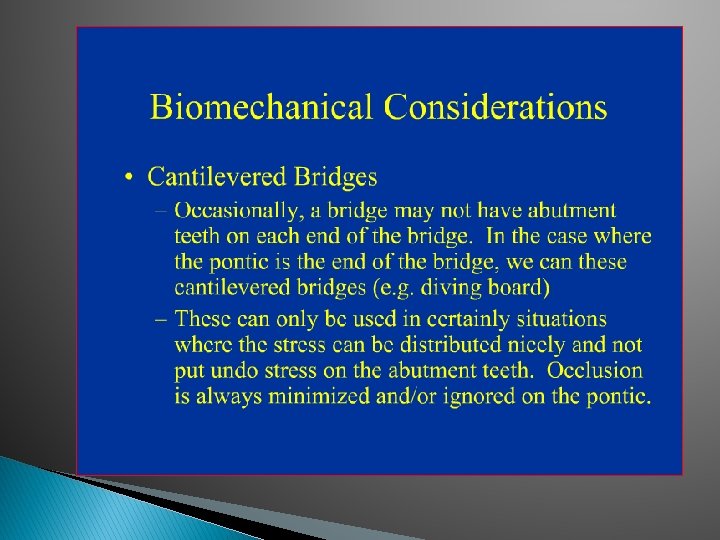
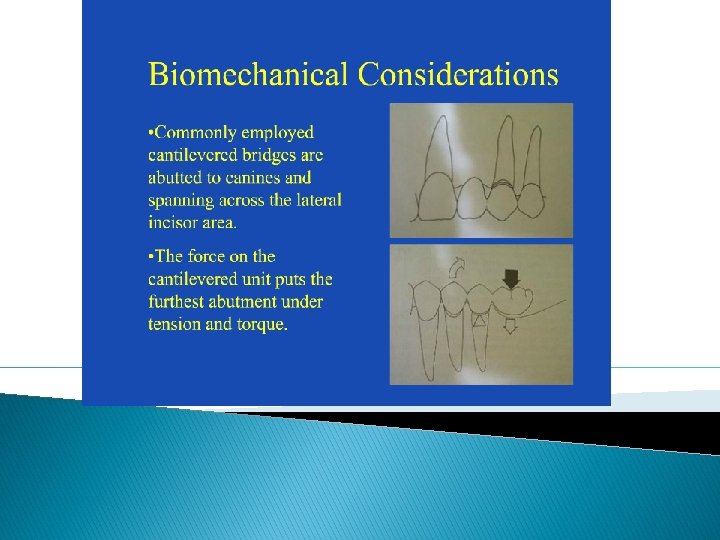


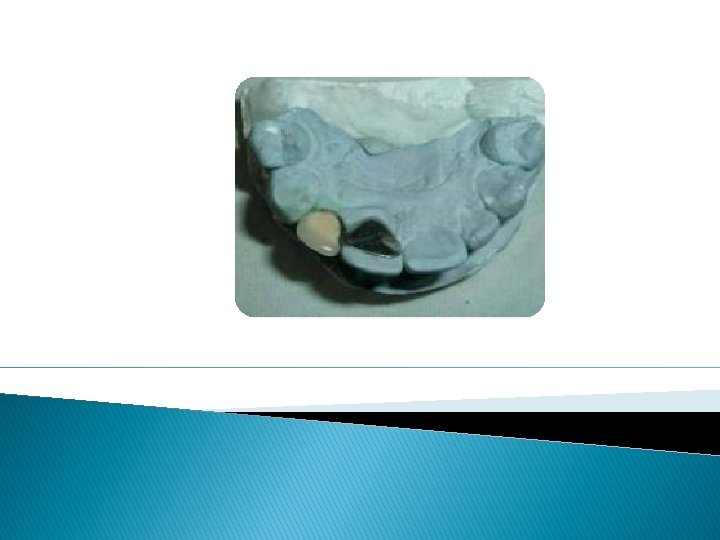
Recent clinical studies show that 2 -unit cantilevered resinbonded bridges are as retentive or even more retentive than their fixed-fixed counterparts. This type of restoration is indicated when replacing single pontics anterior to the premolars. It is not recommended to cantilever a molar sized pontic because the greater leverage forces from the pontic may cause uncontrolled tooth movement. Abutments requiring cuspal protection or having restorations larger than a Class II are not good candidates for such cantilevered bridges, although in the case of a small restoration being required, this can often be incorporated into the framework design for additional resistance form.
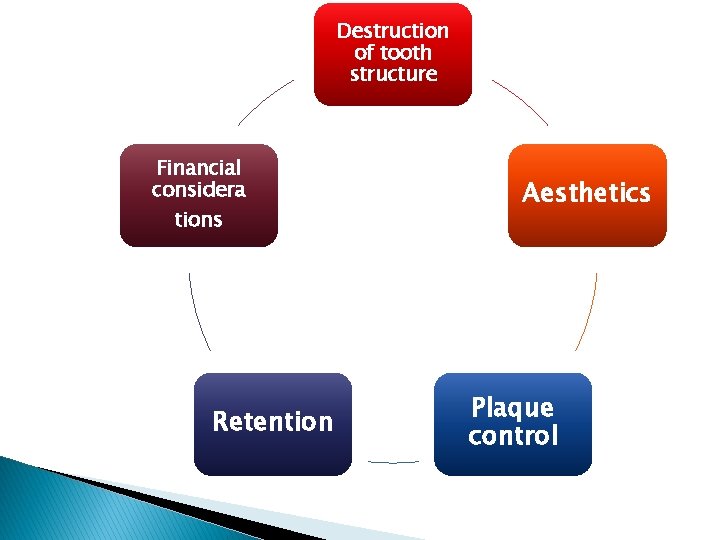
Destruction of tooth structure Financial considera tions Retention Aesthetics Plaque control
Resin-Bonded Tooth-Supported Fixed Partial Denture The resin-bonded fixed partial denture is a conservative restoration that is reserved for use on defect-free abutments in situations where there is a single missing tooth, usually an incisor or premolar. A single molar can be replaced by this type of prosthesis if the patient's muscles of mastication are not too well developed, thus assuring that a minimum load will be placed on the Retainers
This prosthesis utilizes a standard pontic form, accommodating an edentulous ridge with moderate resorption and no gross soft tissue defects. Because it requires a shallow preparation that is restricted to enamel, the resinbonded fixed partial denture is especially useful in younger patients whose immature teeth with large pulps are poor risks for endodontic-free abutment preparations. Tilted abutments can be accommodated only if there is enough tooth structure to allow a change in the normal alignment of axial reduction. This is limited by the need to restrict most of the reduction to enamel. Rarely can a mesiodistal difference in abutment inclination greater than 15 degrees be accommodated. There can be little or no difference in the inclination of the abutments faciolingually.
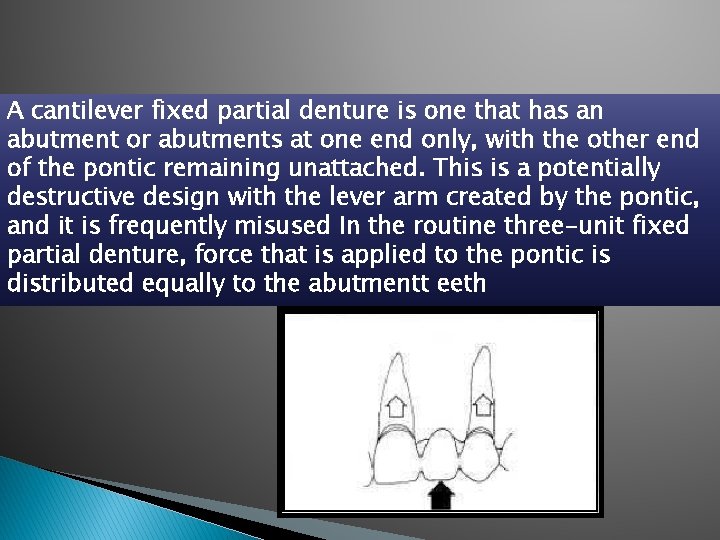
A cantilever fixed partial denture is one that has an abutment or abutments at one end only, with the other end of the pontic remaining unattached. This is a potentially destructive design with the lever arm created by the pontic, and it is frequently misused In the routine three-unit fixed partial denture, force that is applied to the pontic is distributed equally to the abutmentt eeth

If there is only one pontic and it is near the interabutment axis line, less leverage is applied to the abutment teeth or to the retainers than with a cantilever. When a cantilever pontic is employed to replace a missing tooth, forces applied to the pontic have an entirely different effect on the abutment tooth. The pontic acts as a lever that tends to be depressed under forces with a strong occlusal vector
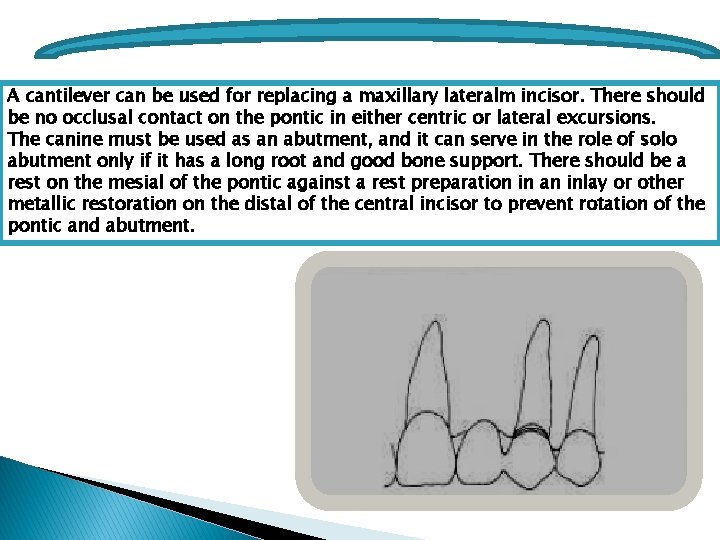
A cantilever can be used for replacing a maxillary lateralm incisor. There should be no occlusal contact on the pontic in either centric or lateral excursions. The canine must be used as an abutment, and it can serve in the role of solo abutment only if it has a long root and good bone support. There should be a rest on the mesial of the pontic against a rest preparation in an inlay or other metallic restoration on the distal of the central incisor to prevent rotation of the pontic and abutment.
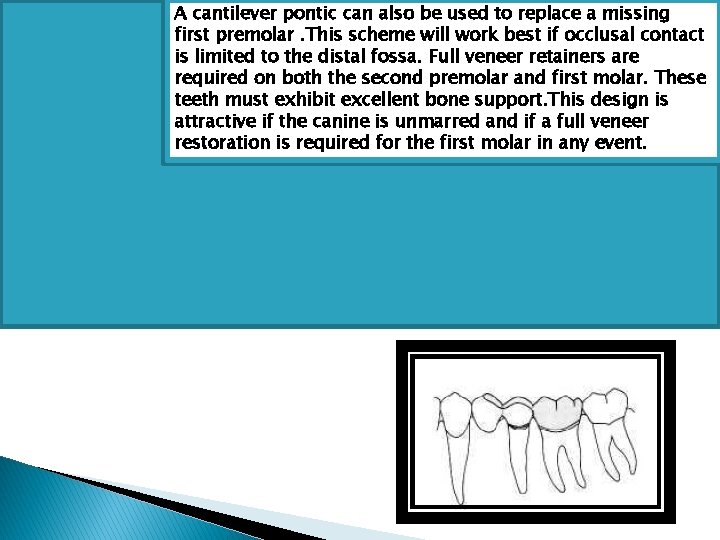
A cantilever pontic can also be used to replace a missing first premolar. This scheme will work best if occlusal contact is limited to the distal fossa. Full veneer retainers are required on both the second premolar and first molar. These teeth must exhibit excellent bone support. This design is attractive if the canine is unmarred and if a full veneer restoration is required for the first molar in any event.
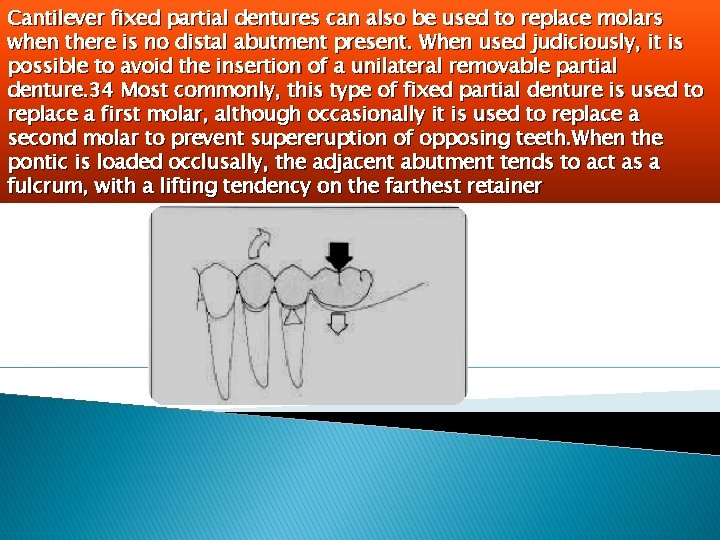
Cantilever fixed partial dentures can also be used to replace molars when there is no distal abutment present. When used judiciously, it is possible to avoid the insertion of a unilateral removable partial denture. 34 Most commonly, this type of fixed partial denture is used to replace a first molar, although occasionally it is used to replace a second molar to prevent supereruption of opposing teeth. When the pontic is loaded occlusally, the adjacent abutment tends to act as a fulcrum, with a lifting tendency on the farthest retainer
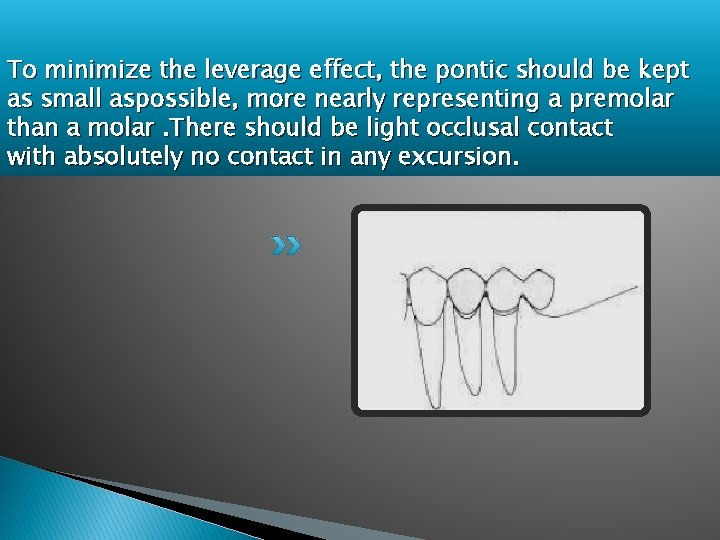
To minimize the leverage effect, the pontic should be kept as small aspossible, more nearly representing a premolar than a molar. There should be light occlusal contact with absolutely no contact in any excursion.
Working Casts and Dies They must be bubble free, especially along the finish lines of the prepared teeth. All portions of the cast must be distortion free. The casts must be trimmed to insure access for carving wax pattern margins.
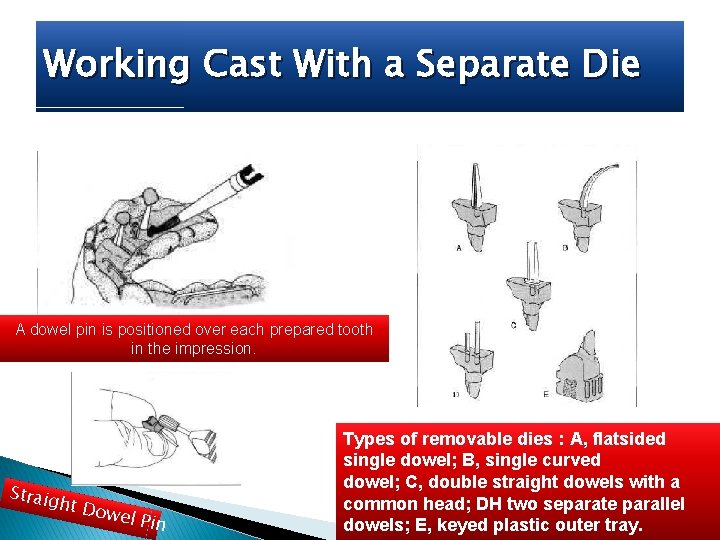
Working Cast With a Separate Die A dowel pin is positioned over each prepared tooth in the impression. Straig ht Do wel P in Types of removable dies : A, flatsided single dowel; B, single curved dowel; C, double straight dowels with a common head; DH two separate parallel dowels; E, keyed plastic outer tray.
Dowel Pin System The accurate placement of the dowels can be a problem: If the dowel pins are positioned inaccurately, they may pinged on the margins, weaken the die, or prevent the die from being easily removed from the cast. Marking the desired location of the dowel on the periphery of the impression and then placing the dowel freehand after the stone has been poured can result in the dowel settling into the stone. v
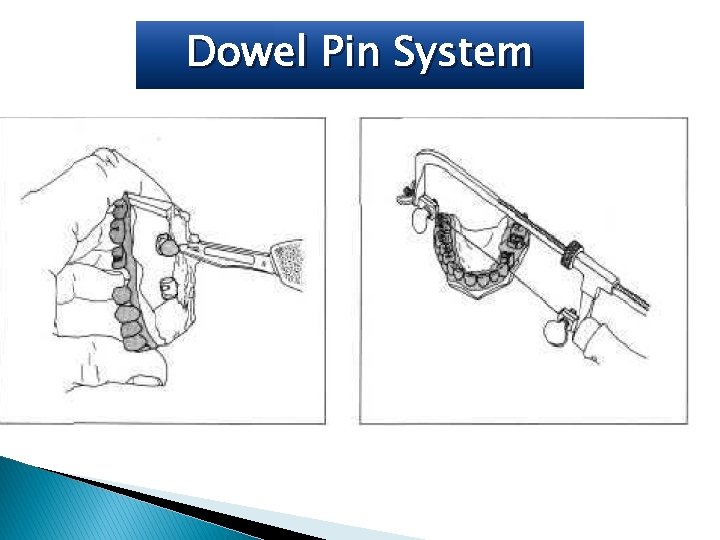
Dowel Pin System
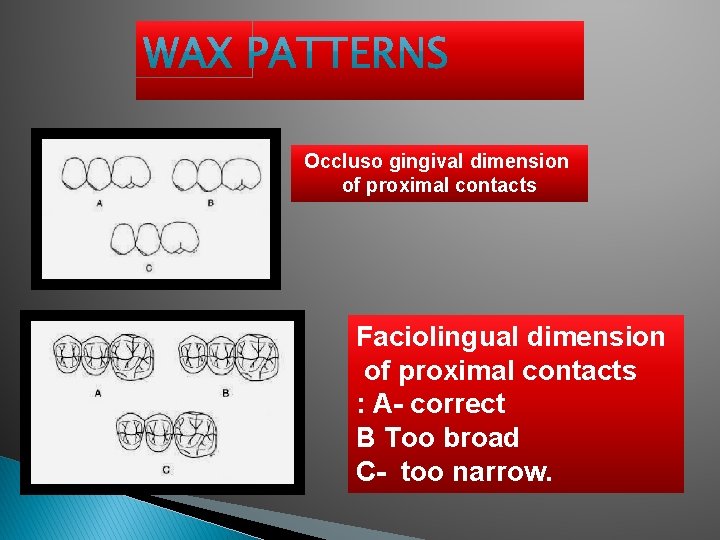
Occluso gingival dimension of proximal contacts Faciolingual dimension of proximal contacts : A- correct B Too broad C- too narrow.
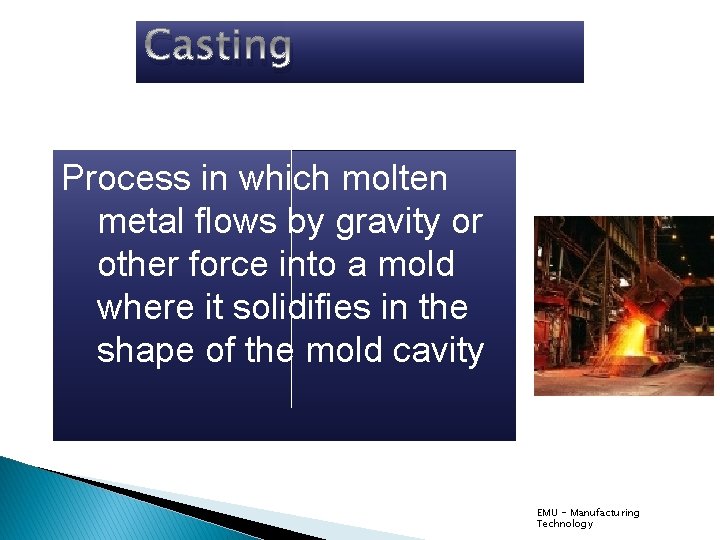
Casting Process in which molten metal flows by gravity or other force into a mold where it solidifies in the shape of the mold cavity EMU - Manufacturing Technology
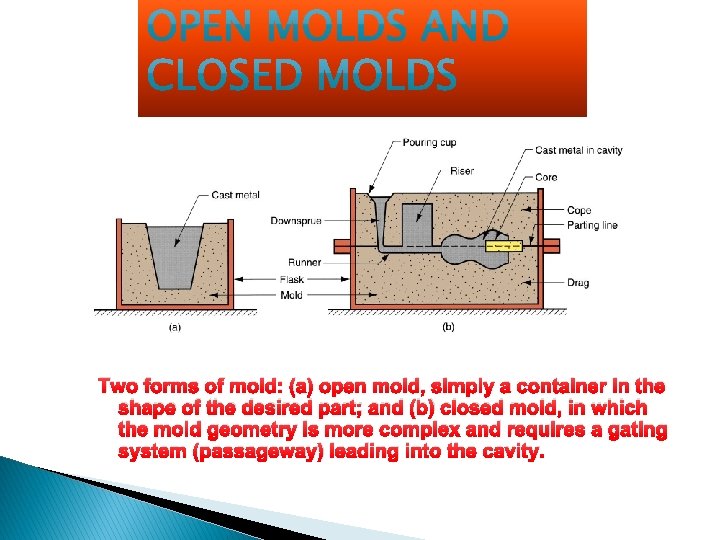
Two forms of mold: (a) open mold, simply a container in the shape of the desired part; and (b) closed mold, in which the mold geometry is more complex and requires a gating system (passageway) leading into the cavity.
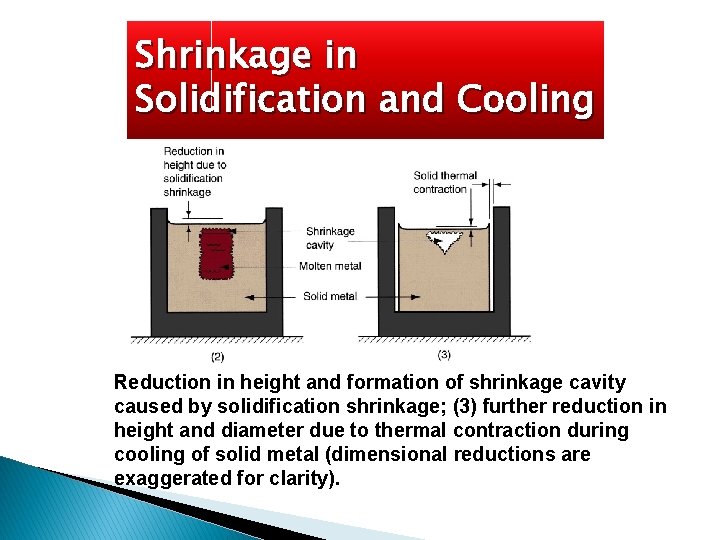
Shrinkage in Solidification and Cooling Reduction in height and formation of shrinkage cavity caused by solidification shrinkage; (3) further reduction in height and diameter due to thermal contraction during cooling of solid metal (dimensional reductions are exaggerated for clarity).
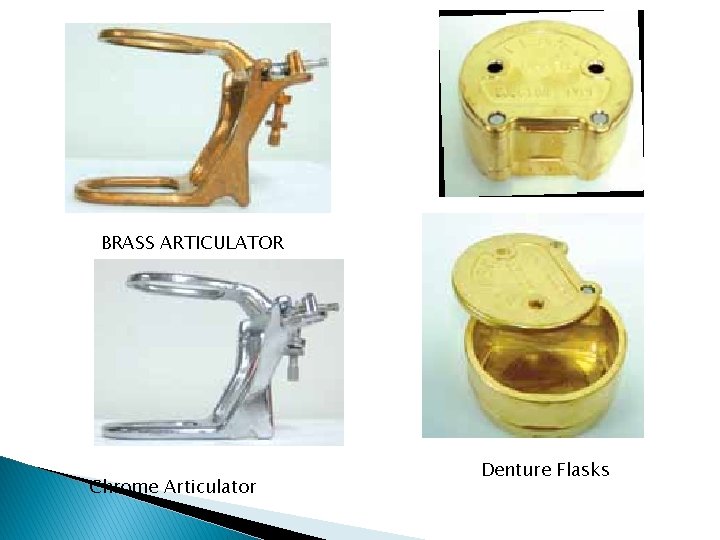
BRASS ARTICULATOR Chrome Articulator Denture Flasks
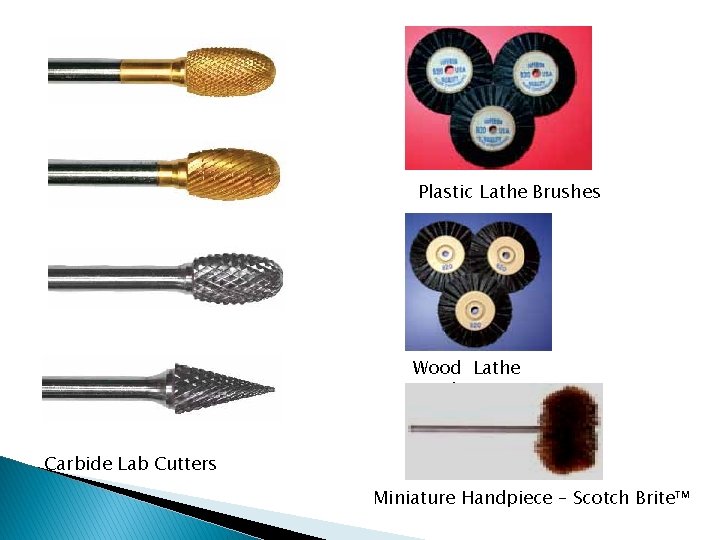
Plastic Lathe Brushes Wood Lathe Brushes Carbide Lab Cutters Miniature Handpiece – Scotch Brite™
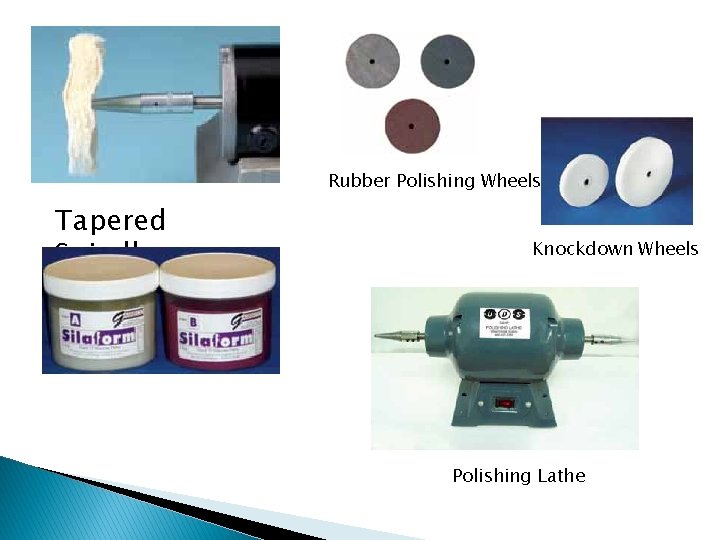
Rubber Polishing Wheels Tapered Spindle Knockdown Wheels Polishing Lathe

Tank You for Your attention
- Slides: 47