
IV The Domain Eukarya D Plants 4 Nontracheophytes
- Slides: 24
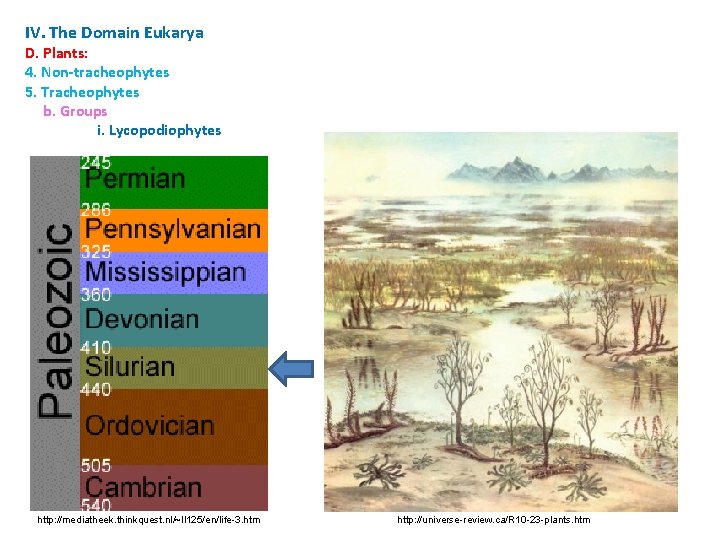
IV. The Domain Eukarya D. Plants: 4. Non-tracheophytes 5. Tracheophytes b. Groups i. Lycopodiophytes http: //mediatheek. thinkquest. nl/~ll 125/en/life-3. htm http: //universe-review. ca/R 10 -23 -plants. htm
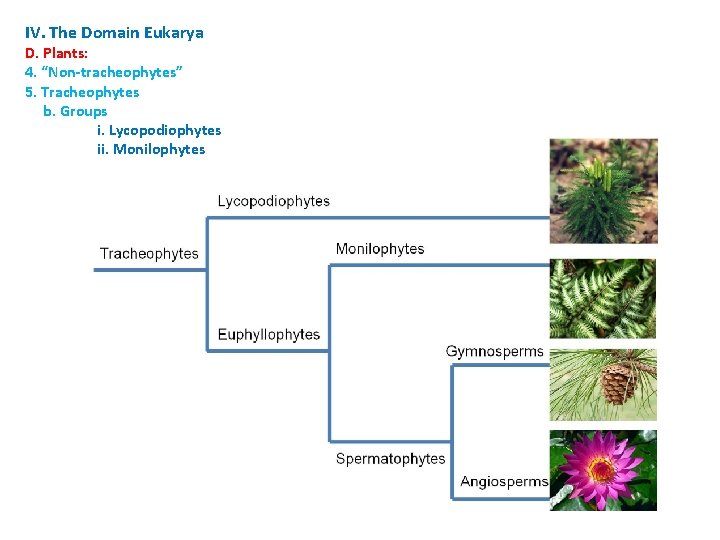
IV. The Domain Eukarya D. Plants: 4. “Non-tracheophytes” 5. Tracheophytes b. Groups i. Lycopodiophytes ii. Monilophytes
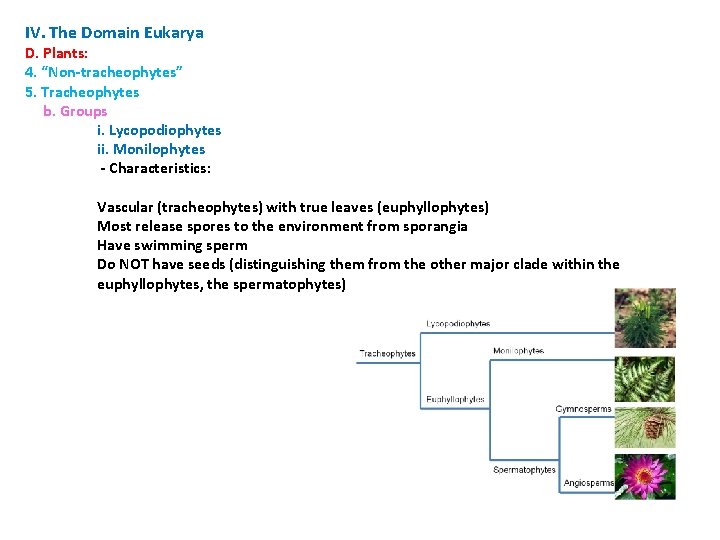
IV. The Domain Eukarya D. Plants: 4. “Non-tracheophytes” 5. Tracheophytes b. Groups i. Lycopodiophytes ii. Monilophytes - Characteristics: Vascular (tracheophytes) with true leaves (euphyllophytes) Most release spores to the environment from sporangia Have swimming sperm Do NOT have seeds (distinguishing them from the other major clade within the euphyllophytes, the spermatophytes)
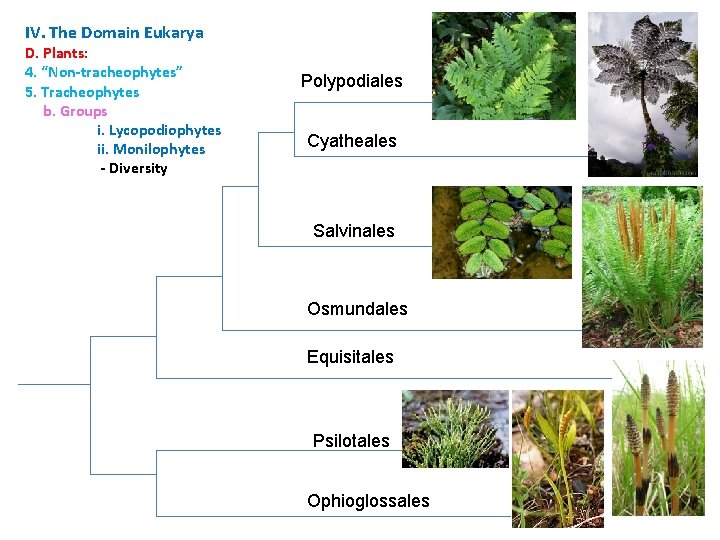
IV. The Domain Eukarya D. Plants: 4. “Non-tracheophytes” 5. Tracheophytes b. Groups i. Lycopodiophytes ii. Monilophytes - Diversity Polypodiales Cyatheales Salvinales Osmundales Equisitales Psilotales Ophioglossales
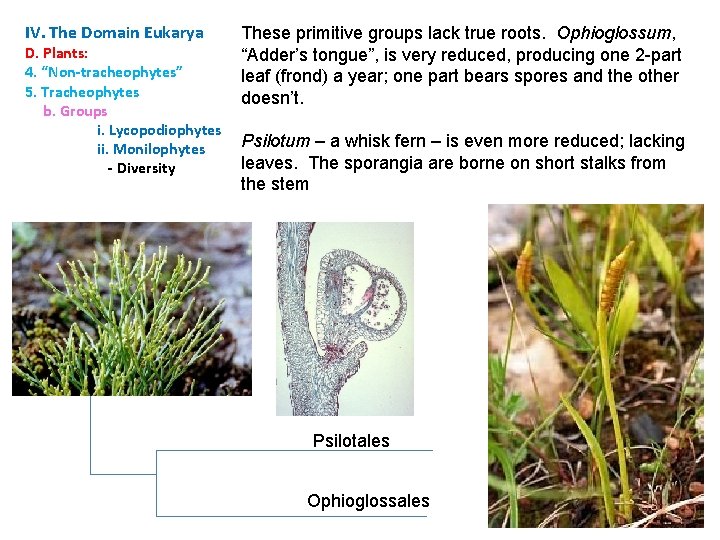
IV. The Domain Eukarya D. Plants: 4. “Non-tracheophytes” 5. Tracheophytes b. Groups i. Lycopodiophytes ii. Monilophytes - Diversity These primitive groups lack true roots. Ophioglossum, “Adder’s tongue”, is very reduced, producing one 2 -part leaf (frond) a year; one part bears spores and the other doesn’t. Psilotum – a whisk fern – is even more reduced; lacking leaves. The sporangia are borne on short stalks from the stem Psilotales Ophioglossales
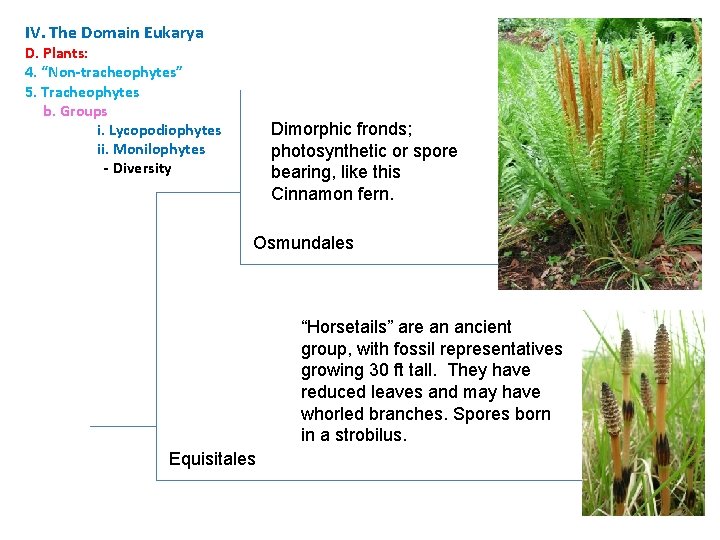
IV. The Domain Eukarya D. Plants: 4. “Non-tracheophytes” 5. Tracheophytes b. Groups i. Lycopodiophytes ii. Monilophytes - Diversity Dimorphic fronds; photosynthetic or spore bearing, like this Cinnamon fern. Osmundales “Horsetails” are an ancient group, with fossil representatives growing 30 ft tall. They have reduced leaves and may have whorled branches. Spores born in a strobilus. Equisitales
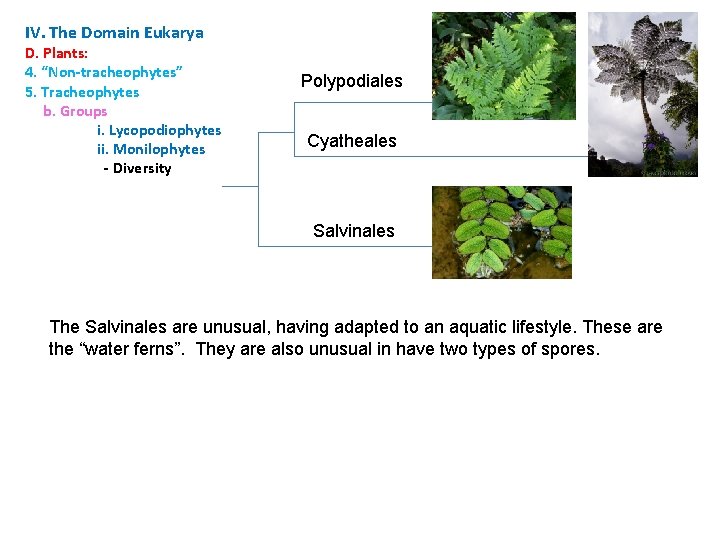
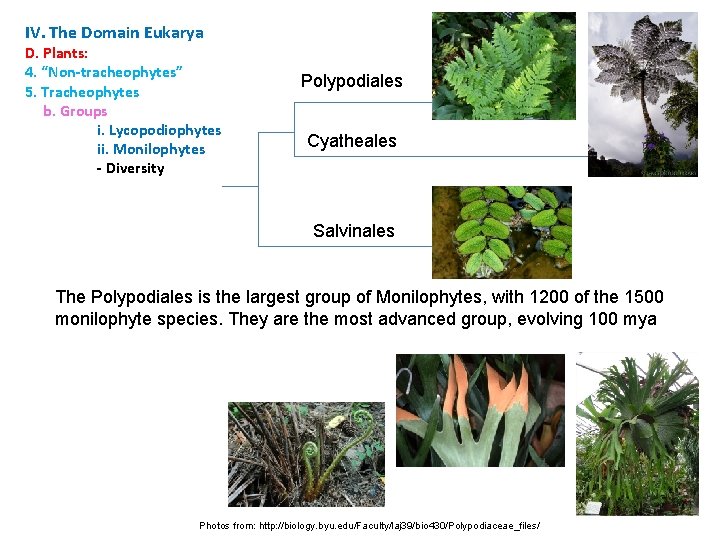
IV. The Domain Eukarya D. Plants: 4. “Non-tracheophytes” 5. Tracheophytes b. Groups i. Lycopodiophytes ii. Monilophytes - Diversity Polypodiales Cyatheales Salvinales The Salvinales are unusual, having adapted to an aquatic lifestyle. These are the “water ferns”. They are also unusual in have two types of spores.
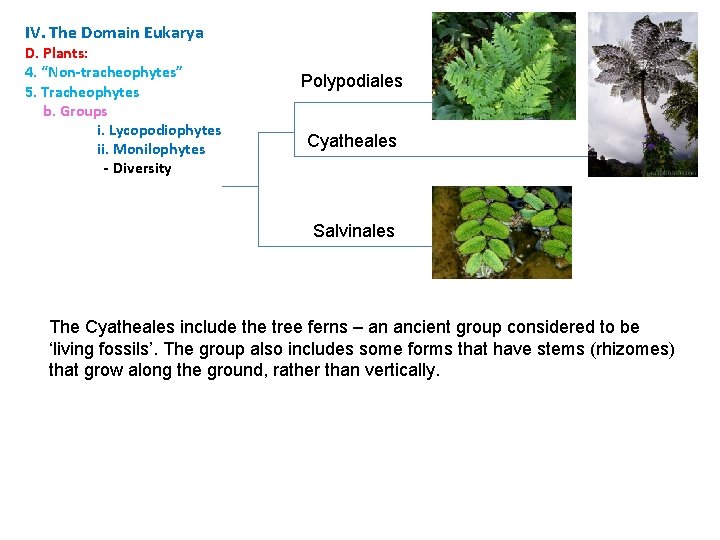
IV. The Domain Eukarya D. Plants: 4. “Non-tracheophytes” 5. Tracheophytes b. Groups i. Lycopodiophytes ii. Monilophytes - Diversity Polypodiales Cyatheales Salvinales The Cyatheales include the tree ferns – an ancient group considered to be ‘living fossils’. The group also includes some forms that have stems (rhizomes) that grow along the ground, rather than vertically.
IV. The Domain Eukarya D. Plants: 4. “Non-tracheophytes” 5. Tracheophytes b. Groups i. Lycopodiophytes ii. Monilophytes - Diversity Polypodiales Cyatheales Salvinales The Polypodiales is the largest group of Monilophytes, with 1200 of the 1500 monilophyte species. They are the most advanced group, evolving 100 mya Photos from: http: //biology. byu. edu/Faculty/laj 39/bio 430/Polypodiaceae_files/
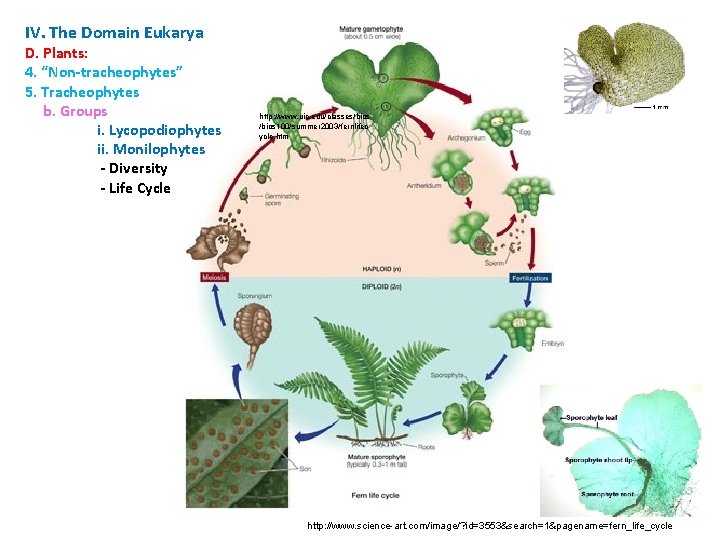
IV. The Domain Eukarya D. Plants: 4. “Non-tracheophytes” 5. Tracheophytes b. Groups i. Lycopodiophytes ii. Monilophytes - Diversity - Life Cycle http: //www. uic. edu/classes/bios 100/summer 2003/fernlifec ycle. htm http: //www. science-art. com/image/? id=3553&search=1&pagename=fern_life_cycle
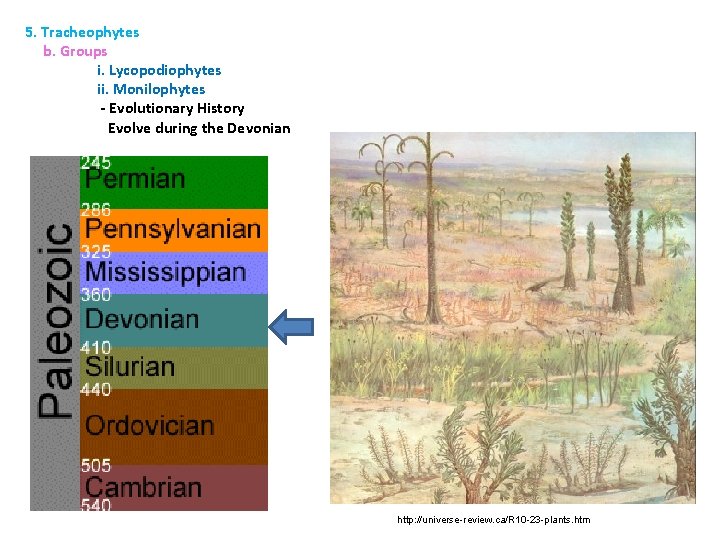
5. Tracheophytes b. Groups i. Lycopodiophytes ii. Monilophytes - Evolutionary History Evolve during the Devonian http: //universe-review. ca/R 10 -23 -plants. htm
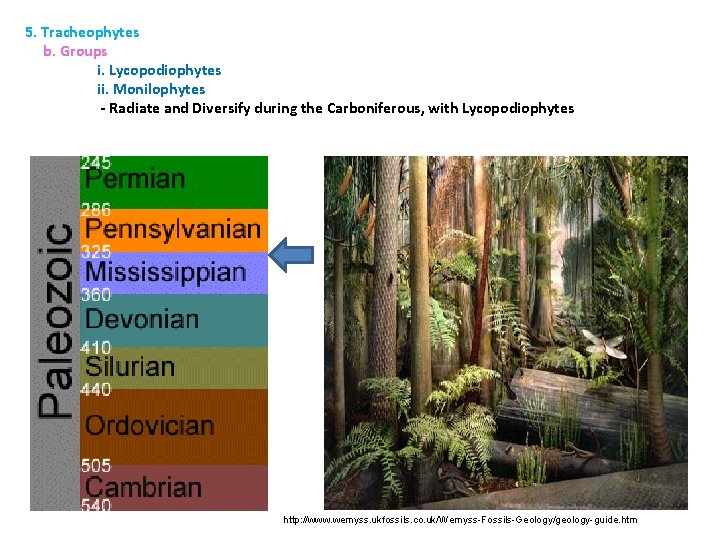
5. Tracheophytes b. Groups i. Lycopodiophytes ii. Monilophytes - Radiate and Diversify during the Carboniferous, with Lycopodiophytes http: //www. wemyss. ukfossils. co. uk/Wemyss-Fossils-Geology/geology-guide. htm
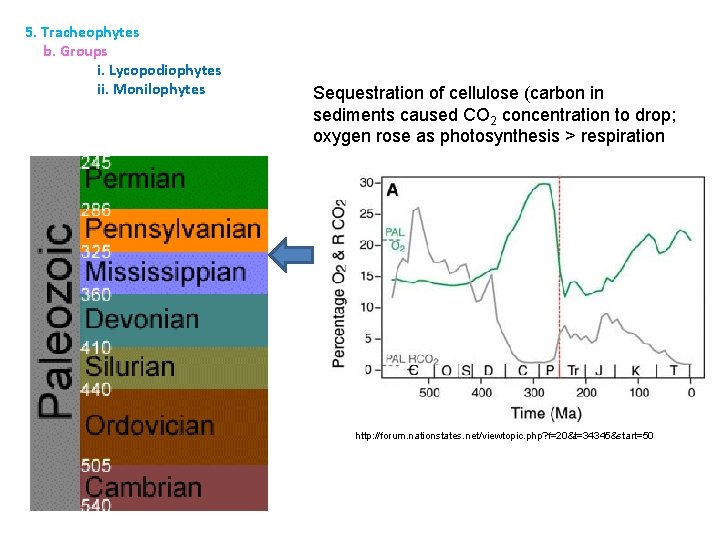
5. Tracheophytes b. Groups i. Lycopodiophytes ii. Monilophytes Sequestration of cellulose (carbon in sediments caused CO 2 concentration to drop; oxygen rose as photosynthesis > respiration http: //forum. nationstates. net/viewtopic. php? f=20&t=34345&start=50
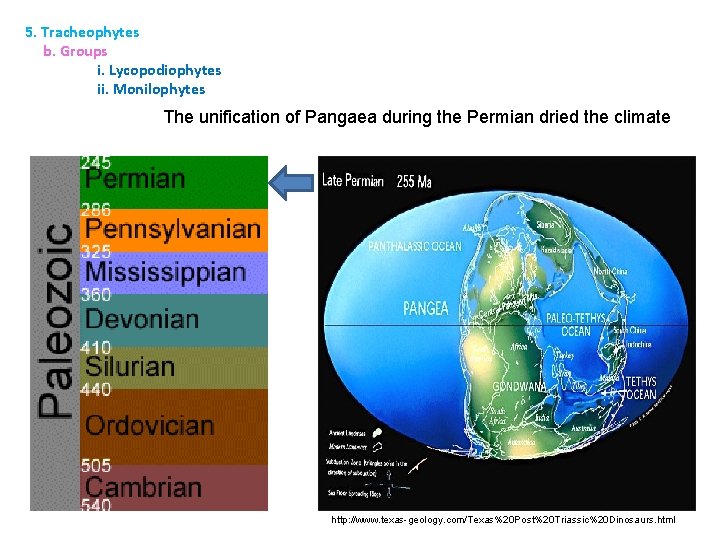
5. Tracheophytes b. Groups i. Lycopodiophytes ii. Monilophytes The unification of Pangaea during the Permian dried the climate http: //www. texas-geology. com/Texas%20 Post%20 Triassic%20 Dinosaurs. html
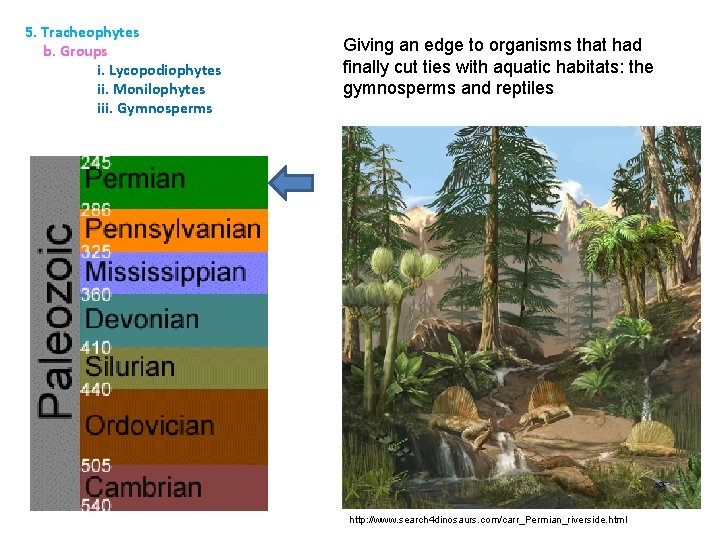
5. Tracheophytes b. Groups i. Lycopodiophytes ii. Monilophytes iii. Gymnosperms Giving an edge to organisms that had finally cut ties with aquatic habitats: the gymnosperms and reptiles http: //www. search 4 dinosaurs. com/carr_Permian_riverside. html
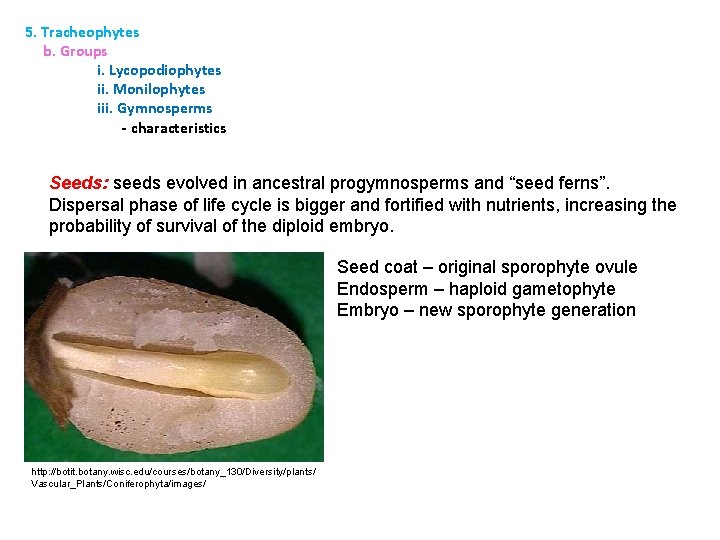
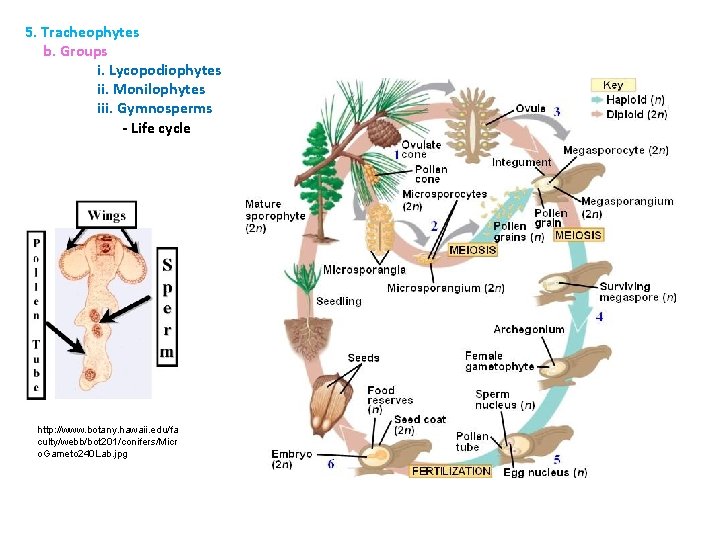
5. Tracheophytes b. Groups i. Lycopodiophytes ii. Monilophytes iii. Gymnosperms - characteristics Seeds: seeds evolved in ancestral progymnosperms and “seed ferns”. Dispersal phase of life cycle is bigger and fortified with nutrients, increasing the probability of survival of the diploid embryo. Seed coat – original sporophyte ovule Endosperm – haploid gametophyte Embryo – new sporophyte generation http: //botit. botany. wisc. edu/courses/botany_130/Diversity/plants/ Vascular_Plants/Coniferophyta/images/
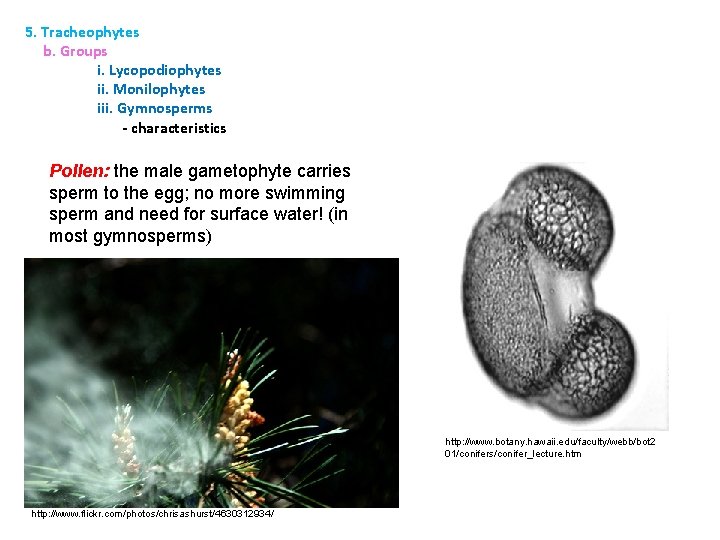
5. Tracheophytes b. Groups i. Lycopodiophytes ii. Monilophytes iii. Gymnosperms - characteristics Pollen: the male gametophyte carries sperm to the egg; no more swimming sperm and need for surface water! (in most gymnosperms) http: //www. botany. hawaii. edu/faculty/webb/bot 2 01/conifers/conifer_lecture. htm http: //www. flickr. com/photos/chrisashurst/4630312934/
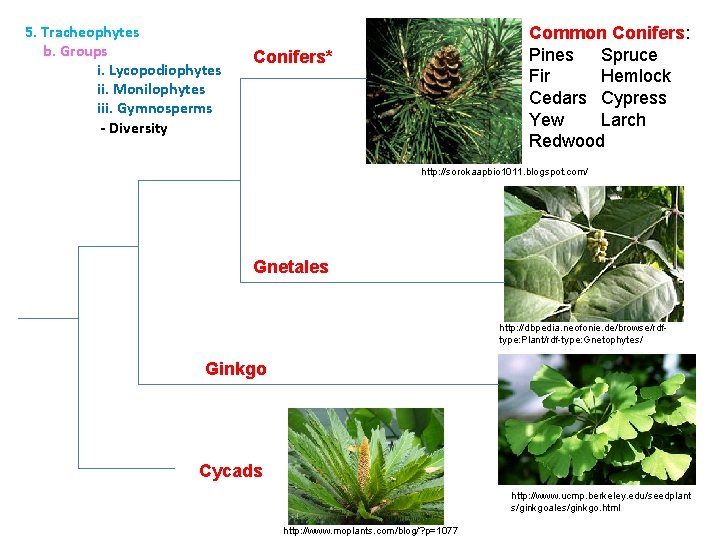
5. Tracheophytes b. Groups i. Lycopodiophytes ii. Monilophytes iii. Gymnosperms - Diversity Common Conifers: Pines Spruce Fir Hemlock Cedars Cypress Yew Larch Redwood Conifers* http: //sorokaapbio 1011. blogspot. com/ Gnetales http: //dbpedia. neofonie. de/browse/rdftype: Plant/rdf-type: Gnetophytes/ Ginkgo Cycads http: //www. ucmp. berkeley. edu/seedplant s/ginkgoales/ginkgo. html http: //www. moplants. com/blog/? p=1077
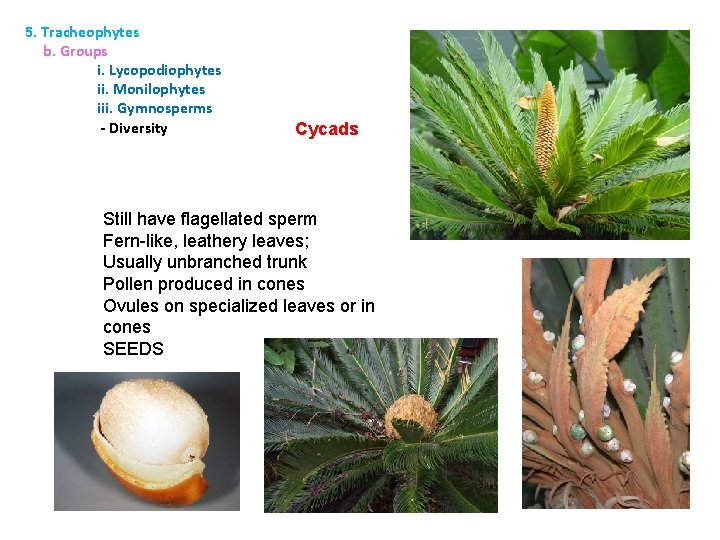
5. Tracheophytes b. Groups i. Lycopodiophytes ii. Monilophytes iii. Gymnosperms - Diversity Cycads Still have flagellated sperm Fern-like, leathery leaves; Usually unbranched trunk Pollen produced in cones Ovules on specialized leaves or in cones SEEDS
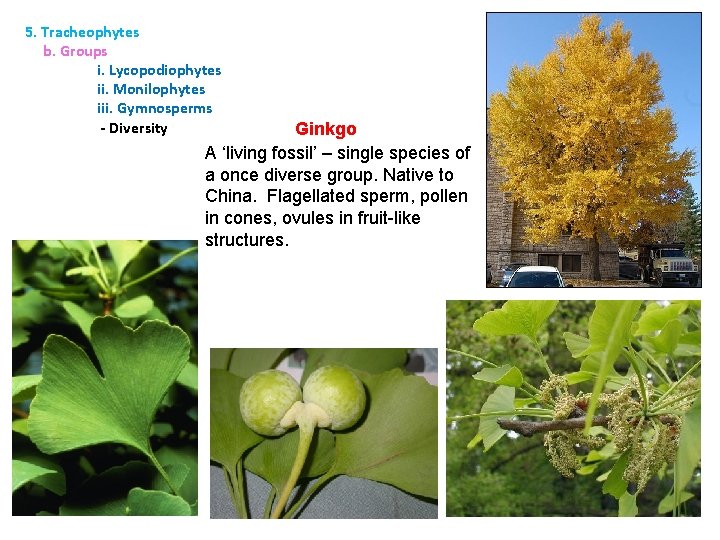
5. Tracheophytes b. Groups i. Lycopodiophytes ii. Monilophytes iii. Gymnosperms - Diversity Ginkgo A ‘living fossil’ – single species of a once diverse group. Native to China. Flagellated sperm, pollen in cones, ovules in fruit-like structures.
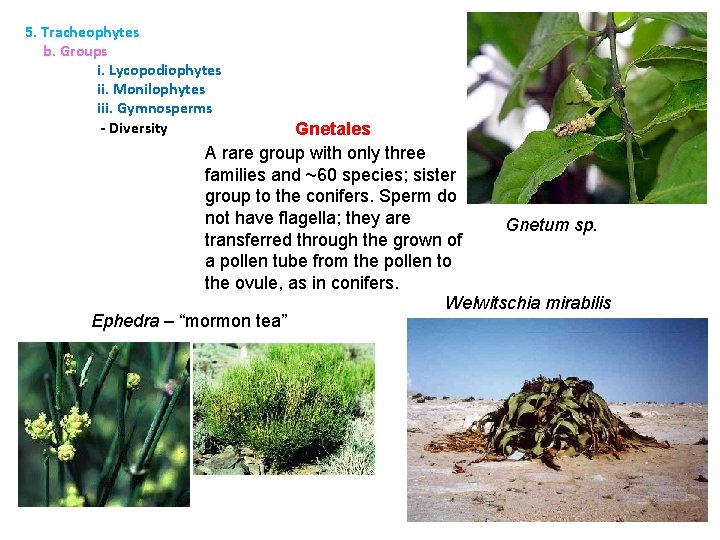
5. Tracheophytes b. Groups i. Lycopodiophytes ii. Monilophytes iii. Gymnosperms - Diversity Gnetales A rare group with only three families and ~60 species; sister group to the conifers. Sperm do not have flagella; they are Gnetum sp. transferred through the grown of a pollen tube from the pollen to the ovule, as in conifers. Welwitschia mirabilis Ephedra – “mormon tea”
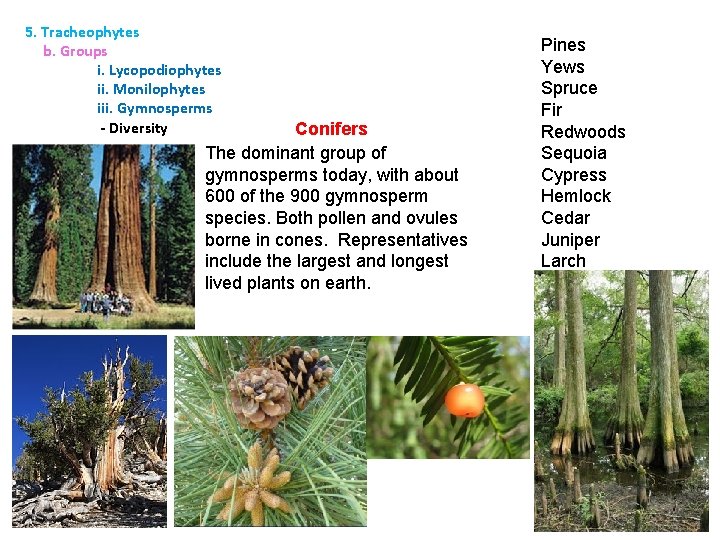
5. Tracheophytes b. Groups i. Lycopodiophytes ii. Monilophytes iii. Gymnosperms - Diversity Conifers The dominant group of gymnosperms today, with about 600 of the 900 gymnosperm species. Both pollen and ovules borne in cones. Representatives include the largest and longest lived plants on earth. Pines Yews Spruce Fir Redwoods Sequoia Cypress Hemlock Cedar Juniper Larch
5. Tracheophytes b. Groups i. Lycopodiophytes ii. Monilophytes iii. Gymnosperms - Life cycle http: //www. botany. hawaii. edu/fa culty/webb/bot 201/conifers/Micr o. Gameto 240 Lab. jpg
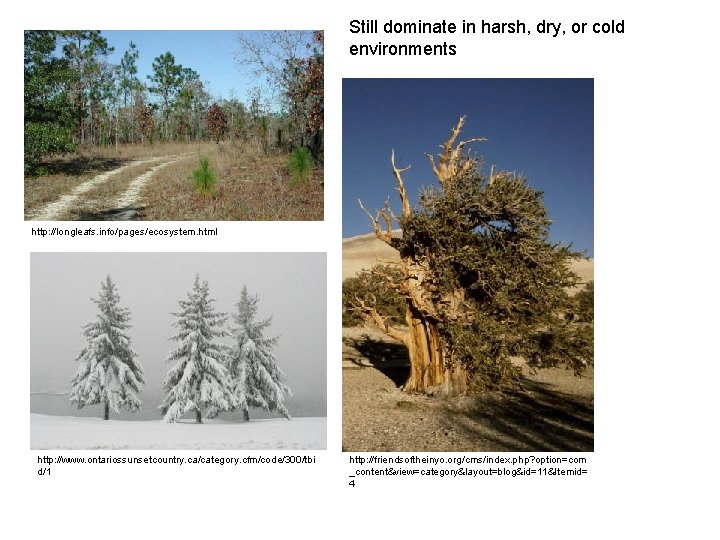
Still dominate in harsh, dry, or cold environments http: //longleafs. info/pages/ecosystem. html http: //www. ontariossunsetcountry. ca/category. cfm/code/300/tbi d/1 http: //friendsoftheinyo. org/cms/index. php? option=com _content&view=category&layout=blog&id=11&Itemid= 4