
IV Cenozoic 65 0 mya IV Cenozoic 65
- Slides: 54
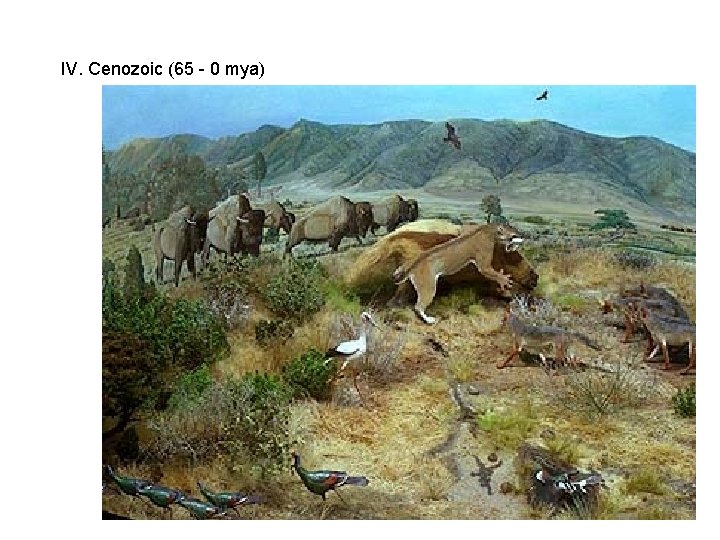
IV. Cenozoic (65 - 0 mya)
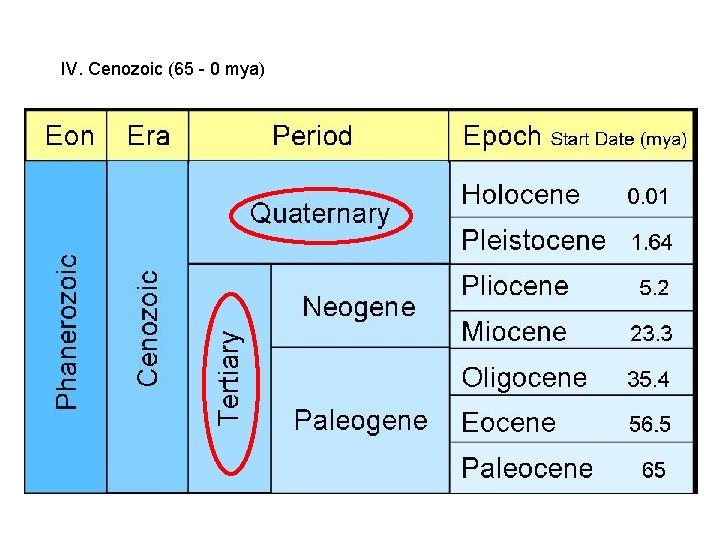
IV. Cenozoic (65 - 0 mya)
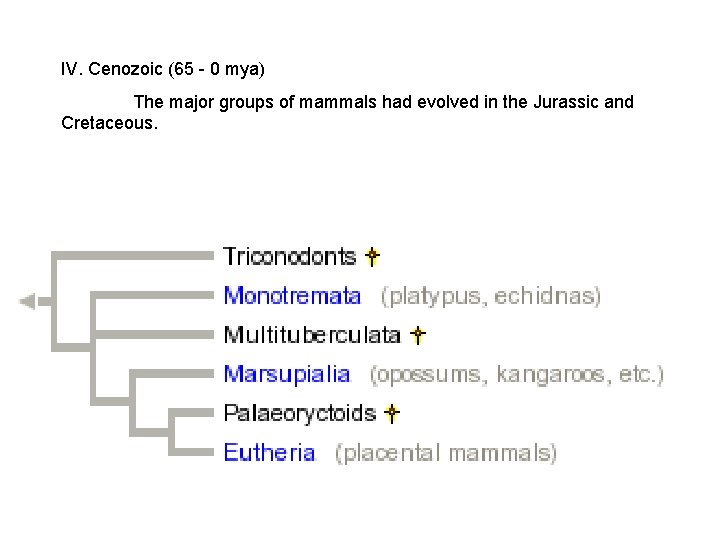
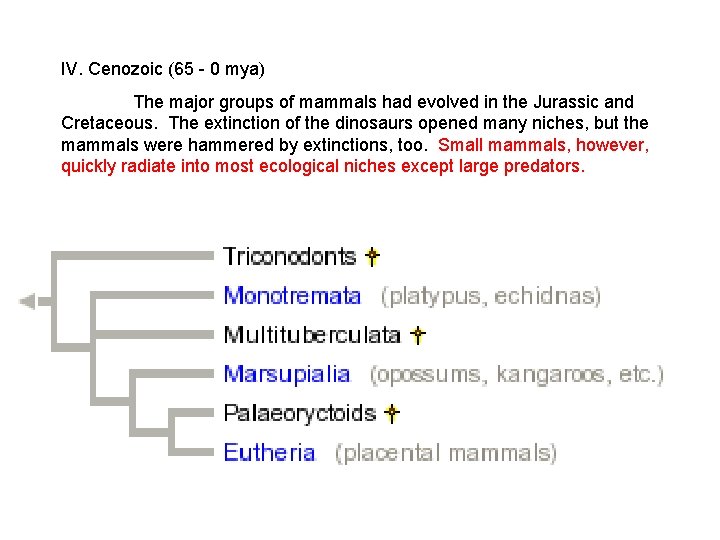
IV. Cenozoic (65 - 0 mya) The major groups of mammals had evolved in the Jurassic and Cretaceous.
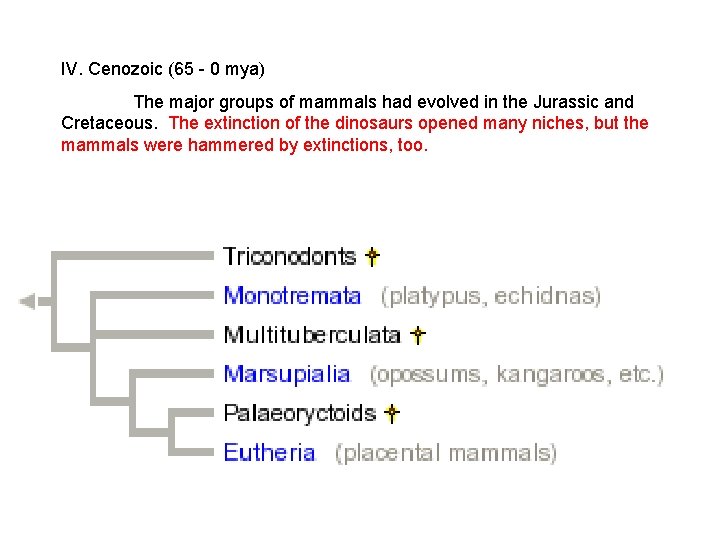
IV. Cenozoic (65 - 0 mya) The major groups of mammals had evolved in the Jurassic and Cretaceous. The extinction of the dinosaurs opened many niches, but the mammals were hammered by extinctions, too.
IV. Cenozoic (65 - 0 mya) The major groups of mammals had evolved in the Jurassic and Cretaceous. The extinction of the dinosaurs opened many niches, but the mammals were hammered by extinctions, too. Small mammals, however, quickly radiate into most ecological niches except large predators.
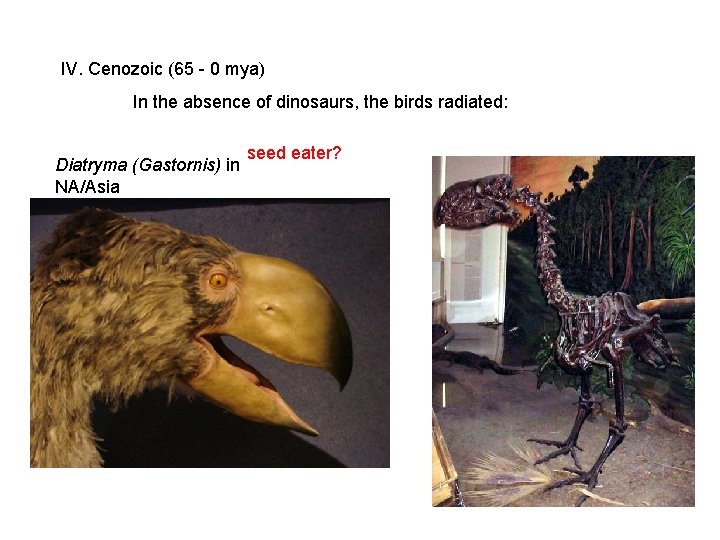
IV. Cenozoic (65 - 0 mya) In the absence of dinosaurs, the birds radiated: Diatryma (Gastornis) in NA/Asia seed eater?
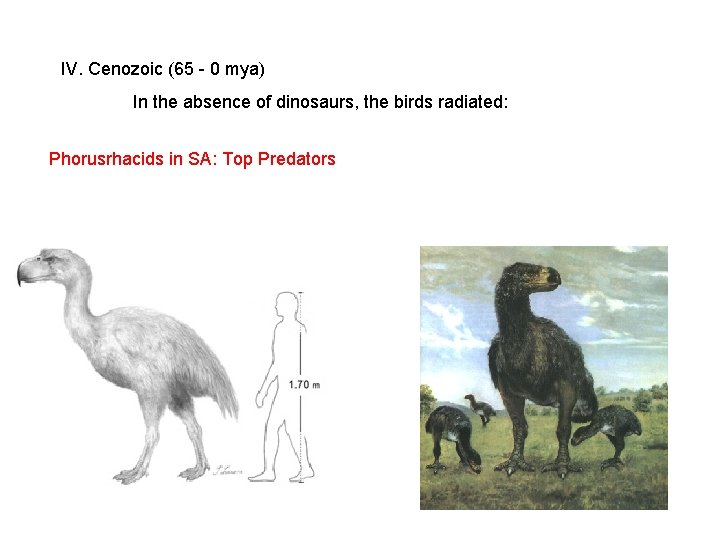
IV. Cenozoic (65 - 0 mya) In the absence of dinosaurs, the birds radiated: Phorusrhacids in SA: Top Predators
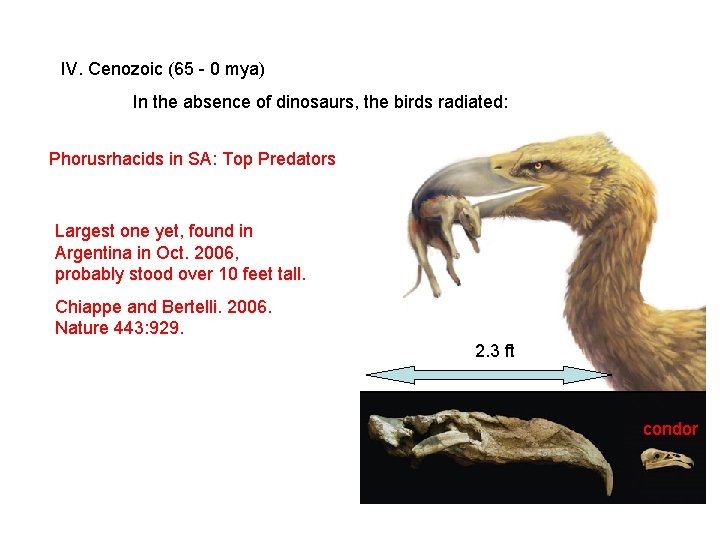
IV. Cenozoic (65 - 0 mya) In the absence of dinosaurs, the birds radiated: Phorusrhacids in SA: Top Predators Largest one yet, found in Argentina in Oct. 2006, probably stood over 10 feet tall. Chiappe and Bertelli. 2006. Nature 443: 929. 2. 3 ft condor
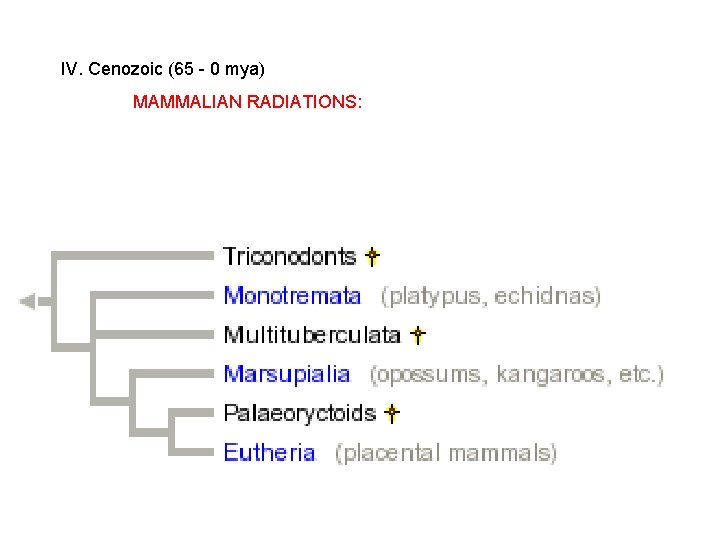
IV. Cenozoic (65 - 0 mya) MAMMALIAN RADIATIONS:
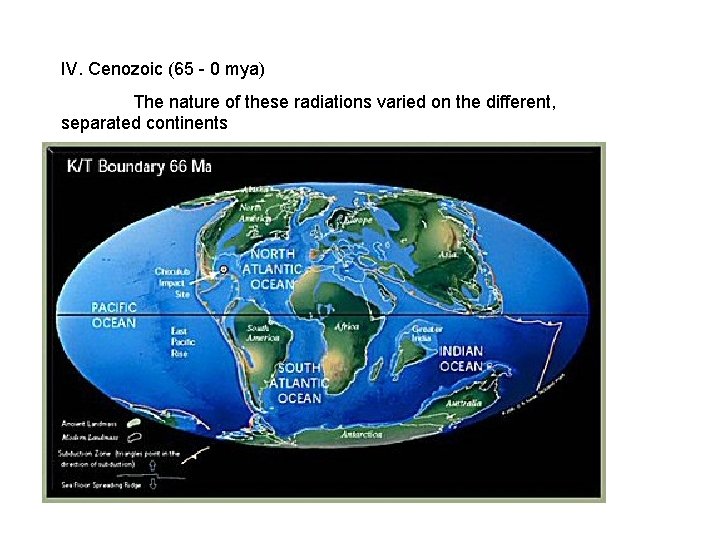
IV. Cenozoic (65 - 0 mya) The nature of these radiations varied on the different, separated continents
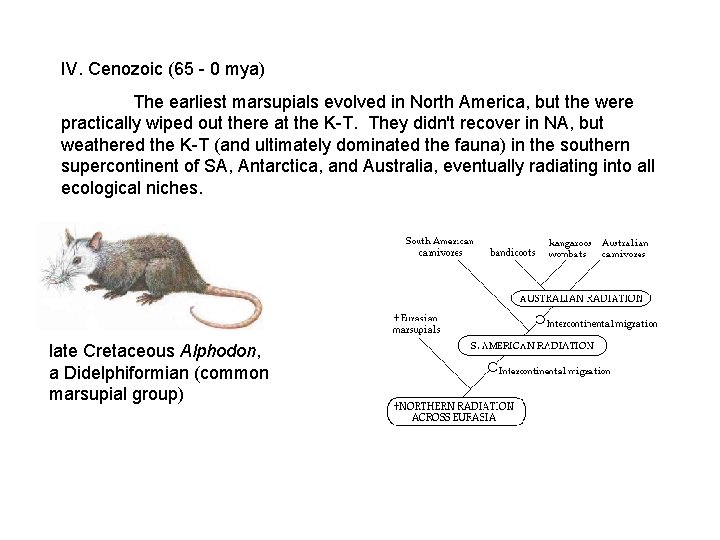
IV. Cenozoic (65 - 0 mya) The earliest marsupials evolved in North America, but the were practically wiped out there at the K-T. They didn't recover in NA, but weathered the K-T (and ultimately dominated the fauna) in the southern supercontinent of SA, Antarctica, and Australia, eventually radiating into all ecological niches. late Cretaceous Alphodon, a Didelphiformian (common marsupial group)
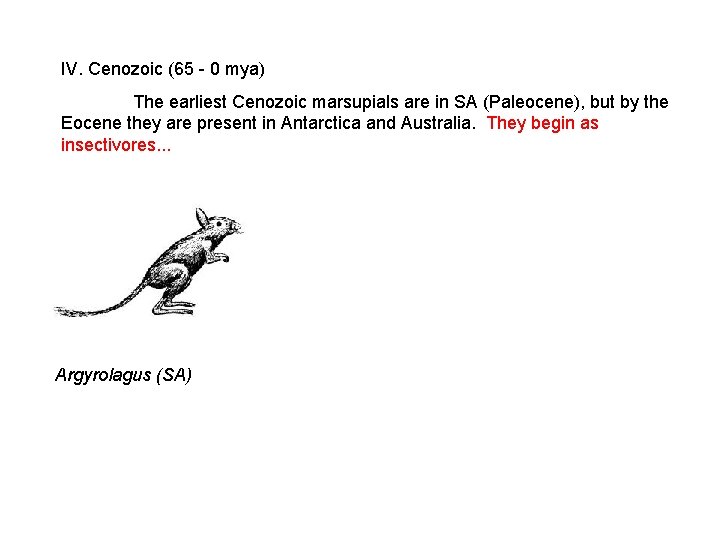
IV. Cenozoic (65 - 0 mya) The earliest Cenozoic marsupials are in SA (Paleocene), but by the Eocene they are present in Antarctica and Australia. They begin as insectivores. . . Argyrolagus (SA)
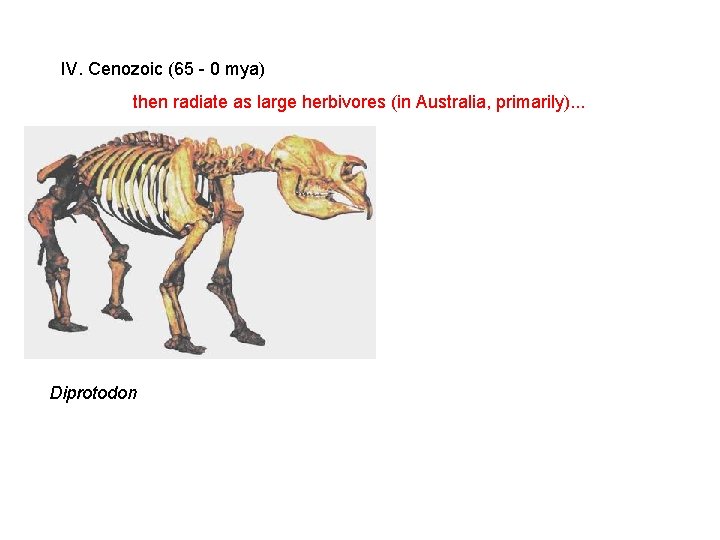
IV. Cenozoic (65 - 0 mya) then radiate as large herbivores (in Australia, primarily). . . Diprotodon
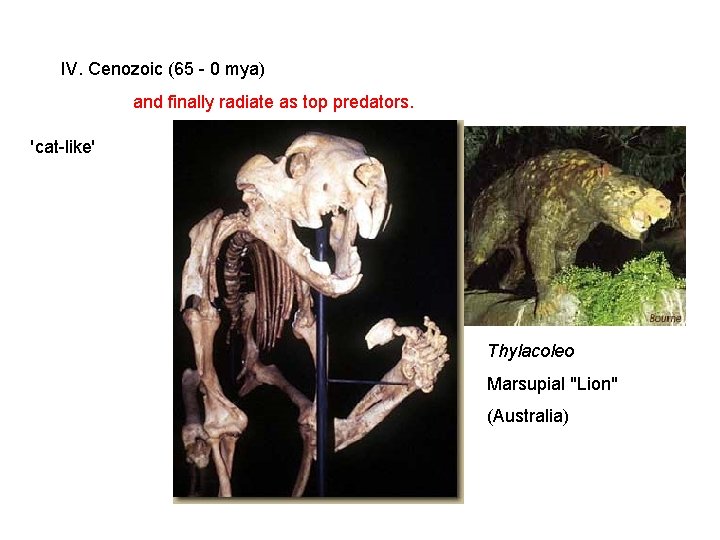
IV. Cenozoic (65 - 0 mya) and finally radiate as top predators. 'cat-like' Thylacoleo Marsupial "Lion" (Australia)
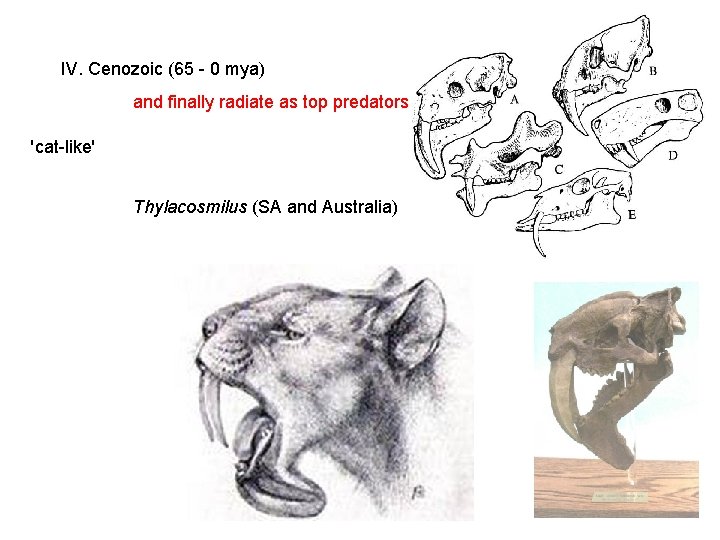
IV. Cenozoic (65 - 0 mya) and finally radiate as top predators. 'cat-like' Thylacosmilus (SA and Australia)
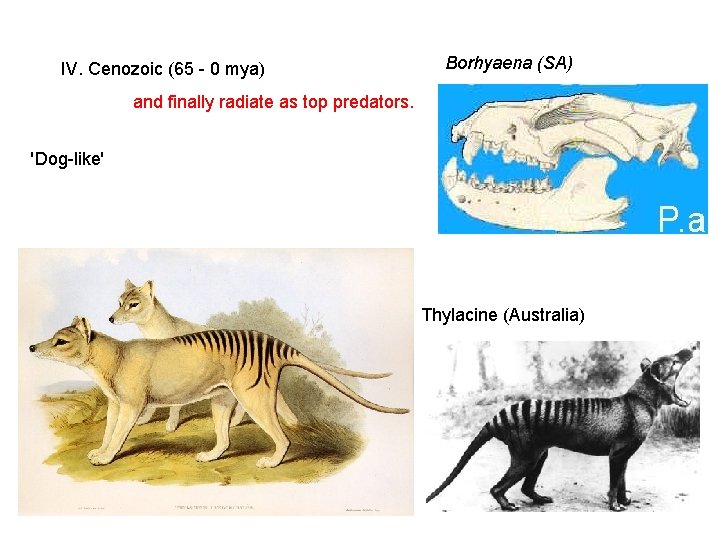
IV. Cenozoic (65 - 0 mya) Borhyaena (SA) and finally radiate as top predators. 'Dog-like' Thylacine (Australia)
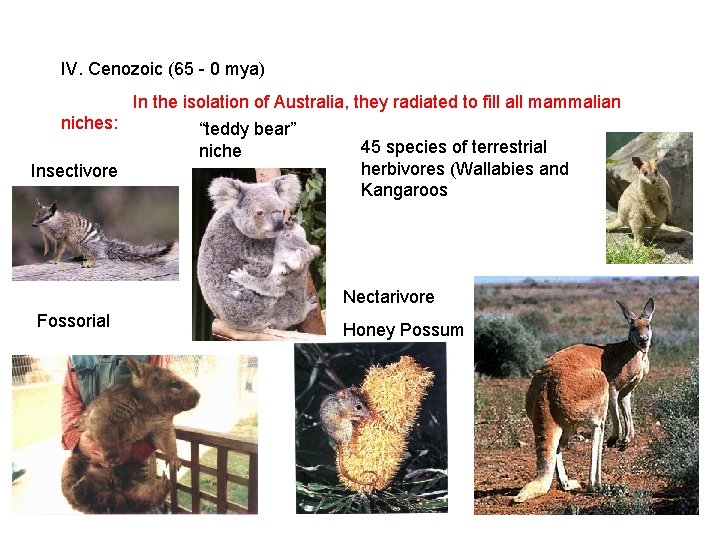
IV. Cenozoic (65 - 0 mya) In the isolation of Australia, they radiated to fill all mammalian niches: Insectivore “teddy bear” niche 45 species of terrestrial herbivores (Wallabies and Kangaroos Nectarivore Fossorial Honey Possum
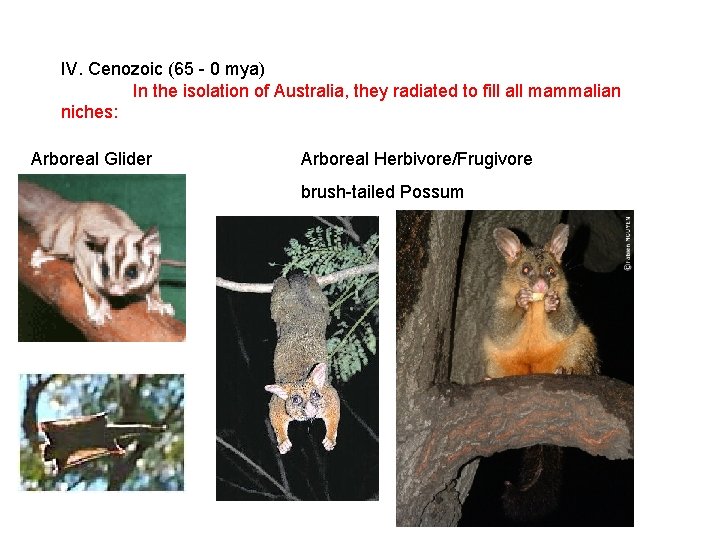
IV. Cenozoic (65 - 0 mya) In the isolation of Australia, they radiated to fill all mammalian niches: Arboreal Glider Arboreal Herbivore/Frugivore brush-tailed Possum
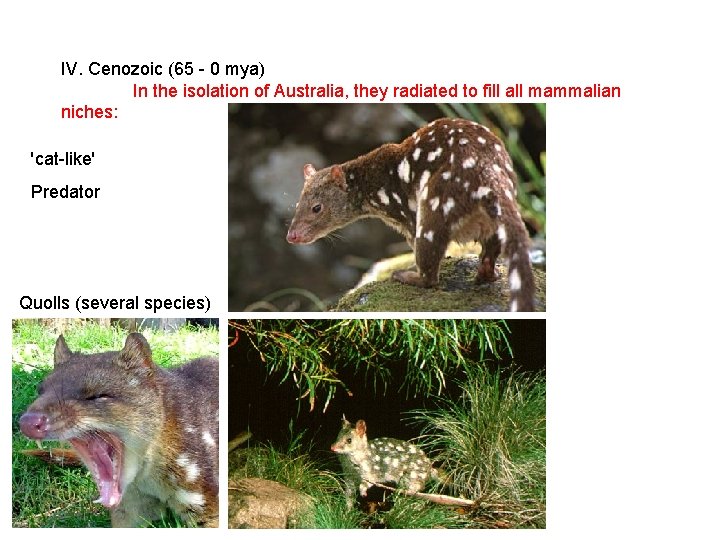
IV. Cenozoic (65 - 0 mya) In the isolation of Australia, they radiated to fill all mammalian niches: 'cat-like' Predator Quolls (several species)
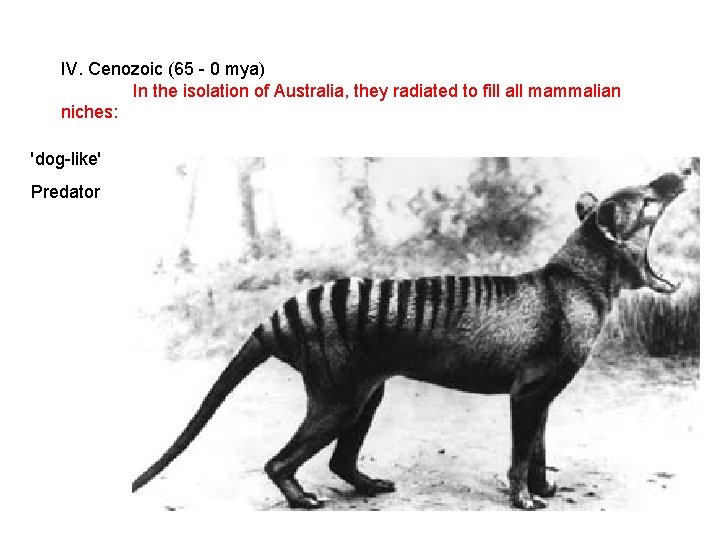
IV. Cenozoic (65 - 0 mya) In the isolation of Australia, they radiated to fill all mammalian niches: 'dog-like' Predator
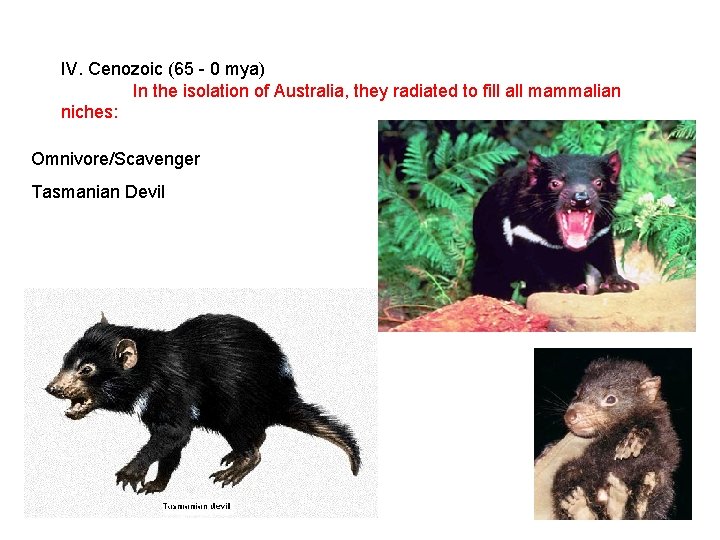
IV. Cenozoic (65 - 0 mya) In the isolation of Australia, they radiated to fill all mammalian niches: Omnivore/Scavenger Tasmanian Devil
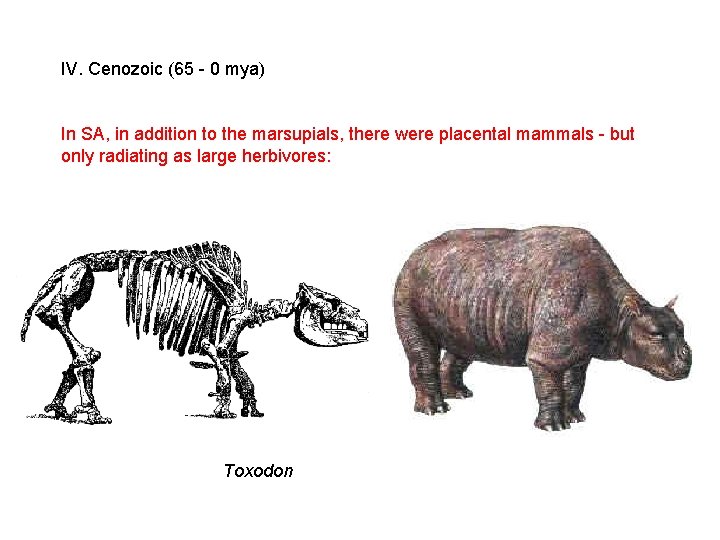
IV. Cenozoic (65 - 0 mya) In SA, in addition to the marsupials, there were placental mammals - but only radiating as large herbivores: Toxodon
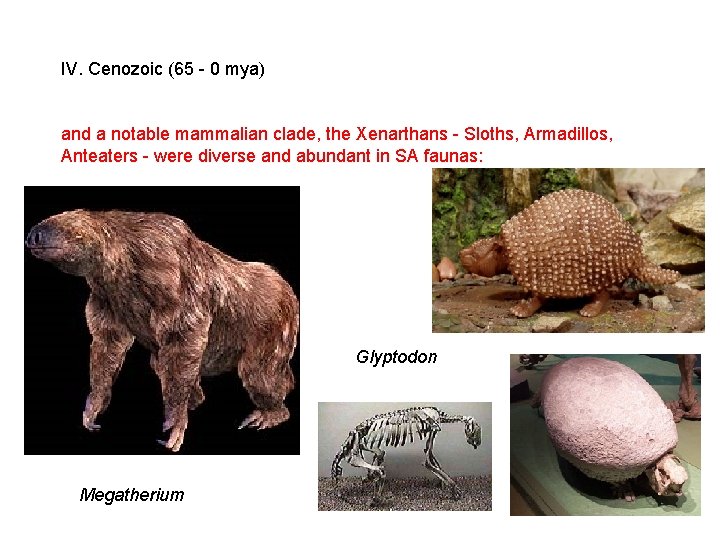
IV. Cenozoic (65 - 0 mya) and a notable mammalian clade, the Xenarthans - Sloths, Armadillos, Anteaters - were diverse and abundant in SA faunas: Glyptodon Megatherium
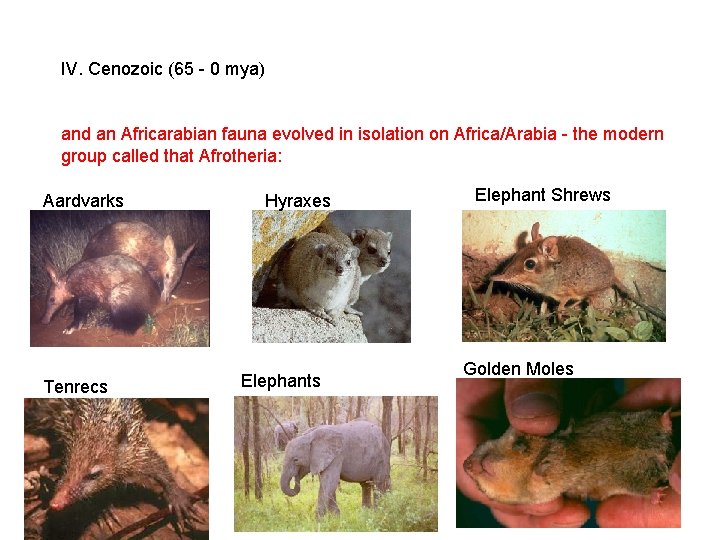
IV. Cenozoic (65 - 0 mya) and an Africarabian fauna evolved in isolation on Africa/Arabia - the modern group called that Afrotheria: Aardvarks Tenrecs Hyraxes Elephant Shrews Golden Moles
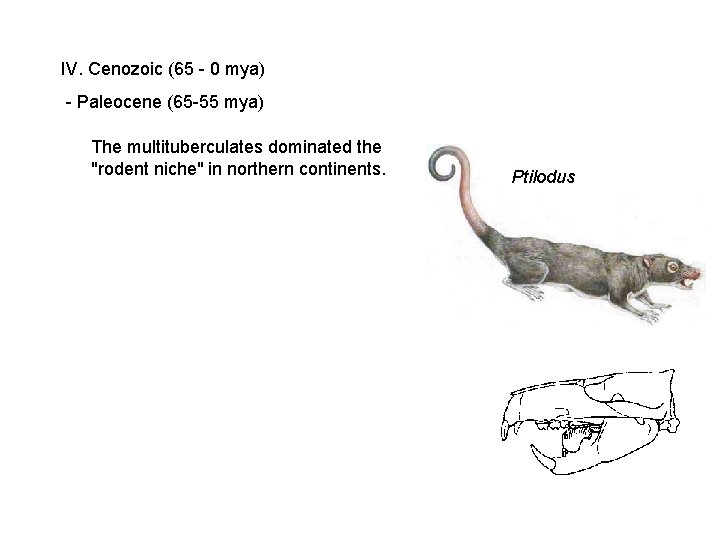
IV. Cenozoic (65 - 0 mya) - Paleocene (65 -55 mya) The multituberculates dominated the "rodent niche" in northern continents. Ptilodus
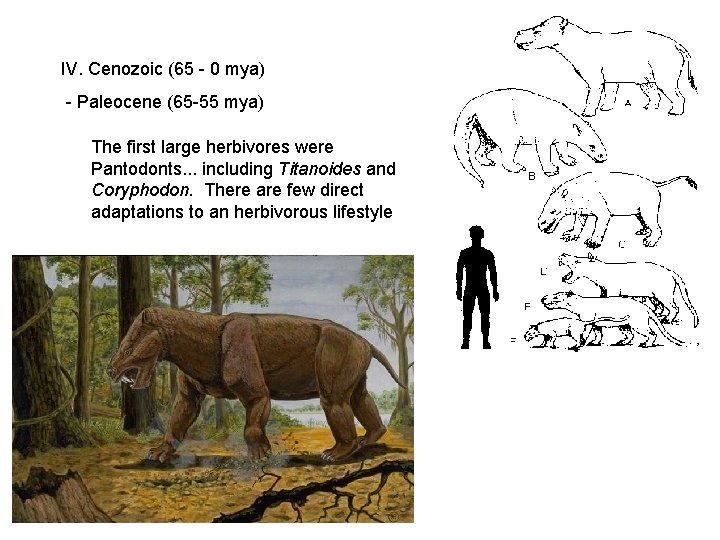
IV. Cenozoic (65 - 0 mya) - Paleocene (65 -55 mya) The first large herbivores were Pantodonts. . . including Titanoides and Coryphodon. There are few direct adaptations to an herbivorous lifestyle Ptilodus
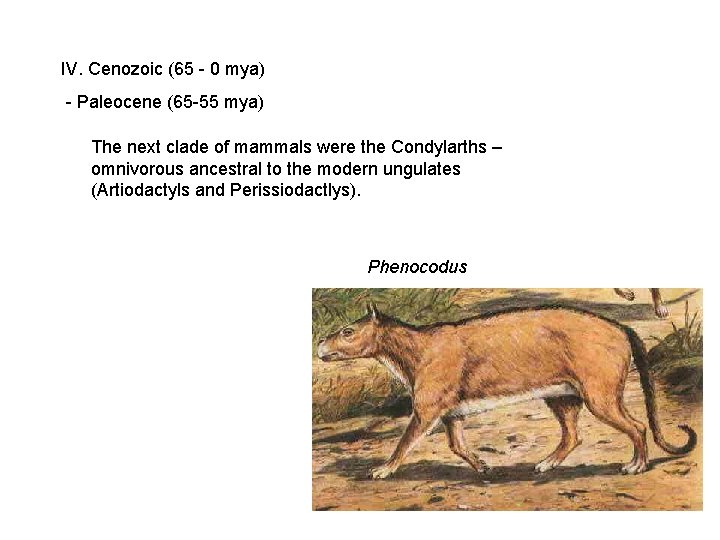
IV. Cenozoic (65 - 0 mya) - Paleocene (65 -55 mya) The next clade of mammals were the Condylarths – omnivorous ancestral to the modern ungulates (Artiodactyls and Perissiodactlys). Phenocodus
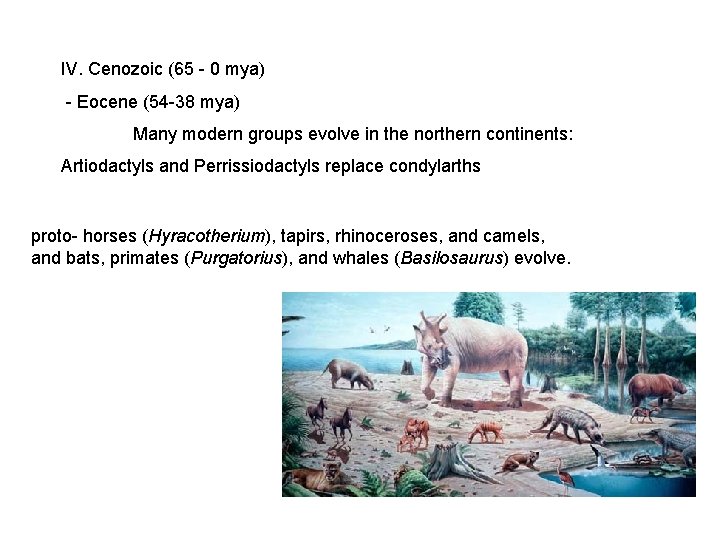
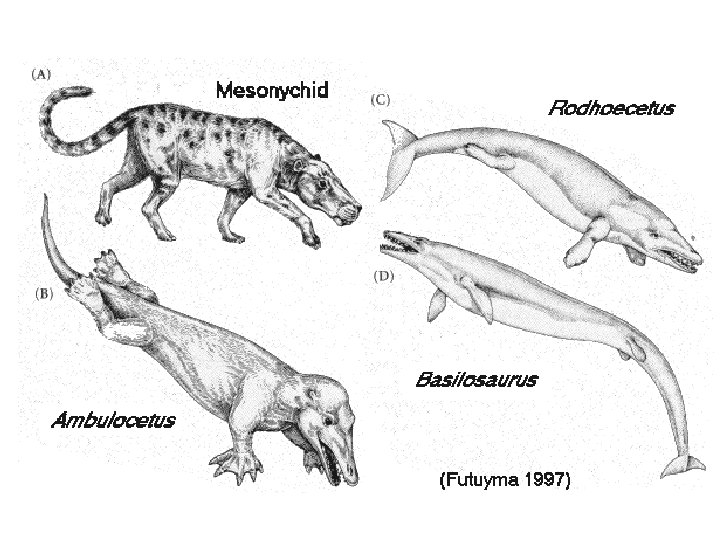
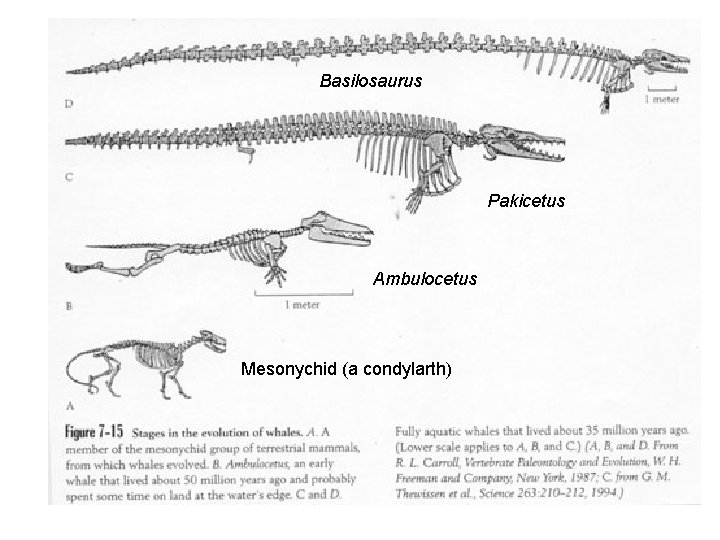
IV. Cenozoic (65 - 0 mya) - Eocene (54 -38 mya) Many modern groups evolve in the northern continents: Artiodactyls and Perrissiodactyls replace condylarths proto- horses (Hyracotherium), tapirs, rhinoceroses, and camels, and bats, primates (Purgatorius), and whales (Basilosaurus) evolve.
Basilosaurus Pakicetus Ambulocetus Mesonychid (a condylarth)
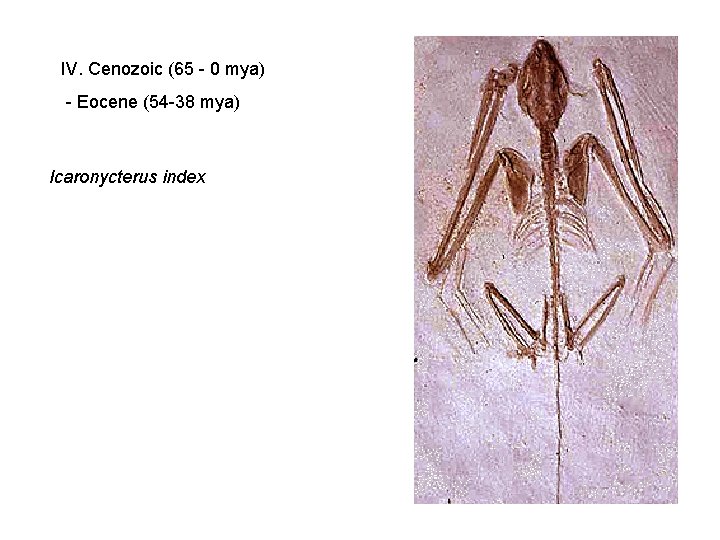
IV. Cenozoic (65 - 0 mya) - Eocene (54 -38 mya) Icaronycterus index
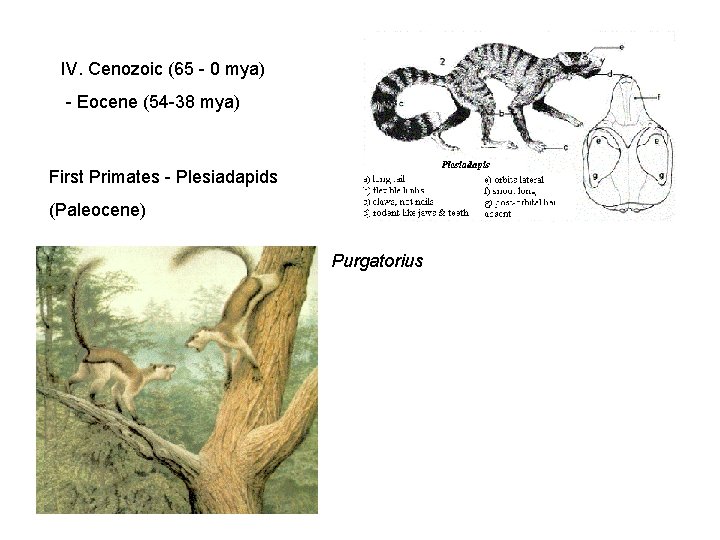
IV. Cenozoic (65 - 0 mya) - Eocene (54 -38 mya) First Primates - Plesiadapids (Paleocene) Purgatorius
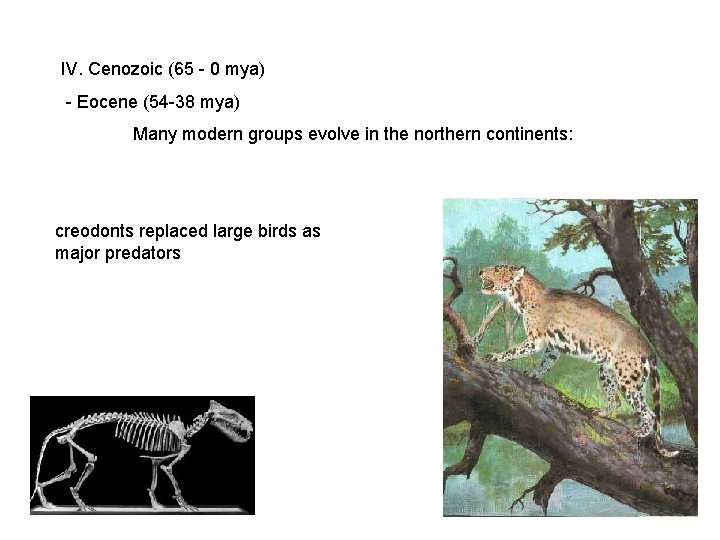
IV. Cenozoic (65 - 0 mya) - Eocene (54 -38 mya) Many modern groups evolve in the northern continents: creodonts replaced large birds as major predators
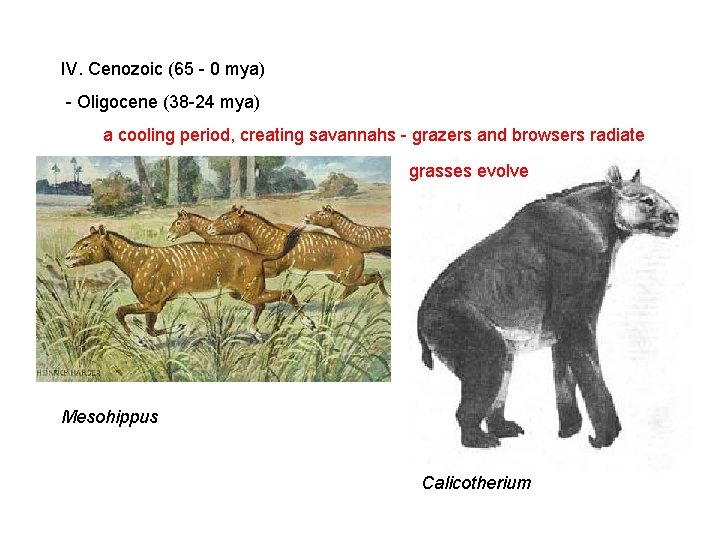
IV. Cenozoic (65 - 0 mya) - Oligocene (38 -24 mya) a cooling period, creating savannahs - grazers and browsers radiate grasses evolve Mesohippus Calicotherium
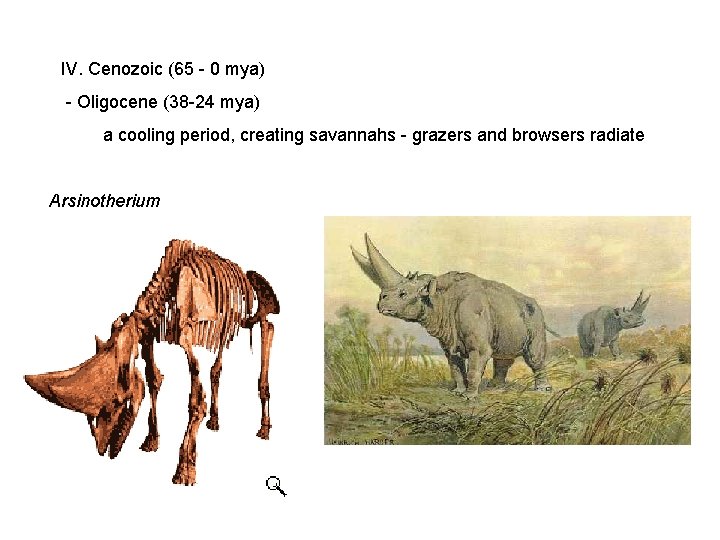
IV. Cenozoic (65 - 0 mya) - Oligocene (38 -24 mya) a cooling period, creating savannahs - grazers and browsers radiate Arsinotherium
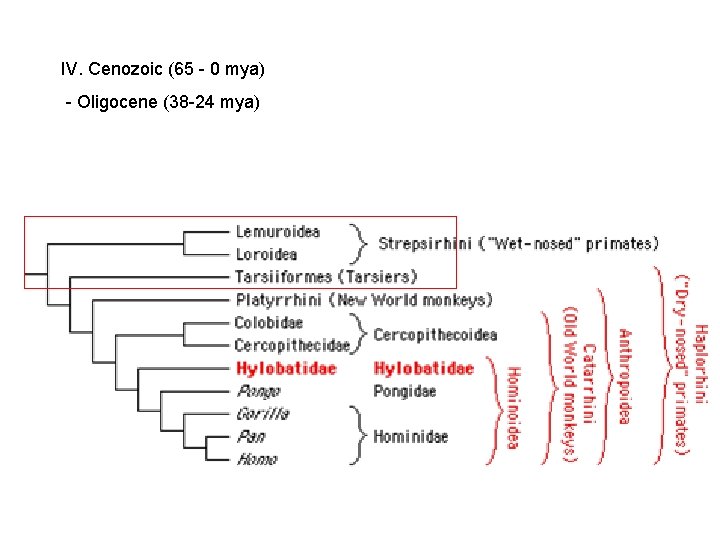
IV. Cenozoic (65 - 0 mya) - Oligocene (38 -24 mya)
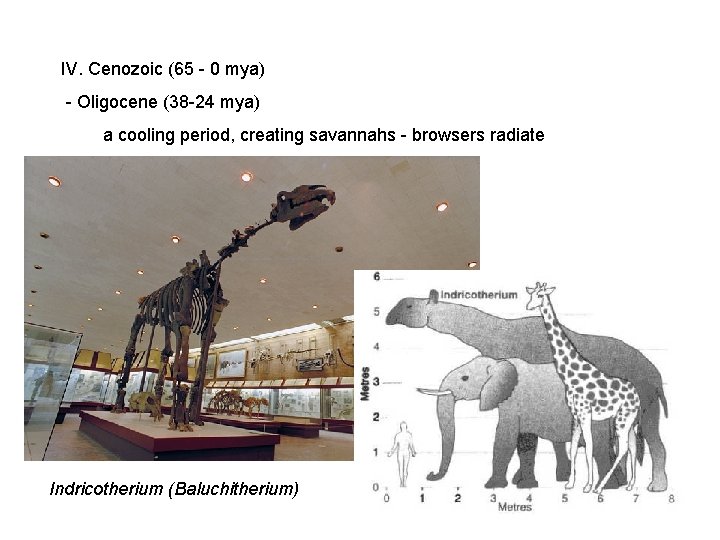
IV. Cenozoic (65 - 0 mya) - Oligocene (38 -24 mya) a cooling period, creating savannahs - browsers radiate Indricotherium (Baluchitherium)
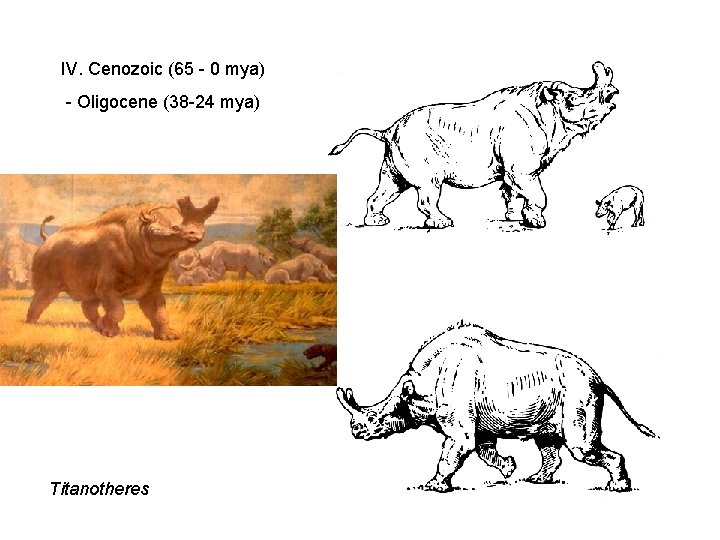
IV. Cenozoic (65 - 0 mya) - Oligocene (38 -24 mya) Titanotheres
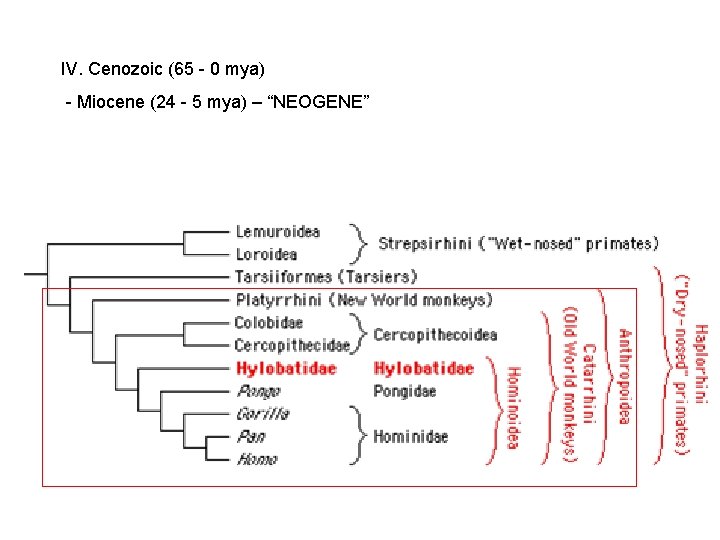
IV. Cenozoic (65 - 0 mya) - Miocene (24 - 5 mya) – “NEOGENE”
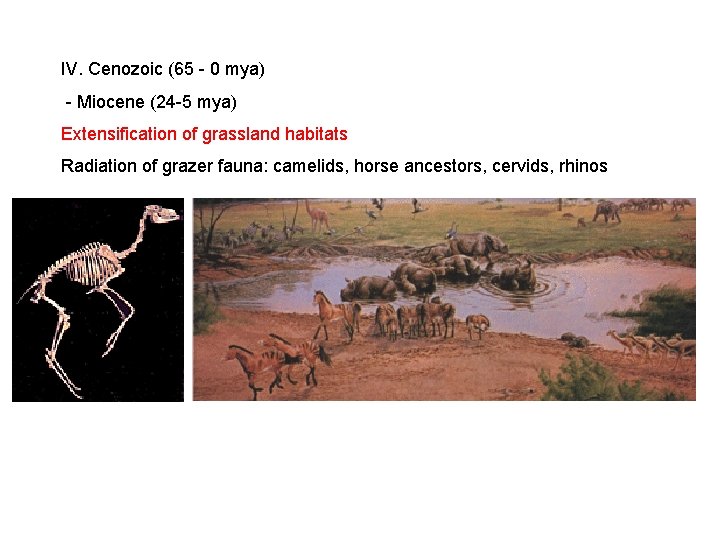
IV. Cenozoic (65 - 0 mya) - Miocene (24 -5 mya) Extensification of grassland habitats Radiation of grazer fauna: camelids, horse ancestors, cervids, rhinos
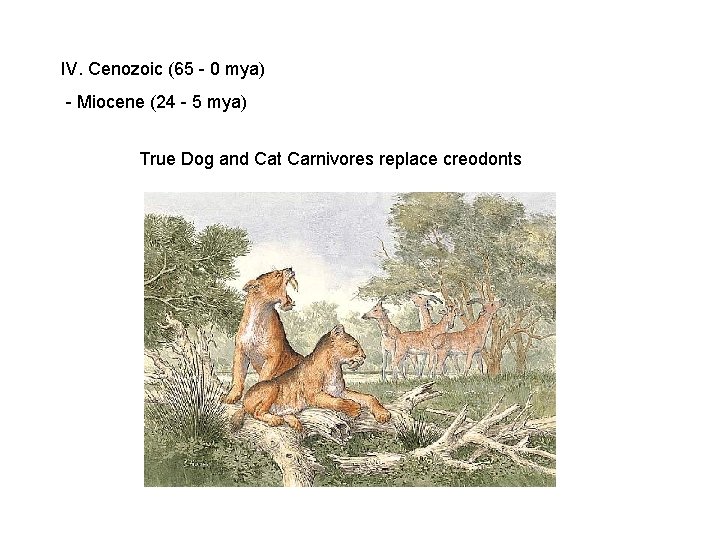
IV. Cenozoic (65 - 0 mya) - Miocene (24 - 5 mya) True Dog and Cat Carnivores replace creodonts
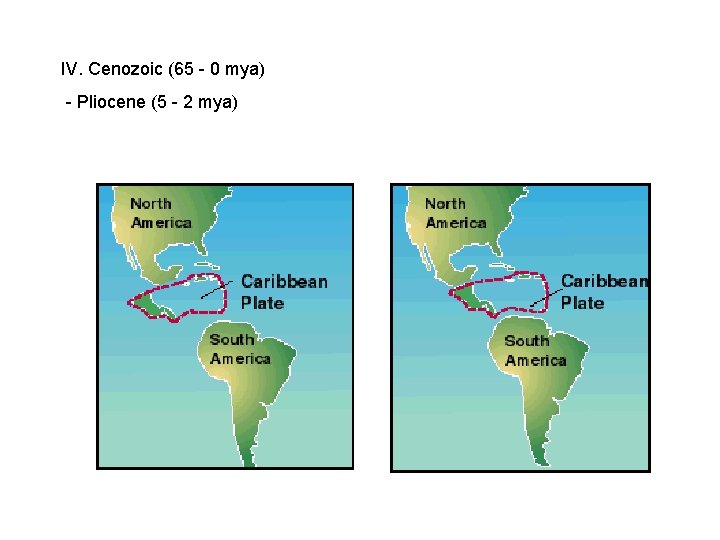
IV. Cenozoic (65 - 0 mya) - Pliocene (5 - 2 mya)
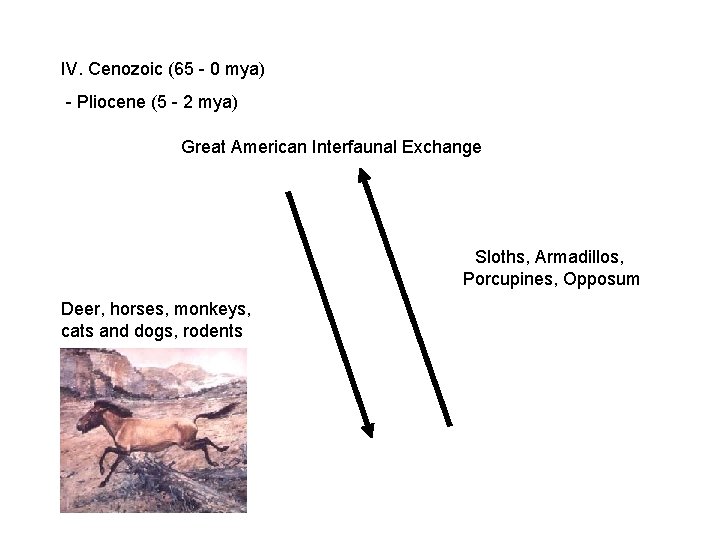
IV. Cenozoic (65 - 0 mya) - Pliocene (5 - 2 mya) Great American Interfaunal Exchange Sloths, Armadillos, Porcupines, Opposum Deer, horses, monkeys, cats and dogs, rodents
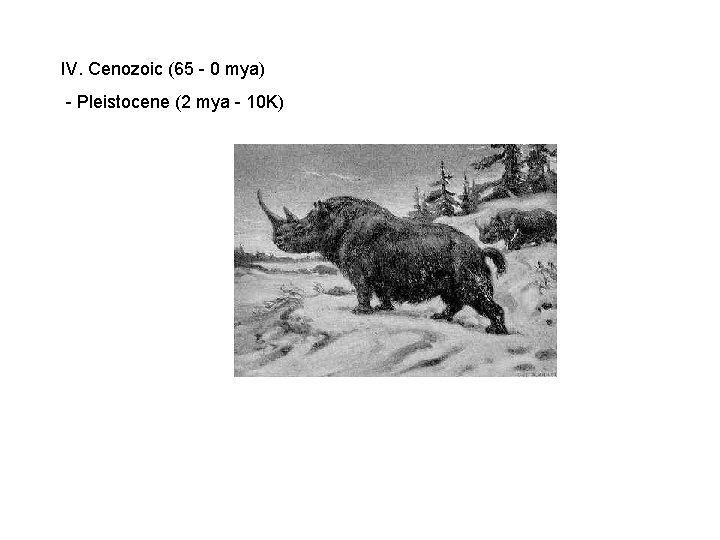
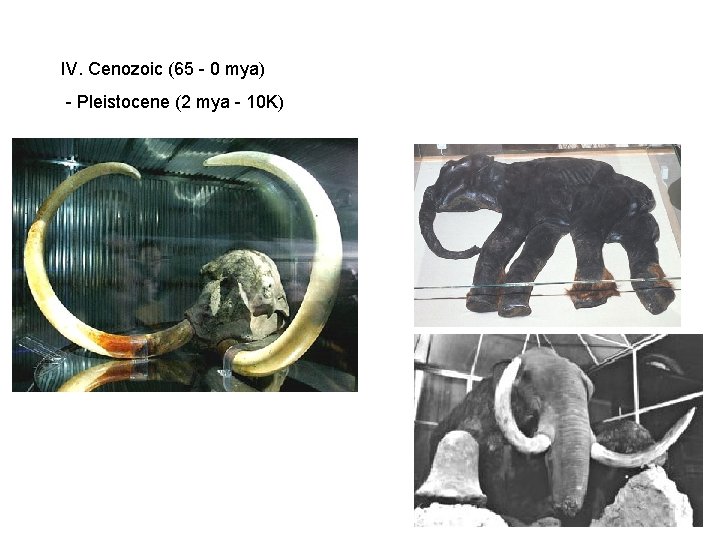
IV. Cenozoic (65 - 0 mya) - Pleistocene (2 mya - 10 K)
IV. Cenozoic (65 - 0 mya) - Pleistocene (2 mya - 10 K)
IV. Cenozoic (65 - 0 mya) - Pleistocene (2 mya - 10 K)
IV. Cenozoic (65 - 0 mya) - Pleistocene (2 mya - 10 K)
IV. Cenozoic (65 - 0 mya) - Pleistocene (2 mya - 10 K)
IV. Cenozoic (65 - 0 mya) - Pleistocene (2 mya - 10 K)
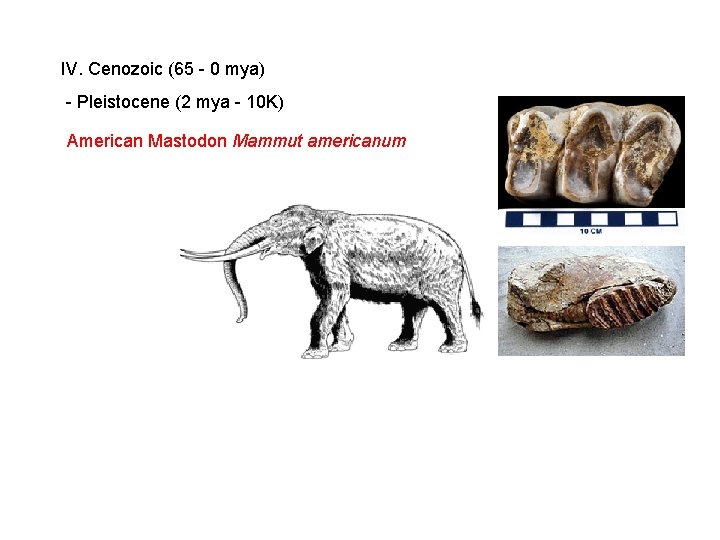
IV. Cenozoic (65 - 0 mya) - Pleistocene (2 mya - 10 K) American Mastodon Mammut americanum
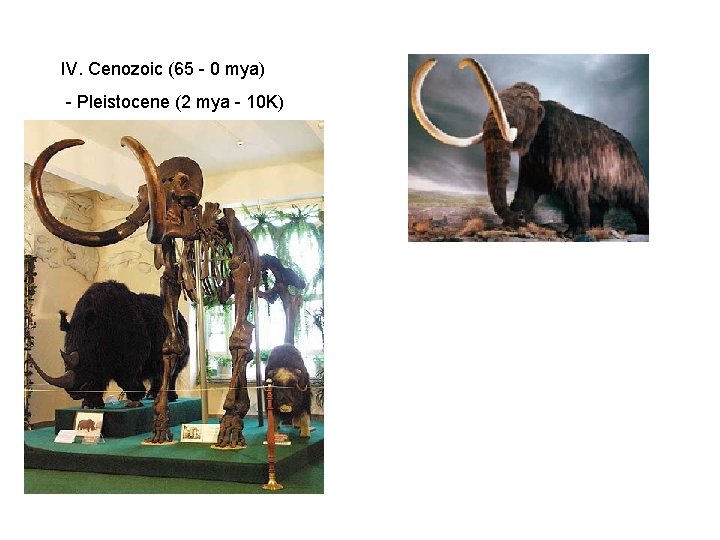
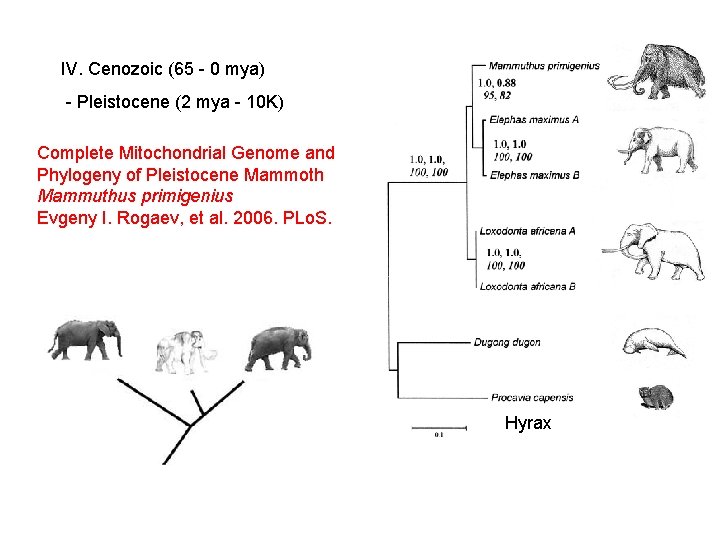
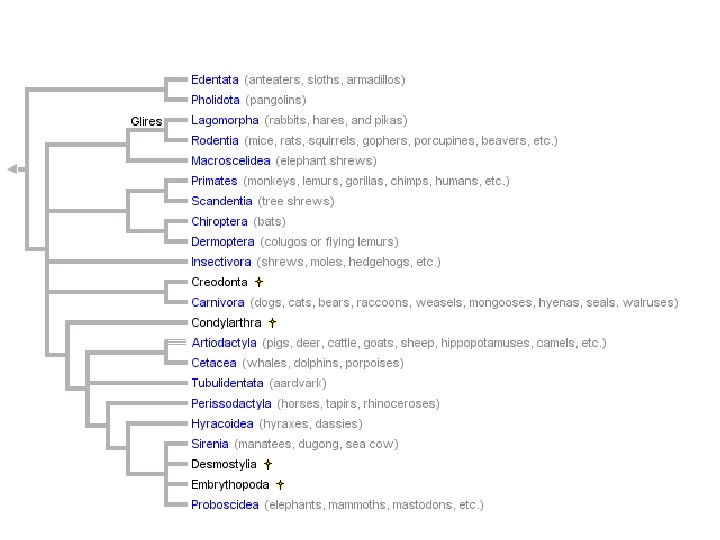
IV. Cenozoic (65 - 0 mya) - Pleistocene (2 mya - 10 K) Complete Mitochondrial Genome and Phylogeny of Pleistocene Mammoth Mammuthus primigenius Evgeny I. Rogaev, et al. 2006. PLo. S. Hyrax
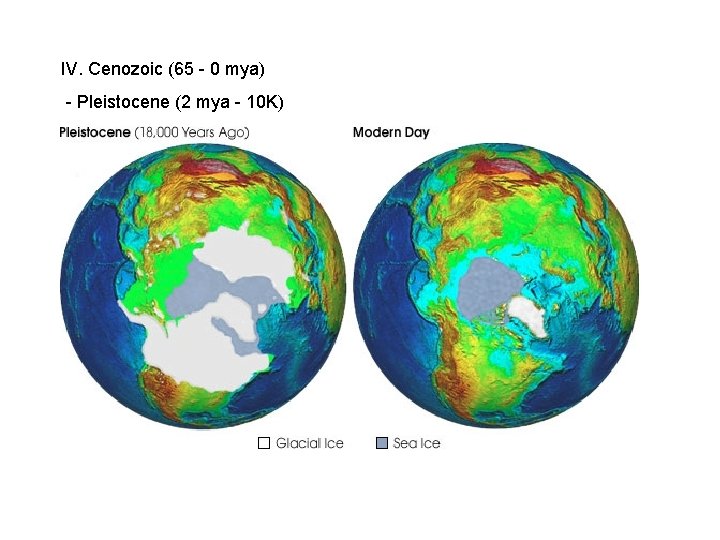
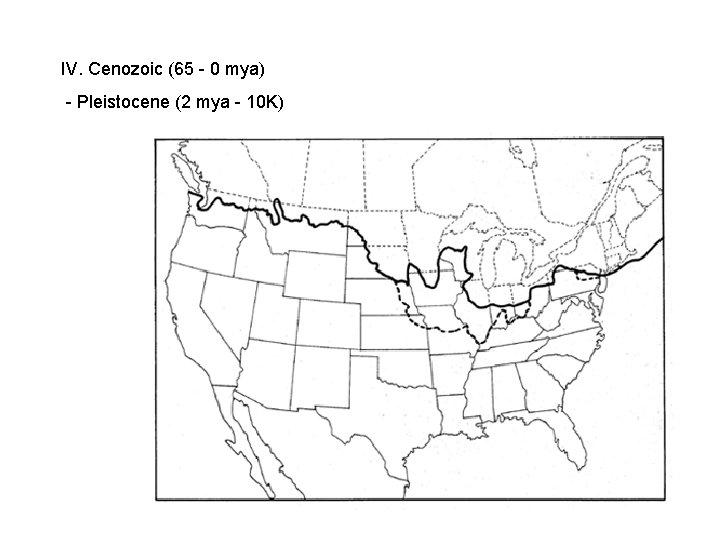
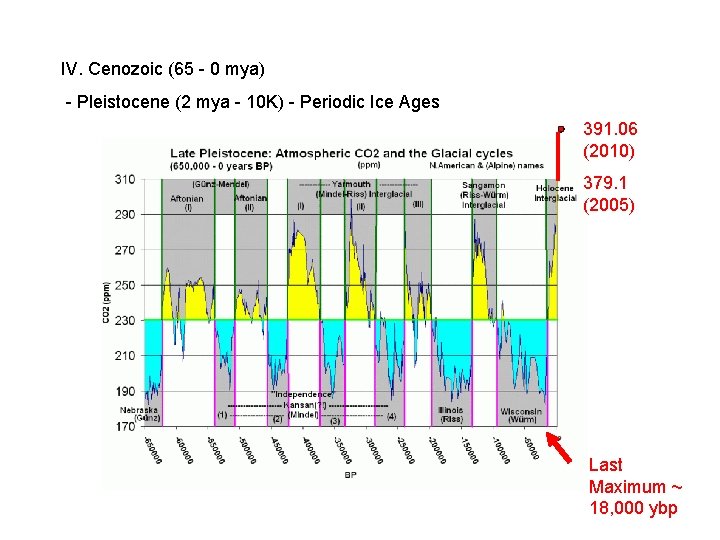
IV. Cenozoic (65 - 0 mya) - Pleistocene (2 mya - 10 K) - Periodic Ice Ages 391. 06 (2010) 379. 1 (2005) Last Maximum ~ 18, 000 ybp
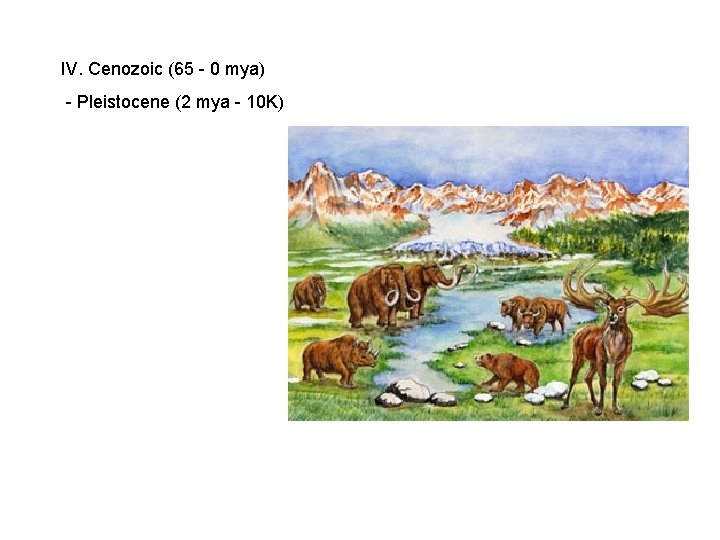
IV. Cenozoic (65 - 0 mya) - Pleistocene (2 mya - 10 K) Extinction of the Pleistocene Megafuana - Human overhunting and keystone effects - Climate change - diseases brought by humans and their dogs.