
ITS YOUR RIGHT TO KNOW HAZARDOUS COMUNICATION PROGRAM


- Slides: 15
ITS YOUR RIGHT TO KNOW HAZARDOUS COMUNICATION PROGRAM
WHY WE NEED TO KNOW Every day at workplaces throughout California, employees work with or are incidentally exposed to hazardous substances that can harm their health or cause safety hazards. This guide is designed to help employers and employees understand the requirements of the hazard communication regulation by providing a simplified and clear overview of the major program elements
HAZARDOUS COMMUNICATION STANDARD In February 1983, California’s Hazard communication Standard was enacted, requiring employees and manufacturers to make chemical information and training to all employees using hazardous substances. The act, known as California’s Right-To-Know Law was revised in 1985 where it increased the number of substances considered hazardous It was revised once more in 2013 to conform with the UN’s globally harmonized system classification and labeling of chemicals
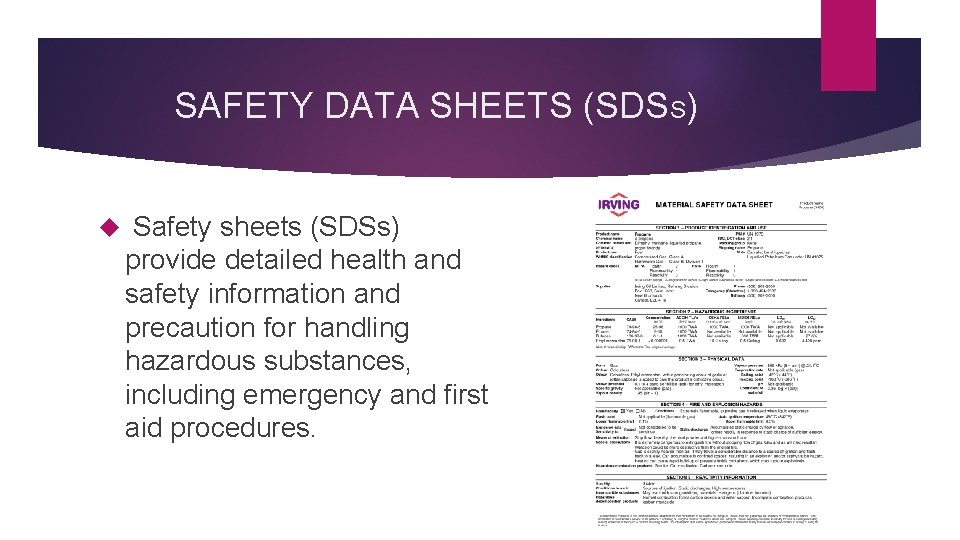
SAFETY DATA SHEETS (SDSS) Safety sheets (SDSs) provide detailed health and safety information and precaution for handling hazardous substances, including emergency and first aid procedures.
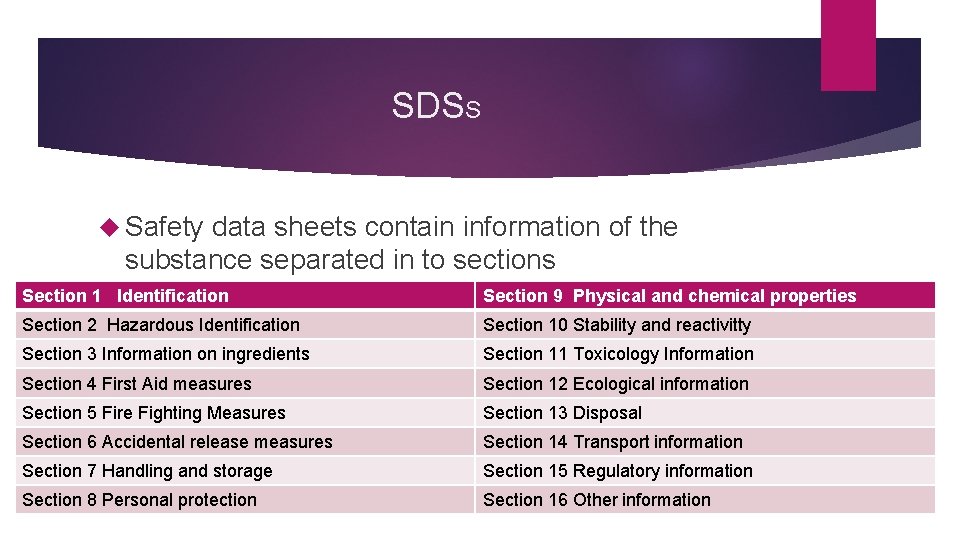
SDSS Safety data sheets contain information of the substance separated in to sections Section 1 Identification Section 9 Physical and chemical properties Section 2 Hazardous Identification Section 10 Stability and reactivitty Section 3 Information on ingredients Section 11 Toxicology Information Section 4 First Aid measures Section 12 Ecological information Section 5 Fire Fighting Measures Section 13 Disposal Section 6 Accidental release measures Section 14 Transport information Section 7 Handling and storage Section 15 Regulatory information Section 8 Personal protection Section 16 Other information
LOCATION OF SDSs for all inventoried chemicals are located in a binder labeled SDSs in science stock room A 3218 Also located in a binder titled Chemical and Safety in the PCR
LOCATION OF CHEMICAL STORAGE Chemicals are stored in A 2 and A 3 science stockrooms A 2218 Between Mrs. Chen and Ms. Molina A 3218 Between Ms. Mina and Mr. Putcher
HAZARDS ASSOCIATED WITH USAGE OF CHEMICALS Chemicals may enter the body in four ways: 1. Inhalation (breathing) 2. Ingestion (swallowing) 3. Absorption through the skin 4. Injection
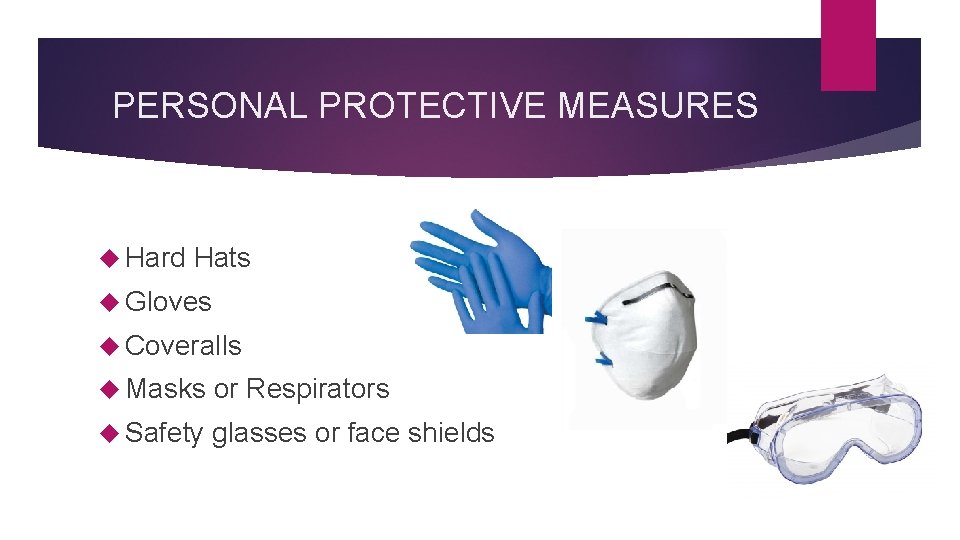
PERSONAL PROTECTIVE MEASURES Hard Hats Gloves Coveralls Masks or Respirators Safety glasses or face shields
WORKPLACE LABELS Labels must be legible and fade resistant or not easily removed in anyway. Labels can either provide all required information on the original chemical manufacture's label or the product identifier and words, pictures, symbols or a combination of these.
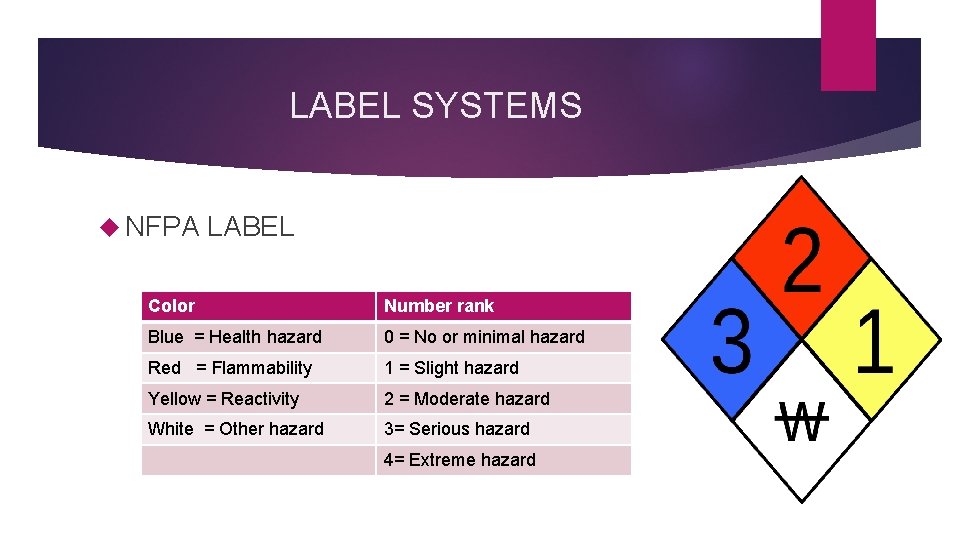
LABEL SYSTEMS NFPA LABEL Color Number rank Blue = Health hazard 0 = No or minimal hazard Red = Flammability 1 = Slight hazard Yellow = Reactivity 2 = Moderate hazard White = Other hazard 3= Serious hazard 4= Extreme hazard
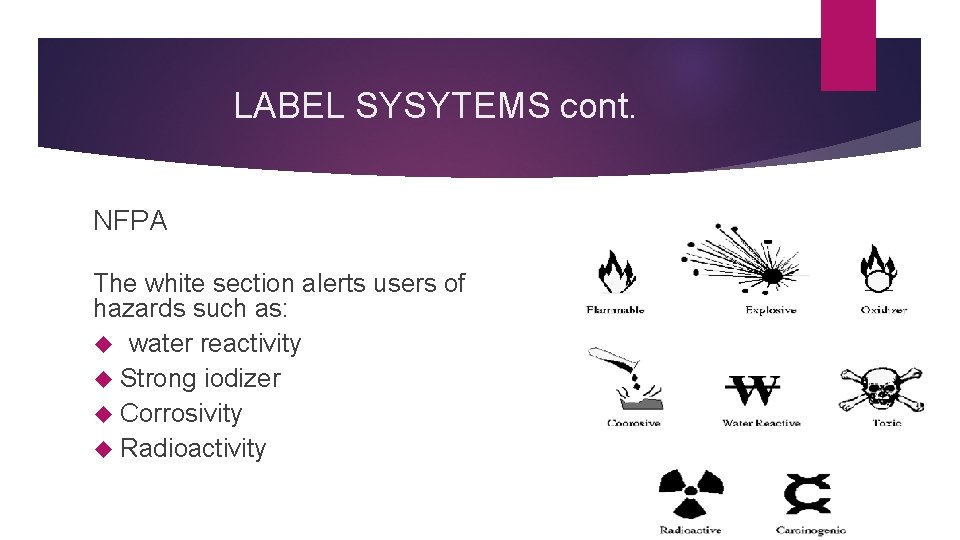
LABEL SYSYTEMS cont. NFPA The white section alerts users of hazards such as: water reactivity Strong iodizer Corrosivity Radioactivity special
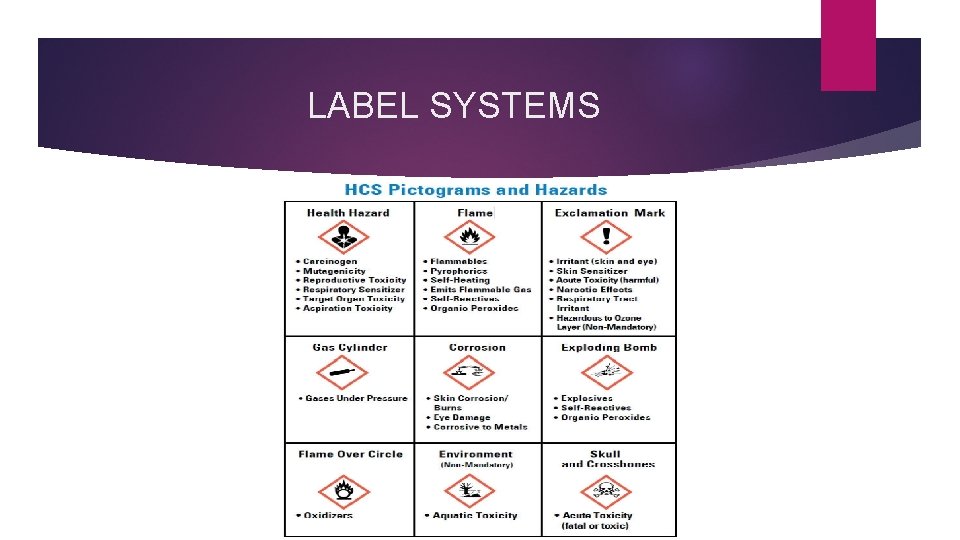
LABEL SYSTEMS
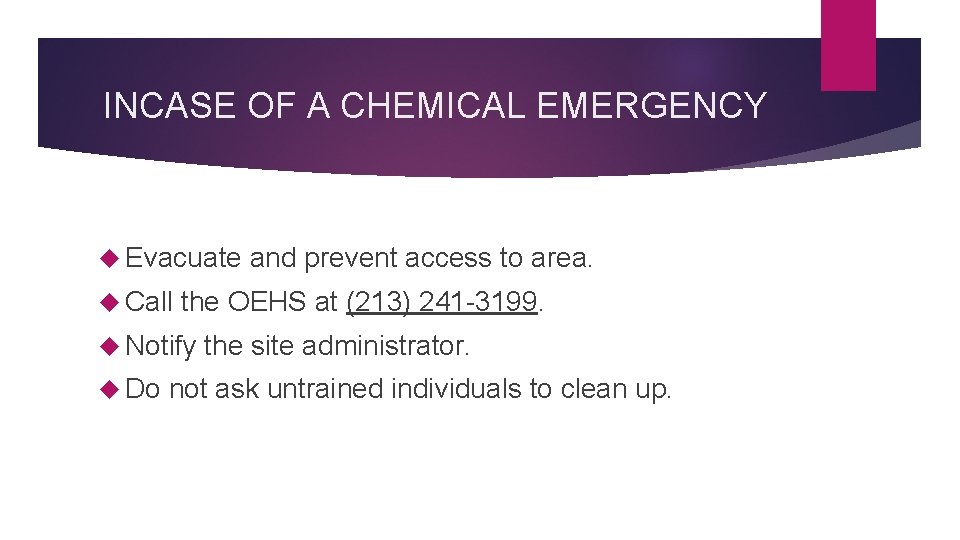
INCASE OF A CHEMICAL EMERGENCY Evacuate Call the OEHS at (213) 241 -3199. Notify Do and prevent access to area. the site administrator. not ask untrained individuals to clean up.
WHO TO CONTACT Mr. Greenbaum mark. greenbaum@lauds. net Ex 4315 Jerry Nuno gxn 8995@lauds. net Ex 4350 Ms. Marquez sam 13632@lauds. net EX 1217 Or dial the main office Ex 4306 Ex 4307 Ex 4308