
Its soil not dirt Soil is a dynamic
- Slides: 18
It’s soil, not dirt! Soil is a dynamic, changing, and even living thing. What is soil? Soil is a natural body comprised of solids (minerals and organic matter), liquid, and gases that occurs on the land surface, occupies space, and is characterized by one or both of the following: horizons, or layers, that are distinguishable from the initial material as a result of additions, losses, transfers, and transformations of energy and matter or the ability to support rooted plants in a natural environment.
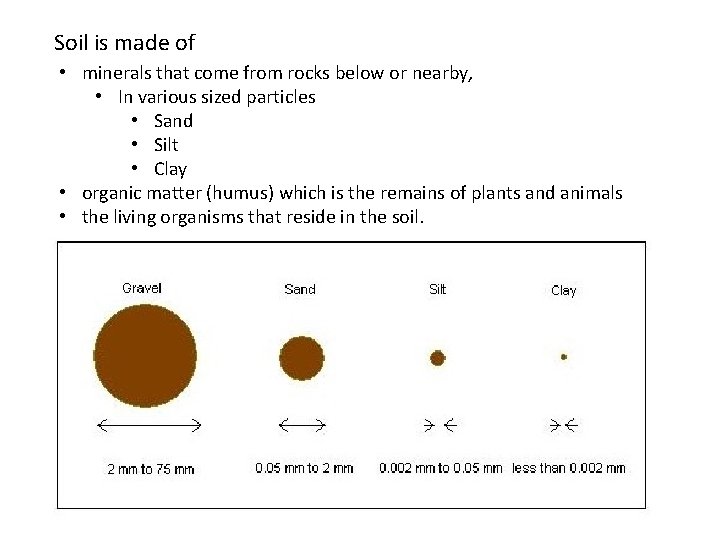
Soil is made of • minerals that come from rocks below or nearby, • In various sized particles • Sand • Silt • Clay • organic matter (humus) which is the remains of plants and animals • the living organisms that reside in the soil.
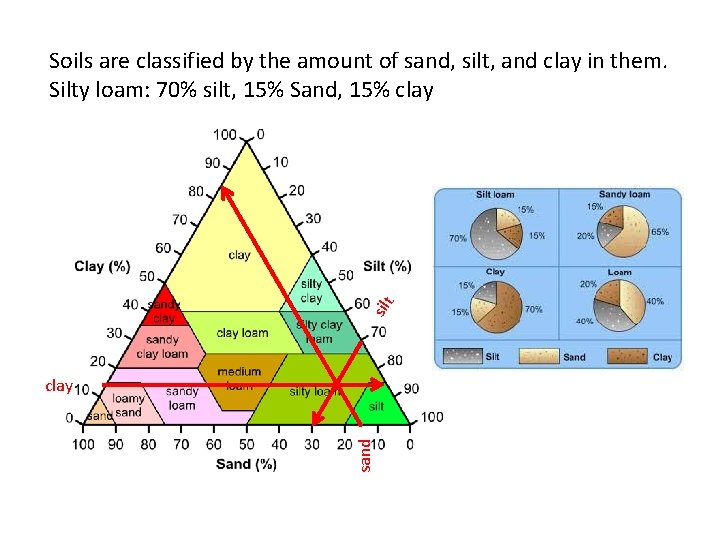
silt Soils are classified by the amount of sand, silt, and clay in them. Silty loam: 70% silt, 15% Sand, 15% clay sand clay
Soil type can be determined by how it fees Sand = coarse, rough Silt = smooth, silky Clay = sticky
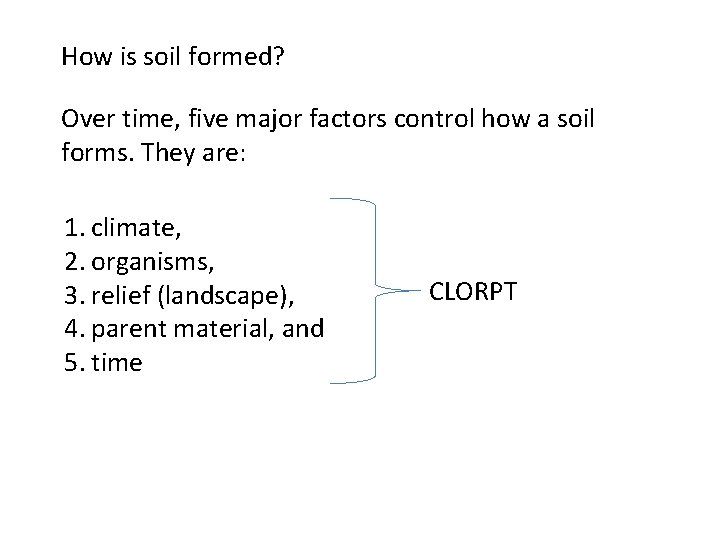
How is soil formed? Over time, five major factors control how a soil forms. They are: 1. climate, 2. organisms, 3. relief (landscape), 4. parent material, and 5. time CLORPT
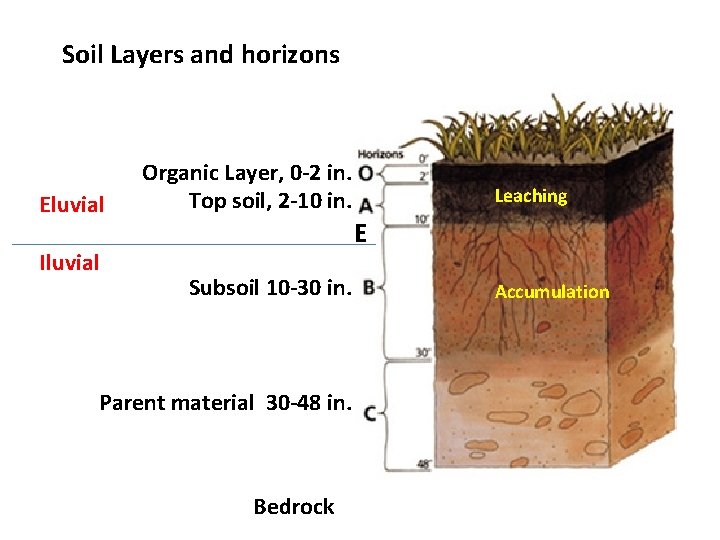
Soil Layers and horizons Eluvial Iluvial Organic Layer, 0 -2 in. Top soil, 2 -10 in. Leaching E Subsoil 10 -30 in. Parent material 30 -48 in. Bedrock Accumulation
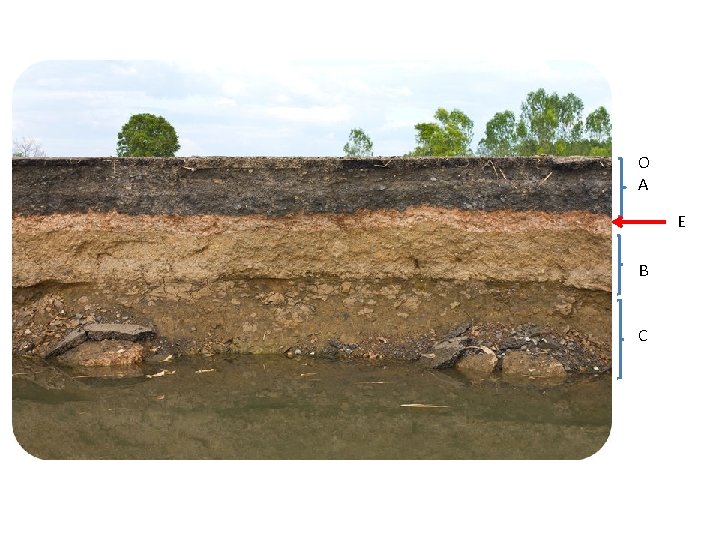
O A E B C
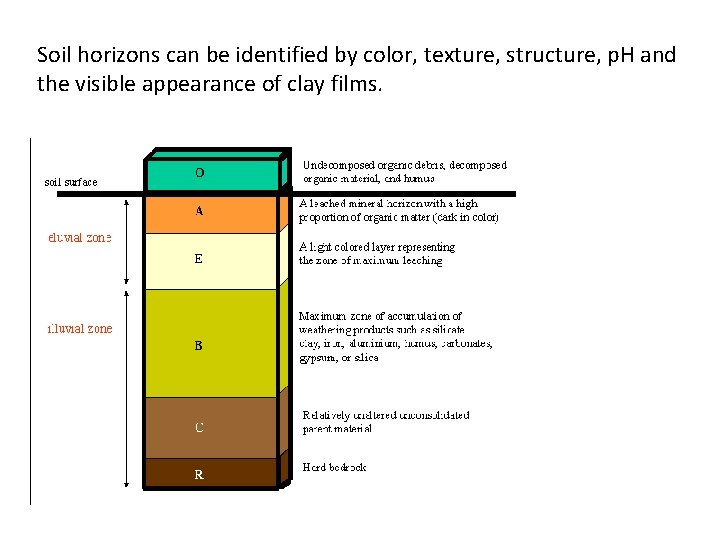
Soil horizons can be identified by color, texture, structure, p. H and the visible appearance of clay films.
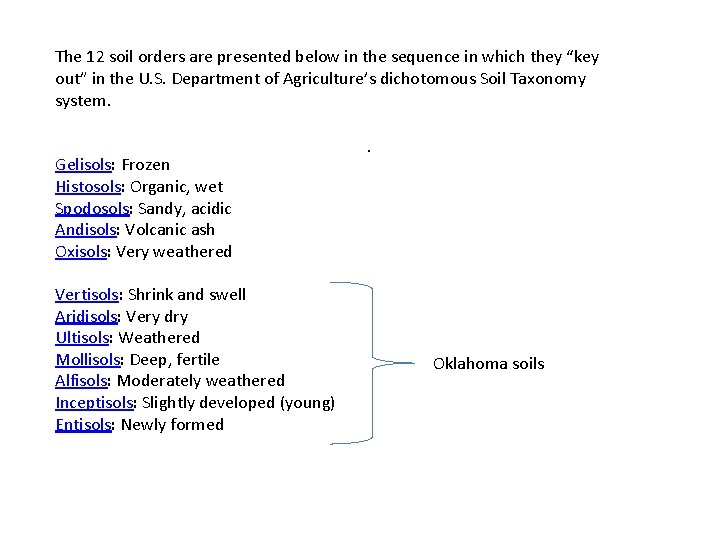
The 12 soil orders are presented below in the sequence in which they “key out” in the U. S. Department of Agriculture’s dichotomous Soil Taxonomy system. . Gelisols: Frozen Histosols: Organic, wet Spodosols: Sandy, acidic Andisols: Volcanic ash Oxisols: Very weathered Vertisols: Shrink and swell Aridisols: Very dry Ultisols: Weathered Mollisols: Deep, fertile Alfisols: Moderately weathered Inceptisols: Slightly developed (young) Entisols: Newly formed Oklahoma soils
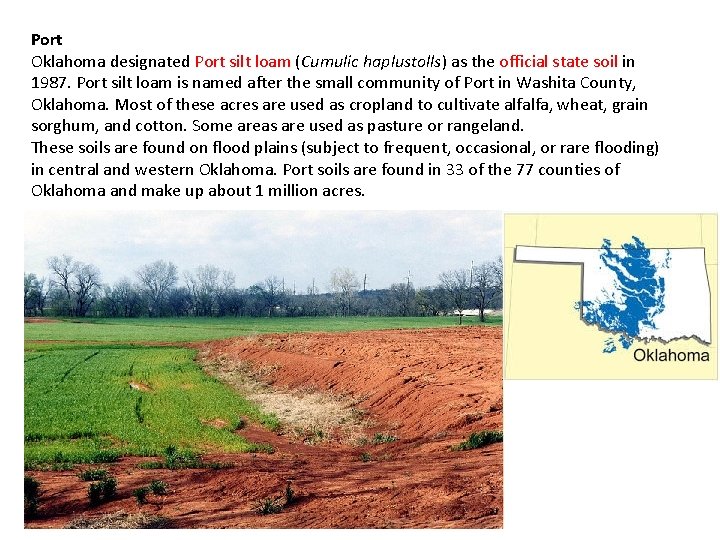
Port Oklahoma designated Port silt loam (Cumulic haplustolls) as the official state soil in 1987. Port silt loam is named after the small community of Port in Washita County, Oklahoma. Most of these acres are used as cropland to cultivate alfalfa, wheat, grain sorghum, and cotton. Some areas are used as pasture or rangeland. These soils are found on flood plains (subject to frequent, occasional, or rare flooding) in central and western Oklahoma. Port soils are found in 33 of the 77 counties of Oklahoma and make up about 1 million acres.
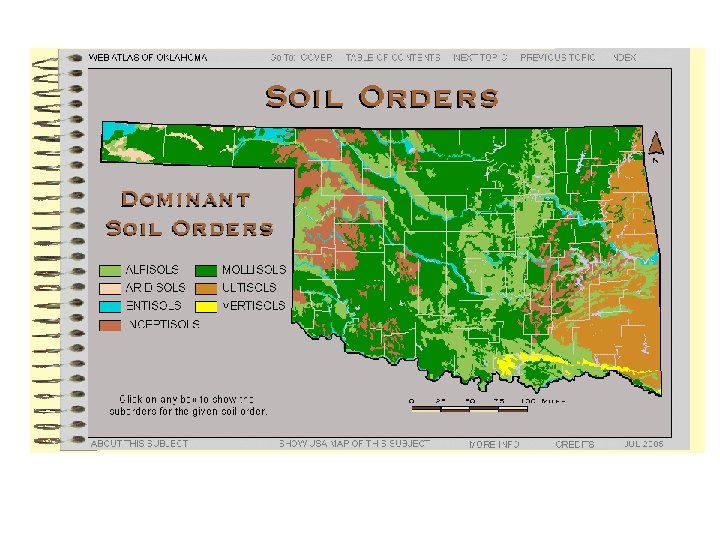
Alfisols are moderately leached soils that have relatively high native fertility. These soils have mainly formed under forest and have a subsurface horizon in which clays have accumulated Mollisols (from Latin mollis, "soft") are the soils of grassland ecosystems. They are characterized by a thick, dark surface horizon. This fertile surface horizon, known as a mollic epipedon, results from the long-term addition of organic materials derived from plant roots. Aridisols (from Latin aridus, "dry") are Ca. CO 3 -containing soils of arid regions that exhibit at least some subsurface horizon development. They are characterized by being dry most of the year and limited leaching. Aridisols contain subsurface horizons in which clays, calcium carbonate, silica, salts, and/or gypsum have accumulated. Materials such as soluble salts, gypsum, and Ca. CO 3 tend to be leached from soils of moister climates.
Ultisols (from Latin ultimus, "last") are strongly leached, acid forest soils with relatively low native fertility. They are found primarily in humid temperate and tropical areas of the world, typically on older, stable landscapes. Intense weathering of primary minerals has occurred, and much Ca, Mg, and K has been leached from these soils. Ultisols have a subsurface horizon in which clays have accumulated, often with strong yellowish or reddish colors resulting from the presence of Fe oxides. The 'red clay' soils of the southeastern United States are examples of Ultisols. Vertisols (from Latin verto, "turn") are clay-rich soils that shrink and swell with changes in moisture content. During dry periods, the soil volume shrinks, and deep wide cracks form. The soil volume then expands as it wets up. This shrink/swell action creates serious engineering problems and generally prevents formation of distinct, well-developed horizons in these soils.
Entisols are soils of recent origin. The central concept is soils developed in unconsolidated parent material with usually no genetic horizons except an A horizon. All soils that do not fit into one of the other 11 orders are Entisols. Thus, they are characterized by great diversity, both in environmental setting and land use. Inceptisols (from Latin inceptum, "beginning") are soils that exhibit minimal horizon development. They are more developed than Entisols, but still lack the features that are characteristic of other soil orders.
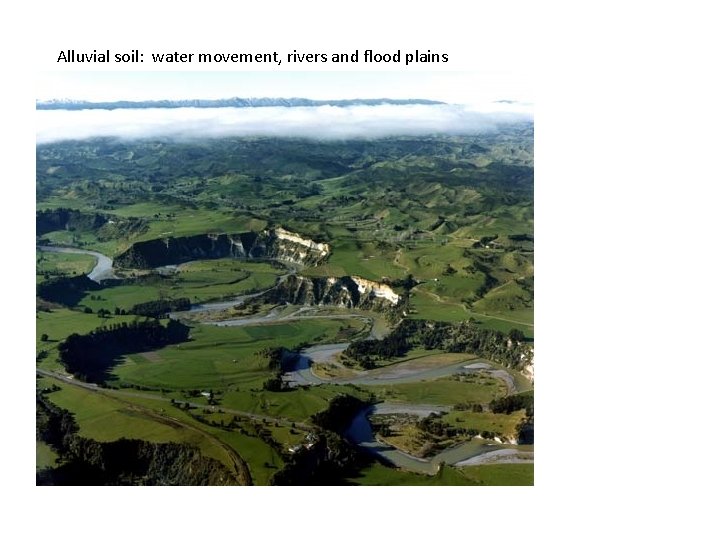
Alluvial soil: water movement, rivers and flood plains
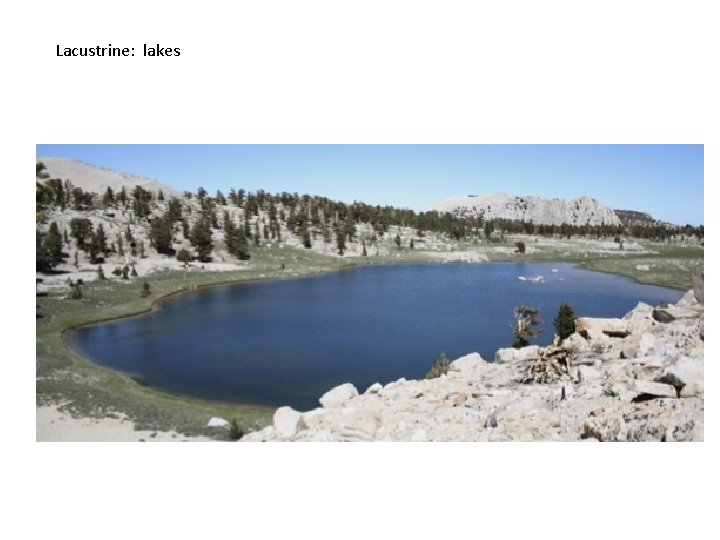
Lacustrine: lakes
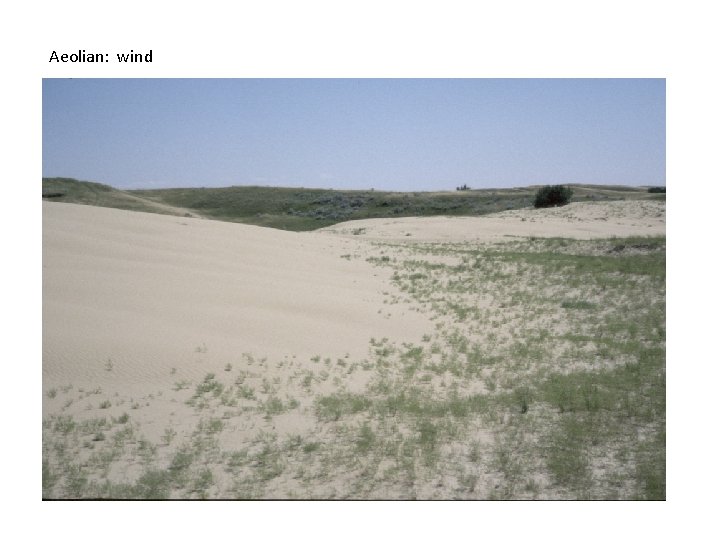
Aeolian: wind
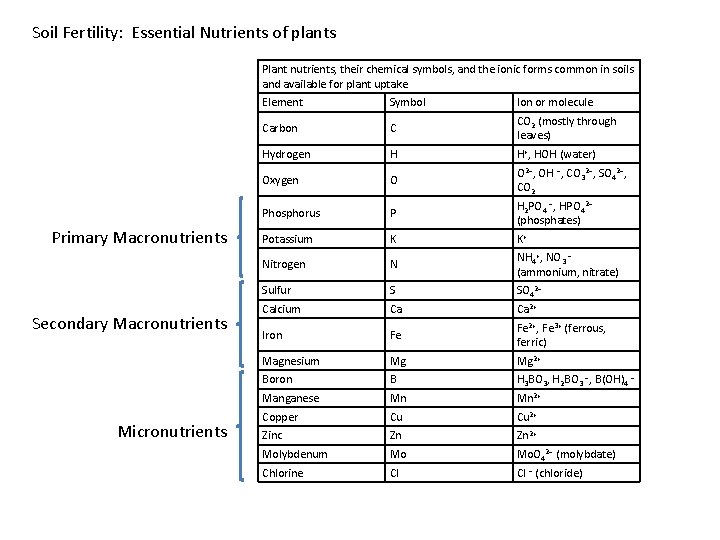
Soil Fertility: Essential Nutrients of plants Plant nutrients, their chemical symbols, and the ionic forms common in soils and available for plant uptake Primary Macronutrients Secondary Macronutrients Micronutrients Element Symbol Ion or molecule Carbon C CO 2 (mostly through leaves) Hydrogen H H+, HOH (water) Oxygen O O 2−, OH −, CO 32−, SO 42−, CO 2 Phosphorus P H 2 PO 4 −, HPO 42− (phosphates) Potassium K K+ Nitrogen N NH 4+, NO 3 − (ammonium, nitrate) Sulfur S SO 42− Calcium Ca Ca 2+ Iron Fe Fe 2+, Fe 3+ (ferrous, ferric) Magnesium Mg Mg 2+ Boron B H 3 BO 3, H 2 BO 3 −, B(OH)4 − Manganese Mn Mn 2+ Copper Cu Cu 2+ Zinc Zn Zn 2+ Molybdenum Mo Mo. O 42− (molybdate) Chlorine Cl Cl − (chloride)