
Its not all about the money Susanna Gallani
It’s not all about the money… Susanna Gallani Copyright © President & Fellows of Harvard College
What do We Mean by Incentives? Something that incites or has a tendency to incite to determination or action (Merriam-Webster, 2016) 2
Question What are the ways we incentivize people? 3
Traditional Economics Viewpoint • Agency Framework: • • Principals (owners) reward Agents (managers) for: • Effort: managers are effort averse (lazy) • Risk: managers are risk averse Incentives serve the role of aligning goals between agent and principal and influence agent to make choices in the best interest of the principal • • 4 Decrease the unattractiveness of actions Assumptions: • Agents act primarily in their own interest • Agent’s utility is strictly concave and monotonically increasing in wealth
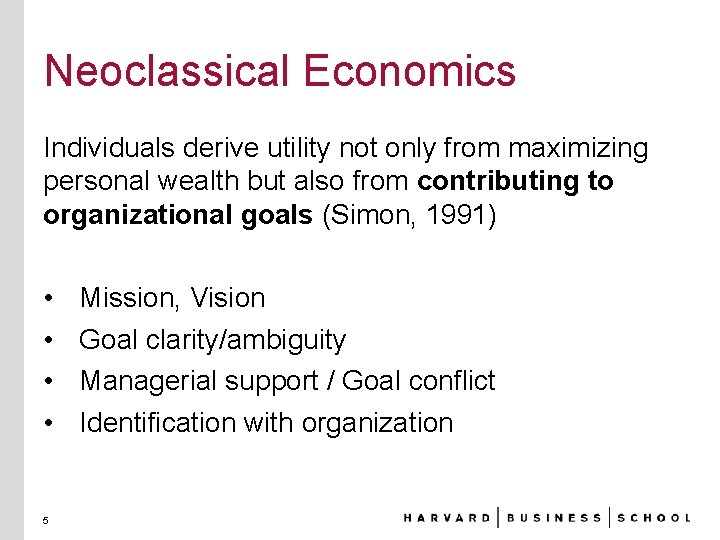
Neoclassical Economics Individuals derive utility not only from maximizing personal wealth but also from contributing to organizational goals (Simon, 1991) • • 5 Mission, Vision Goal clarity/ambiguity Managerial support / Goal conflict Identification with organization
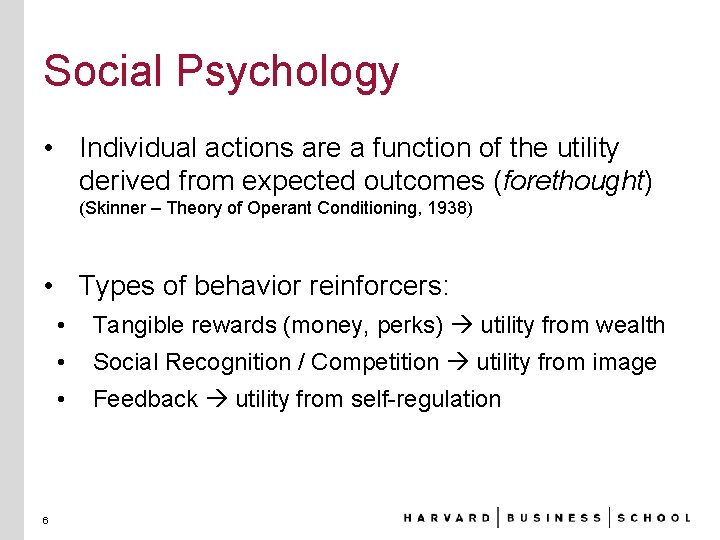
Social Psychology • Individual actions are a function of the utility derived from expected outcomes (forethought) (Skinner – Theory of Operant Conditioning, 1938) • Types of behavior reinforcers: 6 • Tangible rewards (money, perks) utility from wealth • Social Recognition / Competition utility from image • Feedback utility from self-regulation
Motivators ”Call it what you will, incentives are what makes people work harder” Nikita Khrushchev 7
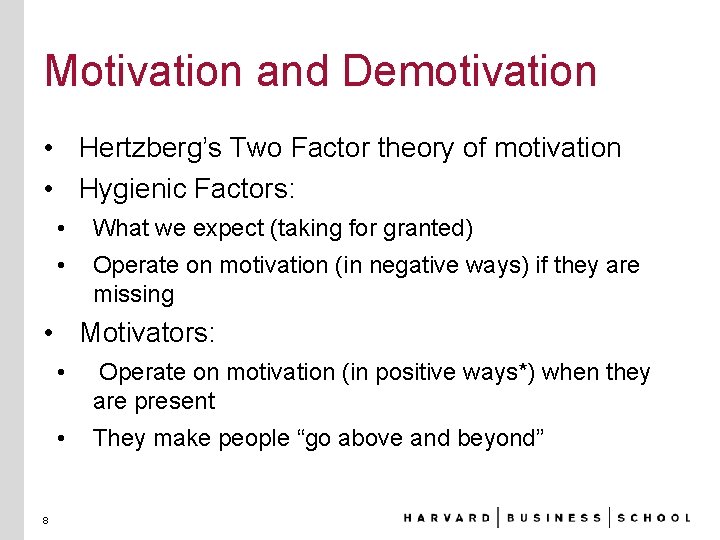
Motivation and Demotivation • Hertzberg’s Two Factor theory of motivation • Hygienic Factors: • What we expect (taking for granted) • Operate on motivation (in negative ways) if they are missing • Motivators: 8 • Operate on motivation (in positive ways*) when they are present • They make people “go above and beyond”
Question Is money ever a demotivator? 9
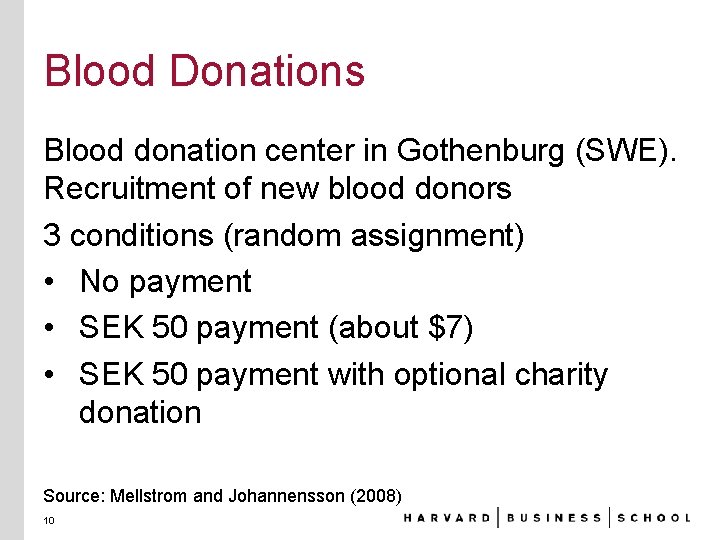
Blood Donations Blood donation center in Gothenburg (SWE). Recruitment of new blood donors 3 conditions (random assignment) • No payment • SEK 50 payment (about $7) • SEK 50 payment with optional charity donation Source: Mellstrom and Johannensson (2008) 10
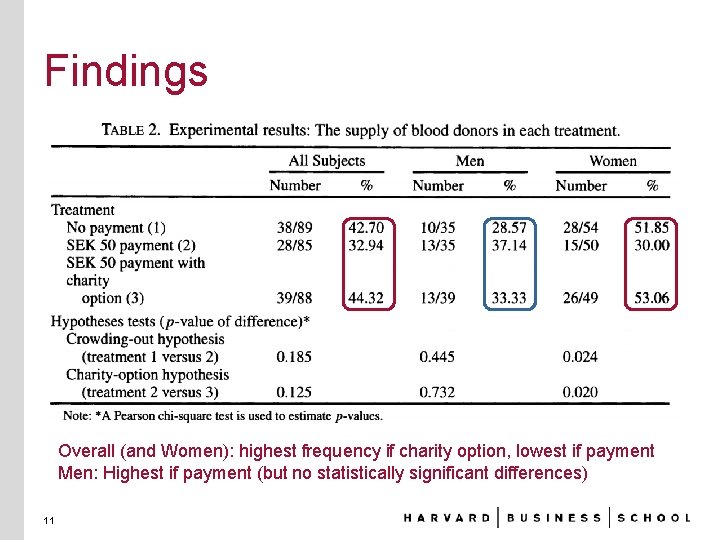
Findings Overall (and Women): highest frequency if charity option, lowest if payment Men: Highest if payment (but no statistically significant differences) 11
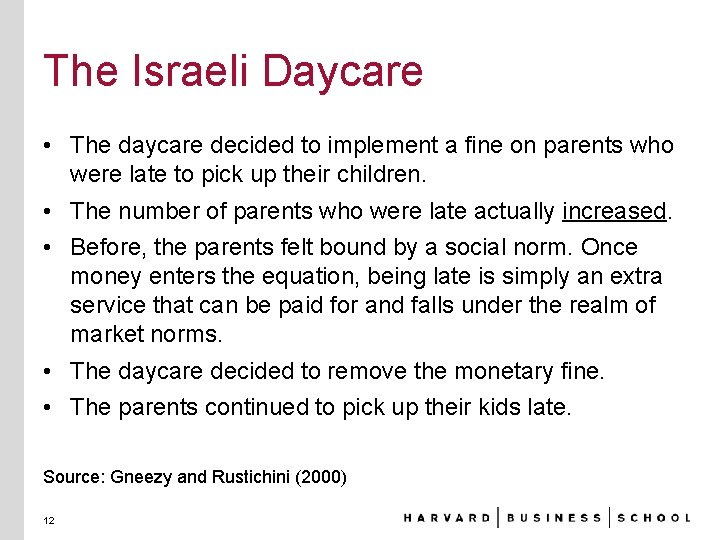
The Israeli Daycare • The daycare decided to implement a fine on parents who were late to pick up their children. • The number of parents who were late actually increased. • Before, the parents felt bound by a social norm. Once money enters the equation, being late is simply an extra service that can be paid for and falls under the realm of market norms. • The daycare decided to remove the monetary fine. • The parents continued to pick up their kids late. Source: Gneezy and Rustichini (2000) 12
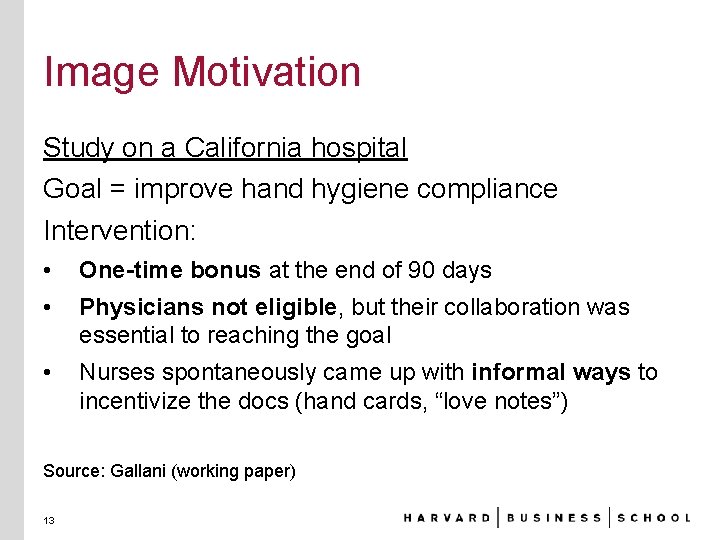
Image Motivation Study on a California hospital Goal = improve hand hygiene compliance Intervention: • One-time bonus at the end of 90 days • Physicians not eligible, but their collaboration was essential to reaching the goal • Nurses spontaneously came up with informal ways to incentivize the docs (hand cards, “love notes”) Source: Gallani (working paper) 13
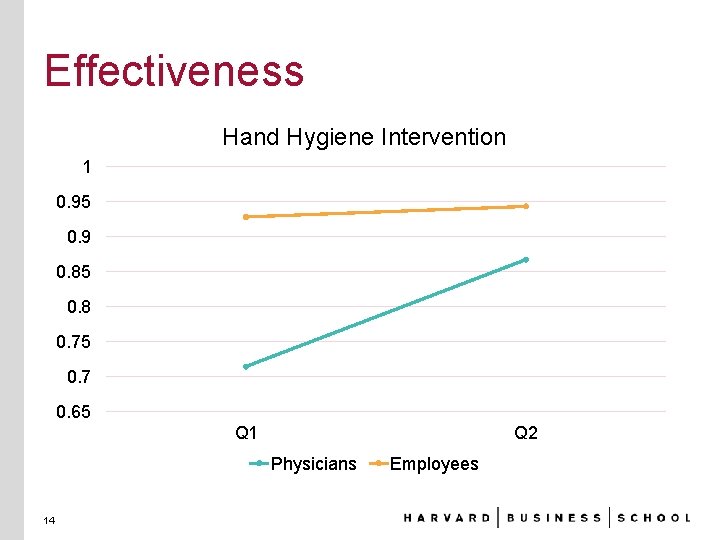
Effectiveness Hand Hygiene Intervention 1 0. 95 0. 9 0. 85 0. 8 0. 75 0. 7 0. 65 Q 1 Q 2 Physicians 14 Employees
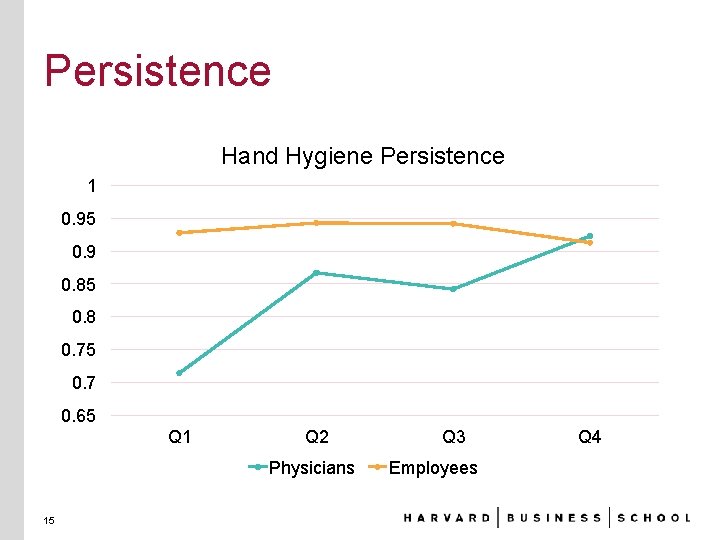
Persistence Hand Hygiene Persistence 1 0. 95 0. 9 0. 85 0. 8 0. 75 0. 7 0. 65 Q 1 Q 2 Physicians 15 Q 3 Employees Q 4
Behavioral Economics • Crowding-out theory • Monetary incentives change the nature of the exchange (Deci, 1971) • They assign explicit value (priority) to activities that might be lower than expected (Fehr and Gachter, 2001) • Can result in a decrease frequency of desired behaviors (especially if the behavior is driven by intrinsic motivation) • 16 From “doing good” to “doing well” (Gneezy, 2011)
Image Motivation • People care about what other people say about them (Ariely et al, 2009) • Especially if their behavior is visible to others (Ellingsen and Johannesson, 2007) • Recognition motivates through social esteem (Lourenco 2016) • Caveat: • Need to care about the audience 17
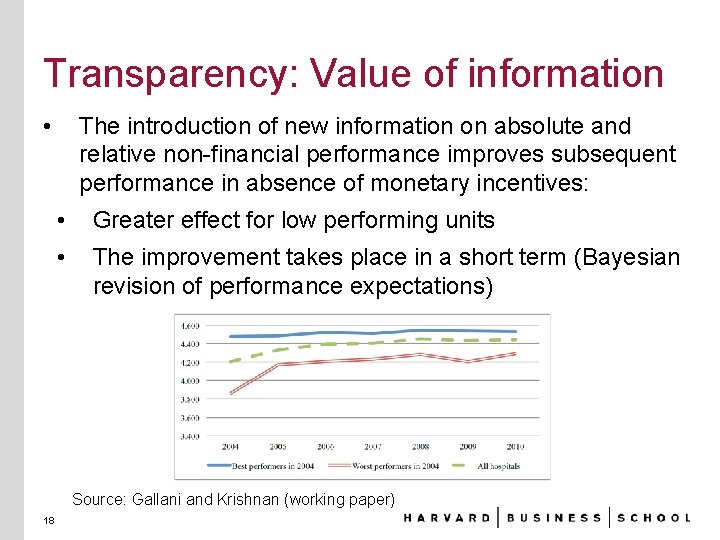
Transparency: Value of information • The introduction of new information on absolute and relative non-financial performance improves subsequent performance in absence of monetary incentives: • Greater effect for low performing units • The improvement takes place in a short term (Bayesian revision of performance expectations) Source: Gallani and Krishnan (working paper) 18
Relative Performance Evaluation • Levelling the playing field – absorb nonidiosyncratic shocks • Offer a term of comparison • Social comparison theory • Information effect • Reference effect 19
Subjectivity Can improve incentive contracting allowing the firm to exploit non-contractible information that might otherwise be ignored in formula-based contracts (Baker et al, 1994; Baiman and Rajan, 1995) • E. g. positive progress toward a goal • E. g. correct for stochastic factors of performance • E. g. recognize talent However… • Subjectivity can be perceived as bias or procedural injustice, thereby undermining the incentive system and/or leading to counterproductive reactions (Gibbs et al. (2004); Prendergast and Topel (1993)) • Referent Cognitions Theory : individuals attribute favorable surprises to their own abilities and unfavorable surprises to procedural injustice or unfairness. (Cropanzano and Folger, 1989) 20
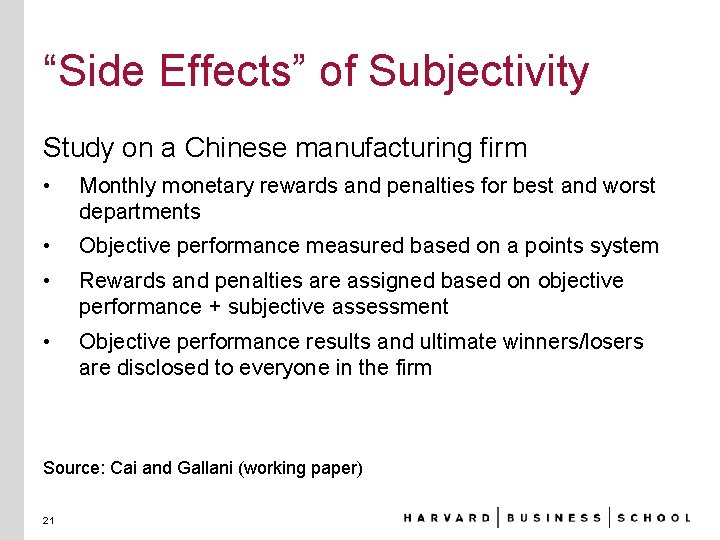
“Side Effects” of Subjectivity Study on a Chinese manufacturing firm • Monthly monetary rewards and penalties for best and worst departments • Objective performance measured based on a points system • Rewards and penalties are assigned based on objective performance + subjective assessment • Objective performance results and ultimate winners/losers are disclosed to everyone in the firm Source: Cai and Gallani (working paper) 21
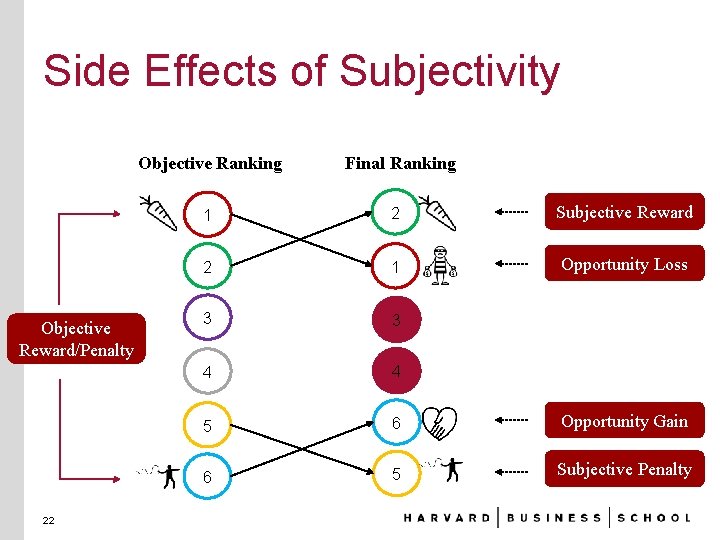
Side Effects of Subjectivity Objective Ranking Objective Reward/Penalty 22 Final Ranking 1 2 Subjective Reward 2 1 Opportunity Loss 3 3 4 4 5 6 Opportunity Gain 6 5 Subjective Penalty
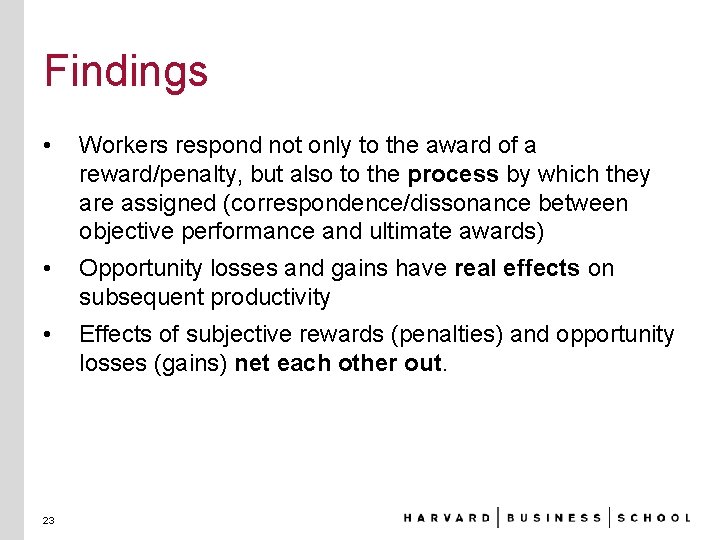
Findings • Workers respond not only to the award of a reward/penalty, but also to the process by which they are assigned (correspondence/dissonance between objective performance and ultimate awards) • Opportunity losses and gains have real effects on subsequent productivity • Effects of subjective rewards (penalties) and opportunity losses (gains) net each other out. 23
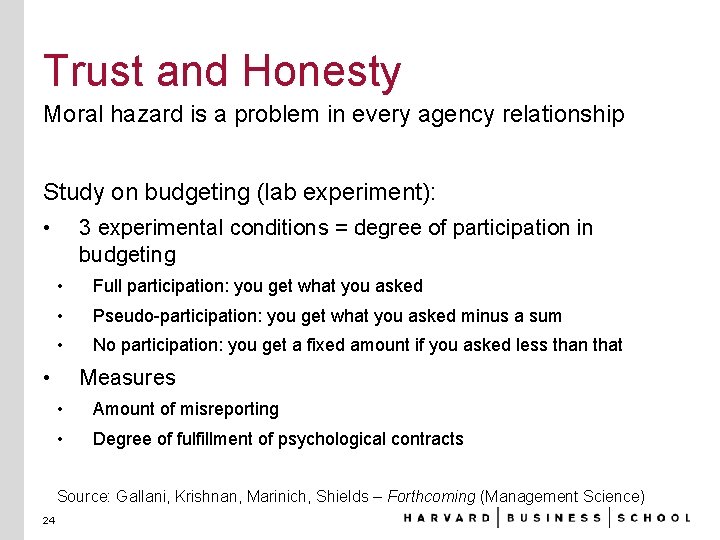
Trust and Honesty Moral hazard is a problem in every agency relationship Study on budgeting (lab experiment): • 3 experimental conditions = degree of participation in budgeting • Full participation: you get what you asked • Pseudo-participation: you get what you asked minus a sum • No participation: you get a fixed amount if you asked less than that • Measures • Amount of misreporting • Degree of fulfillment of psychological contracts Source: Gallani, Krishnan, Marinich, Shields – Forthcoming (Management Science) 24
Findings • Higher degree of trust is associated with lower misreporting • Higher degree of trust is associated with higher fulfillment of psychological contract • Pseudo-participation is associated with the lowest profit for the firm • Psychological contracts are easy to break and hard to repair 25
Organizational Identification • Individuals classify themselves into groups and assign salient group features to themselves • Individuals identify themselves more strongly with groups with which they share values • Work in the collective’s best interests if they strongly identify with the group (Ashforth and Mael 1989; Van Knippenberg 2000) 26
Mission Statements and Misreporting • An organization’s mission statement is a formal summary of its goals, values and philosophies (Klemm et al. 1991; Collis and Rukstad 2008; Dowling and Pfeffer 1975) • Content of mission statement: • Primes employees to think about organizational goals • Clarifies priorities among desirable behaviors • Types of content used in this study: • Financial objectives • Integrity objectives Source: Deore, Gallani, Krishnan (working paper) 27
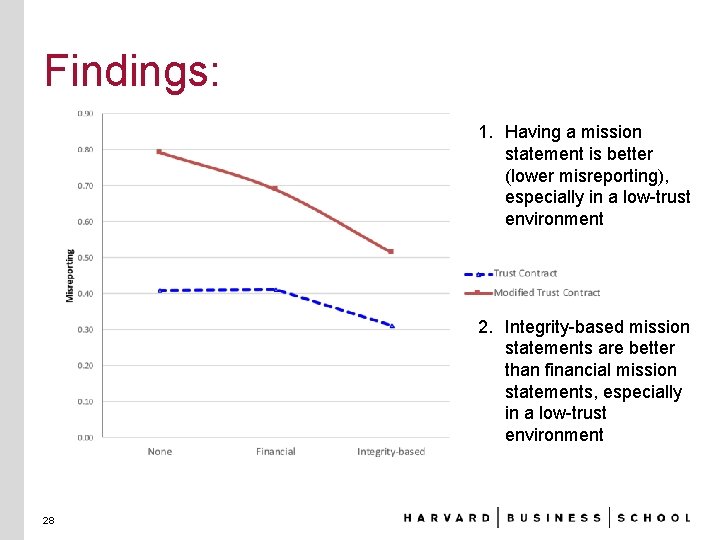
Findings: 1. Having a mission statement is better (lower misreporting), especially in a low-trust environment 2. Integrity-based mission statements are better than financial mission statements, especially in a low-trust environment 28
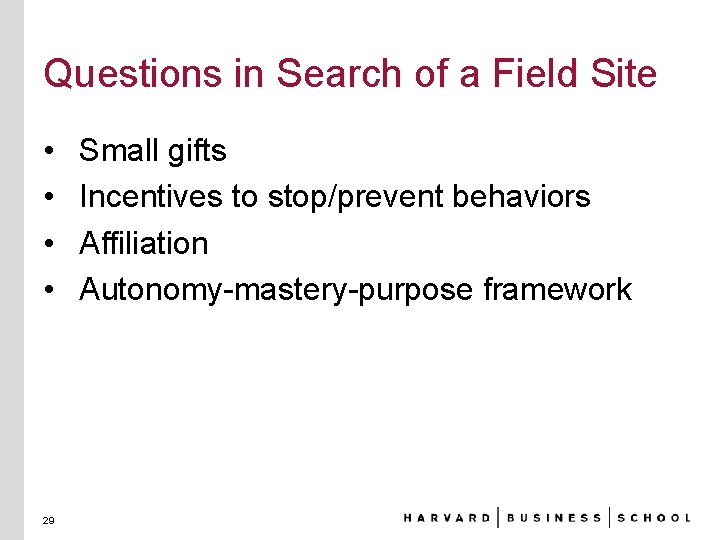
Questions in Search of a Field Site • • 29 Small gifts Incentives to stop/prevent behaviors Affiliation Autonomy-mastery-purpose framework
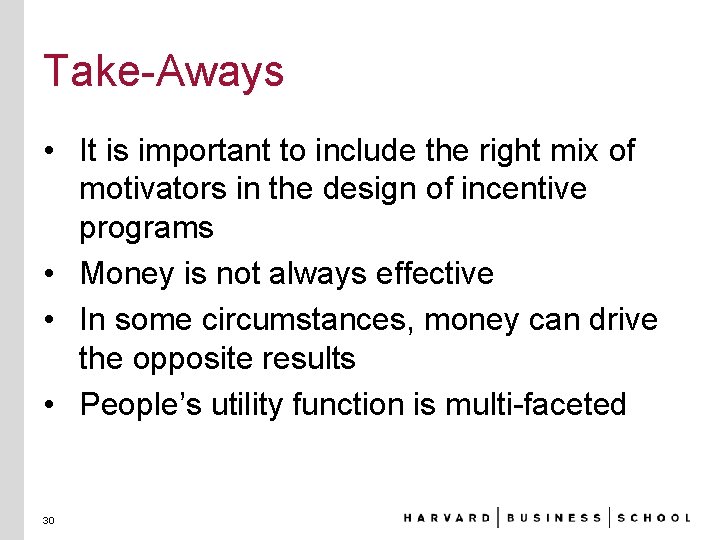
Take-Aways • It is important to include the right mix of motivators in the design of incentive programs • Money is not always effective • In some circumstances, money can drive the opposite results • People’s utility function is multi-faceted 30

Thank You! sgallani@hbs. edu 31
- Slides: 31