
Its all about Diversion Started in 1987 Recycling
It’s all about Diversion
Started in 1987
Recycling rate has flattened Source: Bio. Cycle April 2006
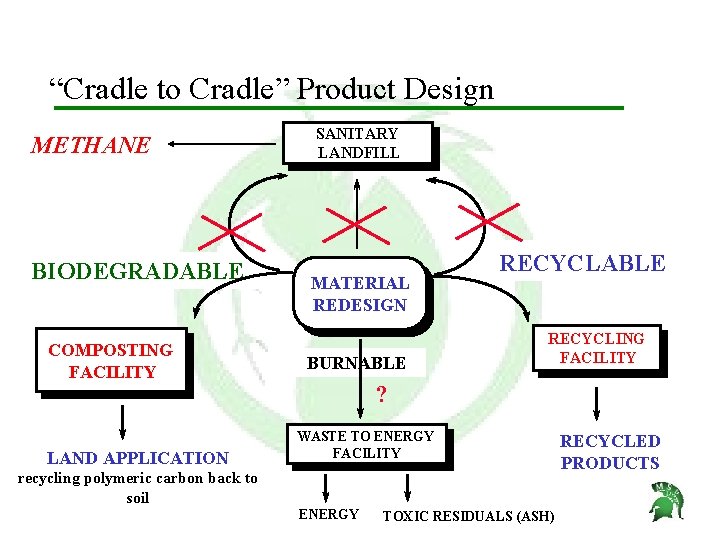
“Cradle to Cradle” Product Design METHANE BIODEGRADABLE COMPOSTING FACILITY LAND APPLICATION SANITARY LANDFILL MATERIAL REDESIGN BURNABLE RECYCLING FACILITY ? WASTE TO ENERGY FACILITY recycling polymeric carbon back to soil ENERGY TOXIC RESIDUALS (ASH) RECYCLED PRODUCTS
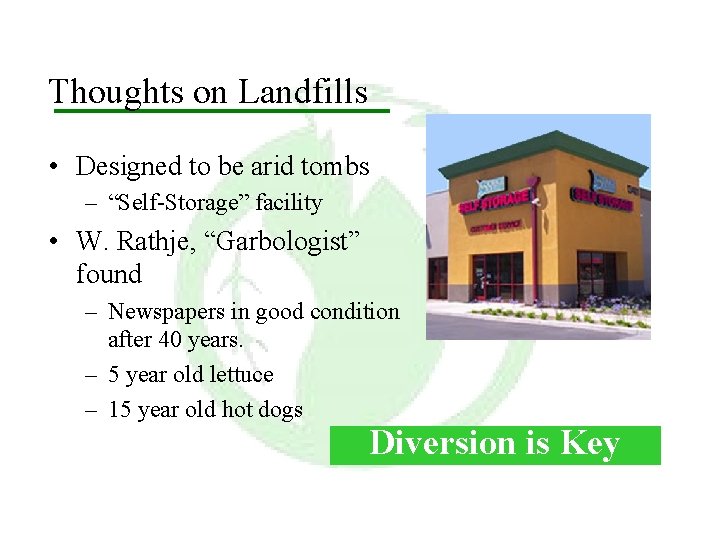
Thoughts on Landfills • Designed to be arid tombs – “Self-Storage” facility • W. Rathje, “Garbologist” found – Newspapers in good condition after 40 years. – 5 year old lettuce – 15 year old hot dogs Diversion is Key
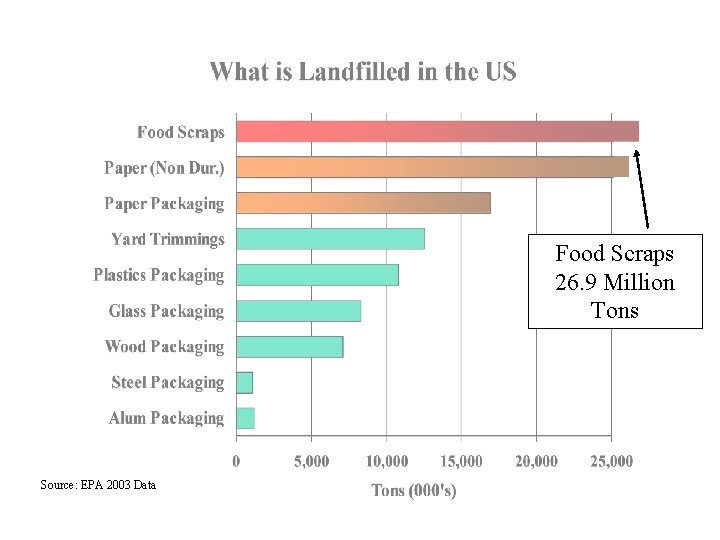
Food Scraps 26. 9 Million Tons Source: EPA 2003 Data
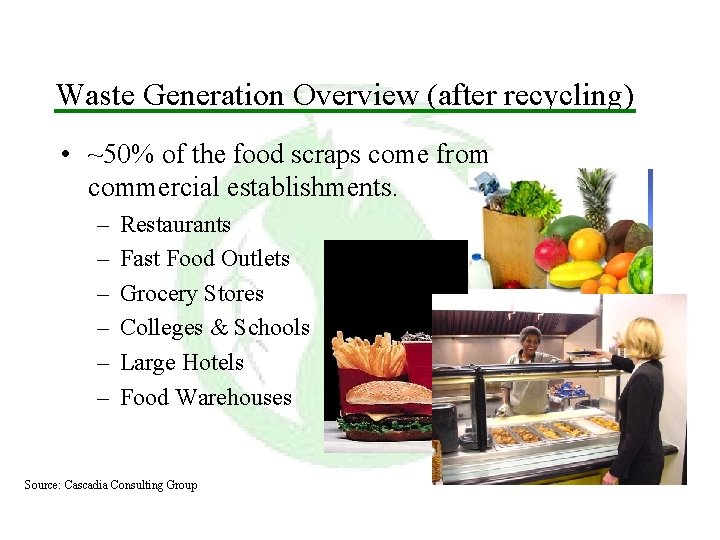
Waste Generation Overview (after recycling) • ~50% of the food scraps come from commercial establishments. – – – Restaurants Fast Food Outlets Grocery Stores Colleges & Schools Large Hotels Food Warehouses Source: Cascadia Consulting Group
Restaurants • Full Service – Generate 4, 400 lbs waste/yr/employee (after recycling) – 66% are food scraps – 5% “compostable paper” – 6% “plastics” • Fast Food – 4, 250 lbs. waste/yr/employee (after recycling) – 52% food scraps – 12% “compostable paper” – 10% plastics Source: Cascadia Consulting Group
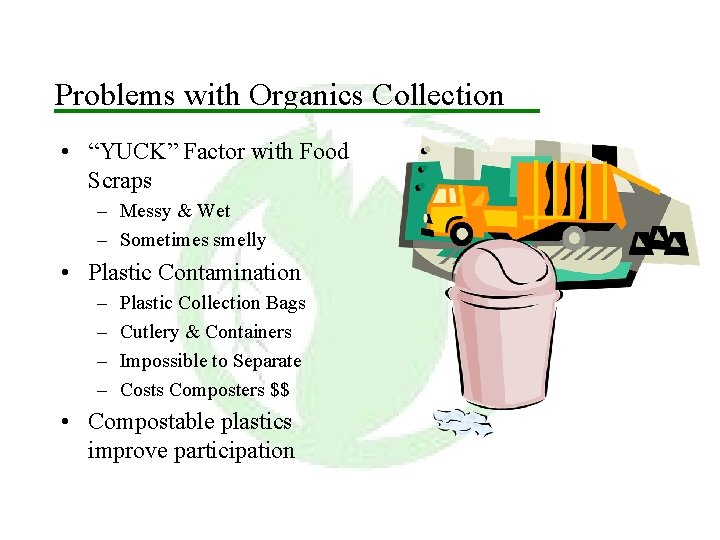
Problems with Organics Collection • “YUCK” Factor with Food Scraps – Messy & Wet – Sometimes smelly • Plastic Contamination – – Plastic Collection Bags Cutlery & Containers Impossible to Separate Costs Composters $$ • Compostable plastics improve participation
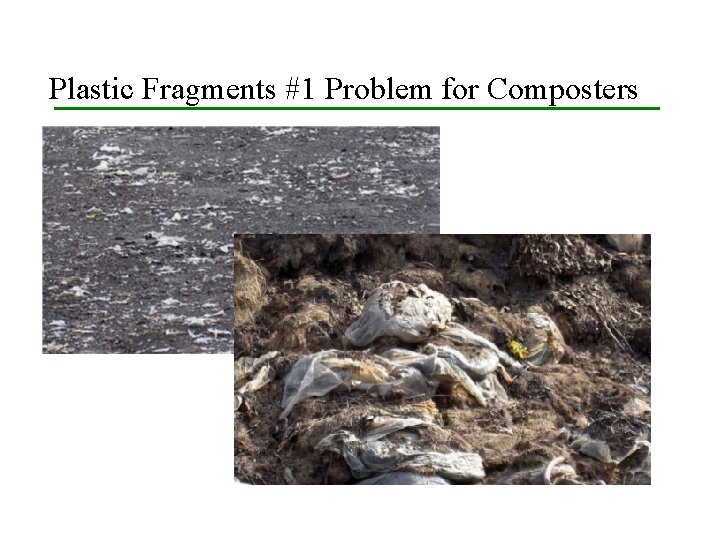
Plastic Fragments #1 Problem for Composters
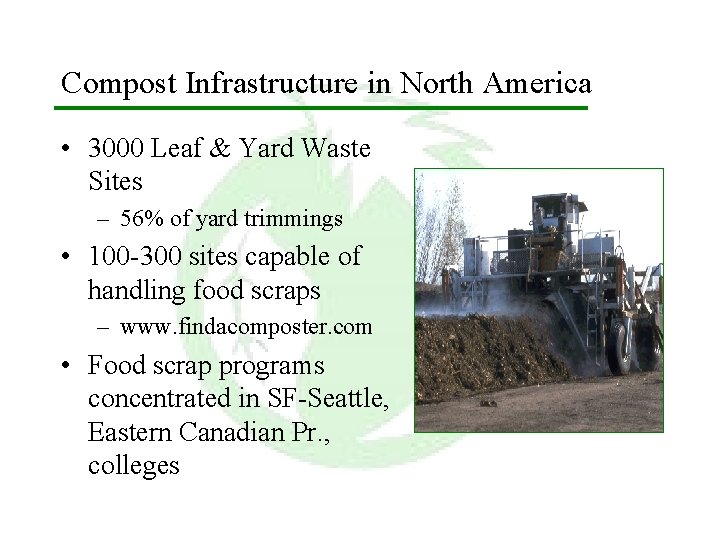
Compost Infrastructure in North America • 3000 Leaf & Yard Waste Sites – 56% of yard trimmings • 100 -300 sites capable of handling food scraps – www. findacomposter. com • Food scrap programs concentrated in SF-Seattle, Eastern Canadian Pr. , colleges
- Slides: 12