
ITNW 1380 COOPERATIVE EDUCATION NETWORKING Spring 2010 Seminar

- Slides: 44
ITNW 1380 COOPERATIVE EDUCATION – NETWORKING Spring 2010 Seminar # 4 VOIP Network Solutions
Unified Communications and Collaboration Solution Unified Communications IP Convergence: Voice, data & video on the same network. Voice: Voice over IP - VOIP. Collaboration Solution IM: Yahoo, MSN, Novell, Skype. . . 3 G Wireless: WCDMA, UMTS. 4 G Wireless: Wireless LAN, WIFI, WMAX, LTE Blackbery, Motorola, Iphone Web & Email services
Today's Collaboration Solution VOIP
VOIP Definition VOIP Service Providers VOIP Benefits VOIP Protocols VOIP Networks VOIP Open Source Software
Vo. IP Definition Vo. IP (Voice Over Internet Protocol). Voice transmission over packet based network such as Internet, corporate intranet, LAN, WAN. Vo. IP known as Internet telephony. Integrate Vo. IP enabled voice signals with faxes & data into a unified network. Telephone conversation over Internet (IP Telephony).
VOIP Definition VOIP Service Providers VOIP Benefits VOIP Protocols VOIP Networks VOIP Open Source Software
Vo. IP Service providers With Vo. IP you can call PC to PC (Softfone), PC to IP phone, or IP phone to ordinary phone over Internet. Vo. IP is popular international calling. Vo. IP enables you to call from virtually anywhere. Vo. IP provider offer low rates or free service deals – Free World Dialup & Skype, Yahoo Voice. . .
VOIP Definition VOIP Service Providers VOIP Benefits VOIP Protocols VOIP Networks VOIP Open Source Software
VOIP Benefits Lower long distance rates: requires only Internet connection. Simplicity: Vo. IP transmission combines voice & data. Capacity: Vo. IP better uses you network for less. Global outsourcing: International call centers rely on Vo. IP. Automatic routing: Receive calls automatically to your Vo. IP phone. Portability: Travel with your Vo. IP phones.
VOIP Definition VOIP Service Providers VOIP Benefits VOIP Protocols VOIP Networks VOIP Open Source Software
Vo. IP Protocols H. 323 Session Initiation Protocol (SIP)
H. 323 Published by Telecommunication Standardization Sector (ITU-T) in November 1996. ITU-T defines H. 323 protocols to provide audio-visual communication sessions on any packet network. Widely implemented by voice and videoconferencing equipment manufacturers. Widely deployed worldwide by service providers and enterprises for both voice and video services over Internet Protocol (IP) networks.
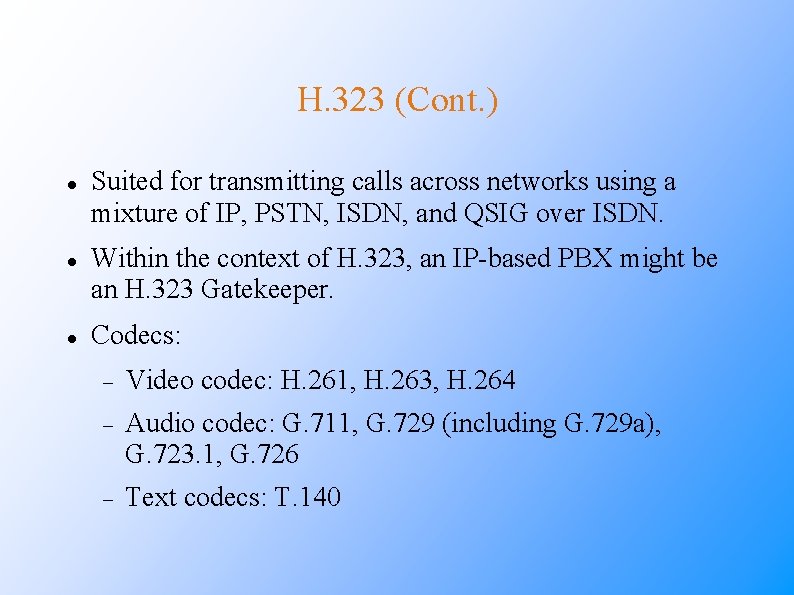
H. 323 (Cont. ) Suited for transmitting calls across networks using a mixture of IP, PSTN, ISDN, and QSIG over ISDN. Within the context of H. 323, an IP-based PBX might be an H. 323 Gatekeeper. Codecs: Video codec: H. 261, H. 263, H. 264 Audio codec: G. 711, G. 729 (including G. 729 a), G. 723. 1, G. 726 Text codecs: T. 140
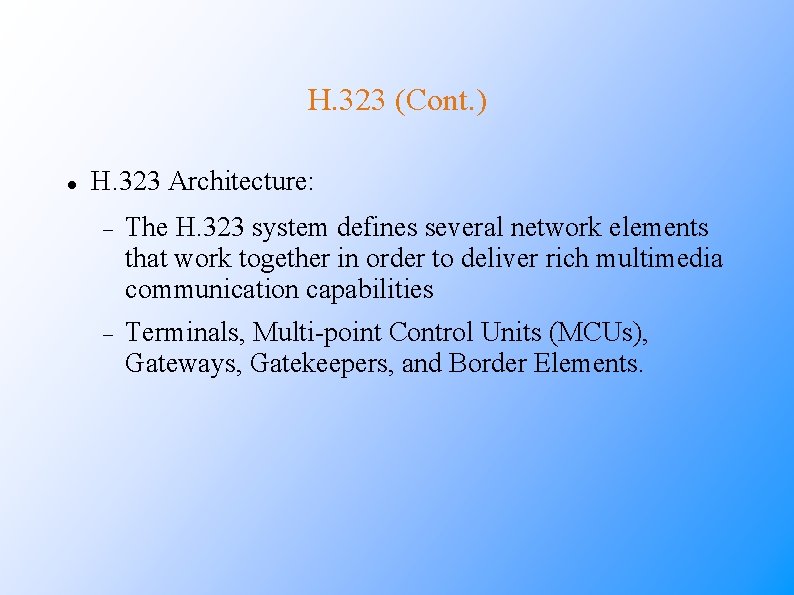
H. 323 (Cont. ) H. 323 Architecture: The H. 323 system defines several network elements that work together in order to deliver rich multimedia communication capabilities Terminals, Multi-point Control Units (MCUs), Gateways, Gatekeepers, and Border Elements.
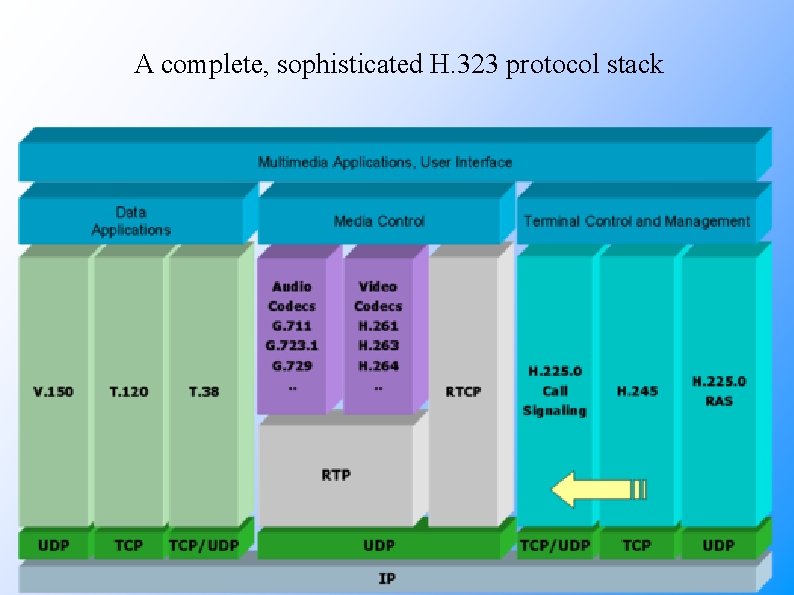
A complete, sophisticated H. 323 protocol stack
Vo. IP Protocols (Cont. ) H. 323 Session Initiation Protocol (SIP)
Session Initiation Protocol (SIP) Purpose of SIP URI SIP Network Elements SIP Messages Transactions Dialogs Typical SIP Scenarios
Purpose of SIP Application-layer control protocol which has been developed and designed within the IETF (Internet Engineering Task Force). The most important one is RFC 3261 which contains the core protocol specification. The protocol is used for creating, modifying, and terminating sessions with one or more participants.
Purpose of SIP (Cont. ) Two protocols that are most often used along with SIP are RTP and SDP. RTP – Real Time Protocol is used to carry the real-time multimedia data (including audio, video, and text), the protocol makes it possible to encode and split the data into packets and transport such packets over the Internet. SDP – Session Description Protocol, which is used to describe and encode capabilities of session participants (negotiation of codecs used to encode media so all participants will be able to decode it).
Purpose of SIP (Cont. ) SIP is based on HTTP protocol. SIP is used to carry the description of session parameters, the description is encoded into a document using SDP.
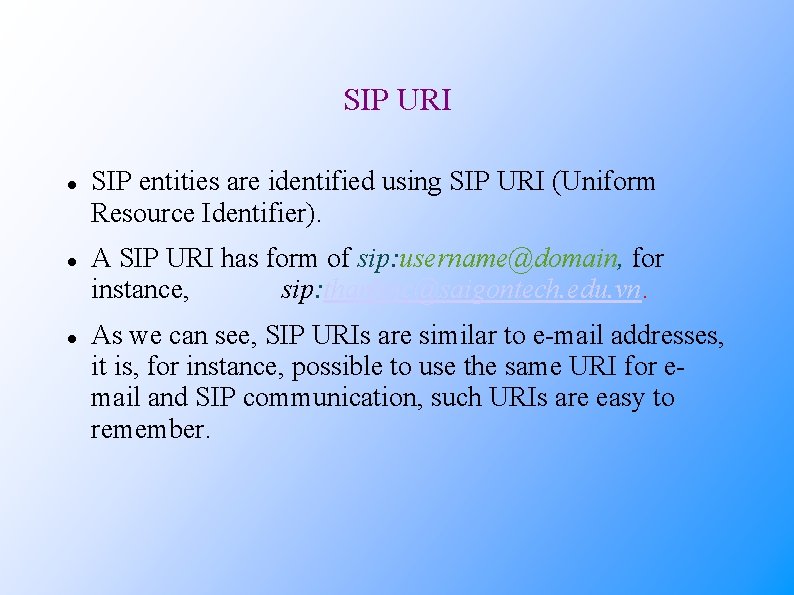
SIP URI SIP entities are identified using SIP URI (Uniform Resource Identifier). A SIP URI has form of sip: username@domain, for instance, sip: thanhnc@saigontech. edu. vn. As we can see, SIP URIs are similar to e-mail addresses, it is, for instance, possible to use the same URI for email and SIP communication, such URIs are easy to remember.
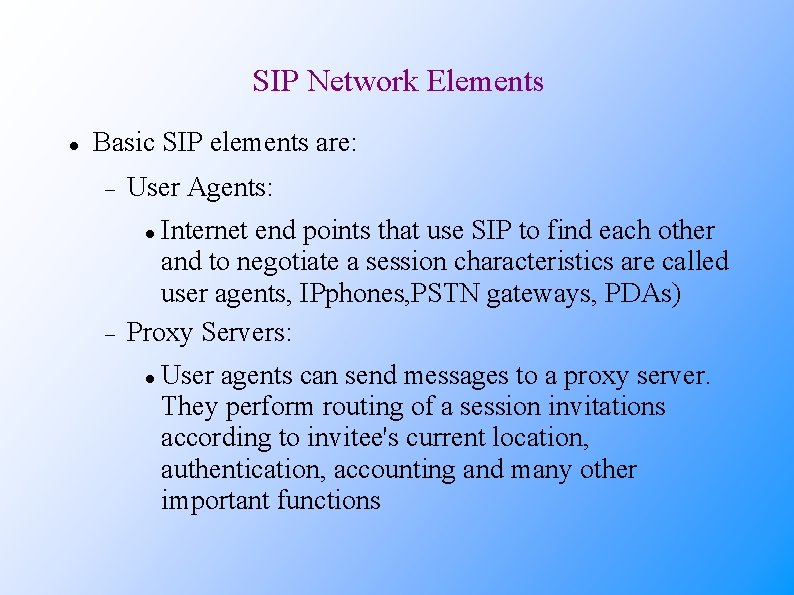
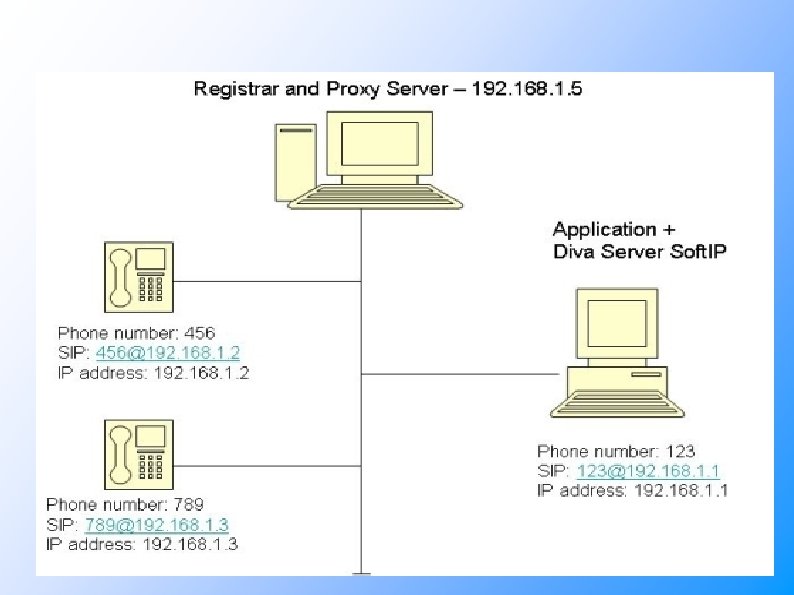
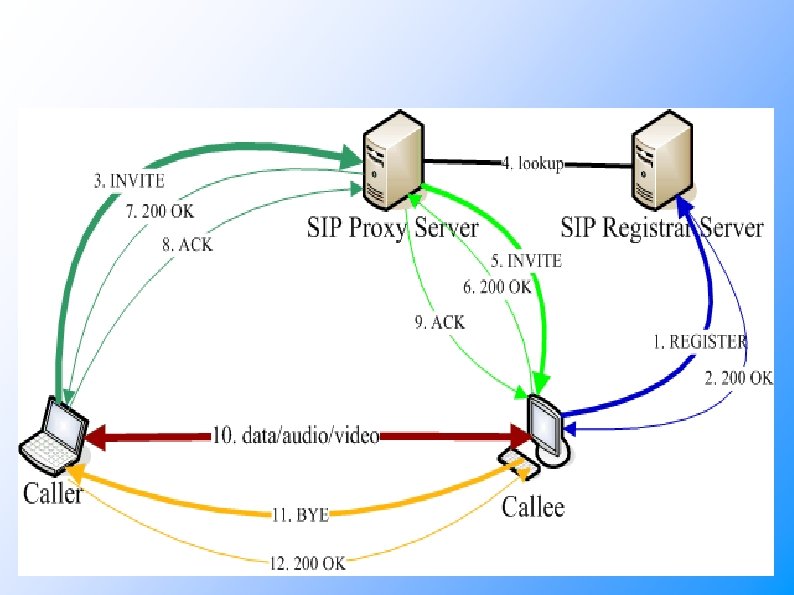
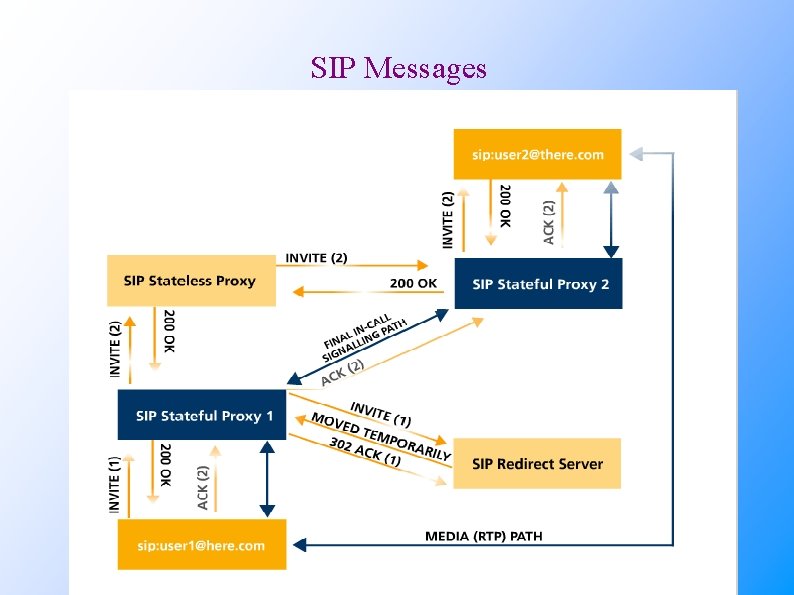
SIP Network Elements Basic SIP elements are: User Agents: Internet end points that use SIP to find each other and to negotiate a session characteristics are called user agents, IPphones, PSTN gateways, PDAs) Proxy Servers: User agents can send messages to a proxy server. They perform routing of a session invitations according to invitee's current location, authentication, accounting and many other important functions
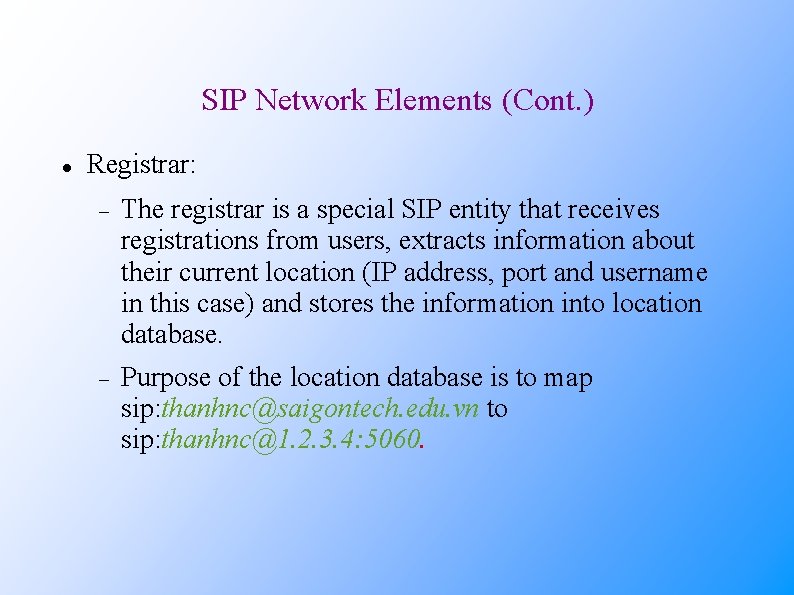
SIP Network Elements (Cont. ) Registrar: The registrar is a special SIP entity that receives registrations from users, extracts information about their current location (IP address, port and username in this case) and stores the information into location database. Purpose of the location database is to map sip: thanhnc@saigontech. edu. vn to sip: thanhnc@1. 2. 3. 4: 5060.
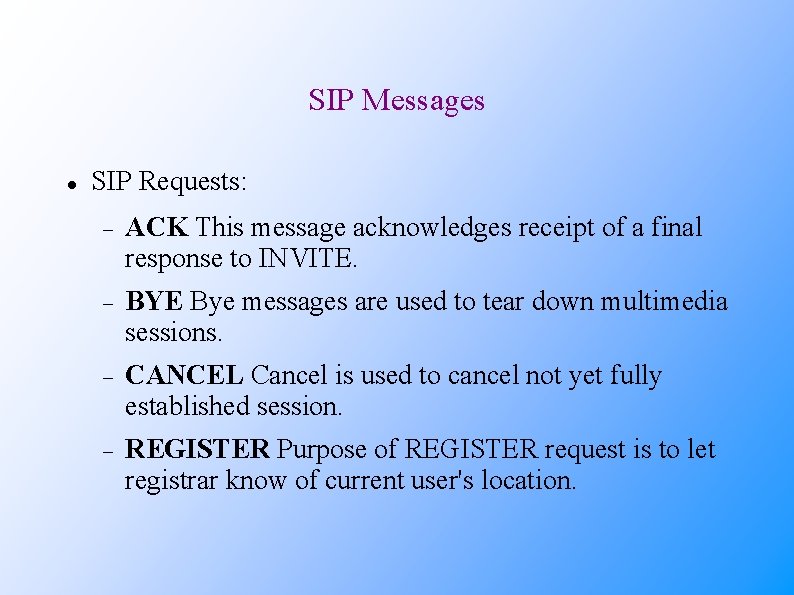
SIP Messages SIP Requests: ACK This message acknowledges receipt of a final response to INVITE. BYE Bye messages are used to tear down multimedia sessions. CANCEL Cancel is used to cancel not yet fully established session. REGISTER Purpose of REGISTER request is to let registrar know of current user's location.
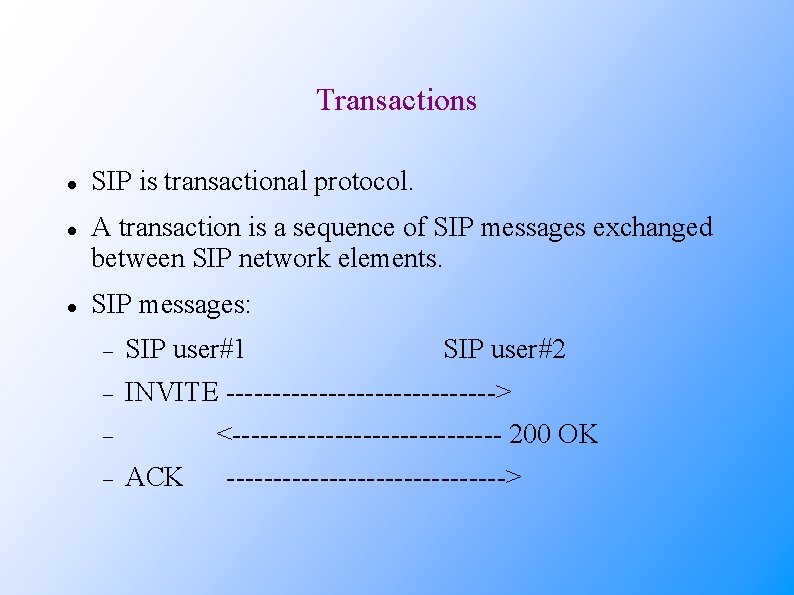
Transactions SIP is transactional protocol. A transaction is a sequence of SIP messages exchanged between SIP network elements. SIP messages: SIP user#1 INVITE ---------------> <--------------- 200 OK SIP user#2 ACK --------------->
SIP Messages
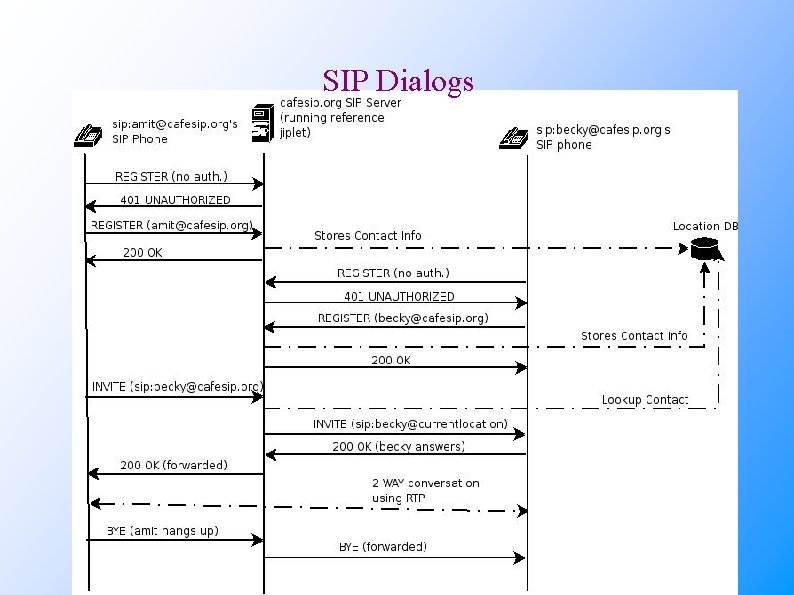
Dialogs A dialog represents a peer-to-peer SIP relationship between two user agents. For instance, INVITE message establishes a dialog, because it will be later followed by BYE request which will tear down the session established by the INVITE. This BYE is sent within the dialog established by the INVITE.
SIP Dialogs
Typical SIP Scenarios Registration Session Invitation Session Termination Record Routing Event Subscription and Notification Instant Messages
VOIP Definition VOIP Service Providers VOIP Benefits VOIP Protocols VOIP Networks VOIP Open Source Software
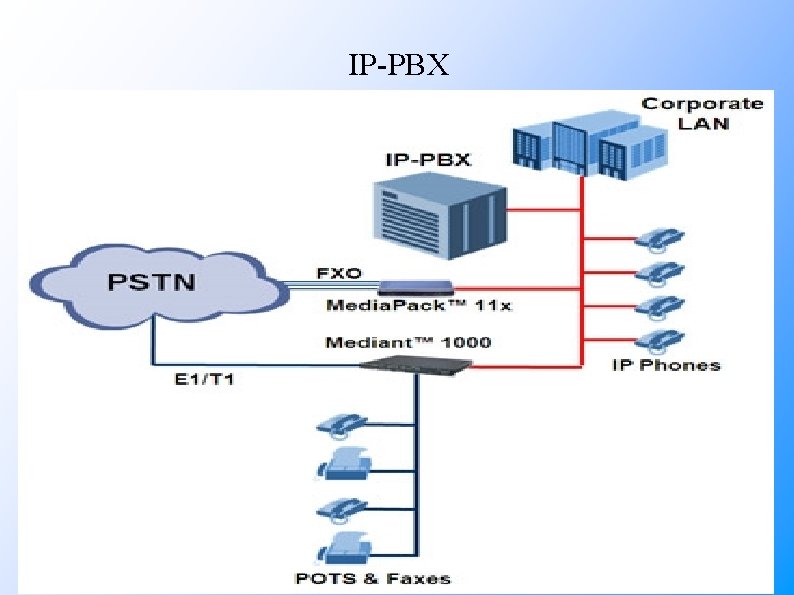
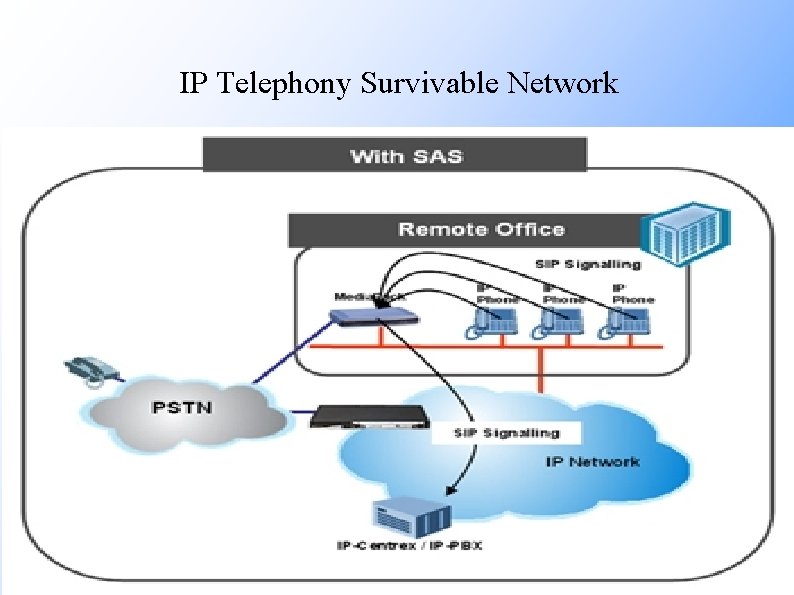
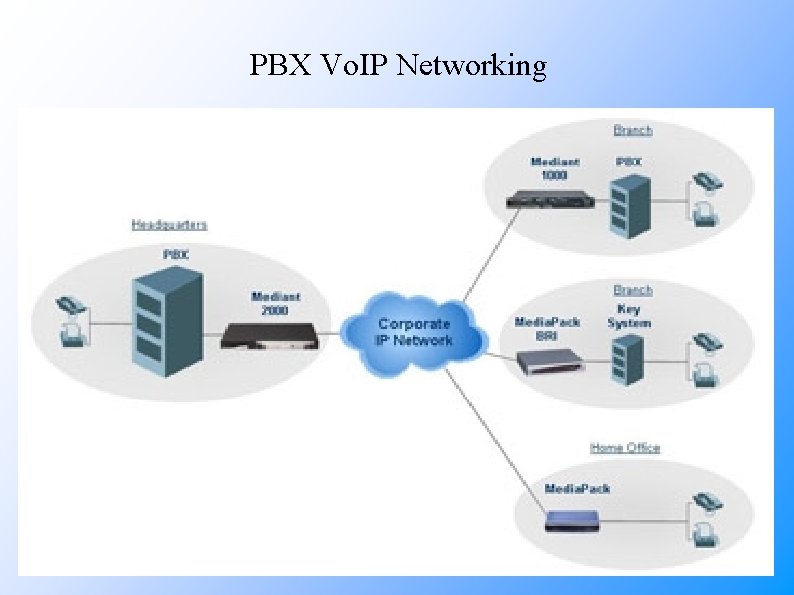
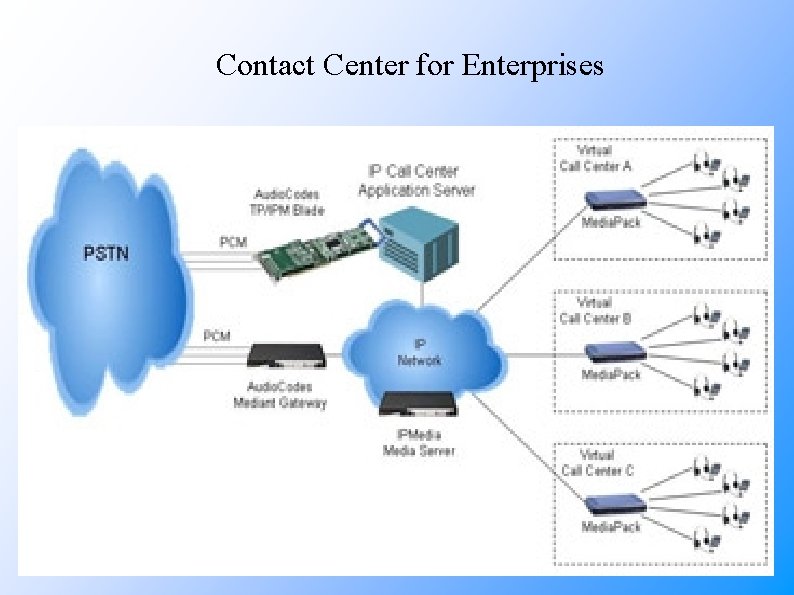
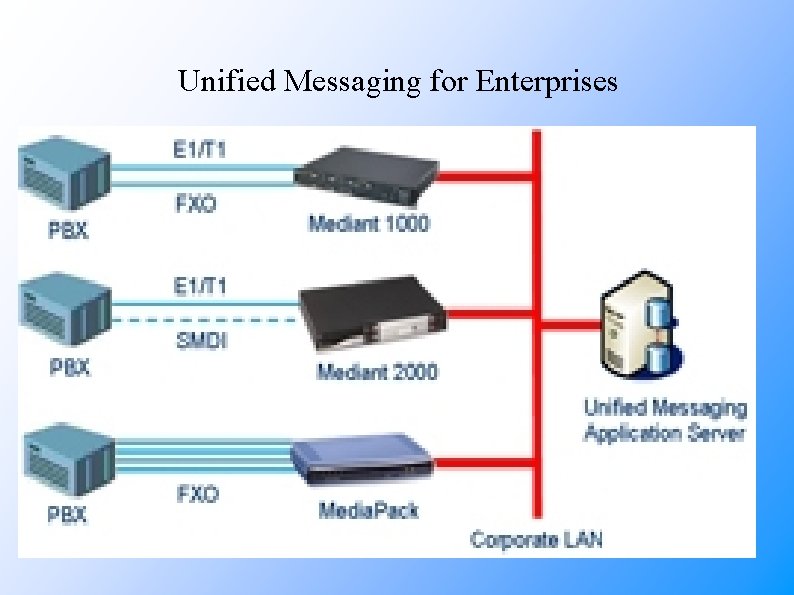
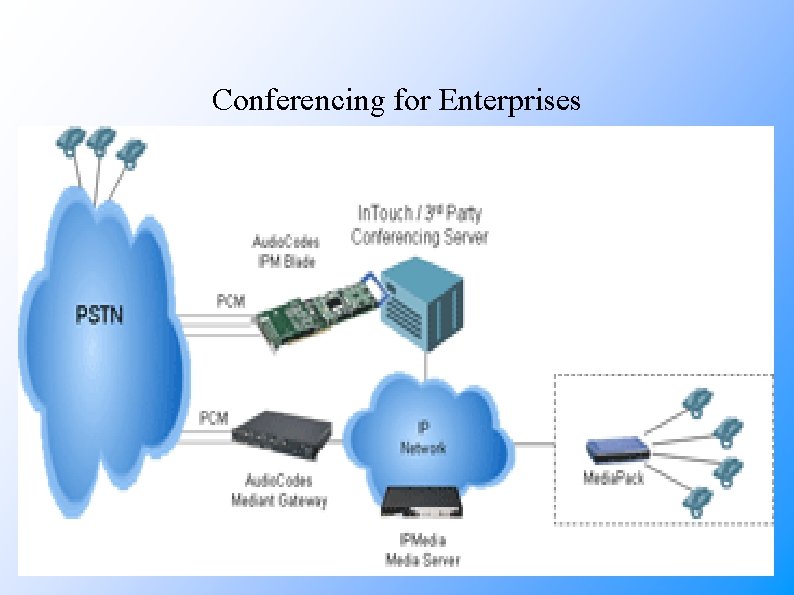
Vo. IP Network Solution for Enterprise from Audio. Codes Ltd. : IP-PBX IP Telephony Survivable Network PBX Vo. IP Networking Contact Center for Enterprises Unified Messaging for Enterprises Conferencing for Enterprises
IP-PBX
IP Telephony Survivable Network
PBX Vo. IP Networking
Contact Center for Enterprises
Unified Messaging for Enterprises
Conferencing for Enterprises
VOIP Definition VOIP Service Providers VOIP Benefits VOIP Protocols VOIP Networks VOIP Open Source Software
VOIP Open Source Software Open. SER: SER – SIP Express Router (Registrar/Proxy/Redirect server) Support database backends: My. SQL, Oracle, Postgres. RTP Proxy, NAT traversal Interoperability with Cisco, Microsoft. Ping. Tel, Siemens, Xten and many others. http: //www. iptel. org/ser
VOIP Open Source Software (Cont. ) Asterisk PBX: Most popular open source VOIP software. IP PBX which connect users over IP to PSTN, T 1/E 1. Media gateway, bridge the legacy PSTN to IP telephony. Media server with IVR, voice mail, automated attendant, unified messaging. Call Center, ACD, advance skills-based routing. http: //www/asterisk. org
References SIP: http: //www. sip. org/ SER: http: //www. iptel. org/ser Audi. Codes: http: //www. audiocodes. com/solutions Asterisk: http: //www. asterisk. org
Questions