
Italian Language and Culture Past and Present Architecture
- Slides: 61
Italian Language and Culture Past and Present
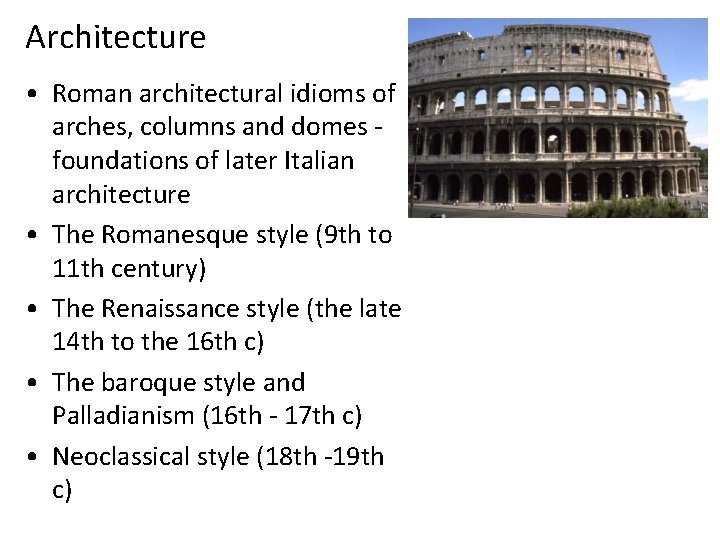
Architecture • Roman architectural idioms of arches, columns and domes foundations of later Italian architecture • The Romanesque style (9 th to 11 th century) • The Renaissance style (the late 14 th to the 16 th c) • The baroque style and Palladianism (16 th - 17 th c) • Neoclassical style (18 th -19 th c)
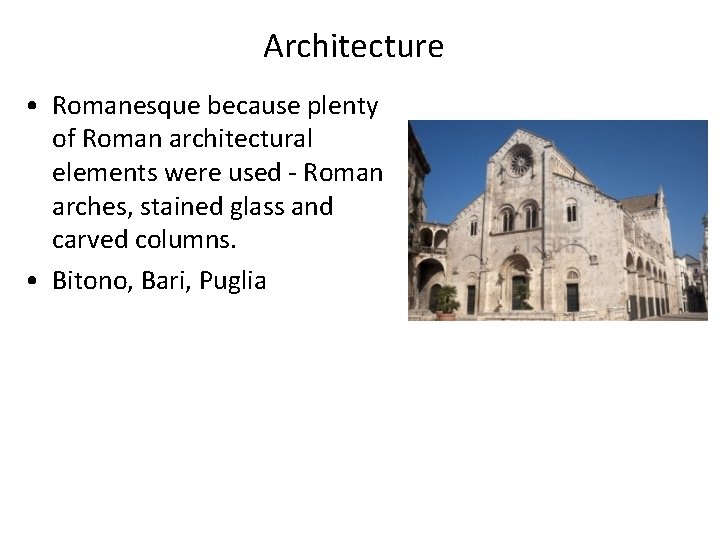
Architecture • Romanesque because plenty of Roman architectural elements were used - Roman arches, stained glass and carved columns. • Bitono, Bari, Puglia
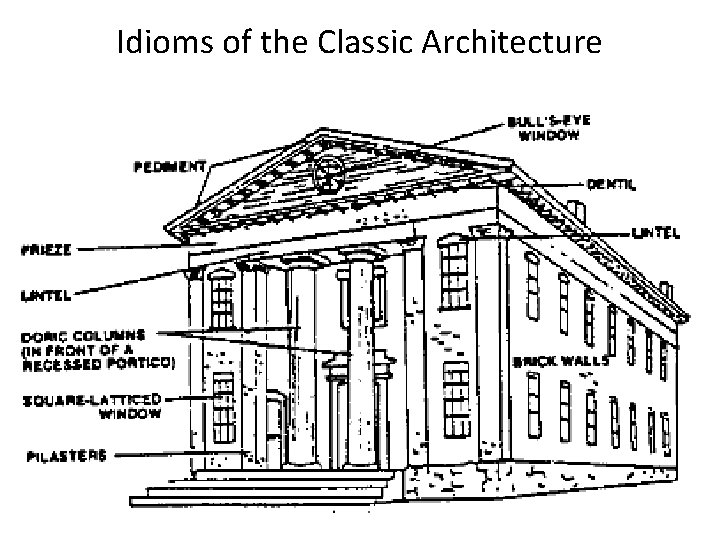
Idioms of the Classic Architecture
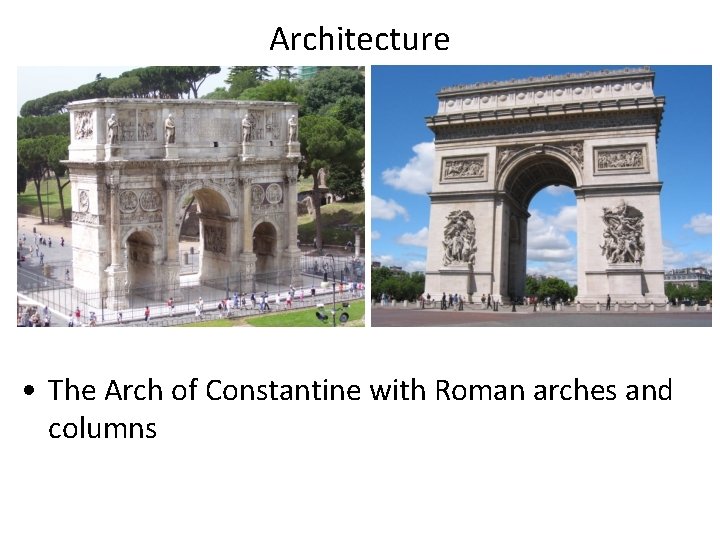
Architecture • The Arch of Constantine with Roman arches and columns
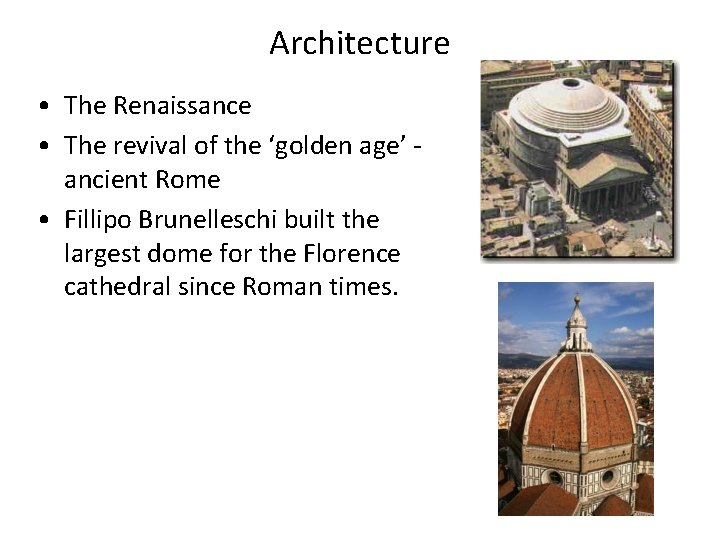
Architecture • The Renaissance • The revival of the ‘golden age’ ancient Rome • Fillipo Brunelleschi built the largest dome for the Florence cathedral since Roman times.
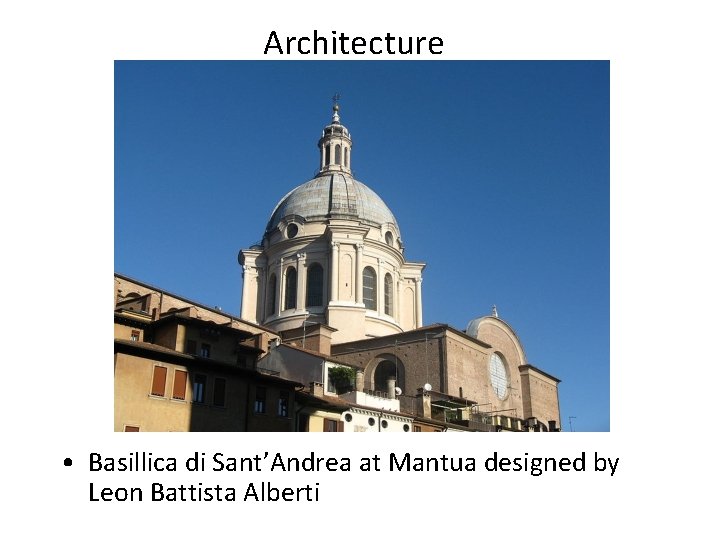
Architecture • Basillica di Sant’Andrea at Mantua designed by Leon Battista Alberti
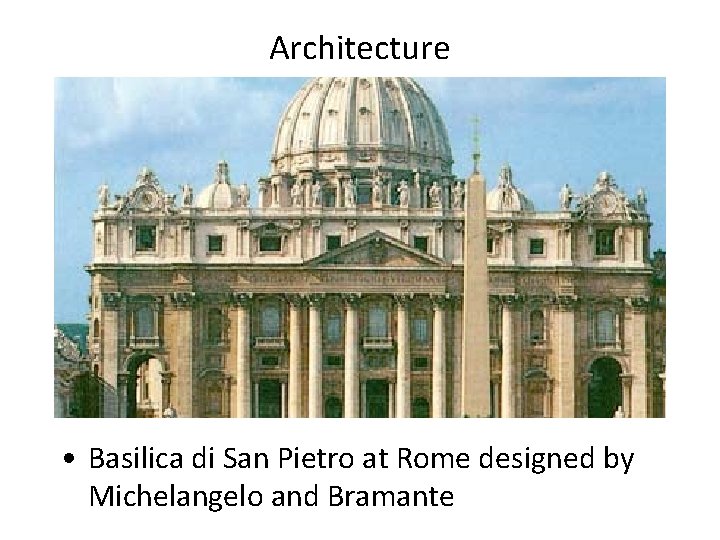
Architecture • Basilica di San Pietro at Rome designed by Michelangelo and Bramante
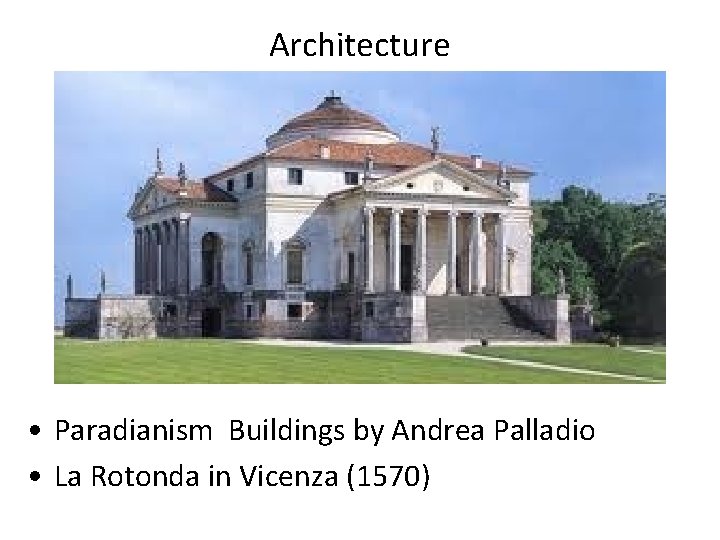
Architecture • Paradianism Buildings by Andrea Palladio • La Rotonda in Vicenza (1570)
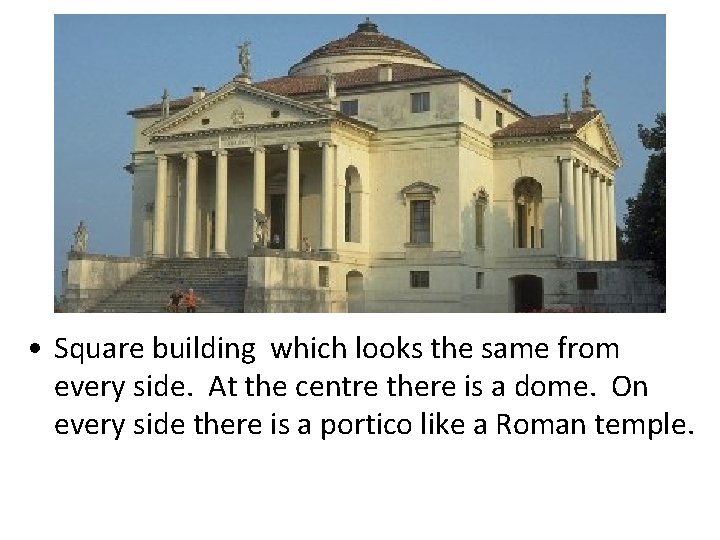
• Square building which looks the same from every side. At the centre there is a dome. On every side there is a portico like a Roman temple.
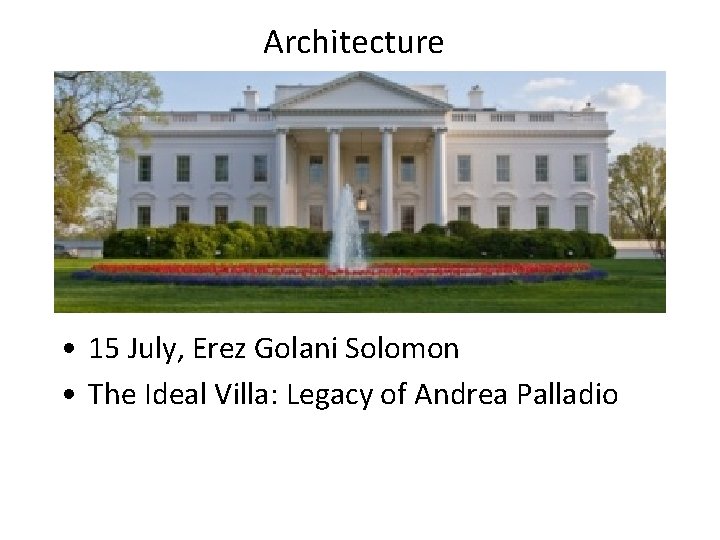
Architecture • 15 July, Erez Golani Solomon • The Ideal Villa: Legacy of Andrea Palladio
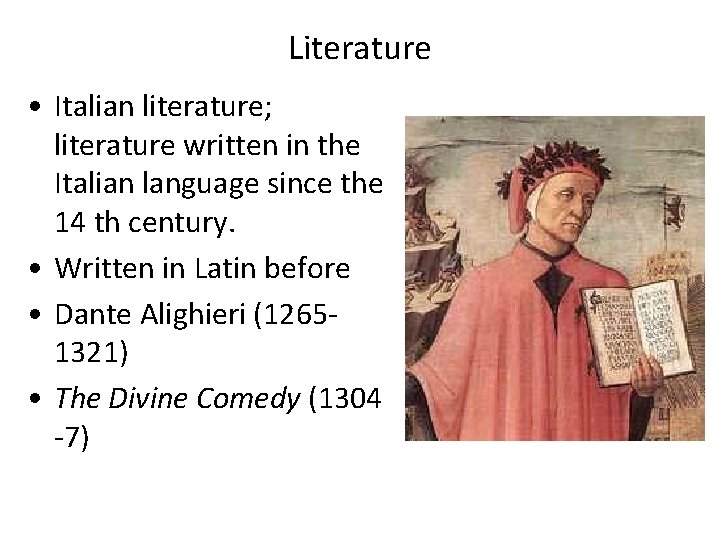
Literature • Italian literature; literature written in the Italian language since the 14 th century. • Written in Latin before • Dante Alighieri (12651321) • The Divine Comedy (1304 -7)
Literature • Nel mezzo del cammin di nostra vita mi ritrovai per una selva oscura, ché la diritta via era smarrita • In the middle of the journey of our life I found myself in a dark wood, for the straight way was lost.
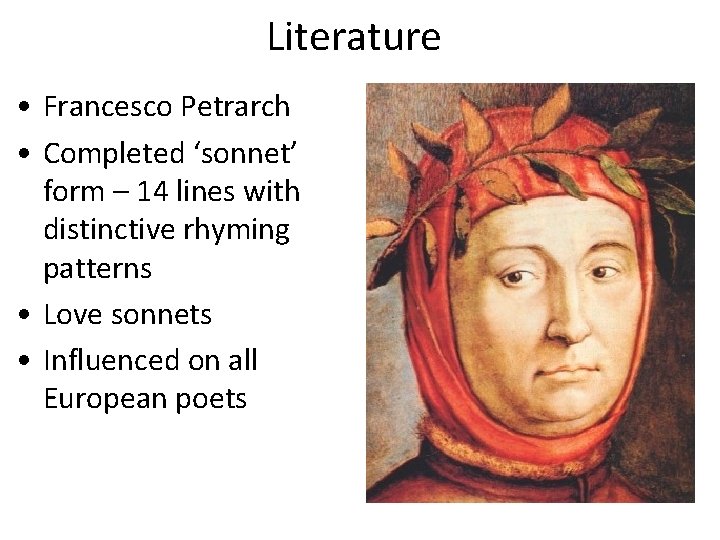
Literature • Francesco Petrarch • Completed ‘sonnet’ form – 14 lines with distinctive rhyming patterns • Love sonnets • Influenced on all European poets
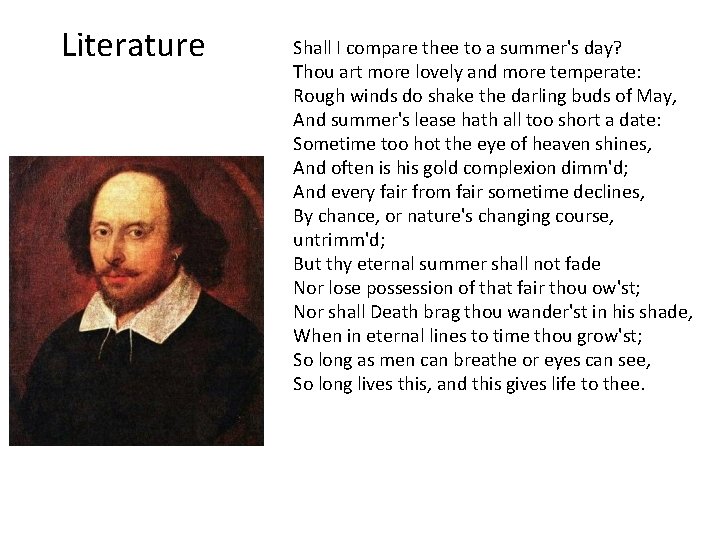
Literature Shall I compare thee to a summer's day? Thou art more lovely and more temperate: Rough winds do shake the darling buds of May, And summer's lease hath all too short a date: Sometime too hot the eye of heaven shines, And often is his gold complexion dimm'd; And every fair from fair sometime declines, By chance, or nature's changing course, untrimm'd; But thy eternal summer shall not fade Nor lose possession of that fair thou ow'st; Nor shall Death brag thou wander'st in his shade, When in eternal lines to time thou grow'st; So long as men can breathe or eyes can see, So long lives this, and this gives life to thee.
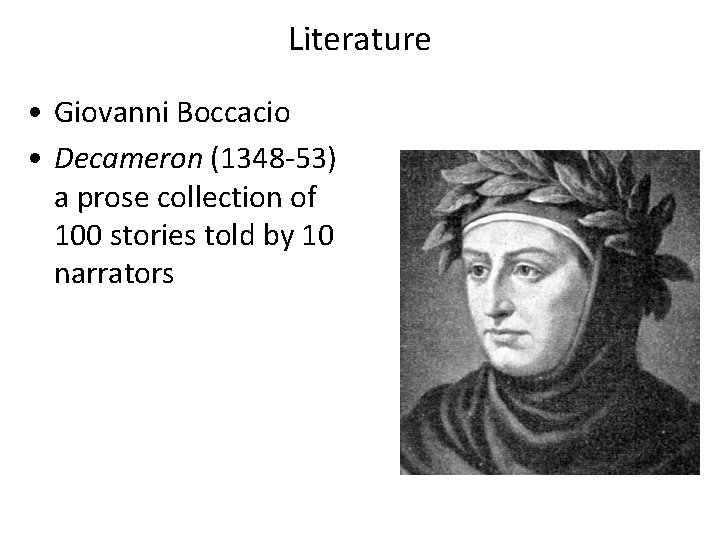
Literature • Giovanni Boccacio • Decameron (1348 -53) a prose collection of 100 stories told by 10 narrators
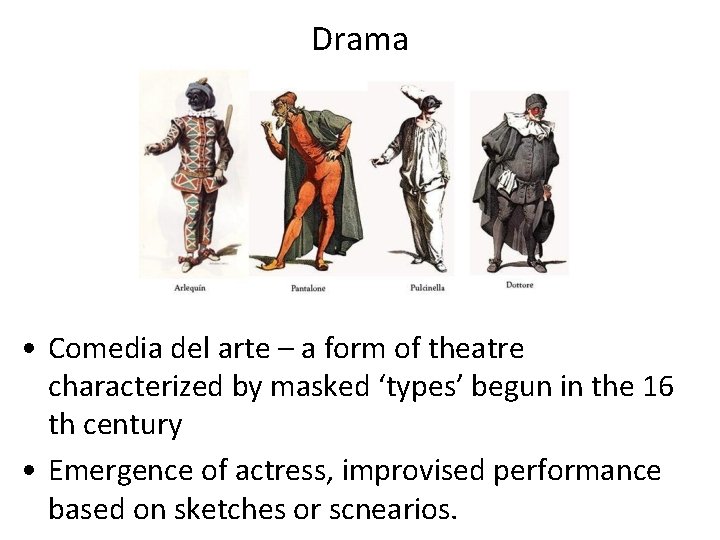
Drama • Comedia del arte – a form of theatre characterized by masked ‘types’ begun in the 16 th century • Emergence of actress, improvised performance based on sketches or scnearios.
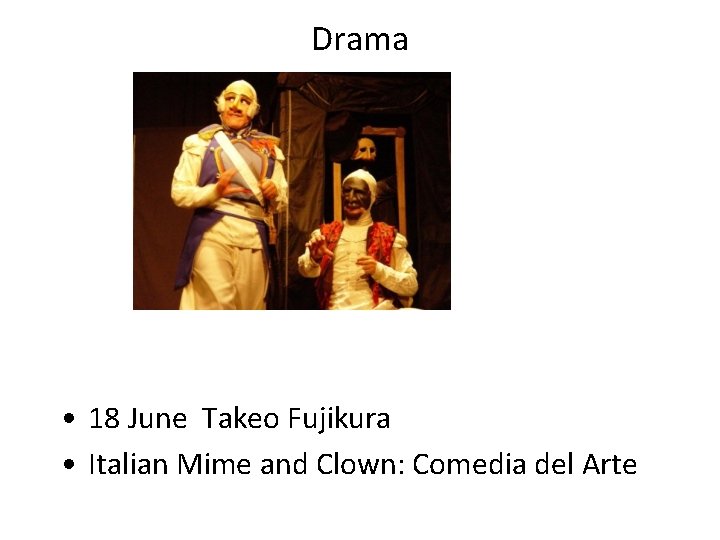
Drama • 18 June Takeo Fujikura • Italian Mime and Clown: Comedia del Arte
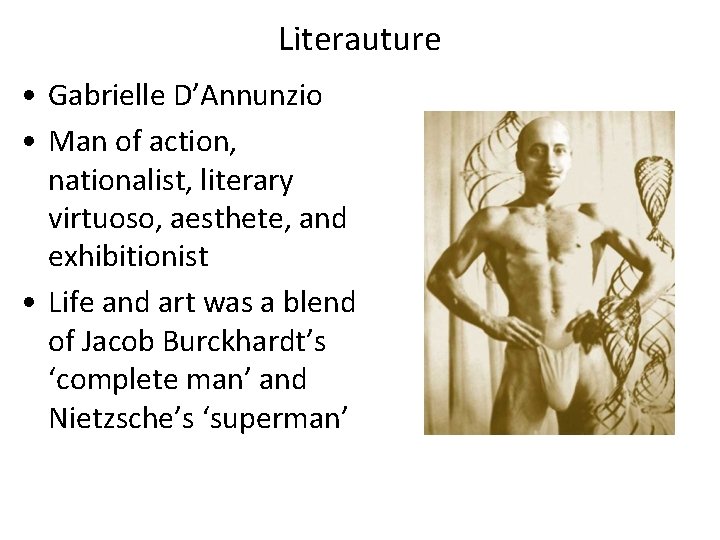
Literauture • Gabrielle D’Annunzio • Man of action, nationalist, literary virtuoso, aesthete, and exhibitionist • Life and art was a blend of Jacob Burckhardt’s ‘complete man’ and Nietzsche’s ‘superman’
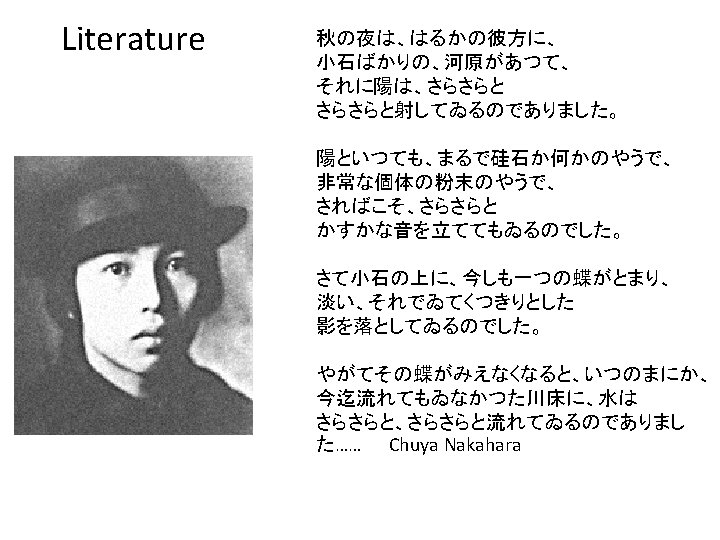
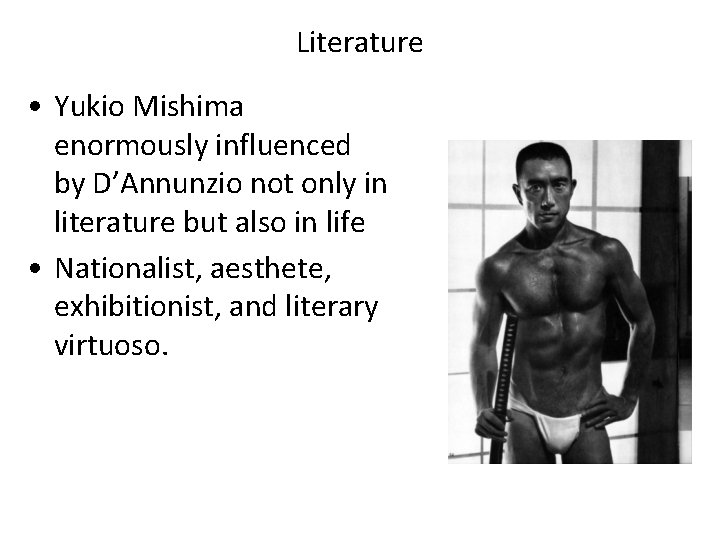
Literature • Yukio Mishima enormously influenced by D’Annunzio not only in literature but also in life • Nationalist, aesthete, exhibitionist, and literary virtuoso.
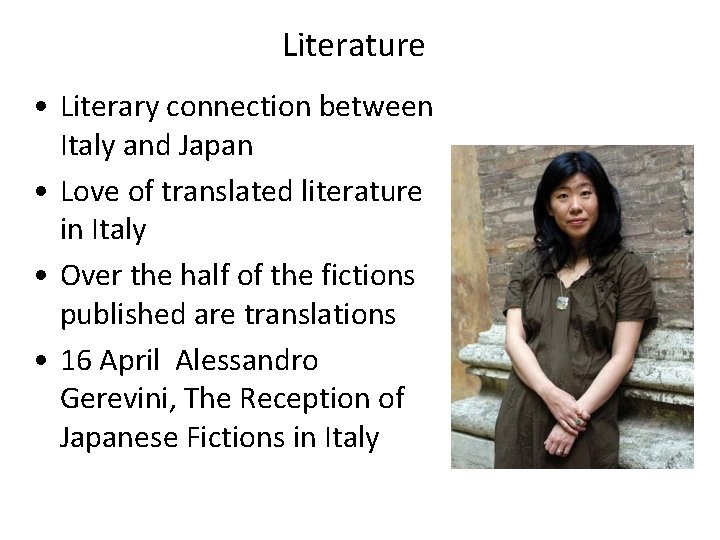
Literature • Literary connection between Italy and Japan • Love of translated literature in Italy • Over the half of the fictions published are translations • 16 April Alessandro Gerevini, The Reception of Japanese Fictions in Italy
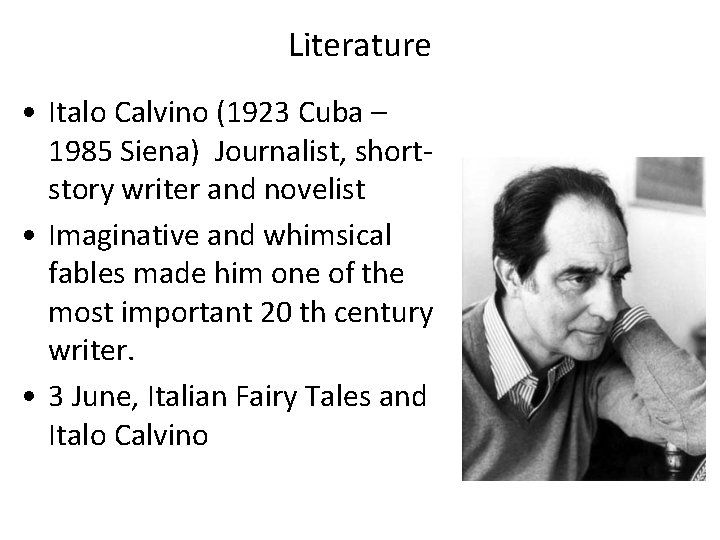
Literature • Italo Calvino (1923 Cuba – 1985 Siena) Journalist, shortstory writer and novelist • Imaginative and whimsical fables made him one of the most important 20 th century writer. • 3 June, Italian Fairy Tales and Italo Calvino
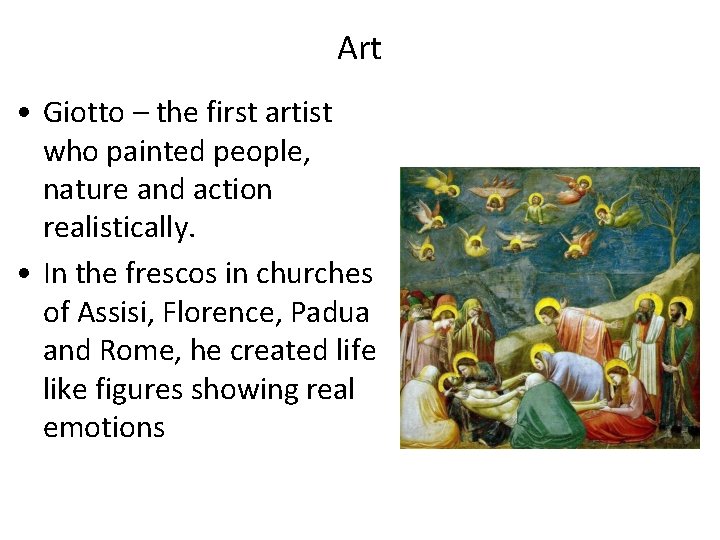
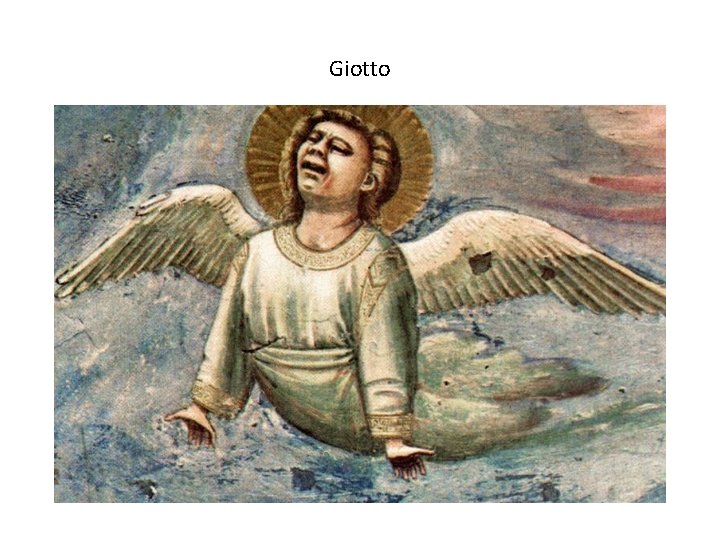
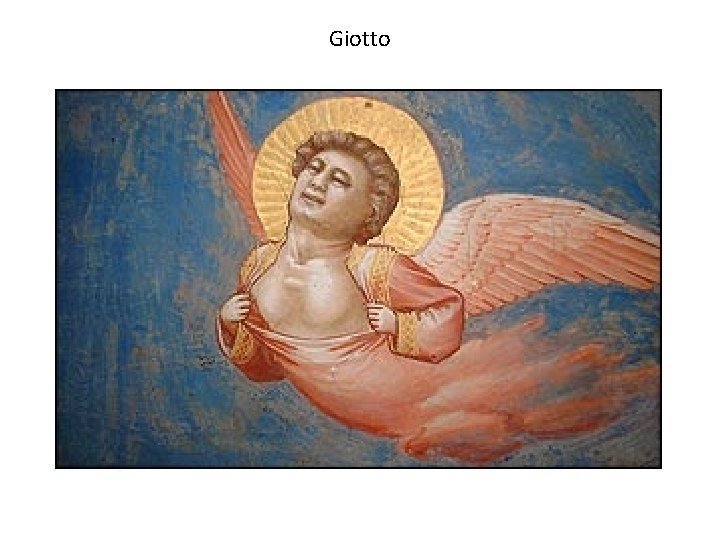
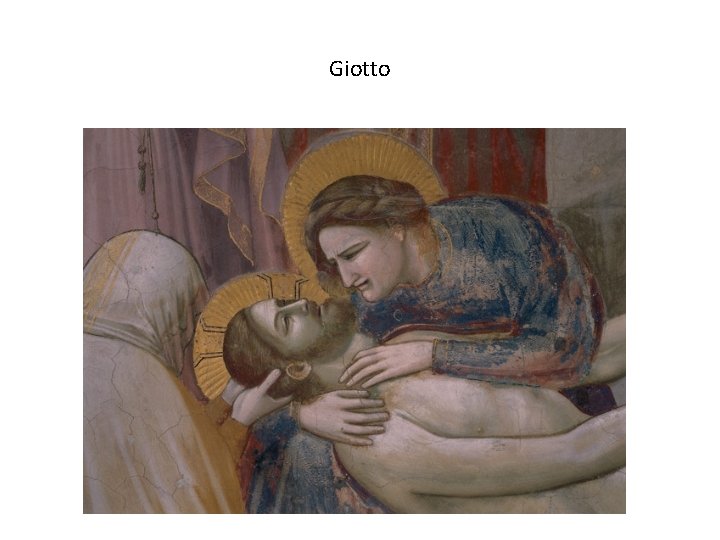
Art • Giotto – the first artist who painted people, nature and action realistically. • In the frescos in churches of Assisi, Florence, Padua and Rome, he created life like figures showing real emotions
Giotto
Giotto
Giotto
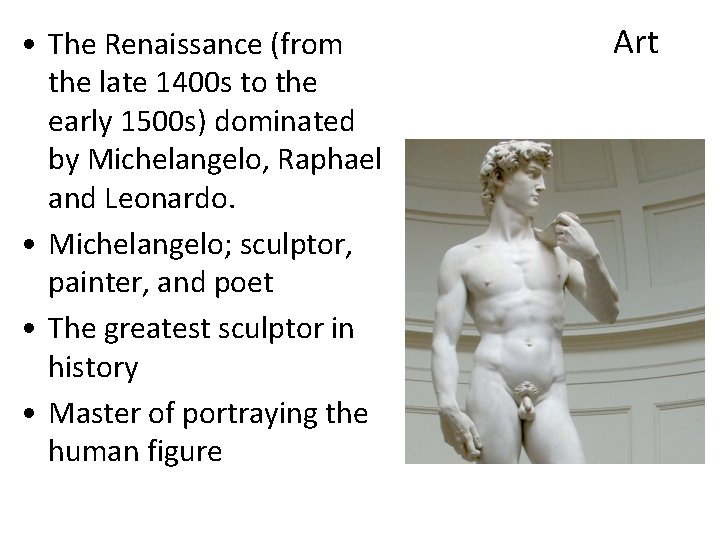
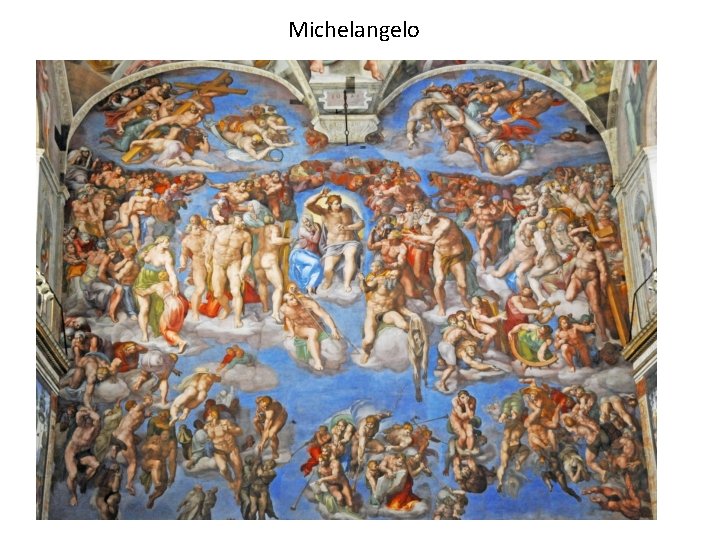
• The Renaissance (from the late 1400 s to the early 1500 s) dominated by Michelangelo, Raphael and Leonardo. • Michelangelo; sculptor, painter, and poet • The greatest sculptor in history • Master of portraying the human figure Art
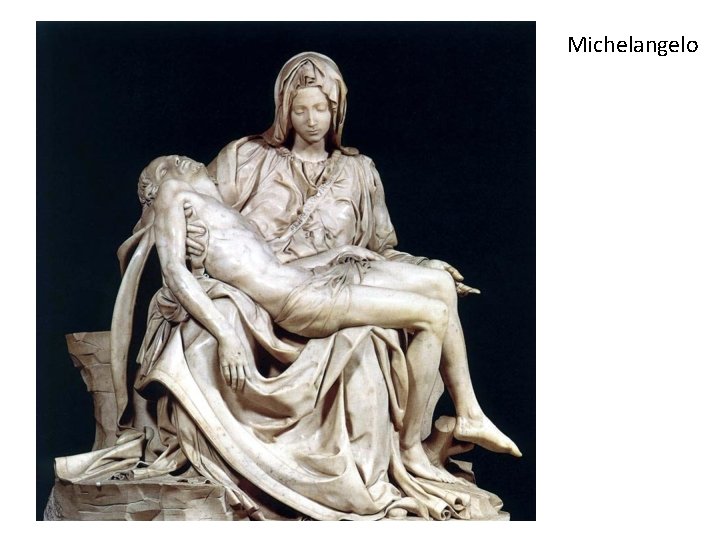
Michelangelo
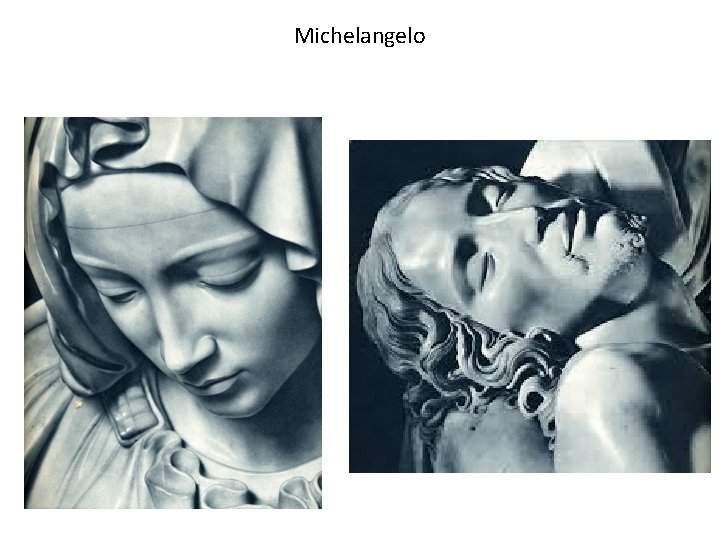
Michelangelo
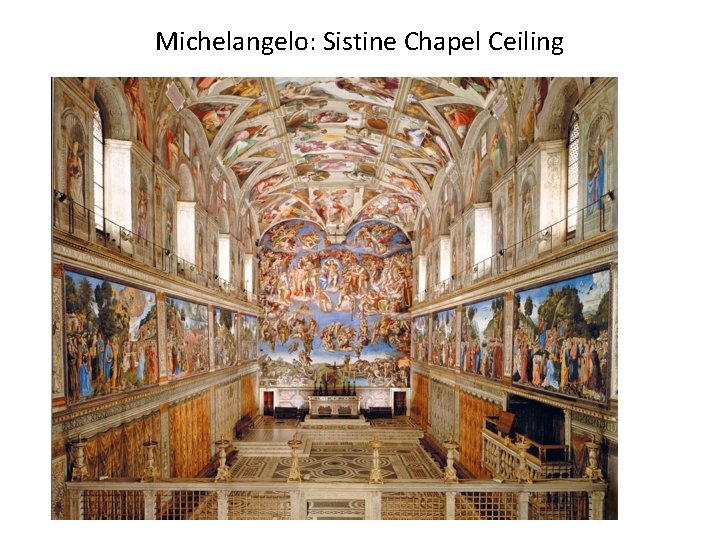
Michelangelo: Sistine Chapel Ceiling
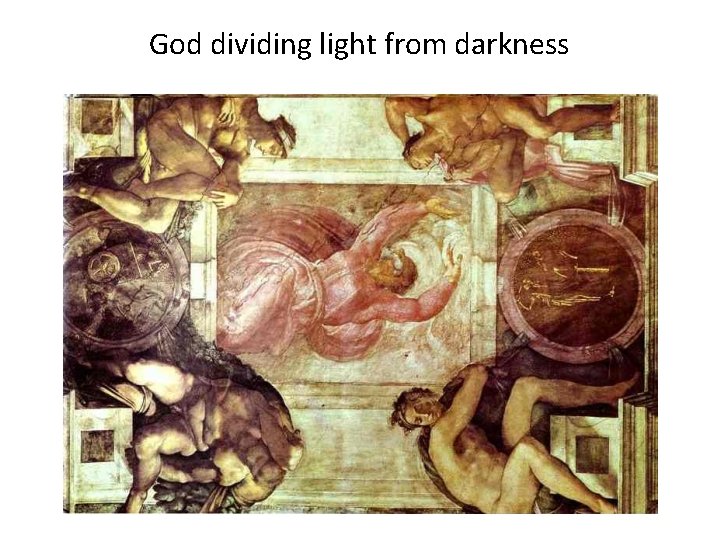
God dividing light from darkness
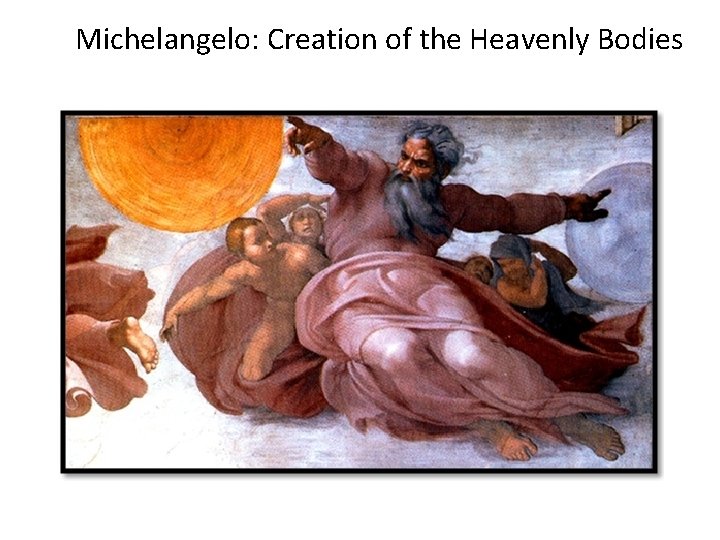
Michelangelo: Creation of the Heavenly Bodies
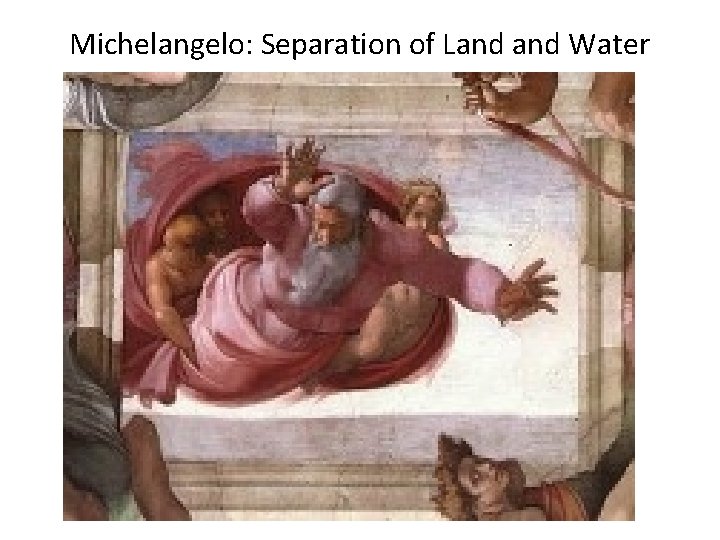
Michelangelo: Separation of Land Water
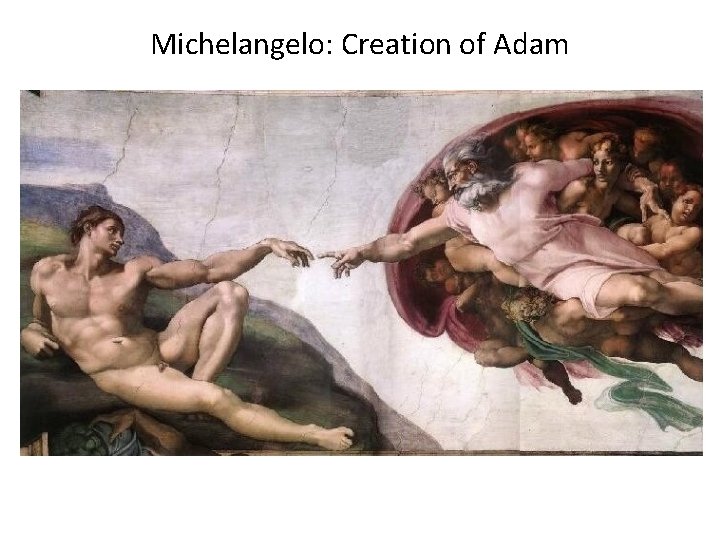
Michelangelo: Creation of Adam
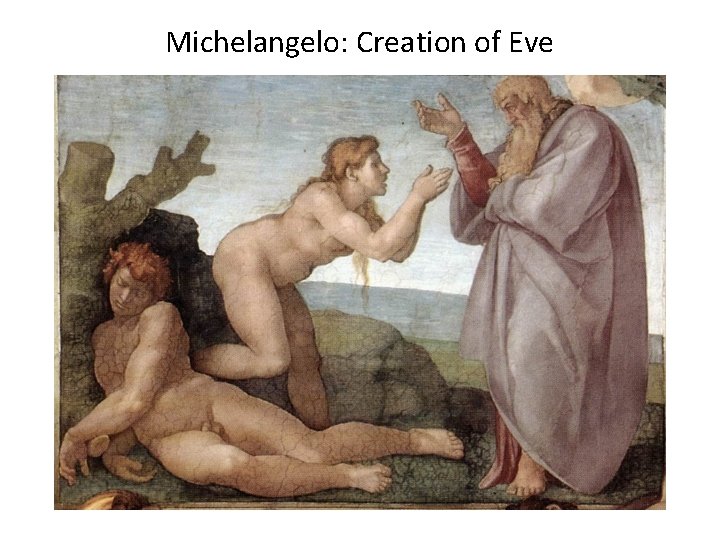
Michelangelo: Creation of Eve
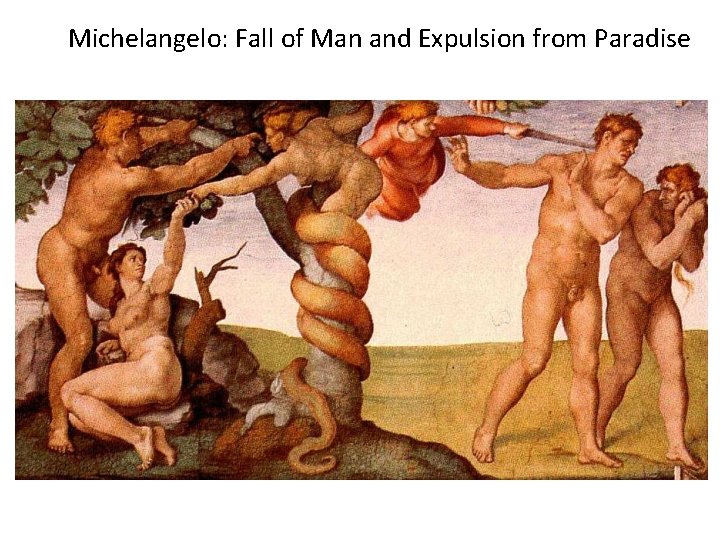
Michelangelo: Fall of Man and Expulsion from Paradise
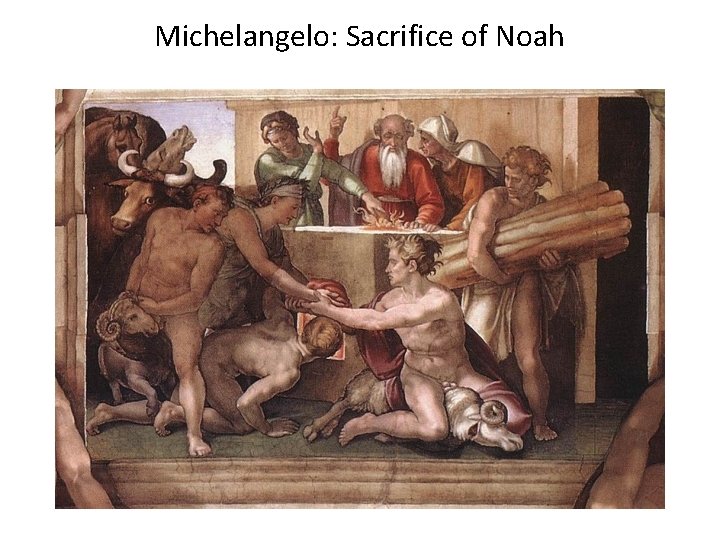
Michelangelo: Sacrifice of Noah
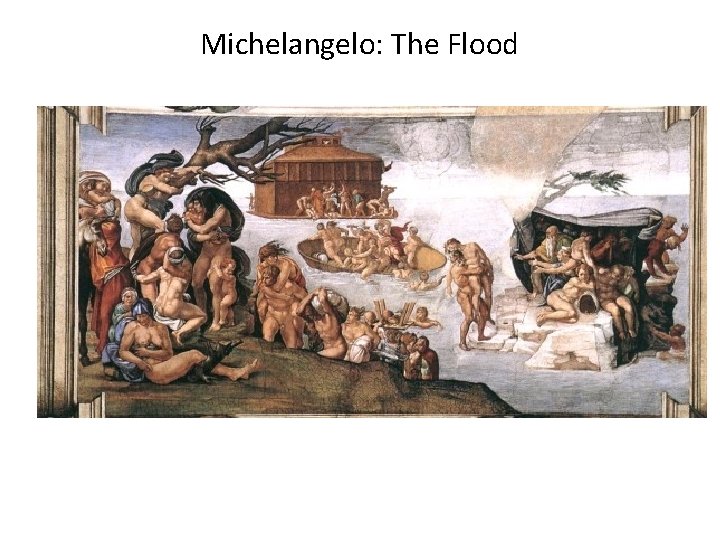
Michelangelo: The Flood
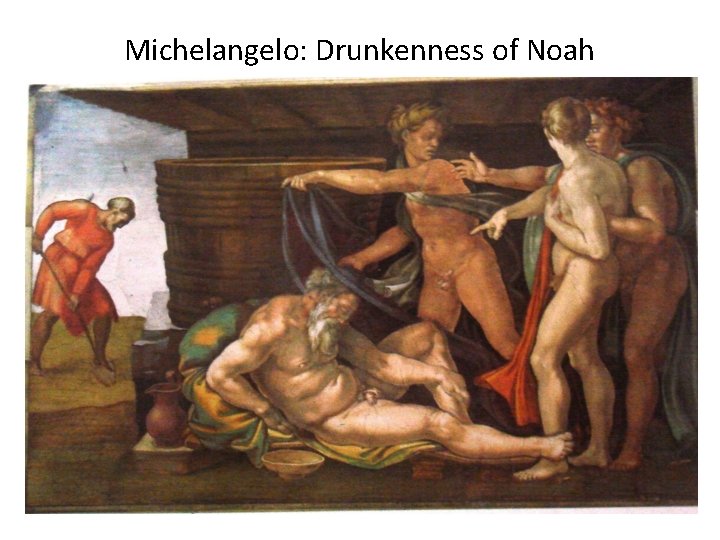
Michelangelo: Drunkenness of Noah
Michelangelo
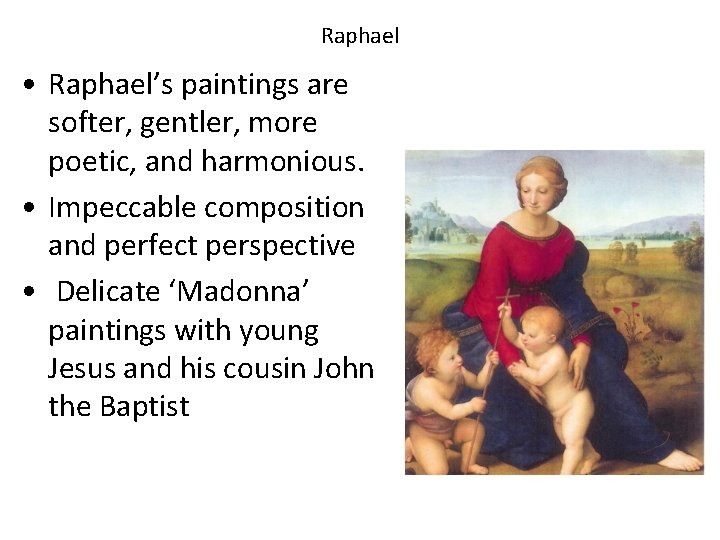
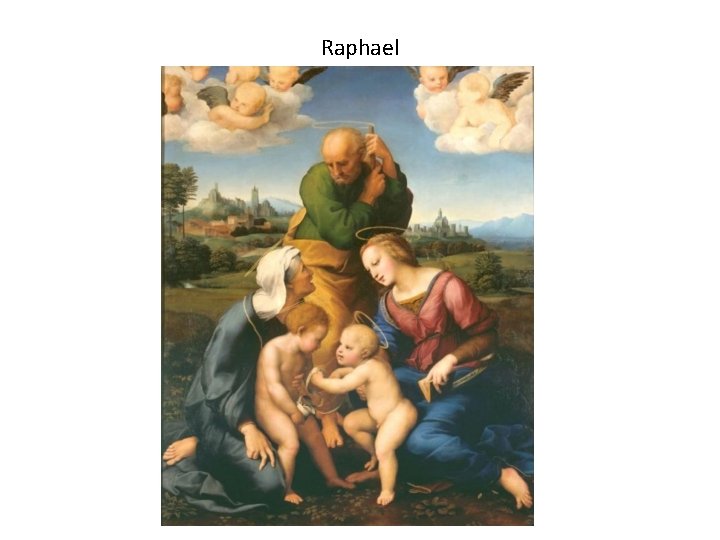
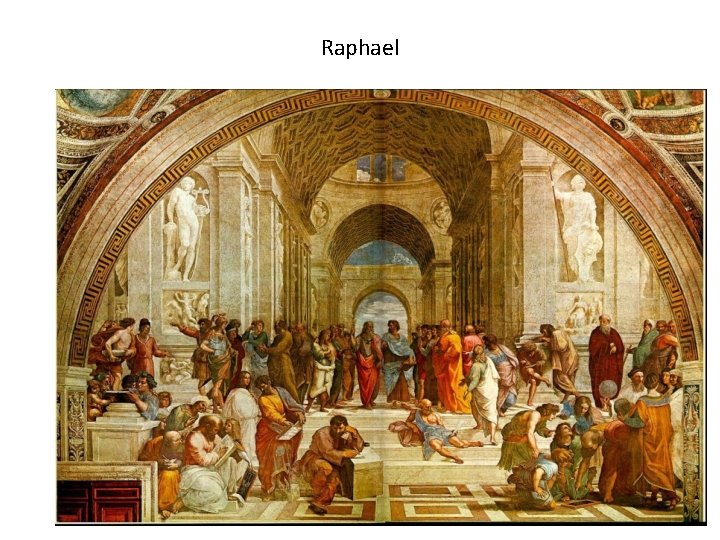
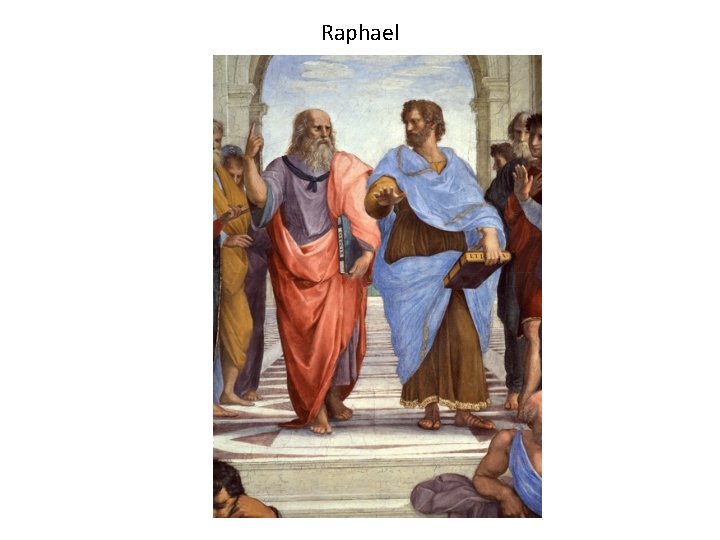
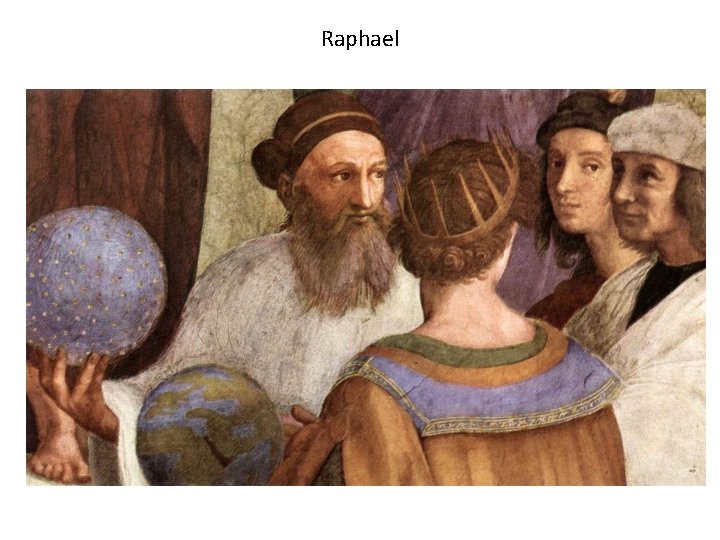
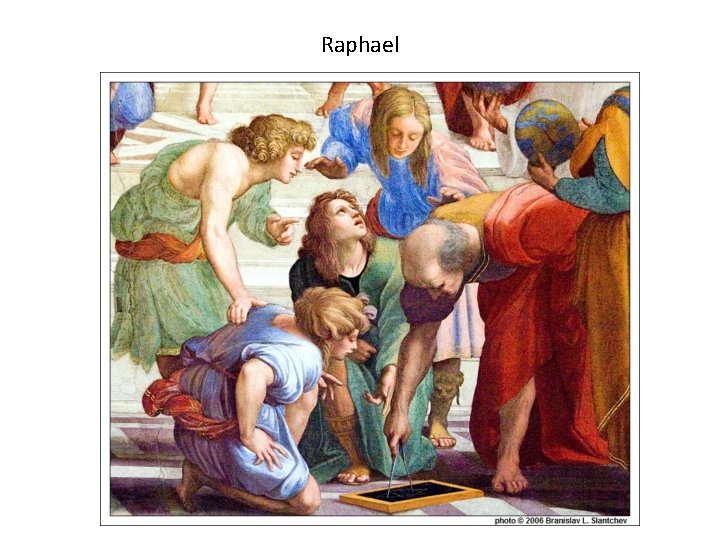
Raphael • Raphael’s paintings are softer, gentler, more poetic, and harmonious. • Impeccable composition and perfect perspective • Delicate ‘Madonna’ paintings with young Jesus and his cousin John the Baptist
Raphael
Raphael
Raphael
Raphael
Raphael
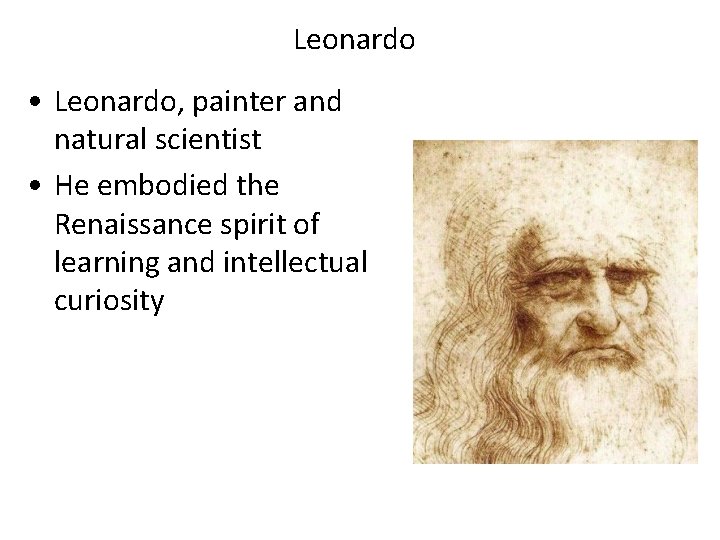
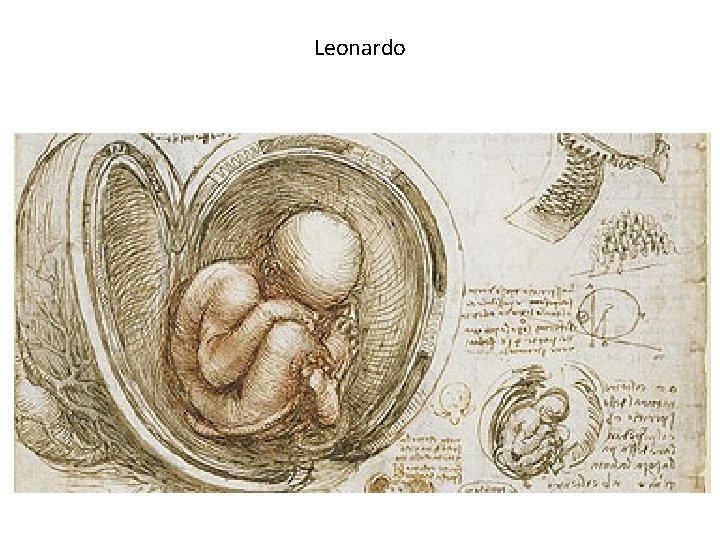
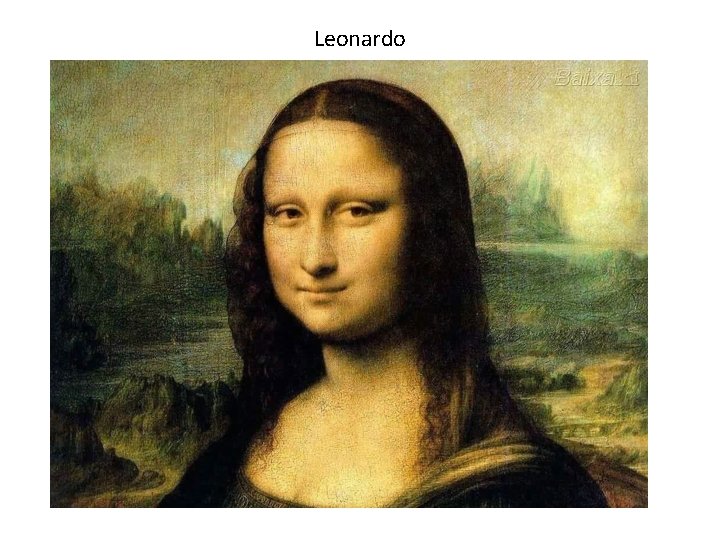
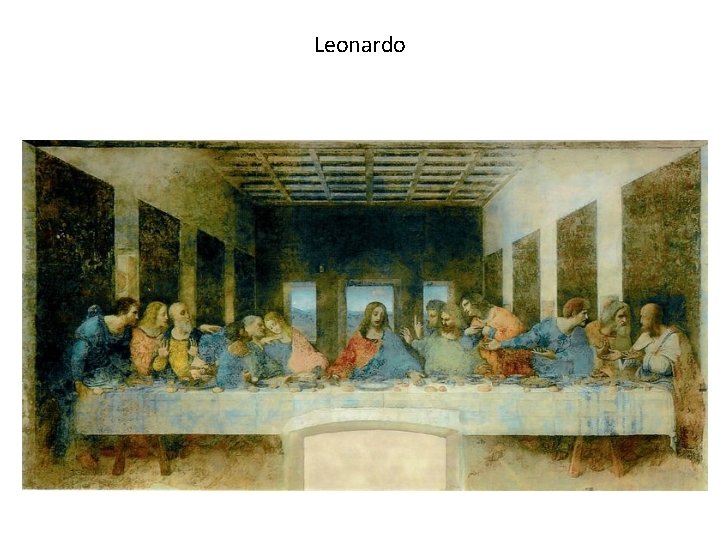
Leonardo • Leonardo, painter and natural scientist • He embodied the Renaissance spirit of learning and intellectual curiosity
Leonardo
Leonardo
Leonardo
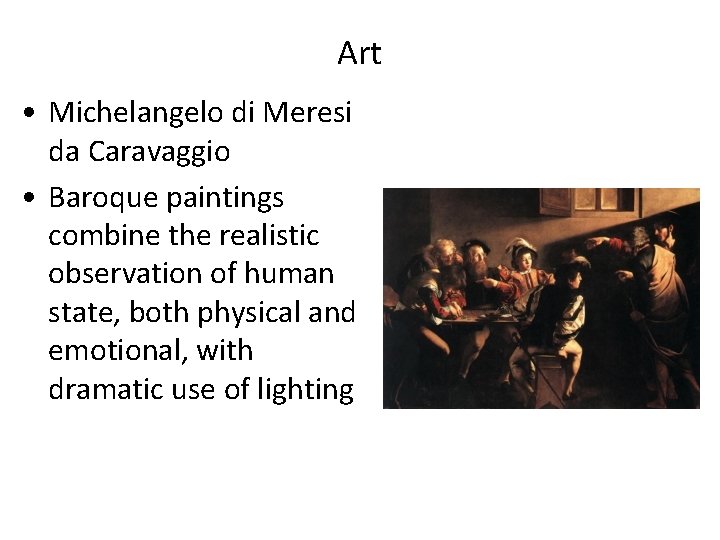
Art • Michelangelo di Meresi da Caravaggio • Baroque paintings combine the realistic observation of human state, both physical and emotional, with dramatic use of lighting
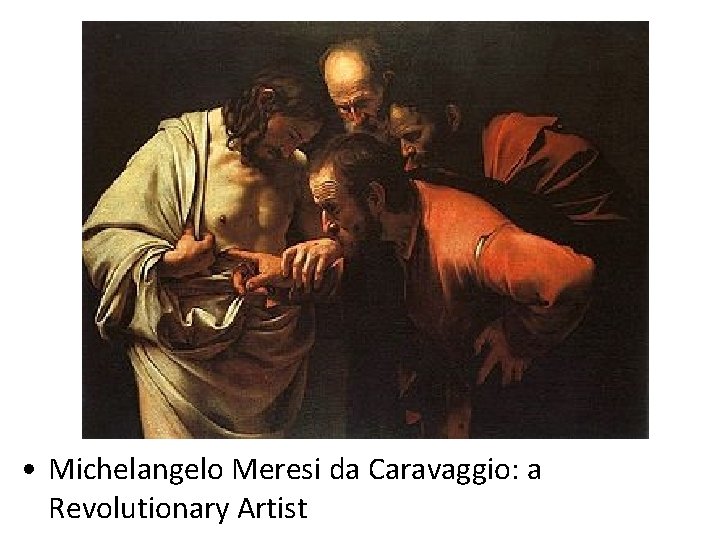
Caravaggio • Michelangelo Meresi da Caravaggio: a Revolutionary Artist
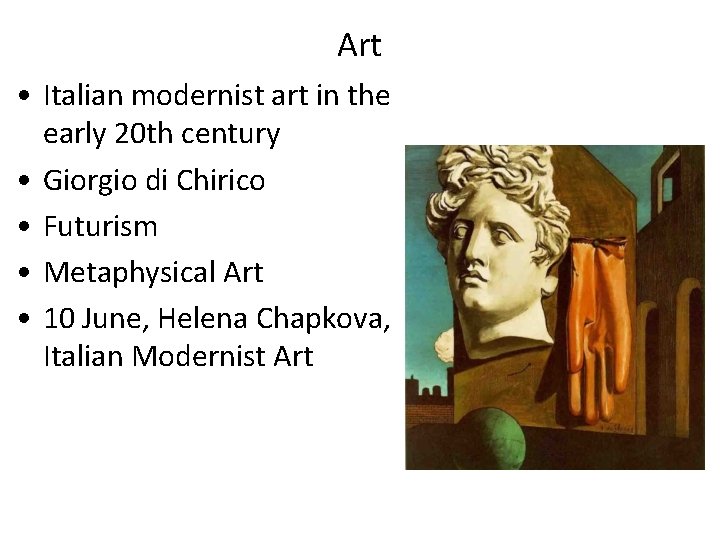
Art • Italian modernist art in the early 20 th century • Giorgio di Chirico • Futurism • Metaphysical Art • 10 June, Helena Chapkova, Italian Modernist Art
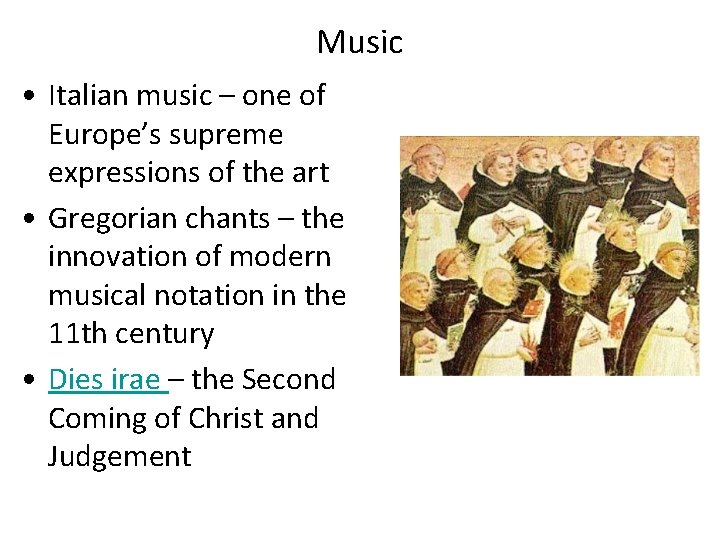
Music • Italian music – one of Europe’s supreme expressions of the art • Gregorian chants – the innovation of modern musical notation in the 11 th century • Dies irae – the Second Coming of Christ and Judgement
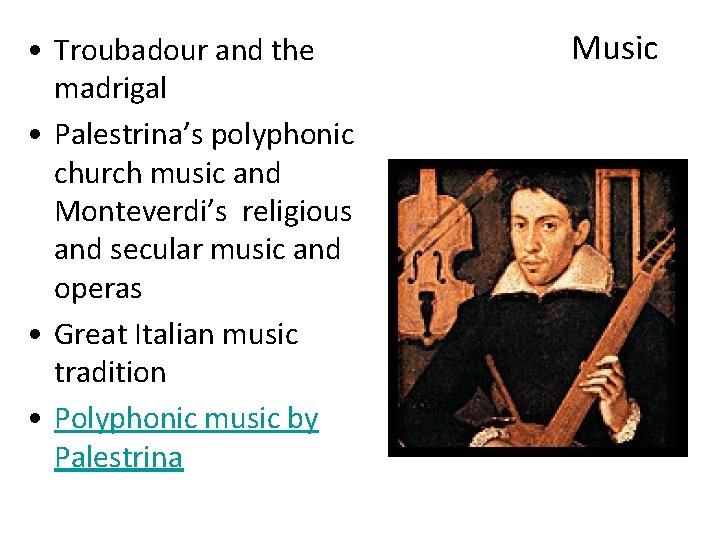
• Troubadour and the madrigal • Palestrina’s polyphonic church music and Monteverdi’s religious and secular music and operas • Great Italian music tradition • Polyphonic music by Palestrina Music
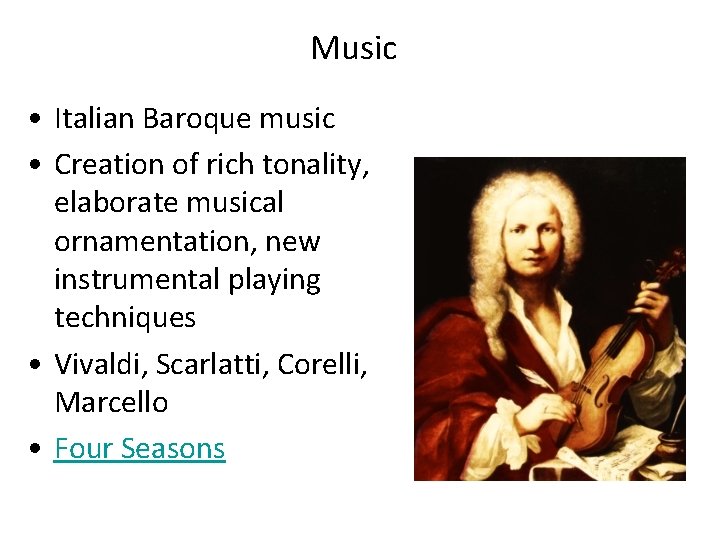
Music • Italian Baroque music • Creation of rich tonality, elaborate musical ornamentation, new instrumental playing techniques • Vivaldi, Scarlatti, Corelli, Marcello • Four Seasons
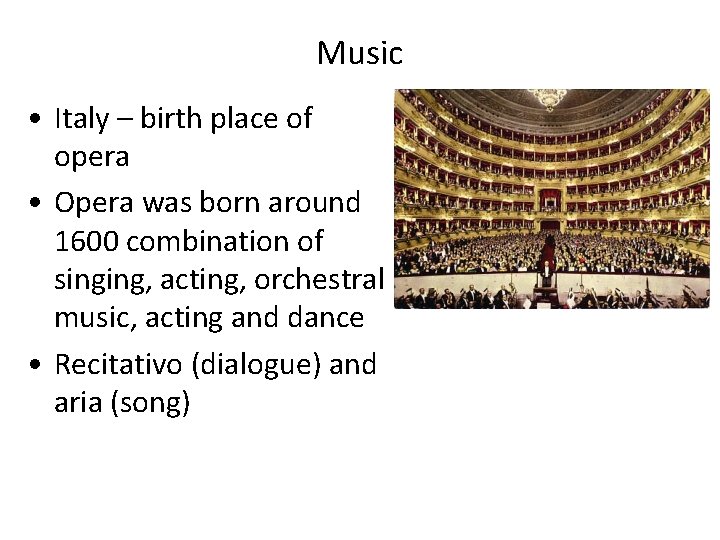
Music • Italy – birth place of opera • Opera was born around 1600 combination of singing, acting, orchestral music, acting and dance • Recitativo (dialogue) and aria (song)
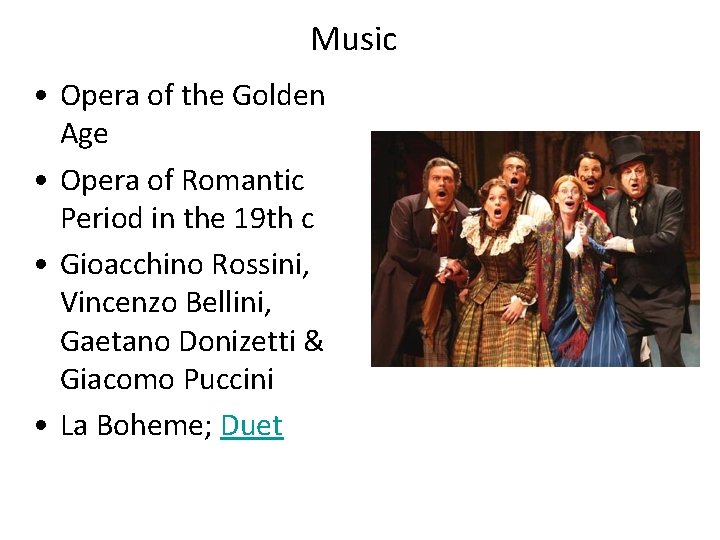
Music • Opera of the Golden Age • Opera of Romantic Period in the 19 th c • Gioacchino Rossini, Vincenzo Bellini, Gaetano Donizetti & Giacomo Puccini • La Boheme; Duet
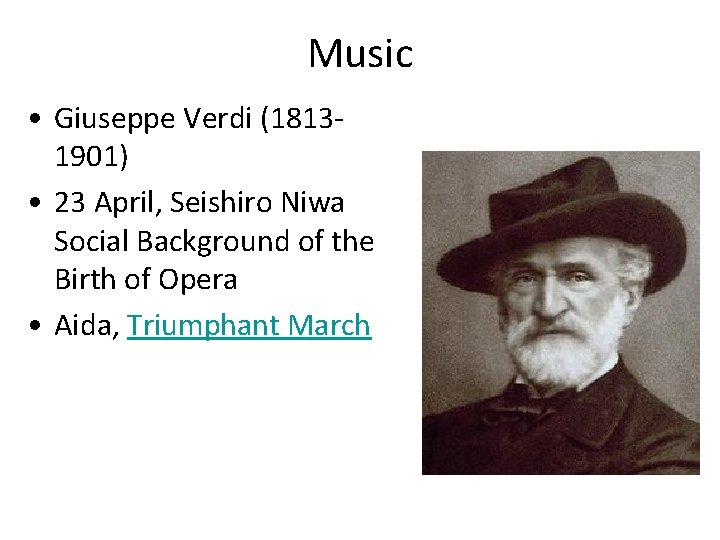
Music • Giuseppe Verdi (18131901) • 23 April, Seishiro Niwa Social Background of the Birth of Opera • Aida, Triumphant March