
IT Security for the LHCb experiment 3 rd
IT Security for the LHCb experiment 3 rd Control System Cyber-Security Workshop (CS)2/HEP ICALEPCS – Grenoble Enrico Bonaccorsi, (CERN) enrico. bonaccorsi@cern. ch Loic Brarda, (CERN) loic. brarda@cern. ch Mohamed Chebbi, (CERN) mohamed. chebbi@cern. ch Niko Neufeld, (CERN) niko. neufeld@cern. ch Enrico Papi, (CERN) enrico. papi@cern. ch
Outline • LHCb intro • IT Security – several point of view o o Security risks Physical and host local security approach. Protected perimeter Network security implementation • Central Log System • Data Security • Log and data analysis Enrico Bonaccorsi, Loic Brarda, Mohamed Chebbi, Niko Neufeld, Enrico Papi 2
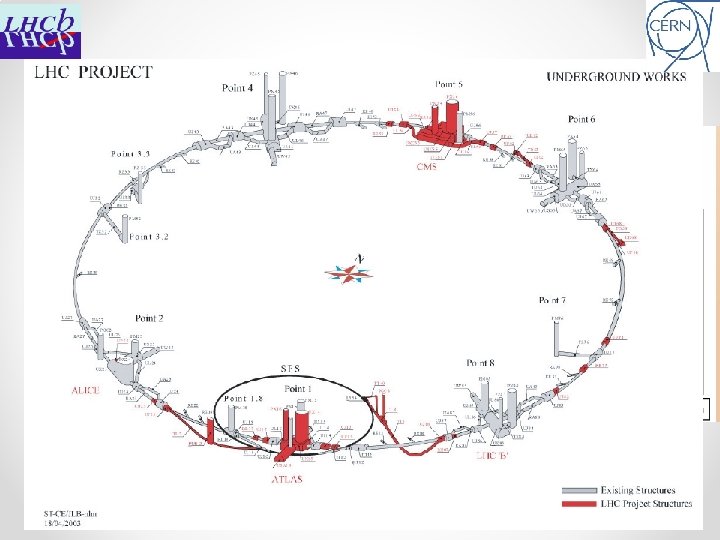
LHCb • Completely isolated network o Data acquisition system o Experiment Control System • Heterogeneus Enviroment o Collaboration o 2000 Servers and embedded systems o 200 Active users o Different vendors o Custom System “self-developed“ o Manageability VS strict security o Security and users impact Enrico Bonaccorsi, Loic Brarda, Mohamed Chebbi, Niko Neufeld 3
IT Security several point of view • • • Physical Security Local Security Network Security Data Security • Local and Remote Access • High Availability • Preemptive measures • External connectivity • Management of Application and Operating Systems • Industrial security Enrico Bonaccorsi, Loic Brarda, Mohamed Chebbi, Niko Neufeld, Enrico Papi 4
Security risks • Interruption in Data Acquisition • Unauthorized modification/destruction to data and systems • Unauthorized disclosure of data • Denial of service Enrico Bonaccorsi, Loic Brarda, Mohamed Chebbi, Niko Neufeld, Enrico Papi 5
Security risks (2) • Users Behavior o o Theft of authentication credentials Lack of awareness, caralessness or negligence Unfair and fraudulent behavior Human errors • Attack and misconfiguration o Virus – Malware – Trojan – Backdoor – Rootkits - Worm – Hiding in encrypted sessions - etc o Sabotage o Unauthorized access o Information o Human errors • Environmental o Theft of devices that contain data o Destructive events (earthquakes, fire, flood, etc) • Intentional, accidental, due to negligence o Human errors Enrico Bonaccorsi, Loic Brarda, Mohamed Chebbi, Niko Neufeld, Enrico Papi 6
Security Policy • Security policies have been produced following the CERN CNIC recommendations: o https: //edms. cern. ch/file/1062503/2/Security_Baseline_for_File_Hosting. pdf o https: //edms. cern. ch/file/1062500/2/Security_Baseline_for_Servers. pdf o https: //edms. cern. ch/file/1062502/2/Security_Baseline_for_Web_Hosting. pdf 7
Physical and host local security approach • Physical: o Authorization required to access Point 8 o Biometric required to access the underground area • Local o Private personal account for each LHCb user • Few shared account are still in use o PAM/Domain Policies used to restrict access to critical servers between LHCb groups o IPMI access protected by router ACL o Applications centrally managed by Quattor/System Center Deployment Services o No internet routing allowed except for few gateway server o Only WEB access granted through an HTTP proxy Enrico Bonaccorsi, Loic Brarda, Mohamed Chebbi, Niko Neufeld, Enrico Papi 8
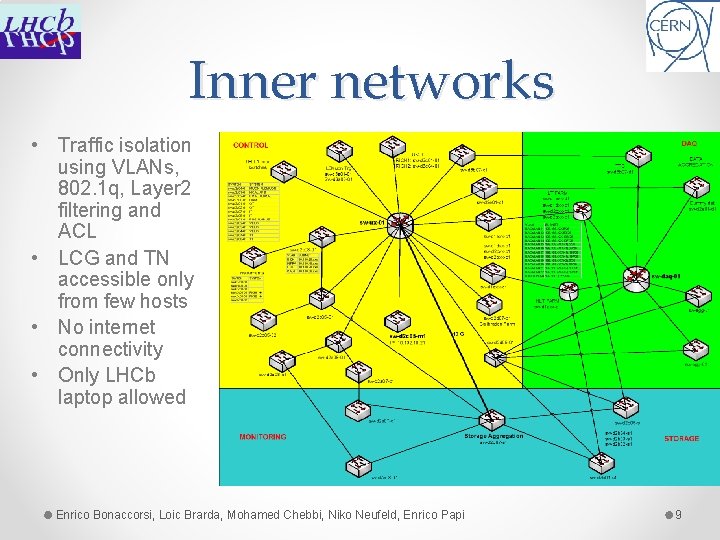
Inner networks • Traffic isolation using VLANs, 802. 1 q, Layer 2 filtering and ACL • LCG and TN accessible only from few hosts • No internet connectivity • Only LHCb laptop allowed Enrico Bonaccorsi, Loic Brarda, Mohamed Chebbi, Niko Neufeld, Enrico Papi 9

• General public and log in services/ Terminal services o RDP windows remote desktops o SSH gateways o NX linux remote desktops o Web services Network Security implementation • Network segmentation and trusted zones o level of trust based on three tiers the sensitivity of the data being processed • Anomaly & Intrusion detection Enrico Bonaccorsi, Loic Brarda, Mohamed Chebbi, Niko Neufeld, Enrico Papi 10
Central Log System • All the windows and Linux servers send their logs to a clustered log server • High Availability granted by o o Active/Active two node cluster system Raid 1 on each cluster node for the local disk Filesystem replica over network between nodes Backup on CASTOR • Logs exported to the users by NFS Enrico Bonaccorsi, Loic Brarda, Mohamed Chebbi, Niko Neufeld, Enrico Papi 11
Data Security • Shared filesystem o served by a cluster of five nodes on redundant hardware o High Availability granted by Cluster of NFS/SMB servers that export the filesystem to the entire experiment o Data protection: • Short term based on different storage raid set using RSYNC for immediate user access (file deleted by mistake by the user, etc) • Long Term based on tape using CASTOR for… ever? • Backup sent to CASTOR and stored on type • Servers and Control PCs o High availability granted by RAID 1 • SW RAID used when HW raid is not available o Daily Backup based on Tivoli (Thanks to IT dep. ) Enrico Bonaccorsi, Loic Brarda, Mohamed Chebbi, Niko Neufeld, Enrico Papi 12
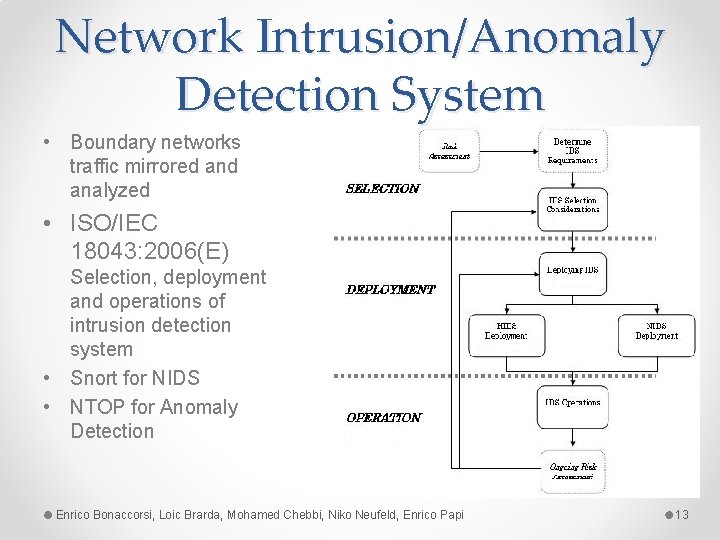
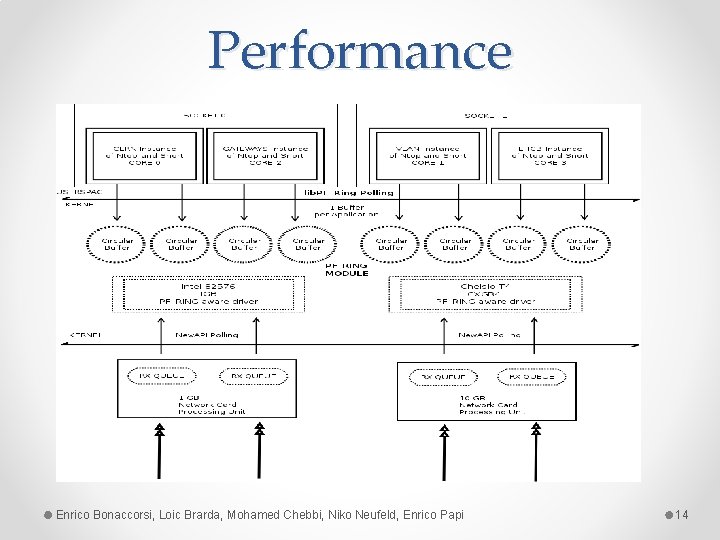
Network Intrusion/Anomaly Detection System • Boundary networks traffic mirrored analyzed • ISO/IEC 18043: 2006(E) Selection, deployment and operations of intrusion detection system • Snort for NIDS • NTOP for Anomaly Detection Enrico Bonaccorsi, Loic Brarda, Mohamed Chebbi, Niko Neufeld, Enrico Papi 13
Performance Enrico Bonaccorsi, Loic Brarda, Mohamed Chebbi, Niko Neufeld, Enrico Papi 14
Questions? Enrico Bonaccorsi, Loic Brarda, Mohamed Chebbi, Niko Neufeld, Enrico Papi 15
Backup slide 16
Snort Log data Analysis Raw logs generated: Ntop – Suspiciuous (Syslog) Ntop – Others (pcap) Snort > Barnyard > Alerts (Syslog) Snort – Packets (pcap) Barnyhard to offload output processing Parsing Visual – Links Graphs Correlation to crosscheck to exclude false positives Centralized Analysis console is not strictly necessary Enrico Bonaccorsi, Loic Brarda, Mohamed Chebbi, Niko Neufeld, Enrico Papi

18
- Slides: 18