
It includes two phases Intra bony Phase Intra
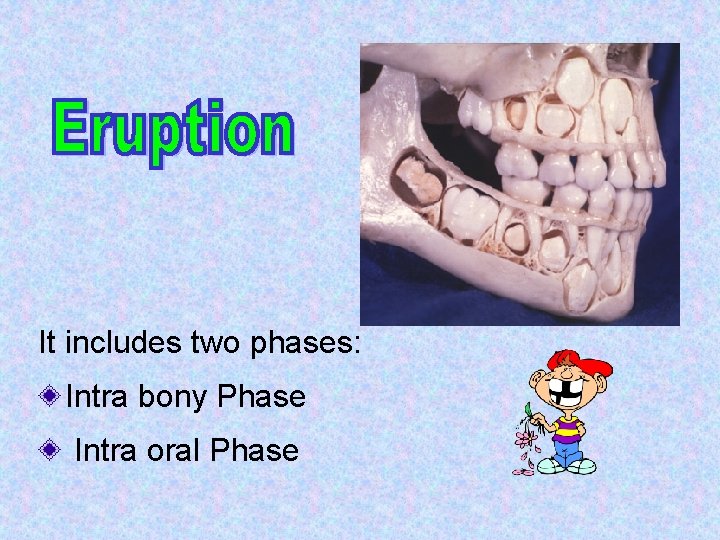
It includes two phases: Intra bony Phase Intra oral Phase
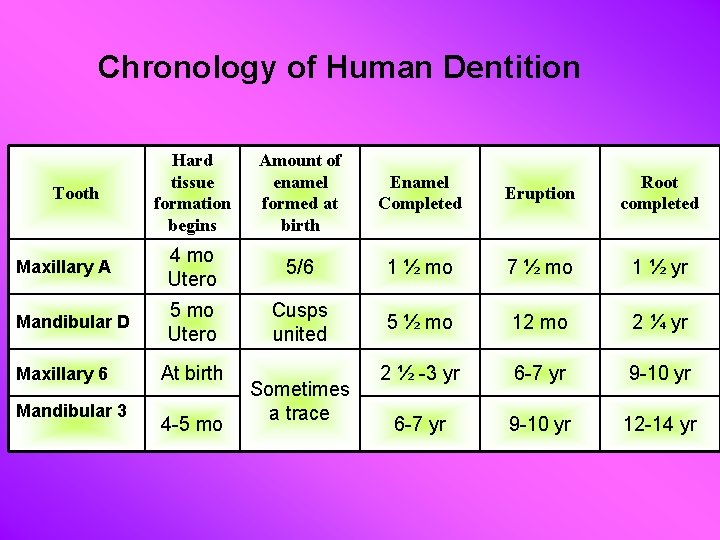
Chronology of Human Dentition Hard tissue formation begins Amount of enamel formed at birth Enamel Completed Eruption Root completed Maxillary A 4 mo Utero 5/6 1 ½ mo 7 ½ mo 1 ½ yr Mandibular D 5 mo Utero Cusps united 5 ½ mo 12 mo 2 ¼ yr 2 ½ -3 yr 6 -7 yr 9 -10 yr 12 -14 yr Tooth Maxillary 6 Mandibular 3 At birth 4 -5 mo Sometimes a trace
Influence of Premature loss of Primary Teeth on Eruption time of their Successors: • lose primary molars at 4 or 5 years of age and before. • If extraction of the primary molars occurs after the age of 5 years. • At 8, 9 and 10 years of age, premature loss of primary teeth
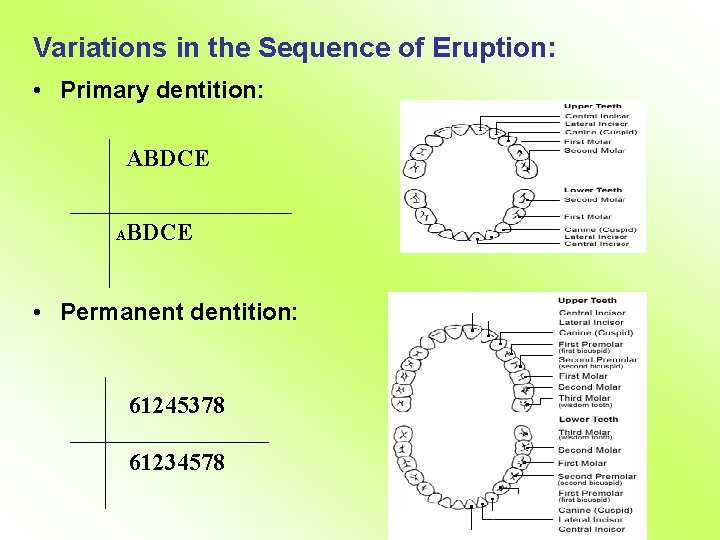
Variations in the Sequence of Eruption: • Primary dentition: ABDCE A BDCE • Permanent dentition: 61245378 61234578
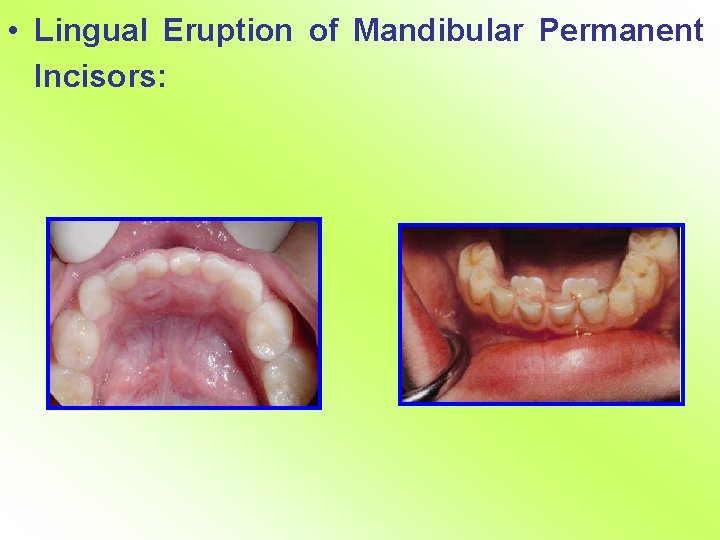
• Lingual Eruption of Mandibular Permanent Incisors:
Teething and Difficult Eruption: Increase in salivation. Itching sensation and the child put hands and fingers in the mouth. The child feels restlessness. Loss of appetite. Inflammation of gingival tissue. Pain.
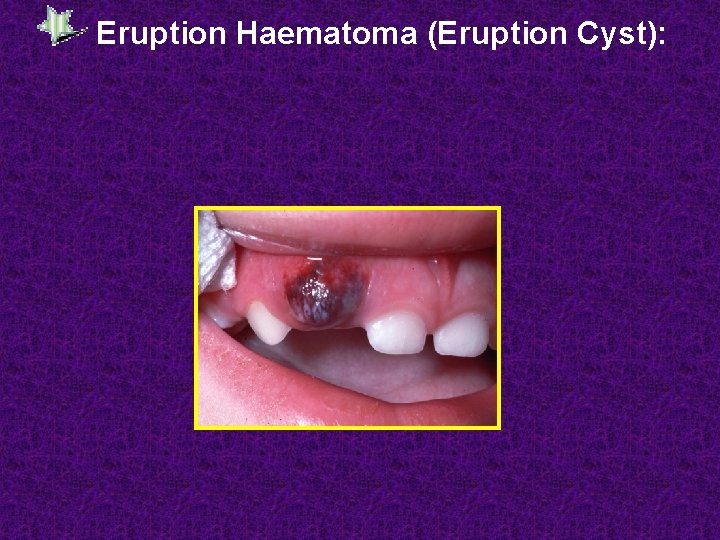
Eruption Haematoma (Eruption Cyst):
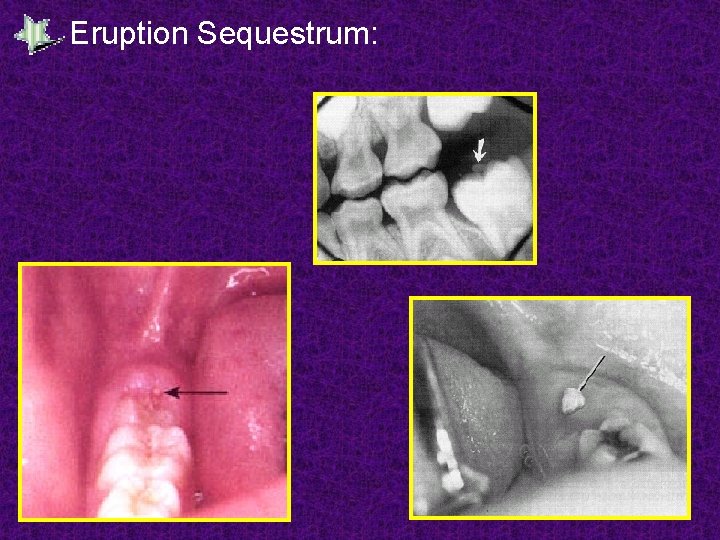
Eruption Sequestrum:
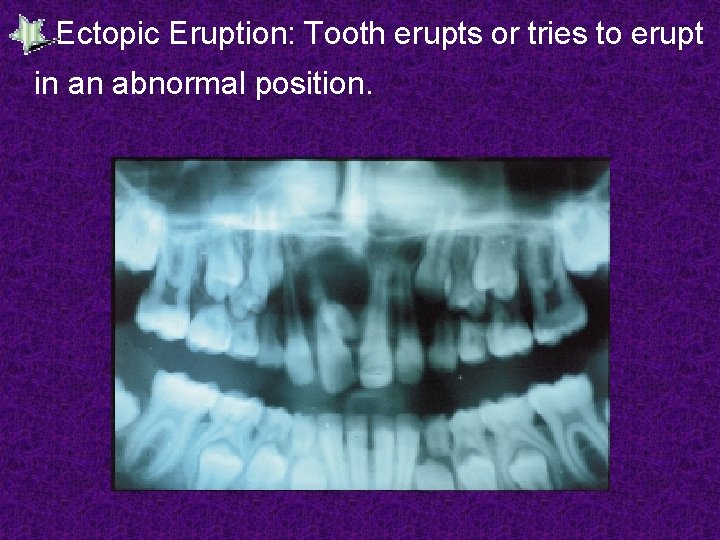
Ectopic Eruption: Tooth erupts or tries to erupt in an abnormal position.
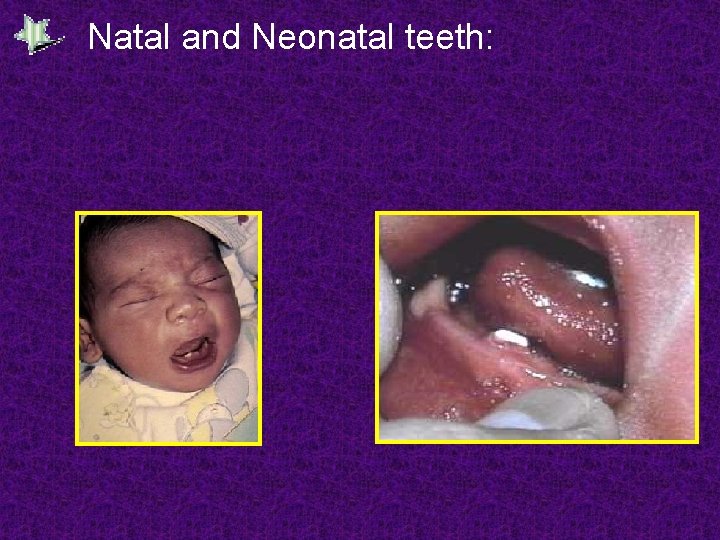
Natal and Neonatal teeth:
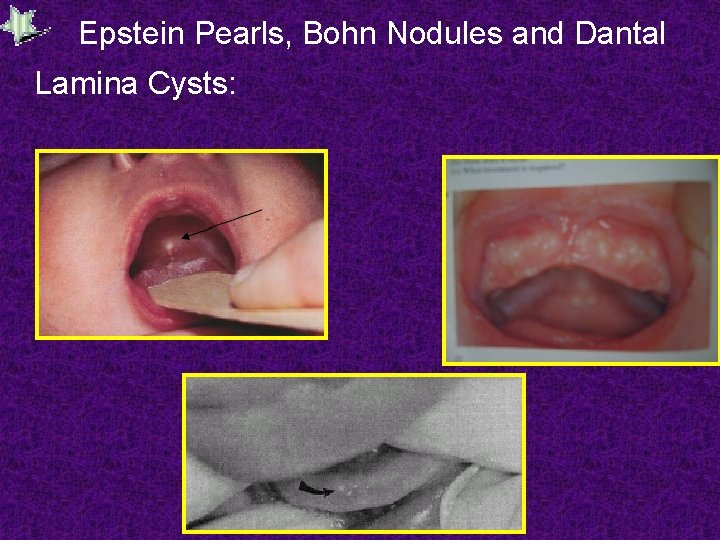
Epstein Pearls, Bohn Nodules and Dantal Lamina Cysts:
Factors that Cause Difference in Time of Eruption: 1. Race: 2. Environment: 3. Socio – economic Level: 4. Nutrition and Growth: 5. Sex: 6. Disease:
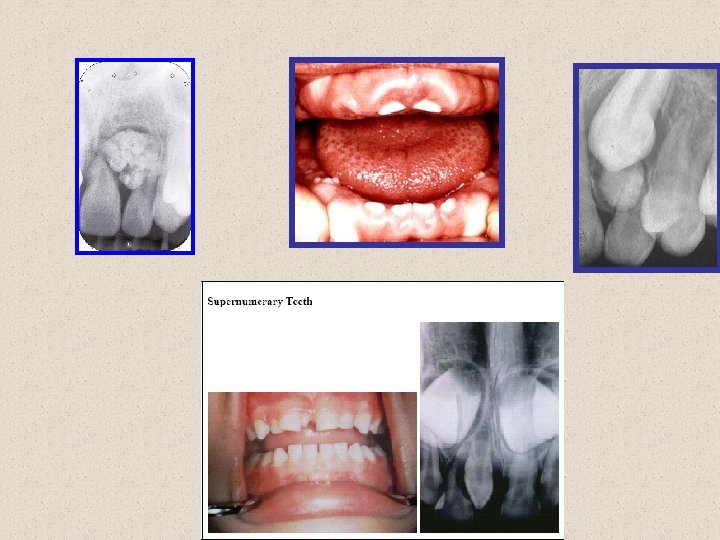
Local Factors: 1. Infection around the tooth. 2. Supernumerary teeth. 3. Trauma. 4. Gingival fibromatosis. 5. Ankylosed teeth.
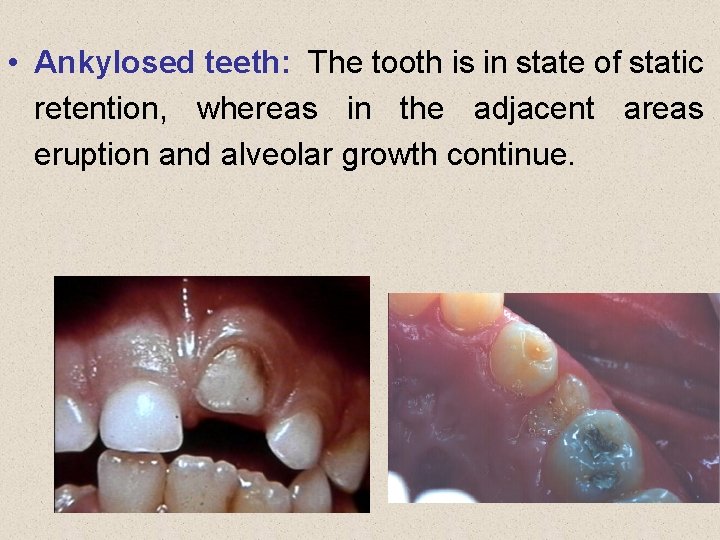
• Ankylosed teeth: The tooth is in state of static retention, whereas in the adjacent areas eruption and alveolar growth continue.

- Slides: 17