
It begins with the Hydrologic water Cycle Sun

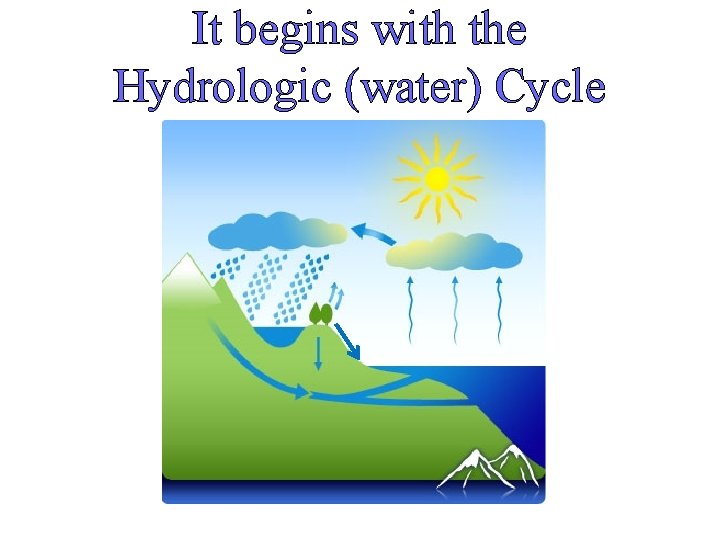
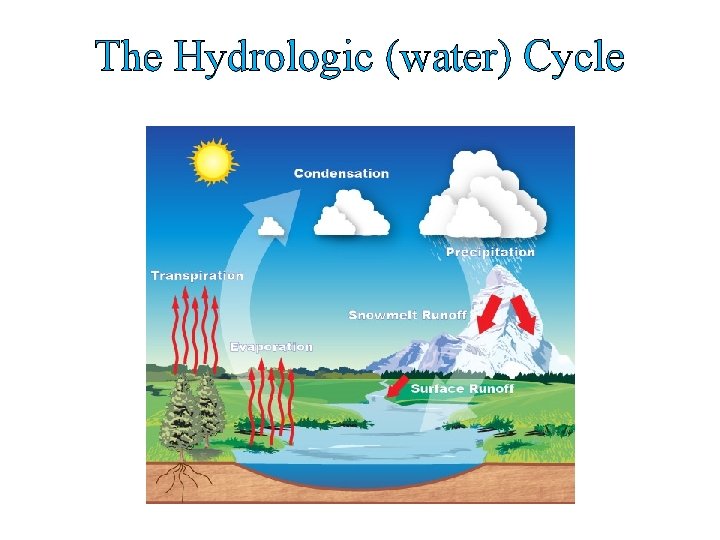
It begins with the Hydrologic (water) Cycle
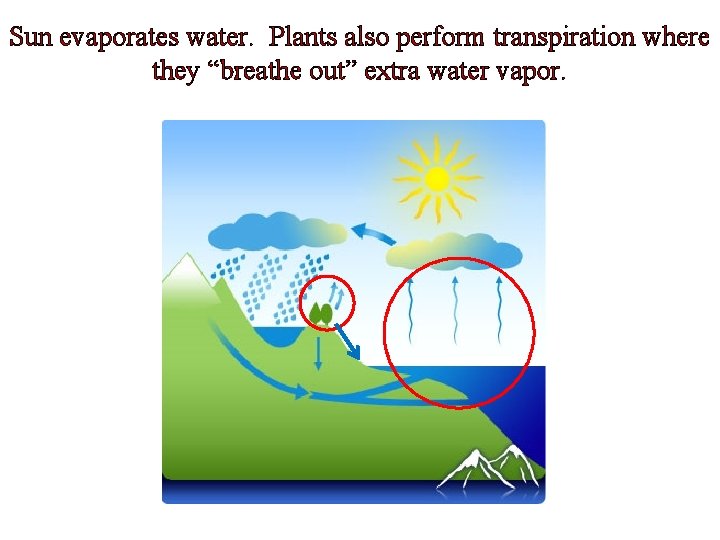
Sun evaporates water. Plants also perform transpiration where they “breathe out” extra water vapor.
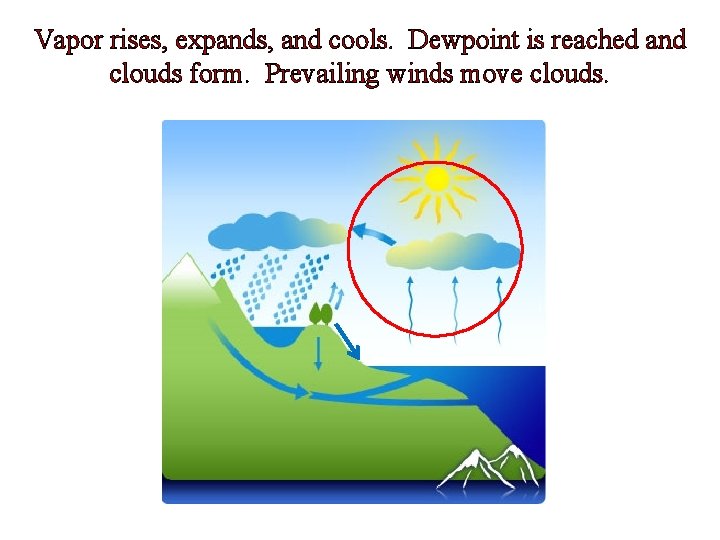
Vapor rises, expands, and cools. Dewpoint is reached and clouds form. Prevailing winds move clouds.
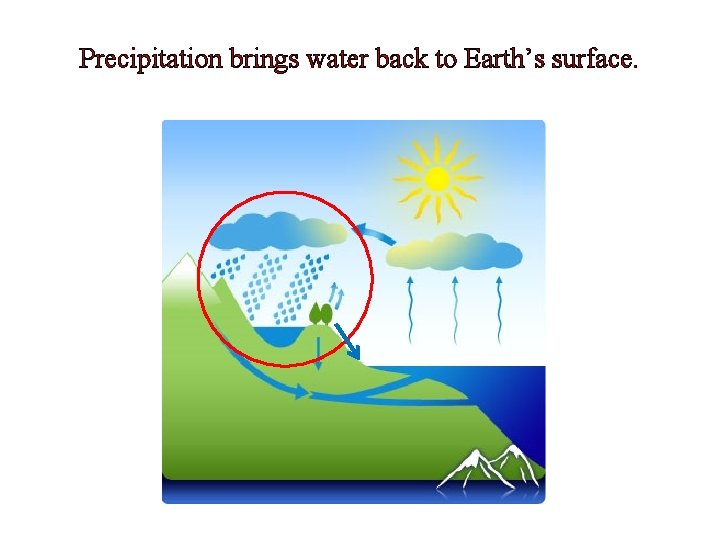
Precipitation brings water back to Earth’s surface.
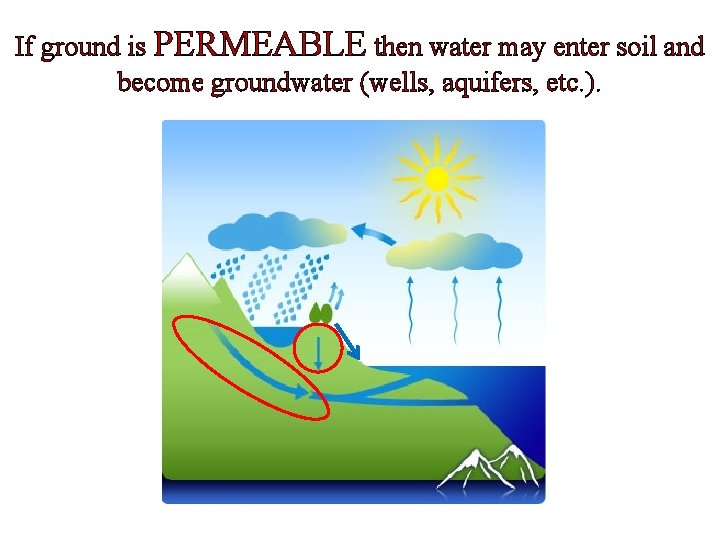
If ground is PERMEABLE then water may enter soil and become groundwater (wells, aquifers, etc. ).
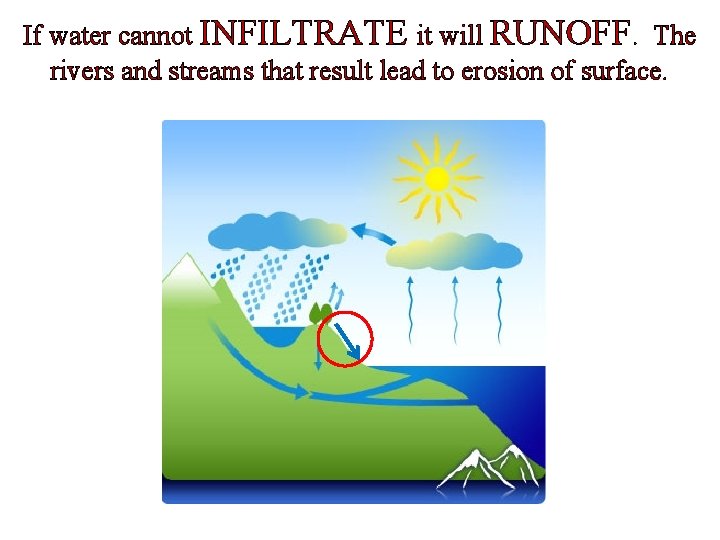
If water cannot INFILTRATE it will RUNOFF. The rivers and streams that result lead to erosion of surface.
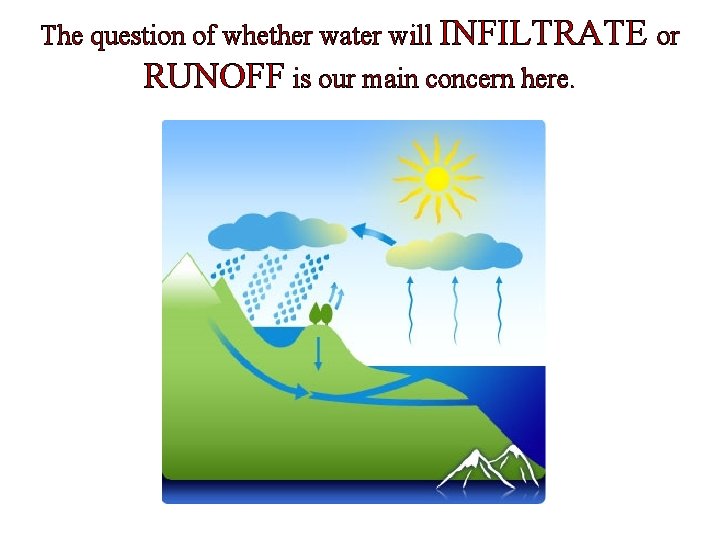
The question of whether water will INFILTRATE or RUNOFF is our main concern here.
The Hydrologic (water) Cycle
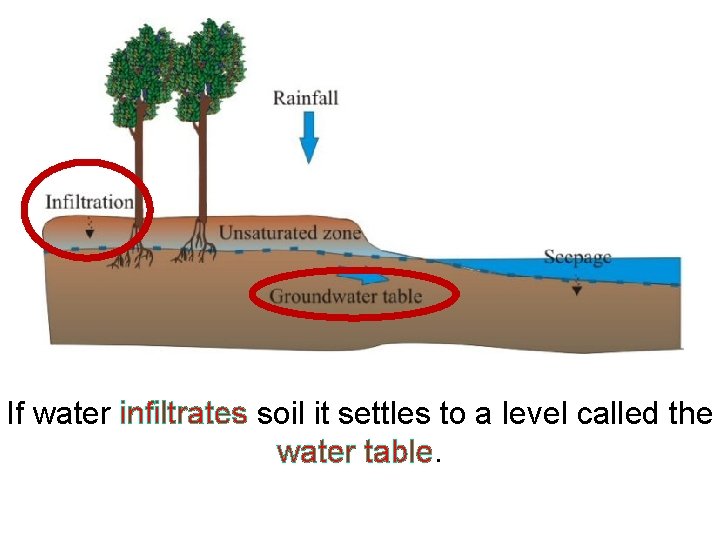
If water infiltrates soil it settles to a level called the water table.
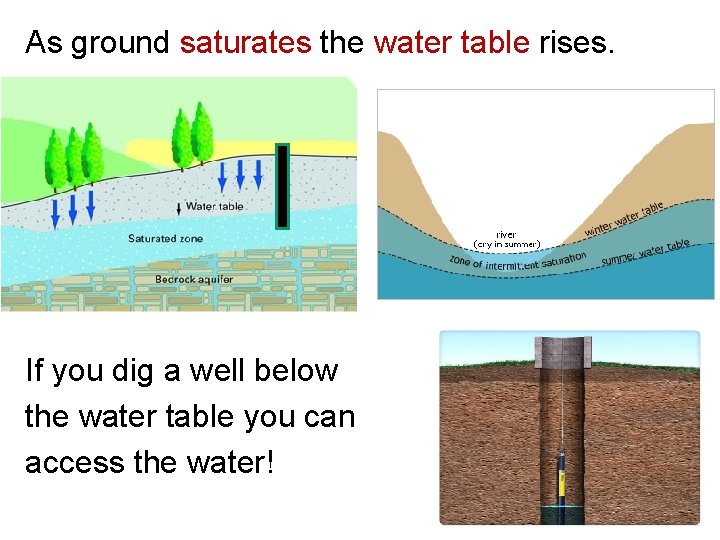
As ground saturates the water table rises. If you dig a well below the water table you can access the water!
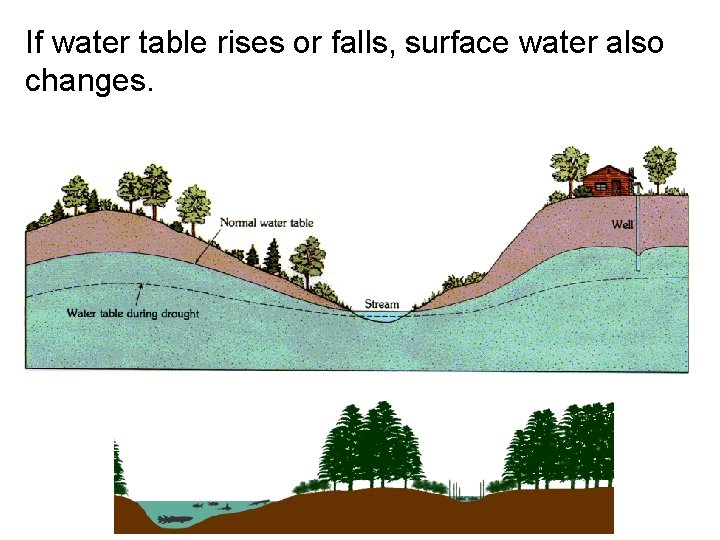
If water table rises or falls, surface water also changes.
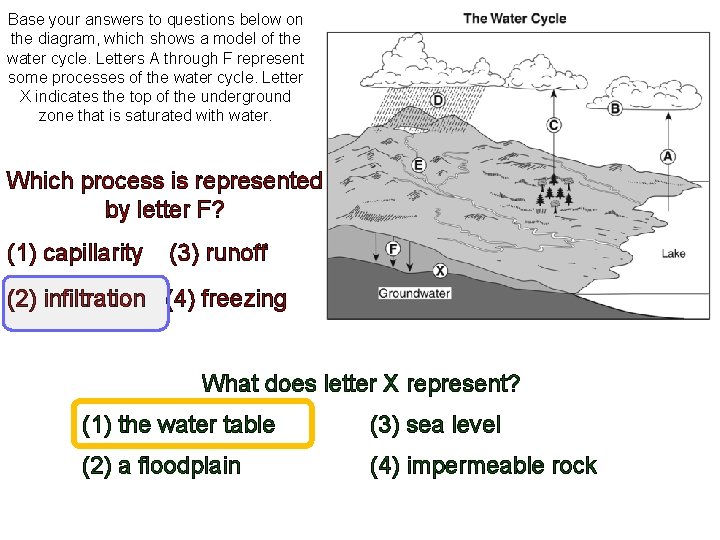
Base your answers to questions below on the diagram, which shows a model of the water cycle. Letters A through F represent some processes of the water cycle. Letter X indicates the top of the underground zone that is saturated with water. Which process is represented by letter F? (1) capillarity (3) runoff (2) infiltration (4) freezing What does letter X represent? (1) the water table (3) sea level (2) a floodplain (4) impermeable rock
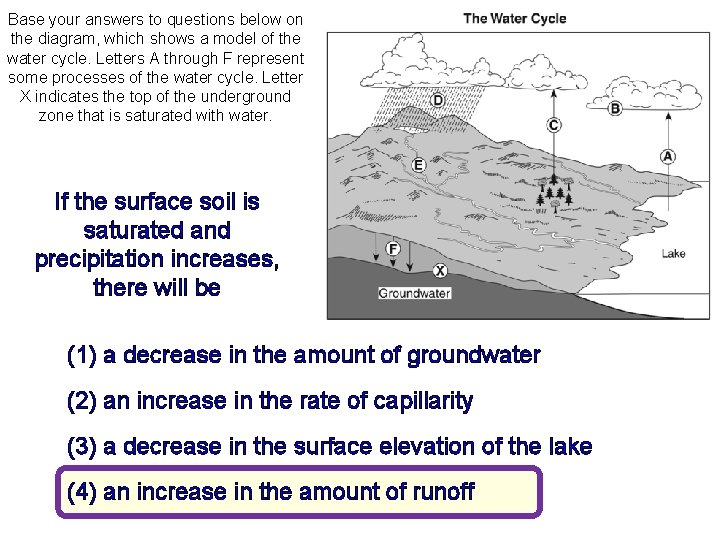
Base your answers to questions below on the diagram, which shows a model of the water cycle. Letters A through F represent some processes of the water cycle. Letter X indicates the top of the underground zone that is saturated with water. If the surface soil is saturated and precipitation increases, there will be (1) a decrease in the amount of groundwater (2) an increase in the rate of capillarity (3) a decrease in the surface elevation of the lake (4) an increase in the amount of runoff
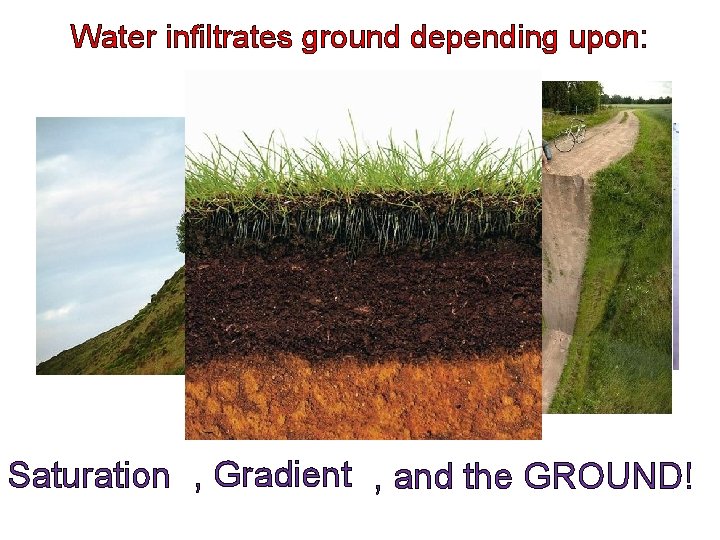
Water infiltrates ground depending upon: Saturation , Gradient , and the GROUND!
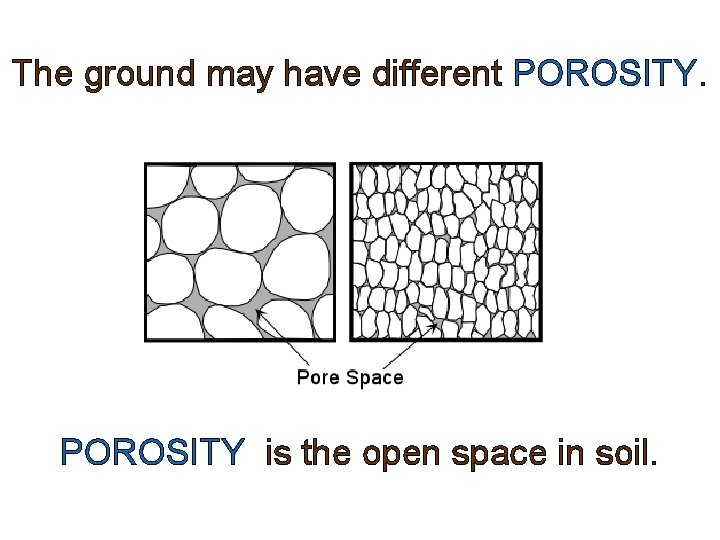
The ground may have different POROSITY is the open space in soil.
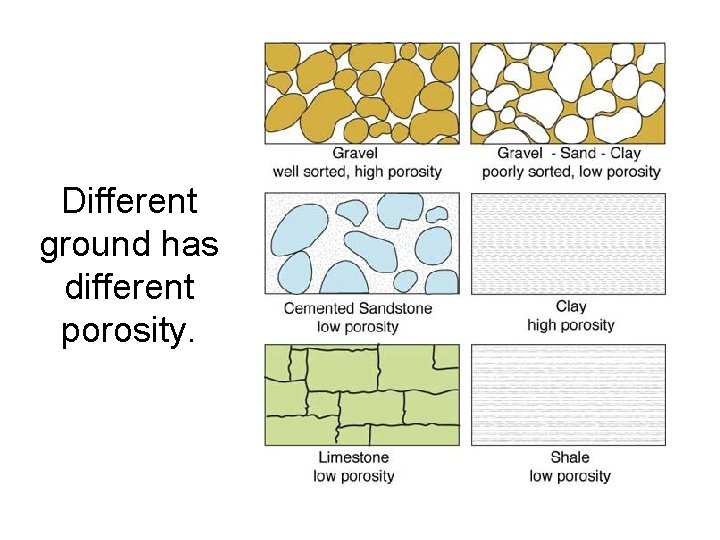
Different ground has different porosity.
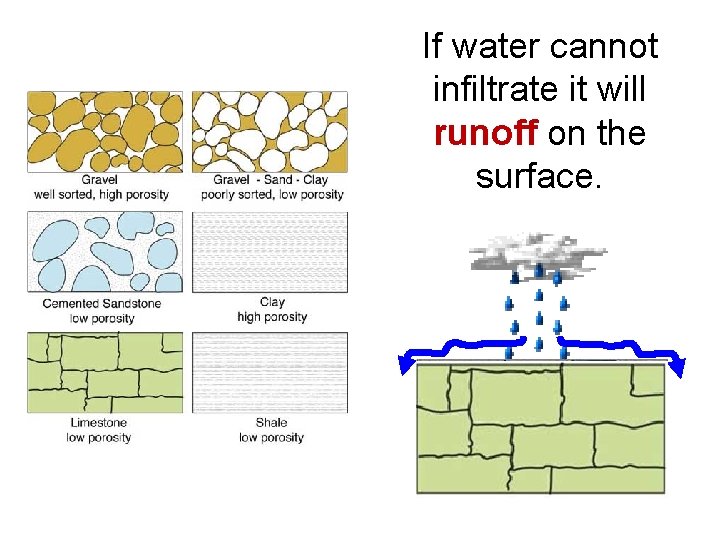
If water cannot infiltrate it will runoff on the surface.
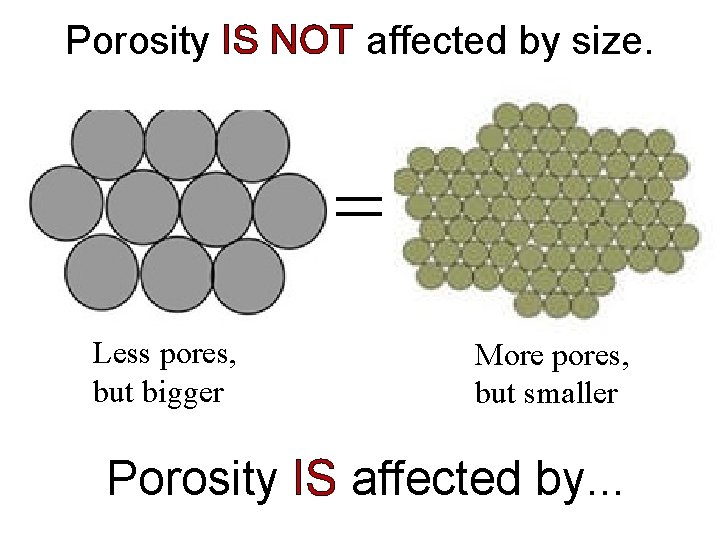
Porosity IS NOT affected by size. = Less pores, but bigger More pores, but smaller Porosity IS affected by. . .
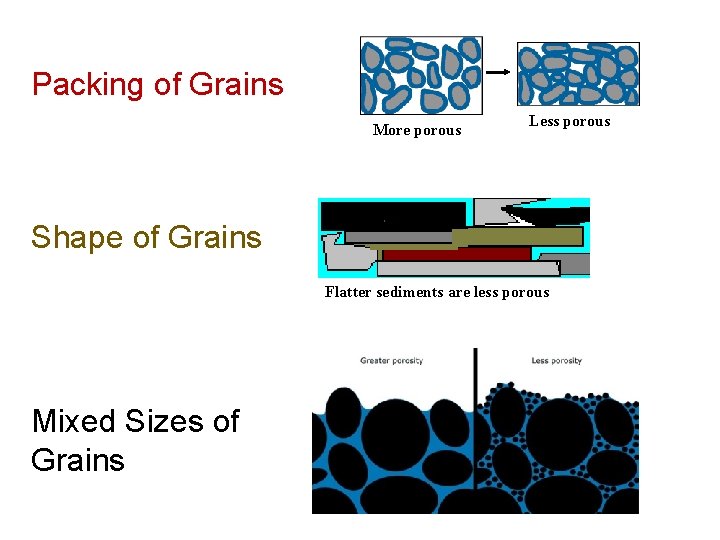
Packing of Grains More porous Less porous Shape of Grains Flatter sediments are less porous Mixed Sizes of Grains
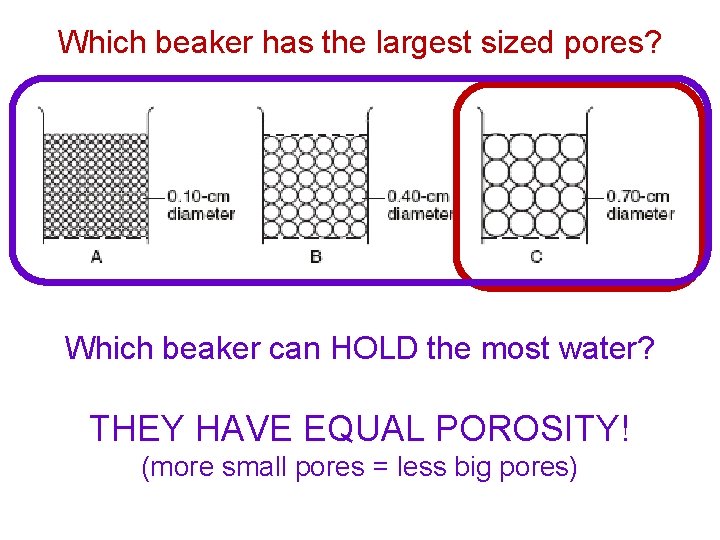
Which beaker has the largest sized pores? Which beaker can HOLD the most water? THEY HAVE EQUAL POROSITY! (more small pores = less big pores)
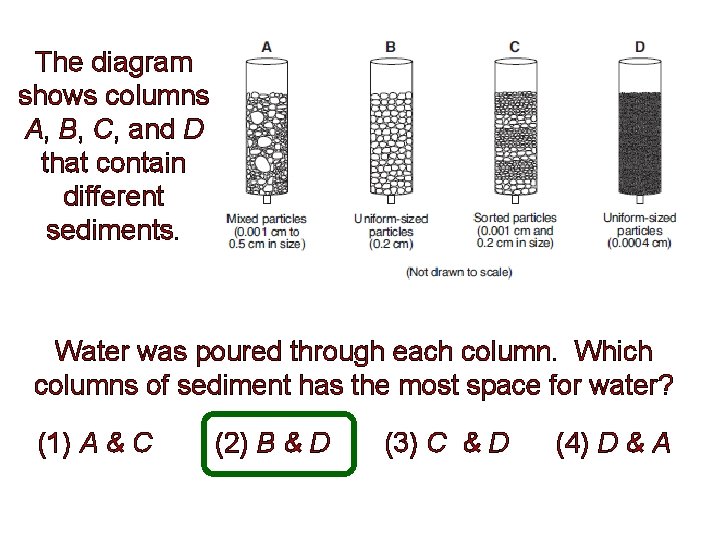
The diagram shows columns A, B, C, and D that contain different sediments. Water was poured through each column. Which columns of sediment has the most space for water? (1) A & C (2) B & D (3) C & D (4) D & A
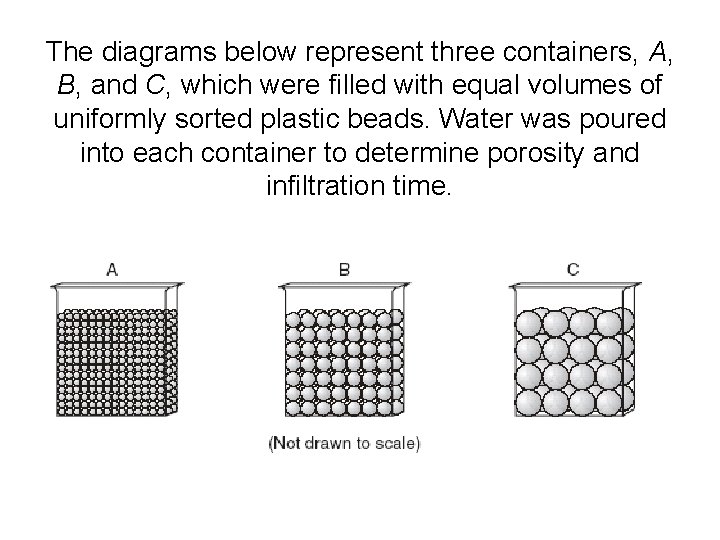
The diagrams below represent three containers, A, B, and C, which were filled with equal volumes of uniformly sorted plastic beads. Water was poured into each container to determine porosity and infiltration time.
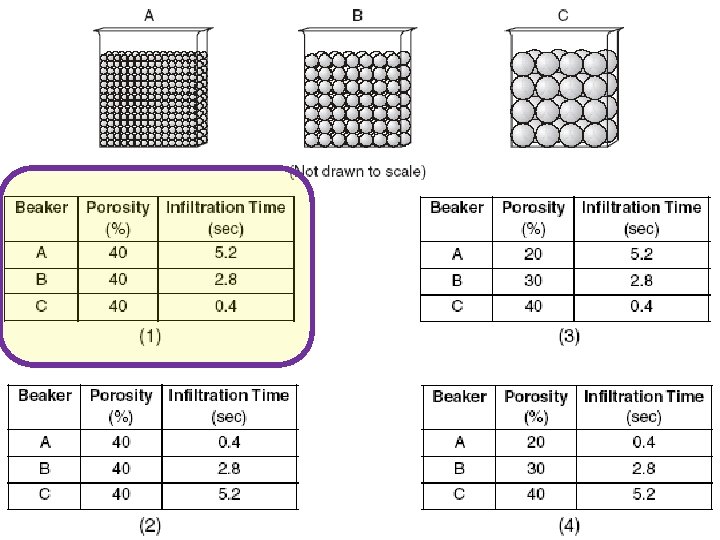
Which data table best represents the porosity and infiltration time of the beads in the three containers?
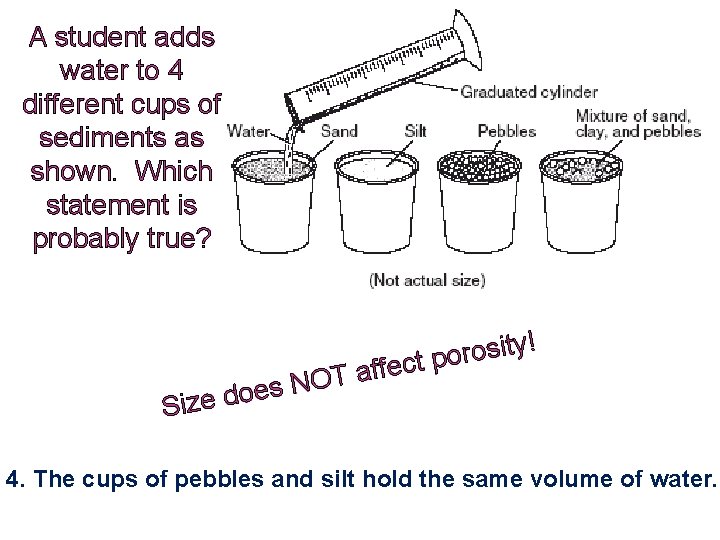
A student adds water to 4 different cups of sediments as shown. Which statement is probably true? ! the most water. y t i 1. The mixture of sand clay and pebbles holds s o r po t c e f f a NOT 2. The cup of sand does more water than the cup of silt. e holds Siz 3. All cups hold the same amount of water. 4. The cups of pebbles and silt hold the same volume of water.
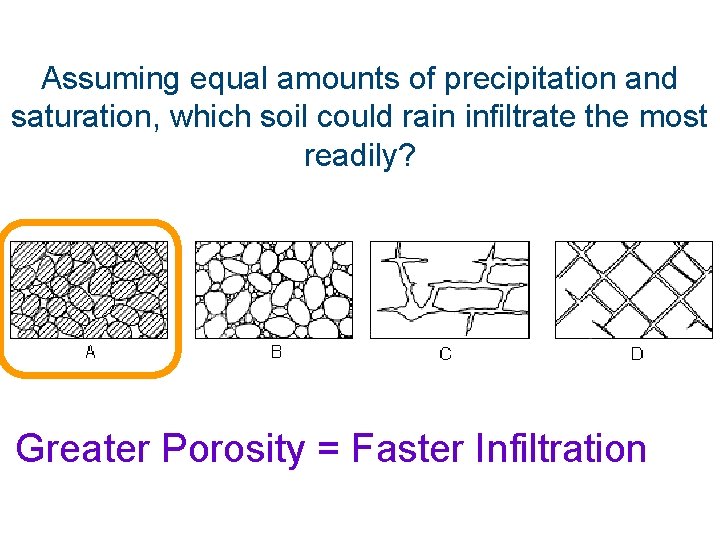
Assuming equal amounts of precipitation and saturation, which soil could rain infiltrate the most readily? Greater Porosity = Faster Infiltration
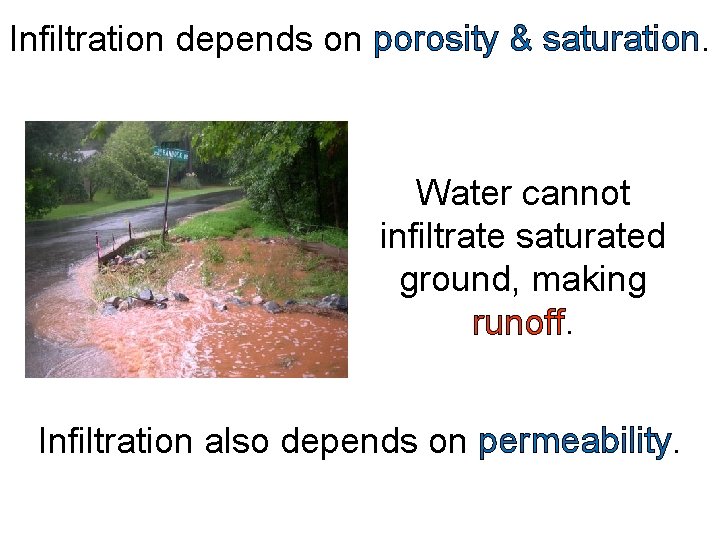
Infiltration depends on porosity & saturation. Water cannot infiltrate saturated ground, making runoff. Infiltration also depends on permeability.
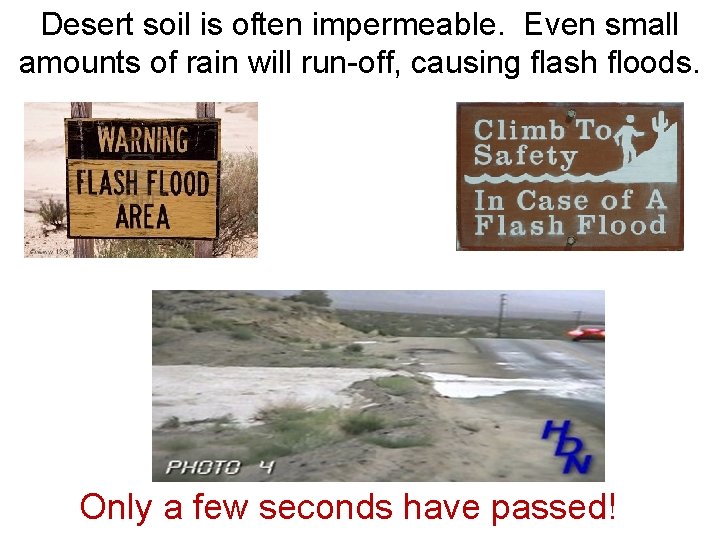
Desert soil is often impermeable. Even small amounts of rain will run-off, causing flash floods. Only a few seconds have passed!
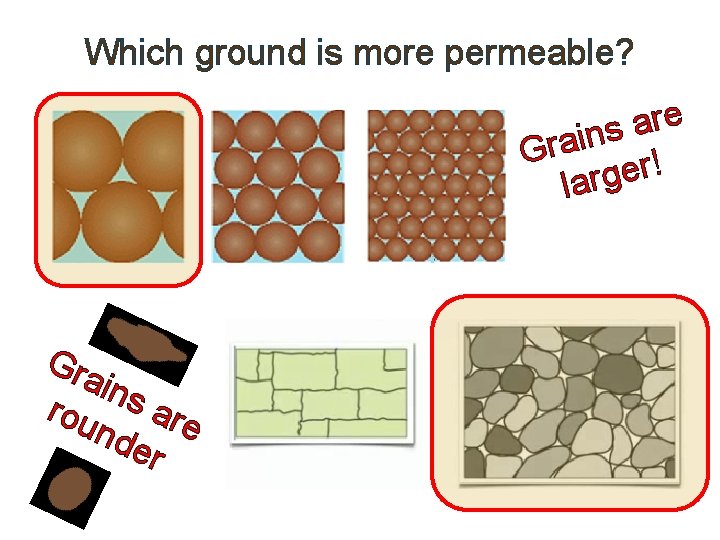
Which ground is more permeable? e r a s n i a r G ! r e larg Gra ins rou are nde r
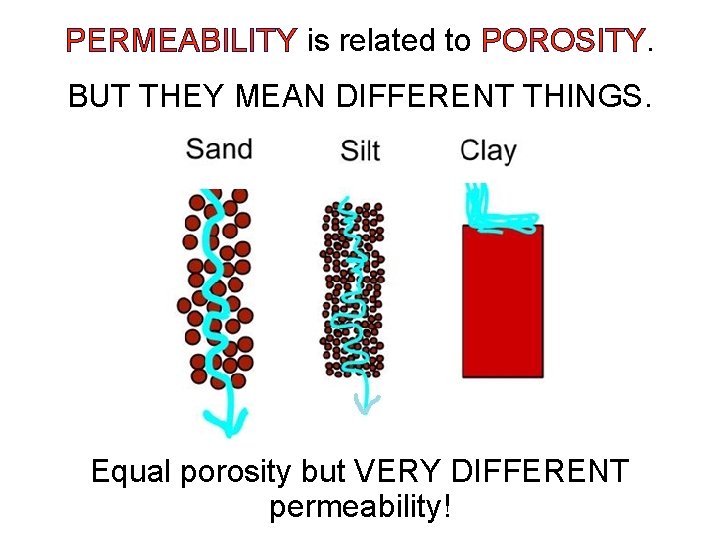
PERMEABILITY is related to POROSITY. BUT THEY MEAN DIFFERENT THINGS. Equal porosity but VERY DIFFERENT permeability!
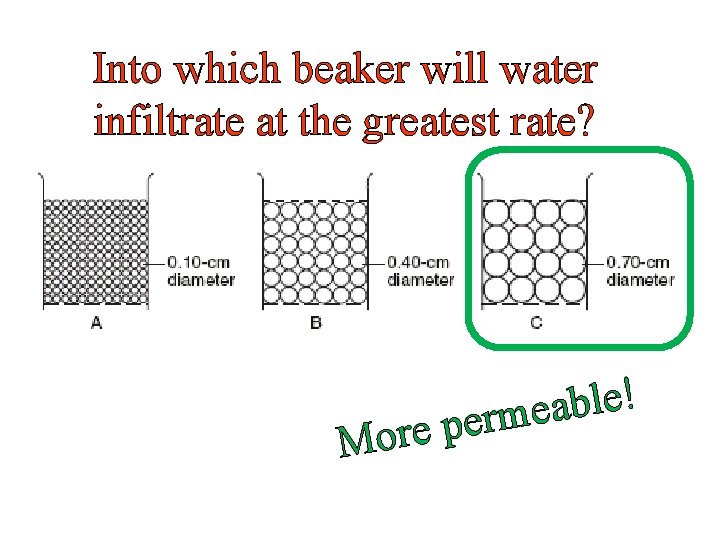
Into which beaker will water infiltrate at the greatest rate? More ! e l b a perme
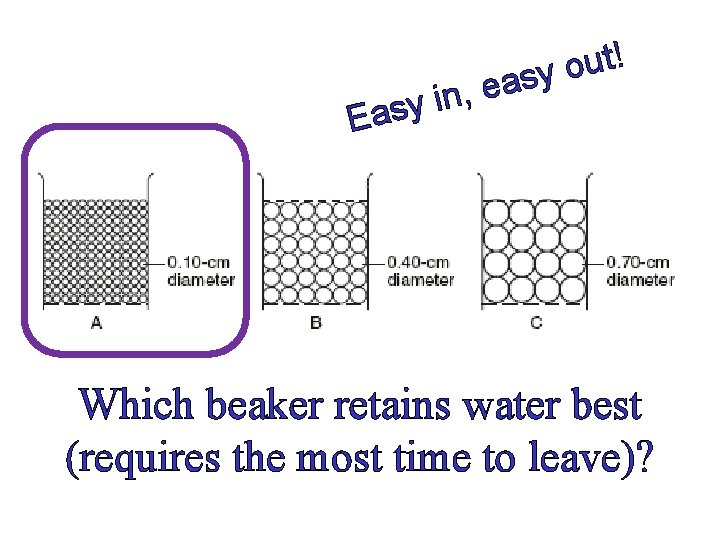
! t u o asy e , n i asy E Which beaker retains water best (requires the most time to leave)?
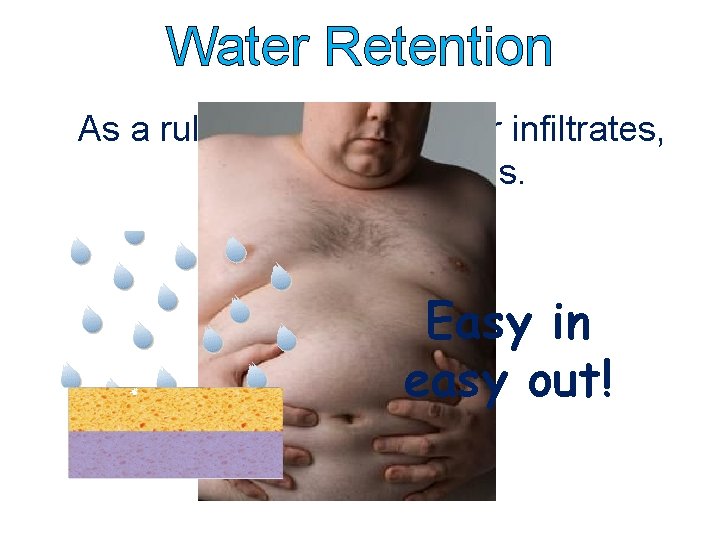
Water Retention As a rule, the slower water infiltrates, the slower it drains. Easy in easy out!
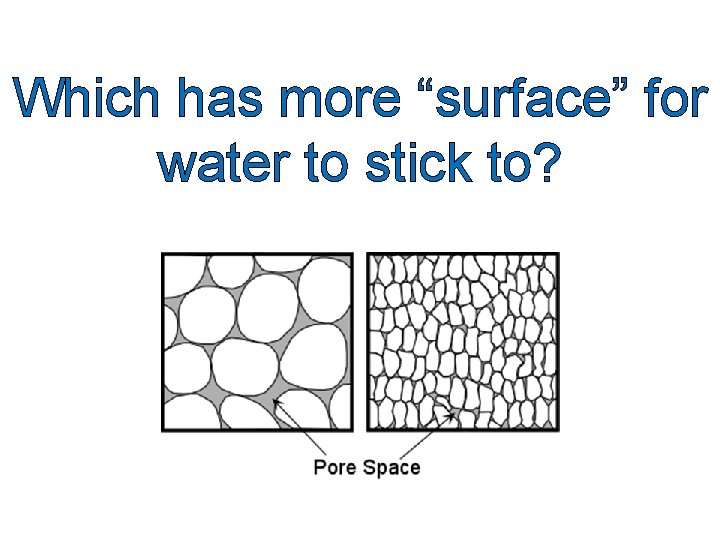
Which has more “surface” for water to stick to?
Capillarity Water is so sticky it can “climb” soil particles, moving up against gravity. Larger particles have less capillarity. Smaller particles have more capillarity.
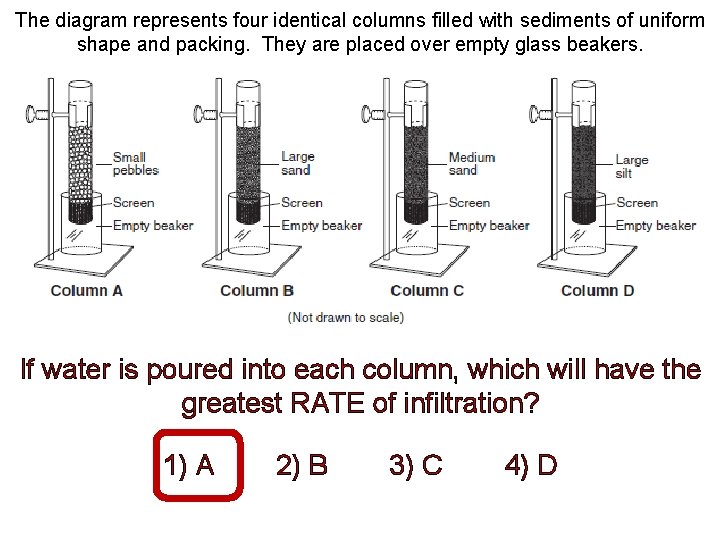
The diagram represents four identical columns filled with sediments of uniform shape and packing. They are placed over empty glass beakers. If water is poured into each column, which will have the greatest RATE of infiltration? 1) A 2) B 3) C 4) D
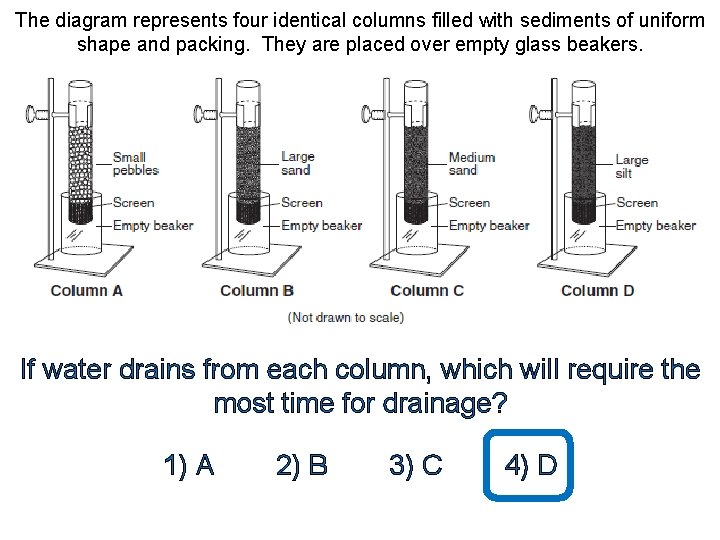
The diagram represents four identical columns filled with sediments of uniform shape and packing. They are placed over empty glass beakers. If water drains from each column, which will require the most time for drainage? 1) A 2) B 3) C 4) D
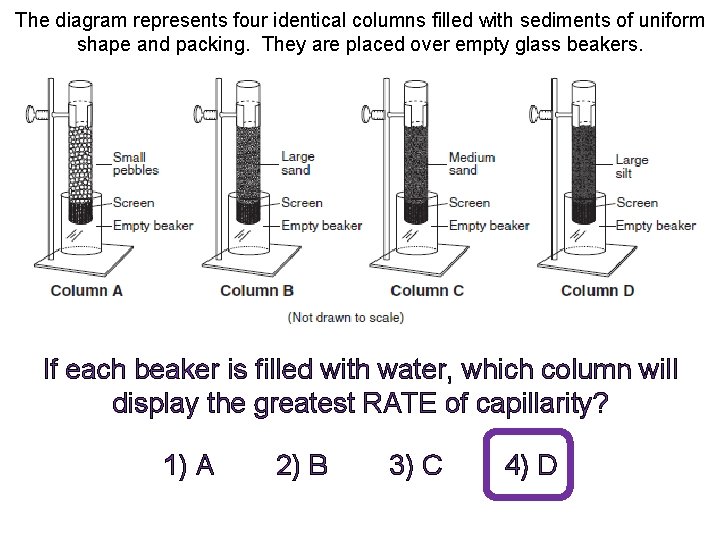
The diagram represents four identical columns filled with sediments of uniform shape and packing. They are placed over empty glass beakers. If each beaker is filled with water, which column will display the greatest RATE of capillarity? 1) A 2) B 3) C 4) D
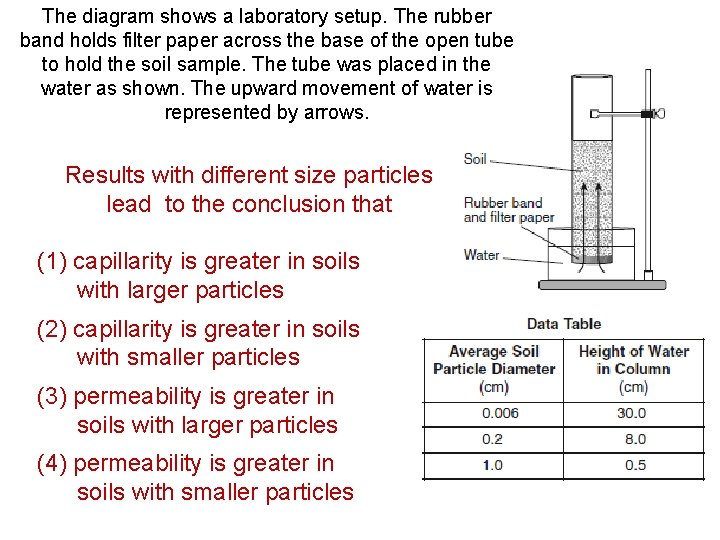
The diagram shows a laboratory setup. The rubber band holds filter paper across the base of the open tube to hold the soil sample. The tube was placed in the water as shown. The upward movement of water is represented by arrows. Results with different size particles lead to the conclusion that (1) capillarity is greater in soils with larger particles (2) capillarity is greater in soils with smaller particles (3) permeability is greater in soils with larger particles (4) permeability is greater in soils with smaller particles
The terms to know for the next few days are: Groundwater- water that enters soil. Runoff- water that does NOT enter soil. Porosity- amount of open space in soil. Permeability- difficulty water has entering soil. Infiltration- rate at which water enters soil. Retention- how fast water drains back out of soil. Capillarity- ability of water to flow up through soil.
- Slides: 40