
IT and reengineering processes in primary care We

![But, . . How should we do it? [1] People: Working with nurses motivated](https://slidetodoc.com/presentation_image_h/061b53f59e01677426d80b73d4d476aa/image-19.jpg "But, . . How should we do it? [1] People: Working with nurses motivated")
![3. Thinking about the actual and future perspective (Knowledge) Model description Management Education [1]](https://slidetodoc.com/presentation_image_h/061b53f59e01677426d80b73d4d476aa/image-20.jpg "3. Thinking about the actual and future perspective (Knowledge) Model description Management Education [1]")
- Slides: 28
IT and reengineering processes in primary care. We should do it better Josep M Picas
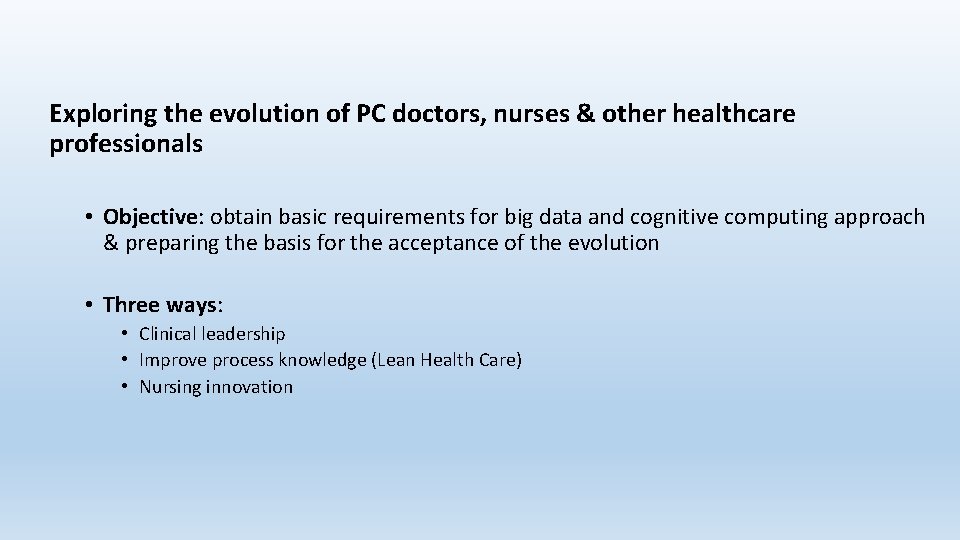
Exploring the evolution of PC doctors, nurses & other healthcare professionals • Objective: obtain basic requirements for big data and cognitive computing approach & preparing the basis for the acceptance of the evolution • Three ways: • Clinical leadership • Improve process knowledge (Lean Health Care) • Nursing innovation
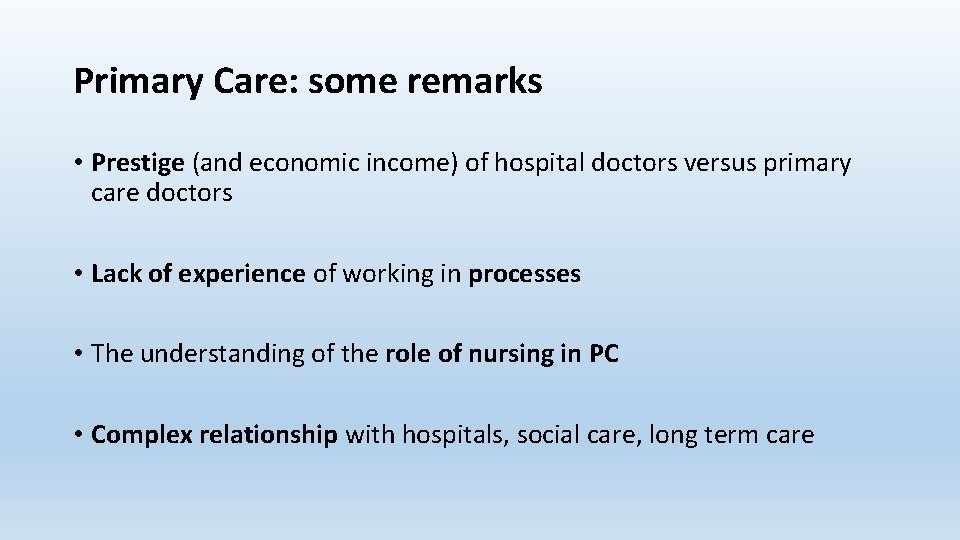
Primary Care: some remarks • Prestige (and economic income) of hospital doctors versus primary care doctors • Lack of experience of working in processes • The understanding of the role of nursing in PC • Complex relationship with hospitals, social care, long term care
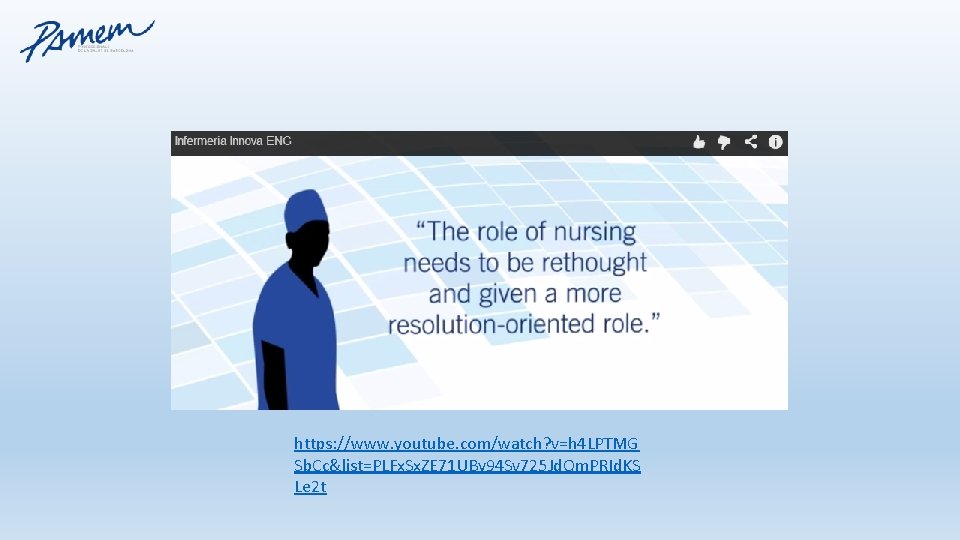
https: //www. youtube. com/watch? v=h 4 LPTMG Sb. Cc&list=PLFx. Sx. ZE 71 UBy 94 Sv 725 Jd. Qm. PRId. KS Le 2 t
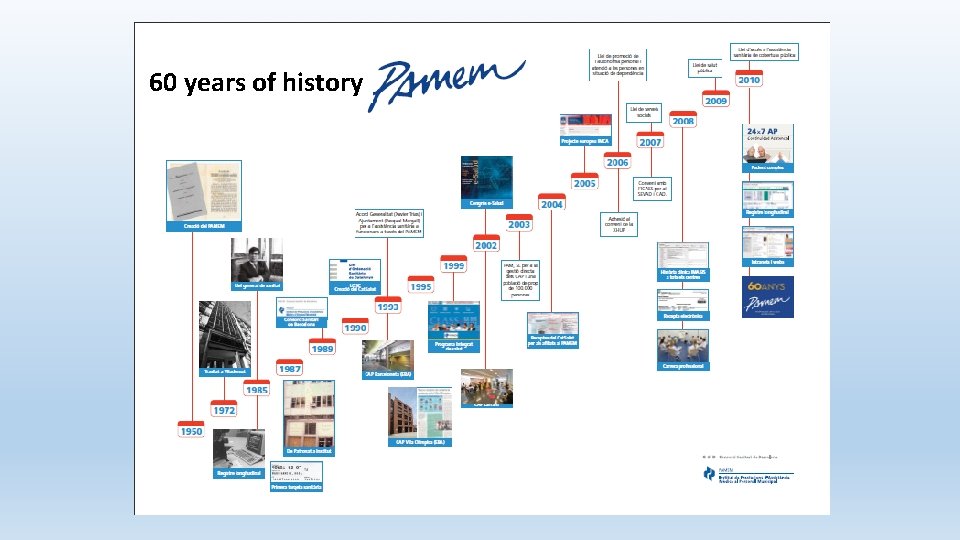
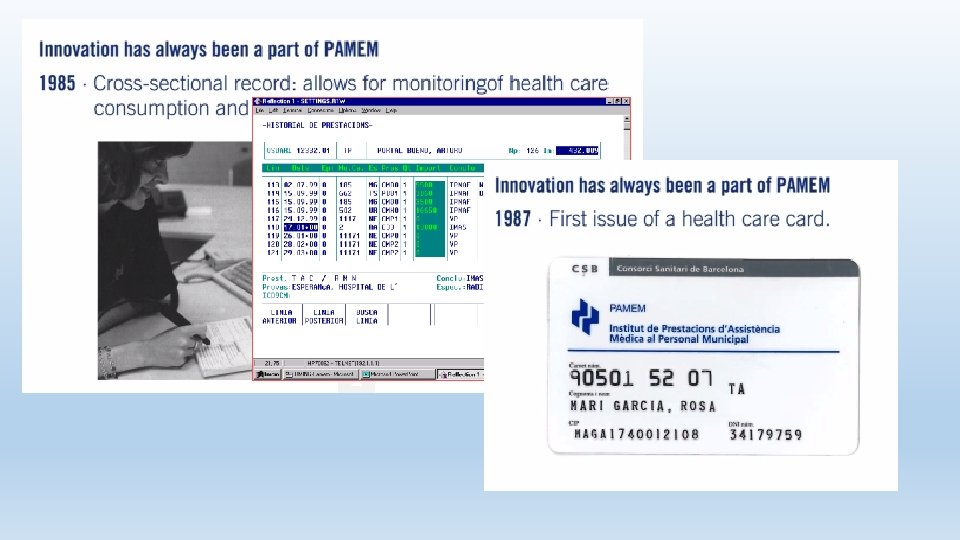
60 years of history
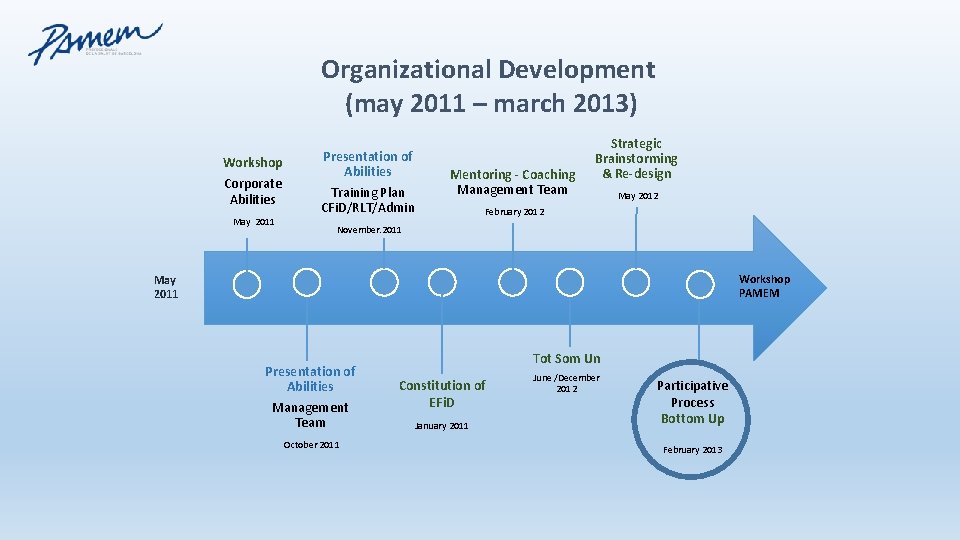
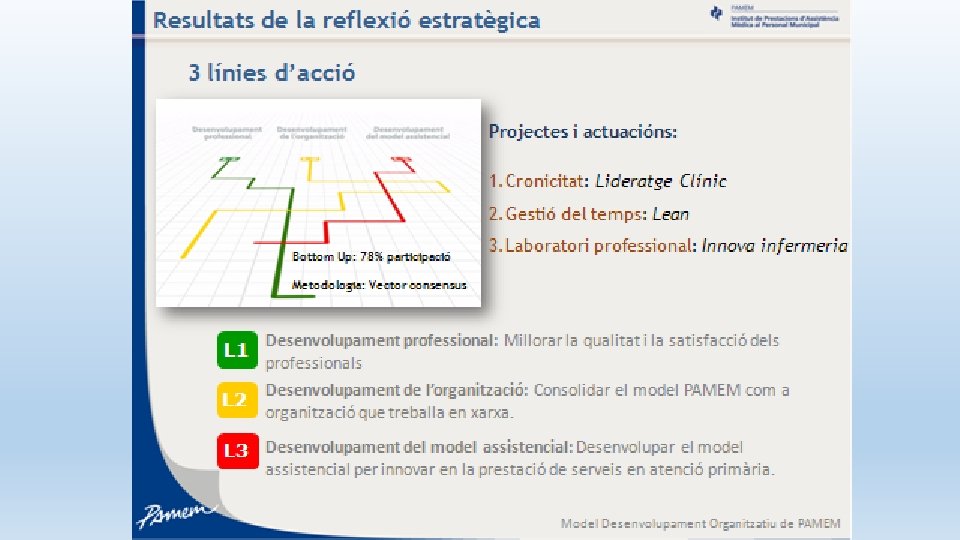
Organizational Development (may 2011 – march 2013) Workshop Corporate Abilities May 2011 Presentation of Abilities Training Plan CFi. D/RLT/Admin Mentoring - Coaching Management Team Strategic Brainstorming & Re-design May 2012 February 2012 November. 2011 Workshop PAMEM May 2011 Presentation of Abilities Management Team October 2011 Tot Som Un Constitution of EFi. D January 2011 June /December 2012 Participative Process Bottom Up February 2013
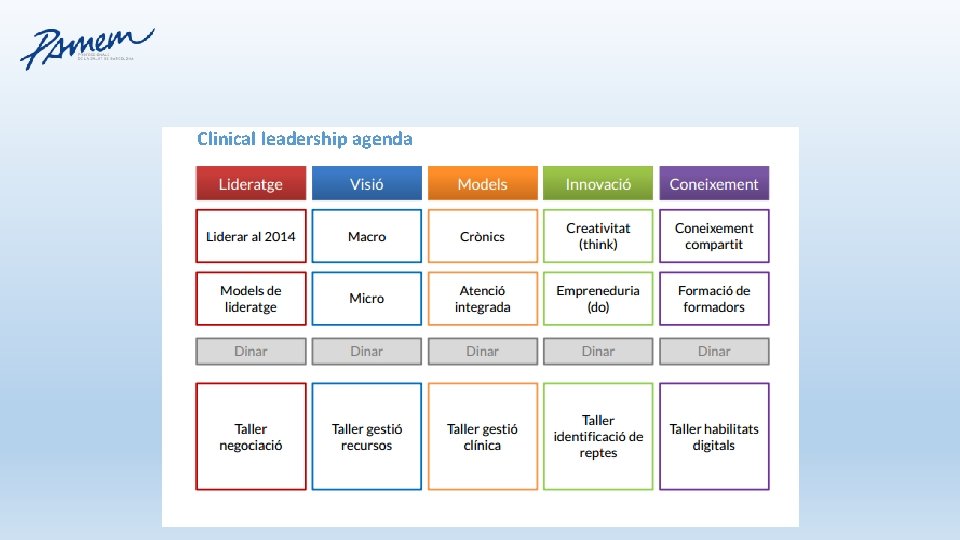
Clinical leadership agenda
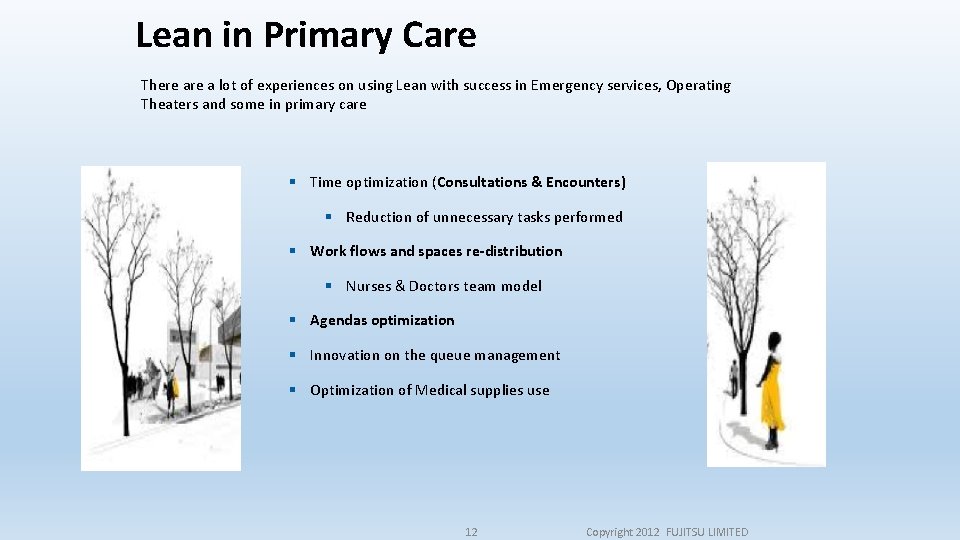
Lean in Primary Care There a lot of experiences on using Lean with success in Emergency services, Operating Theaters and some in primary care § Time optimization (Consultations & Encounters) § Reduction of unnecessary tasks performed § Work flows and spaces re-distribution § Nurses & Doctors team model § Agendas optimization § Innovation on the queue management § Optimization of Medical supplies use 12 Copyright 2012 FUJITSU LIMITED
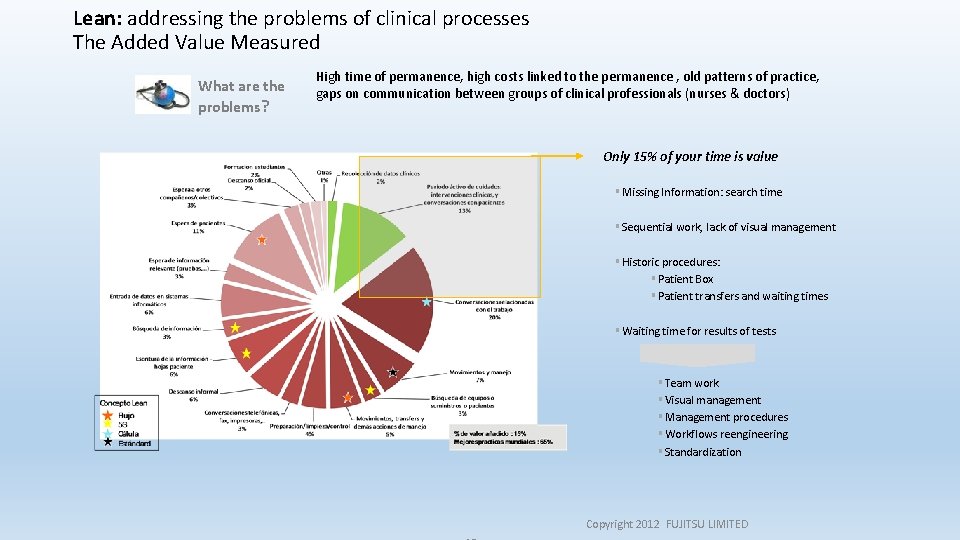
Lean: addressing the problems of clinical processes The Added Value Measured What are the problems? High time of permanence, high costs linked to the permanence , old patterns of practice, gaps on communication between groups of clinical professionals (nurses & doctors) Only 15% of your time is value § Missing Information: search time § Sequential work, lack of visual management § Historic procedures: § Patient Box § Patient transfers and waiting times § Waiting time for results of tests § Team work § Visual management § Management procedures § Workflows reengineering § Standardization Copyright 2012 FUJITSU LIMITED
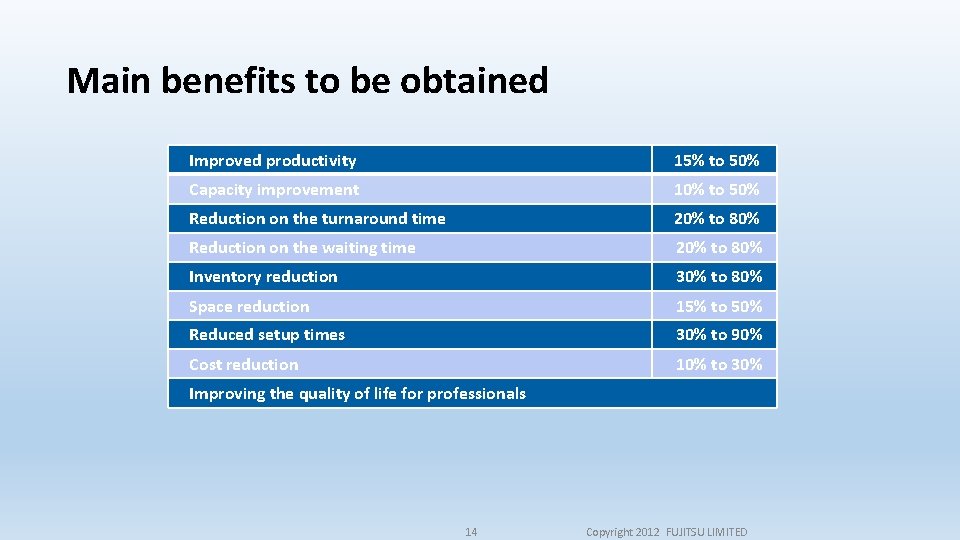
Main benefits to be obtained Improved productivity 15% to 50% Capacity improvement 10% to 50% Reduction on the turnaround time 20% to 80% Reduction on the waiting time 20% to 80% Inventory reduction 30% to 80% Space reduction 15% to 50% Reduced setup times 30% to 90% Cost reduction 10% to 30% Improving the quality of life for professionals 14 Copyright 2012 FUJITSU LIMITED
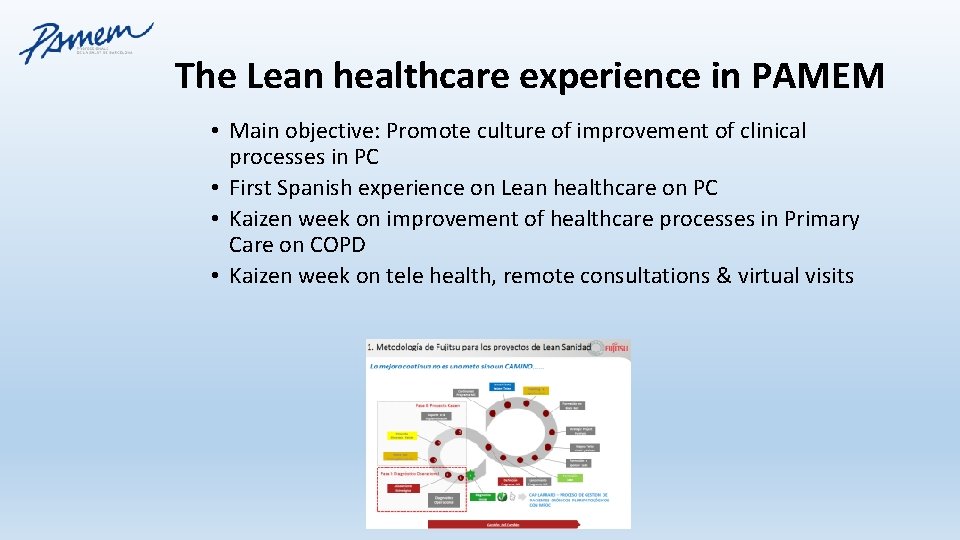
The Lean healthcare experience in PAMEM • Main objective: Promote culture of improvement of clinical processes in PC • First Spanish experience on Lean healthcare on PC • Kaizen week on improvement of healthcare processes in Primary Care on COPD • Kaizen week on tele health, remote consultations & virtual visits
A project on COPD under the leadership of primary care
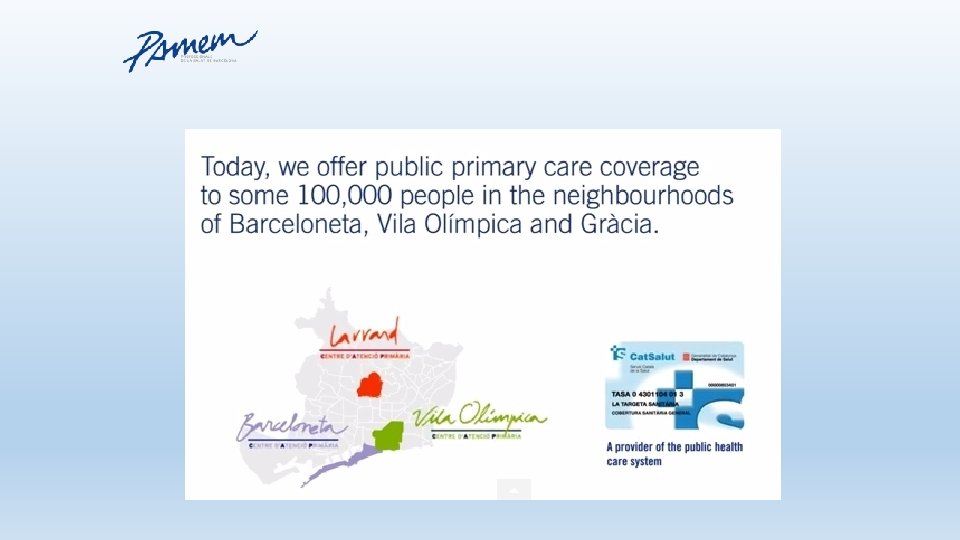
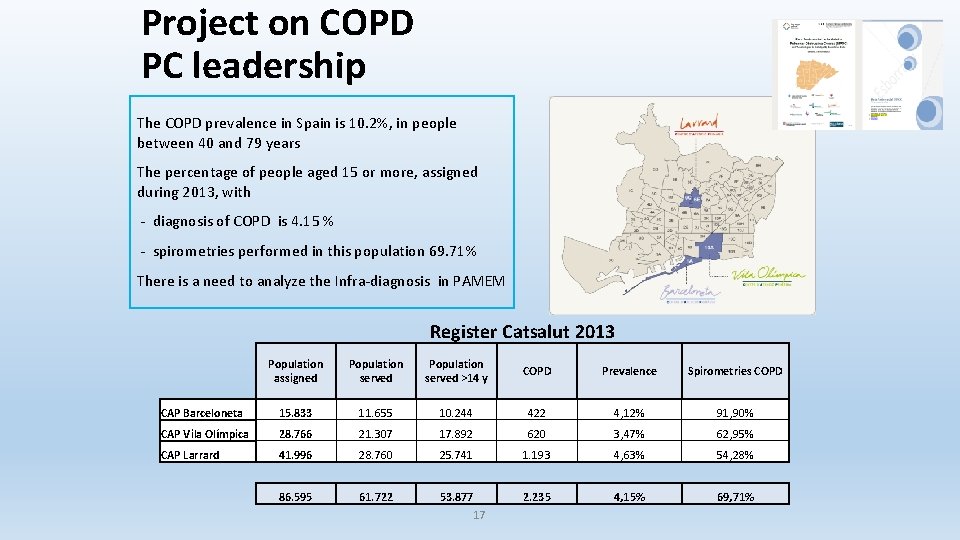
Project on COPD PC leadership The COPD prevalence in Spain is 10. 2%, in people between 40 and 79 years The percentage of people aged 15 or more, assigned during 2013, with - diagnosis of COPD is 4. 15 % - spirometries performed in this population 69. 71% There is a need to analyze the Infra-diagnosis in PAMEM Register Catsalut 2013 Population assigned Population served >14 y COPD Prevalence Spirometries COPD CAP Barceloneta 15. 833 11. 655 10. 244 422 4, 12% 91, 90% CAP Vila Olímpica 28. 766 21. 307 17. 892 620 3, 47% 62, 95% CAP Larrard 41. 996 28. 760 25. 741 1. 193 4, 63% 54, 28% 86. 595 61. 722 53. 877 2. 235 4, 15% 69, 71% 17
https: //www. youtube. com/watch? v=h 4 LPTMG Sb. Cc&list=PLFx. Sx. ZE 71 UBy 94 Sv 725 Jd. Qm. PRId. KS Le 2 t
But, . . How should we do it? [1] People: Working with nurses motivated on the change management [2] Project: Creating an environment of innovation to give answers to the nurses needs [3] Knowledge: Thinking about the actual and future perspectives [4] Action: Creating and developing a space of action with nurses (RN) with the aim of design the new roles Però, . . com ho fem? [1] Persones, [2] Projecte, [3] Coneixement, [4] Acció
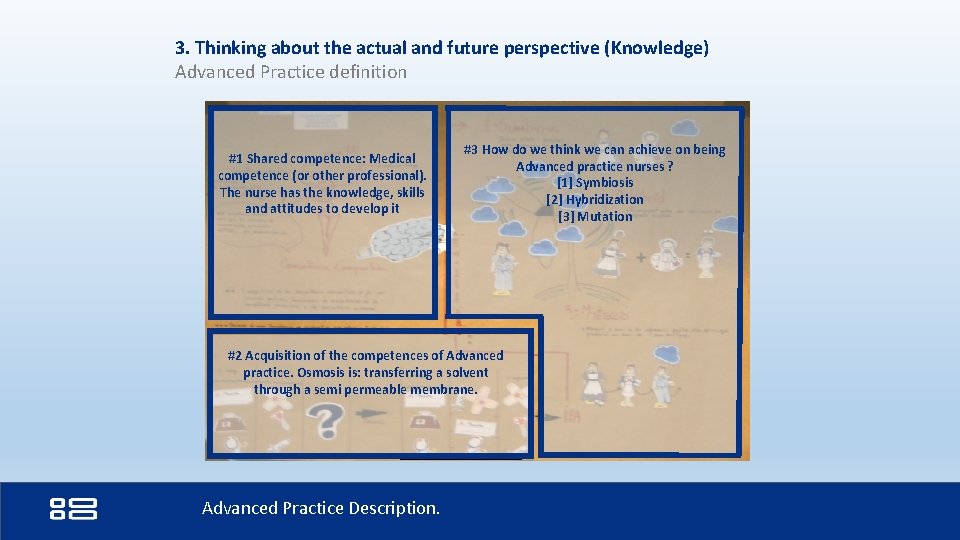
3. Thinking about the actual and future perspective (Knowledge) Model description Management Education [1] Change [2] Cronicity [3] Advanced Practice [4] Development areas Research [1] Canvi: Les societats estan canviant i com a conseqüència l’àrea de la salut també està canviant. [2] Cronicitat: La cronicitat s'ha convertit en un dels reptes de major rellevància per als sistemes de salut comportant una necessitat de canvi de les infermeres per adaptar-se a les noves fórmules d’atenció. [3] Pràctica Avançada: Davant aquesta situació (cronicitat) la pràctica avançada és l’opció recomanada per l’equip Infermeria Innova per adaptar-se a aquest canvi i a les noves demandes de la societat. [4] Àrees de desenvolupament dels rols infermers: De les possibles àrees de desenvolupament de rols infermers i d’evolució dels rols ja existents volem destacar les de: Gestió (coordinació assistencial i coordinació cures infermeres), Educació (coach en salut, l’acció comunitària i l’educació grupal i Recerca (a determinar). Description of the future perspective
3. Thinking about the actual and future perspective (Knowledge) Advanced Practice definition #1 Shared competence: Medical competence (or other professional). The nurse has the knowledge, skills and attitudes to develop it 1. Simbiosis: relació estreta i persistent entre organismes #3 de How do espècies we think diferents we can achieve on being Advanced practice nurses ? [1] Symbiosis 2. Hibridació: Encreuament [2] Hybridization entre dos individus de diferents espècies [3] Mutation 3. Mutació: canvi de la informació genètica d'un ésser viu produint un canvi en les seves característiques #2 Acquisition of the competences of Advanced is: transferring C. mèdica a solvent C. infermera PAI through a semi permeable membrane. C. mèdica C. infermera PAI practice. Osmosis Advanced Practice Description.
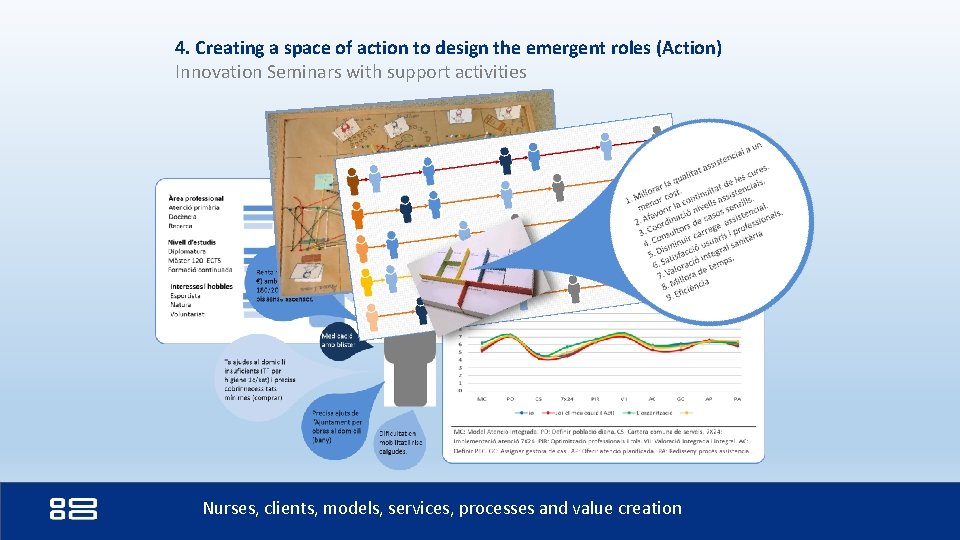
4. Creating a space of action to design the emergent roles (Action) Innovation Seminars with support activities Nurses, clients, models, services, processes and value creation
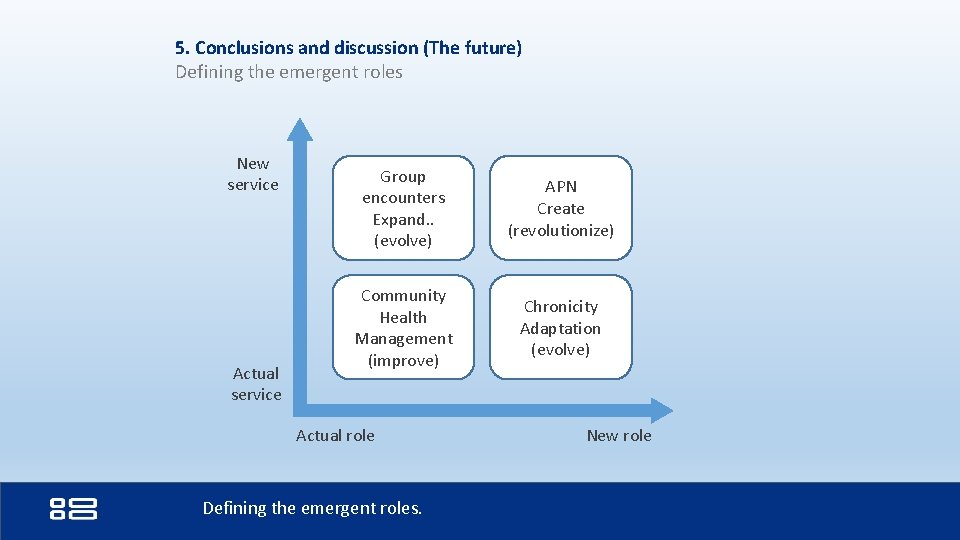
5. Conclusions and discussion (The future) Defining the emergent roles New service Actual service Group encounters Expand. . (evolve) APN Create (revolutionize) Community Health Management (improve) Chronicity Adaptation (evolve) Actual role Defining the emergent roles. New role
Collaborative project on Advanced Nursing Practice in PC University of Quebec at Rimouski
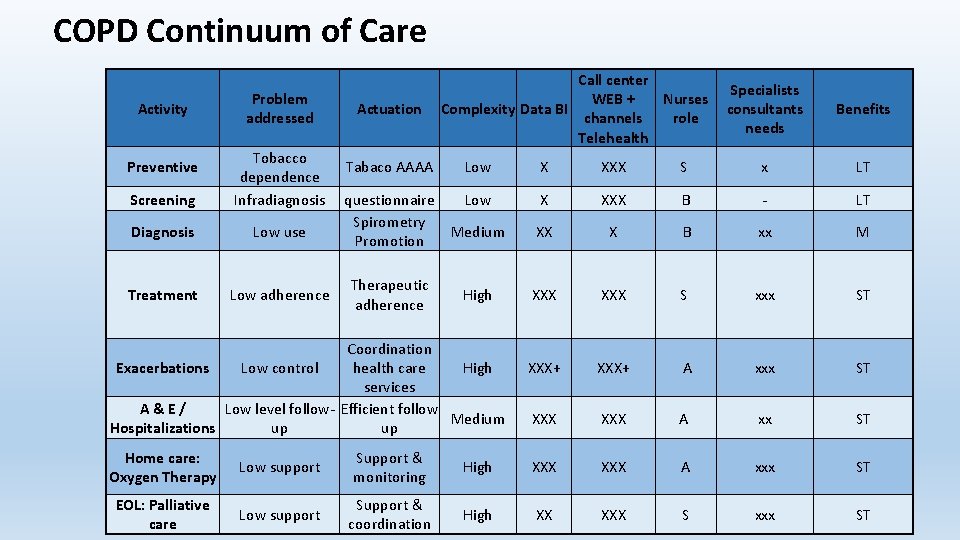
COPD Continuum of Care Activity Problem addressed Screening Tobacco dependence Infradiagnosis Diagnosis Low use Treatment Low adherence Preventive Actuation Call center WEB + Nurses Complexity Data BI channels role Telehealth Specialists consultants needs Benefits Tabaco AAAA Low X XXX S x LT questionnaire Spirometry Promotion Low X XXX B - LT Medium XX X B xx M High XXX S xxx ST XXX+ A xxx ST XXX A xx ST Therapeutic adherence Coordination Exacerbations Low control health care High services A&E/ Low level follow- Efficient follow Medium Hospitalizations up up Home care: Oxygen Therapy Low support Support & monitoring High XXX A xxx ST EOL: Palliative care Low support Support & coordination High XX XXX S xxx ST
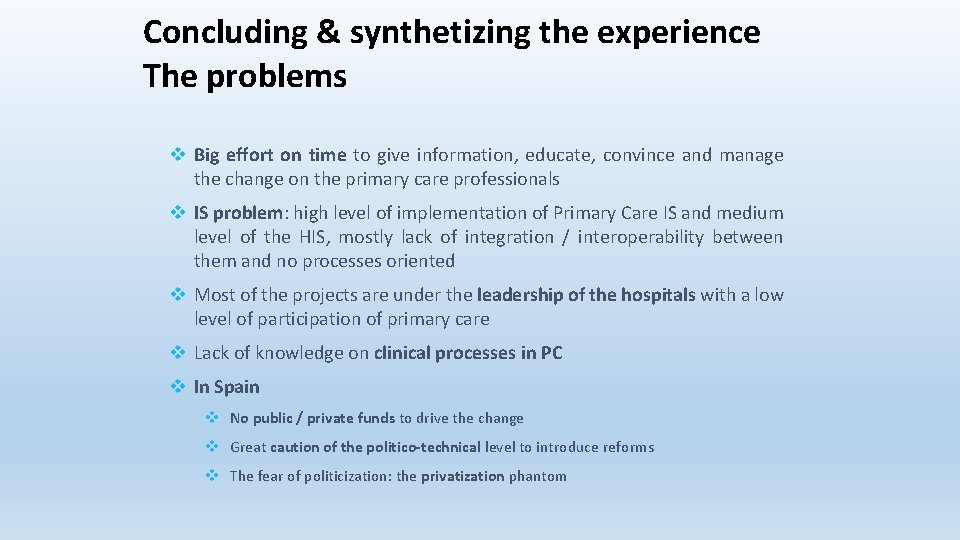
Concluding & synthetizing the experience The problems v Big effort on time to give information, educate, convince and manage the change on the primary care professionals v IS problem: high level of implementation of Primary Care IS and medium level of the HIS, mostly lack of integration / interoperability between them and no processes oriented v Most of the projects are under the leadership of the hospitals with a low level of participation of primary care v Lack of knowledge on clinical processes in PC v In Spain v No public / private funds to drive the change v Great caution of the politico-technical level to introduce reforms v The fear of politicization: the privatization phantom
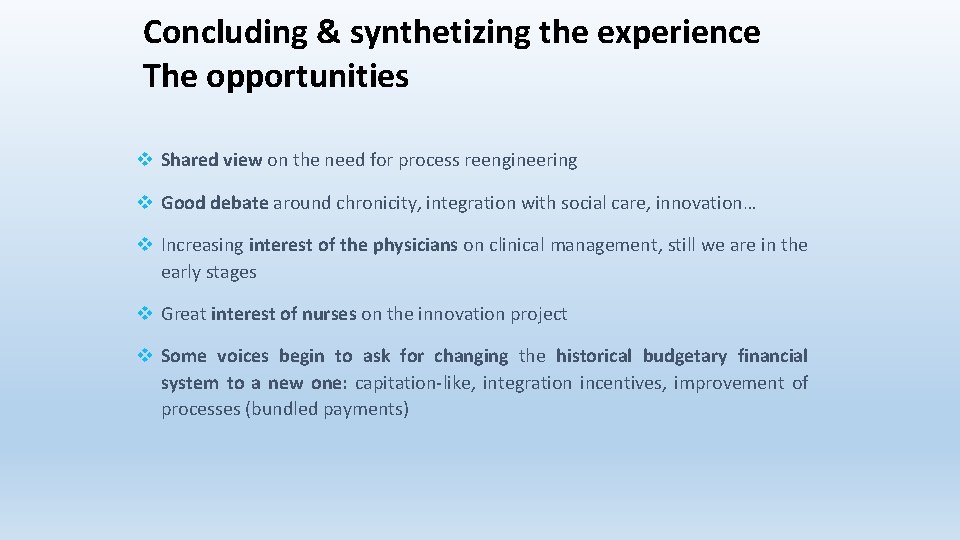
Concluding & synthetizing the experience The opportunities v Shared view on the need for process reengineering v Good debate around chronicity, integration with social care, innovation… v Increasing interest of the physicians on clinical management, still we are in the early stages v Great interest of nurses on the innovation project v Some voices begin to ask for changing the historical budgetary financial system to a new one: capitation-like, integration incentives, improvement of processes (bundled payments)
Thank you ! IT and reengineering processes in primary care. We should do it better Josep M Picas jmpicas@adaptivehs. com