
ISTITUTO NATTA DE AMBROSIS SESTRI LEVANTE GE CLASSE
• ISTITUTO NATTA - DE AMBROSIS • SESTRI LEVANTE (GE) • CLASSE 4 A
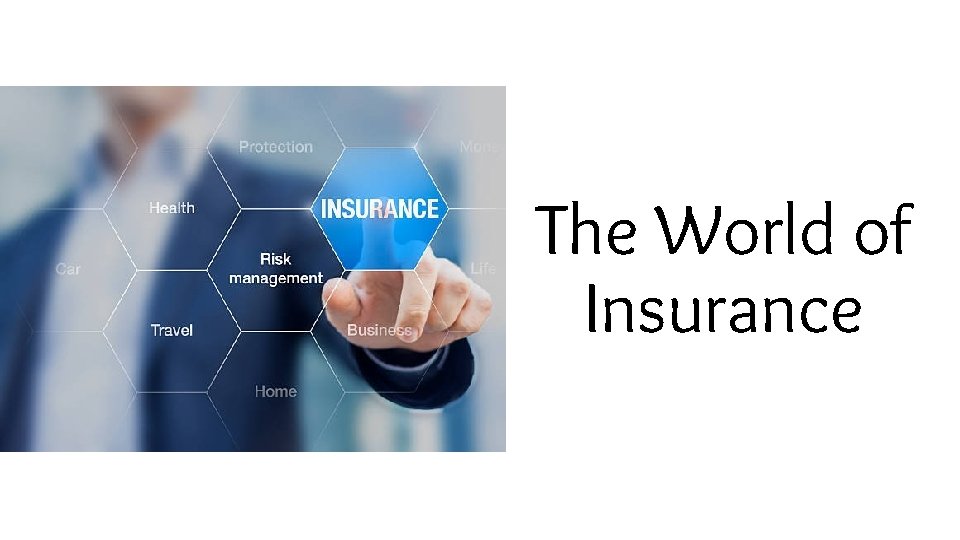
The World of Insurance
What is an insurance company and what does it do? An insurance company is an entity that provides and sells insurance. A person or entity who buys insurance is known as an insured or policyholder. This business provides coverage, in the form of compensation resulting from loss, damages, injury, treatment or hardship in exchange for premium payments. It also calculates the risk of occurence and the cost to replace the loss, to determine the premium amount.
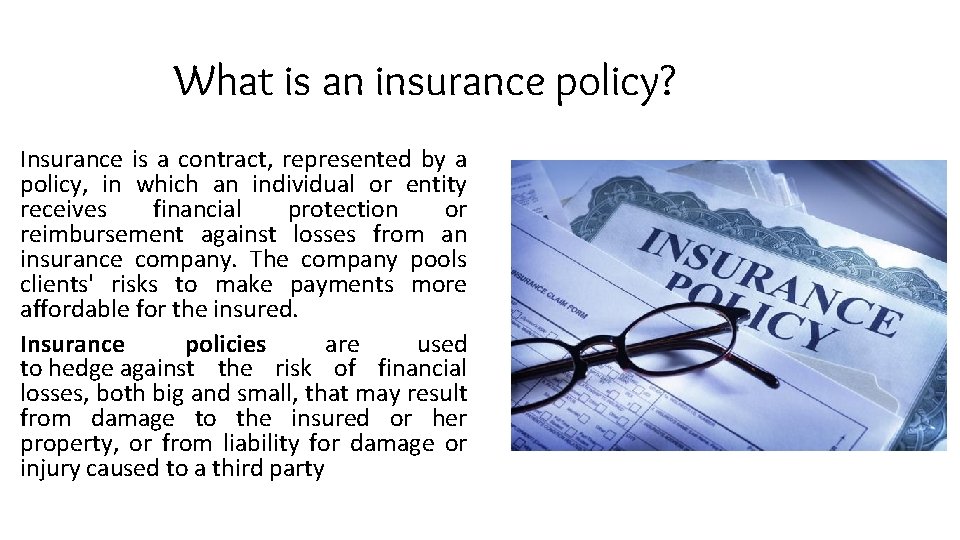
What is an insurance policy? Insurance is a contract, represented by a policy, in which an individual or entity receives financial protection or reimbursement against losses from an insurance company. The company pools clients' risks to make payments more affordable for the insured. Insurance policies are used to hedge against the risk of financial losses, both big and small, that may result from damage to the insured or her property, or from liability for damage or injury caused to a third party
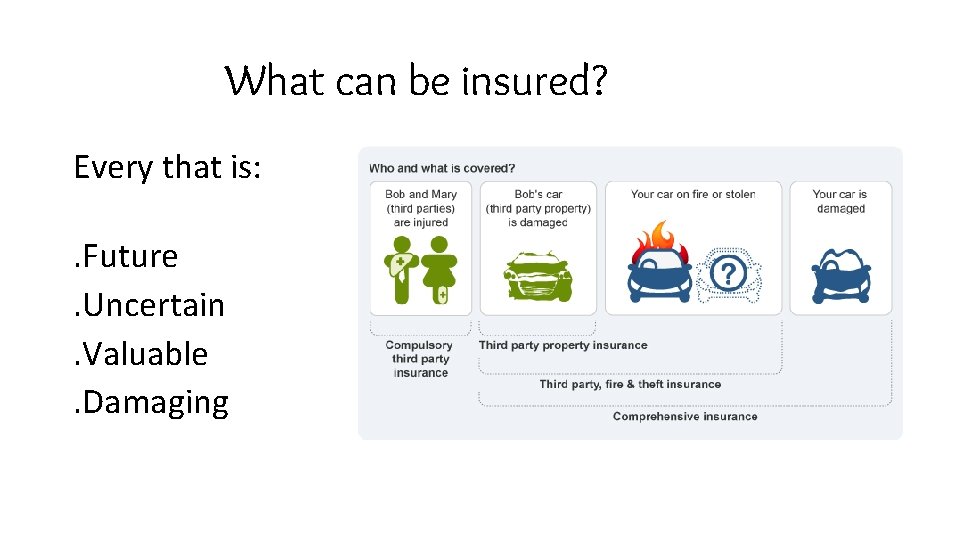
What can be insured? Every that is: . Future. Uncertain. Valuable . Damaging
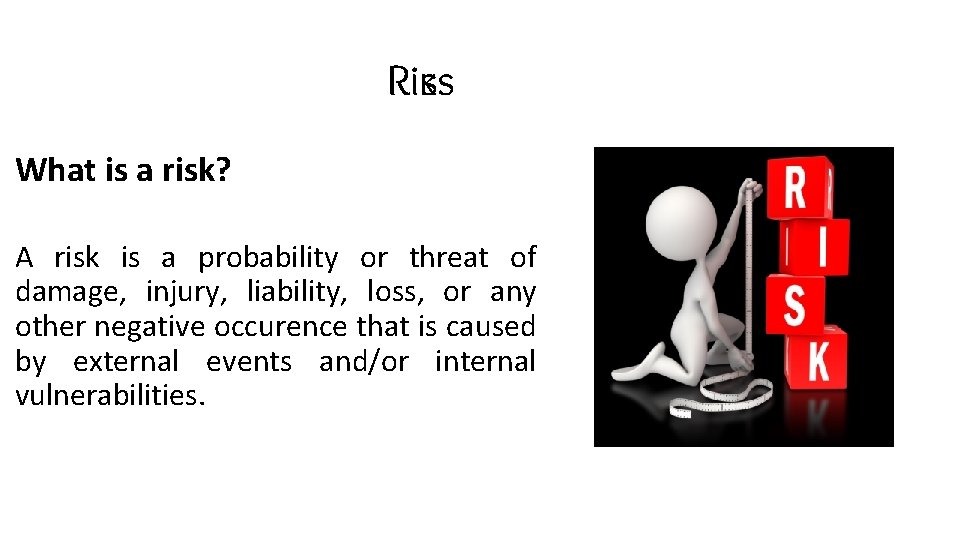
Ris. Ks What is a risk? A risk is a probability or threat of damage, injury, liability, loss, or any other negative occurence that is caused by external events and/or internal vulnerabilities.
Types of risks Pure risks: this type of risks involves only the chance of loss and there is never an opportunity for gain or profit. Only these risks are Insurable. Speculative risks: these risks involve the chance of both loss or gain. This type of risk is not Insurable. Elements of an insurable risk are: the loss must be accidental or unexpected, it must not be catastrophic and the loss produced by the risk must be defined and measurable.
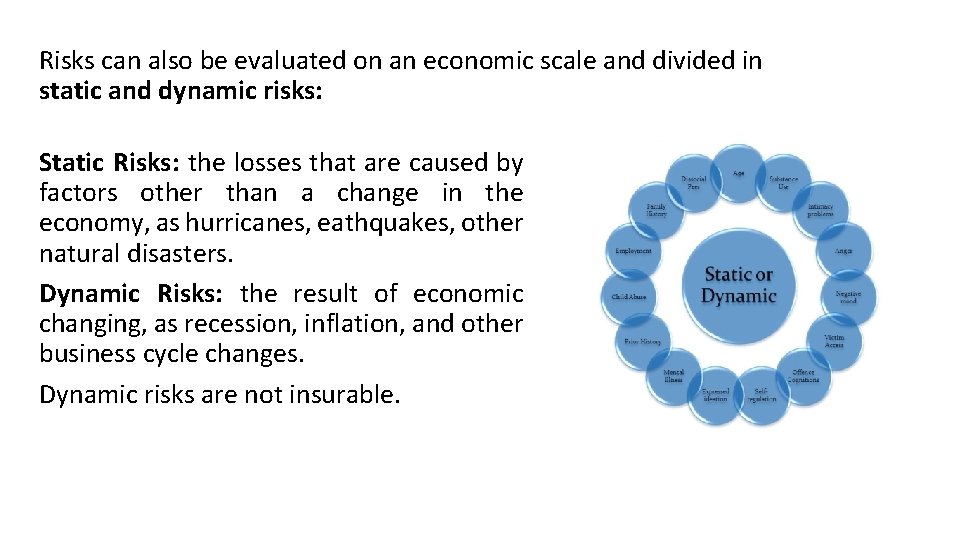
Risks can also be evaluated on an economic scale and divided in static and dynamic risks: Static Risks: the losses that are caused by factors other than a change in the economy, as hurricanes, eathquakes, other natural disasters. Dynamic Risks: the result of economic changing, as recession, inflation, and other business cycle changes. Dynamic risks are not insurable.
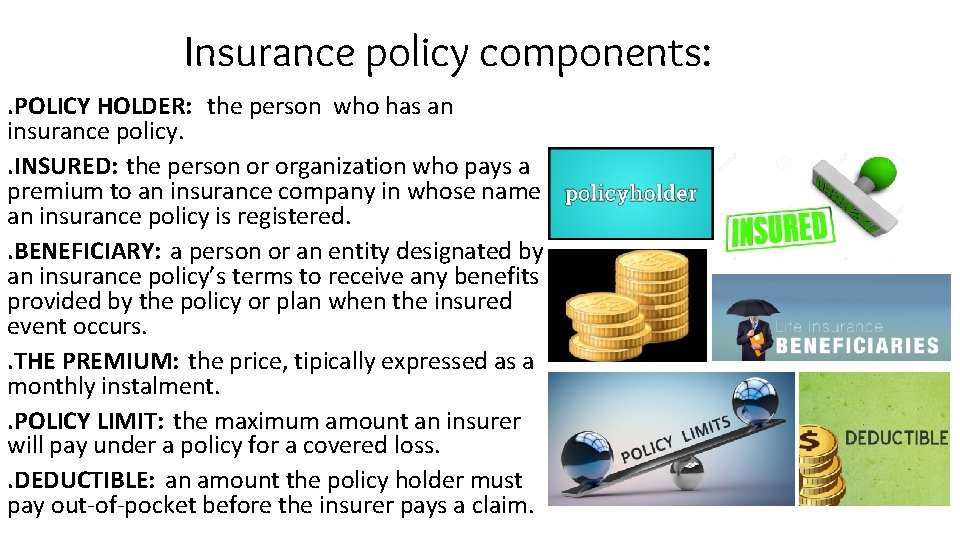
Insurance policy components: . POLICY HOLDER: the person who has an insurance policy. . INSURED: the person or organization who pays a premium to an insurance company in whose name an insurance policy is registered. . BENEFICIARY: a person or an entity designated by an insurance policy’s terms to receive any benefits provided by the policy or plan when the insured event occurs. . THE PREMIUM: the price, tipically expressed as a monthly instalment. . POLICY LIMIT: the maximum amount an insurer will pay under a policy for a covered loss. . DEDUCTIBLE: an amount the policy holder must pay out-of-pocket before the insurer pays a claim.
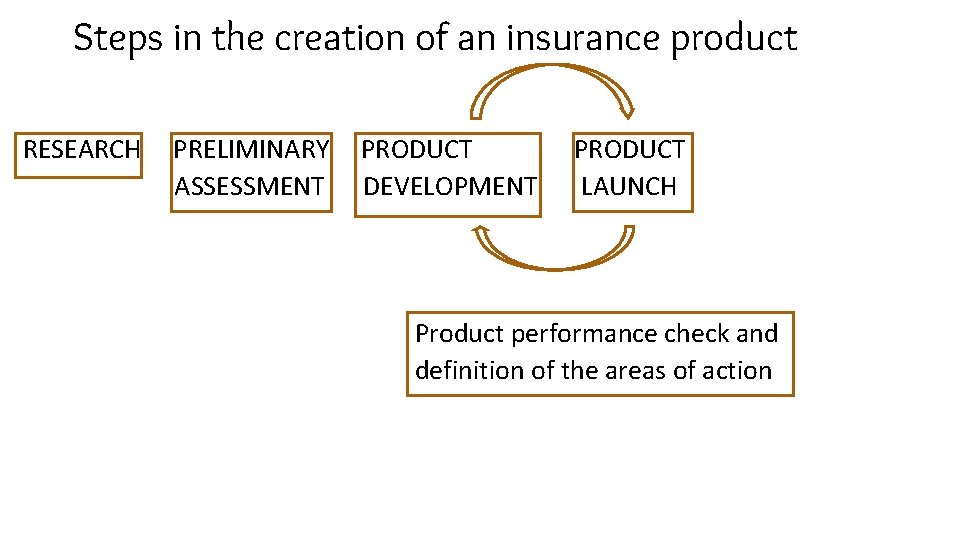
Steps in the creation of an insurance product RESEARCH PRELIMINARY PRODUCT ASSESSMENT DEVELOPMENT LAUNCH Product performance check and definition of the areas of action
- Slides: 10