
Istiadha Its Ruling The majority preferable to recite
Isti’adha ﺍﻻـــــﺎ ﺃﻜﺎﺩﻳﻤﻴﺔ آﻴﺎﺕ ﻟﻠﻌﻠﻮﻡ ﺍﻹﺳﻼﻣﻴﺔ ﺍ ﻣﻨﺪﻭﺑﺔ ﻋﻨﺪ ﺍﺑﺘﺪﺍﺀ ﺍﻟﻘﺮﺍﺀﺓ : ﺍﻟﺠﻤﻬﻮﺭ Its Ruling ﻭﺣﻤﻠﻮﺍ ﺍﻷﻤﺮ ﻓﻲ ﺍﻟﻨﺤﻞ ﻋﻠﻰ ﺍﻟ ﺩﺏ ﺑﺤﻴﺚ ﻟﻮ ﺗﺮﻛﻬﺎ ﺍﻟﻘﺎﺭﺉ ﻻ ﻳﻜﻮﻥ آﺜﺍ . ﻭﺣﻤﻠﻮﺍ ﺍﻷﻤﺮ ﺍﻟﺴﺎﺑﻖ ﻋﻠﻰ ﺍﻟﻮﺟﻮﺏ. . ﻭﺍﺟﺒﺔ ﻋﻨﺪ ﺍﺑﺘﺪﺍﺀ ﺍﻟﻘﺮﺍﺀﺓ : ﺑﻌﺾ ﺍﻟﻌﻠﻤﺎﺀ The majority: preferable to recite it at the beginning of recitation. They built their opinion upon interpreting the verses to mean it is preferable to do so, however if a reciter does not utter it, he is not sinful. Yet another group of the scholars opine that it is obligatory to mention it at the beginning of recitation, where they interpreted the abovementioned verse to mean obligation. 2021 -06 -19 www. ayaatacademy. ca ﺃﻜﺎﺩﻳﻤﻴﺔ آﻴﺎﺕ ﻟﻠﻌﻠﻮﻡ ﺍﻹﺳﻼﻣﻴﺔ 5

Isti’adha ﺍﻻـــــﺎ ﺃﻜﺎﺩﻳﻤﻴﺔ آﻴﺎﺕ ﻟﻠﻌﻠﻮﻡ ﺍﻹﺳﻼﻣﻴﺔ : ﻭﺟﻪ ﺍﻟﺠﻬﺮ ﺑﻬﺎ ﺃﻦ ﻳﻨﺘﺒﻪ ﺍﻟﺴﺎﻣﻊ ﻓﻴﻨﺼﺖ ﻟﻠﻘﺮﺍﺀﺓ ﻣﻦ ﺃﻮﻟﻬﺎ ﻓﻼ ﻳﻔﻮﺗﻪ ﺷﻴﺀ ﻣﻨﻬﺎ ﻷﻦ ﺍﻟﺘﻌﻮﺫ ﺷﻌﺎﺭ ﺍﻟﻘﺮﺍﺀﺓ ﻭﻋﻼﻣﺘﻬﺎ ﺍﺍ Its Conditions : ﻭﺟﻪ ﺍﻹﺳﺮﺍﺭ ﺑﻬﺎ . ﻟﻴﺤﺼﻞ ﺍﻟﻔﺮﻕ ﺑﻴﻦ ﺍﻟﻘﺮآﻦ ﻭﻏﻴﺮﻩ Why to recite it out loud: To attract the attension of the listener from the very beginning, so as not to miss any of its rewards. Because Isti`adhah is a sign and indication that one is about to recite the Qur'an. Why to recite it sub-vocally: to differentiate between the recitation of the Qur'an and the reading of any other sentences. 2021 -06 -19 www. ayaatacademy. ca ﺃﻜﺎﺩﻳﻤﻴﺔ آﻴﺎﺕ ﻟﻠﻌﻠﻮﻡ ﺍﻹﺳﻼﻣﻴﺔ 8
Isti’adha ﺍﻻـــــﺎ ﺍﺍ Its : ﺇﺧﻔﺎﺅﻬﺎ Conditions. ﺇﺫﺍ ﻛﺎﻥ ﺍﻟﻘﺎﺭﺉ ﻳﻘﺮﺃ ﺳ ﺍ 1 - ﺃﻜﺎﺩﻳﻤﻴﺔ آﻴﺎﺕ ﻟﻠﻌﻠﻮﻡ ﺍﻹﺳﻼﻣﻴﺔ . ﻭﻟﻴﺲ ﻣﻌﻪ ﺃﺤﺪ ﻳﺴﺘﻤﻊ ﻟﻘﺮﺍﺀﺗﻪ ، ﺇﺫﺍ ﻛﺎﻥ ﺍﻟﻘﺎﺭﺉ ﻳﻘﺮﺃ ﺟﻬﺍ 2. ﻭﻻ ﺳﻴﻤﺎ ﻓﻲ ﺍﻟﺼﻼﺓ ﺟﻬﺮﻳﺔ ، ﺇﺫﺍ ﻛﺎﻥ ﻳﻘﺮﺃ ﺑﺎﻟﺼﻼﺓ ﺳﻮﺍﺀ ﺇﻣﺎﺍ ﺃﻢ ﻣﺄﻤﻮﺍ ﺃﻢ ﻣﻨﻔﺮﺍ 3. ﺇﺫﺍ ﻛﺎﻥ ﻳﻘﺮﺃ ﻭﺳﻂ ﺟﻤﺎﻋﺔ ﻭﻟﻴﺲ ﻫﻮ ﺍﻟﻤﺒﺘﺪﺉ ﺑﺎﻟﻘﺮﺍﺀﺓ 4 To recite it sub-vocally: 1. If the reciter is reciting sub-vocally; 2. If the reciter is reciting out loud but no one is listening to his recitation; 3. If the Qur'an is being recited during prayer, whether one is the imam leading the prayer, being led by the imam, or performing the prayer by particularly in the prayer performed out loud; 4. If one is reciting with other reciters but he is not the one who starts the recitation. oneself, 2021 -06 -19 www. ayaatacademy. ca ﺃﻜﺎﺩﻳﻤﻴﺔ آﻴﺎﺕ ﻟﻠﻌﻠﻮﻡ ﺍﻹﺳﻼﻣﻴﺔ 10
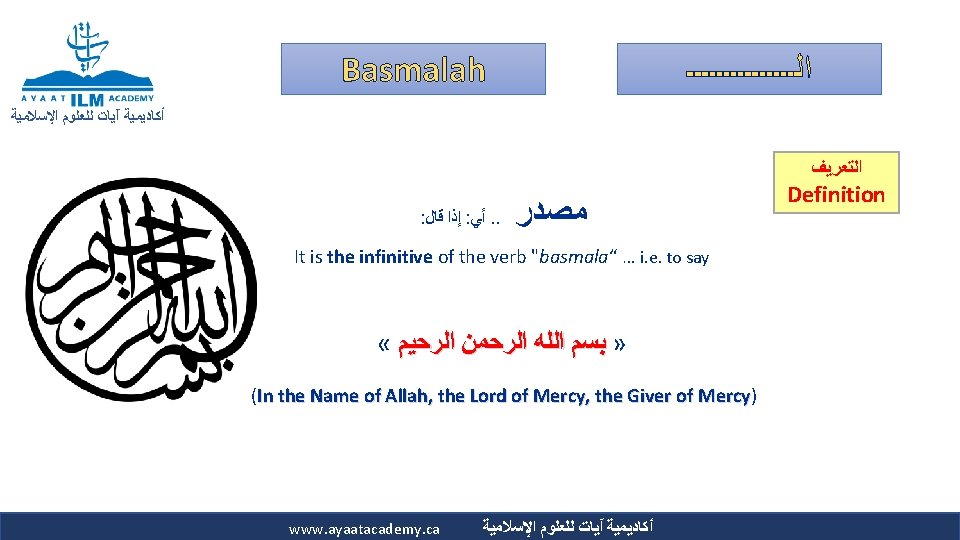
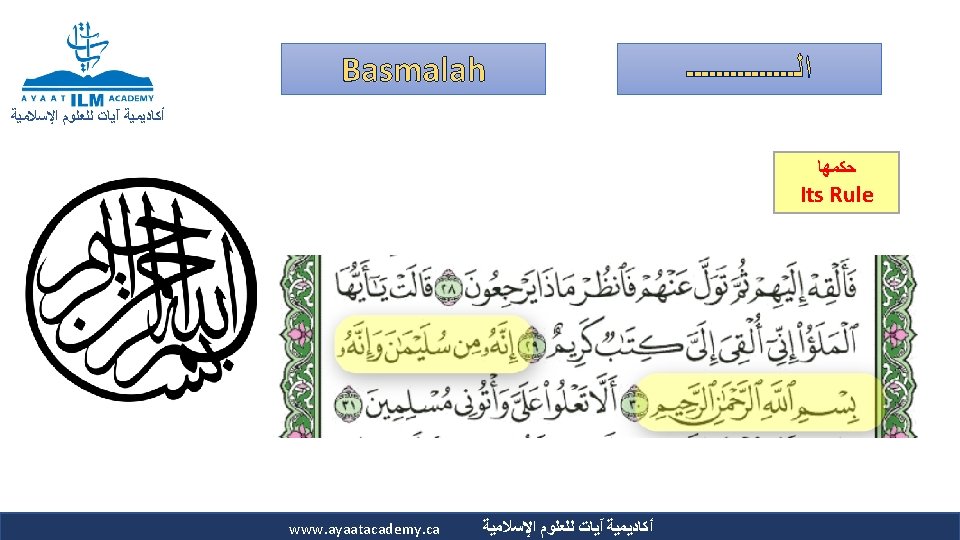
Basmalah ﺃﻜﺎﺩﻳﻤﻴﺔ آﻴﺎﺕ ﻟﻠﻌﻠﻮﻡ ﺍﻹﺳﻼﻣﻴﺔ ﺍﻟــــــــ : ﻻ ﺧﻼﻑ ﺑﻴﻦ ﺍﻟﻌﻠﻤﺎﺀ ﺃﻨﻬﺎ ﺑﻌﺾ آﻴﺔ ﻣﻦ ﺳﻮﺭﺓ ﺍﻟ ﻣﻞ ﺇﺛﺒﺎﺗﻬﺎ ﻓﻲ ﺃﻮﻝ ﺍﻟﻔﺎﺗﺤﺔ ﺗﺨﻴﻴﺮ ﺍﻟﻘﺎﺭﺉ ﻣﻦ ﻭﺳﻂ ﺍﻟﺴﻮﺭ ﻓﻲ ﺍﻻﺗﻴﺎﻥ ﺑﻬﺎ ( ﺍﻹﺗﻴﺎﻥ ﺑﻬﺎ ﻋﻨﺪ ﺍﺑﺘﺪﺍﺀ ﺍﻟﻘﺮﺍﺀﺓ ﺑﺄﻮﻝ ﺃﻲ ﺳﻮﺭﺓ ﺳﻮﻯ ﺳﻮﺭﺓ ﺑﺮﺍﺀﺓ )ﺍﻟﺘﻮﺑﺔ . 1. 2. 3. 4 ﺣﻜﻤﻬﺎ Its Rule § ﻟﻜﺘﺎﺑﺘﻬﺎ ﻓﻲ ﺍﻟﻤﺼﺤﻒ . ﻛﺎﻥ ﻻ ﻳﻌﻠﻢ ﺍﻧﻘﻀﺎﺀ ﺍﻟﺴﻮﺭﺓ ﺣﺘﻰ ﺗﻨﺰﻝ ﻋﻠﻴﻪ - ﺻﻠﻰ ﺍﻟﻠﻪ ﻋﻠﻴﻪ ﻭآﻠﻪ ﻭﺳﻠﻢ - § ﻷﻦ ﺭﺳﻮﻝ ﺍﻟﻠﻪ Scholars agree that the Basmalah is: 1. A part of a verse in Surat An-Naml. 2. Should be recited at the beginning of Surat Al-Fatihah. 3. The reciter can choose to begin his recitation with Basmalah or not if he begins reciting from any part of the Qur'an other than the beginning of a Surah. 4. Should be recited at the beginning of every Surah of the Qur'an, except Surat Al. Tawbah. • • due to the fact that the Basmalah is so written in the Mushaf als Allah's Messenger (peace and blessings of Allah be upon him) would only know that a Surah of the Qur'an ended when the Basmalah was revealed to him. www. ayaatacademy. ca ﺃﻜﺎﺩﻳﻤﻴﺔ آﻴﺎﺕ ﻟﻠﻌﻠﻮﻡ ﺍﻹﺳﻼﻣﻴﺔ
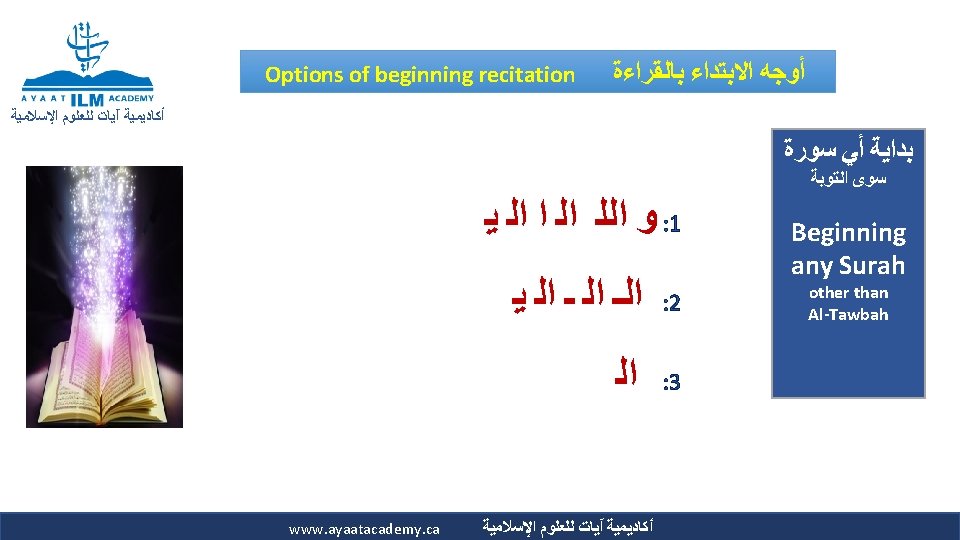
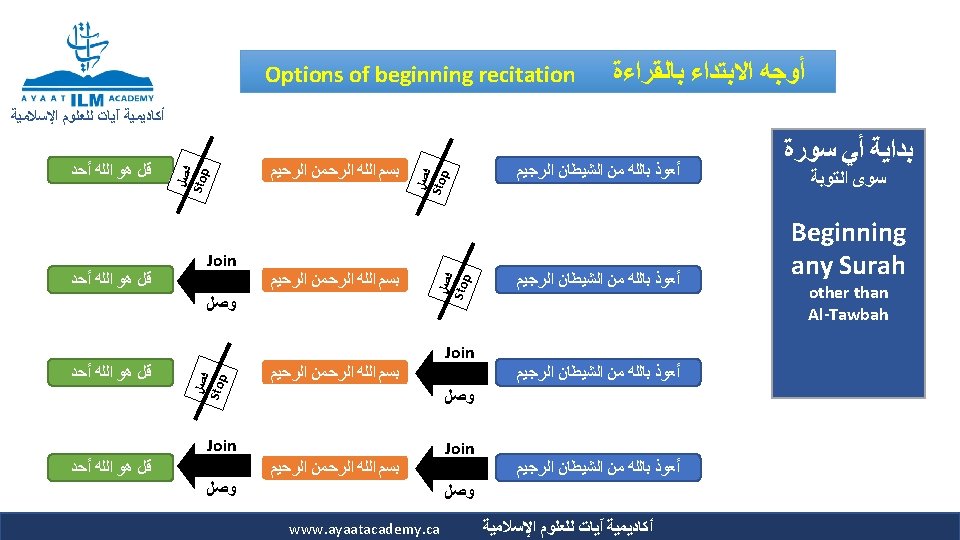
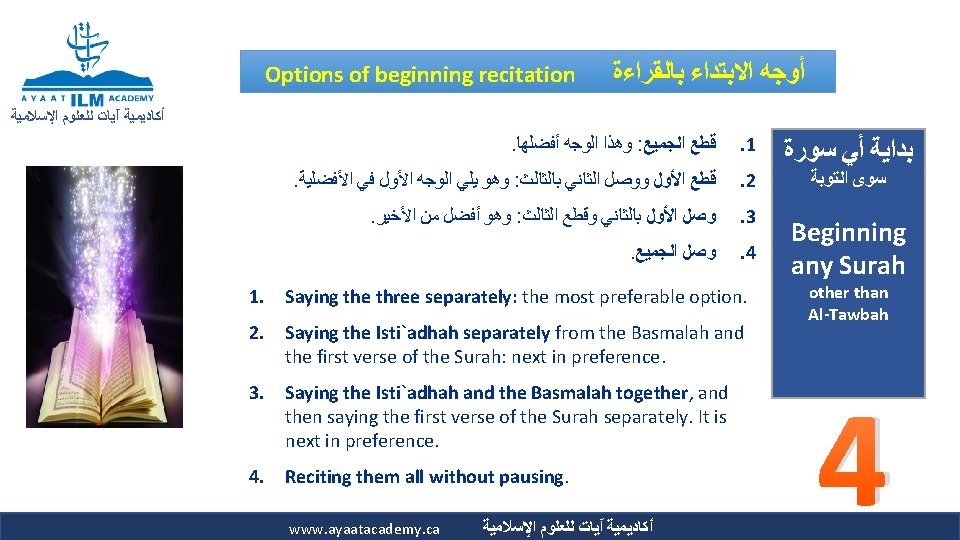
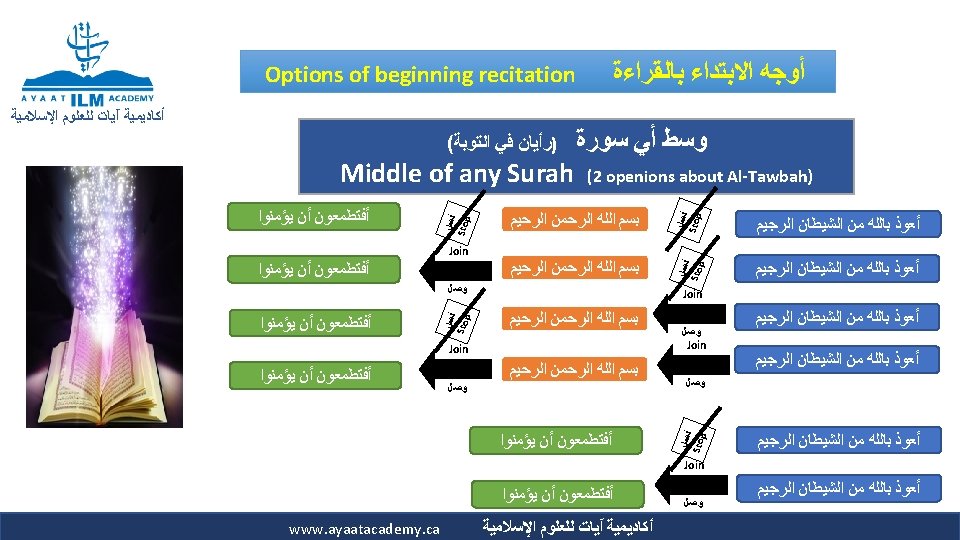
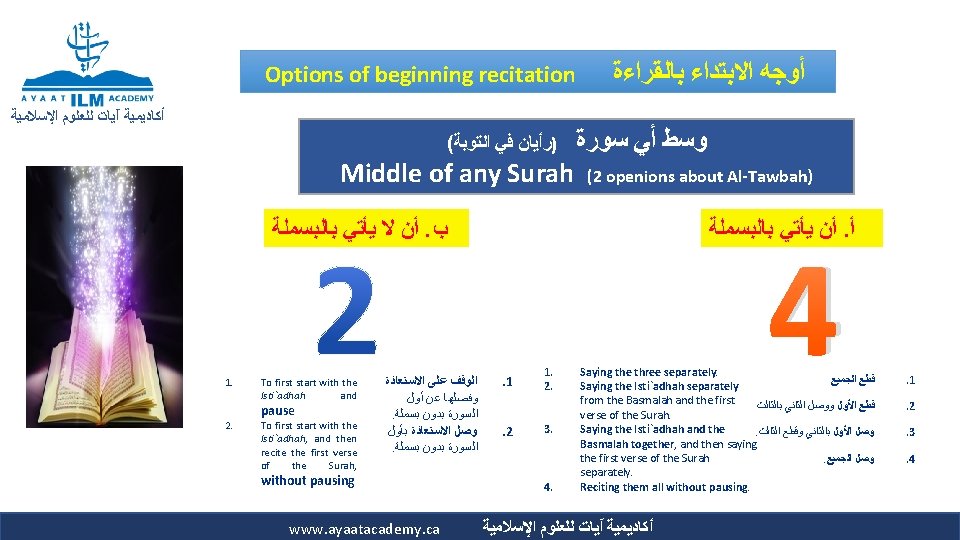
Options of beginning recitation ﺃﻮﺟﻪ ﺍﻻﺑﺘﺪﺍﺀ ﺑﺎﻟﻘﺮﺍﺀﺓ ﺃﻜﺎﺩﻳﻤﻴﺔ آﻴﺎﺕ ﻟﻠﻌﻠﻮﻡ ﺍﻹﺳﻼﻣﻴﺔ . ﻭﻫﺬﺍ ﺍﻟﻮﺟﻪ ﺃﻔﻀﻠﻬﺎ : ﻗﻄﻊ ﺍﻟﺠﻤﻴﻊ . 1 ﺑﺪﺍﻳﺔ ﺃﻲ ﺳﻮﺭﺓ . ﻭﻫﻮ ﻳﻠﻲ ﺍﻟﻮﺟﻪ ﺍﻷﻮﻝ ﻓﻲ ﺍﻷﻔﻀﻠﻴﺔ : ﻗﻄﻊ ﺍﻷﻮﻝ ﻭﻭﺻﻞ ﺍﻟﺜﺎﻧﻲ ﺑﺎﻟﺜﺎﻟﺚ . 2 ﺳﻮﻯ ﺍﻟﺘﻮﺑﺔ . ﻭﻫﻮ ﺃﻔﻀﻞ ﻣﻦ ﺍﻷﺨﻴﺮ : ﻭﺻﻞ ﺍﻷﻮﻝ ﺑﺎﻟﺜﺎﻧﻲ ﻭﻗﻄﻊ ﺍﻟﺜﺎﻟﺚ . 3 . ﻭﺻﻞ ﺍﻟﺠﻤﻴﻊ . 4 Beginning any Surah 1. Saying the three separately: the most preferable option. 2. Saying the Isti`adhah separately from the Basmalah and the first verse of the Surah: next in preference. 3. Saying the Isti`adhah and the Basmalah together, and then saying the first verse of the Surah separately. It is next in preference. 4. Reciting them all without pausing. www. ayaatacademy. ca ﺃﻜﺎﺩﻳﻤﻴﺔ آﻴﺎﺕ ﻟﻠﻌﻠﻮﻡ ﺍﻹﺳﻼﻣﻴﺔ other than Al-Tawbah 4
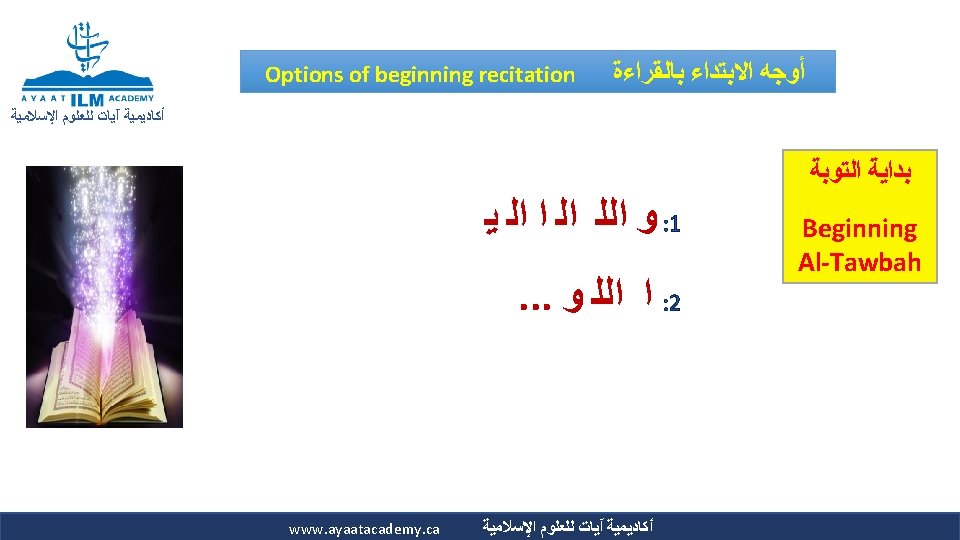
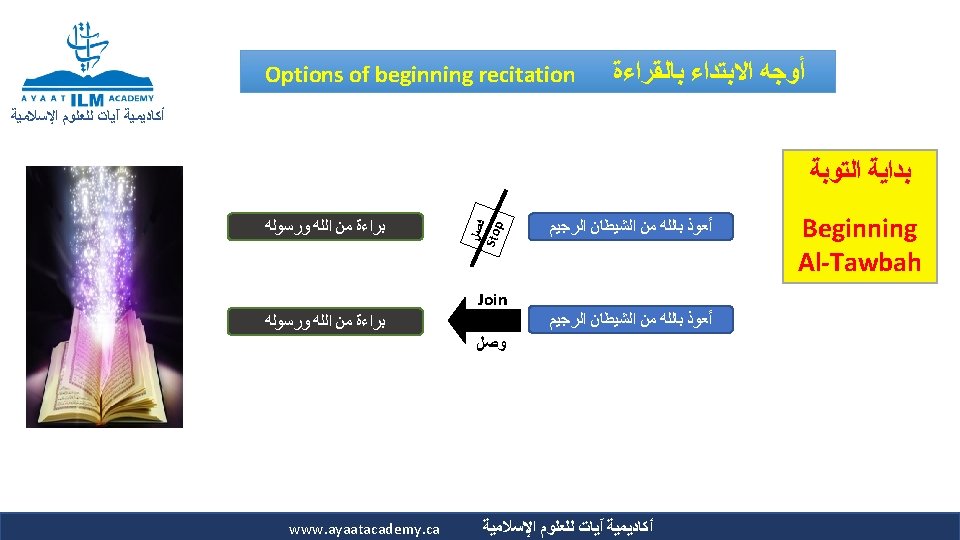
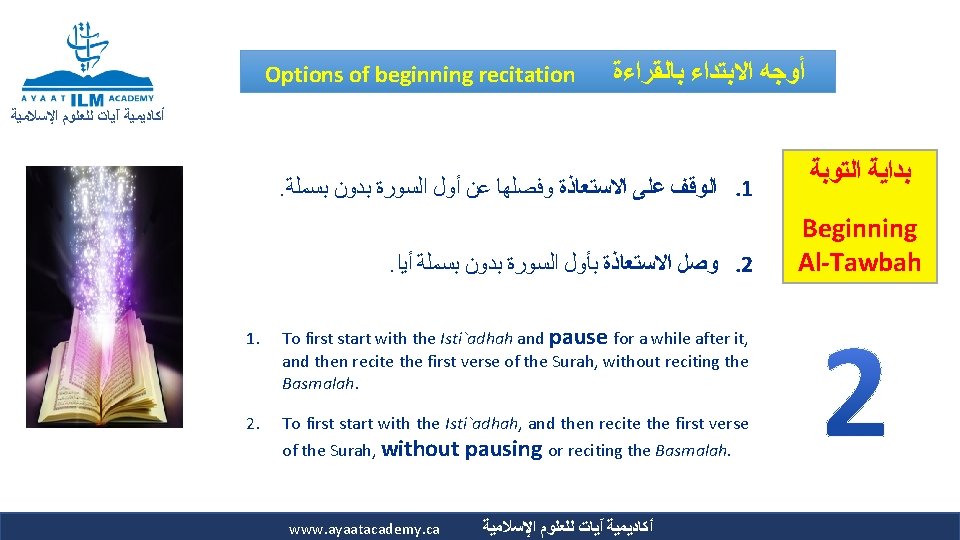
Options of beginning recitation ﺃﻮﺟﻪ ﺍﻻﺑﺘﺪﺍﺀ ﺑﺎﻟﻘﺮﺍﺀﺓ ﺃﻜﺎﺩﻳﻤﻴﺔ آﻴﺎﺕ ﻟﻠﻌﻠﻮﻡ ﺍﻹﺳﻼﻣﻴﺔ . ﺍﻟﻮﻗﻒ ﻋﻠﻰ ﺍﻻﺳﺘﻌﺎﺫﺓ ﻭﻓﺼﻠﻬﺎ ﻋﻦ ﺃﻮﻝ ﺍﻟﺴﻮﺭﺓ ﺑﺪﻭﻥ ﺑﺴﻤﻠﺔ. 1. ﻭﺻﻞ ﺍﻻﺳﺘﻌﺎﺫﺓ ﺑﺄﻮﻝ ﺍﻟﺴﻮﺭﺓ ﺑﺪﻭﻥ ﺑﺴﻤﻠﺔ ﺃﻴﺍ. 2 1. To first start with the Isti`adhah and pause for a while after it, and then recite the first verse of the Surah, without reciting the Basmalah. 2. To first start with the Isti`adhah, and then recite the first verse of the Surah, without www. ayaatacademy. ca pausing or reciting the Basmalah. ﺃﻜﺎﺩﻳﻤﻴﺔ آﻴﺎﺕ ﻟﻠﻌﻠﻮﻡ ﺍﻹﺳﻼﻣﻴﺔ ﺑﺪﺍﻳﺔ ﺍﻟﺘﻮﺑﺔ Beginning Al-Tawbah
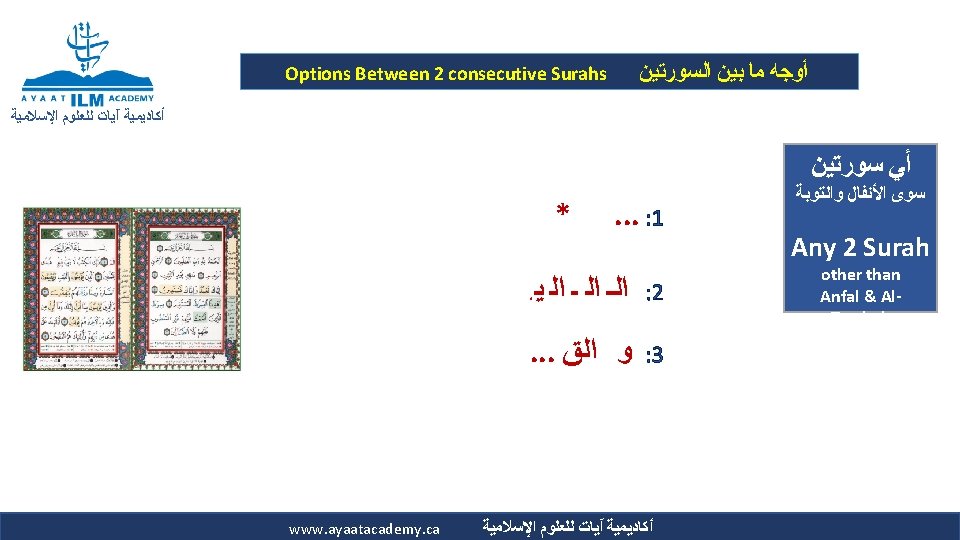
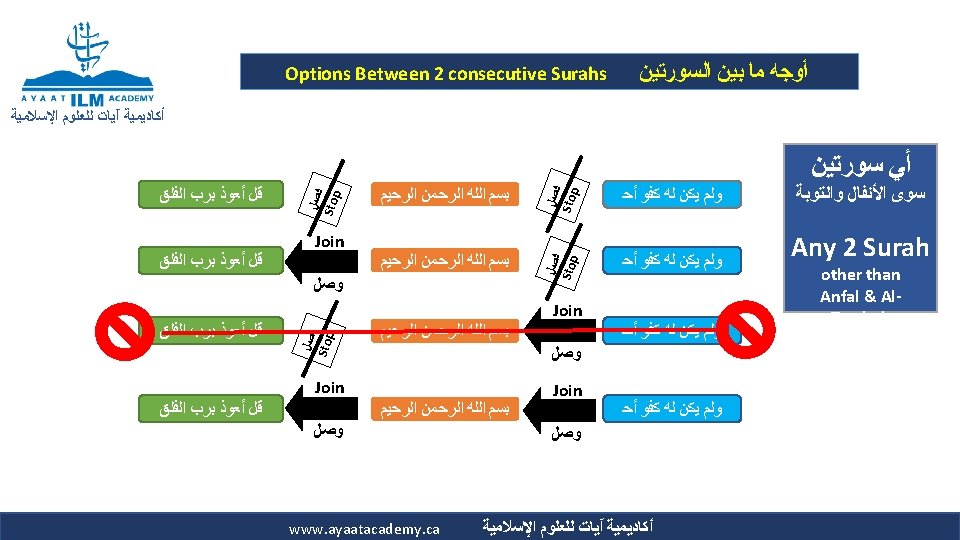
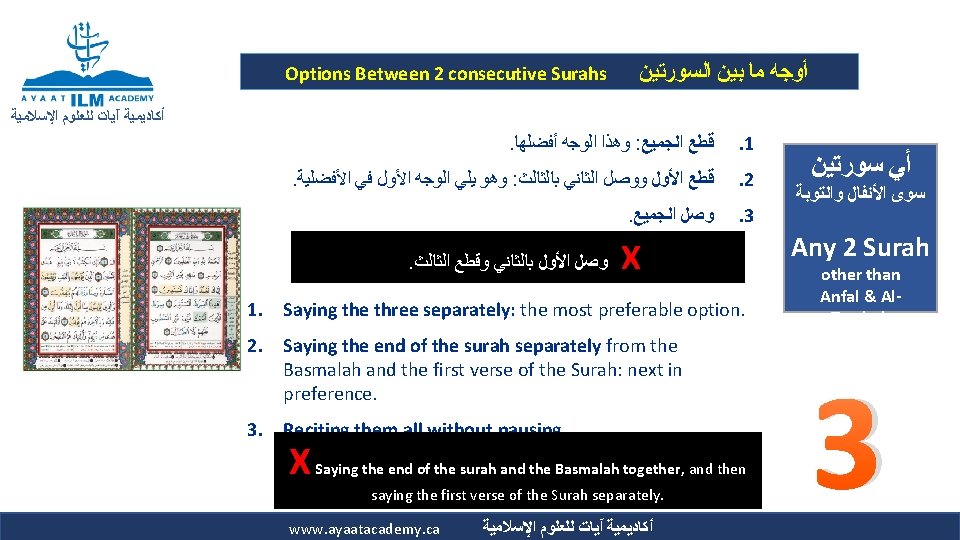
Options Between 2 consecutive Surahs ﺃﻮﺟﻪ ﻣﺎ ﺑﻴﻦ ﺍﻟﺴﻮﺭﺗﻴﻦ ﺃﻜﺎﺩﻳﻤﻴﺔ آﻴﺎﺕ ﻟﻠﻌﻠﻮﻡ ﺍﻹﺳﻼﻣﻴﺔ . ﻭﻫﺬﺍ ﺍﻟﻮﺟﻪ ﺃﻔﻀﻠﻬﺎ : ﻗﻄﻊ ﺍﻟﺠﻤﻴﻊ . 1 . ﻭﻫﻮ ﻳﻠﻲ ﺍﻟﻮﺟﻪ ﺍﻷﻮﻝ ﻓﻲ ﺍﻷﻔﻀﻠﻴﺔ : ﻗﻄﻊ ﺍﻷﻮﻝ ﻭﻭﺻﻞ ﺍﻟﺜﺎﻧﻲ ﺑﺎﻟﺜﺎﻟﺚ . 2 . ﻭﺻﻞ ﺍﻟﺠﻤﻴﻊ . 3 . ﻭﺻﻞ ﺍﻷﻮﻝ ﺑﺎﻟﺜﺎﻧﻲ ﻭﻗﻄﻊ ﺍﻟﺜﺎﻟﺚ X 1. Saying the three separately: the most preferable option. 2. Saying the end of the surah separately from the Basmalah and the first verse of the Surah: next in preference. 3. Reciting them all without pausing. X Saying the end of the surah and the Basmalah together, and then saying the first verse of the Surah separately. www. ayaatacademy. ca ﺃﻜﺎﺩﻳﻤﻴﺔ آﻴﺎﺕ ﻟﻠﻌﻠﻮﻡ ﺍﻹﺳﻼﻣﻴﺔ ﺃﻲ ﺳﻮﺭﺗﻴﻦ ﺳﻮﻯ ﺍﻷﻨﻔﺎﻝ ﻭﺍﻟﺘﻮﺑﺔ Any 2 Surah other than Anfal & Al. Tawbah 3
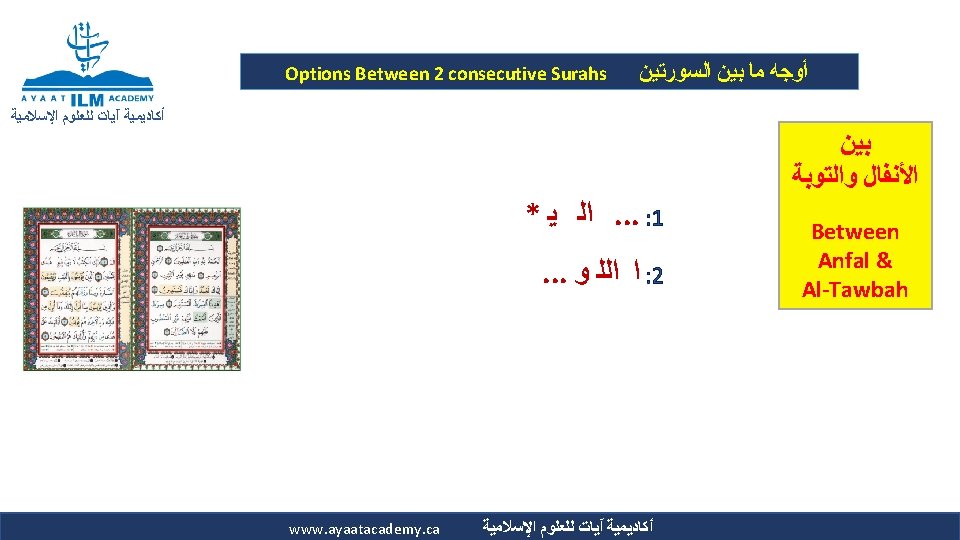
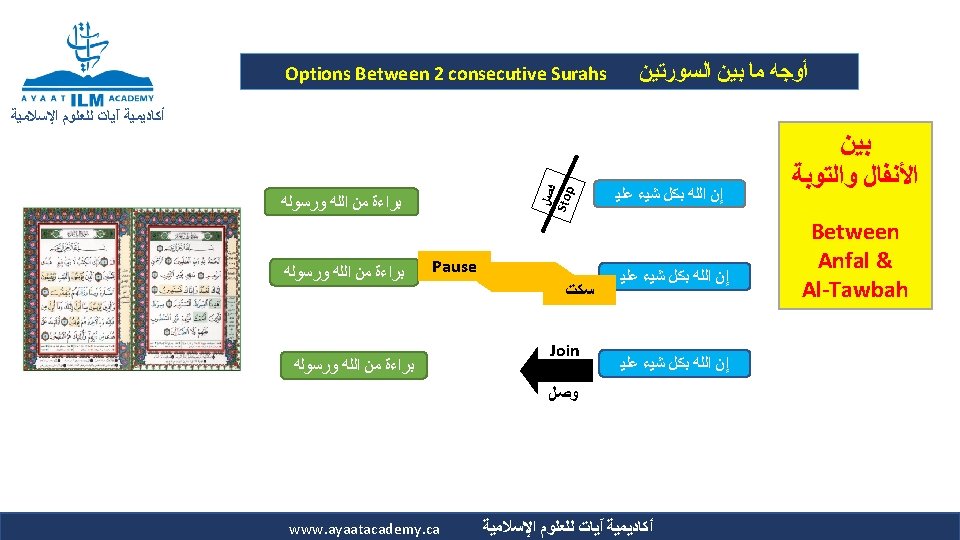
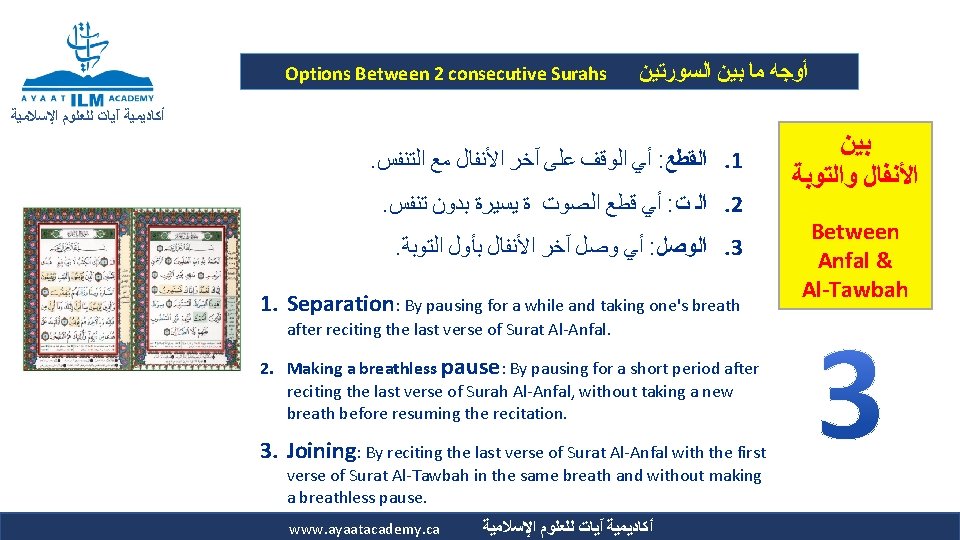
Options Between 2 consecutive Surahs ﺃﻮﺟﻪ ﻣﺎ ﺑﻴﻦ ﺍﻟﺴﻮﺭﺗﻴﻦ ﺃﻜﺎﺩﻳﻤﻴﺔ آﻴﺎﺕ ﻟﻠﻌﻠﻮﻡ ﺍﻹﺳﻼﻣﻴﺔ . ﺃﻲ ﺍﻟﻮﻗﻒ ﻋﻠﻰ آﺨﺮ ﺍﻷﻨﻔﺎﻝ ﻣﻊ ﺍﻟﺘﻨﻔﺲ : ﺍﻟﻘﻄﻊ. 1. ﺃﻲ ﻗﻄﻊ ﺍﻟﺼﻮﺕ ﺓ ﻳﺴﻴﺮﺓ ﺑﺪﻭﻥ ﺗﻨﻔﺲ : ﺍﻟ ﺕ. 2. ﺃﻲ ﻭﺻﻞ آﺨﺮ ﺍﻷﻨﻔﺎﻝ ﺑﺄﻮﻝ ﺍﻟﺘﻮﺑﺔ : ﺍﻟﻮﺻﻞ. 3 1. Separation: By pausing for a while and taking one's breath after reciting the last verse of Surat Al-Anfal. 2. Making a breathless pause: By pausing for a short period after reciting the last verse of Surah Al-Anfal, without taking a new breath before resuming the recitation. 3. Joining: By reciting the last verse of Surat Al-Anfal with the first verse of Surat Al-Tawbah in the same breath and without making a breathless pause. www. ayaatacademy. ca ﺃﻜﺎﺩﻳﻤﻴﺔ آﻴﺎﺕ ﻟﻠﻌﻠﻮﻡ ﺍﻹﺳﻼﻣﻴﺔ ﺑﻴﻦ ﺍﻷﻨﻔﺎﻝ ﻭﺍﻟﺘﻮﺑﺔ Between Anfal & Al-Tawbah

- Slides: 35