
ISSUES OF CLINICAL LABORATORY QUALITY ASSURANCE PROGRAMME IN
ISSUES OF CLINICAL LABORATORY QUALITY ASSURANCE PROGRAMME IN PAKISTAN Brig (R) Dilshad Ahmed Khan SI (M) Professor of Pathology NUMS, Rawalpindi

Quality Assurance Programme n Quality Control - The aim of quality control is simply to ensure that the results generated by the test are correct & verify that the testing system is working properly. n Quality Assurance - Ensures that the final results reported by the laboratory to the patient are correct: that the right test is carried out on the right specimen, right interpretation/result is delivered to the right person at right time
Factors That Affect Quality of Patient’s Results n The condition of the specimens n Reagents & Equipment n Internal quality controls program n Participation in external quality program n The interpretation & reporting of results
Unreliable QA Program ? Potential consequences of unreliable QA Performance include: n Patient misdiagnosis n Delays in treatment n Increased costs
QA Performance Failure n Pre-analytical: - – Errors before the sample reaches the laboratory n Analytical: - – Errors during the analysis of the sample n Post-analytical: - – Errors occurring after the analysis

Pre – Analytical Issues Sample Collection Sample haemolysis/ Incorrect specimen container Sample Transport Delay in samples delivery/ Temperature Incorrect specimen storage Sample left overnight at room temp/ long term storage at 4 c
Improper Collection of Blood Samples § Sample haemolysis üLDH, potassium or inorganic phosphate § Effects of exercise ücreatine kinase / CRP § Collection timing ü 24 hour urine
Incorrect Specimen Container – Serum or plasma • PTH, ACTH – Fluoride tubes for glucose • to inhibit glycolysis – EDTA tube • Unsuitable for calcium assay
Incorrect Specimen Storage – Sample left overnight at room temperature • Falsely elevated K, Pi and red cell enzymes • short –term refrigeration • medium term freezing at – 20 o. C • long term freezing at -80 o. C – Delay in sample delivery • Falsely lowered levels of unstable analytes
Internal Quality Control Ø Daily running of two control sera Ø Calculation of their mean and standard deviation Ø Plotting them on control charts Ø Daily checking and Interpretation of graphs
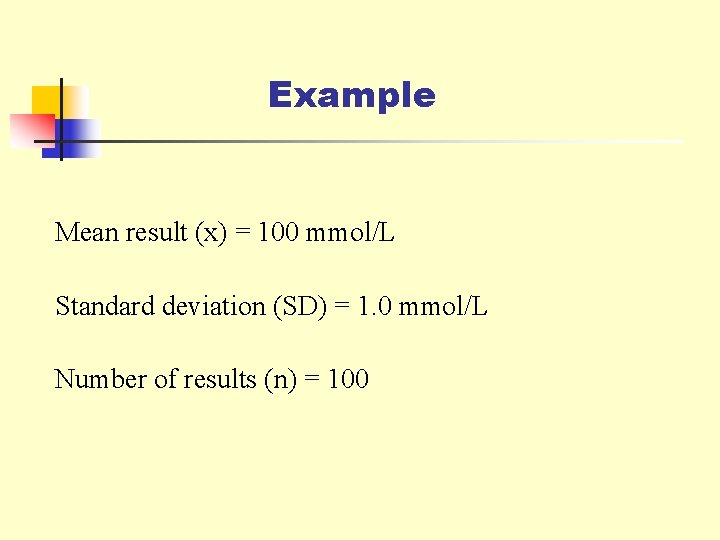
Example Mean result (x) = 100 mmol/L Standard deviation (SD) = 1. 0 mmol/L Number of results (n) = 100
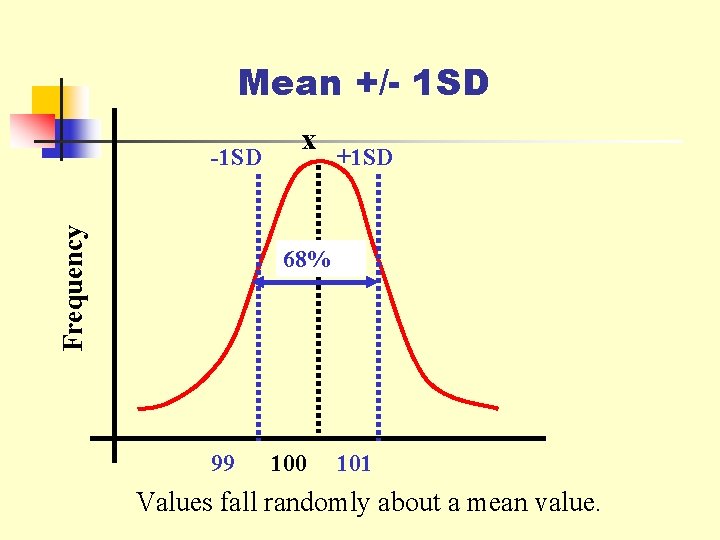
Mean +/- 1 SD Frequency -1 SD x +1 SD 68% 99 100 101 Values fall randomly about a mean value.
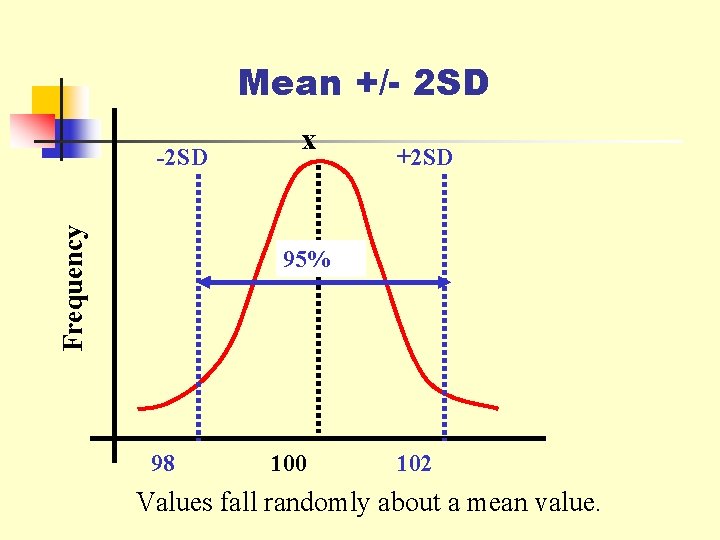
Mean +/- 2 SD Frequency -2 SD x +2 SD 95% 98 100 102 Values fall randomly about a mean value.
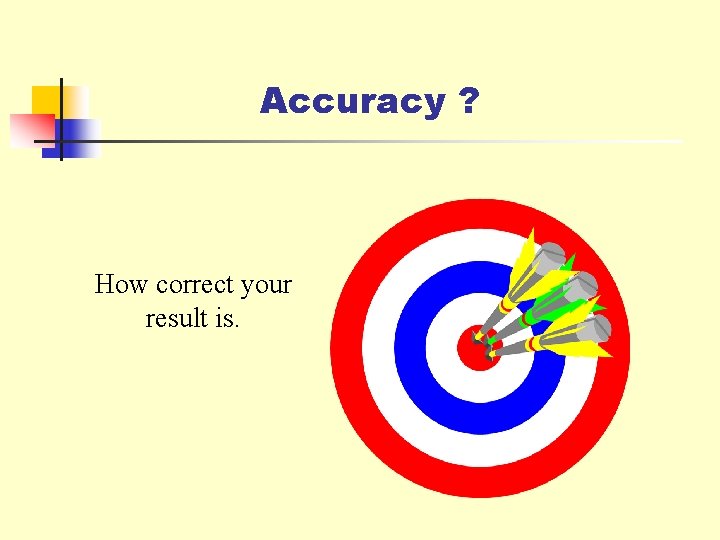
Accuracy ? How correct your result is.

Precision ? The reproducibility of your results.
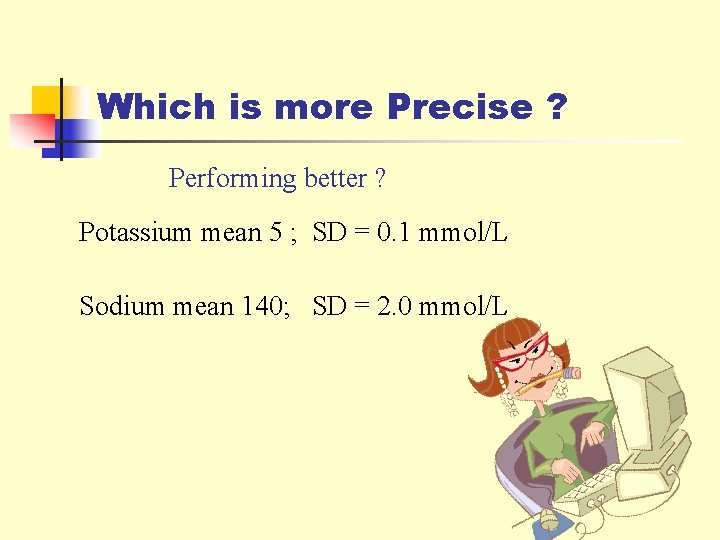
Which is more Precise ? Performing better ? Potassium mean 5 ; SD = 0. 1 mmol/L Sodium mean 140; SD = 2. 0 mmol/L
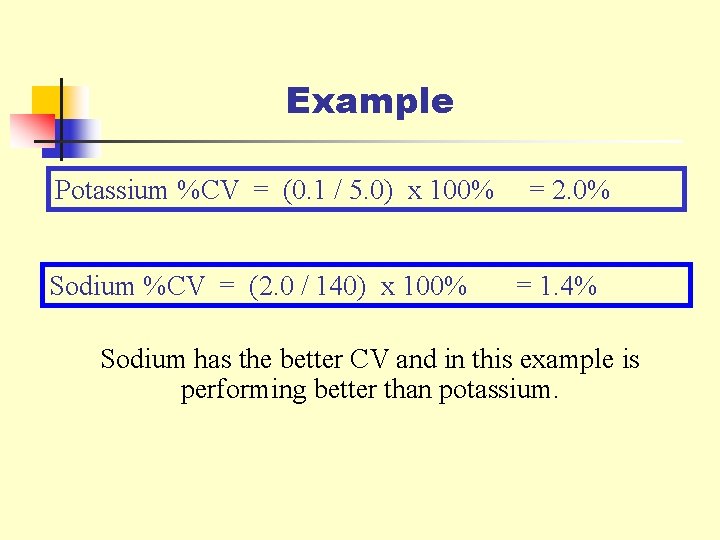
Example Potassium %CV = (0. 1 / 5. 0) x 100% Sodium %CV = (2. 0 / 140) x 100% = 2. 0% = 1. 4% Sodium has the better CV and in this example is performing better than potassium.
Westgard Rules n Westgard provides multiple QC rules: n Defines acceptability of analytical process n minimises false rejections n maintains high error detection
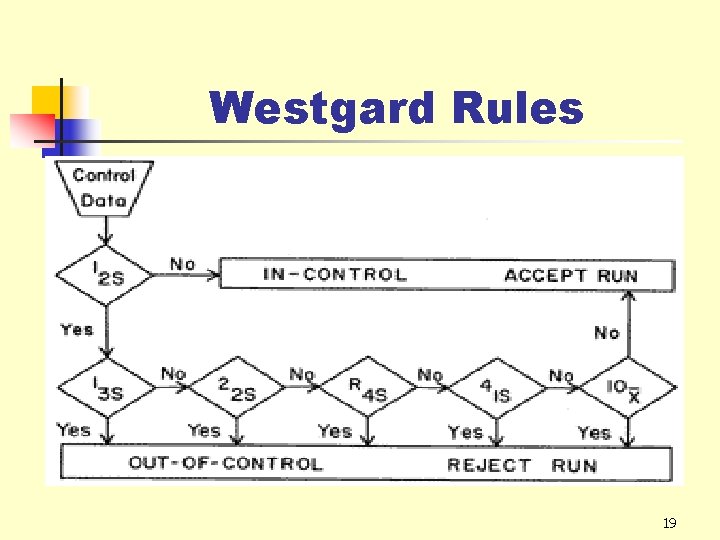
Westgard Rules 19
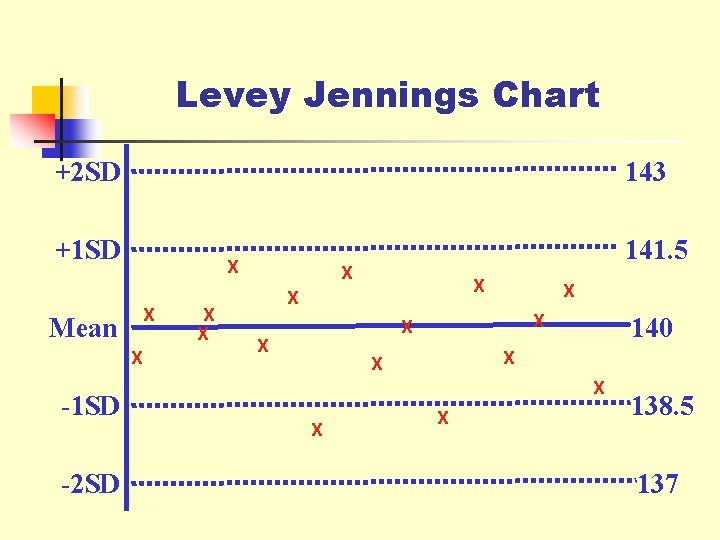
Levey Jennings Chart +2 SD 143 +1 SD 141. 5 X X Mean X -1 SD -2 SD X X X X X 140 X X X 138. 5 137
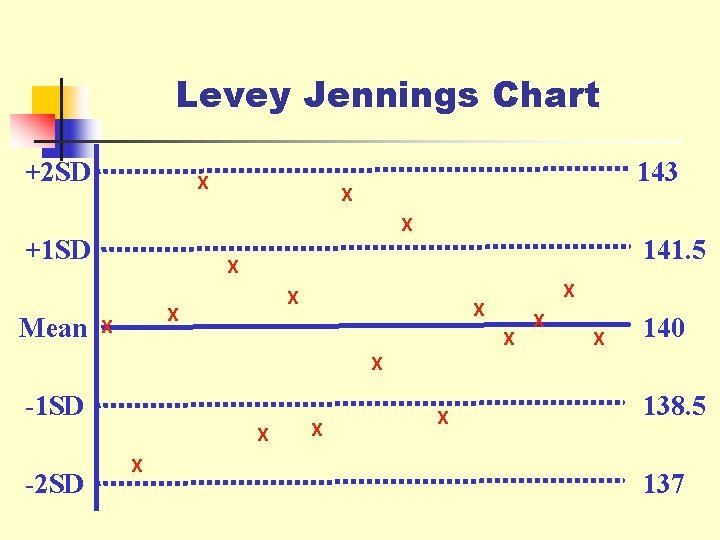
Levey Jennings Chart +2 SD X X X +1 SD Mean 143 141. 5 X X X X X 140 X -1 SD X -2 SD X X X 138. 5 137
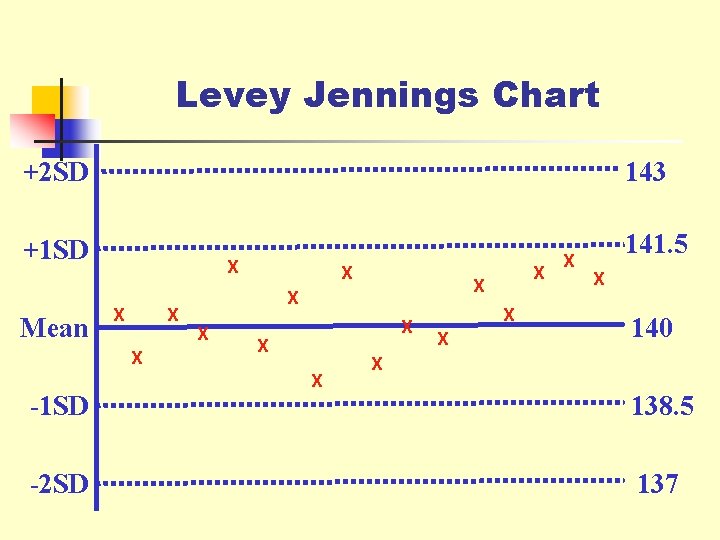
Levey Jennings Chart +2 SD 143 +1 SD Mean X X -1 SD -2 SD X X X 141. 5 X 140 X 138. 5 137
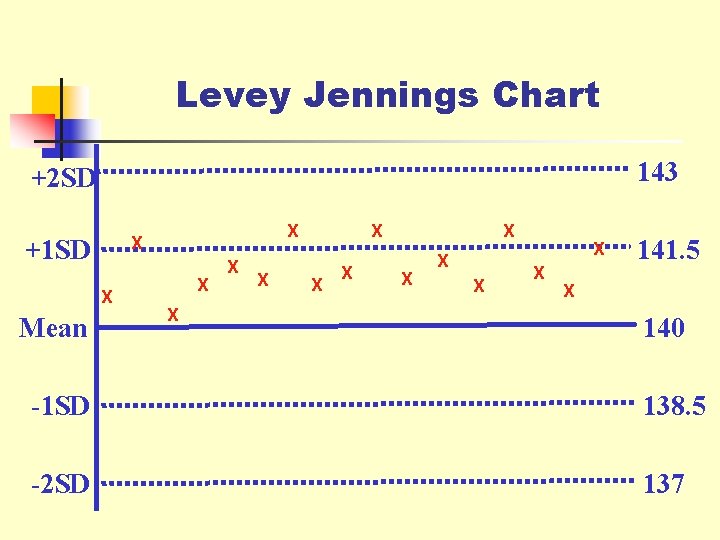
Levey Jennings Chart 143 +2 SD +1 SD X Mean X X X X 141. 5 X 140 -1 SD 138. 5 -2 SD 137
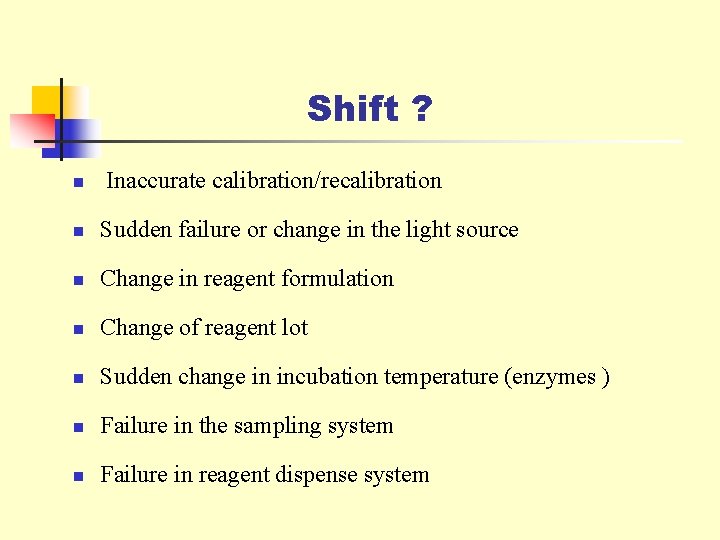
Shift ? n Inaccurate calibration/recalibration n Sudden failure or change in the light source n Change in reagent formulation n Change of reagent lot n Sudden change in incubation temperature (enzymes ) n Failure in the sampling system n Failure in reagent dispense system
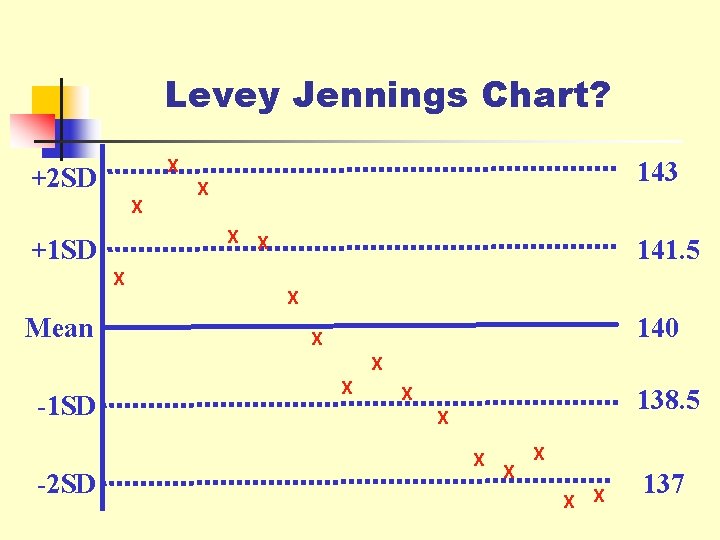
Levey Jennings Chart? X X X +1 SD X Mean 143 X +2 SD X 141. 5 X 140 X X -1 SD -2 SD X 138. 5 X X X X 137
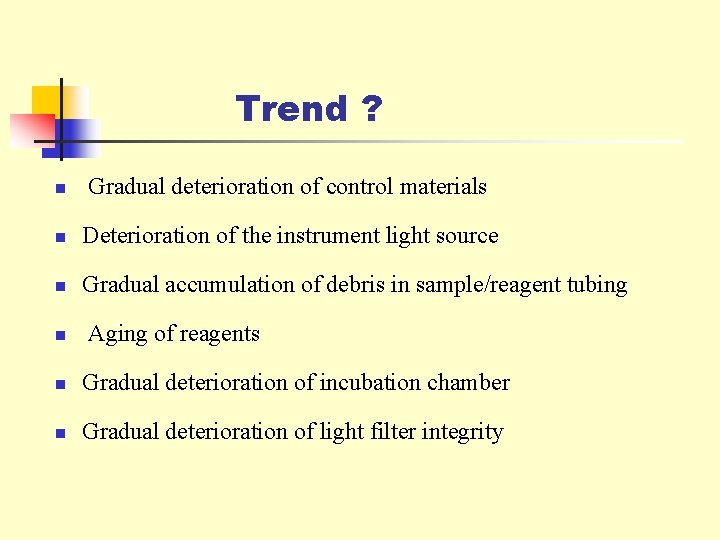
Trend ? n Gradual deterioration of control materials n Deterioration of the instrument light source n Gradual accumulation of debris in sample/reagent tubing n Aging of reagents n Gradual deterioration of incubation chamber n Gradual deterioration of light filter integrity
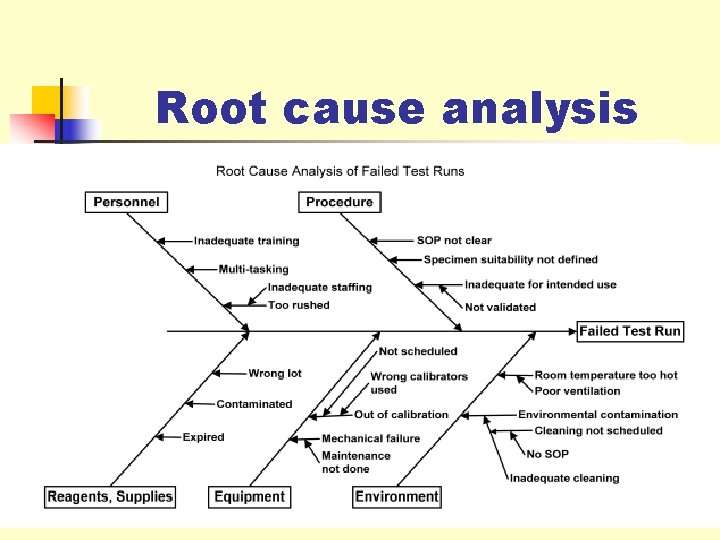
Root cause analysis
External Quality Assurance? Proficiency testing is the system designed to objectively assess the quality of results obtained by laboratories, by means of an external agency.
Benefits of EQA n Provide an inter-laboratory comparison n Allows participants to identify problems with their testing process (Accuracy) n Investigate factors in performance of tests (methods, Instrument, Reagents etc) n Supplement internal quality control procedures n Identifies improvement opportunities
External QA Programme Ø International Ø Regional Ø National
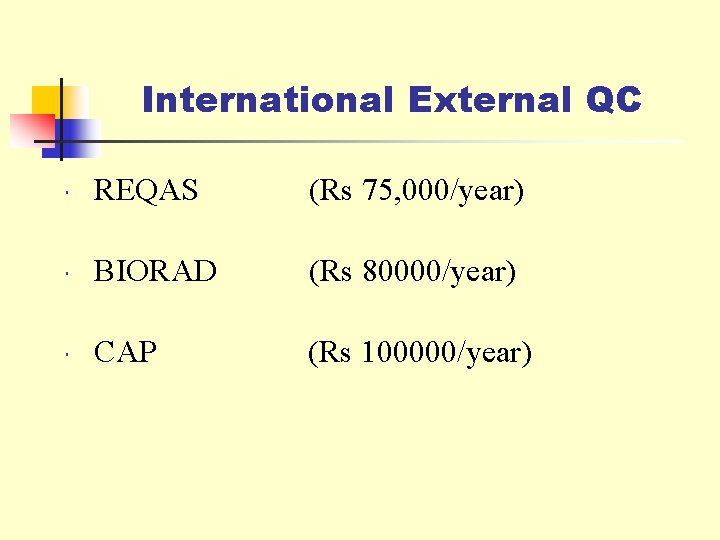
International External QC REQAS (Rs 75, 000/year) BIORAD (Rs 80000/year) CAP (Rs 100000/year)
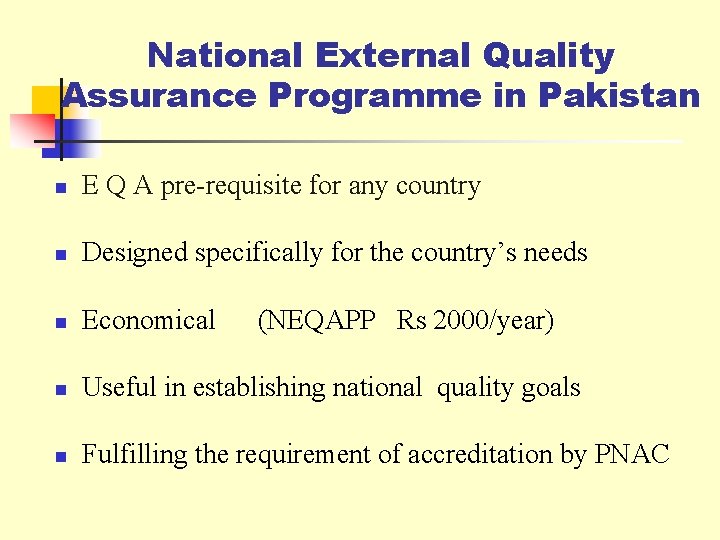
National External Quality Assurance Programme in Pakistan n E Q A pre-requisite for any country n Designed specifically for the country’s needs n Economical n Useful in establishing national quality goals n Fulfilling the requirement of accreditation by PNAC (NEQAPP Rs 2000/year)
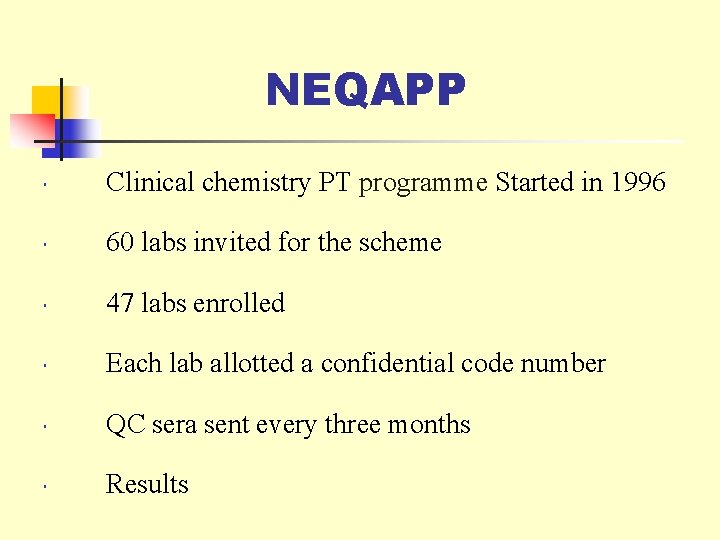
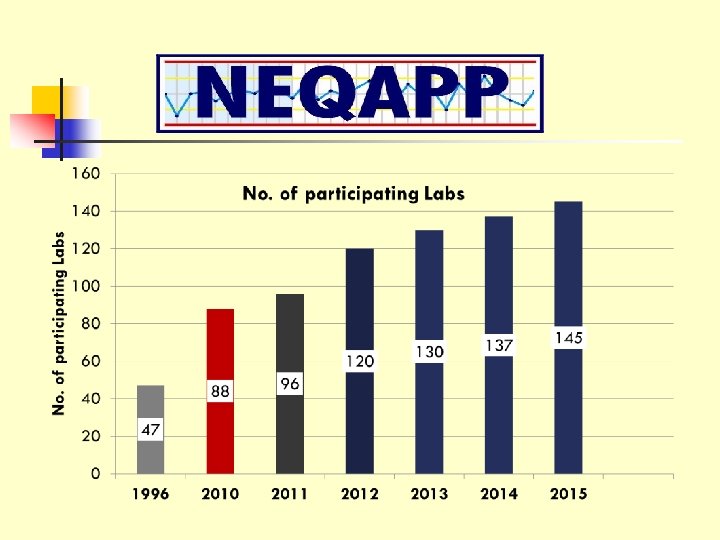
NEQAPP Clinical chemistry PT programme Started in 1996 60 labs invited for the scheme 47 labs enrolled Each lab allotted a confidential code number QC sera sent every three months Results
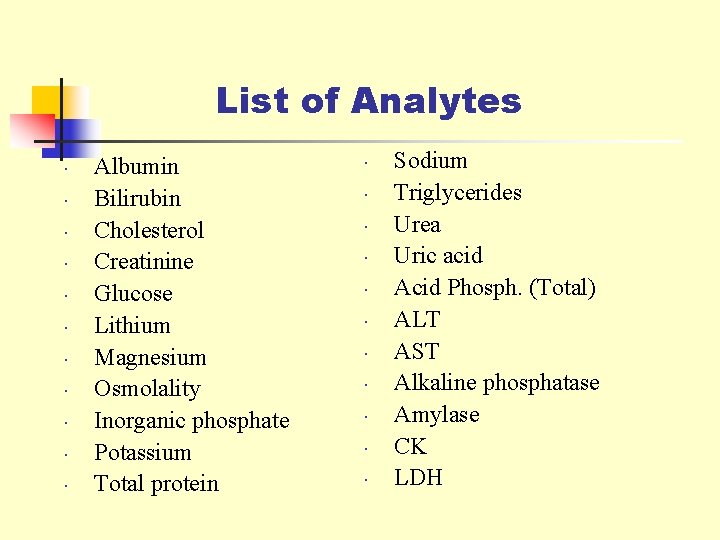
List of Analytes Albumin Bilirubin Cholesterol Creatinine Glucose Lithium Magnesium Osmolality Inorganic phosphate Potassium Total protein Sodium Triglycerides Urea Uric acid Acid Phosph. (Total) ALT AST Alkaline phosphatase Amylase CK LDH
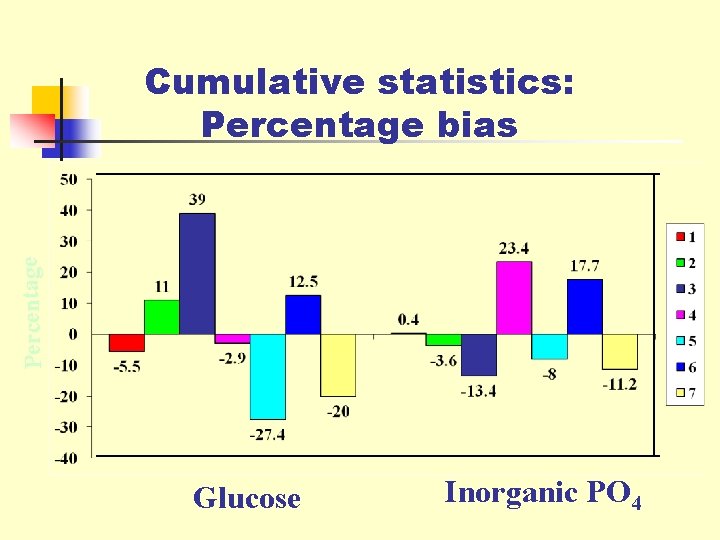
Percentage Cumulative statistics: Percentage bias Glucose Inorganic PO 4
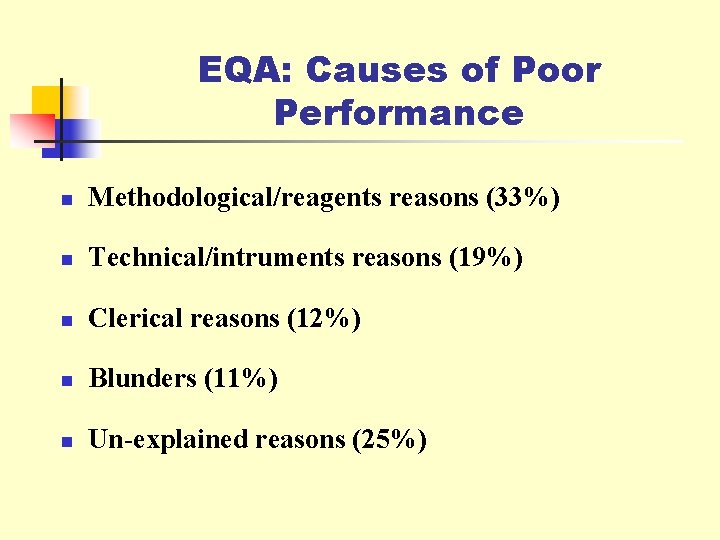
EQA: Causes of Poor Performance n Methodological/reagents reasons (33%) n Technical/intruments reasons (19%) n Clerical reasons (12%) n Blunders (11%) n Un-explained reasons (25%)
Expand Scope of NEQAPP n Expand NEQAPP to all disciplines of Pathology n Funding for necessary infrastructure n Enhance QA of labs on national level
PC-1 for NEQAPP Submitted in early 2005 Prepared By: Checked By: Brig Dilshad Ahmad Khan Brig Farooq Ahmad Khan Approved by: Maj Gen Masood Anwar, HI(M)
PC-1 for NEQAPP n Team of PNAC visited AFIP n PNAC requested Surg Gen for cooperation n Sectoral committee of PNAC for clinical labs n PC-1 for NEQAPP was approved in 2009

Expand NEQAPP Programme offered in 2010 n Clinical Chemistry n Immunoassay/ Tumour Marker n Haematology n Microbiology n Histopathology
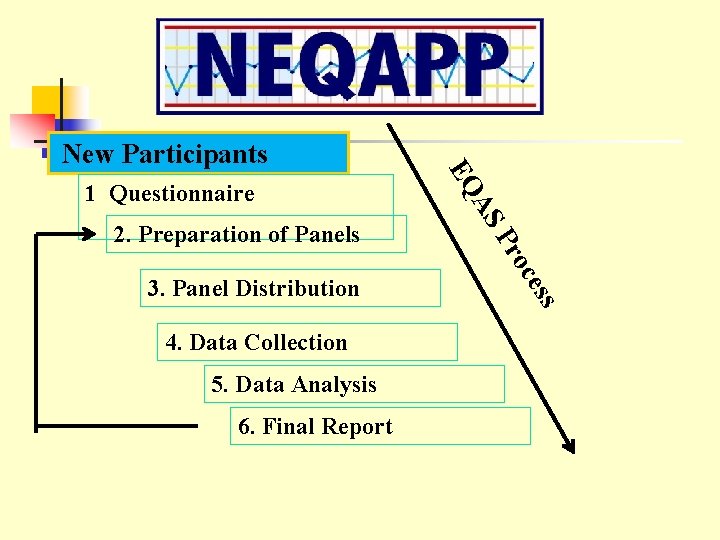
5. Data Analysis 6. Final Report ess 4. Data Collection oc 3. Panel Distribution Pr 2. Preparation of Panels AS 1 Questionnaire EQ New Participants
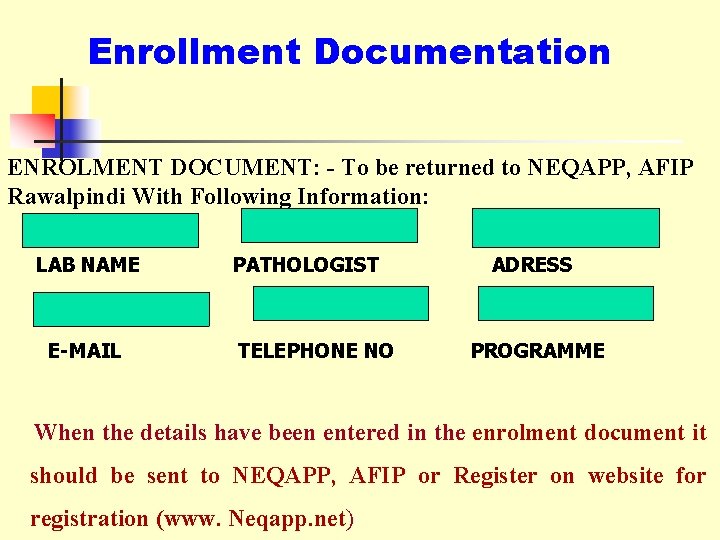
Enrollment Documentation ENROLMENT DOCUMENT: - To be returned to NEQAPP, AFIP Rawalpindi With Following Information: LAB NAME E-MAIL PATHOLOGIST TELEPHONE NO ADRESS PROGRAMME When the details have been entered in the enrolment document it should be sent to NEQAPP, AFIP or Register on website for registration (www. Neqapp. net)
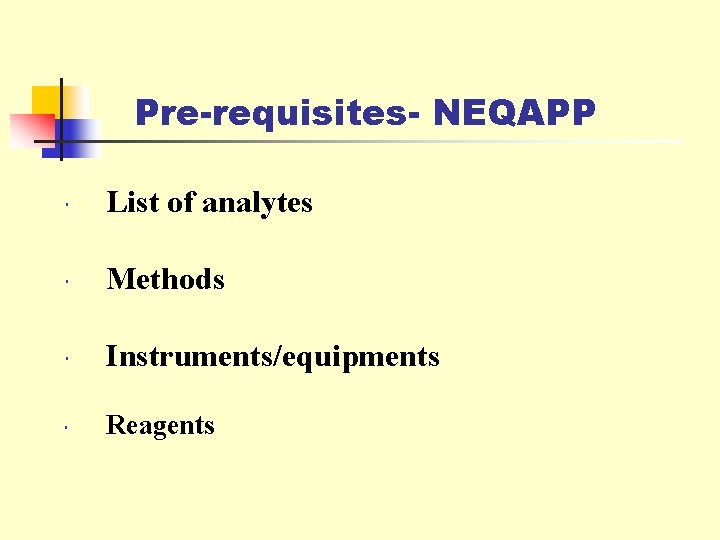
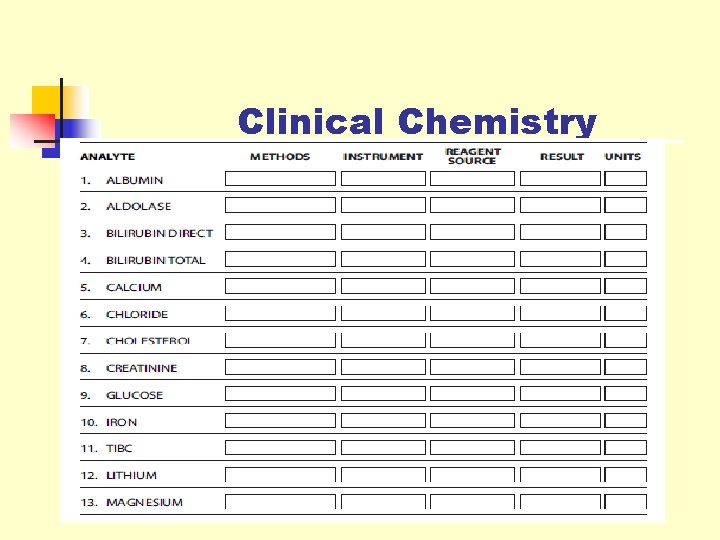
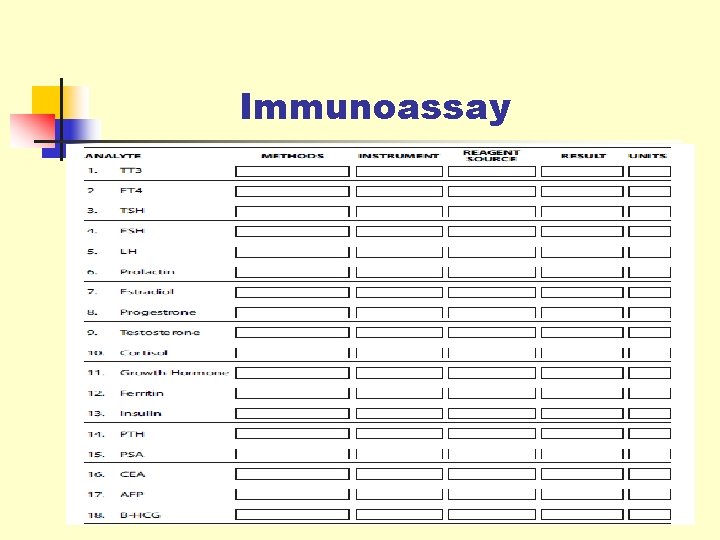
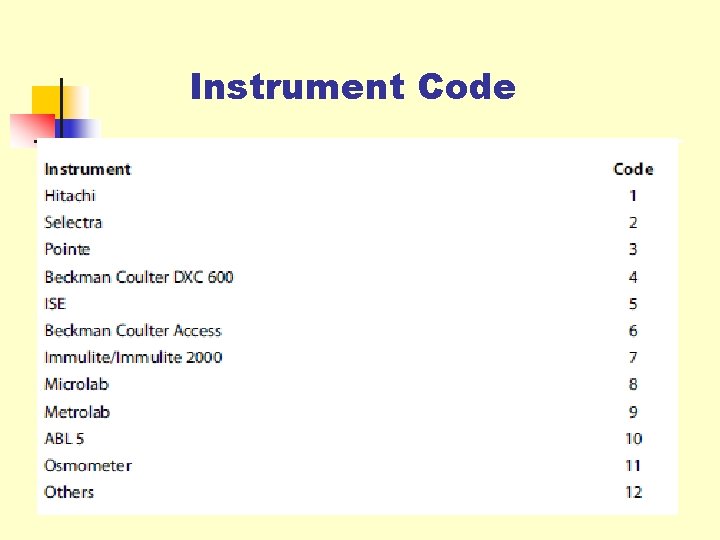
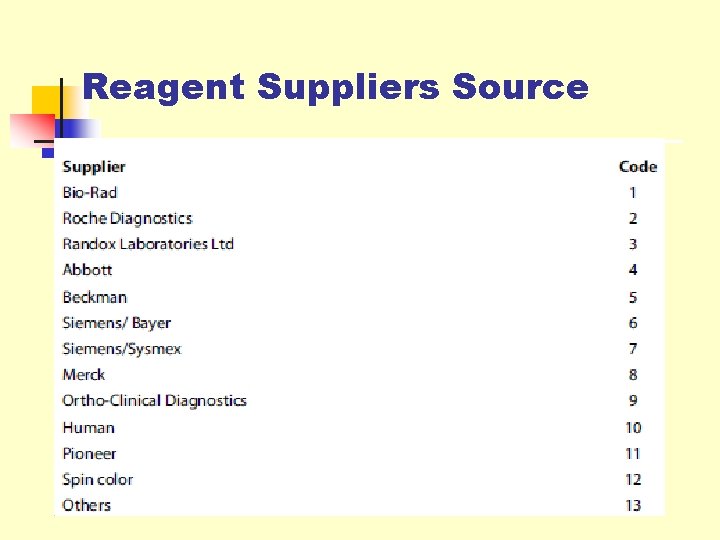
Pre-requisites- NEQAPP List of analytes Methods Instruments/equipments Reagents
Clinical Chemistry
Immunoassay
Instrument Code
Reagent Suppliers Source
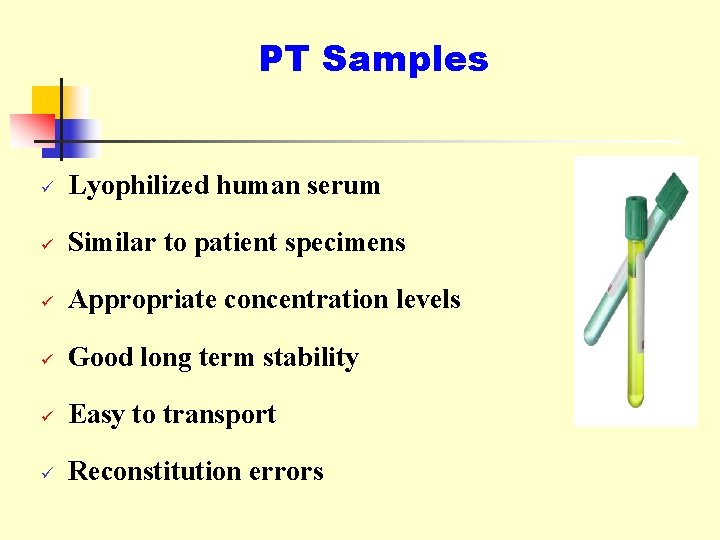
PT Samples ü Lyophilized human serum ü Similar to patient specimens ü Appropriate concentration levels ü Good long term stability ü Easy to transport ü Reconstitution errors
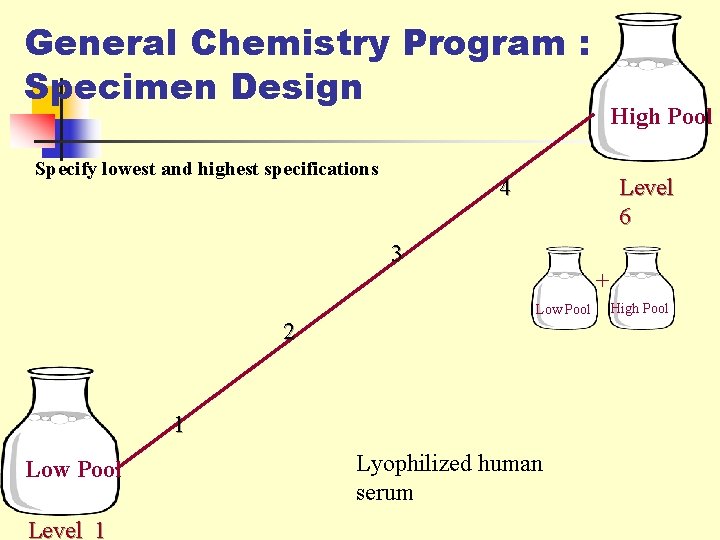
General Chemistry Program : Specimen Design Specify lowest and highest specifications High Pool 4 Level 6 3 + Low Pool 2 1 Low Pool Level 1 Lyophilized human serum High Pool
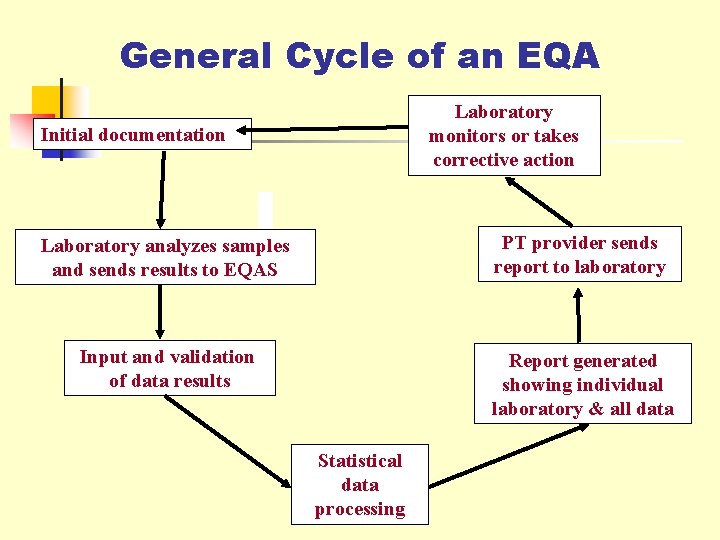
General Cycle of an EQA Laboratory monitors or takes corrective action Initial documentation Laboratory analyzes samples and sends results to EQAS PT provider sends report to laboratory Input and validation of data results Report generated showing individual laboratory & all data Statistical data processing
Return of Results § Reconstituted samples on or before the recommended date for analysis and forward your results on the return sheets provided to arrive at NEQAPP Coordinator by the FINAL DATE. n Results will normally be processed within 10 days of the FINAL DATE. Reports usually take 2 weeks to print and dispatch Late Results n Results received after the FINAL DATE will be processed retrospectively.
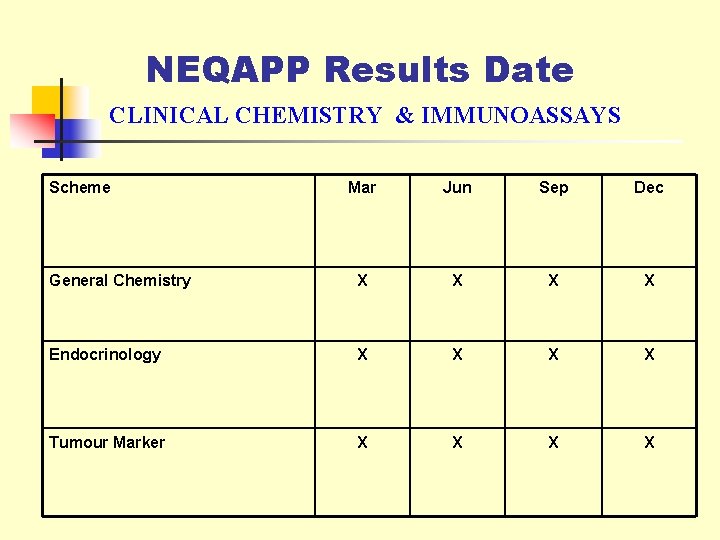
NEQAPP Results Date CLINICAL CHEMISTRY & IMMUNOASSAYS Scheme Mar Jun Sep Dec General Chemistry X X Endocrinology X X Tumour Marker X X
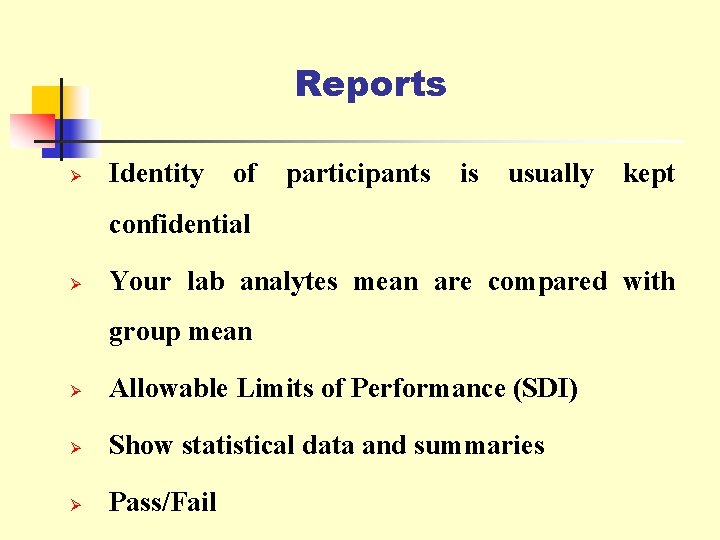
Reports Ø Identity of participants is usually kept confidential Ø Your lab analytes mean are compared with group mean Ø Allowable Limits of Performance (SDI) Ø Show statistical data and summaries Ø Pass/Fail
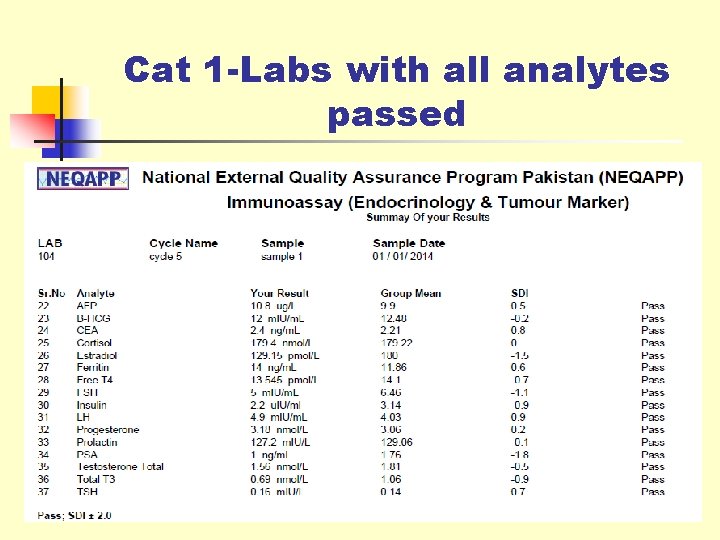
Cat 1 -Labs with all analytes passed
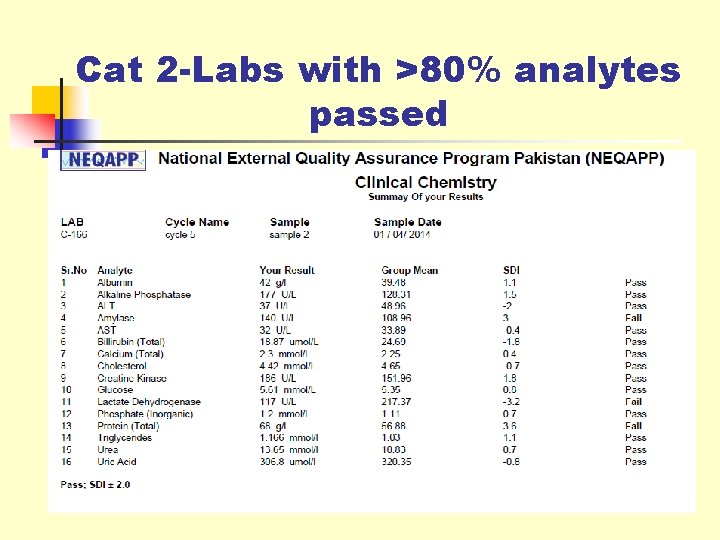
Cat 2 -Labs with >80% analytes passed
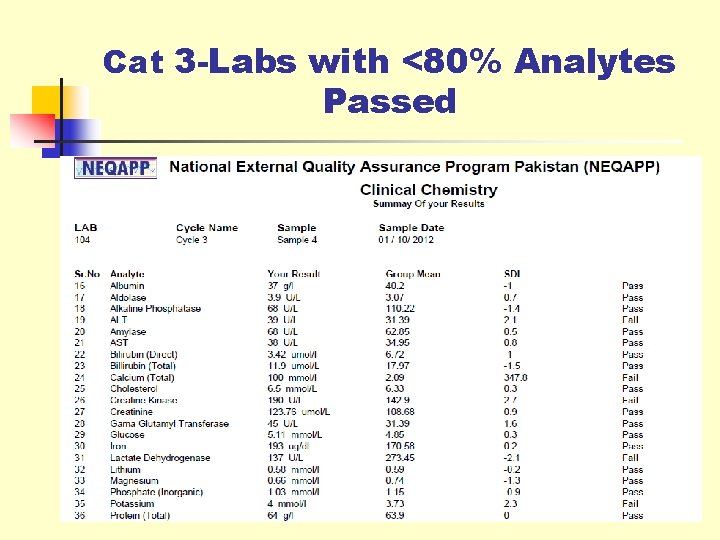
Cat 3 -Labs with <80% Analytes Passed
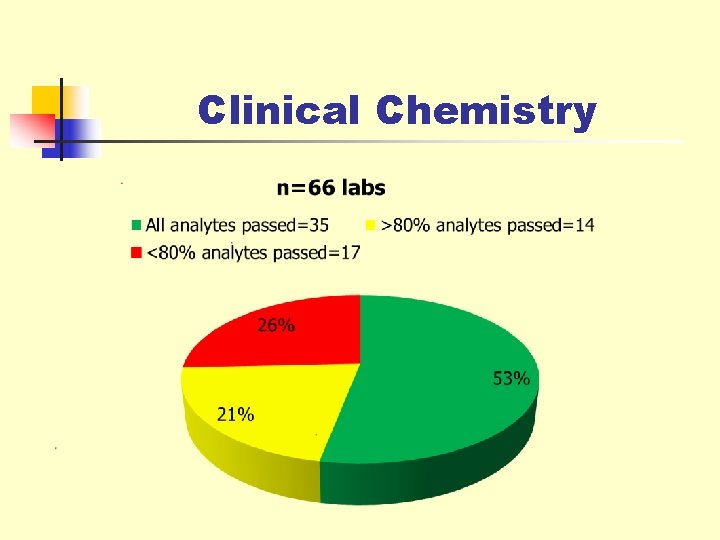
Clinical Chemistry
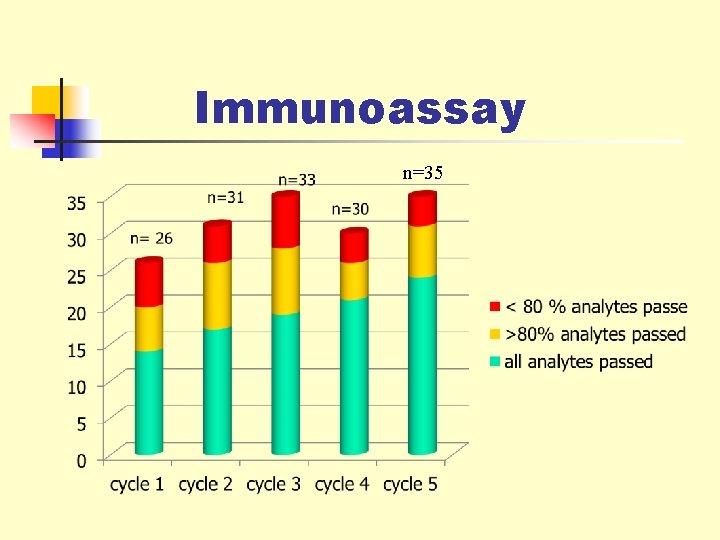
Immunoassay n=35
Reports provide n Data of your lab performance as well as comparison with other laboratories n Analytes that have performed poorly can be identified n Report will assist in determining the cause and corrective action
Conclusions Efforts are required to education about QA. More labs should participate in the to improve the quality of patients results. Need for realization of NEQAPP problem. Official backing/sponsors are required.

- Slides: 62