
Issues in our Environment How humans have caused
- Slides: 40
Issues in our Environment How humans have caused environmental change. Mr. Roes Living Environment
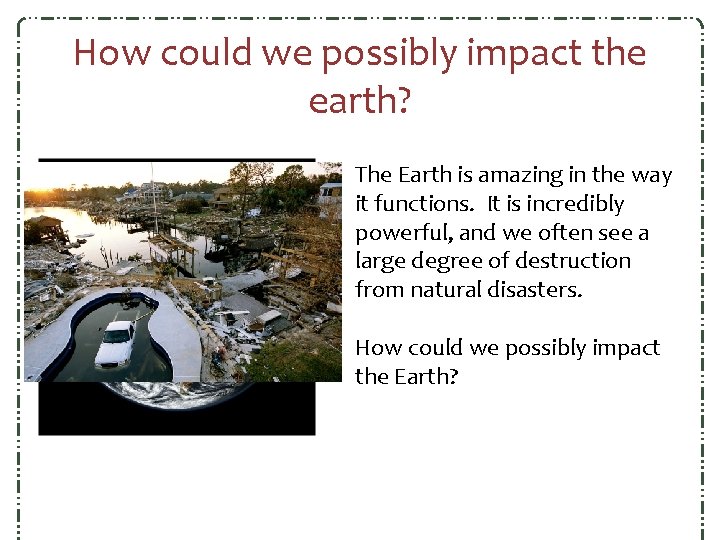
How could we possibly impact the earth? The Earth is amazing in the way it functions. It is incredibly powerful, and we often see a large degree of destruction from natural disasters. How could we possibly impact the Earth?
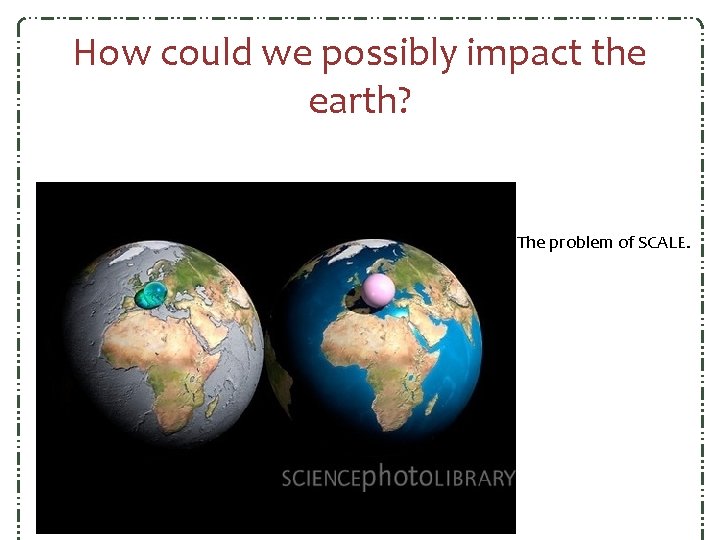
How could we possibly impact the earth? The problem of SCALE.
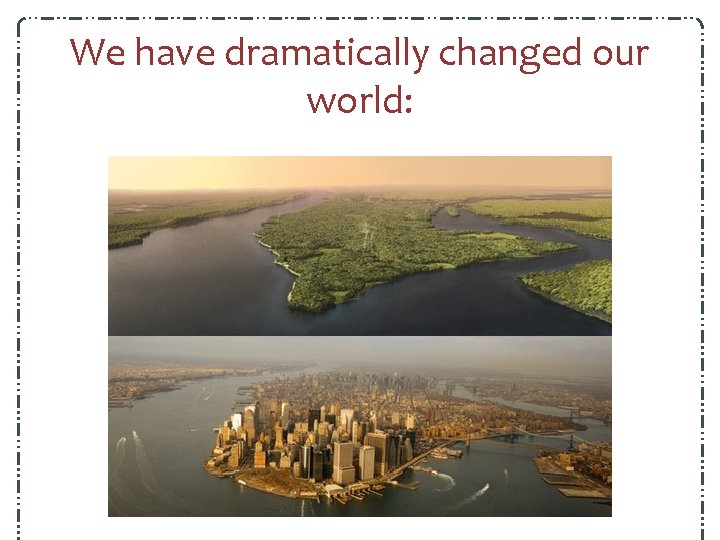
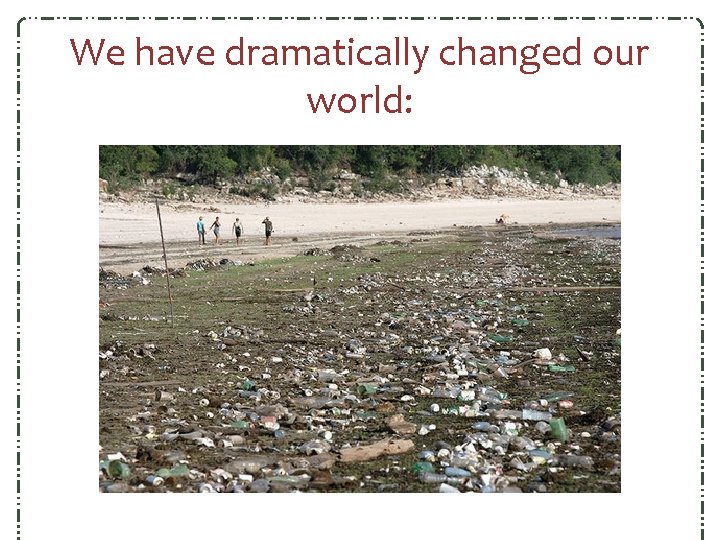
We have dramatically changed our world:
We have dramatically changed our world:
Our figures: In America alone, we consume 200 million barrels of oil every day, which is almost 590, 000 gallons every minute! When we ‘use’ fossil fuels, we are sending them through a chemical reaction known as combustion.
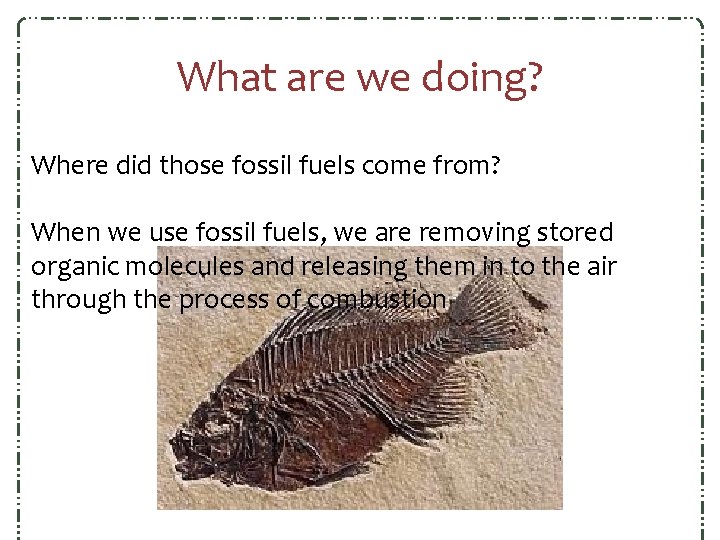
What are we doing? Where did those fossil fuels come from? When we use fossil fuels, we are removing stored organic molecules and releasing them in to the air through the process of combustion
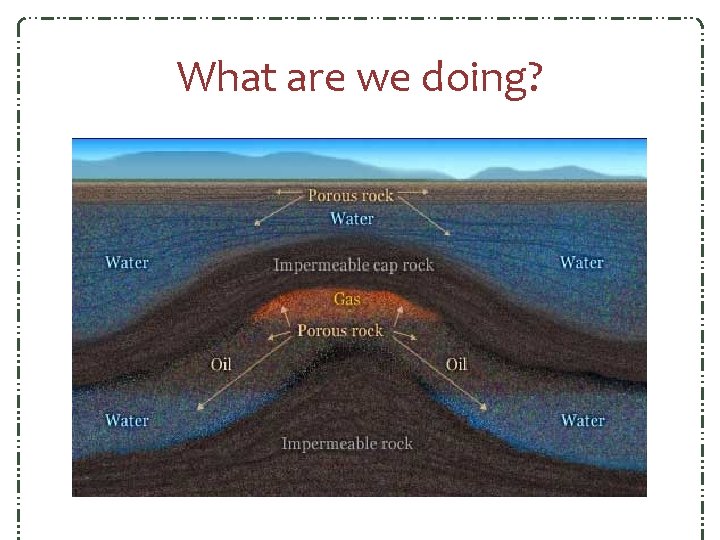
What are we doing?
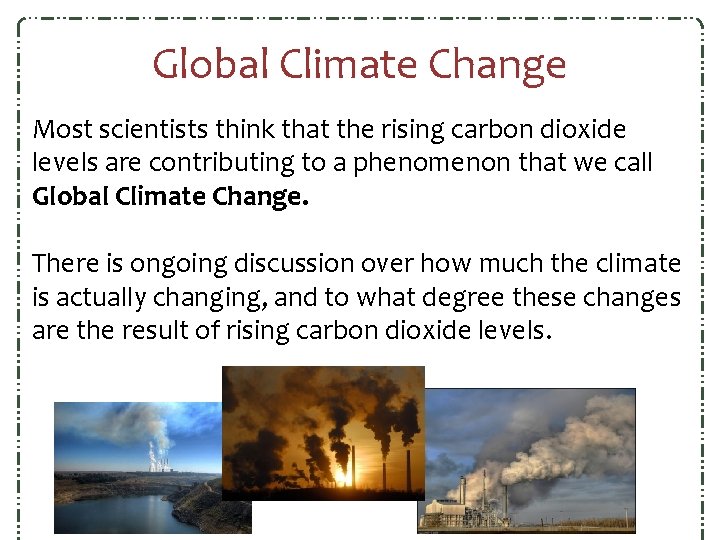
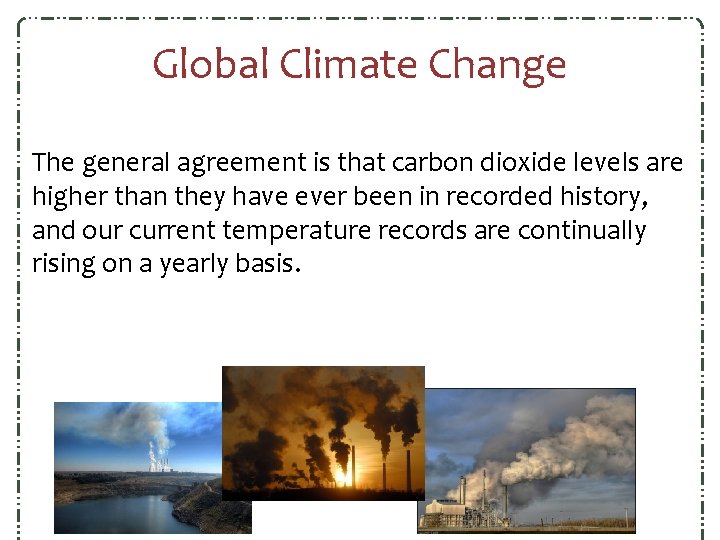
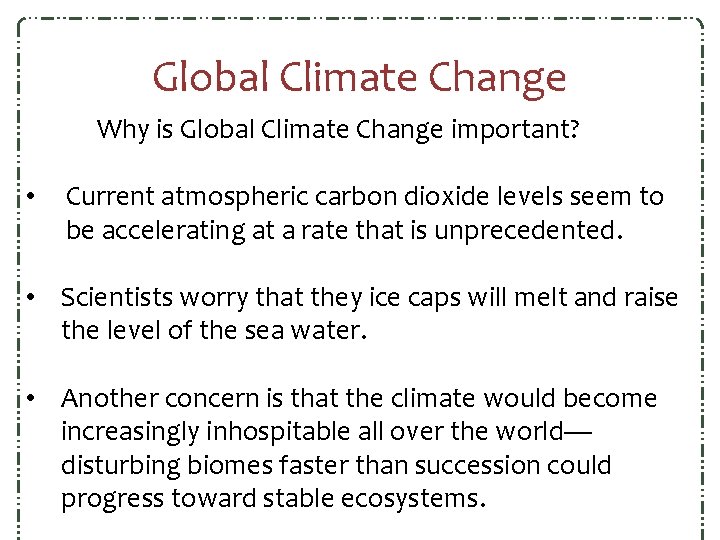
Fossil Fuels Our use of fossil fuels take stored carbon compounds and sends them through the process of combustion. This creates carbon dioxide, which is released into the atmosphere.
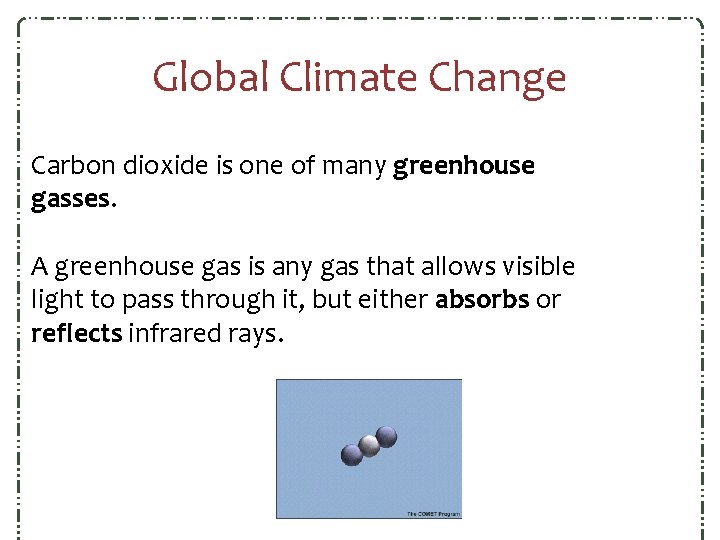
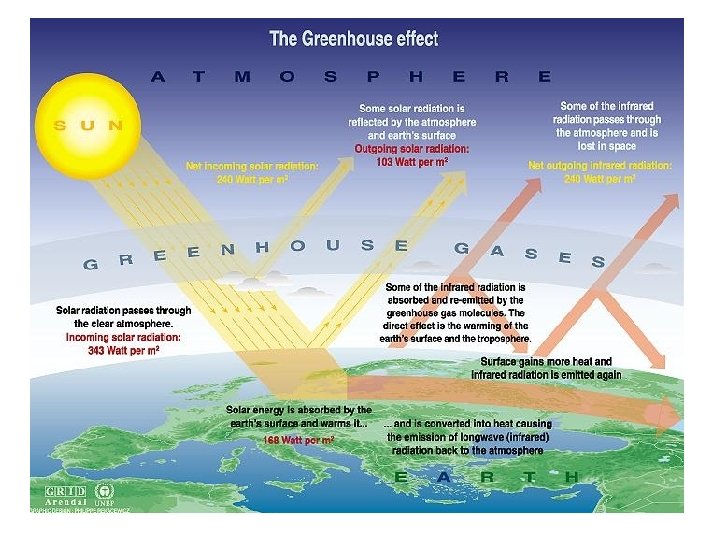
Global Climate Change Carbon dioxide is one of many greenhouse gasses. A greenhouse gas is any gas that allows visible light to pass through it, but either absorbs or reflects infrared rays.
Greenhouse Gasses The more greenhouse gasses there are present in our atmosphere, the less infrared energy can escape earth. Most scientists think that the rising carbon dioxide levels are contributing to a phenomenon that we call Global Climate Change.
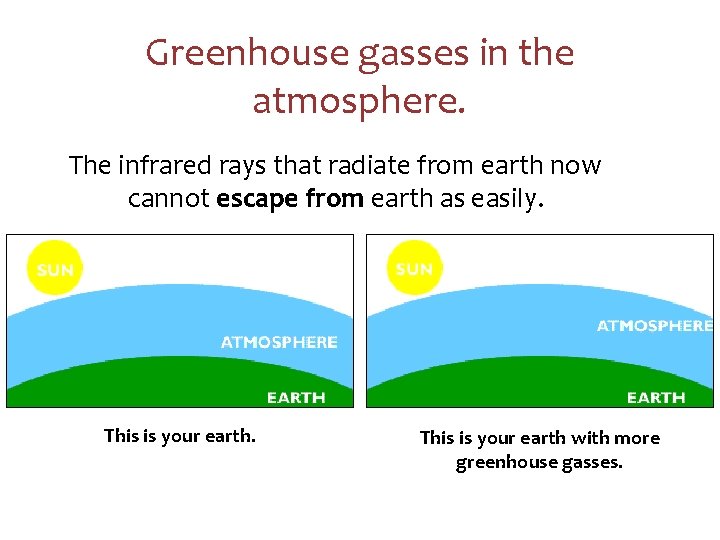
Greenhouse gasses in the atmosphere. The infrared rays that radiate from earth now cannot escape from earth as easily. This is your earth with more greenhouse gasses.
Global Climate Change Most scientists think that the rising carbon dioxide levels are contributing to a phenomenon that we call Global Climate Change. There is ongoing discussion over how much the climate is actually changing, and to what degree these changes are the result of rising carbon dioxide levels.
Global Climate Change The general agreement is that carbon dioxide levels are higher than they have ever been in recorded history, and our current temperature records are continually rising on a yearly basis.
Global Climate Change Why is Global Climate Change important? • Current atmospheric carbon dioxide levels seem to be accelerating at a rate that is unprecedented. • Scientists worry that they ice caps will melt and raise the level of the sea water. • Another concern is that the climate would become increasingly inhospitable all over the world— disturbing biomes faster than succession could progress toward stable ecosystems.
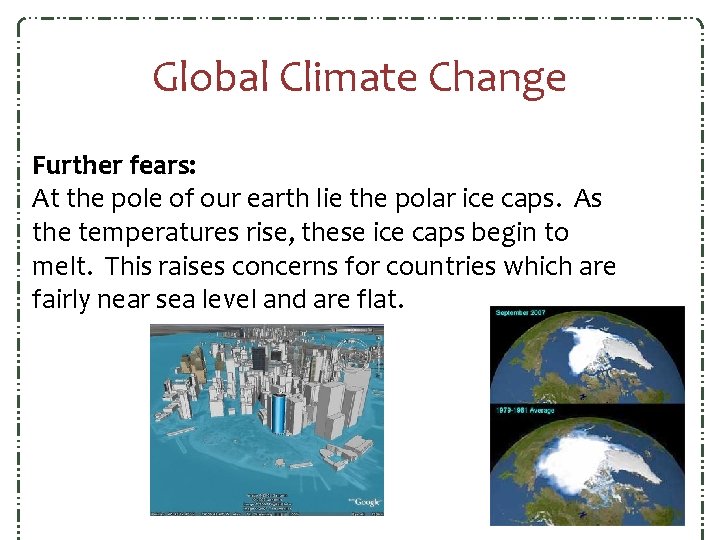
Global Climate Change Further fears: At the pole of our earth lie the polar ice caps. As the temperatures rise, these ice caps begin to melt. This raises concerns for countries which are fairly near sea level and are flat.
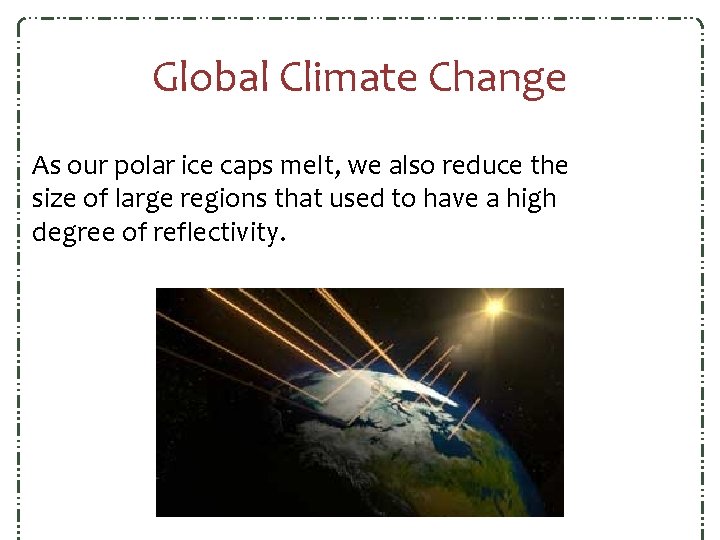
Global Climate Change As our polar ice caps melt, we also reduce the size of large regions that used to have a high degree of reflectivity.
Acid Deposition What was all of our fossil fuel made of (again)?
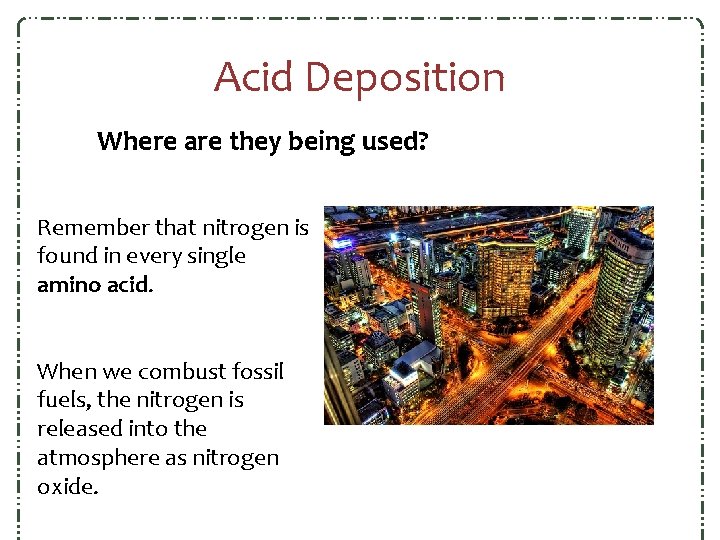
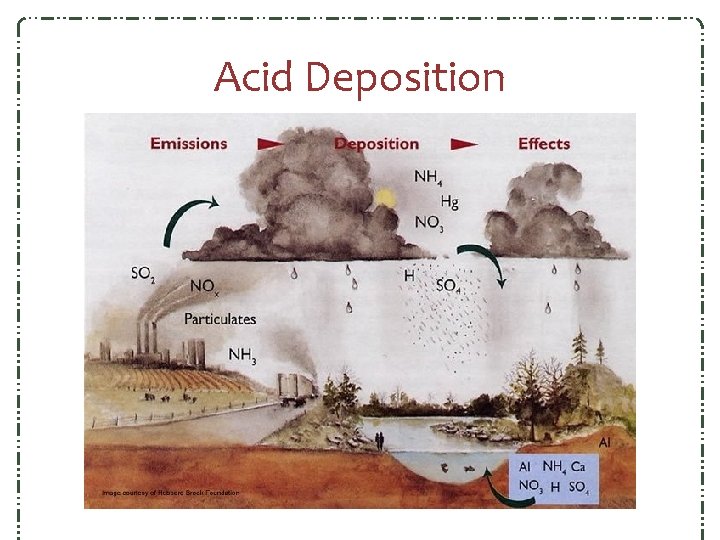
Acid Deposition Where are they being used? Remember that nitrogen is found in every single amino acid. When we combust fossil fuels, the nitrogen is released into the atmosphere as nitrogen oxide.
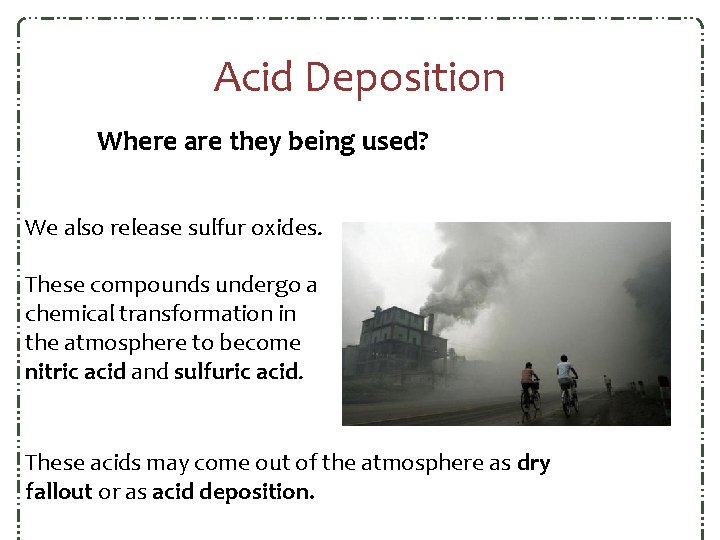
Acid Deposition Where are they being used? We also release sulfur oxides. These compounds undergo a chemical transformation in the atmosphere to become nitric acid and sulfuric acid. These acids may come out of the atmosphere as dry fallout or as acid deposition.
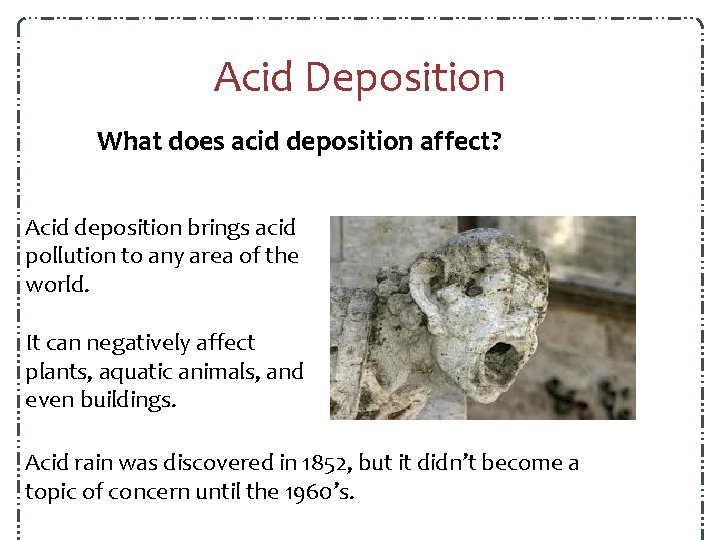
Acid Deposition What does acid deposition affect? Acid deposition brings acid pollution to any area of the world. It can negatively affect plants, aquatic animals, and even buildings. Acid rain was discovered in 1852, but it didn’t become a topic of concern until the 1960’s.
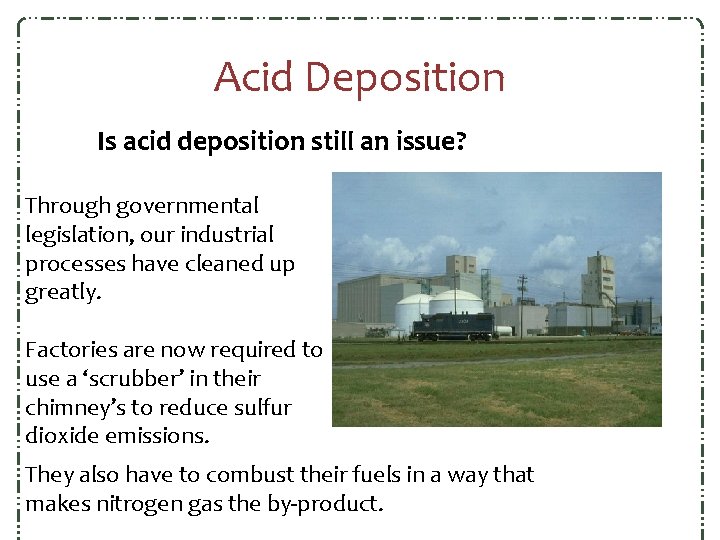
Acid Deposition Is acid deposition still an issue? Through governmental legislation, our industrial processes have cleaned up greatly. Factories are now required to use a ‘scrubber’ in their chimney’s to reduce sulfur dioxide emissions. They also have to combust their fuels in a way that makes nitrogen gas the by-product.
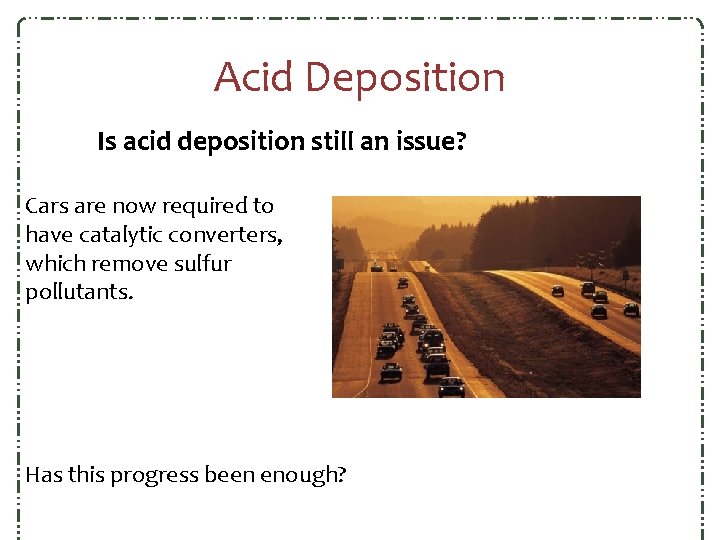
Acid Deposition Is acid deposition still an issue? Cars are now required to have catalytic converters, which remove sulfur pollutants. Has this progress been enough?
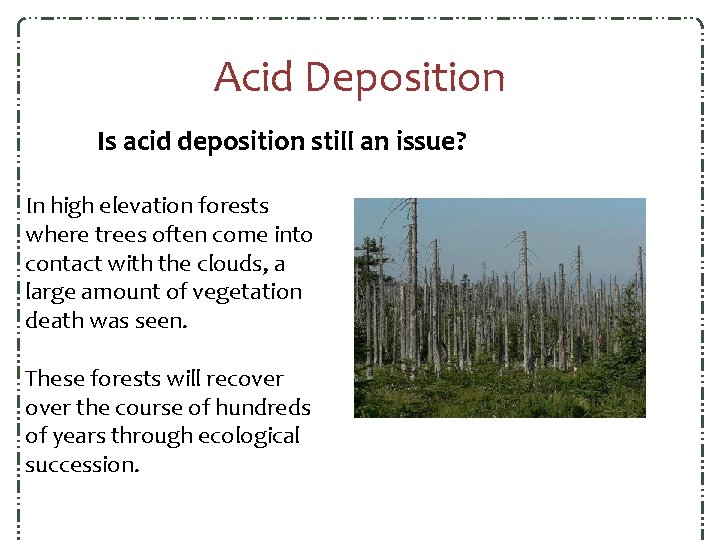
Acid Deposition Is acid deposition still an issue? In high elevation forests where trees often come into contact with the clouds, a large amount of vegetation death was seen. These forests will recover the course of hundreds of years through ecological succession.
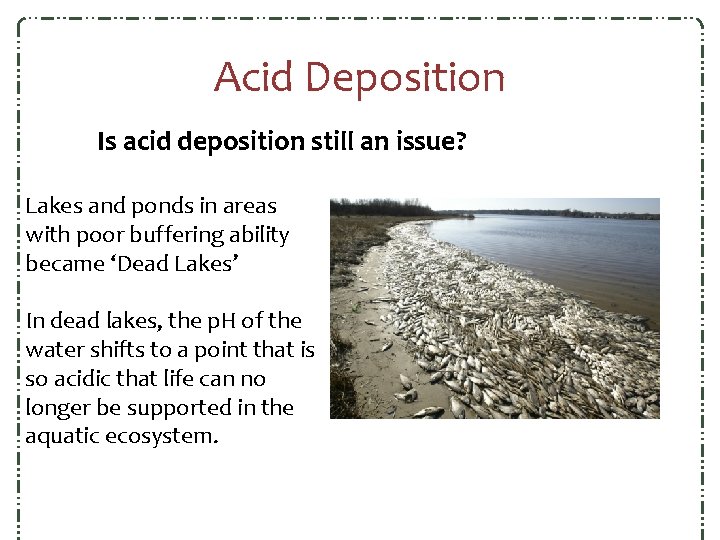
Acid Deposition Is acid deposition still an issue? Lakes and ponds in areas with poor buffering ability became ‘Dead Lakes’ In dead lakes, the p. H of the water shifts to a point that is so acidic that life can no longer be supported in the aquatic ecosystem.
Acid Deposition
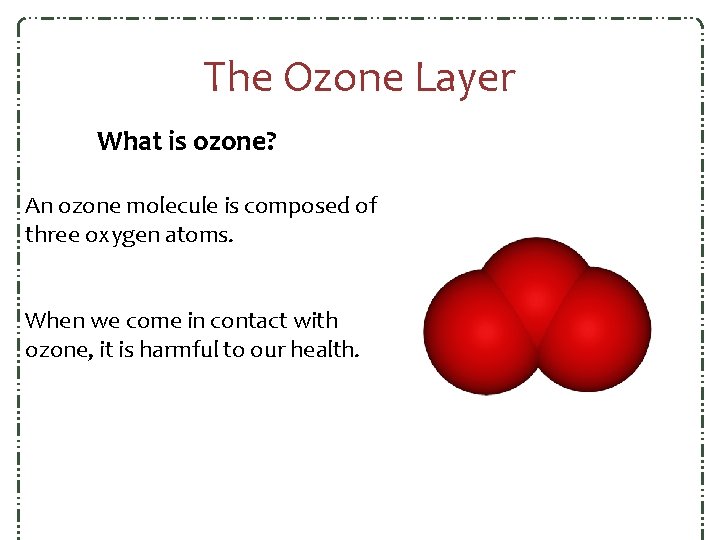
The Ozone Layer What is ozone? An ozone molecule is composed of three oxygen atoms. When we come in contact with ozone, it is harmful to our health.
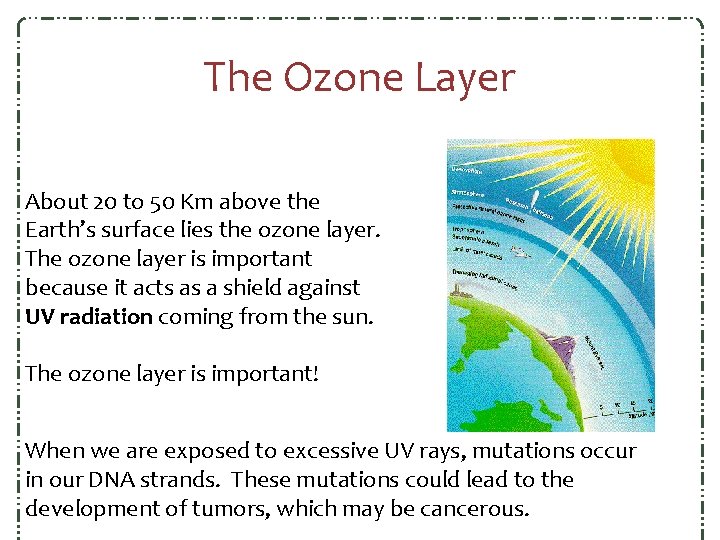
The Ozone Layer About 20 to 50 Km above the Earth’s surface lies the ozone layer. The ozone layer is important because it acts as a shield against UV radiation coming from the sun. The ozone layer is important! When we are exposed to excessive UV rays, mutations occur in our DNA strands. These mutations could lead to the development of tumors, which may be cancerous.
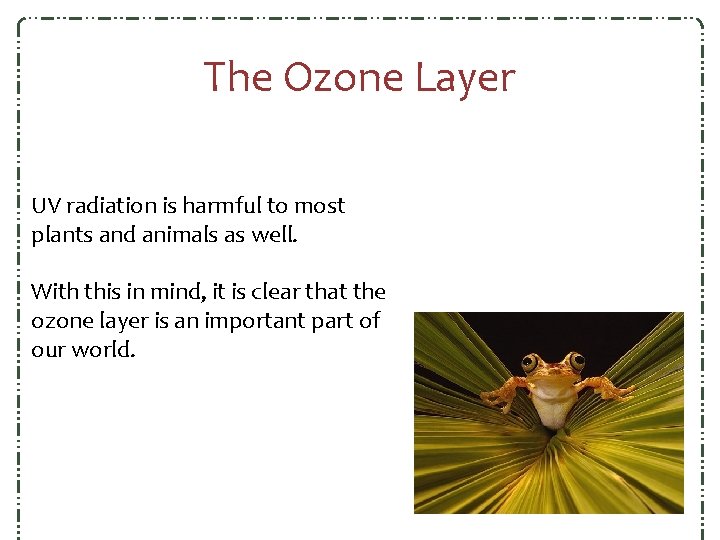
The Ozone Layer UV radiation is harmful to most plants and animals as well. With this in mind, it is clear that the ozone layer is an important part of our world.
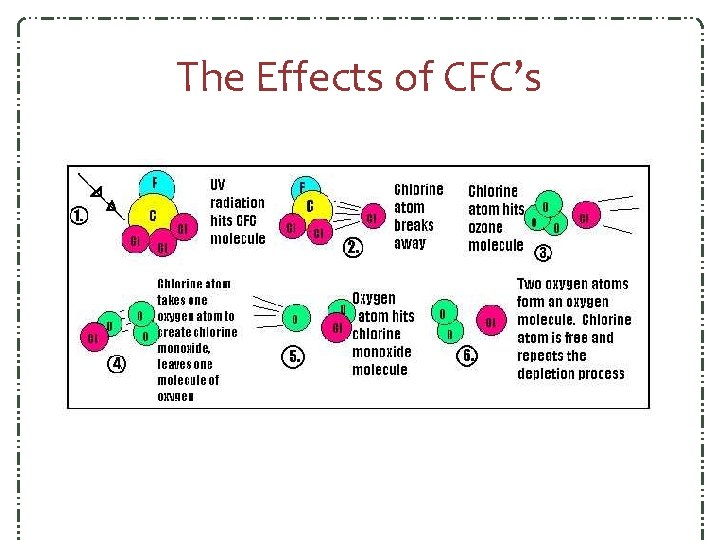
The Ozone Layer In the 1970’s scientists discovered a hole in the ozone layer over Antarctica. Scientists soon discovered that CFC’s were damaging the ozone layer. CFC’s were commonly used as propellants in aerosol cans, as coolants in refrigerators, and in the production of plastic foams. CFC’s were banned shortly after, but their effects are still seen. A CFC molecule can remain for as long as a century.
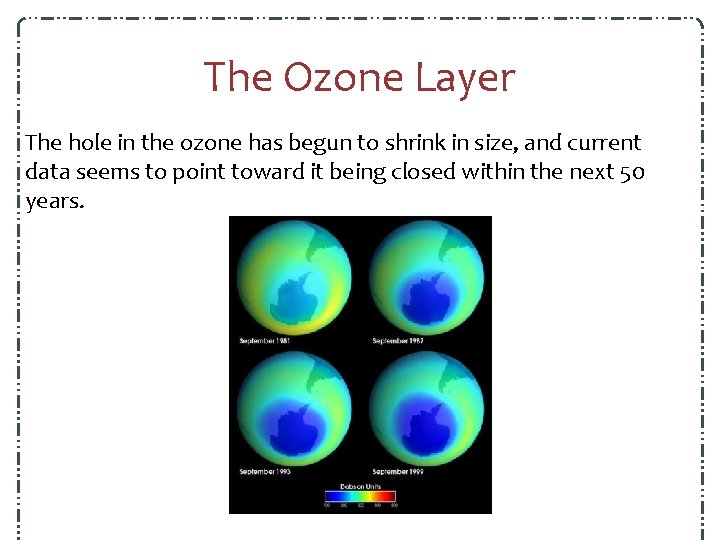
The Ozone Layer The hole in the ozone has begun to shrink in size, and current data seems to point toward it being closed within the next 50 years.
The Effects of CFC’s
Biodiversity The biodiversity of our world is the sum total of the genetically based variety of all of the organisms in the biosphere. What does that mean in your own words? Biodiversity is all of the species of plants, animals, and microorganisms in ecosystems all over the world; including all of the diversity of genes in each species.
Ecosystem diversity includes the variety of habitats, communities, and ecological processes in the living world What does that mean in your own words? Ecosystem diversity refers to the number of different types of nonliving environments there are giving home to diverse communities.
Species diversity refers to the number of different species in the biosphere. Biologists have named 1. 5 million species of organisms, and estimate that millions more may be discovered in the future.
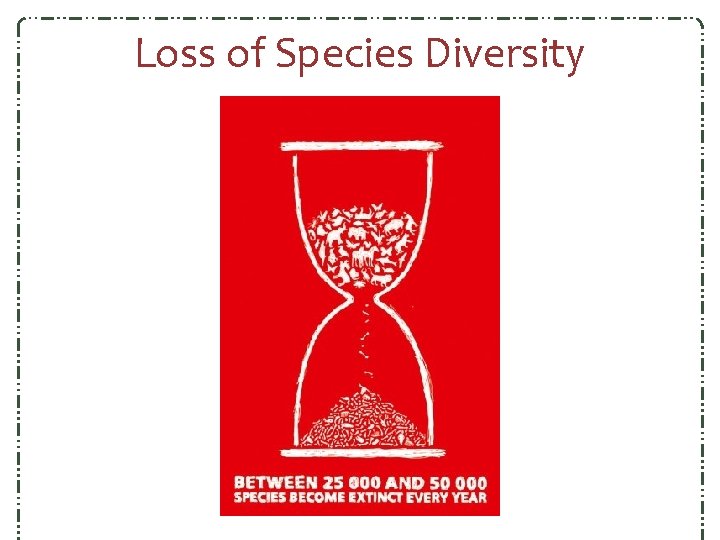
Loss of Species Diversity
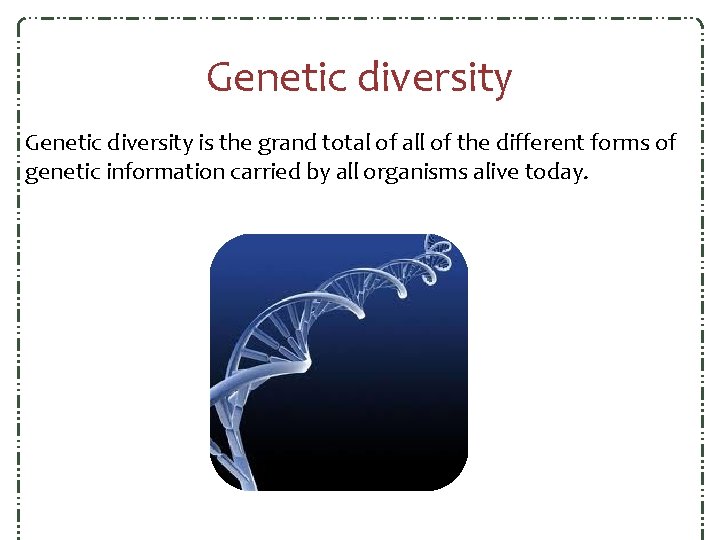
Genetic diversity is the grand total of all of the different forms of genetic information carried by all organisms alive today.
Biodiversity The biodiversity of our planet is one of our planets greatest resources. Many kinds of species have provided us with foods, industrial products, and medicines. Human activity can reduce biodiversity by altering habitats, hunting species to extinction, introducing toxic compounds into food webs, and introducing foreign species to new environments.
Biodiversity Many feel that the sum of all of our actions has led to an increased rate of extinction of many of the world’s species of organism. Extinction occurs when a species disappears from all of its range.