
Issues in Comparative Politics What Is Comparative Politics
- Slides: 25
Issues in Comparative Politics
What Is Comparative Politics? Involves two separate elements It is a subject of study--comparing the nature of politics and the political process across different political systems. It is a method of study--how and why we make such comparisons.
Comparative Politics focuses on Political Decisions ? Political decisions are social public authoritative. They take place within a political system. The public sphere deals with collective decisions that extend beyond the individual and typically involve government action.
What is excluded? ◦ Private sphere deals with actions that do not bind anyone outside a group (e. g. , family, friends). ◦ Boundaries exist between the two. These boundaries can change.
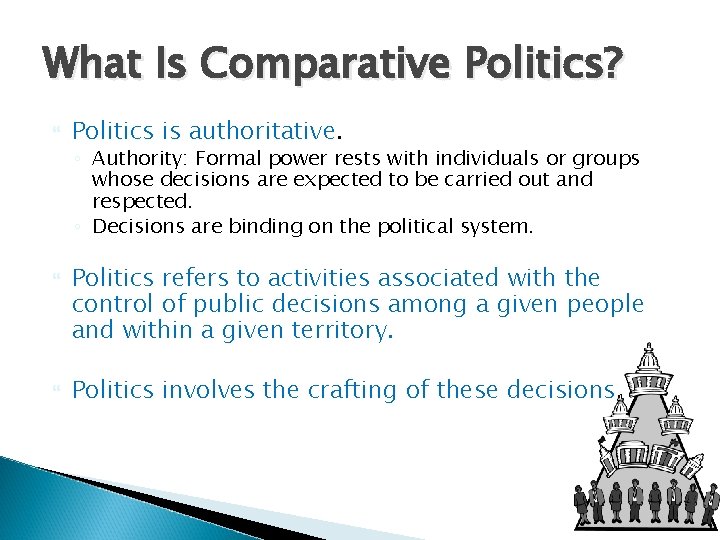
What Is Comparative Politics? Politics is authoritative. ◦ Authority: Formal power rests with individuals or groups whose decisions are expected to be carried out and respected. ◦ Decisions are binding on the political system. Politics refers to activities associated with the control of public decisions among a given people and within a given territory. Politics involves the crafting of these decisions.
Governments: Limited Governments – organizations of individuals who are legally empowered to make binding decisions on behalf of a particular community Limited governments built on model of Night Watchman (nineteenth century in W. Europe)
Minarchists – Contemporay Advocates of Watchman State argue that the state has no right to interfere in free transactions between people the state's sole responsibility as ensuring that transactions between private individuals are free. In general, the majority of minarchists use deontological arguments: they claim that a minimal state is good in and of itself Objectivist philosophy of Ayn Rand is notable for its support of minarchism, believing that the taxes that fund government actions are essentially theft.
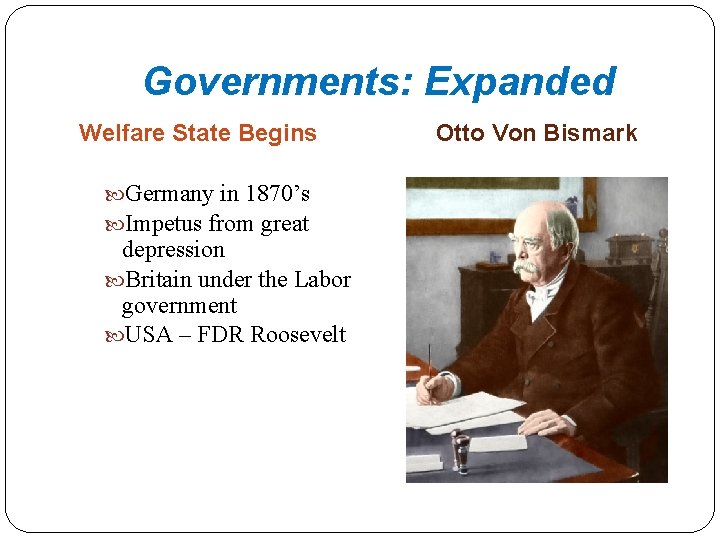
Governments: Expanded Welfare State Begins Germany in 1870’s Impetus from great depression Britain under the Labor government USA – FDR Roosevelt Otto Von Bismark
Why Governments Expanded ? Community- and nation-building Help create a national political culture Security and order Protecting property and other rights Promoting economic efficiency and growth Public goods Externalities Social justice Protecting the weak
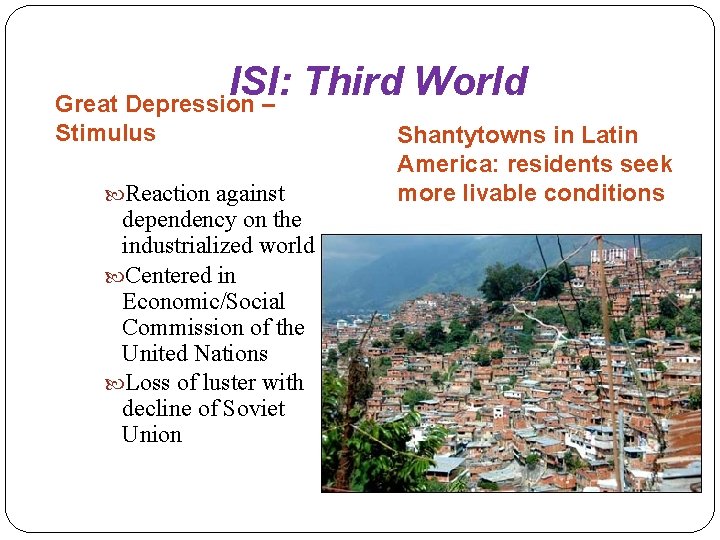
ISI: Third World Great Depression – Stimulus Reaction against dependency on the industrialized world Centered in Economic/Social Commission of the United Nations Loss of luster with decline of Soviet Union Shantytowns in Latin America: residents seek more livable conditions
State of Nature & the Social Contract Hobbs State of nature mercilessly inhospitable Government needed to be a Leviathan Rousseau Man is born free Government source of inequality Locke Less dire view of state of nature than Hobbs Promoted limited government
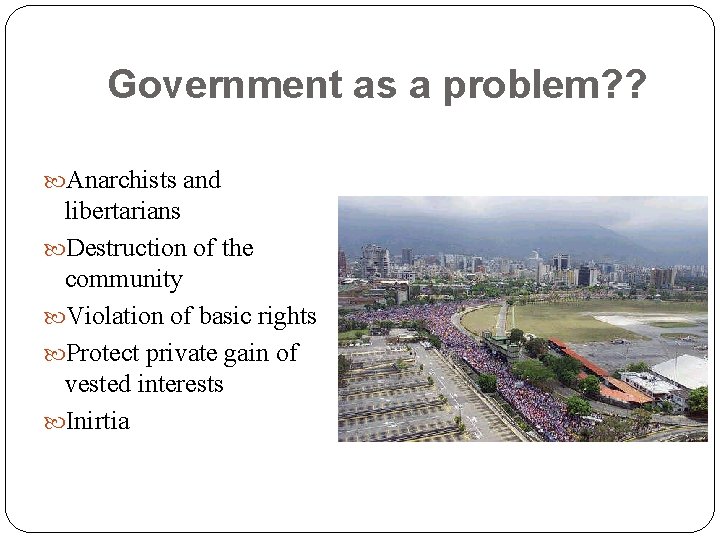
Government as a problem? ? Anarchists and libertarians Destruction of the community Violation of basic rights Protect private gain of vested interests Inirtia
Political Systems and States Political system Has two properties: It has a set of interdependent parts. It has boundaries towards the environment with which it interacts. Examples: ecosystems; social systems such as a family Political systems are a particular type of social system - makes authoritative public decisions Elements within it are institutions of government, political organizations
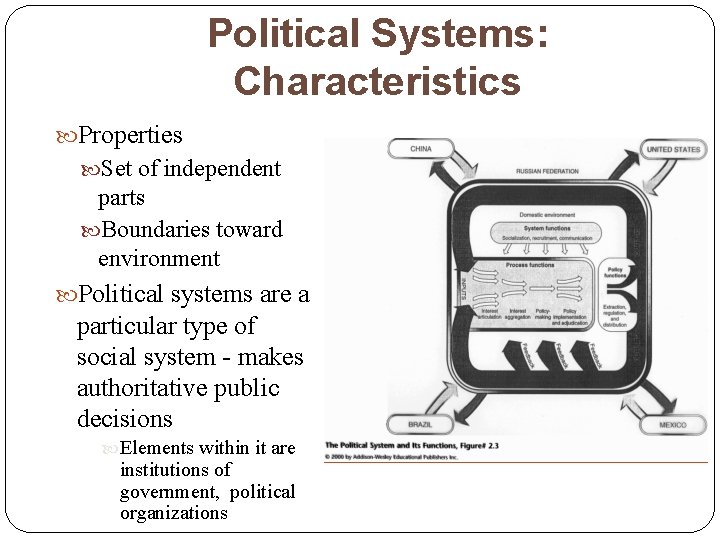
Political Systems: Characteristics Properties Set of independent parts Boundaries toward environment Political systems are a particular type of social system - makes authoritative public decisions Elements within it are institutions of government, political organizations
STATES ARE THE MOST IMPORTANT AND POWERFUL POLITICAL SYSTEMS IN THE MODERN WORLD
The Diversity of States Big and small states Vatican City - smallest legally independent entity in geographic size and population Russia - largest landmass China and India - largest populations Political implications of geographic and population size? Big countries not always most important Small ones can be: Cuba, Israel, Vatican City Area and population do not determine a country’s political system. Geographic location can have strategic implications.
Challenges within the Diversity of States All face common challenges: Building community Fostering economic and social development Advancing democracy and civil liberties
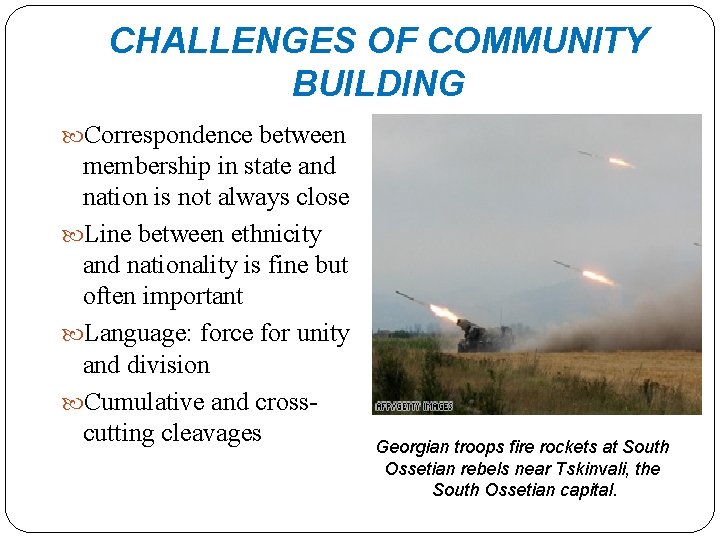
CHALLENGES OF COMMUNITY BUILDING Correspondence between membership in state and nation is not always close Line between ethnicity and nationality is fine but often important Language: force for unity and division Cumulative and crosscutting cleavages Georgian troops fire rockets at South Ossetian rebels near Tskinvali, the South Ossetian capital.
CHALLENGES OF COMMUNITY BUILDING Correspondence between membership in state and nation is not always close Line between ethnicity and nationality is fine but often important Language: force for unity and division Cumulative and crosscutting cleavages Georgian troops fire rockets at South Ossetian rebels near Tskinvali, the South Ossetian capital.
Nationality and Ethnicity There is a fine line between nations and ethnic groups. Ethnicity need not have any objective basis in genetics, culture, or history. Ethnic differences can be a source of political conflict. Former Soviet bloc Former Yugoslavia In many developing countries, boundaries cut across ethnic lines. Former colonies: Britain withdrew from India and divided the subcontinent into a northern Muslim area - Pakistan - and a southern Hindu area - India. Consequence: terrible civil conflict and “ethno-religious” cleansing Nigeria Rwanda Traits related to political significant “ethnicity” Physical differences, language, norms against intermarriage, religion, and negative historical memories. Multiethnic countries
Religious Differences and Fundamentalism States vary in their religious characteristics. Religion may be a basis of national identity for a majority of the population: Israel, the Irish Republic, and Pakistan Iran is a theocratic regime. Religious authorities govern Religious law is part of the country’s legal code Religion can be a rallying point for political movements. Spain Turkey Poland
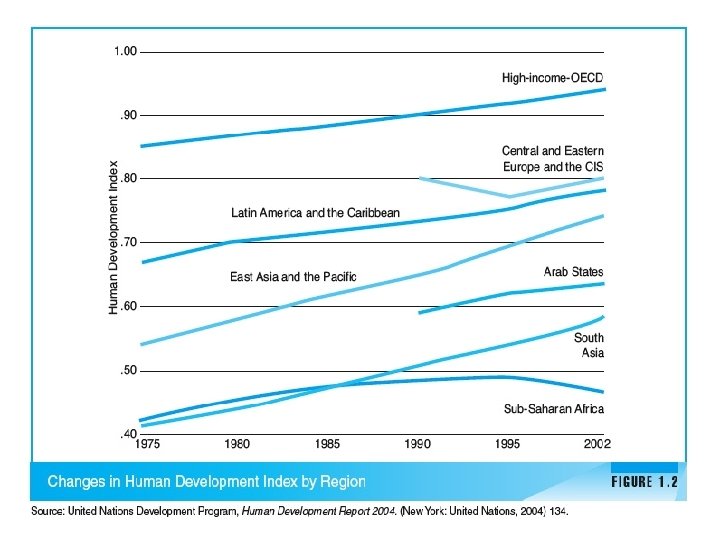
Fostering Economic Development Two major forces transforming political systems and nations Process of economic development Political democratization A political system cannot satisfy its citizens if it does not foster these social and economic development. Living standards Globalization, democratization, and marketization HDI- Human Development Index Structure of the labor force Agriculture Urbanization
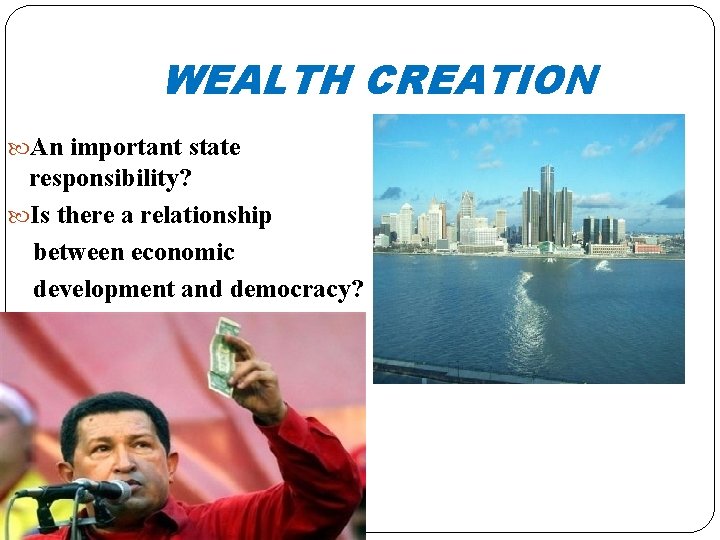
WEALTH CREATION An important state responsibility? Is there a relationship between economic development and democracy?