
Issues Challenges and Opportunities for Open Source Software

- Slides: 32
Issues, Challenges, and Opportunities for Open Source Software Development Walt Scacchi Institute for Software Research University of California, Irvine 7 January 2010 © Walt Scacchi, All Rights Reserved 1
Background • What is Free/Open Source Software Development? • FOSSD project characteristics and practices • Open Architectures and secure computing 2
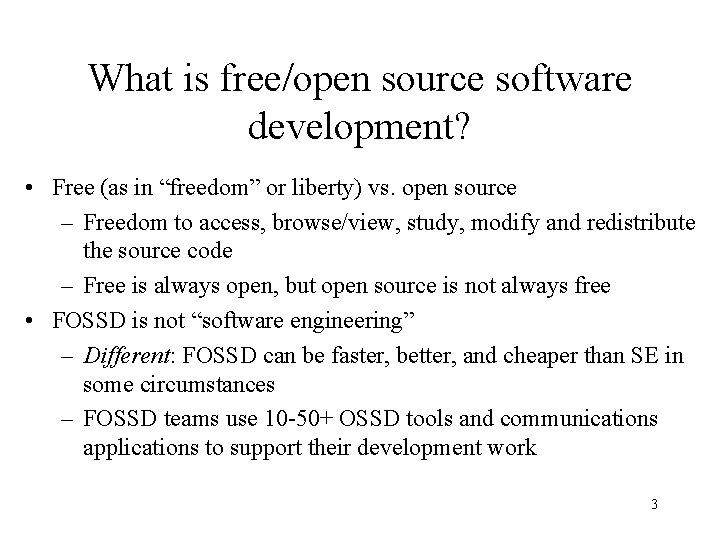
What is free/open source software development? • Free (as in “freedom” or liberty) vs. open source – Freedom to access, browse/view, study, modify and redistribute the source code – Free is always open, but open source is not always free • FOSSD is not “software engineering” – Different: FOSSD can be faster, better, and cheaper than SE in some circumstances – FOSSD teams use 10 -50+ OSSD tools and communications applications to support their development work 3
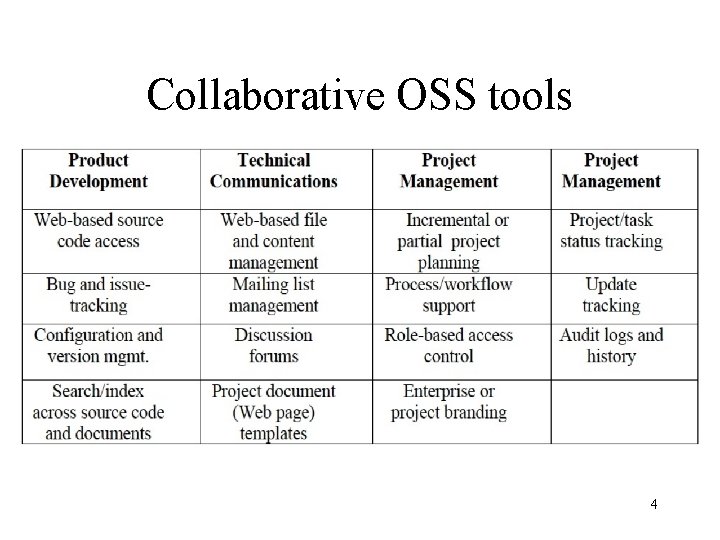
Collaborative OSS tools 4
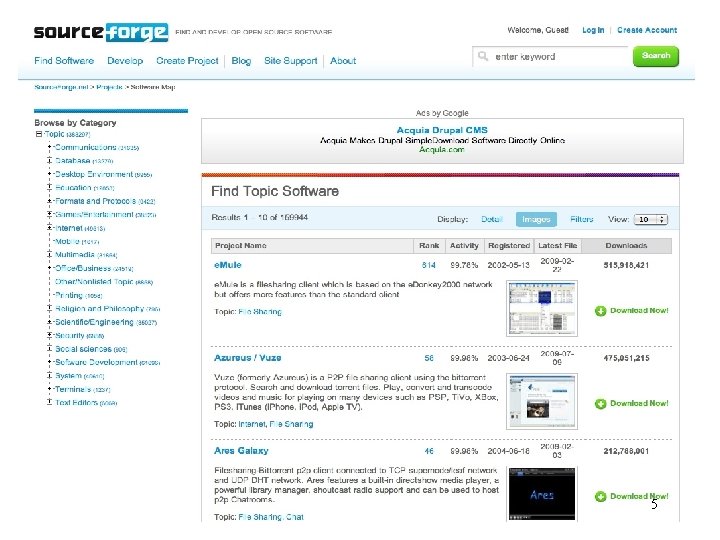
Source. Forge Topic Map 5
FOSSD Project Characteristics • Operational code early and often--actively improved and continuously adapted – Short-cycle (FOSS) vs. long-cycle (SLC) time processes • Post-facto software system requirements and design – FOSSD has its own “-ilities” which differ from those for SE • Caution: the vast majority (>90%) of FOSSD projects fail to grow or to produce a software release. 6
FOSSD Project Characteristics • FOSS developers are typically users of what they build, while FOSS users (~1%) are also FOSS developers • Requires “critical mass” of contributors and FOSS components connected through socio-technical interaction networks • FOSSD projects can emerge/evolve via bricolage – Unanticipated architectural (de)compositions – Multi-project component integrations – Even for mission-critical systems 7
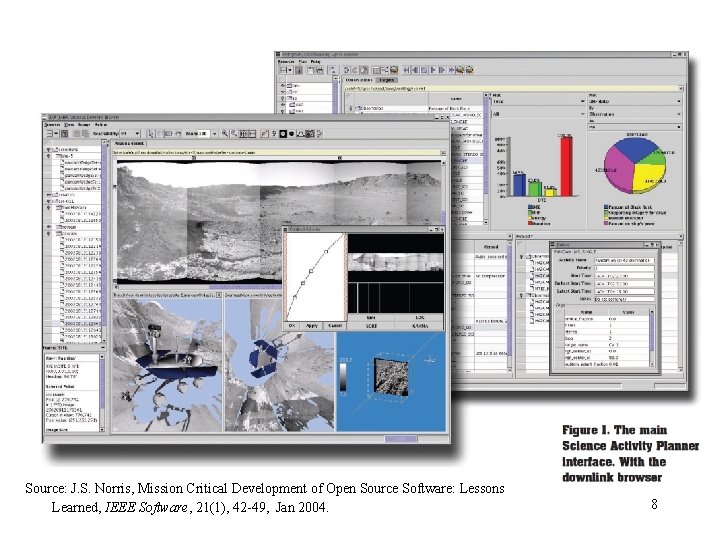
JPL Mars Exploration Rover Space Activity Planner Source: J. S. Norris, Mission Critical Development of Open Source Software: Lessons Learned, IEEE Software, 21(1), 42 -49, Jan 2004. 8
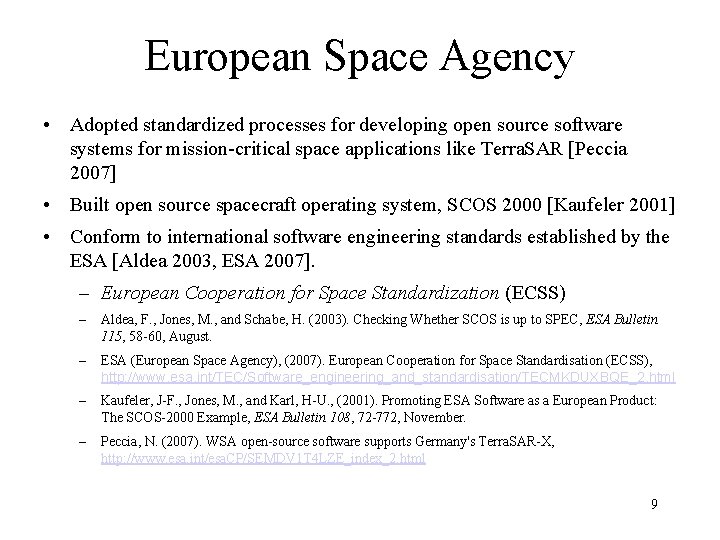
European Space Agency • Adopted standardized processes for developing open source software systems for mission-critical space applications like Terra. SAR [Peccia 2007] • Built open source spacecraft operating system, SCOS 2000 [Kaufeler 2001] • Conform to international software engineering standards established by the ESA [Aldea 2003, ESA 2007]. – European Cooperation for Space Standardization (ECSS) – Aldea, F. , Jones, M. , and Schabe, H. (2003). Checking Whether SCOS is up to SPEC, ESA Bulletin 115, 58 -60, August. – ESA (European Space Agency), (2007). European Cooperation for Space Standardisation (ECSS), http: //www. esa. int/TEC/Software_engineering_and_standardisation/TECMKDUXBQE_2. html – Kaufeler, J-F. , Jones, M. , and Karl, H-U. , (2001). Promoting ESA Software as a European Product: The SCOS-2000 Example, ESA Bulletin 108, 72 -772, November. – Peccia, N. (2007). WSA open-source software supports Germany's Terra. SAR-X, http: //www. esa. int/esa. CP/SEMDV 1 T 4 LZE_index_2. html 9
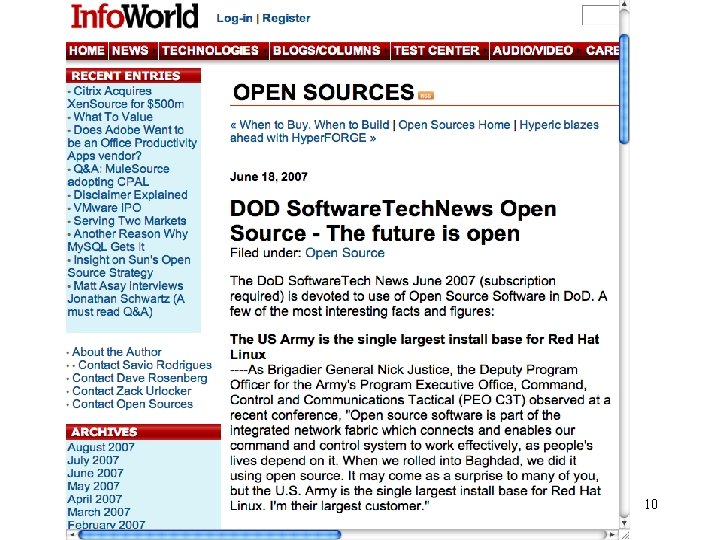
Do. D Largest Red Hat customer 10
Empirical findings from OSSD practices • Individual participation • Resources supporting FOSSD activities • Governance: cooperation, coordination, and control in FOSSD projects • Alliances, social networking and community development • Multi-project software ecosystems • FOSS as a social movement 11
Individual participation in FOSSD projects: motives and consequences • FOSS developers want to: – – – learn about new tools, techniques, skills, etc. have fun building software exercise their technical skill try out new kinds of systems to develop interconnect multiple FOSSD projects • FOSS developers frequently: – build trust and reputation with one another – achieve “geek fame” (for project leaders) – spend more time reading online documents and communicating with one another than writing code 12
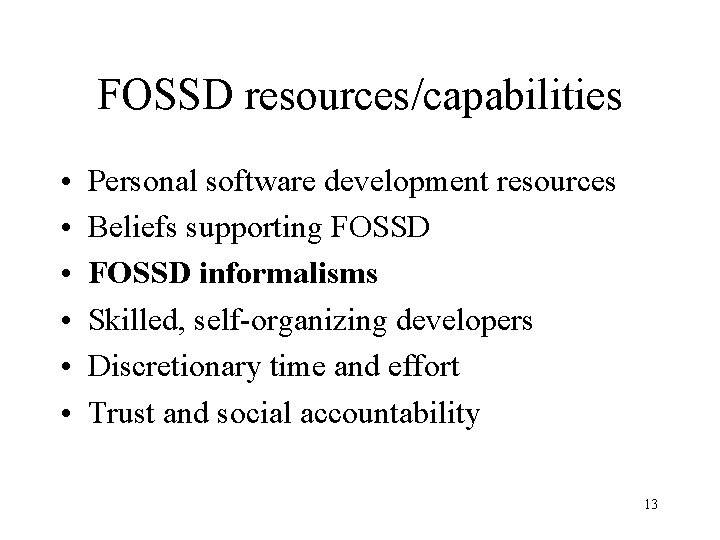
FOSSD resources/capabilities • • • Personal software development resources Beliefs supporting FOSSD informalisms Skilled, self-organizing developers Discretionary time and effort Trust and social accountability 13
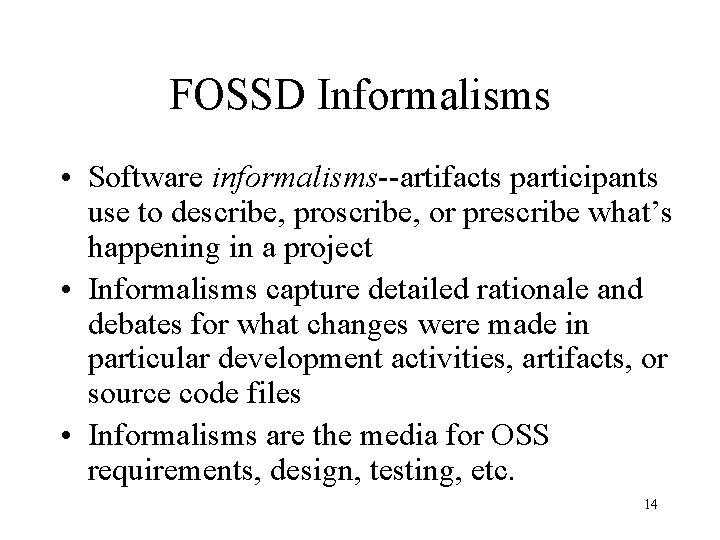
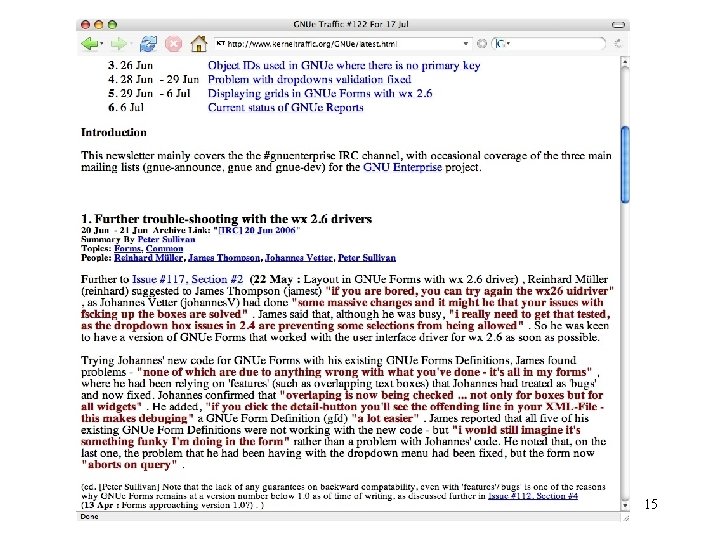
FOSSD Informalisms • Software informalisms--artifacts participants use to describe, proscribe, or prescribe what’s happening in a project • Informalisms capture detailed rationale and debates for what changes were made in particular development activities, artifacts, or source code files • Informalisms are the media for OSS requirements, design, testing, etc. 14
Another OSSD informalism 15
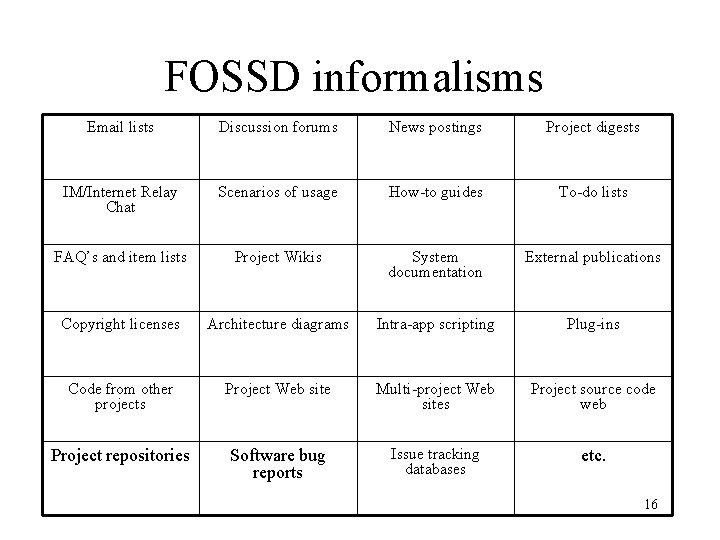
FOSSD informalisms Email lists Discussion forums News postings Project digests IM/Internet Relay Chat Scenarios of usage How-to guides To-do lists FAQ’s and item lists Project Wikis System documentation External publications Copyright licenses Architecture diagrams Intra-app scripting Plug-ins Code from other projects Project Web site Multi-project Web sites Project source code web Project repositories Software bug reports Issue tracking databases etc. 16
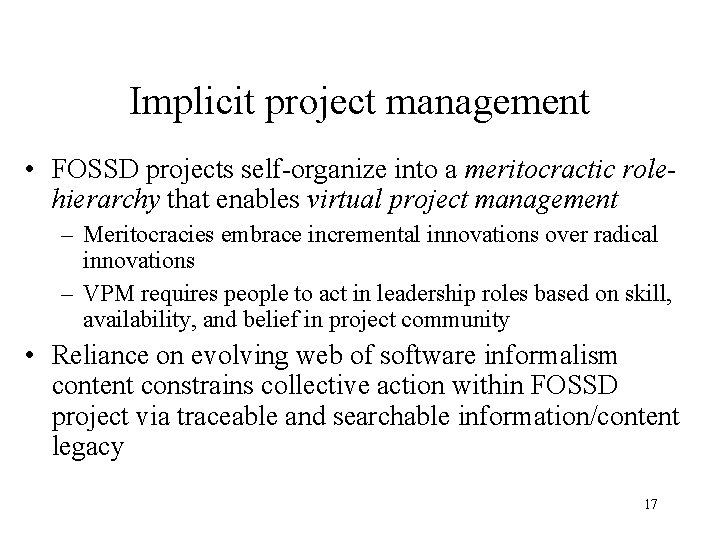
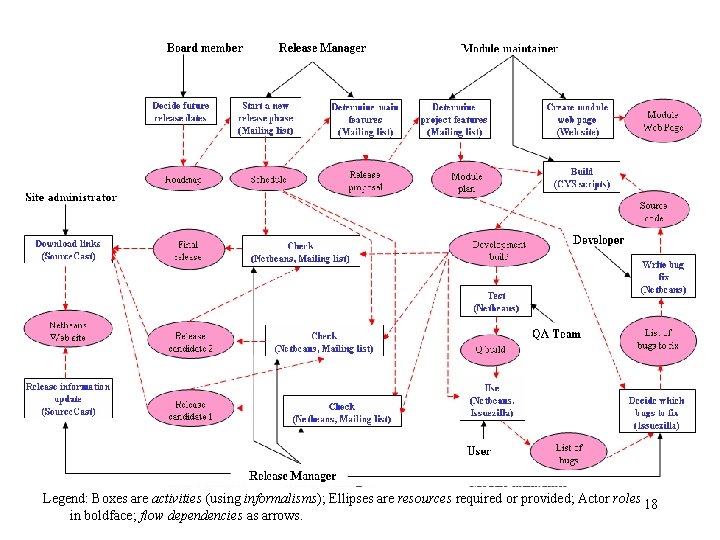
Implicit project management • FOSSD projects self-organize into a meritocractic rolehierarchy that enables virtual project management – Meritocracies embrace incremental innovations over radical innovations – VPM requires people to act in leadership roles based on skill, availability, and belief in project community • Reliance on evolving web of software informalism content constrains collective action within FOSSD project via traceable and searchable information/content legacy 17
Net. Beans self-organized coordination and control Legend: Boxes are activities (using informalisms); Ellipses are resources required or provided; Actor roles 18 in boldface; flow dependencies as arrows.
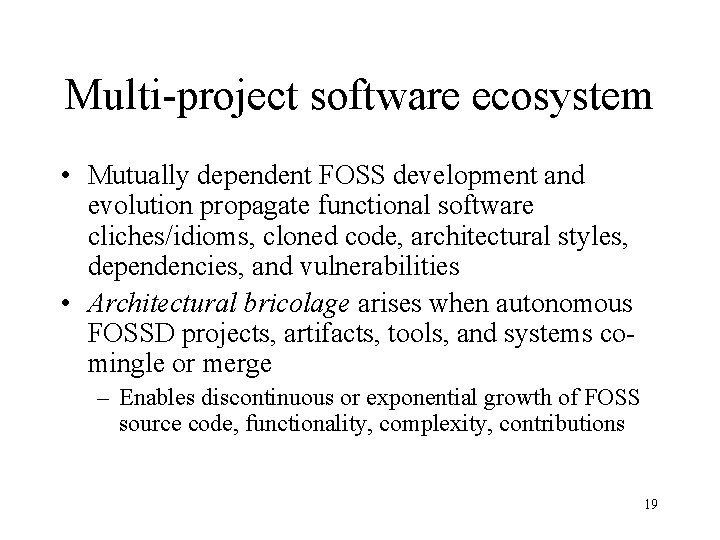
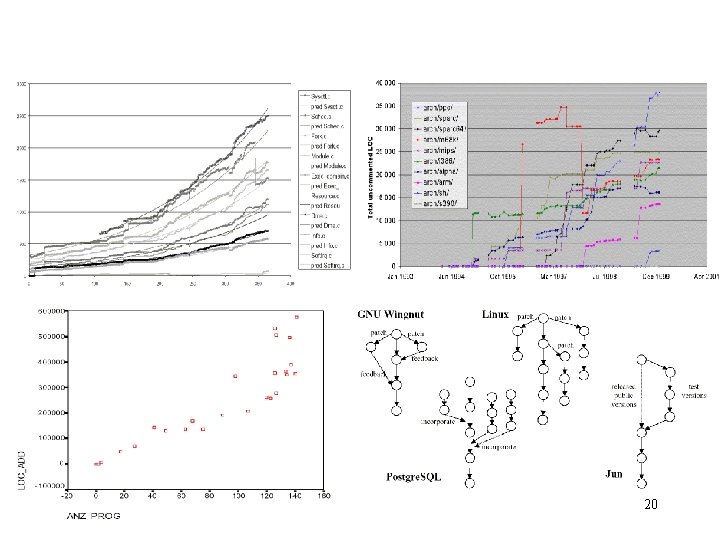
Multi-project software ecosystem • Mutually dependent FOSS development and evolution propagate functional software cliches/idioms, cloned code, architectural styles, dependencies, and vulnerabilities • Architectural bricolage arises when autonomous FOSSD projects, artifacts, tools, and systems comingle or merge – Enables discontinuous or exponential growth of FOSS source code, functionality, complexity, contributions 19
20
Open Architectures and OSS (and some secure computing topics) 21
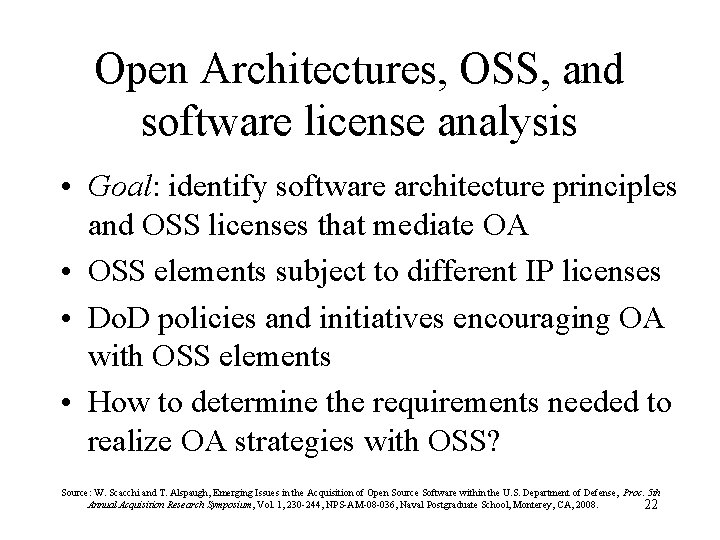
Open Architectures, OSS, and software license analysis • Goal: identify software architecture principles and OSS licenses that mediate OA • OSS elements subject to different IP licenses • Do. D policies and initiatives encouraging OA with OSS elements • How to determine the requirements needed to realize OA strategies with OSS? Source: W. Scacchi and T. Alspaugh, Emerging Issues in the Acquisition of Open Source Software within the U. S. Department of Defense, Proc. 5 th Annual Acquisition Research Symposium, Vol. 1, 230 -244, NPS-AM-08 -036, Naval Postgraduate School, Monterey, CA, 2008. 22
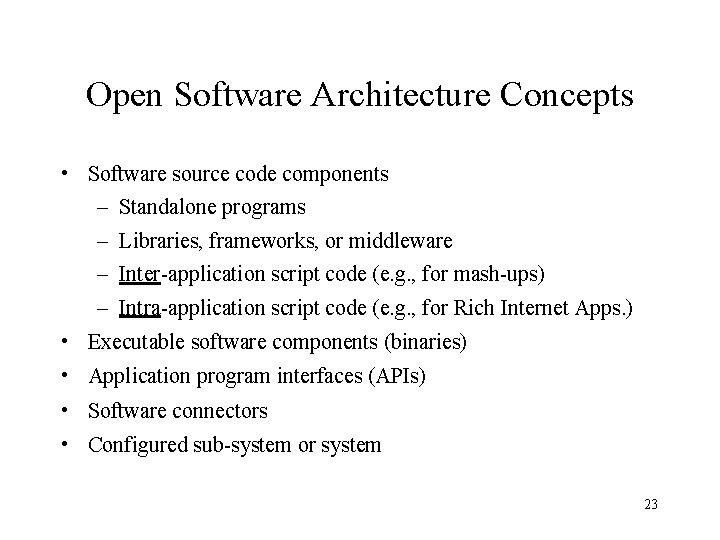
Open Software Architecture Concepts • Software source code components – Standalone programs – Libraries, frameworks, or middleware – Inter-application script code (e. g. , for mash-ups) – Intra-application script code (e. g. , for Rich Internet Apps. ) • Executable software components (binaries) • Application program interfaces (APIs) • Software connectors • Configured sub-system or system 23
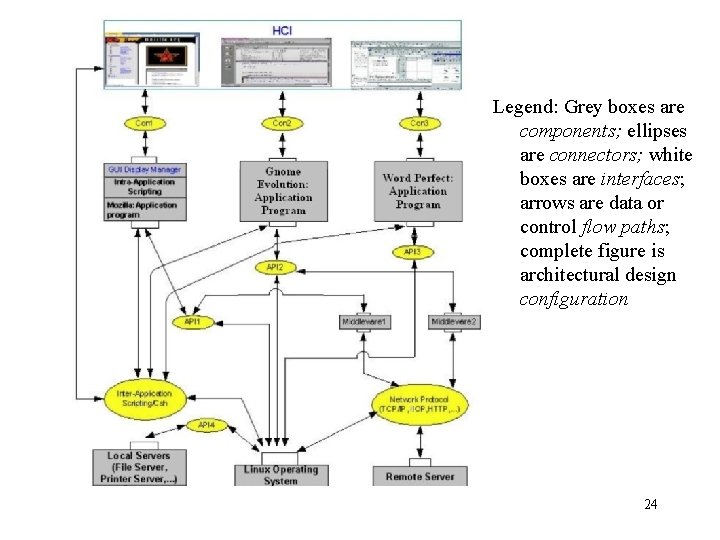
Open Architecture Example Legend: Grey boxes are components; ellipses are connectors; white boxes are interfaces; arrows are data or control flow paths; complete figure is architectural design configuration 24
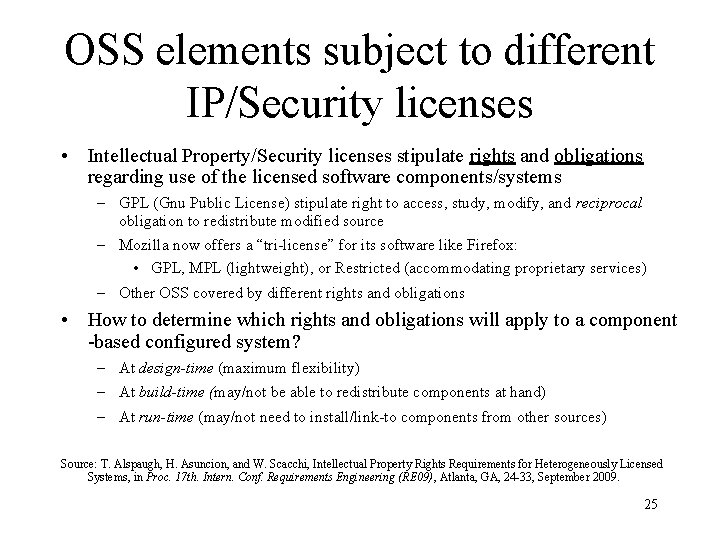
OSS elements subject to different IP/Security licenses • Intellectual Property/Security licenses stipulate rights and obligations regarding use of the licensed software components/systems – GPL (Gnu Public License) stipulate right to access, study, modify, and reciprocal obligation to redistribute modified source – Mozilla now offers a “tri-license” for its software like Firefox: • GPL, MPL (lightweight), or Restricted (accommodating proprietary services) – Other OSS covered by different rights and obligations • How to determine which rights and obligations will apply to a component -based configured system? – At design-time (maximum flexibility) – At build-time (may/not be able to redistribute components at hand) – At run-time (may/not need to install/link-to components from other sources) Source: T. Alspaugh, H. Asuncion, and W. Scacchi, Intellectual Property Rights Requirements for Heterogeneously Licensed Systems, in Proc. 17 th. Intern. Conf. Requirements Engineering (RE 09), Atlanta, GA, 24 -33, September 2009. 25
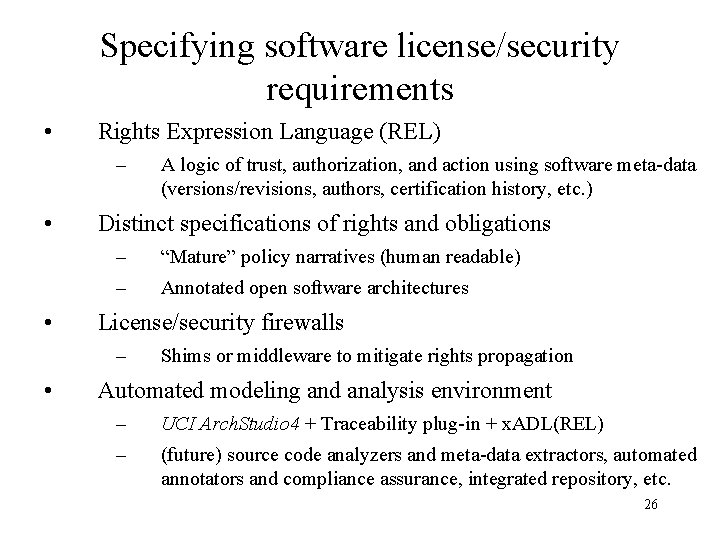
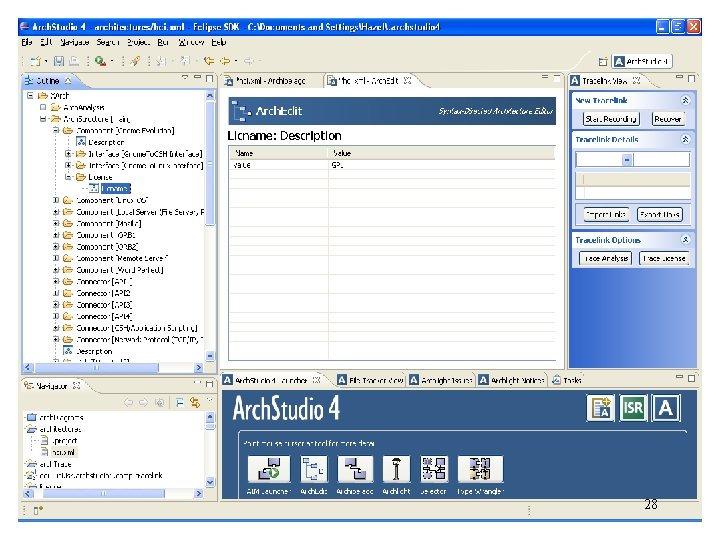
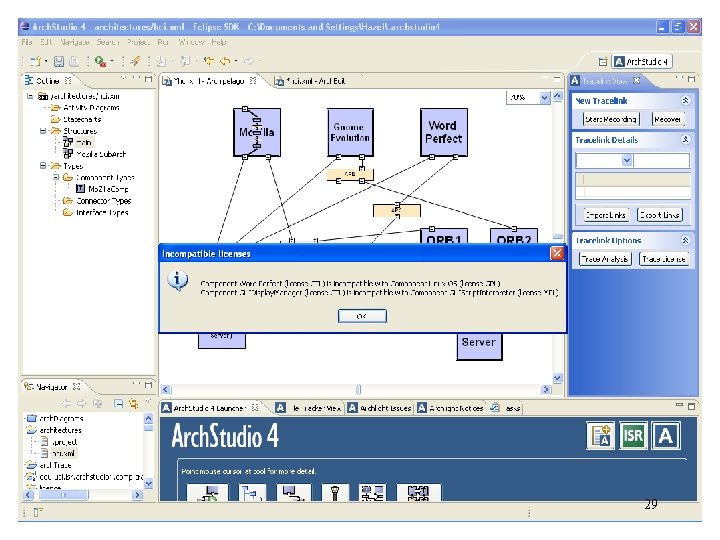
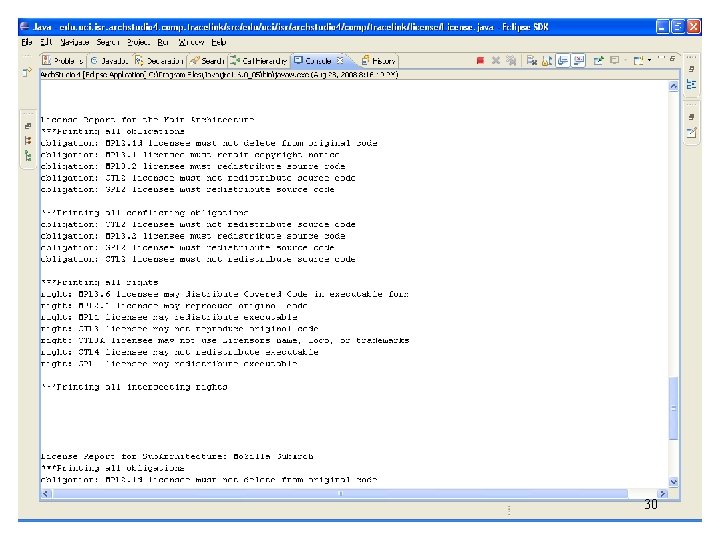
Specifying software license/security requirements • Rights Expression Language (REL) – • • Distinct specifications of rights and obligations – “Mature” policy narratives (human readable) – Annotated open software architectures License/security firewalls – • A logic of trust, authorization, and action using software meta-data (versions/revisions, authors, certification history, etc. ) Shims or middleware to mitigate rights propagation Automated modeling and analysis environment – UCI Arch. Studio 4 + Traceability plug-in + x. ADL(REL) – (future) source code analyzers and meta-data extractors, automated annotators and compliance assurance, integrated repository, etc. 26
27
28
29
30
Recent reports available W. Scacchi, Free/Open Source Software Development: Recent Research Results and Emerging Opportunities, Proc. European Software Engineering Conference and ACM SIGSOFT Symposium on the Foundations of Software Engineering, Dubrovnik, Croatia, 459 -468, September 2007. – http: //doi. acm. org/10. 1145/1287624. 1287689 T. Alspaugh, H. Asuncion, W. Scacchi, Intellectual Property Requirements for Heterogeneously Licensed Systems, Proc. 17 th. Intern. Conf. Requirements Engineering (RE 09), Atlanta, GA, 24 -33, September 2009. Also see http: //www. ics. uci. edu/~wscacchi for other papers on FOSS research 31
Acknowledgements • Project collaborators: – – Mark Ackerman, UMichigan, Ann Arbor Les Gasser, UIllinois, Urbana-Champaign John Noll, LERO, Irish Software Engineering Research Center Thomas Alspaugh, Hazel Asunction, Margaret Ellliot, Chris Jensen and others at the UCI ISR • Funding support: – National Science Foundation: #0534771, #0749353, #0808783 – Digital Industry Promotion (DIP) Agency, Global R&D Collaboration Center, Daegu, South Korea – Naval Postgraduate School: Acquisition Research Program – No endorsement implied. 32