
ISSUES AND DEBATES HOLISM VS REDUCTIONISM Describe what

ISSUES AND DEBATES
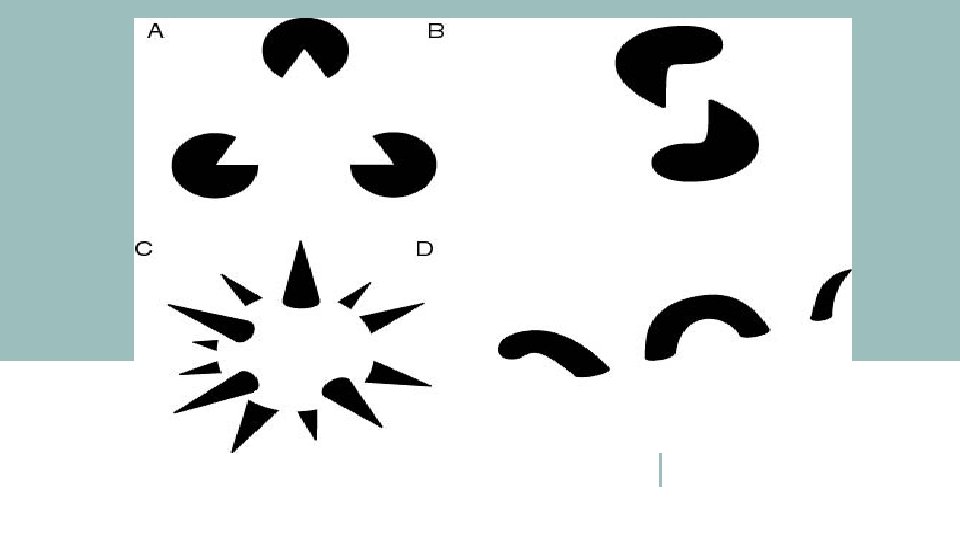
HOLISM VS. REDUCTIONISM Describe what you see in relation to the following images….
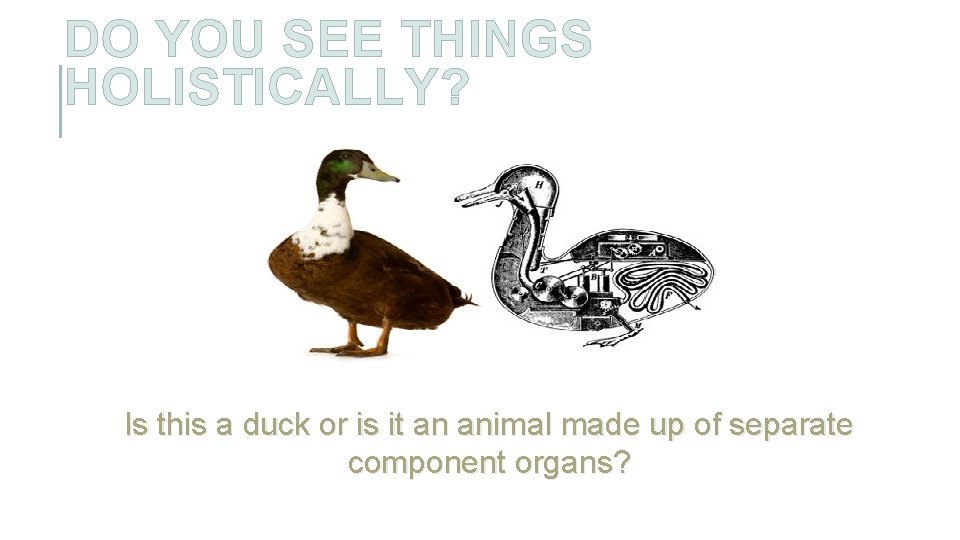
DO YOU SEE THINGS HOLISTICALLY? Is this a duck or is it an animal made up of separate component organs?
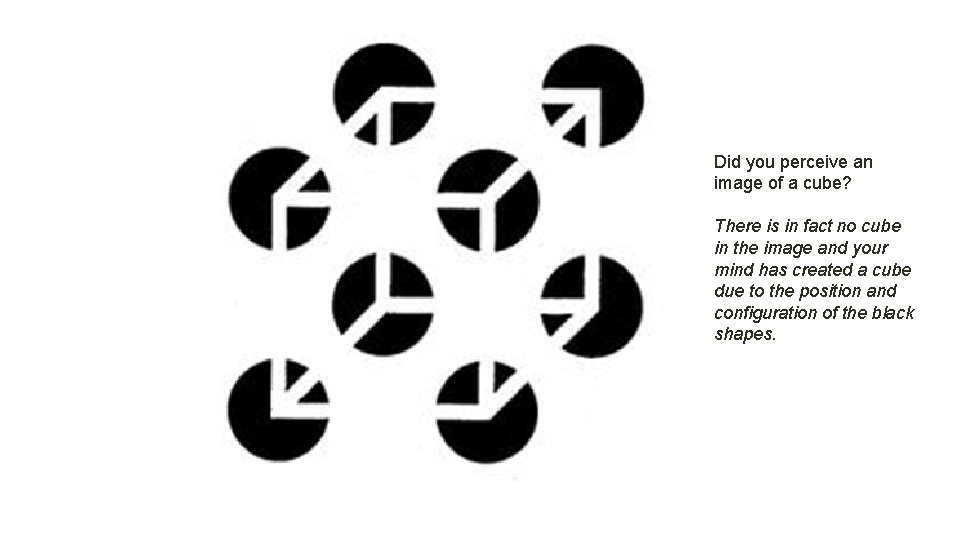
Did you perceive an image of a cube? There is in fact no cube in the image and your mind has created a cube due to the position and configuration of the black shapes.
HOLISM VS. REDUCTIONISM (30 MINUTES) Work through the hand out. Define and give examples of the following terms… §Holism §Reductionism §Parsimony §Levels of explanations §Biological reductionism §Environmental reductionism
WHAT IS REDUCTIONISM AND HOLISM? Holism: Attempts to understanding human behaviour can only be done through analysing the person or the behaviour as a whole rather than its constituent parts. Reductionism: Analysing behaviour by breaking it down into its constituent parts. It is based around the scientific principle of parsimony. All behaviour should be explained using the most basic (lowest levels) principles.
Levels of Explanations How explanations vary from those at a lower or fundamental level focusing on basic components or units to those at a higher more holistic multivariable level. The Law of Parsimony The simplest explanation is normally the correct one.
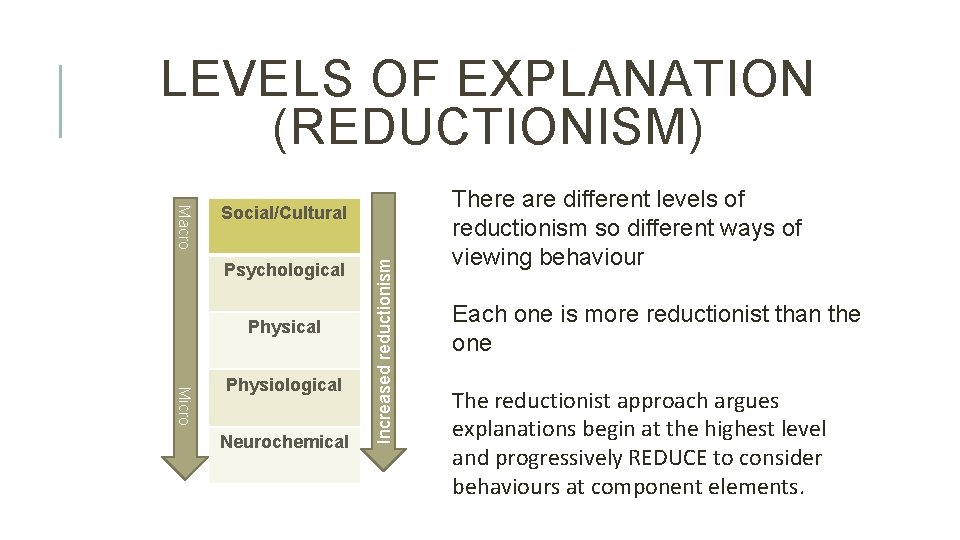
LEVELS OF EXPLANATION (REDUCTIONISM) Psychological Physical Micro Physiological Neurochemical Increased reductionism Macro Social/Cultural There are different levels of reductionism so different ways of viewing behaviour Each one is more reductionist than the one The reductionist approach argues explanations begin at the highest level and progressively REDUCE to consider behaviours at component elements.

REDUCTIONISM Biological Reductionism refers to the way that biological psychologists try to reduce behaviour to a physical level and explain it in terms of neurons, neurotransmitters, hormones, brain structure, etc. Environmental Reductionism is also known as stimulus-response reductionism. Behaviourists assume that all behaviour can be reduced to the simple building blocks of S-R (stimulus-response) associations and that complex behaviours are a series of S-R chains.

EXAMPLES: ENVIRONMENTAL REDUCTIONISM Year 1 Psychopathology: The behaviourist approach claims that phobias are acquired through classical conditioning and maintained through operant conditioning
EXAMPLES: BIOLOGICAL EXPLANATIONS This is the assumption of the biological approach and has been successfully applied to a number of different topic areas in psychology. For example, the effects of psychoactive drugs on the brain have contributed much to our understanding of neural processes and the fact that it might be possible to explain serious mental disorders such as OCD, depression and schizophrenia at a biochemical level. Year 1 Psychopathology: The biological approach claims that OCD is caused by higher levels of dopamine and lower levels of serotonin.
ENVIRONMENTAL (STIMULUS-RESPONSE) REDUCTIONISM +Parsimony: simple is better to understand behaviour that complex, over detailed explanations + successfully explains behaviour like phobias -Too simplistic -Focus is on learned association and ignores other factors
BIOLOGICAL REDUCTIONISM + Scientific + Easy to replicate studies + Allows for successful treatments -Too simplistic/ incomplete explanation -Ignores learned behaviours -Ignores social factors

HOLISM & REDUCTIONISM Which is more…? Scientific Objective Deterministic Economical

HOLISM: EVALUATION The case for Holism Some topics such as conformity to social roles and deindividuation cannot be understood without taking a holistic approach. Against Holism Holistic explanations such as the humanistic approach can be criticised for a lack of empirical (scientific) evidence.
REDUCTIONISM: EVALUATION The case for Reductionism In order to ensure a scientific approach behaviour needs to be operationalised, broken down into its constituent parts to ensure measurement is valid and cause and effect is observed in relation to the effect of the independent variable on the dependent variable. We need to make sure the dependent variable is not affected by other extraneous variables so a reductionist approach is crucial. The case against Reductionism Explanations such as the genetic and biochemical fails to take account of the social context in which the behaviour occurs.
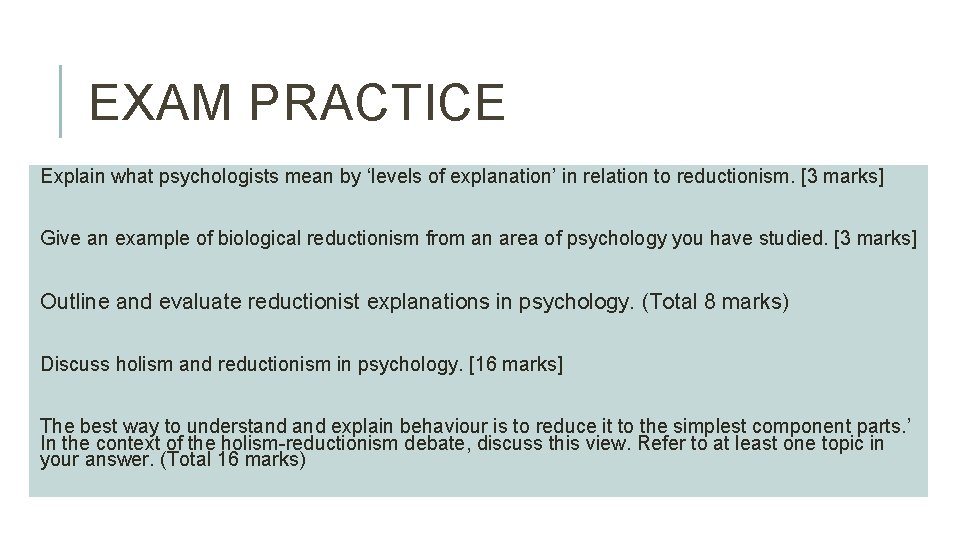
EXAM PRACTICE Explain what psychologists mean by ‘levels of explanation’ in relation to reductionism. [3 marks] Give an example of biological reductionism from an area of psychology you have studied. [3 marks] Outline and evaluate reductionist explanations in psychology. (Total 8 marks) Discuss holism and reductionism in psychology. [16 marks] The best way to understand explain behaviour is to reduce it to the simplest component parts. ’ In the context of the holism-reductionism debate, discuss this view. Refer to at least one topic in your answer. (Total 16 marks)
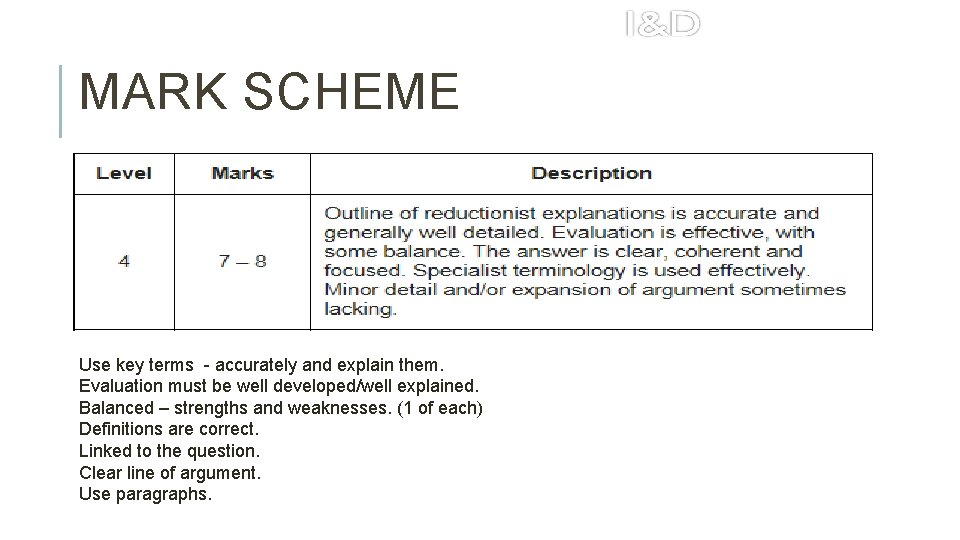
MARK SCHEME Use key terms - accurately and explain them. Evaluation must be well developed/well explained. Balanced – strengths and weaknesses. (1 of each) Definitions are correct. Linked to the question. Clear line of argument. Use paragraphs.
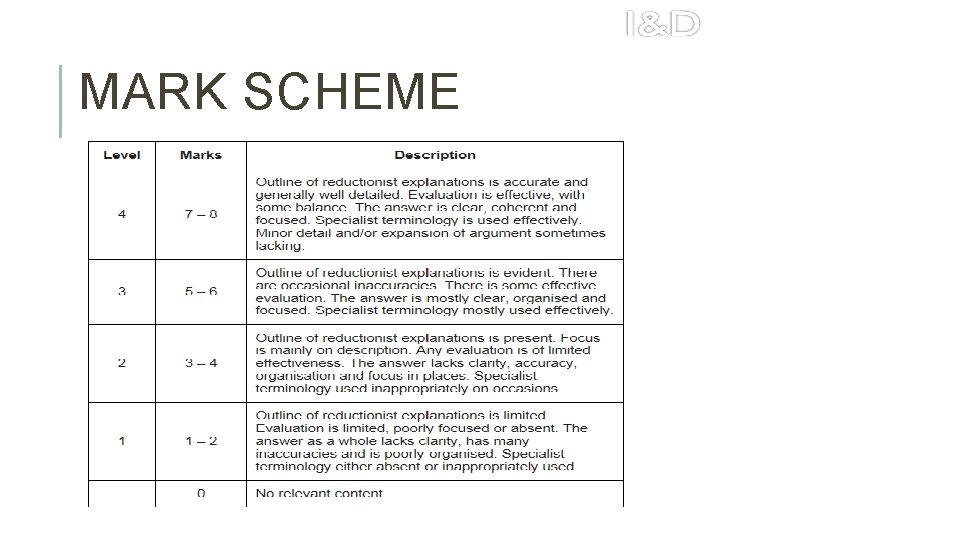
MARK SCHEME
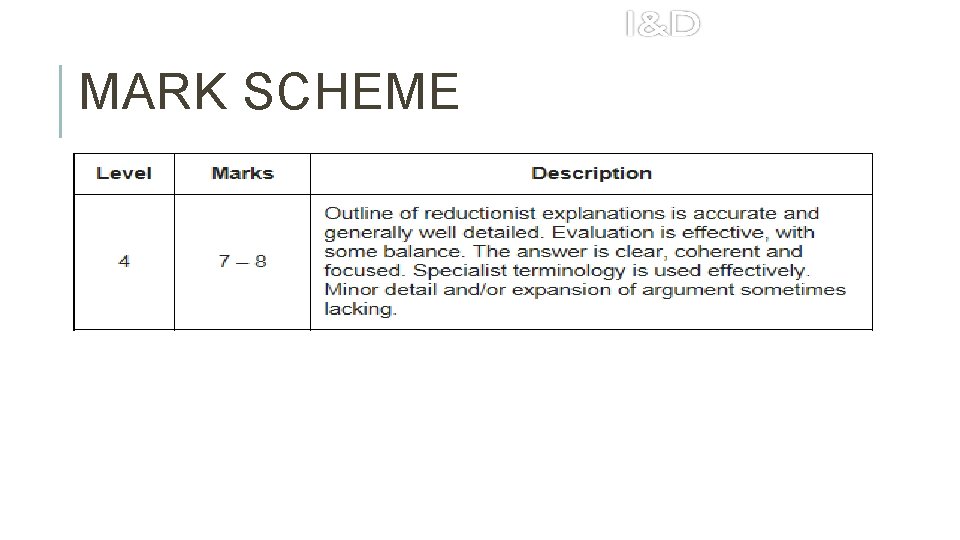
MARK SCHEME
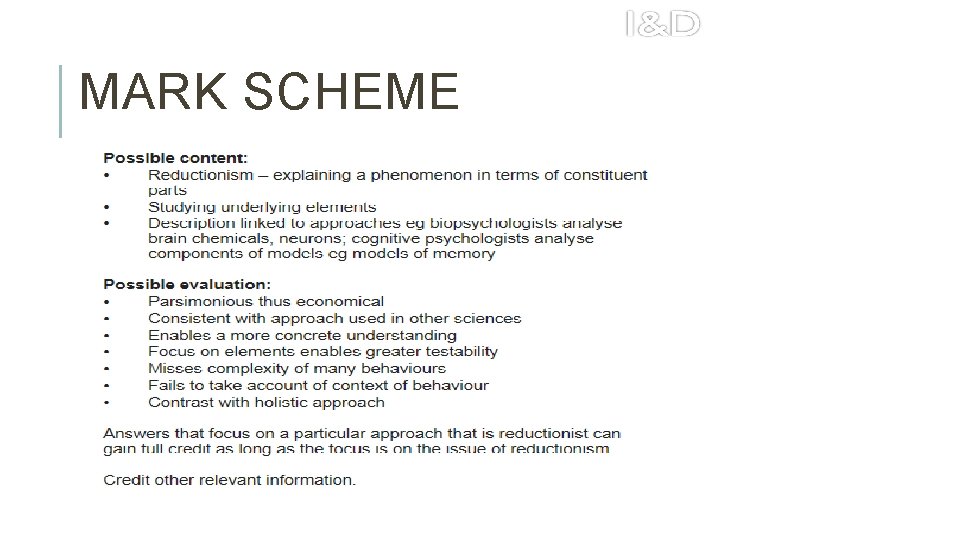
MARK SCHEME
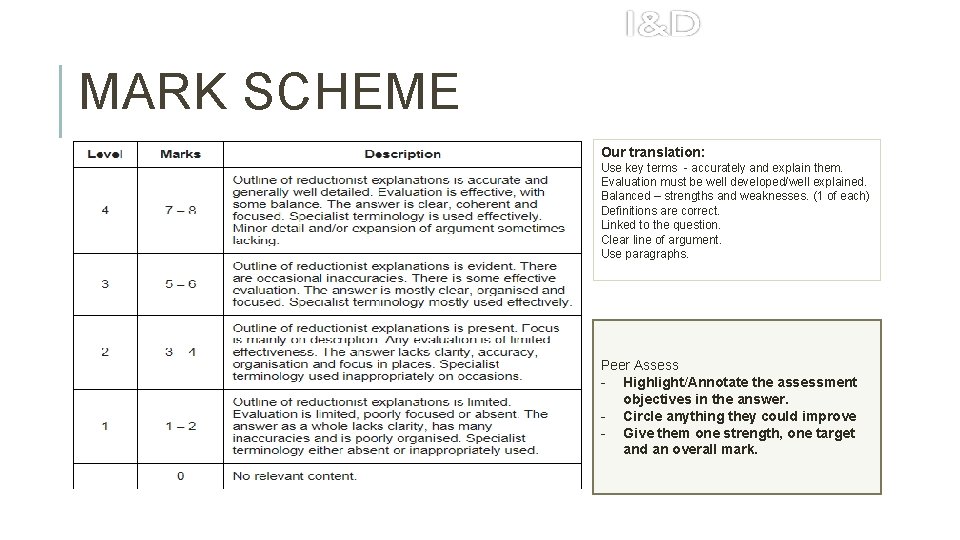
MARK SCHEME Our translation: Use key terms - accurately and explain them. Evaluation must be well developed/well explained. Balanced – strengths and weaknesses. (1 of each) Definitions are correct. Linked to the question. Clear line of argument. Use paragraphs. Peer Assess - Highlight/Annotate the assessment objectives in the answer. - Circle anything they could improve - Give them one strength, one target and an overall mark.
![DISCUSS HOLISM AND REDUCTIONISM IN PSYCHOLOGY. [16 MARKS] Create a plan A 01 Reductionism](http://slidetodoc.com/presentation_image_h2/0d09d32bebabae8efd5cbb36c3674d38/image-24.jpg "DISCUSS HOLISM AND REDUCTIONISM IN PSYCHOLOGY. [16 MARKS] Create a plan A 01 Reductionism")
DISCUSS HOLISM AND REDUCTIONISM IN PSYCHOLOGY. [16 MARKS] Create a plan A 01 Reductionism (biological/environmental) – OCD/PHOBIA A 01 Holism (Gestalt) A 03 Psychology as a science (experimental, reductionism, causal relationships) Real world applications (SSRI’s) Reductionism is limited: igmores the complexity of behaviour
- Slides: 24