
Issues and Answers with Turfgrass Ronald Calhoun calhounmsu





- Slides: 61
Issues and Answers with Turfgrass Ronald Calhoun calhoun@msu. edu Michigan State University Extension
Top Ten List • Renovation • Fertilizer • Mowing • Watering • Grubs • Crabgrass • Moles • Broadleaf Weeds • Mulching Leaves • Organic
“Pesticides are a shortcut to cultural practices. ” -the Yard Doctor, 2006
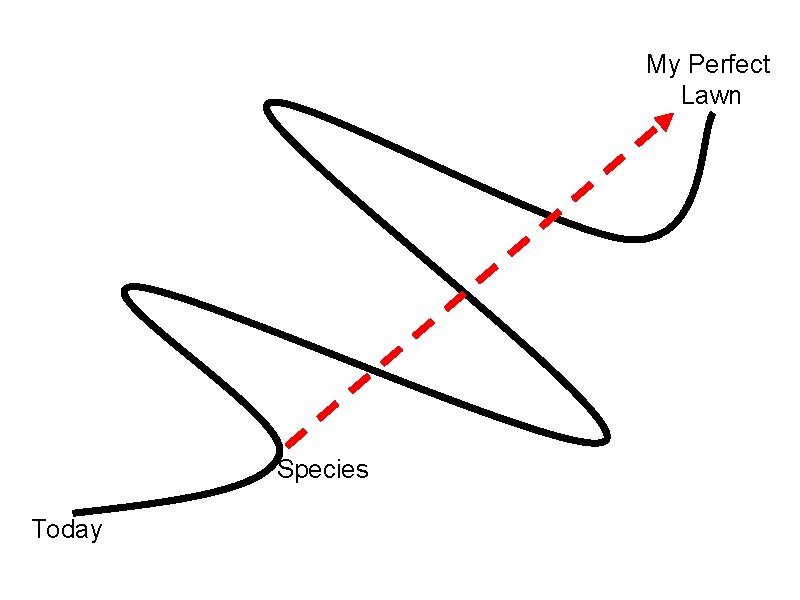
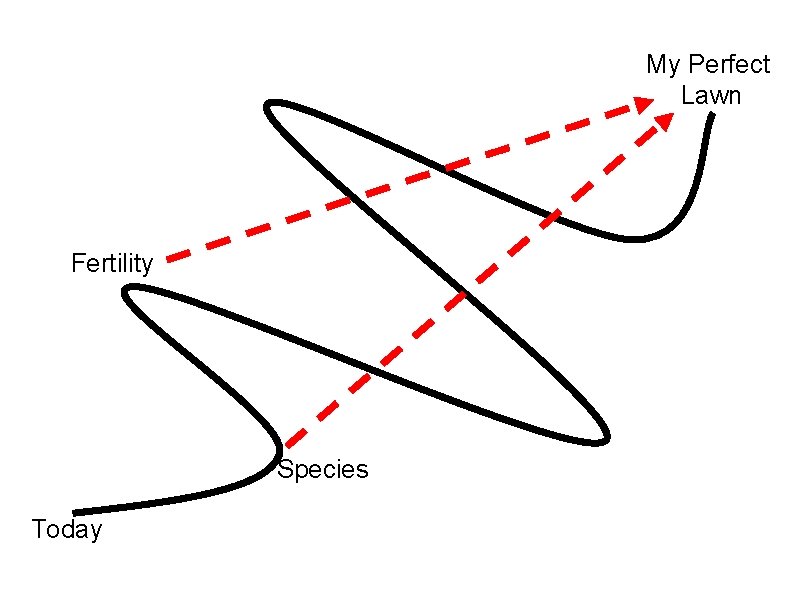
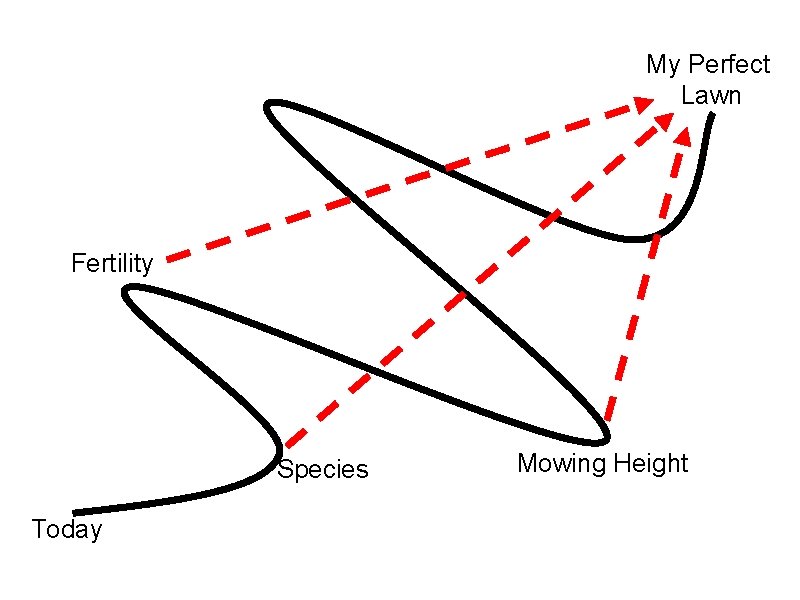
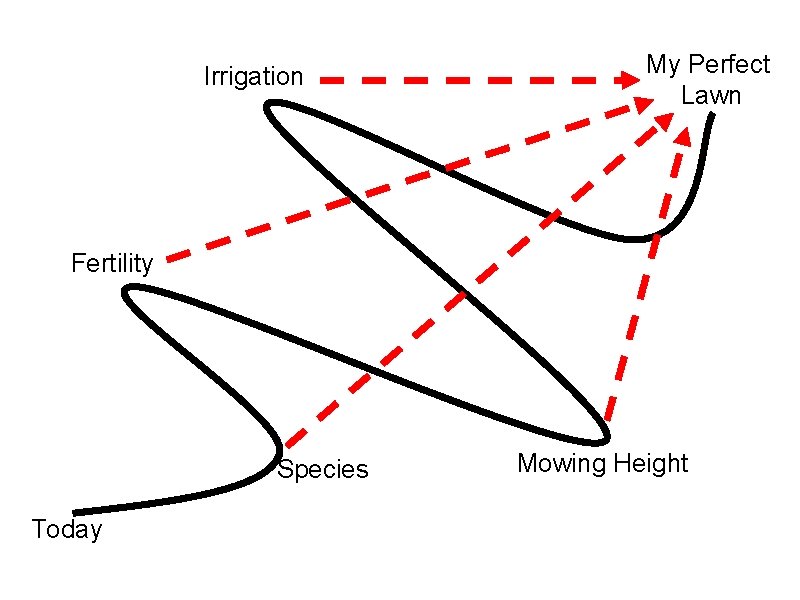
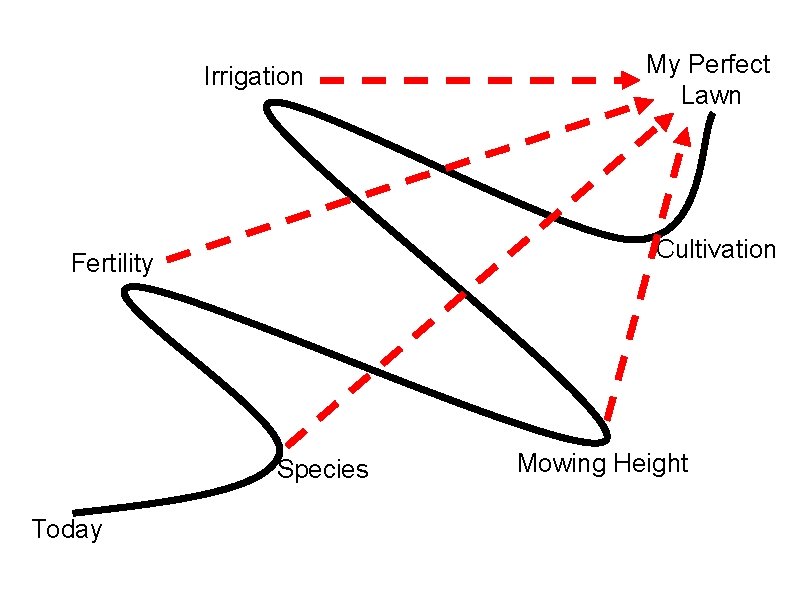
My Perfect Lawn Species Today
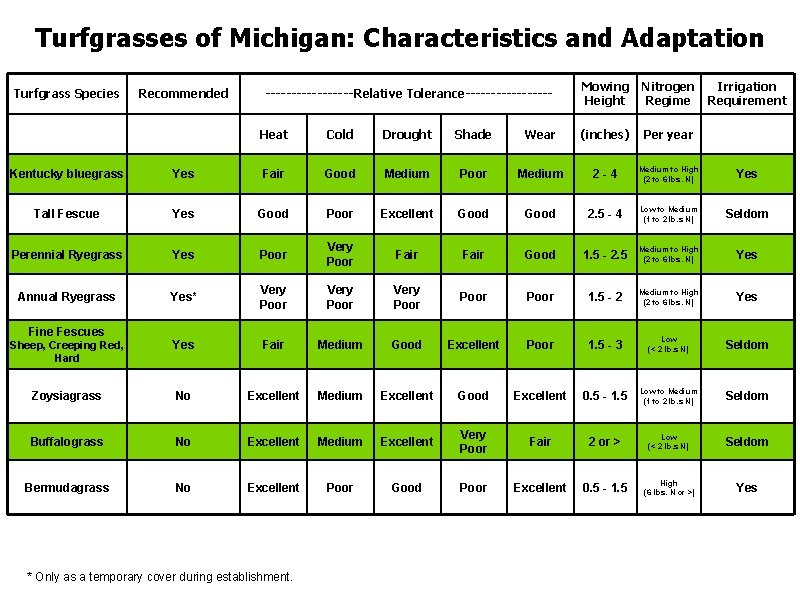
Turfgrasses of Michigan: Characteristics and Adaptation Turfgrass Species Recommended ---------Relative Tolerance--------- Mowing Height Nitrogen Regime Heat Cold Drought Shade Wear (inches) Per year Irrigation Requirement Kentucky bluegrass Yes Fair Good Medium Poor Medium 2 -4 Medium to High (2 to 6 lbs. N) Yes Tall Fescue Yes Good Poor Excellent Good 2. 5 - 4 Low to Medium (1 to 2 lb. s N) Seldom Perennial Ryegrass Yes Poor Very Poor Fair Good 1. 5 - 2. 5 Medium to High (2 to 6 lbs. N) Yes Annual Ryegrass Yes* Very Poor Poor 1. 5 - 2 Medium to High (2 to 6 lbs. N) Yes Sheep, Creeping Red, Hard Yes Fair Medium Good Excellent Poor 1. 5 - 3 Low (< 2 lb. s N) Seldom Zoysiagrass No Excellent Medium Excellent Good Excellent 0. 5 - 1. 5 Low to Medium (1 to 2 lb. s N) Seldom Buffalograss No Excellent Medium Excellent Very Poor Fair 2 or > Low (< 2 lb. s N) Seldom Bermudagrass No Excellent Poor Good Poor Excellent 0. 5 - 1. 5 High (6 lbs. N or >) Yes Fine Fescues * Only as a temporary cover during establishment.
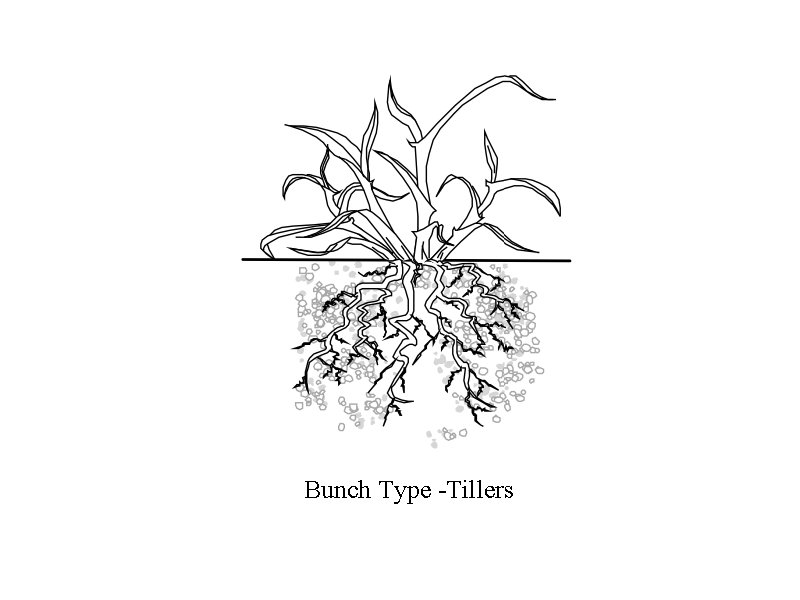
Bunch Type -Tillers
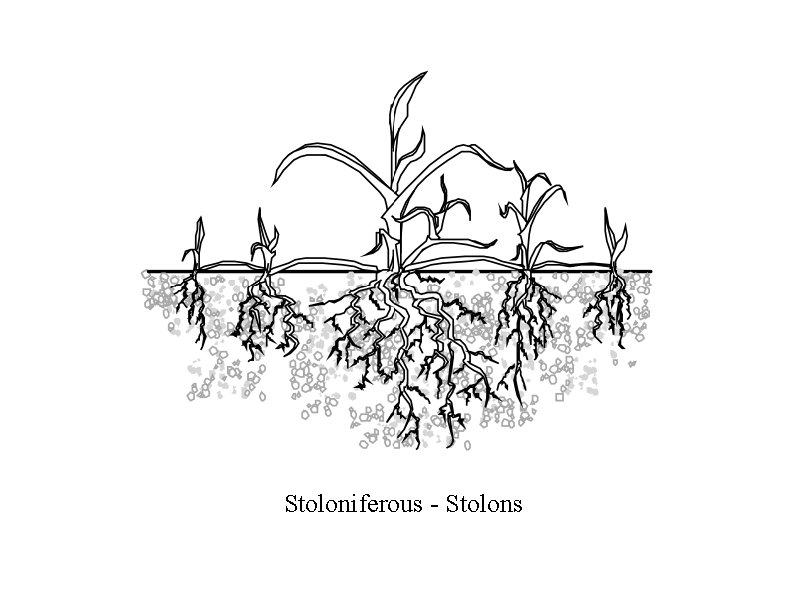
Stoloniferous - Stolons
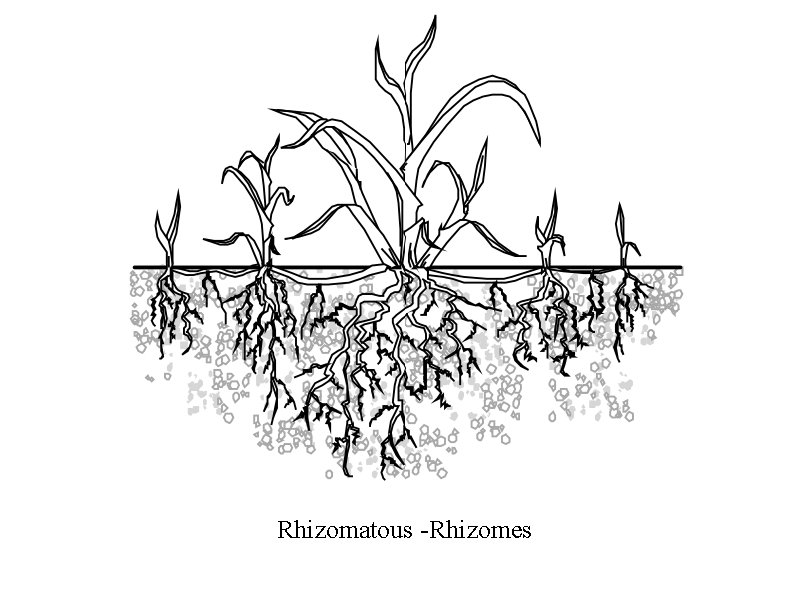
Rhizomatous -Rhizomes
My Perfect Lawn Fertility Species Today
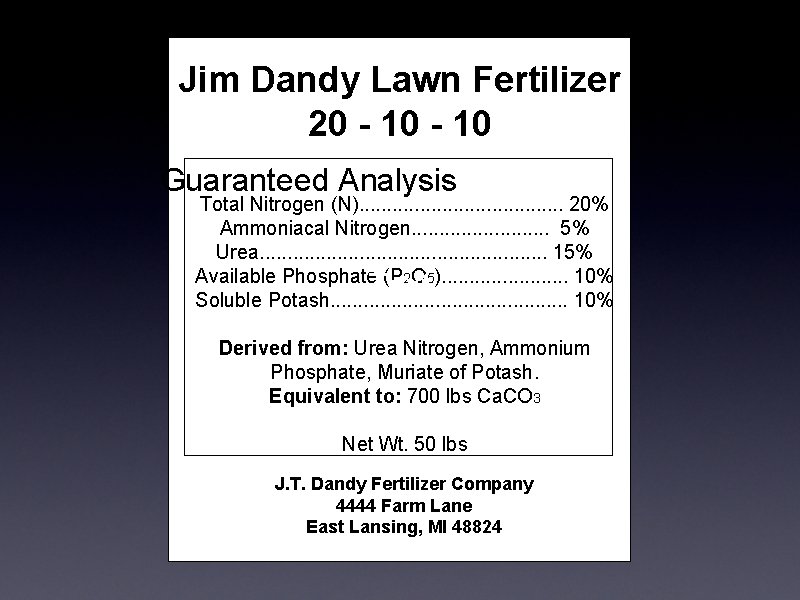
Jim Dandy Lawn Fertilizer 20 - 10 Guaranteed Analysis Total Nitrogen (N). . . . . 20% Ammoniacal Nitrogen. . . 5% Urea. . . . 15% Available Phosphate (P 2 O 5). . . 10% Soluble Potash. . . 10% Text Derived from: Urea Nitrogen, Ammonium Phosphate, Muriate of Potash. Equivalent to: 700 lbs Ca. CO 3 Net Wt. 50 lbs J. T. Dandy Fertilizer Company 4444 Farm Lane East Lansing, MI 48824
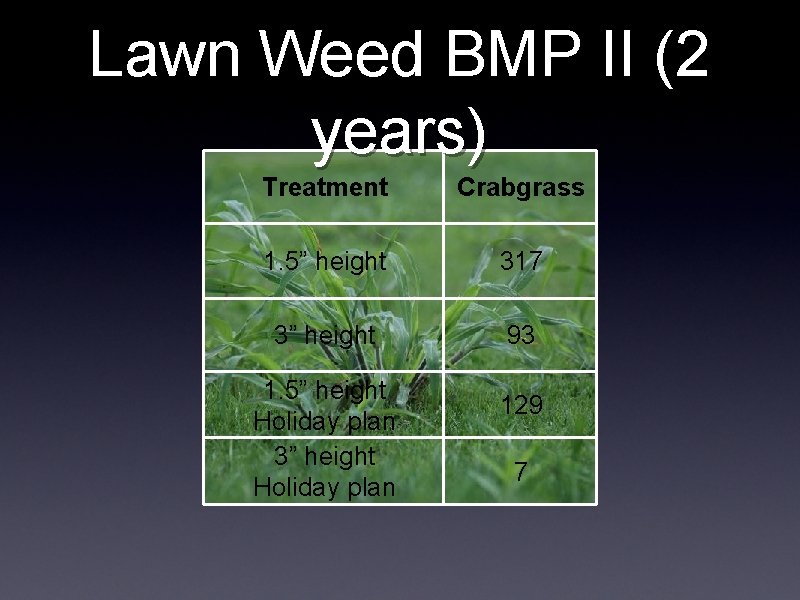
Lawn Weed BMP II (2 years) Treatment Crabgrass 1. 5” height 317 3” height 93 1. 5” height Holiday plan 3” height Holiday plan 129 7
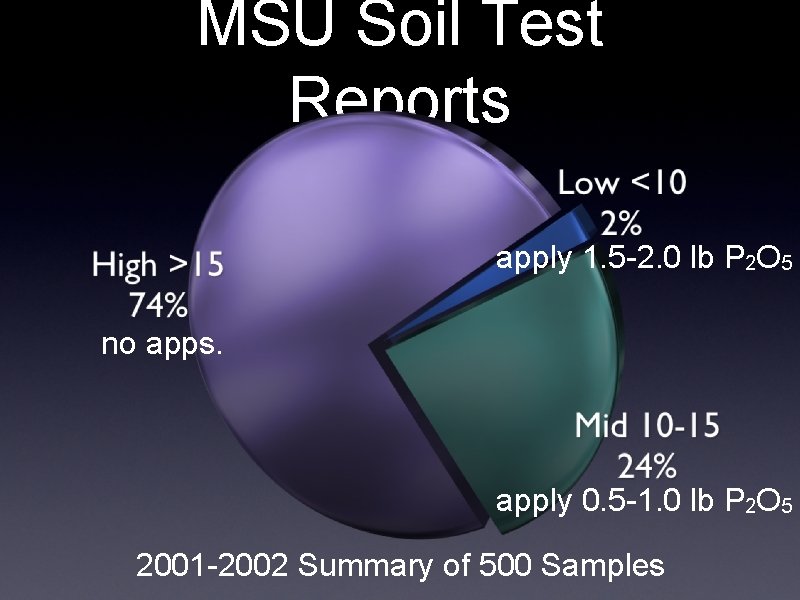
MSU Soil Test Reports apply 1. 5 -2. 0 lb P 2 O 5 no apps. apply 0. 5 -1. 0 lb P 2 O 5 2001 -2002 Summary of 500 Samples
My Perfect Lawn Fertility Species Today Mowing Height
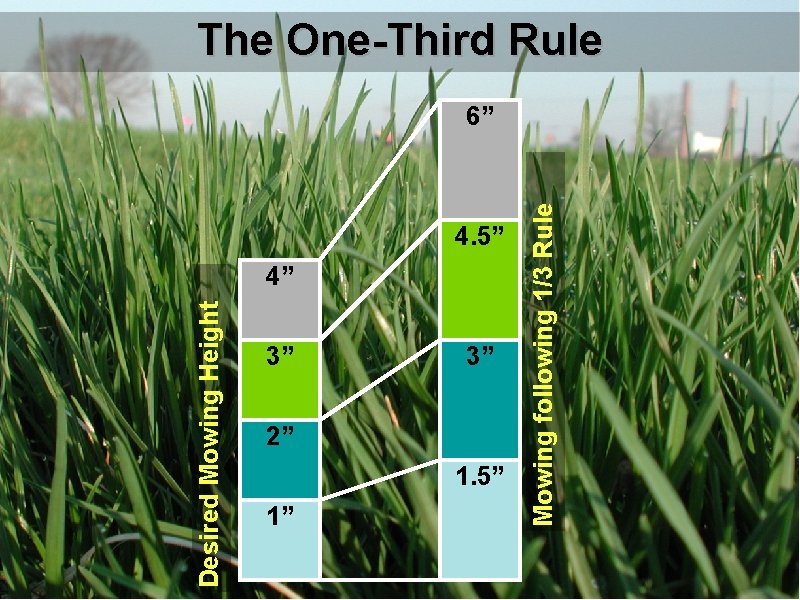
Desired Mowing Height 4. 5” 4” 3” 1” 3” 2” 1. 5” Mowing following 1/3 Rule The One-Third Rule 6”
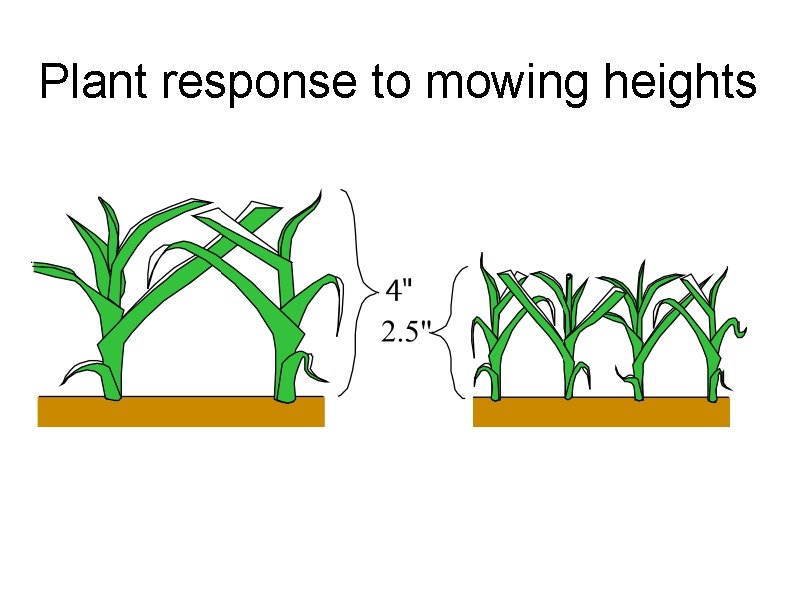
Plant response to mowing heights
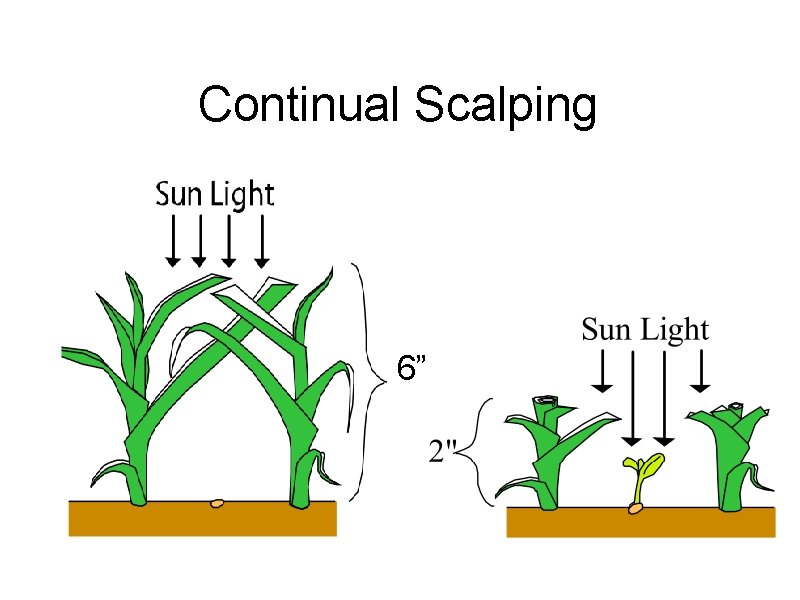
Continual Scalping 6”
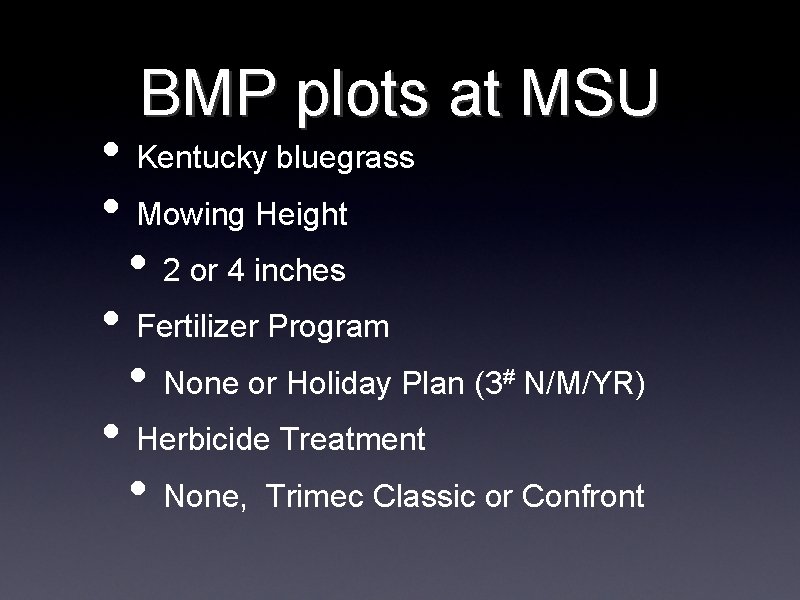
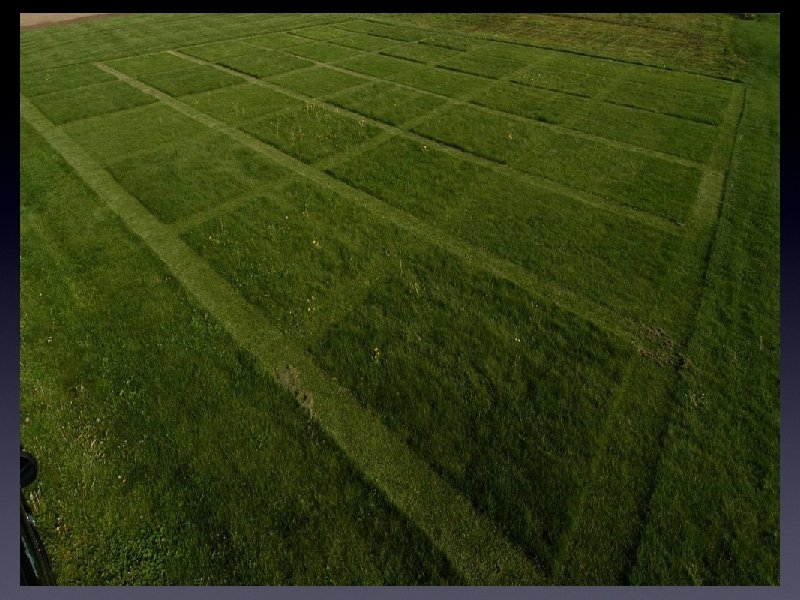
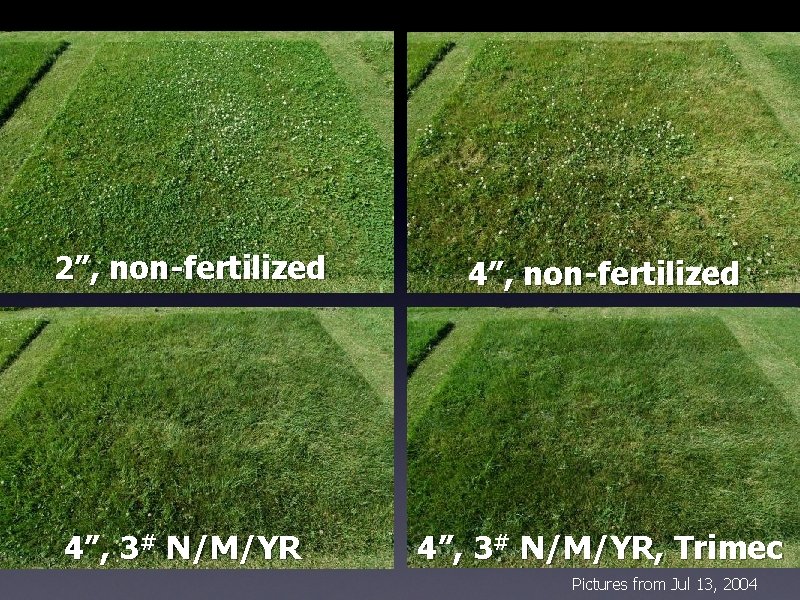
BMP plots at MSU • Kentucky bluegrass • Mowing Height • 2 or 4 inches • Fertilizer Program • None or Holiday Plan (3 N/M/YR) • Herbicide Treatment • None, Trimec Classic or Confront #
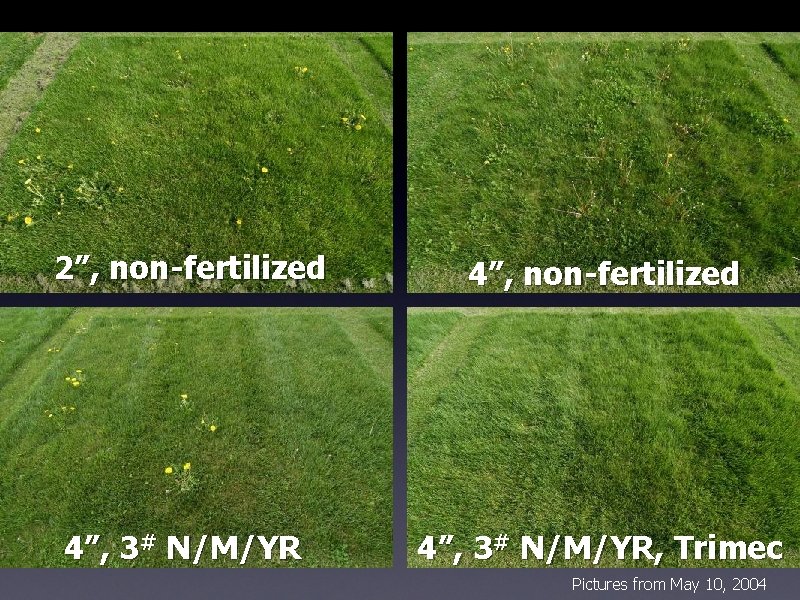
2”, non-fertilized 4”, 3# N/M/YR, Trimec Pictures from May 10, 2004
2”, non-fertilized 4”, 3# N/M/YR, Trimec Pictures from Jul 13, 2004
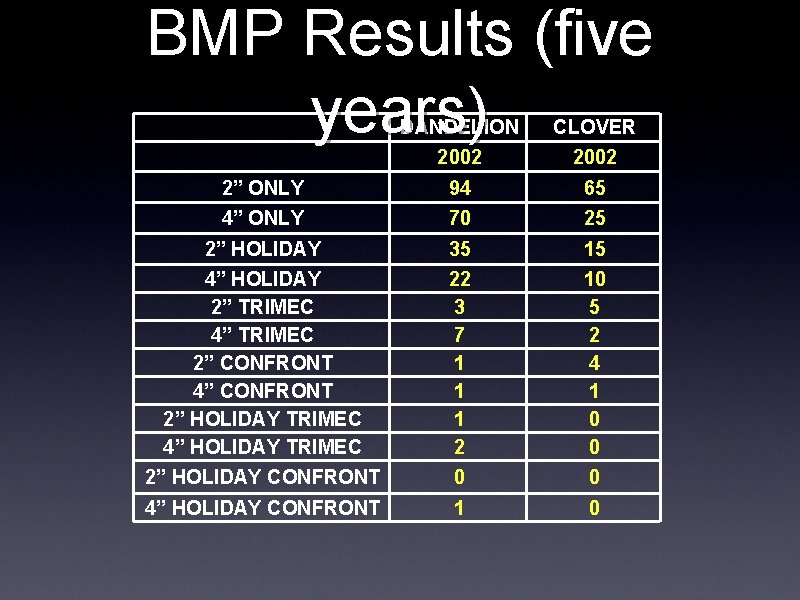
BMP Results (five years) DANDELION 2002 CLOVER 2002 2” ONLY 94 65 4” ONLY 70 25 2” HOLIDAY 4” HOLIDAY 2” TRIMEC 4” TRIMEC 2” CONFRONT 4” CONFRONT 2” HOLIDAY TRIMEC 4” HOLIDAY TRIMEC 35 22 3 7 1 1 1 2 15 10 5 2 4 1 0 0 2” HOLIDAY CONFRONT 0 0 4” HOLIDAY CONFRONT 1 0
Top Ten List • Renovation • Fertilizer • Mowing • Watering • Grubs • Crabgrass • Moles • Broadleaf Weeds • Mulching Leaves • Organic
Irrigation My Perfect Lawn Fertility Species Today Mowing Height
Irrigation Cultivation Fertility Species Today My Perfect Lawn Mowing Height
Top Ten List • Renovation • Fertilizer • Mowing • Watering • Grubs • Crabgrass • Moles • Broadleaf Weeds • Mulching Leaves • Organic
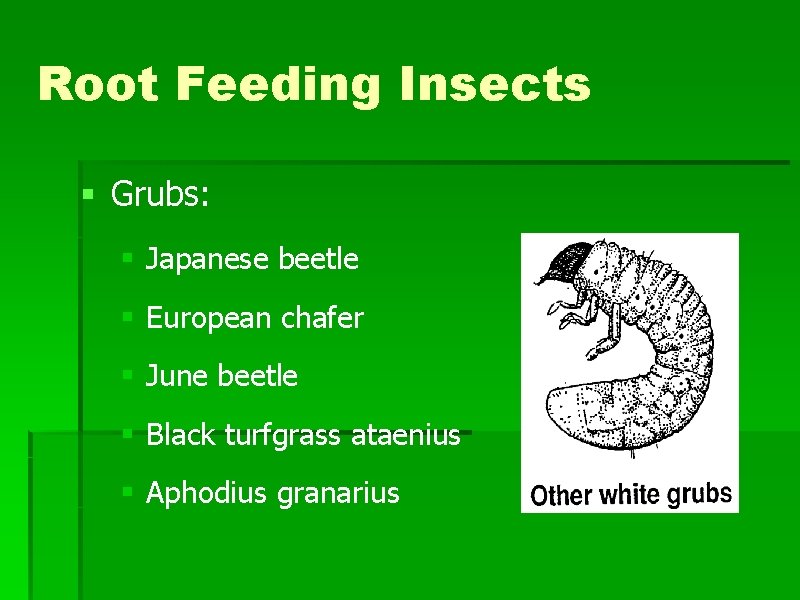
Root Feeding Insects § Grubs: § Japanese beetle § European chafer § June beetle § Black turfgrass ataenius § Aphodius granarius
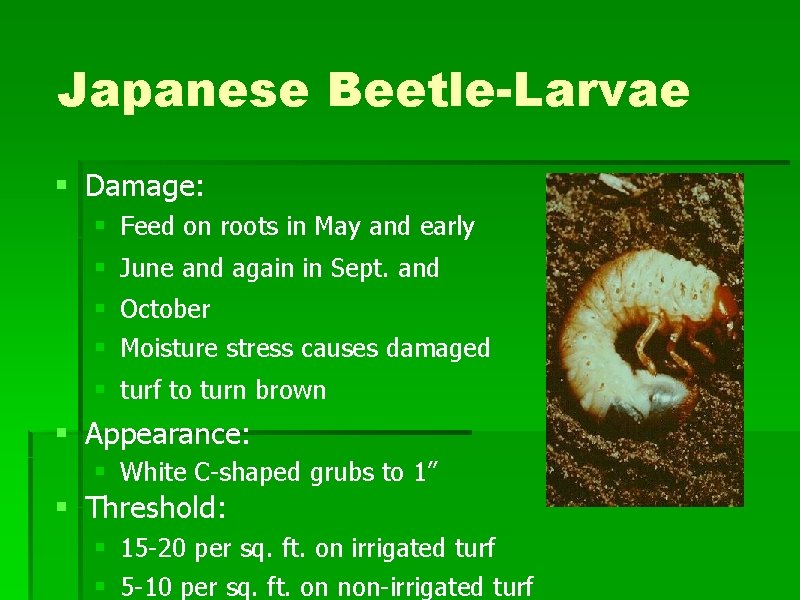
Japanese Beetle-Larvae § Damage: § Feed on roots in May and early § June and again in Sept. and § October § Moisture stress causes damaged § turf to turn brown § Appearance: § White C-shaped grubs to 1” § Threshold: § 15 -20 per sq. ft. on irrigated turf § 5 -10 per sq. ft. on non-irrigated turf
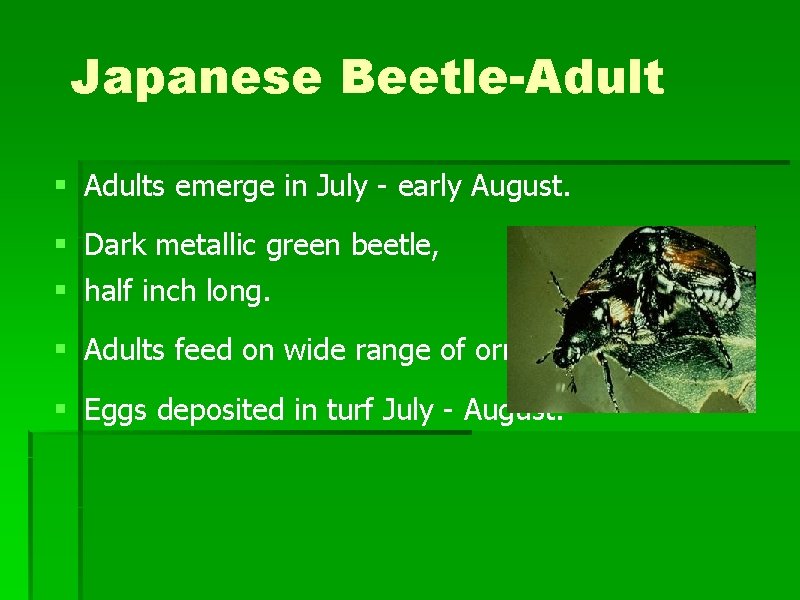
Japanese Beetle-Adult § Adults emerge in July - early August. § Dark metallic green beetle, § half inch long. § Adults feed on wide range of ornamentals. § Eggs deposited in turf July - August.
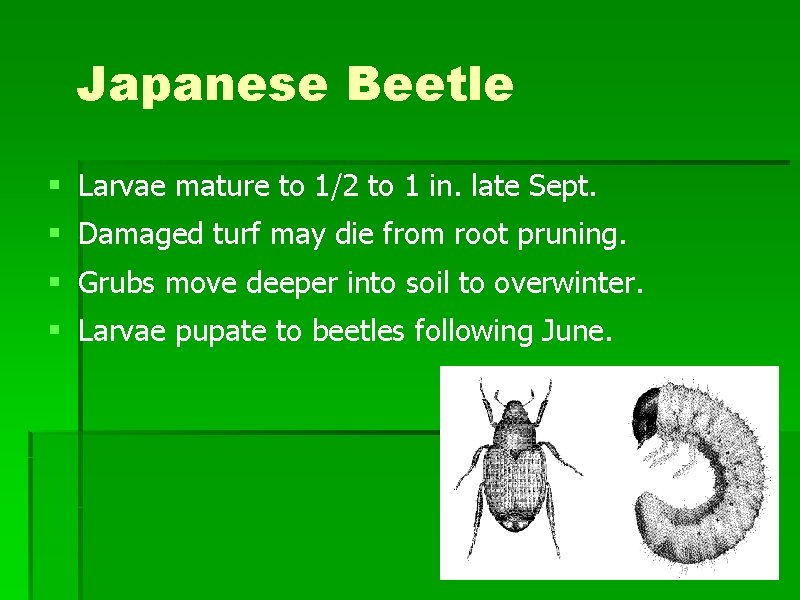
Japanese Beetle § Larvae mature to 1/2 to 1 in. late Sept. § Damaged turf may die from root pruning. § Grubs move deeper into soil to overwinter. § Larvae pupate to beetles following June.
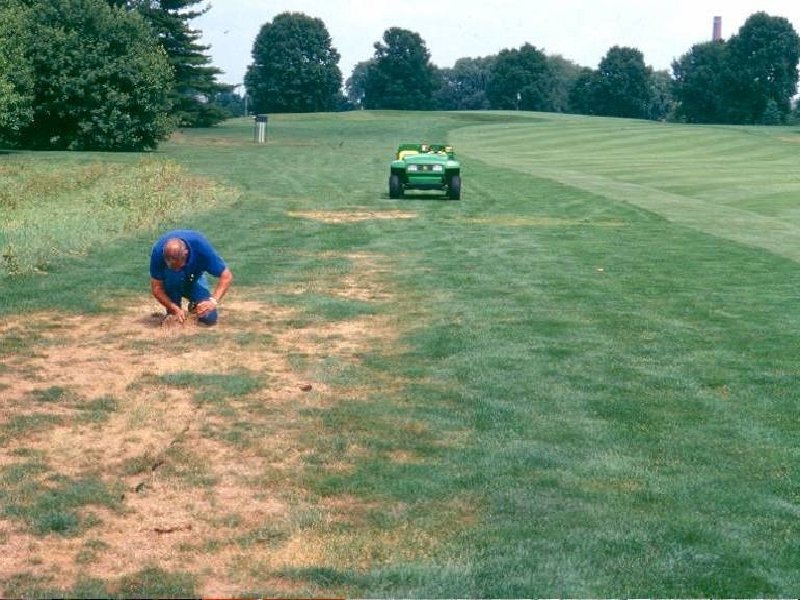
Japanese Beetle § Skunks and raccoons may rip up turf looking for larvae. § Irrigated turf has a tremendous ability to recover. § Monitor populations. § Insecticides should be watered-in to reach the larvae.
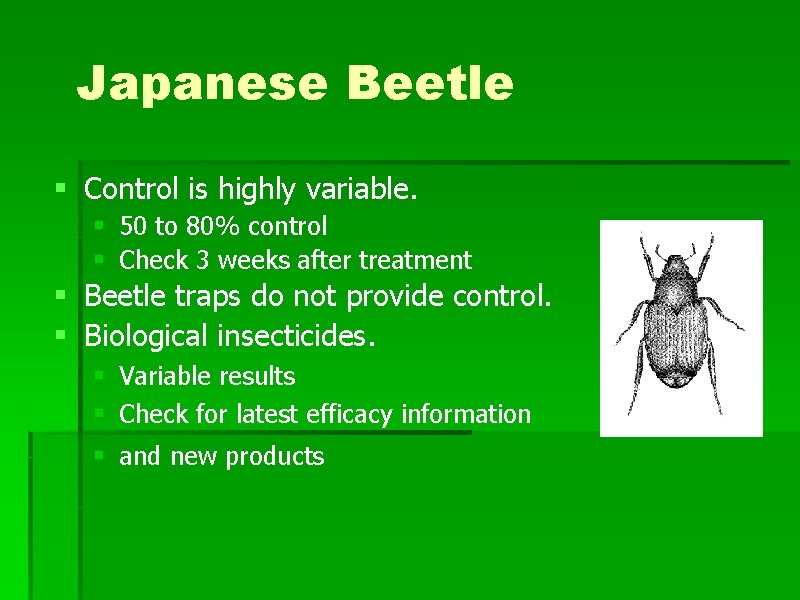
Japanese Beetle § Control is highly variable. § 50 to 80% control § Check 3 weeks after treatment § Beetle traps do not provide control. § Biological insecticides. § Variable results § Check for latest efficacy information § and new products
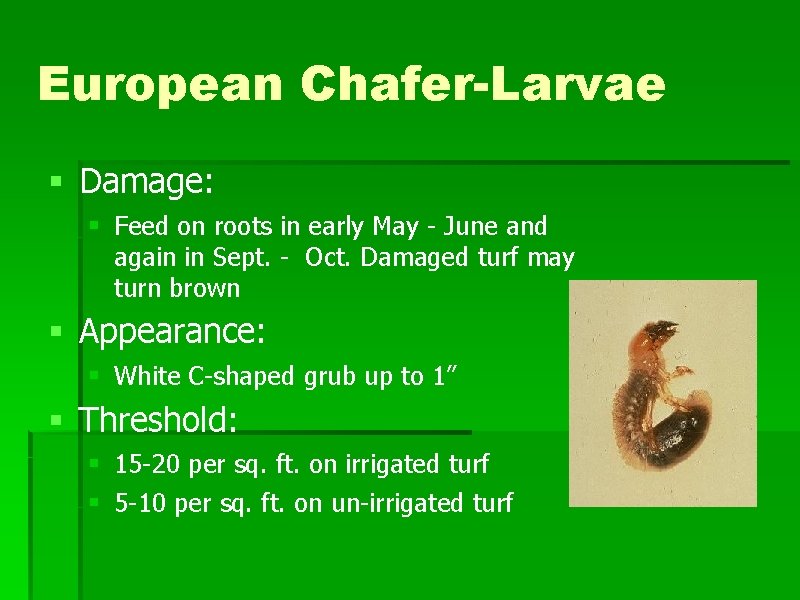
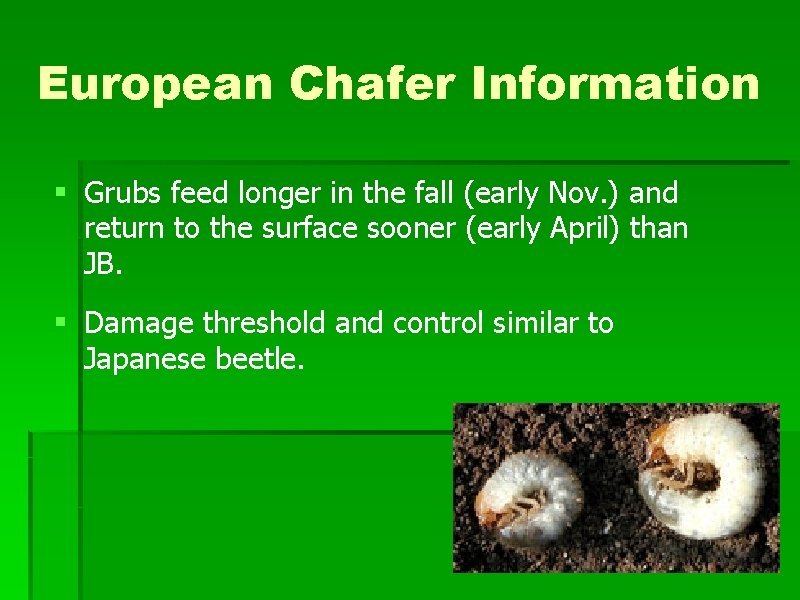
European Chafer-Larvae § Damage: § Feed on roots in early May - June and again in Sept. - Oct. Damaged turf may turn brown § Appearance: § White C-shaped grub up to 1” § Threshold: § 15 -20 per sq. ft. on irrigated turf § 5 -10 per sq. ft. on un-irrigated turf
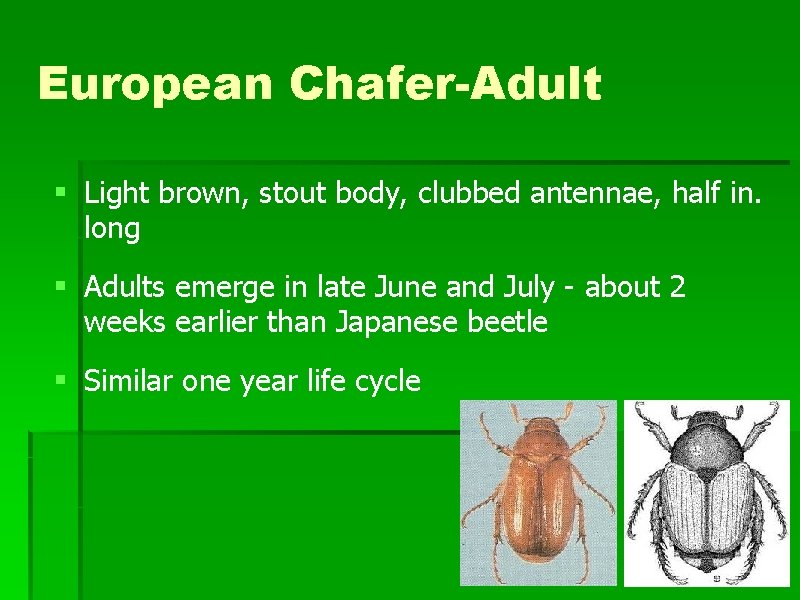
European Chafer-Adult § Light brown, stout body, clubbed antennae, half in. long § Adults emerge in late June and July - about 2 weeks earlier than Japanese beetle § Similar one year life cycle
European Chafer Information § Grubs feed longer in the fall (early Nov. ) and return to the surface sooner (early April) than JB. § Damage threshold and control similar to Japanese beetle.
Top Ten List • Renovation • Fertilizer • Mowing • Watering • Grubs • Crabgrass • Moles • Broadleaf Weeds • Mulching Leaves • Organic
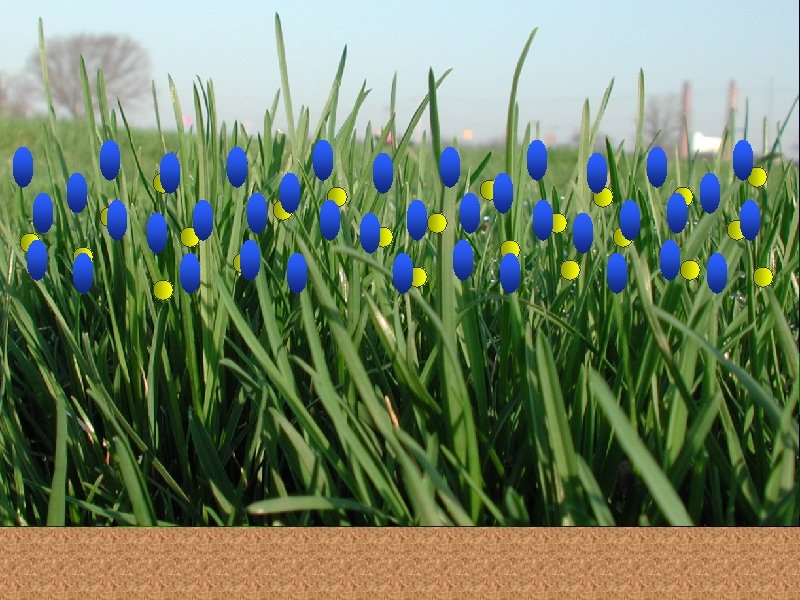
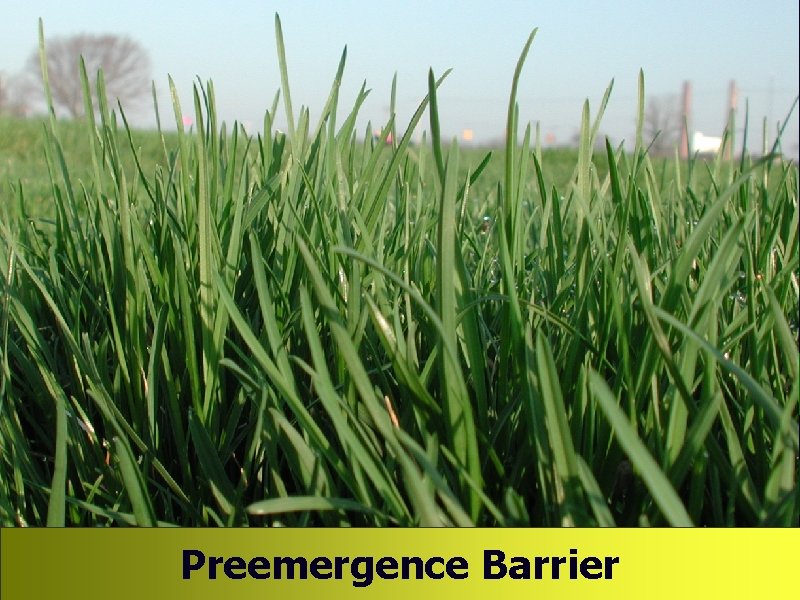
Preemergence Barrier
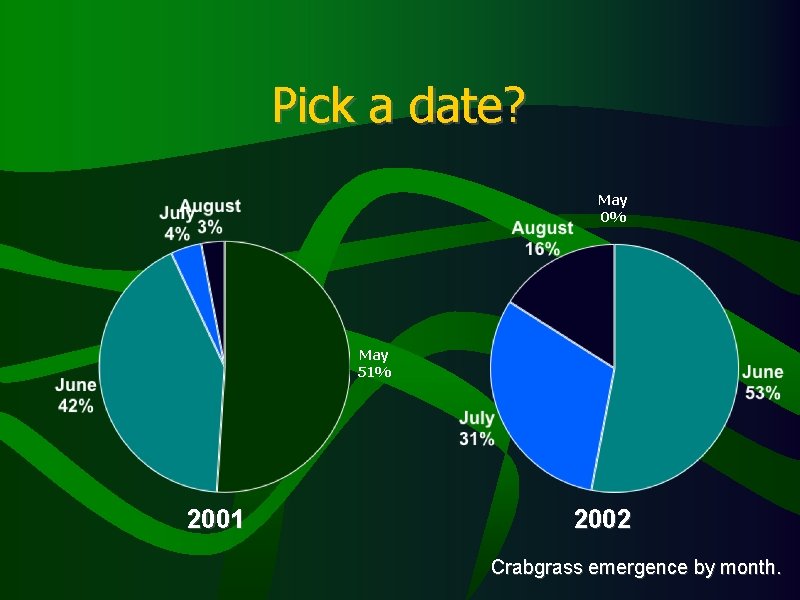
Pick a date? May 0% May 51% 2001 2002 Crabgrass emergence by month.
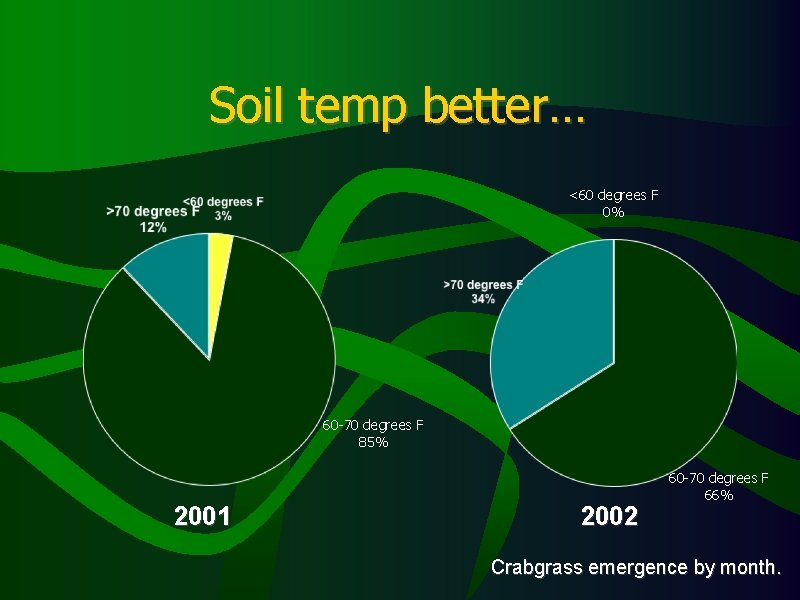
Soil temp better… <60 degrees F 0% 60 -70 degrees F 85% 2001 2002 60 -70 degrees F 66% Crabgrass emergence by month.
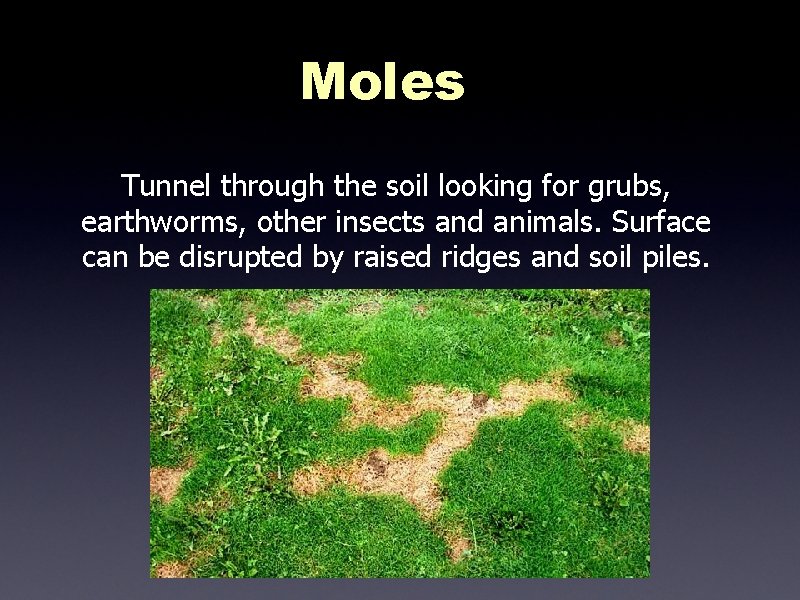
Moles Tunnel through the soil looking for grubs, earthworms, other insects and animals. Surface can be disrupted by raised ridges and soil piles.
Top Ten List • Renovation • Fertilizer • Mowing • Watering • Grubs • Crabgrass • Moles • Broadleaf Weeds • Mulching Leaves • Organic
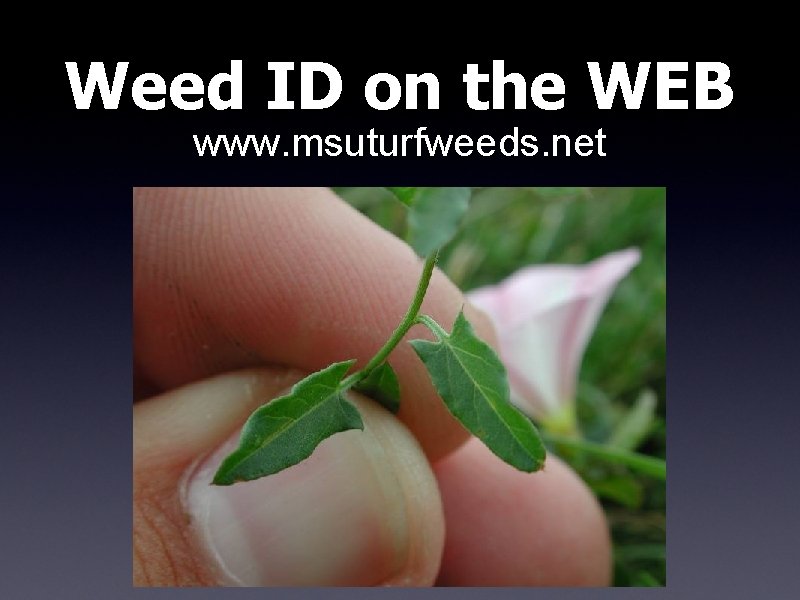
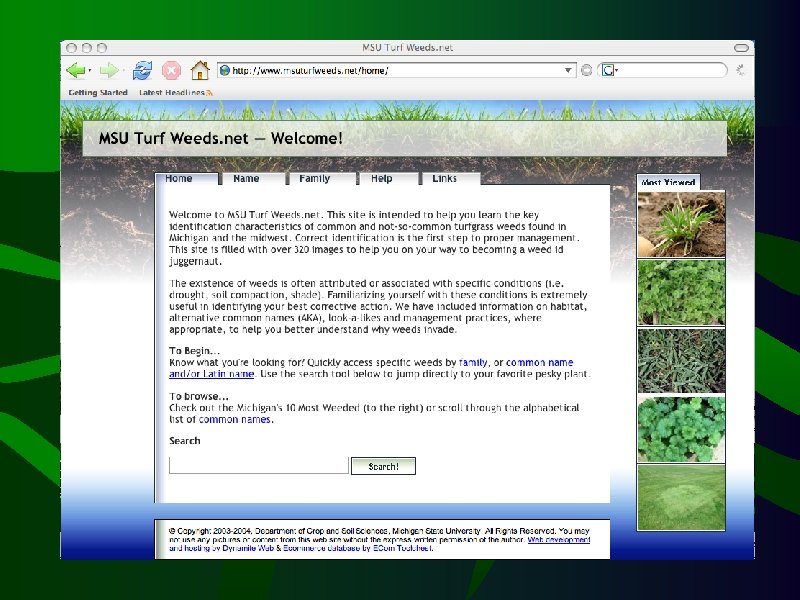
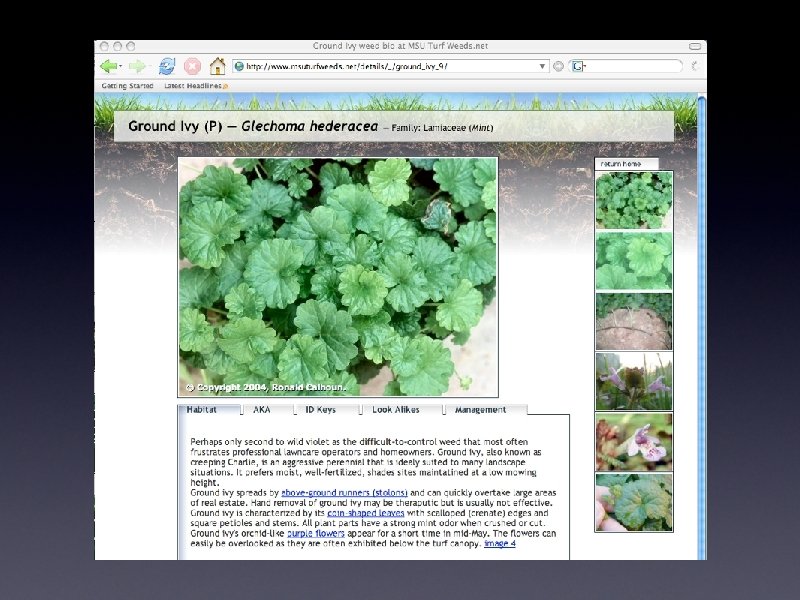
Weed ID on the WEB www. msuturfweeds. net
Top Ten List • Renovation • Fertilizer • Mowing • Watering • Grubs • Crabgrass • Moles • Broadleaf Weeds • Mulching Leaves • Organic
What is organic?
What is natural?
What is a chemical?
Define the terms. . .
Establish the goals. . .
Everything in life has risk. . .
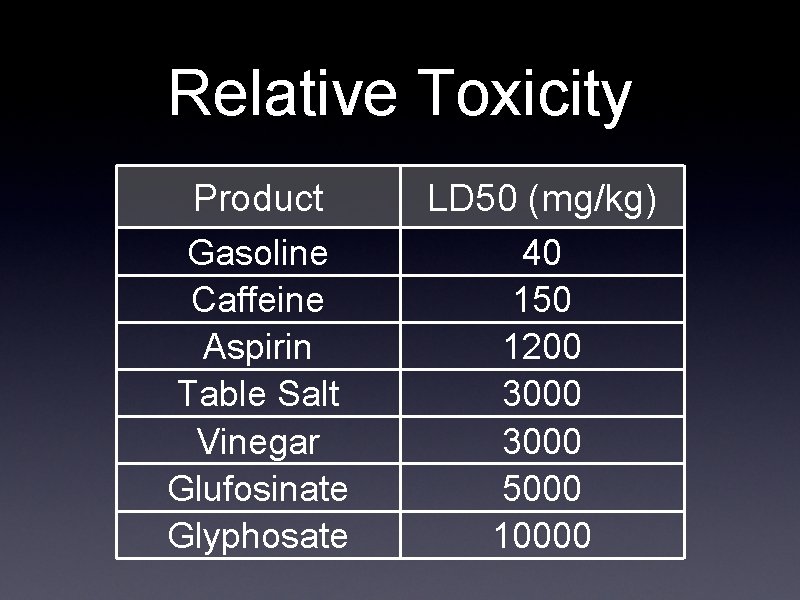
Relative Toxicity Product LD 50 (mg/kg) Gasoline Caffeine Aspirin Table Salt Vinegar Glufosinate Glyphosate 40 150 1200 3000 5000 10000
www. turf. msu. edu