
Issues Affecting Students Poverty and the Digital Divide
- Slides: 14
Issues Affecting Students: Poverty and the Digital Divide EDUC 550: June 17, 2014
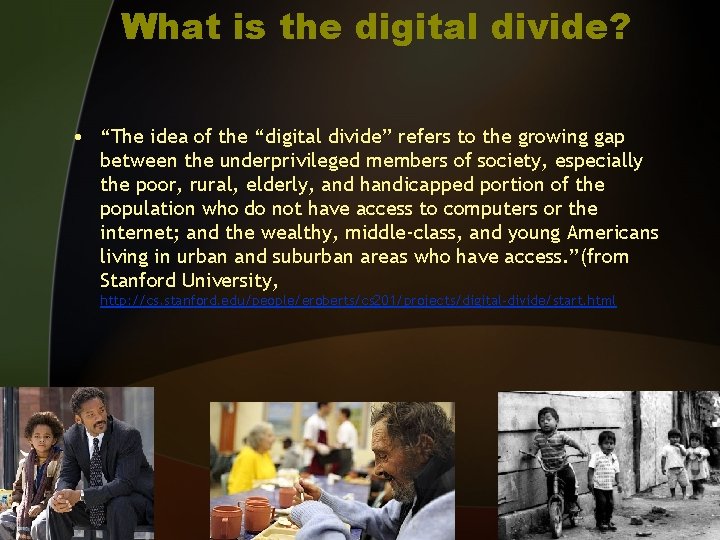
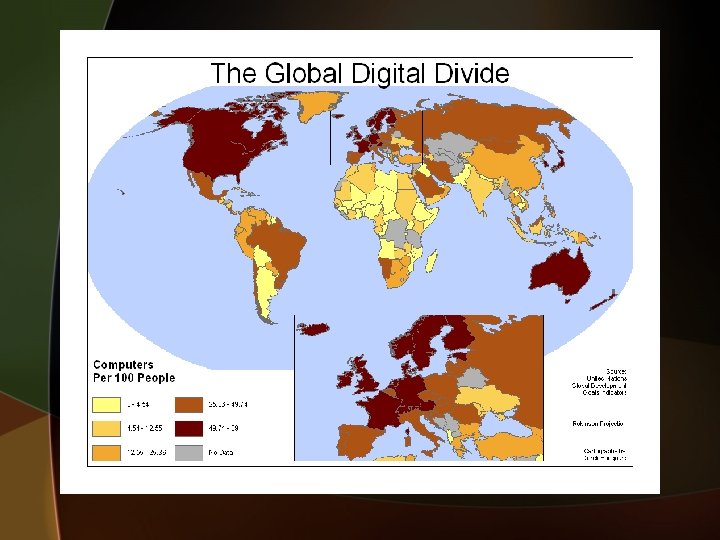
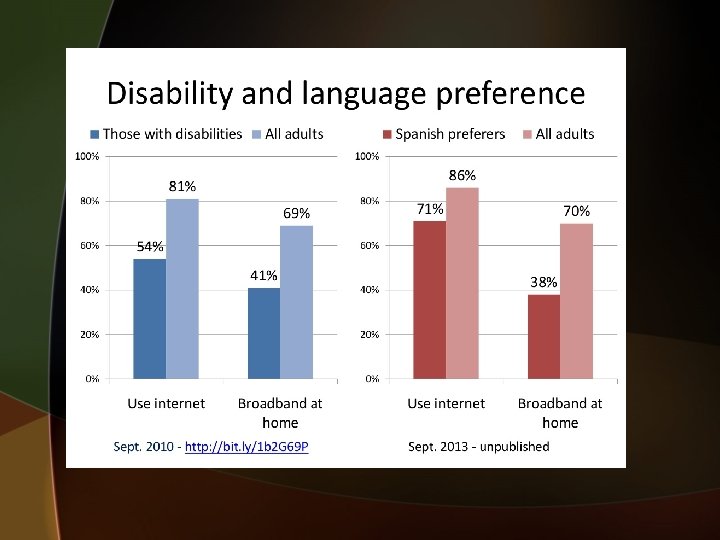
What is the digital divide? • “The idea of the “digital divide” refers to the growing gap between the underprivileged members of society, especially the poor, rural, elderly, and handicapped portion of the population who do not have access to computers or the internet; and the wealthy, middle-class, and young Americans living in urban and suburban areas who have access. ”(from Stanford University, http: //cs. stanford. edu/people/eroberts/cs 201/projects/digital-divide/start. html
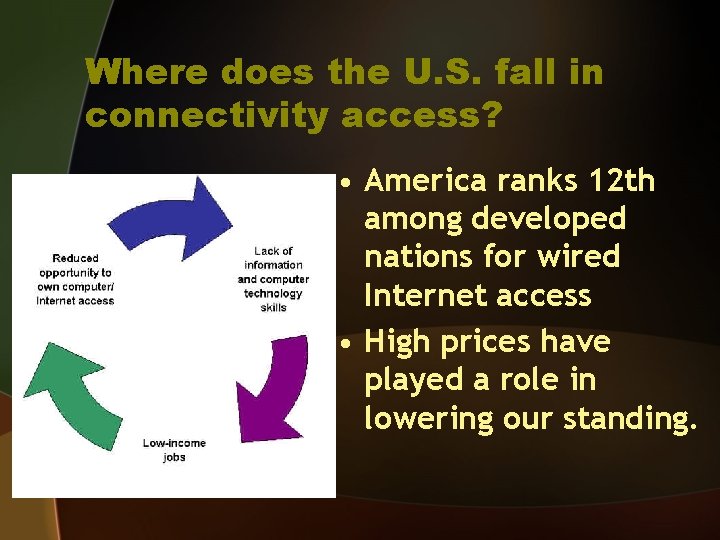
Where does the U. S. fall in connectivity access? • America ranks 12 th among developed nations for wired Internet access • High prices have played a role in lowering our standing.
How will technology continue to impact our lives in the future? • “Cloud of Things” -a catchall phrase for the array of devices, appliances, vehicles, wearable material, and sensor-laden parts of the environment that connect to each other and feed data back and forth. – This is leading to a disruption of business models established in the 20 th century (most notably impacting finance, entertainment, publishers of all sorts, and education). http: //www. pewinternet. org/2014/05/14/internet-of-things/
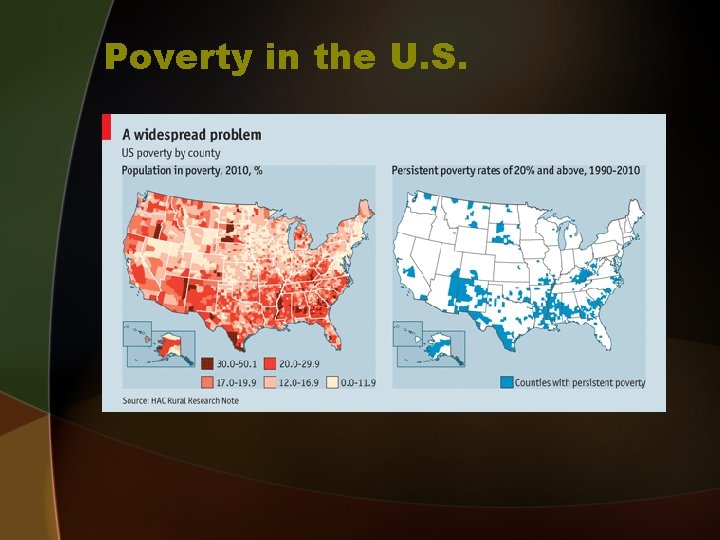
Poverty in the U. S.
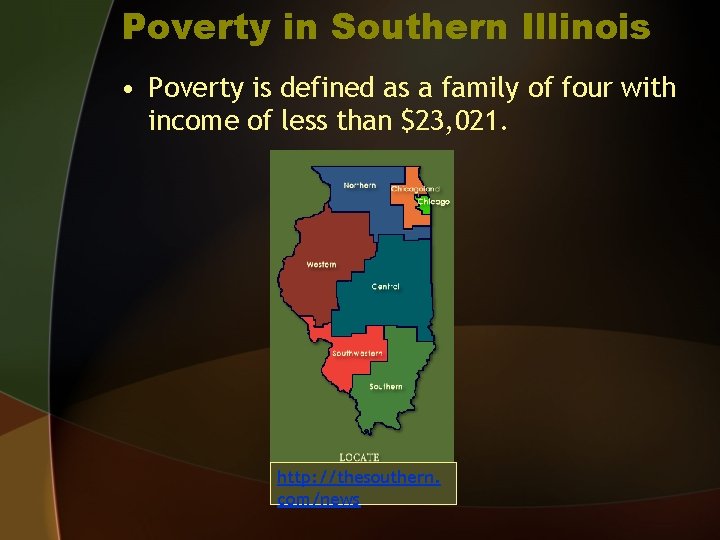
Poverty in Southern Illinois • Poverty is defined as a family of four with income of less than $23, 021. http: //thesouthern. com/news
What backgrounds are students coming from? • Racial, ethnic, and cultural differences • Socioeconomic variations – Many students live in poverty. – Carbondale District 95 • English language learners • A wide variety of family arrangements • Exceptional students – gifted, learning disabilities, behavior disorders- all have a right to be in the Least Restrictive Environment (LRE)
• Sixteen million children live in poverty in the U. S.
Testimony from a teacher • What, if anything, is different about your students than students in, say, a wealthy Chicago suburb? We are not wealthy first of all. We now qualify for free lunches in our entire district. Students having a traditional nuclear family is the rarity these days. Many live with grandparents, cousins, or sometimes friends. Some students will come to our school for a few weeks, then one parent becomes angry with the other, and the child is forced to go to another school. But, then a few weeks after this, it is possible the child will re-enter your class because the couple (which could be mom and step-dad, dad and step-mom, etc. ) have reconciled. There is much instability in the homes. I recently purchased an eleven dollar t shirt for one of my scholar bowl members. She told me she hoped to receive money for her birthday to pay for the shirt, but the next day, sadly she informed me she didn't receive anything for her birthday. Her father paid off her cell phone bill, and that was it. The key here is that this story is typical at our school. Teachers constantly have to help feed, clothe, and even buy soap for the students. I would bet it is similar to an urban poverty area except there is less violence/gangs. http: //www. cbsnews. com/videos/hard-times-generation-homeless-kids/
How can schools and teachers help? • Programs such as free and reduced price breakfast and lunch • After school care and tutoring services • Keep programs such as music and art • Be understanding – a child who has missed breakfast, is working a full time job after school to help his family, or watches younger siblings in the evening may need extra time to finish assignments • Don’t assign projects with items that may be inaccessible to impoverished students.
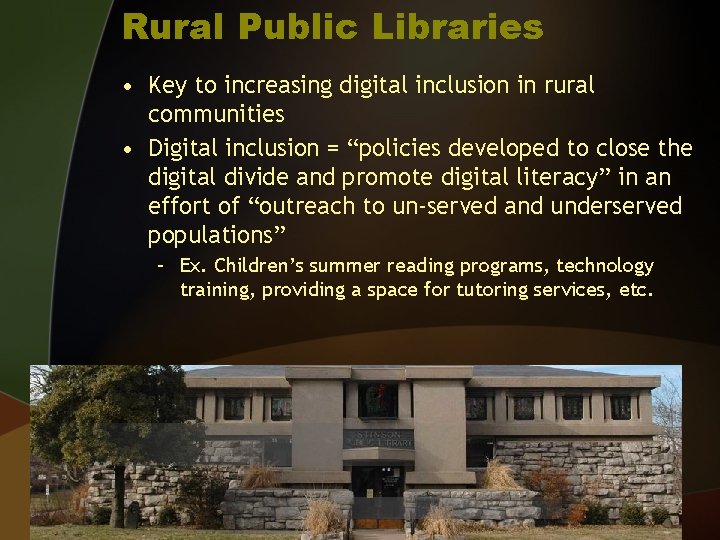
Rural Public Libraries • Key to increasing digital inclusion in rural communities • Digital inclusion = “policies developed to close the digital divide and promote digital literacy” in an effort of “outreach to un-served and underserved populations” – Ex. Children’s summer reading programs, technology training, providing a space for tutoring services, etc.
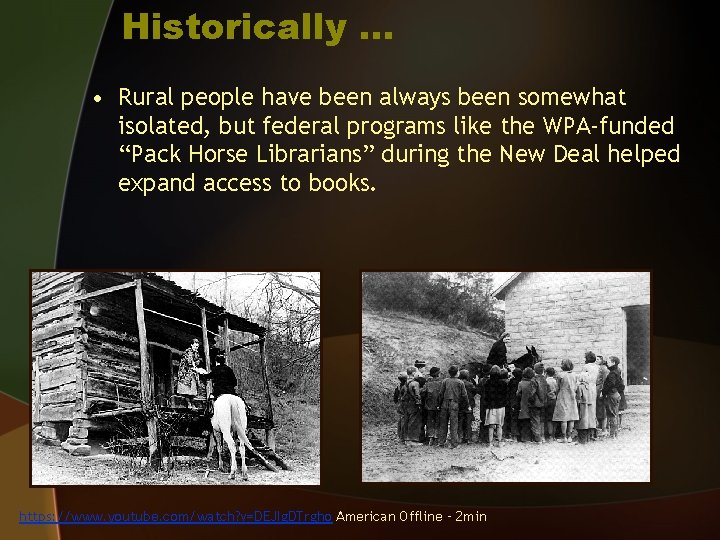
Historically … • Rural people have been always been somewhat isolated, but federal programs like the WPA-funded “Pack Horse Librarians” during the New Deal helped expand access to books. https: //www. youtube. com/watch? v=DEJIg. DTrgho American Offline – 2 min