
ISSHAM Slow Scan Television SSTV Project A joint

- Slides: 26
ISS-HAM Slow Scan Television (SSTV) Project A joint AMSAT-NA And MAREX-NA Project
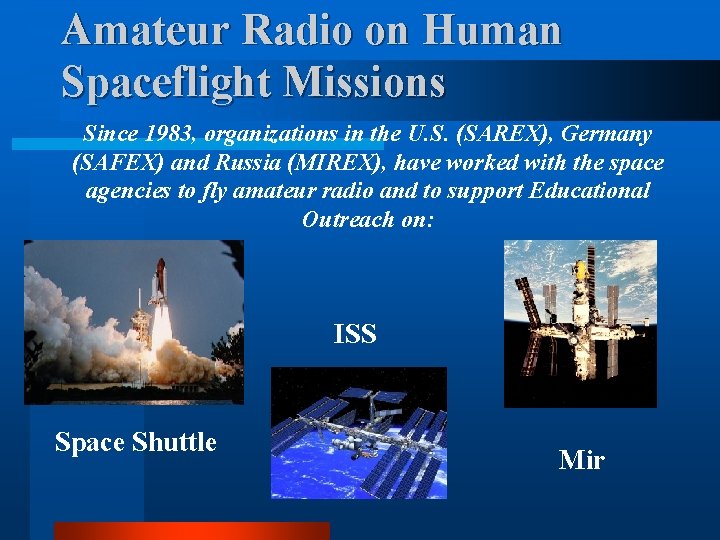
Amateur Radio on Human Spaceflight Missions Since 1983, organizations in the U. S. (SAREX), Germany (SAFEX) and Russia (MIREX), have worked with the space agencies to fly amateur radio and to support Educational Outreach on: ISS Space Shuttle Mir
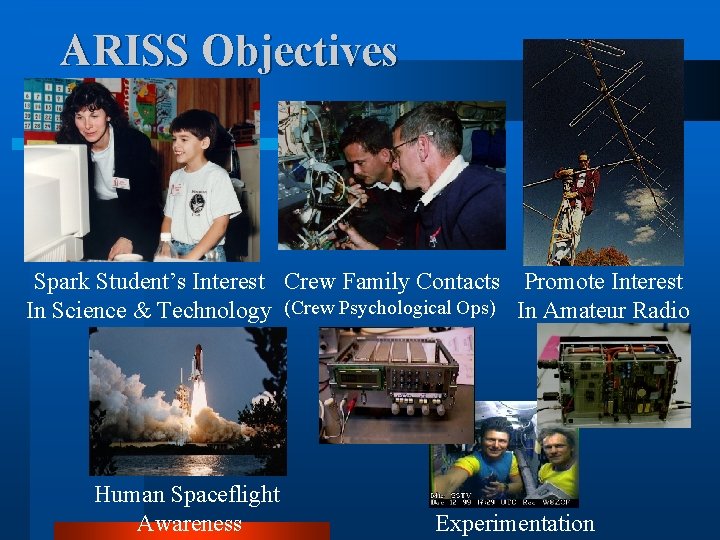
ARISS Objectives Spark Student’s Interest Crew Family Contacts Promote Interest In Science & Technology (Crew Psychological Ops) In Amateur Radio Human Spaceflight Awareness Experimentation
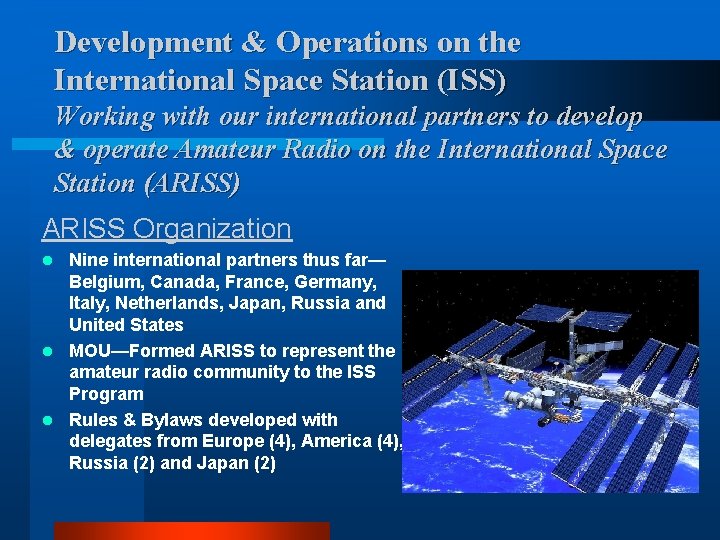
Development & Operations on the International Space Station (ISS) Working with our international partners to develop & operate Amateur Radio on the International Space Station (ARISS) ARISS Organization Nine international partners thus far— Belgium, Canada, France, Germany, Italy, Netherlands, Japan, Russia and United States l MOU—Formed ARISS to represent the amateur radio community to the ISS Program l Rules & Bylaws developed with delegates from Europe (4), America (4), Russia (2) and Japan (2) l
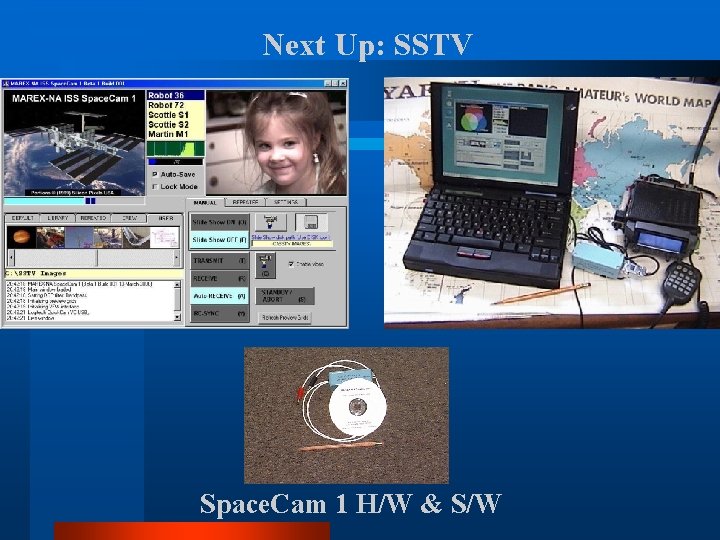
Next Up: SSTV Space. Cam 1 H/W & S/W
History l SSTV has flown on the Shuttle four times STS-51 F, 37, 50, 56 l SSTV Flew on the Mir station for several years
What is Slow Scan Television? SSTV is a system by which pictures can be sent over low bandwidth channels such as voice loops. l A series of tones similar to a modem represent the Television signal. l Amateur radio operators have been using this method to exchange pictures around the world using their ham radio sets. l These methods predate the jpeg and Mpeg formats by many years. l
Why SSTV on ISS l Provides a capability for the crew to exchange pictures with Ham operators around the world as they desire. l The crew can set up the SSTV to send down pictures automatically without crew attention.
Why SSTV Continued l Crew can exchange pictures with school groups during school contacts. l Software is relatively inexpensive and therefore can have a large audience l Great morale booster l Just plain fun for the crew
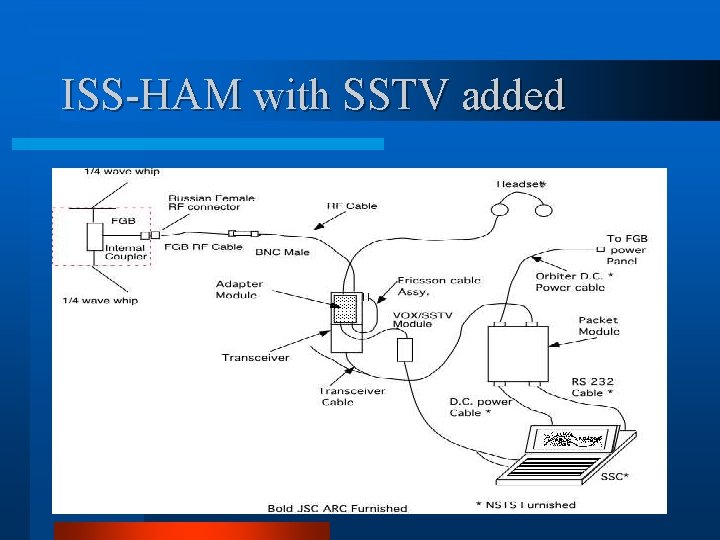
ISS-HAM with SSTV added
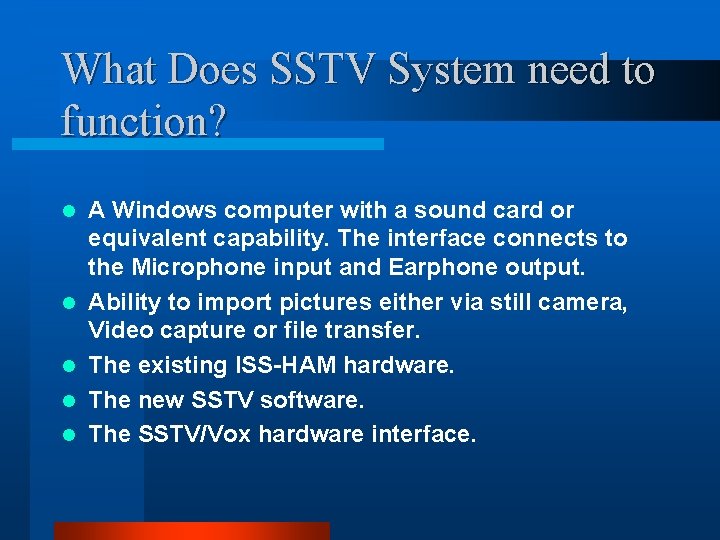
What Does SSTV System need to function? l l l A Windows computer with a sound card or equivalent capability. The interface connects to the Microphone input and Earphone output. Ability to import pictures either via still camera, Video capture or file transfer. The existing ISS-HAM hardware. The new SSTV software. The SSTV/Vox hardware interface.
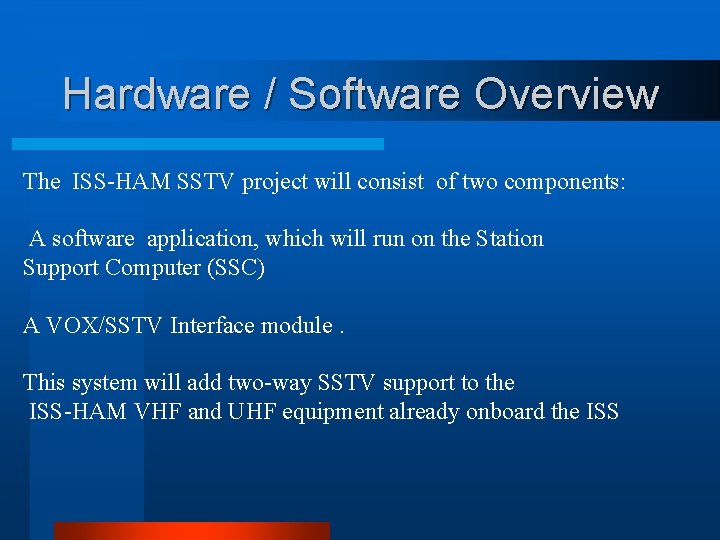
Hardware / Software Overview The ISS-HAM SSTV project will consist of two components: A software application, which will run on the Station Support Computer (SSC) A VOX/SSTV Interface module. This system will add two-way SSTV support to the ISS-HAM VHF and UHF equipment already onboard the ISS
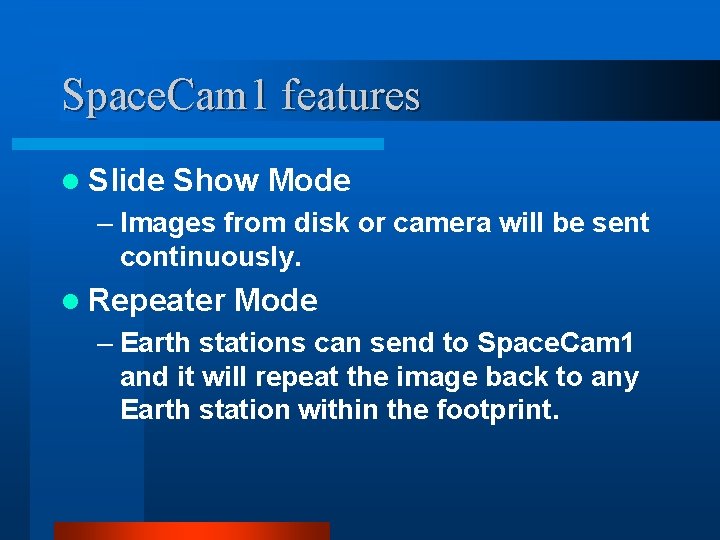
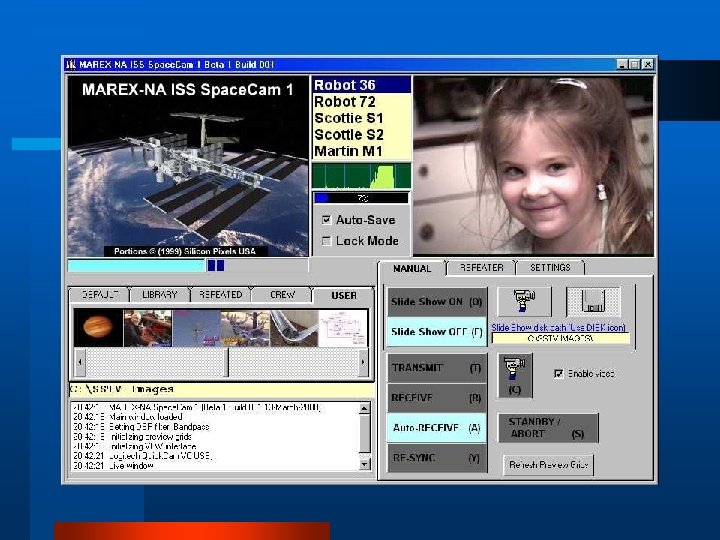
Space. Cam 1 features l Slide Show Mode – Images from disk or camera will be sent continuously. l Repeater Mode – Earth stations can send to Space. Cam 1 and it will repeat the image back to any Earth station within the footprint.
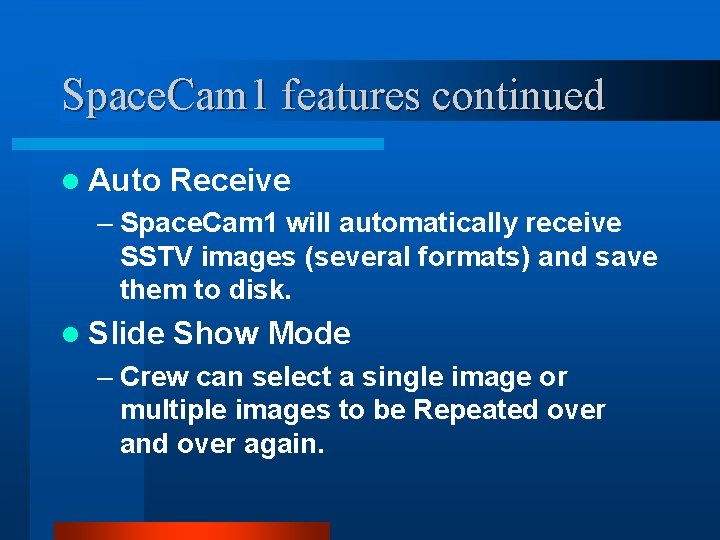
Space. Cam 1 features continued l Auto Receive – Space. Cam 1 will automatically receive SSTV images (several formats) and save them to disk. l Slide Show Mode – Crew can select a single image or multiple images to be Repeated over and over again.
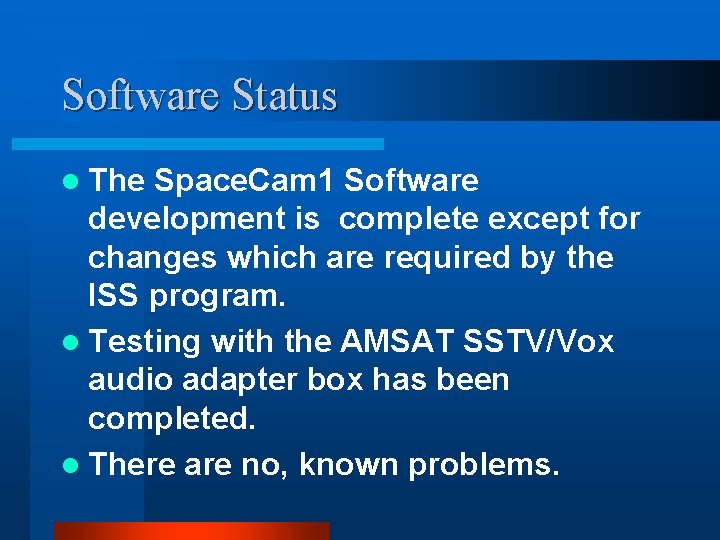
Software Status l The Space. Cam 1 Software development is complete except for changes which are required by the ISS program. l Testing with the AMSAT SSTV/Vox audio adapter box has been completed. l There are no, known problems.
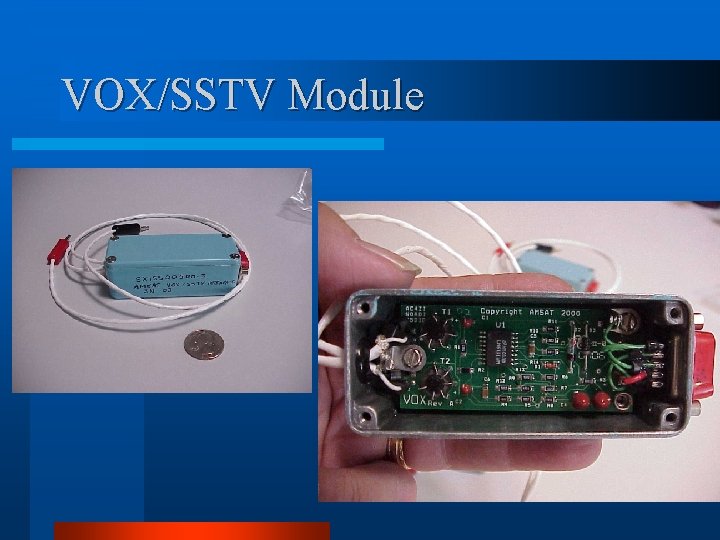
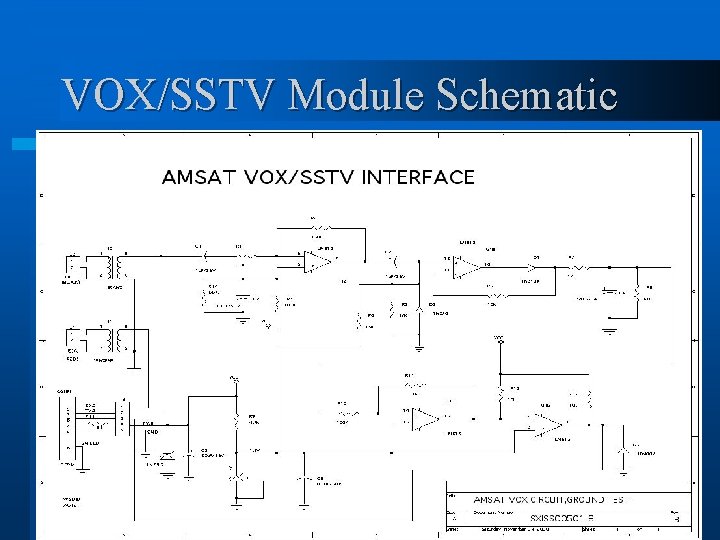
VOX/SSTV Module
VOX/SSTV Module Schematic
Hardware Status l Prototype Hardware completed l Flight Ready Hardware being built l Testing in progress on prototype hardware with excellent results. l The SSTV system has been tested with the SSC computer in the lab at JSC with no problems noted.
Hardware Status continued l. A full up configuration test with video interface is desireable. l If the Russian computer is made available more testing with it will be necessary to verify software and hardware compatability.
What do we need from this board? l Approval to manifest the software on the SSC computer l Direction on how and where to store images.
What downlink/uplink resources do we need l None ISS-HAM sends and receives it’s images through the ham radio RF links.
System Requirements l CPU Usage: 20 -40%, depending on options selected (on current SSC) l Memory Requirements: 12 mb l Size of application/files: 12 mb l Data Storage: Variable, limits TBD l Hardware resources: Video capture and sound hardware used
Usage of SSC l The ISS-HAM project can use any of the SSC computers that can be assigned to the ISS-HAM. l ISS-HAM plans to request the permanent assignment of either a SSC or a Russian computer.
What do we want the board to manifest for the SSTV? l The software as a part of the standard load l ISS-HAM will manifest the hardware as a part of the ISS-HAM equipment.
Russian Certification l Since there are no direct interfaces with the Russian equipment if we use the SSC, the certification should be simple. l The certification will be incorporated into the ISS-HAM certification process presently in work with the Russians