
Isolationism Continues From Isolation to World War 1930
- Slides: 34
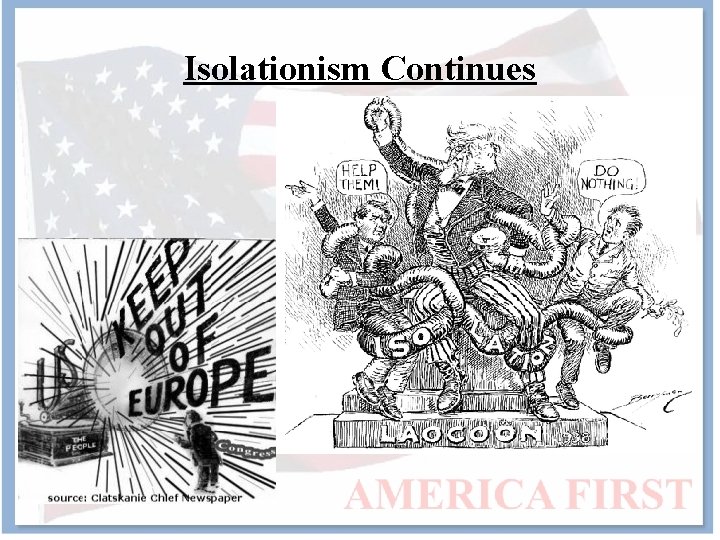
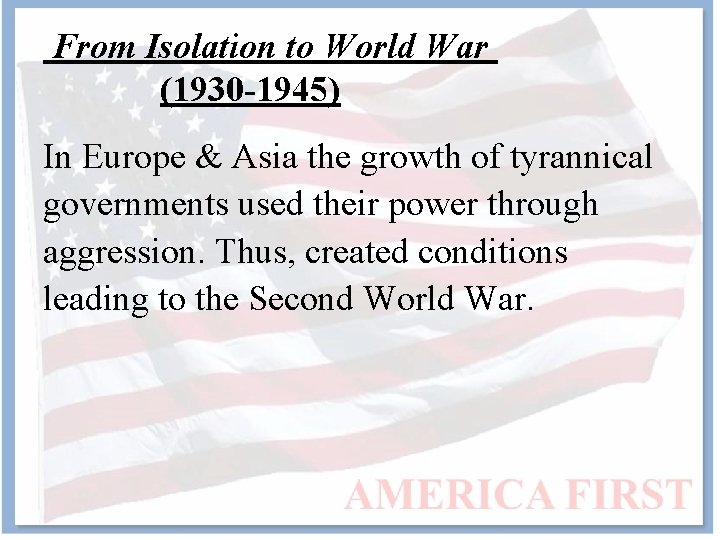
Isolationism Continues
From Isolation to World War (1930 -1945) In Europe & Asia the growth of tyrannical governments used their power through aggression. Thus, created conditions leading to the Second World War.
Content Statement: During the 1930 s, the U. S. government attempted to distance the country from earlier interventionist policies in the Western Hemisphere as well as retain an isolationist approach to events in Europe and Asia until the beginning of WWII.
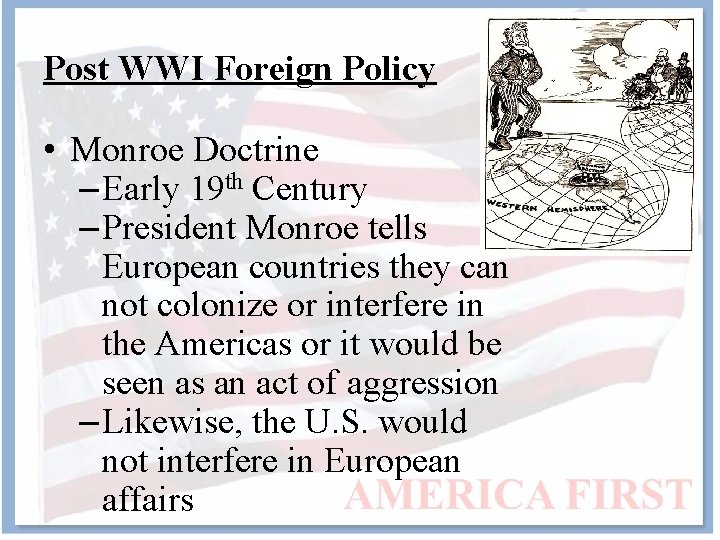
Post WWI Foreign Policy • Monroe Doctrine – Early 19 th Century – President Monroe tells European countries they can not colonize or interfere in the Americas or it would be seen as an act of aggression – Likewise, the U. S. would not interfere in European affairs
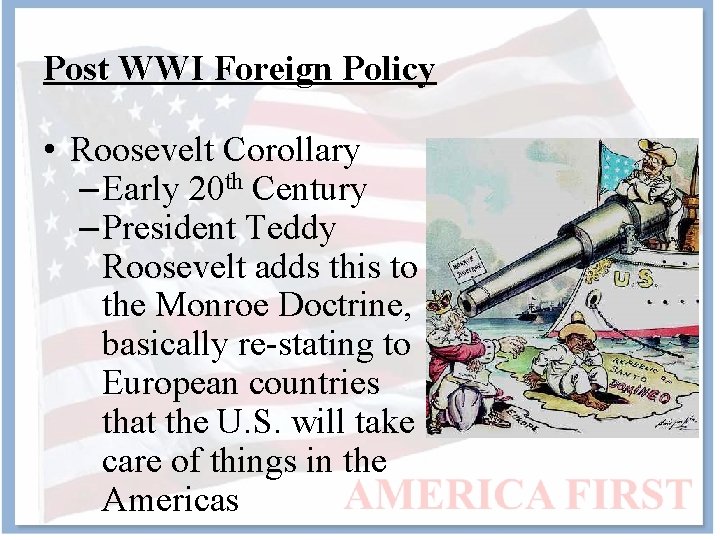
Post WWI Foreign Policy • Roosevelt Corollary – Early 20 th Century – President Teddy Roosevelt adds this to the Monroe Doctrine, basically re-stating to European countries that the U. S. will take care of things in the Americas
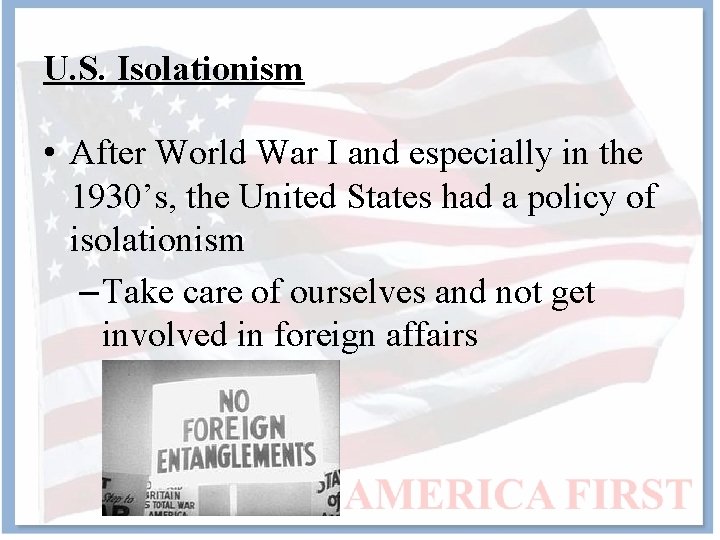
U. S. Isolationism • After World War I and especially in the 1930’s, the United States had a policy of isolationism – Take care of ourselves and not get involved in foreign affairs
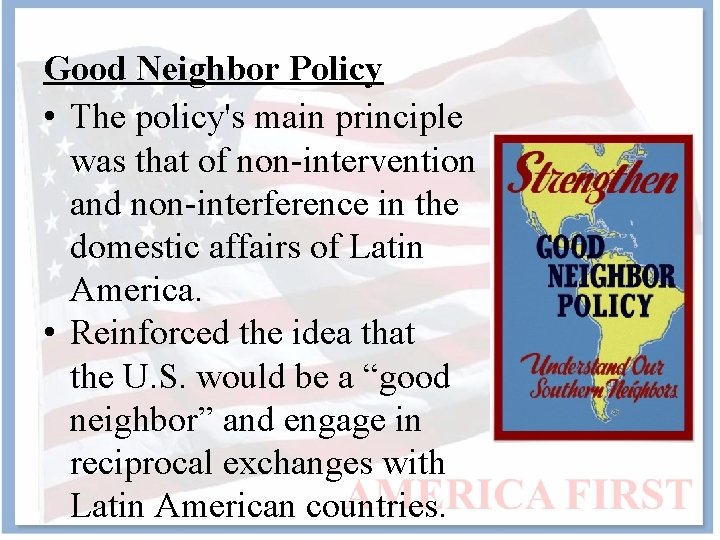
Good Neighbor Policy • The policy's main principle was that of non-intervention and non-interference in the domestic affairs of Latin America. • Reinforced the idea that the U. S. would be a “good neighbor” and engage in reciprocal exchanges with Latin American countries.
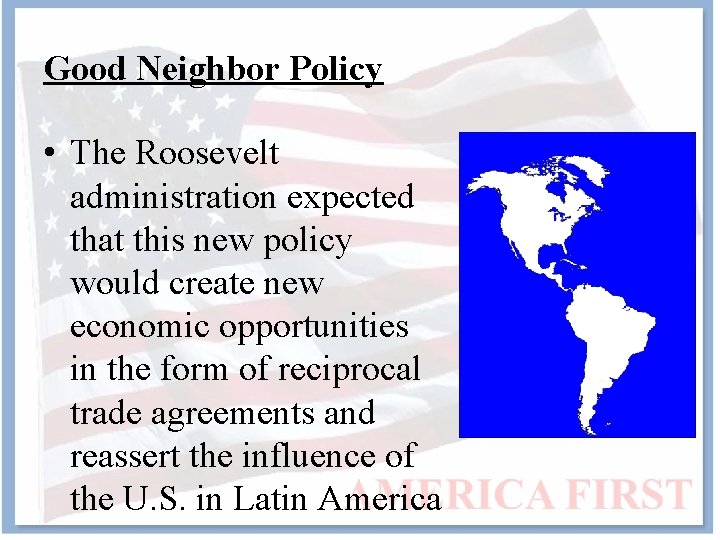
Good Neighbor Policy • The Roosevelt administration expected that this new policy would create new economic opportunities in the form of reciprocal trade agreements and reassert the influence of the U. S. in Latin America
U. S. Foreign Relations • Following World War I, the U. S. was reluctant to become entangled in overseas conflicts that would lead to another war • In the past, the U. S. had used the Monroe Doctrine and the Roosevelt Corollary to justify intervention into Latin American affairs • U. S. retreated from these policies during the 1930’s with the Good Neighbor Policy
Europe Close to War • When FDR took over in 1933, world prospects were grim • Europe was again in shambles and close to war • Europe did not like democracy or the ideals that the United States was trying to promote
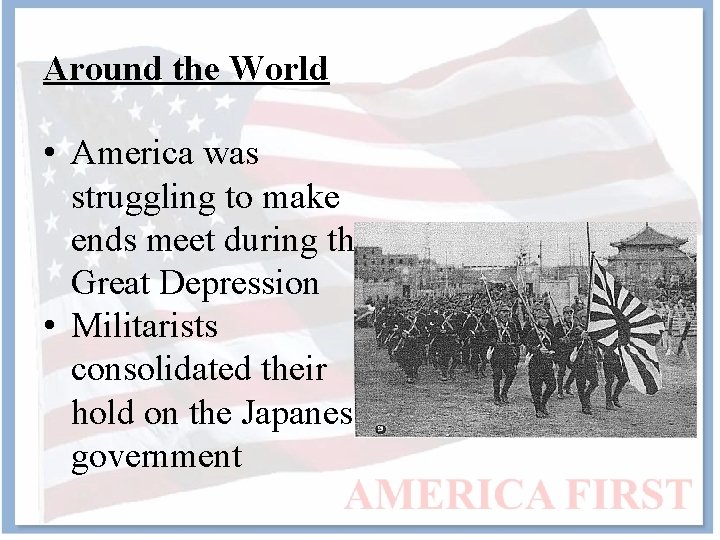
Around the World • America was struggling to make ends meet during the Great Depression • Militarists consolidated their hold on the Japanese government
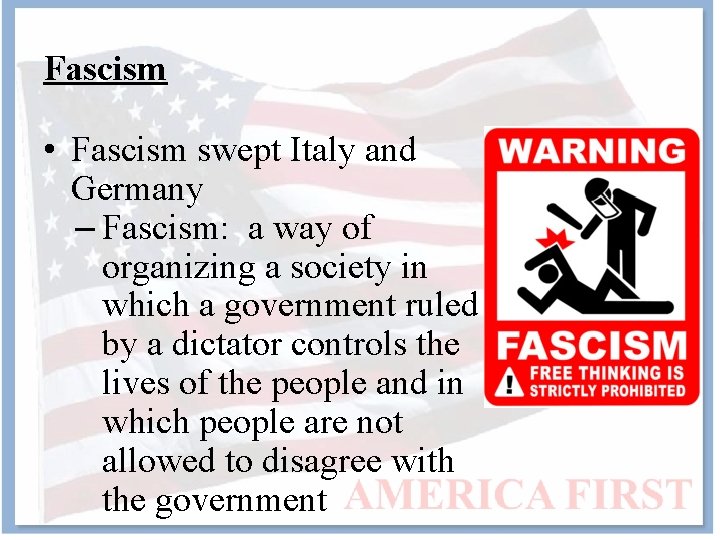
Fascism • Fascism swept Italy and Germany – Fascism: a way of organizing a society in which a government ruled by a dictator controls the lives of the people and in which people are not allowed to disagree with the government
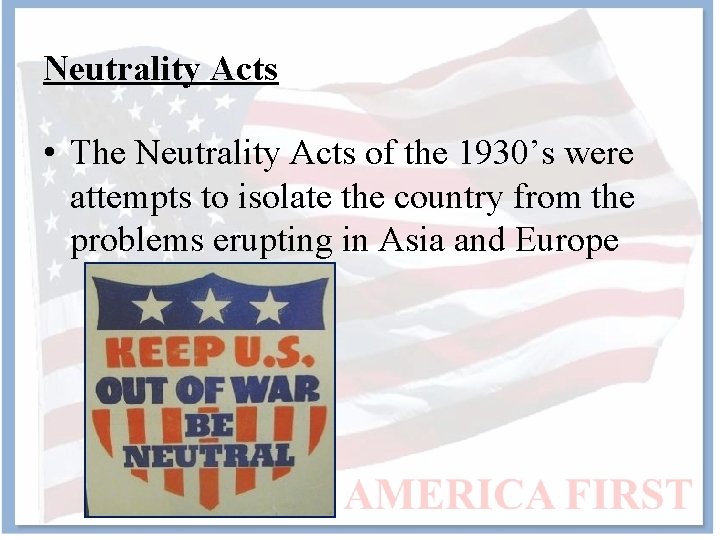
Neutrality Acts • The Neutrality Acts of the 1930’s were attempts to isolate the country from the problems erupting in Asia and Europe
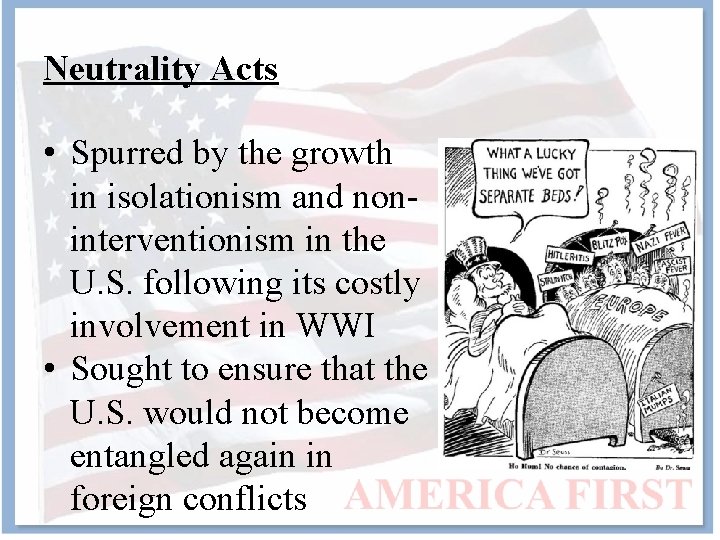
Neutrality Acts • Spurred by the growth in isolationism and noninterventionism in the U. S. following its costly involvement in WWI • Sought to ensure that the U. S. would not become entangled again in foreign conflicts
Legacy of the Neutrality Acts • Generally negative reaction: – No distinction between aggressor and victim, treating both equally as “belligerents” § Belligerent: a nation or person engaged in war or conflict, as recognized by international law
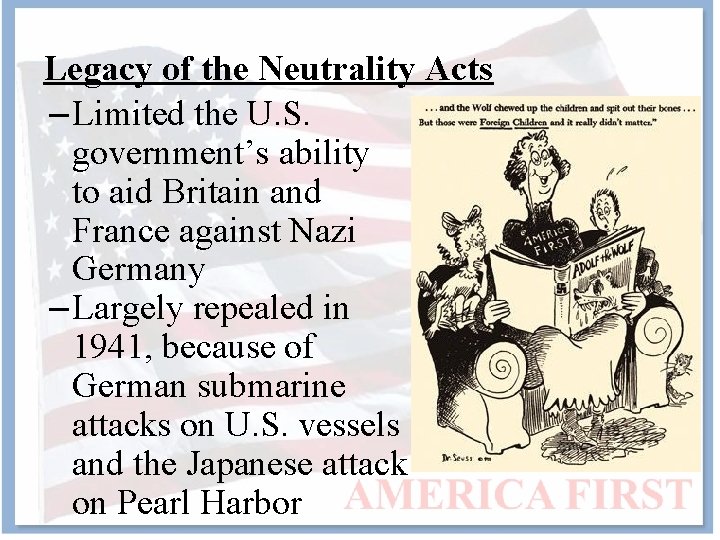
Legacy of the Neutrality Acts – Limited the U. S. government’s ability to aid Britain and France against Nazi Germany – Largely repealed in 1941, because of German submarine attacks on U. S. vessels and the Japanese attack on Pearl Harbor
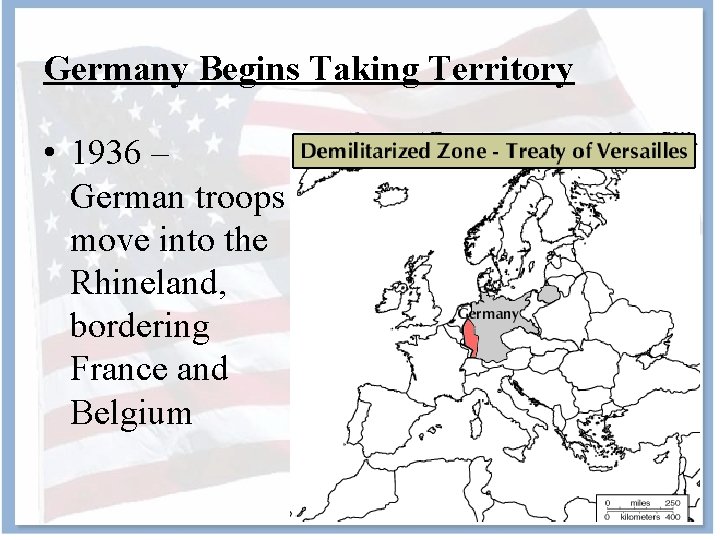
Germany Begins Taking Territory • 1936 – German troops move into the Rhineland, bordering France and Belgium
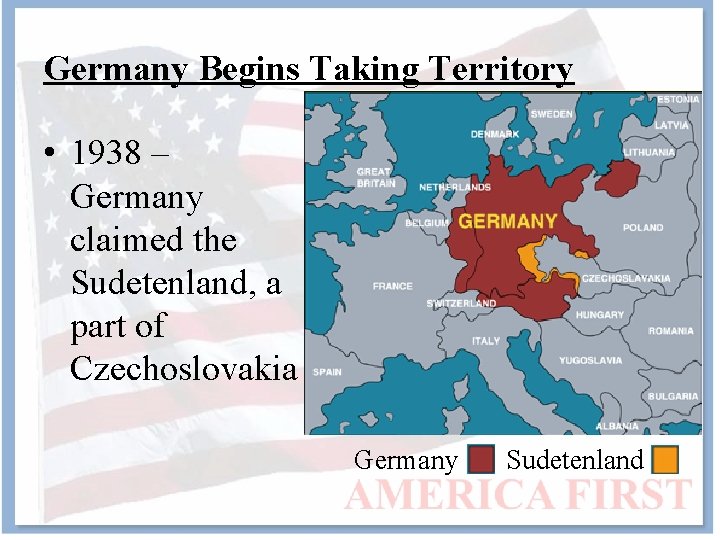
Germany Begins Taking Territory • 1938 – Germany claimed the Sudetenland, a part of Czechoslovakia Germany Sudetenland
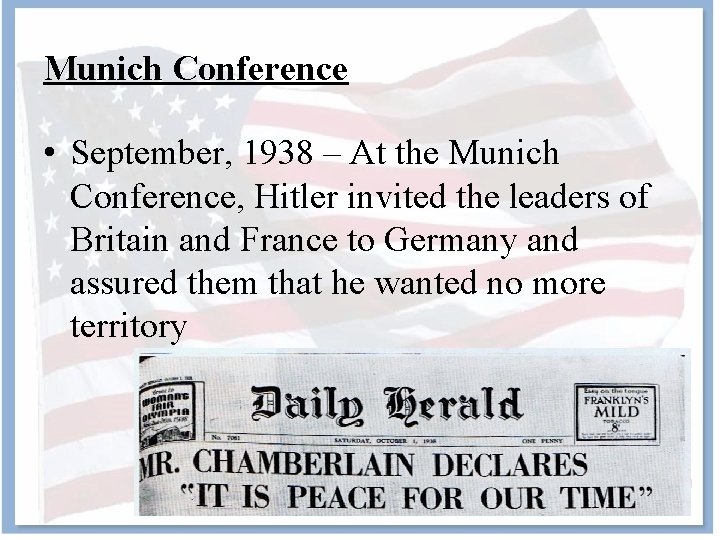
Munich Conference • September, 1938 – At the Munich Conference, Hitler invited the leaders of Britain and France to Germany and assured them that he wanted no more territory
Munich Conference • Britain and France allow for Hitler to go on unopposed as he expands German territory in Europe • They ignore German military build-up even though it violates the Treaty of Versailles • Britain and France gave into Germany hoping that ignoring these actions would prevent conflict from escalating to war – This was known as appeasement
Stalin and Hitler • 1939 – Nazi-Soviet Pact – Hitler and Stalin agreed not to attack one another – Also agreed to divide Poland Eastern Europe amongst themselves • September 1, 1939 – Germany invaded Poland without having to fear of a Soviet attack • Two days later, Britain and France declared war on Germany
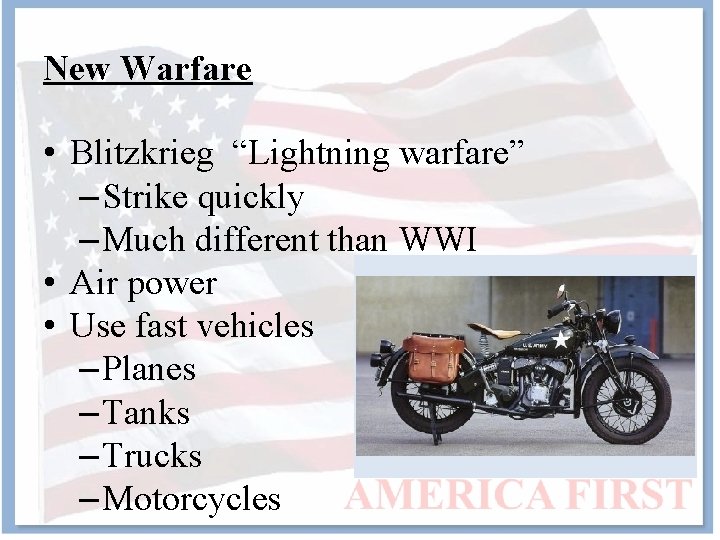
New Warfare • Blitzkrieg “Lightning warfare” – Strike quickly – Much different than WWI • Air power • Use fast vehicles – Planes – Tanks – Trucks – Motorcycles
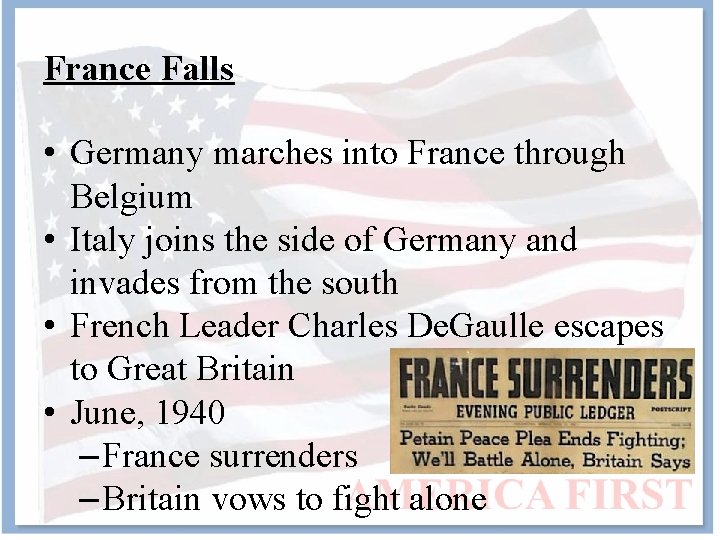
France Falls • Germany marches into France through Belgium • Italy joins the side of Germany and invades from the south • French Leader Charles De. Gaulle escapes to Great Britain • June, 1940 – France surrenders – Britain vows to fight alone
War in Europe • The Soviet Union seized eastern Poland, Finland, Estonia, Latvia, and Lithuania • 1940 – Germany conquered Denmark, Belgium, Holland, Norway and France • 1940 – The Germans severely bombed Great Britain during the Battle of Britain but were unable the defeat the island nation
Cash and Carry Plan • FDR changed the Neutrality Acts through a “cash and carry” plan – Allowed the sale of material to belligerents, as long as the recipients arranged for the transport using their own ships and paid immediately in cash, assuming all risk in transportation • Meanwhile, the U. S. prepared for war by setting up the first ever peacetime draft in U. S. history
Destroyers for Bases • September 2, 1940 • Agreement between the U. S. and the United Kingdom • Fifty mothballed destroyers were transferred to the Royal Navy from the U. S. Navy in exchange for land rights on British possessions • The U. S. had chosen a side in the war – They were no longer neutral
Lend-Lease Act • A plan of President Roosevelt’s to help Great Britain • March 11, 1941 – The U. S. would lend or lease war materials to the allied countries – These items were to be returned to the U. S. after the lease was over, but that rarely happened
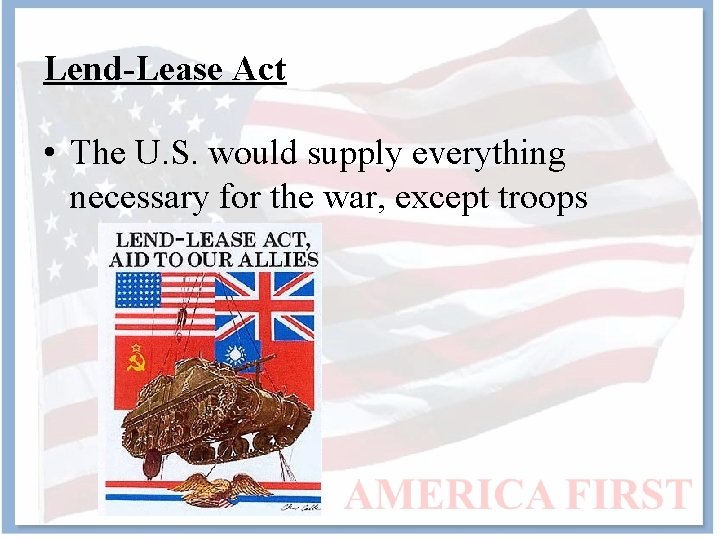
Lend-Lease Act • The U. S. would supply everything necessary for the war, except troops
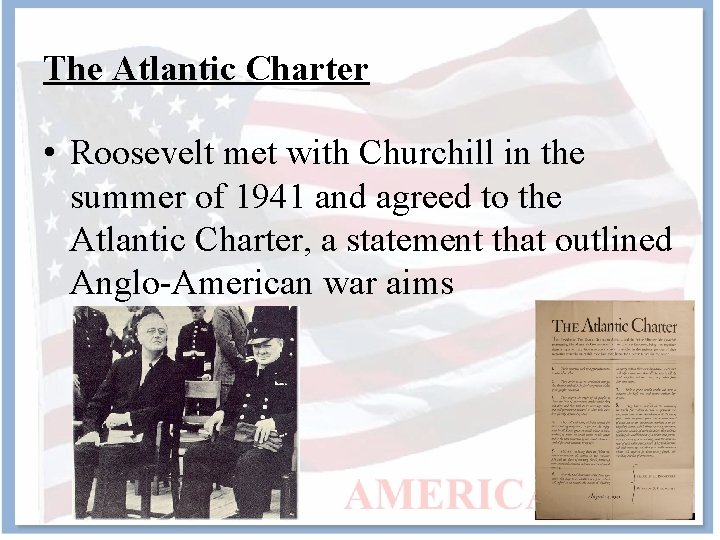
The Atlantic Charter • Roosevelt met with Churchill in the summer of 1941 and agreed to the Atlantic Charter, a statement that outlined Anglo-American war aims
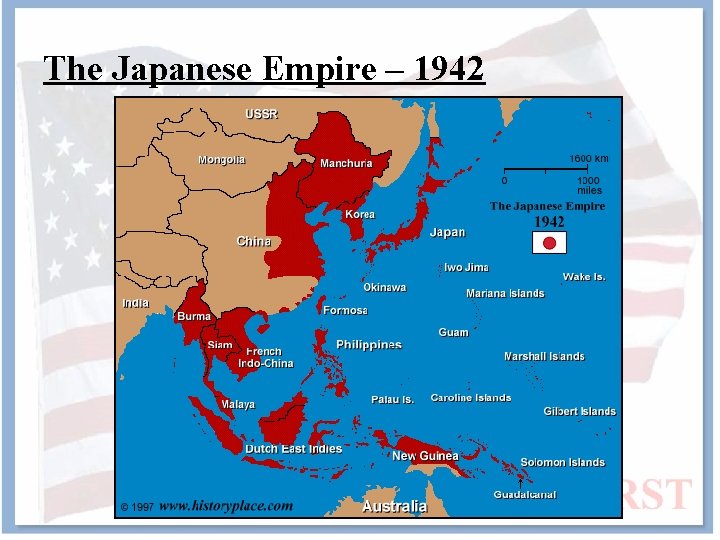
Japan • Japan felt that they had the right to start an overseas empire, just as European countries such as Britain and France had • In 1931, Japan seized Manchuria, China, for its valuable coal and iron • The League of Nations failed to help China • In 1937, Japan began an all-out attack on China, eventually conquering Korea and French Indo-China as well
The Japanese Empire – 1942
The U. S. Enters the War • The U. S. was the only nation standing against Japanese domination of the entire Pacific Rim • Economic sanctions against Japan produced a diplomatic stalemate • Japan launched a ruthless surprise attack against American naval bases at Pearl Harbor • Faced with an assault on its own forces, the U. S. finally entered World War II
From Isolationism to War • The U. S. tried to maintain its isolationist approach when war broke out in Europe • The U. S. aided countries fighting against fascist aggression – Introduced the cash-and-carry policy – Negotiated the destroyer-for-bases agreement – Enacted the Lend-Lease Policy – Helped write the Atlantic Charter
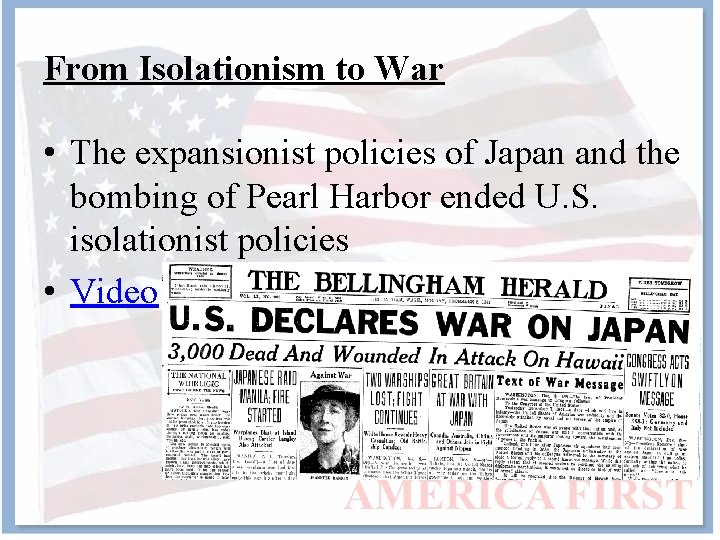
From Isolationism to War • The expansionist policies of Japan and the bombing of Pearl Harbor ended U. S. isolationist policies • Video