
Isolation vs Social Connection Suicide Prevention in a


- Slides: 26
Isolation vs. Social Connection Suicide Prevention in a Pandemic Thomas A. Bonine Suicide Prevention Converence April 22, 2021 Ashlynn Pinney & Samantha Boomgarden EIU Counseling Clinic
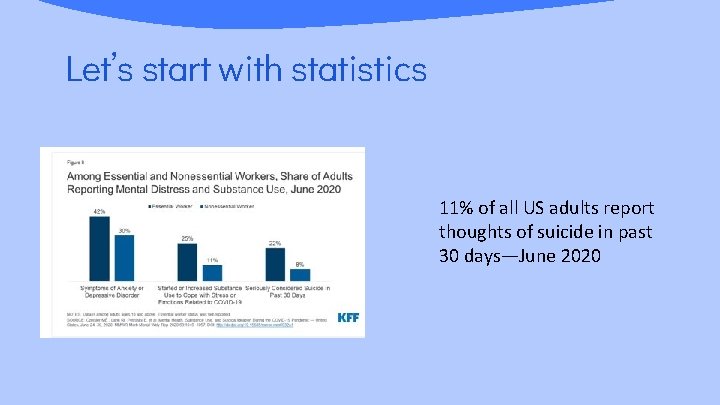
Let’s start with statistics 11% of all US adults report thoughts of suicide in past 30 days—June 2020
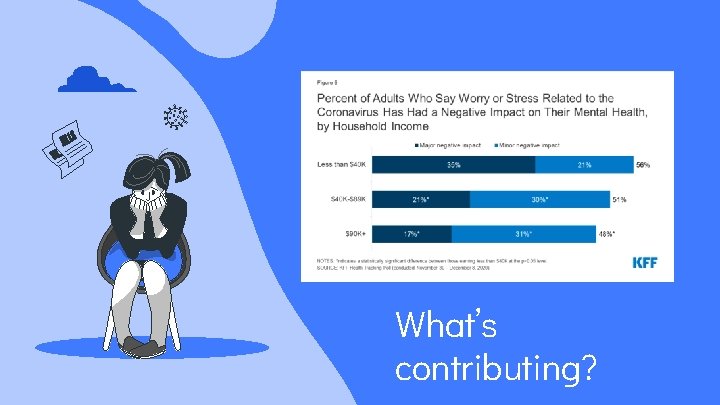
What’s contributing?
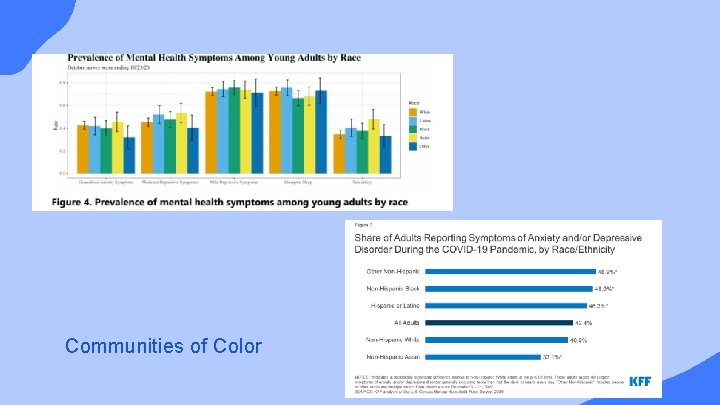
Communities of Color
Identifying risk factors & warning signs
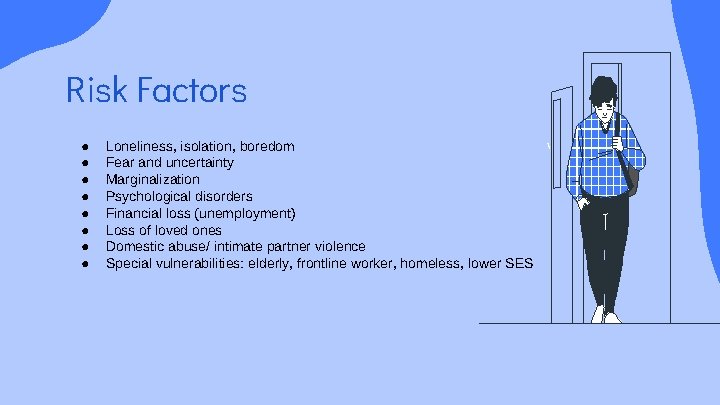
Risk Factors ● ● ● ● Loneliness, isolation, boredom Fear and uncertainty Marginalization Psychological disorders Financial loss (unemployment) Loss of loved ones Domestic abuse/ intimate partner violence Special vulnerabilities: elderly, frontline worker, homeless, lower SES
Warning Signs. . . Changes in communication Changes in behavior Other behaviors Changes in timing, language, and tone of texts, posts, talking. Eating or sleeping habits, increased substance use or risky behavior Giving away possessions, getting financial affairs in order
What is social support? “Social support refers to a social network’s provision of psychological and material resources intended to benefit an individual’s capacity to cope with stress" (Cohen, 2004, p. 676)
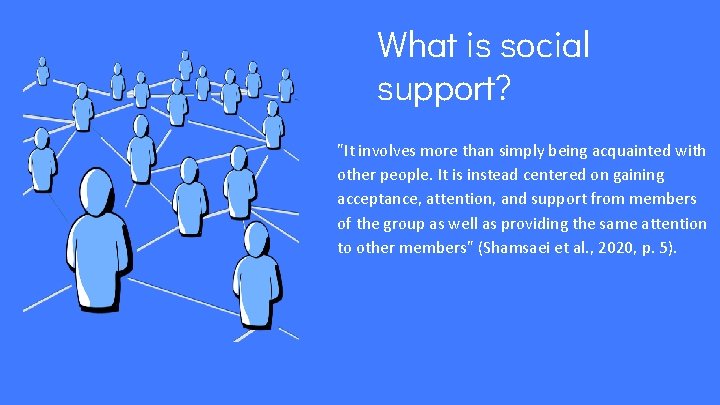
What is social support? "It involves more than simply being acquainted with other people. It is instead centered on gaining acceptance, attention, and support from members of the group as well as providing the same attention to other members" (Shamsaei et al. , 2020, p. 5).
Influence of social connection/support ● Need for love, belonging and acceptance ● Empathy and understanding ● Social support may provide a sense of meaning/purpose in life (Chen et al. , 2020). ● Types of support may need to be altered based on the situation and the individual person in need of support (Jacobson, 1986).
So, what can you do? 50% of suicide victims sought help within one month of the attempt. Gatekeeper training for community and primary care centers Teleconsultations for distress with active follow-up (Banerjee, et al 2021)
General Considerations Be mindful of changes in social engagement (Sippel et al. , 2015). ● Social interactions can be a "buffer" for stressful experiences early after a trauma or negative experience ● Engagement may lessen over time as a secondary response (i. e. worsening of PTSD symptoms) ● Raise awareness for self-care and educate on ways to promote connection (Saltzman et al. , 2020) ●
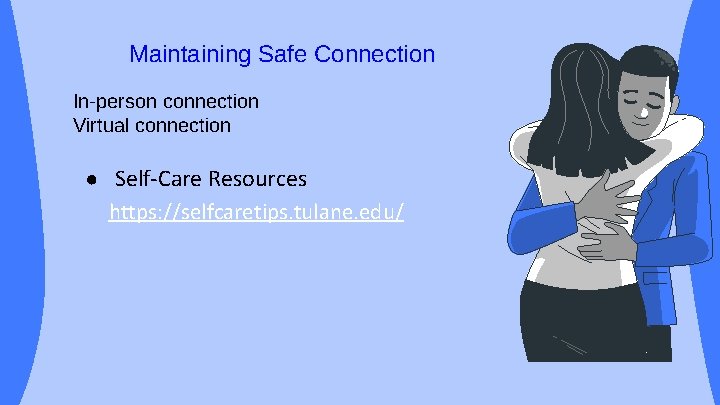
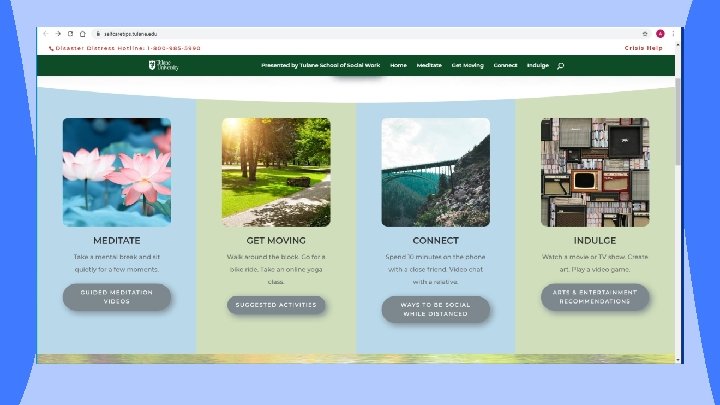
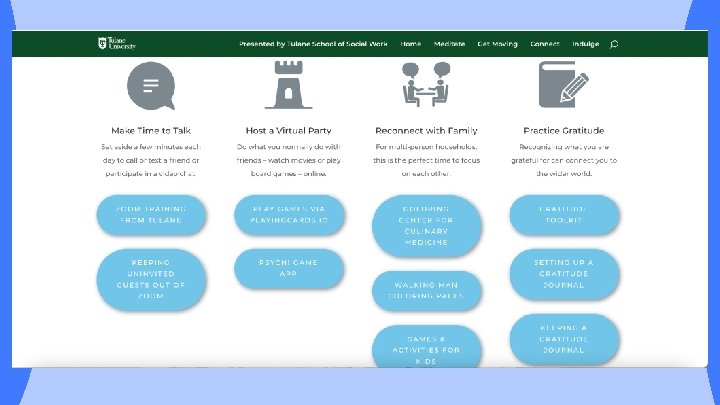
Maintaining Safe Connection In-person connection Virtual connection ● Self-Care Resources https: //selfcaretips. tulane. edu/
Teletherapy Considerations Center for Practice Innovations At Columbia Psychiatry New York State Psychiatric Institute
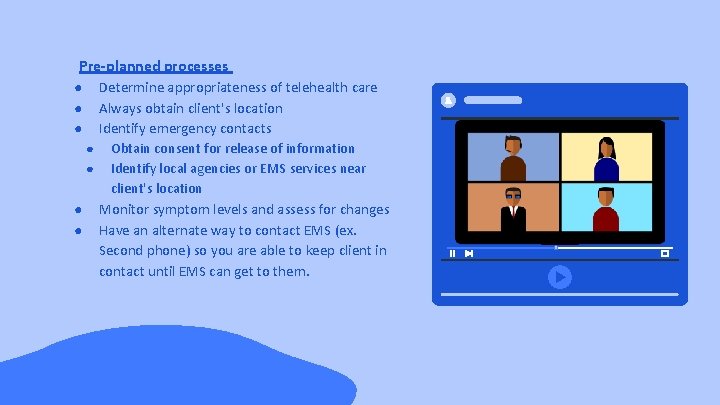
Pre-planned processes Determine appropriateness of telehealth care Always obtain client's location Identify emergency contacts ● Obtain consent for release of information ● Identify local agencies or EMS services near client's location ● Monitor symptom levels and assess for changes ● Have an alternate way to contact EMS (ex. Second phone) so you are able to keep client in contact until EMS can get to them. ● ● ●
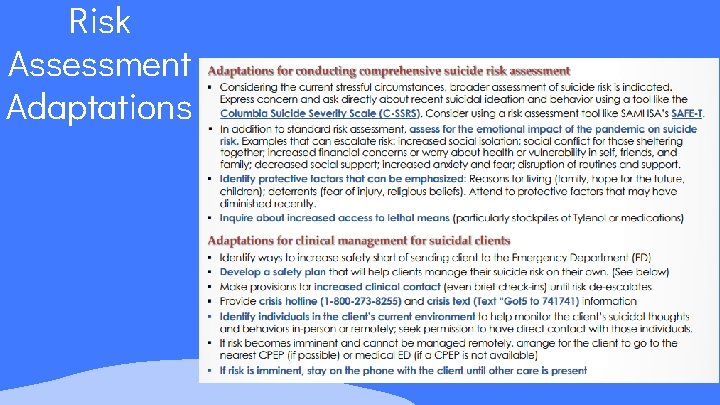
Risk Assessment Adaptations
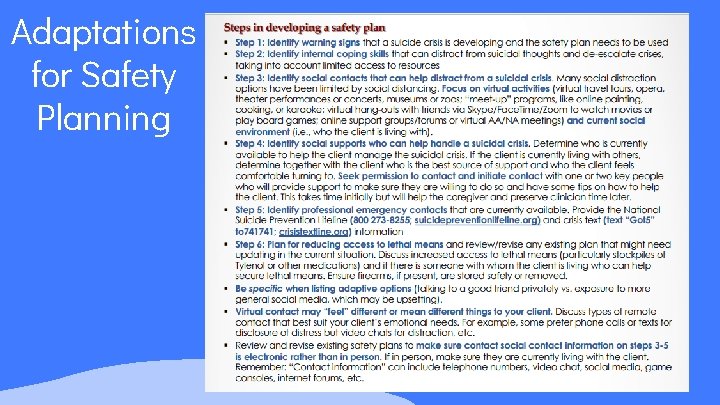
Adaptations for Safety Planning
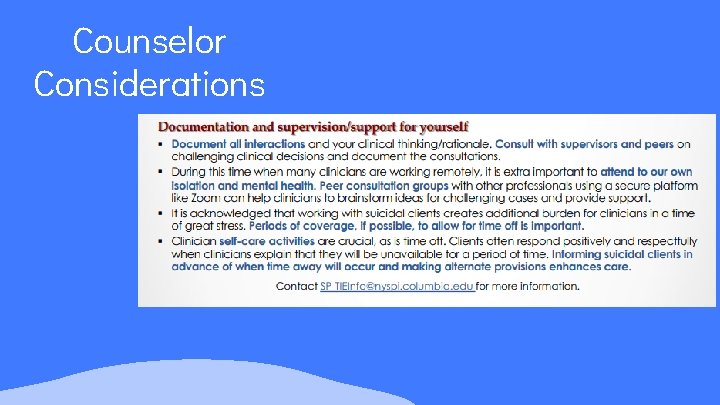
Counselor Considerations
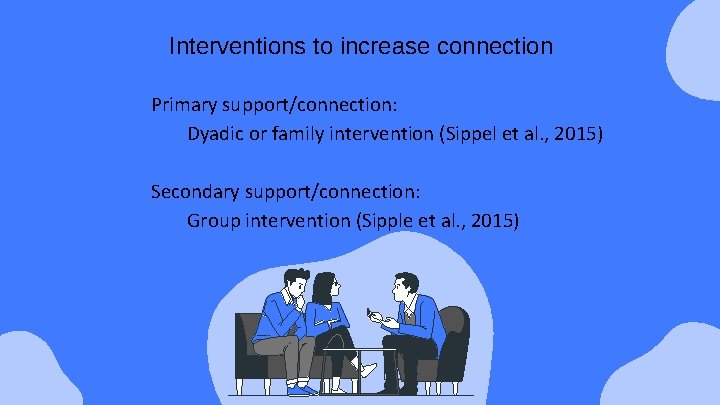
Interventions to increase connection Primary support/connection: Dyadic or family intervention (Sippel et al. , 2015) Secondary support/connection: Group intervention (Sipple et al. , 2015)
EIU Counseling Clinic ● Individual Counseling ● Group Counseling ● Crisis Intervention ● Psychiatric Care (via EIU Medical Clinic) ● Consultations ● Outreach Office: 217 -581 -3413 After hours crisis line: 1866 -567 -2400
Other Resources ● Crisis Resources ● National Suicide Prevention Hotline: 800 -2738255 ● CARES line for children and adolescents: 1 -800345 -9049 ● Psychological first aid: https: //www. apa. org/practice/programs/dmhi/ psychological-first-aid ● International Trauma Center (trainings and resources): https: //internationaltraumacenter. com/
Thanks Do you have any questions? CREDITS: This presentation template was created by Slidesgo, including icons by Flaticon, and infographics & images by Freepik and illustrations by Stories Please keep this slide for attribution Eastern Illinois University Health and Counseling Services Counseling Clinic Office: 217 -581 -3413
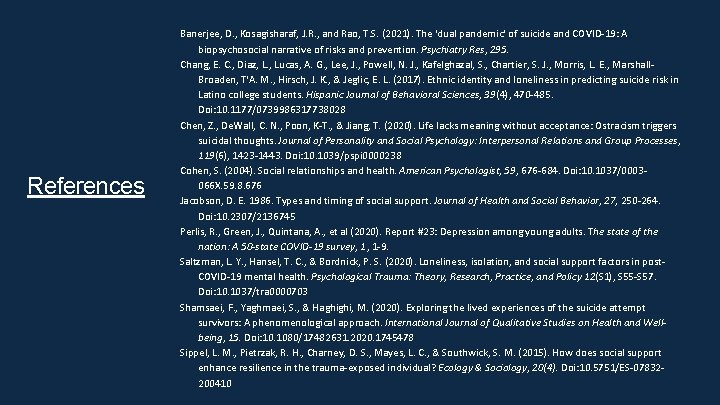
References Banerjee, D. , Kosagisharaf, J. R. , and Rao, T. S. (2021). The 'dual pandemic' of suicide and COVID-19: A biopsychosocial narrative of risks and prevention. Psychiatry Res, 295. Chang, E. C. , Diaz, L. , Lucas, A. G. , Lee, J. , Powell, N. J. , Kafelghazal, S. , Chartier, S. J. , Morris, L. E. , Marshall. Broaden, T'A. M. , Hirsch, J. K. , & Jeglic, E. L. (2017). Ethnic identity and loneliness in predicting suicide risk in Latino college students. Hispanic Journal of Behavioral Sciences, 39(4), 470 -485. Doi: 10. 1177/0739986317738028 Chen, Z. , De. Wall, C. N. , Poon, K-T. , & Jiang, T. (2020). Life lacks meaning without acceptance: Ostracism triggers suicidal thoughts. Journal of Personality and Social Psychology: Interpersonal Relations and Group Processes, 119(6), 1423 -1443. Doi: 10. 1039/pspi 0000238 Cohen, S. (2004). Social relationships and health. American Psychologist, 59, 676 -684. Doi: 10. 1037/0003066 X. 59. 8. 676 Jacobson, D. E. 1986. Types and timing of social support. Journal of Health and Social Behavior, 27, 250 -264. Doi: 10. 2307/2136745 Perlis, R. , Green, J. , Quintana, A. , et al (2020). Report #23: Depression among young adults. The state of the nation: A 50 -state COVID-19 survey, 1, 1 -9. Saltzman, L. Y. , Hansel, T. C. , & Bordnick, P. S. (2020). Loneliness, isolation, and social support factors in post. COVID-19 mental health. Psychological Trauma: Theory, Research, Practice, and Policy 12(S 1), S 55 -S 57. Doi: 10. 1037/tra 0000703 Shamsaei, F. , Yaghmaei, S. , & Haghighi, M. (2020). Exploring the lived experiences of the suicide attempt survivors: A phenomenological approach. International Journal of Qualitative Studies on Health and Wellbeing, 15. Doi: 10. 1080/17482631. 2020. 1745478 Sippel, L. M. , Pietrzak, R. H. , Charney, D. S. , Mayes, L. C. , & Southwick, S. M. (2015). How does social support enhance resilience in the trauma-exposed individual? Ecology & Sociology, 20(4). Doi: 10. 5751/ES-07832200410