
Isolation Precautions Infectious Disease Epidemiology Section Office of


- Slides: 22
Isolation Precautions Infectious Disease Epidemiology Section Office of Public Health Louisiana Dept of Health & Hospitals 800 -256 -2748 www. infectiousdisease. dhh. louisiana. gov Your taxes at work
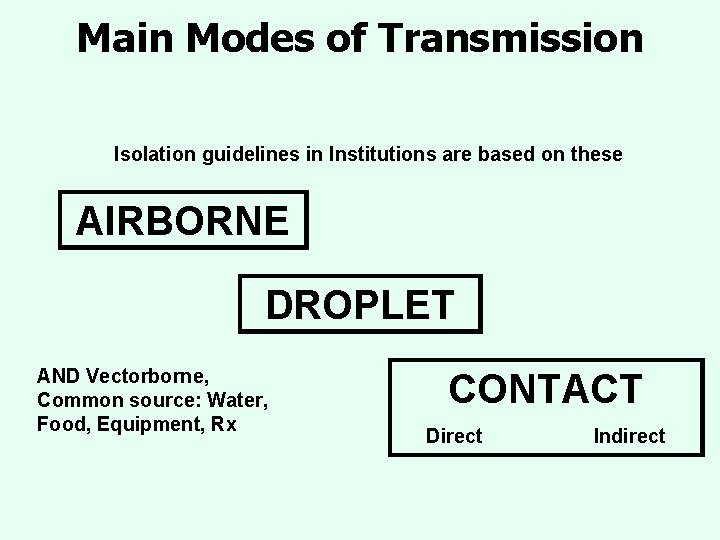
Main Modes of Transmission Isolation guidelines in Institutions are based on these AIRBORNE DROPLET AND Vectorborne, Common source: Water, Food, Equipment, Rx CONTACT Direct Indirect
Isolation Precaution System for Institutions is an expansion of Universal Precautions
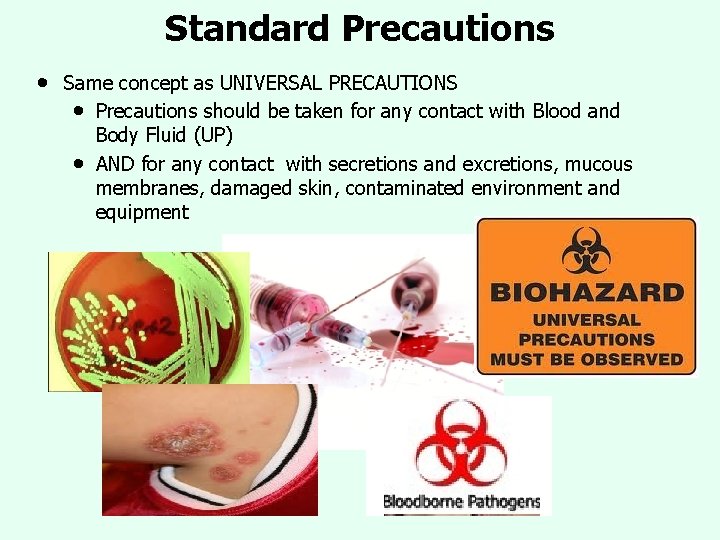
Standard Precautions • Same concept as UNIVERSAL PRECAUTIONS • Precautions should be taken for any contact with Blood and Body Fluid (UP) • AND for any contact with secretions and excretions, mucous membranes, damaged skin, contaminated environment and equipment
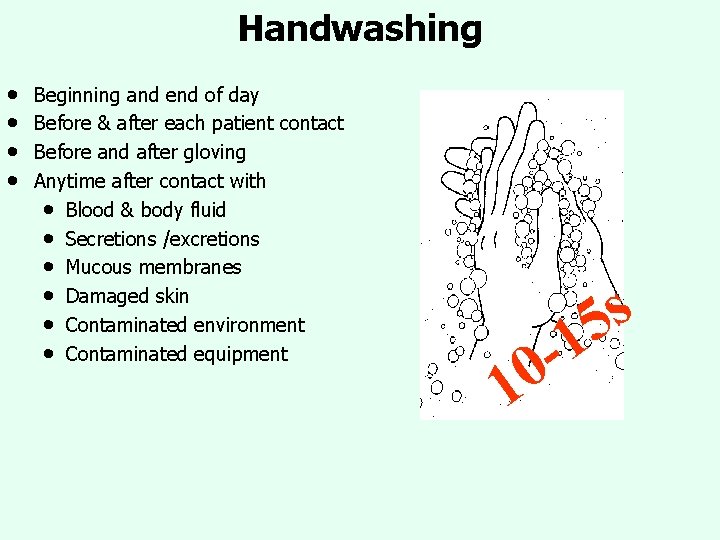
Handwashing • • Beginning and end of day Before & after each patient contact Before and after gloving Anytime after contact with • Blood & body fluid • Secretions /excretions • Mucous membranes • Damaged skin • Contaminated environment • Contaminated equipment 1 1 0 s 5
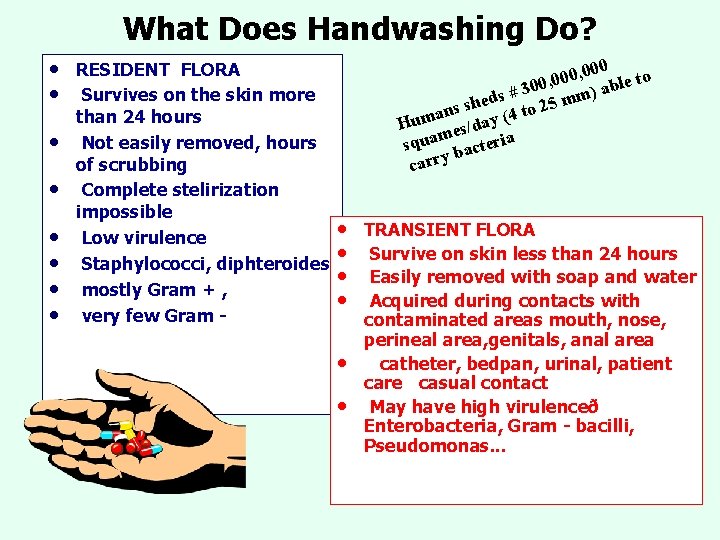
What Does Handwashing Do? • • RESIDENT FLORA , 000 0 , e to l 0 b 0 a 3 Survives on the skin more ds # 25 mm) e h s to ans 4 ( than 24 hours m y u H es/da ia m a Not easily removed, hours squ bacter y of scrubbing carr Complete stelirization impossible • TRANSIENT FLORA Low virulence • Survive on skin less than 24 hours Staphylococci, diphteroides, • Easily removed with soap and water mostly Gram + , • Acquired during contacts with very few Gram contaminated areas mouth, nose, perineal area, genitals, anal area • catheter, bedpan, urinal, patient care casual contact • May have high virulenceð Enterobacteria, Gram - bacilli, Pseudomonas. . .
What Does Handwashing Do? Activity Pulse, blood pressure Number of Klebsiella on nurse’s hand In Colony Forming Units (CFU) 100 -1, 000 Touching hand 10 - 100 Touch shoulder 7, 0000 Oral temperature Caswell & Phillips 100 – 1, 000 British Med J Nov 1977: 1316 Seroytpe 21 Klebsiella cultured Hands of nurses washed and cultured: NO Klebsiella Patient care Activity
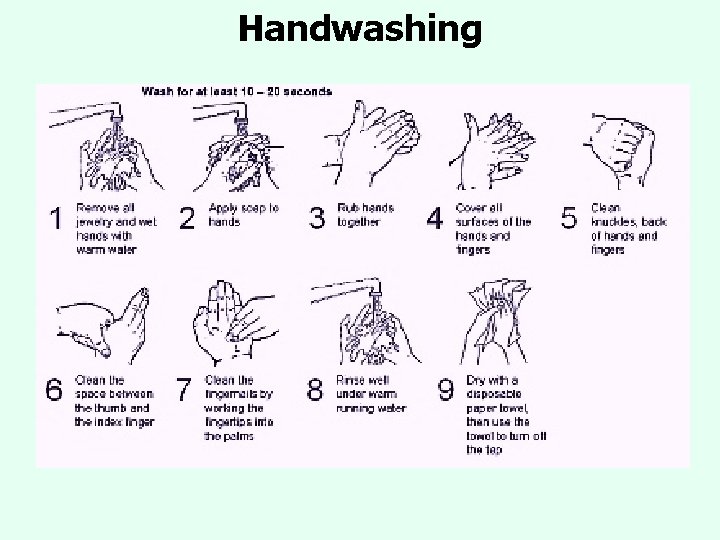
Handwashing
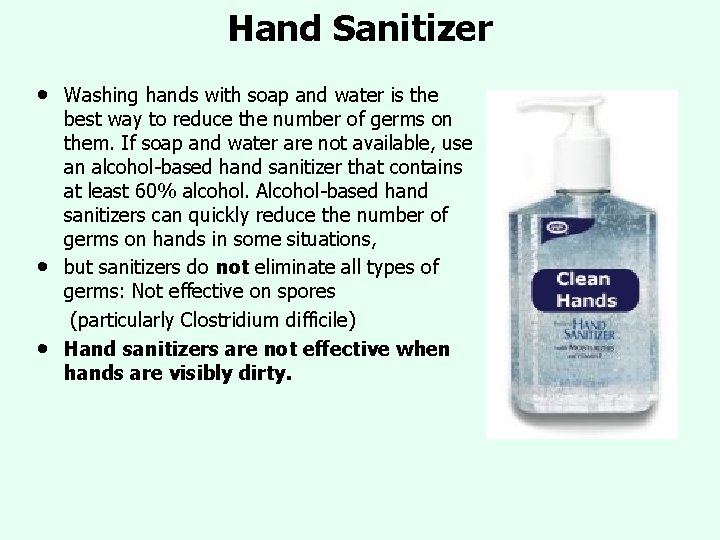
Hand Sanitizer • • • Washing hands with soap and water is the best way to reduce the number of germs on them. If soap and water are not available, use an alcohol-based hand sanitizer that contains at least 60% alcohol. Alcohol-based hand sanitizers can quickly reduce the number of germs on hands in some situations, but sanitizers do not eliminate all types of germs: Not effective on spores (particularly Clostridium difficile) Hand sanitizers are not effective when hands are visibly dirty.
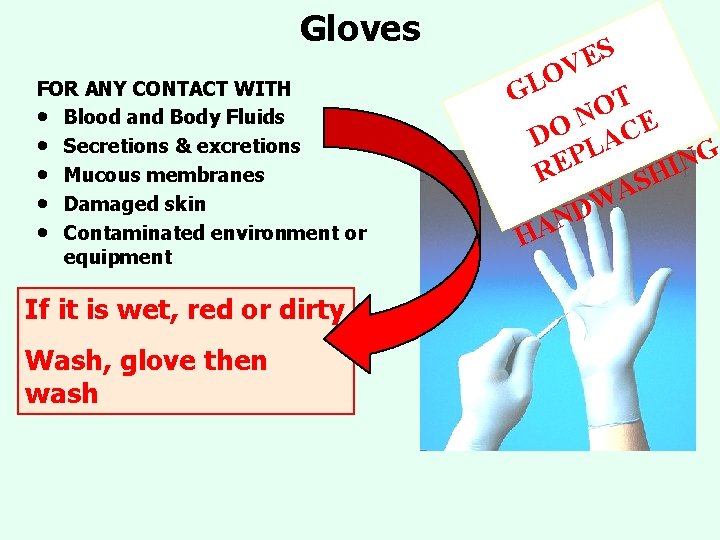
Gloves FOR ANY CONTACT WITH • Blood and Body Fluids • Secretions & excretions • Mucous membranes • Damaged skin • Contaminated environment or equipment If it is wet, red or dirty Wash, glove then wash O L G S E V T O N O D LACE G P N E R HI S A W D N HA
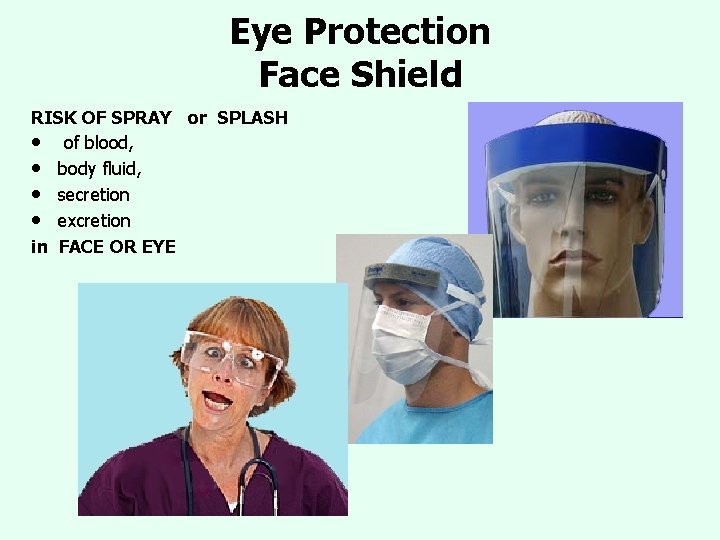
Eye Protection Face Shield RISK OF SPRAY or SPLASH • of blood, • body fluid, • secretion • excretion in FACE OR EYE
Surgical Masks • STANDARD PRECAUTIONS For personnel to protect from splashes /sprays of BBF/ S E • DROPLET PRECAUTIONS to prevent large droplets (>5 m) on/from patient • For patients to prevent emission of droplet (large and droplet nuclei)
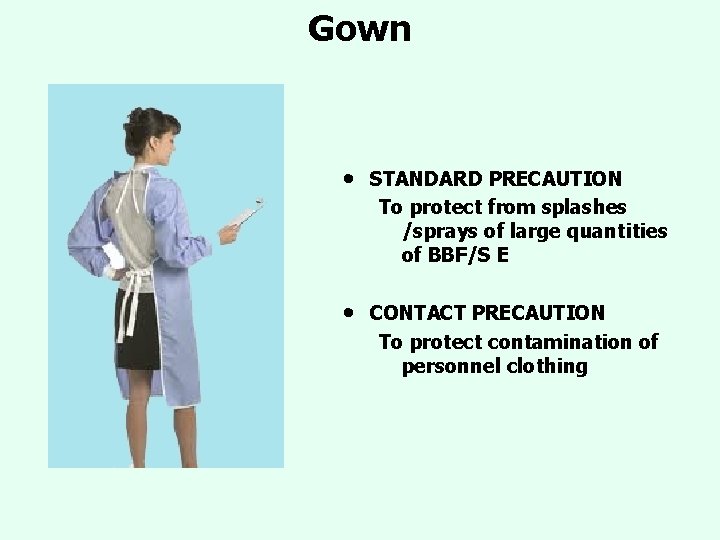
Gown • STANDARD PRECAUTION To protect from splashes /sprays of large quantities of BBF/S E • CONTACT PRECAUTION To protect contamination of personnel clothing
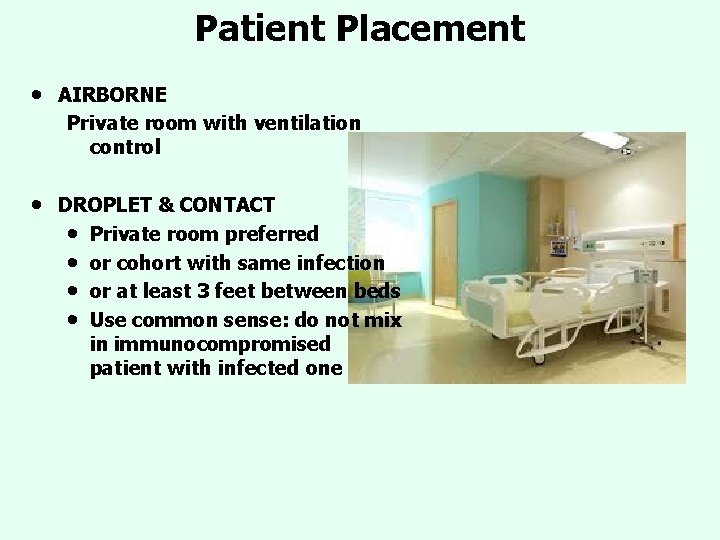
Patient Placement • AIRBORNE Private room with ventilation control • DROPLET & CONTACT • Private room preferred • or cohort with same infection • or at least 3 feet between beds • Use common sense: do not mix in immunocompromised patient with infected one
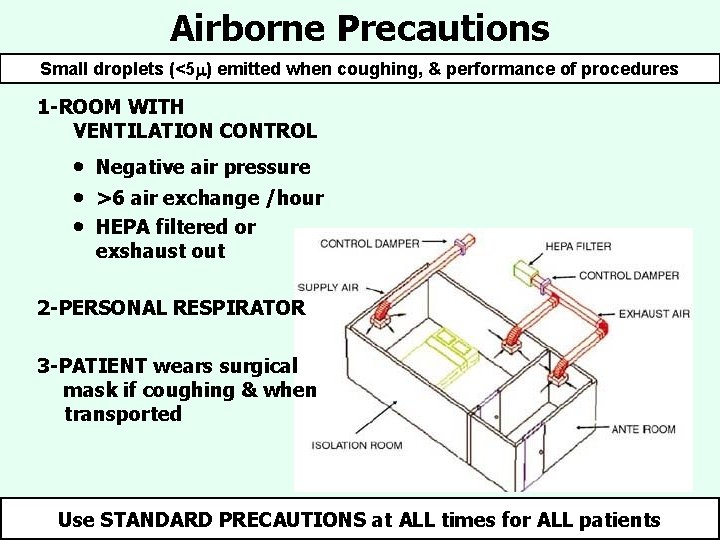
Airborne Precautions Small droplets (<5 ) emitted when coughing, & performance of procedures 1 -ROOM WITH VENTILATION CONTROL • • • Negative air pressure >6 air exchange /hour HEPA filtered or exshaust out 2 -PERSONAL RESPIRATOR 3 -PATIENT wears surgical mask if coughing & when transported Use STANDARD PRECAUTIONS at ALL times for ALL patients
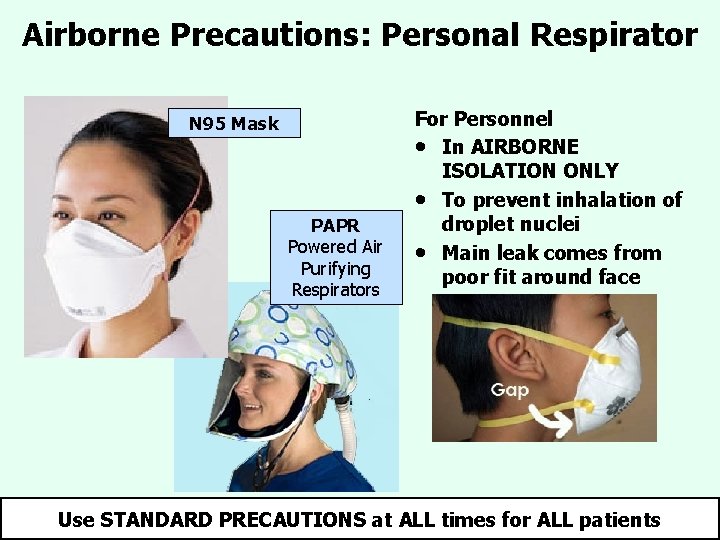
Airborne Precautions: Personal Respirator N 95 Mask PAPR Powered Air Purifying Respirators For Personnel • In AIRBORNE ISOLATION ONLY • To prevent inhalation of droplet nuclei • Main leak comes from poor fit around face Use STANDARD PRECAUTIONS at ALL times for ALL patients
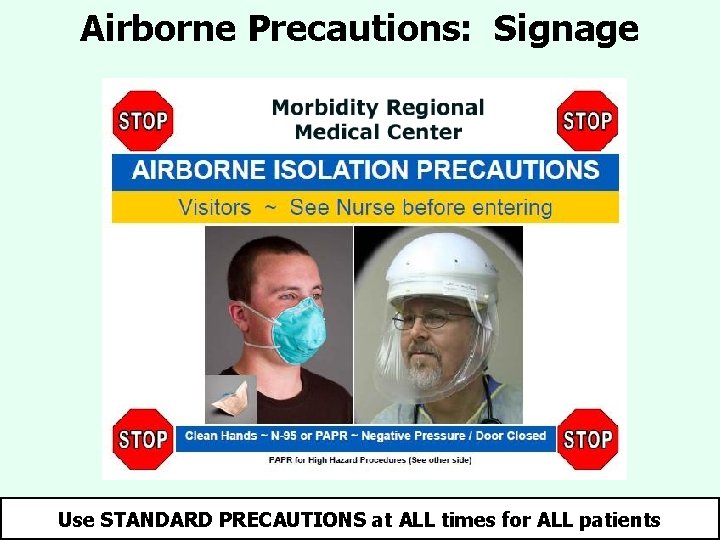
Airborne Precautions: Signage Use STANDARD PRECAUTIONS at ALL times for ALL patients
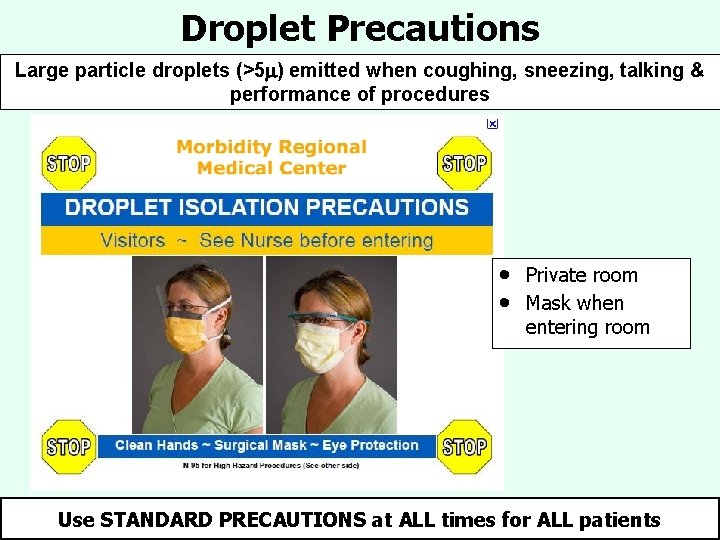
Droplet Precautions Large particle droplets (>5 ) emitted when coughing, sneezing, talking & performance of procedures • • Private room Mask when entering room Use STANDARD PRECAUTIONS at ALL times for ALL patients
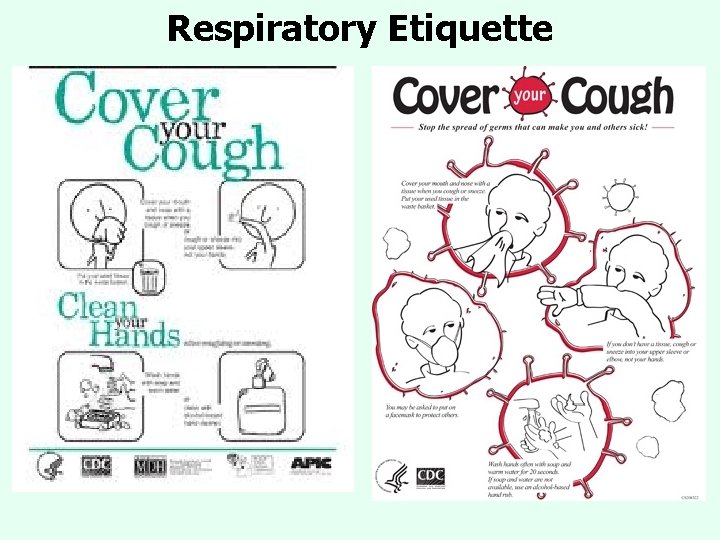
Respiratory Etiquette
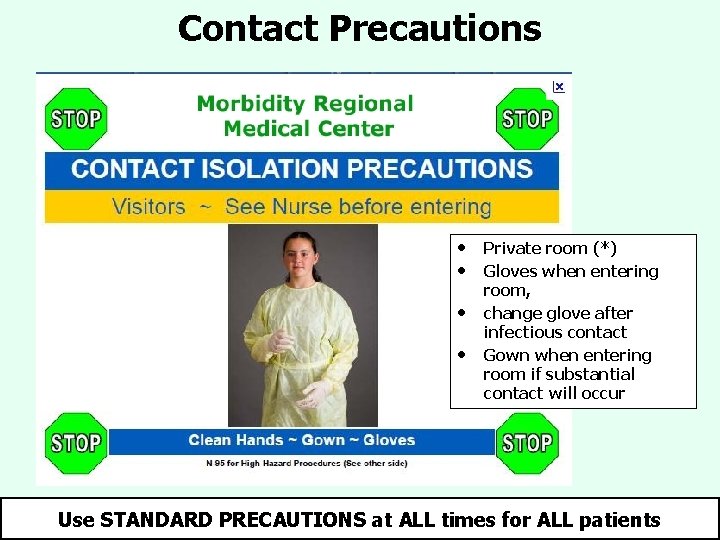
Contact Precautions • • Private room (*) Gloves when entering room, change glove after infectious contact Gown when entering room if substantial contact will occur Use STANDARD PRECAUTIONS at ALL times for ALL patients
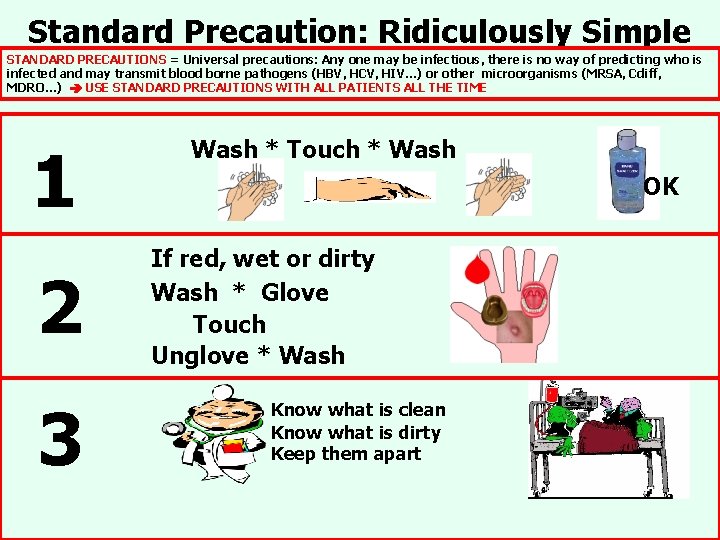
Standard Precaution: Ridiculously Simple STANDARD PRECAUTIONS = Universal precautions: Any one may be infectious, there is no way of predicting who is infected and may transmit blood borne pathogens (HBV, HCV, HIV…) or other microorganisms (MRSA, Cdiff, MDRO…) USE STANDARD PRECAUTIONS WITH ALL PATIENTS ALL THE TIME 1 2 3 Wash * Touch * Wash OK If red, wet or dirty Wash * Glove Touch Unglove * Wash Know what is clean Know what is dirty Keep them apart
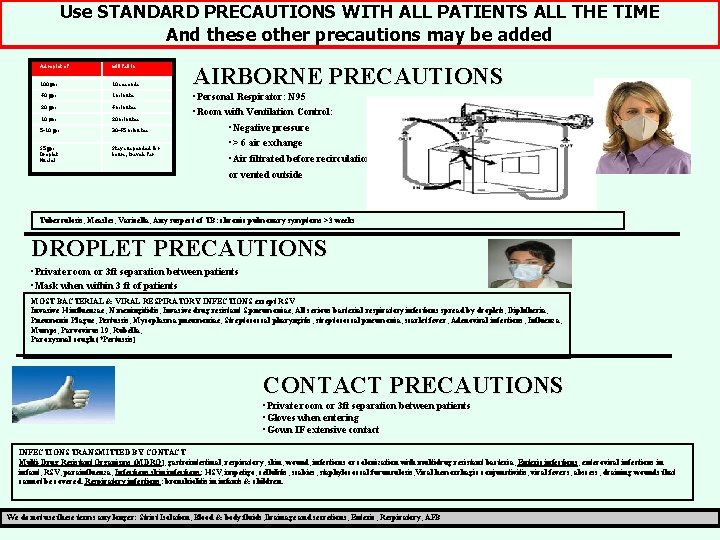
Use STANDARD PRECAUTIONS WITH ALL PATIENTS ALL THE TIME And these other precautions may be added A droplet of will fall in 100 m 10 seconds 40 m 1 minute 20 m 4 minutes 10 m 20 minutes 5 -10 m 30 -45 minutes £ 5 m Stay suspended for hours, travels far Droplet Nuclei AIRBORNE PRECAUTIONS • Personal Respirator: N 95 • Room with Ventilation Control: • Negative pressure • > 6 air exchange • Air filtrated before recirculation or vented outside Tuberculosis, Measles, Varicella, Any suspect of TB: chronic pulmonary symptoms >3 weeks DROPLET PRECAUTIONS • Private room or 3 ft separation between patients • Mask when within 3 ft of patients MOST BACTERIAL & VIRAL RESPIRATORY INFECTIONS except RSV Invasive H. influenzae, N. meningitidis, Invasive drug resistant S. pneumoniae, All serious bacterial respiratory infections spread by droplets, Diphtheria, Pneumonic Plague, Pertussis, Mycoplasma pneumoniae, Streptococcal pharyngitis, streptococcal pneumonia, scarlet fever, Adenoviral infections, Influenza, Mumps, Parvovirus 19, Rubella, Paroxysmal cough (? Pertussis) CONTACT PRECAUTIONS • Private room or 3 ft separation between patients • Gloves when entering • Gown IF extensive contact INFECTIONS TRANSMITTED BY CONTACT Multi-Drug Resistant Organisms (MDRO), gastrointestinal, respiratory, skin, wound, infections or colonization with multidrug resistant bacteria, Enteric infections, enteroviral infections in infant, RSV, parainfluenza, Infectious skin infections: HSV, impetigo, cellulitis, scabies, staphylococcal furunculosis, Viral hemorrhagic conjunctivitis, viral fevers, abscess, draining wounds that cannot be covered. Respiratory infections: bronchiolitis in infants & children. We do not use these terms any longer: Strict Isolation, Blood & body fluids, Drainage and secretions, Enteric, Respiratory, AFB