
Isolation of Microorganisms from Soil Dr A Saha



- Slides: 28
Isolation of Microorganisms from Soil Dr. A. Saha. Assistant Prof. in Botany(St-III) Surendranath College, Kolkata
Introduction • The physical and chemical properties of the soil and soil fertility determine the nature of the soil environment in which these microbes occur. • The largest number of microbes occurs in the top layer of the soil at a depth of 5 -10 cm. • In deeper layers(1. 5 -5 m), the no. of microbes is reduced. • In cultivable lands, microbes occur in large numbers.
• Besides composition of soil, climatic factors such as available moisture, degree of aeration, temperature and p. H and agricultural practices also affect the distribution of microorganisms in the soil. • Microbes occurring in soil are called soil microflora which are as follows
1. Bacteria • They are the most frequent group of microorganisms present in the soil and constitute half of the total biomass. • 1 gm fertile soil contains as many as 109 bacteria. • Some common bacterial are the species of Pseudomonas • Arthrobacter • Achromobacter
• • Bacillus Clostridium Micrococcus Flavobacterium Chromobacterium Mycobacterium etc.
• Escherichia occurs in soil due to sewage contamination. • In cellulose rich environment celluloytic bacteria like Cytophaga, Sporocytophaga are found. • Chemosynthetic autotrophic bacteria like Thiobacillus, Ferrobacillus, Nitrosomonas, Nitob acter.
2. Actinomycetes • They are abundant in the soil rich in decomposed organic materials. • They are responsible for the earthy smell of a freshly ploughed soil. • Streptomyces • Micromonospora • Nocardia
3. Microfungi • The quality and quantity of organic materials present in the soil and depth of the soil influence the fungal population • Aspergillus • Botrytis • Penicillium • Alternaria • Fusarium
• Rhizopus • Pythium • Alternaria, Aspergillus, Cladosporium and Dematium are helpful in the preservation of organic materials.
4. Microalgae • Occur on the surface of moist soils where sufficient light is available. • Helpful for soil conservation and improving soil structure • Chlorella • Aphanocapsa • Anabaena • Nostoc • Scytonema, etc.
5. Prortozoa • Occur in great no. in the upper layer of the soil and have direct effect on the bacterial population as they ingest bacteria. • Maintains equilibrium of the microbial flora in the soil. • Allantion • Bodo • Monas • Spiromonas • Amoeba • Vorticella, etc.
6. Viruses • They are present in the least number in the soil. • Bacteriophages ingest bacteria, actinomycets and some viruses infect the fungi present in the soil.
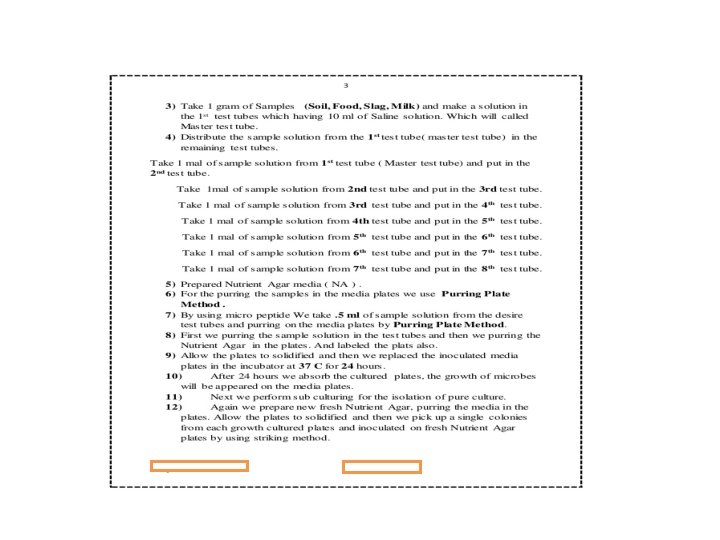
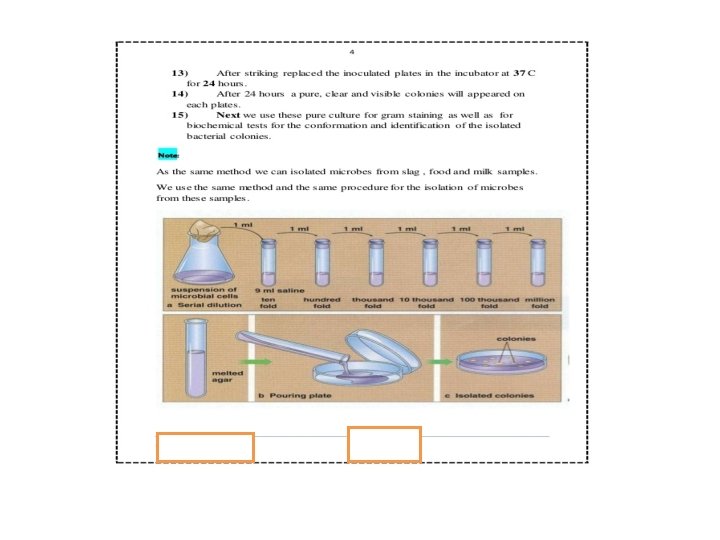
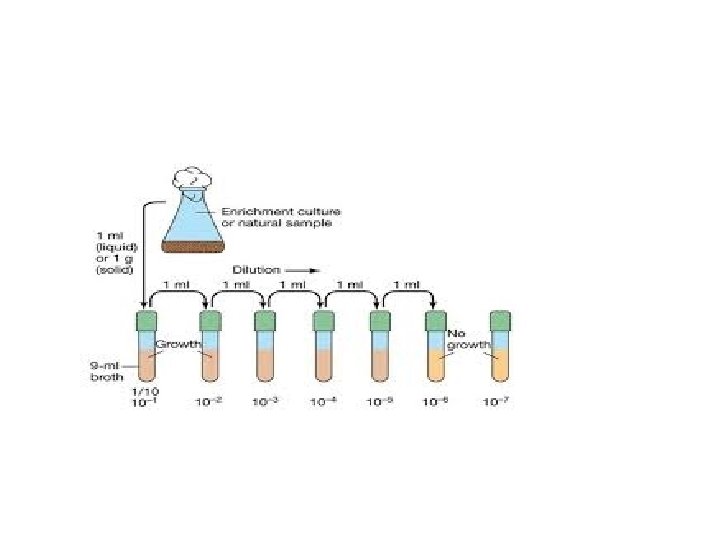
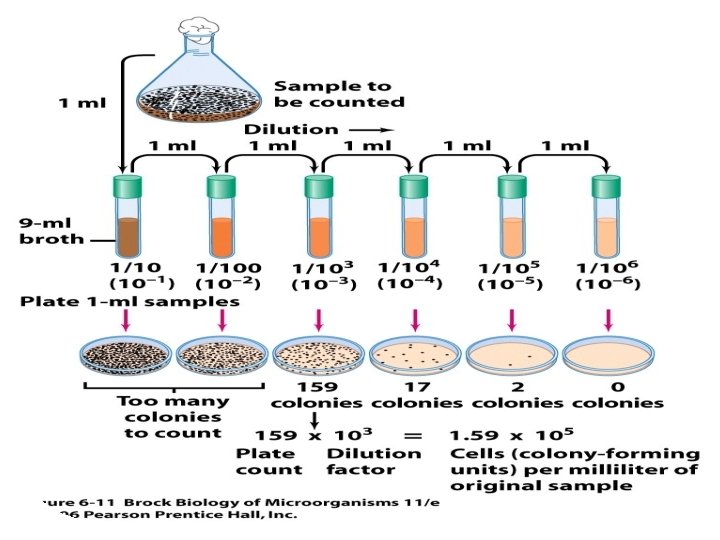
Serial Dilution is one of the old method which is in use for the isolation of bacterial colony.
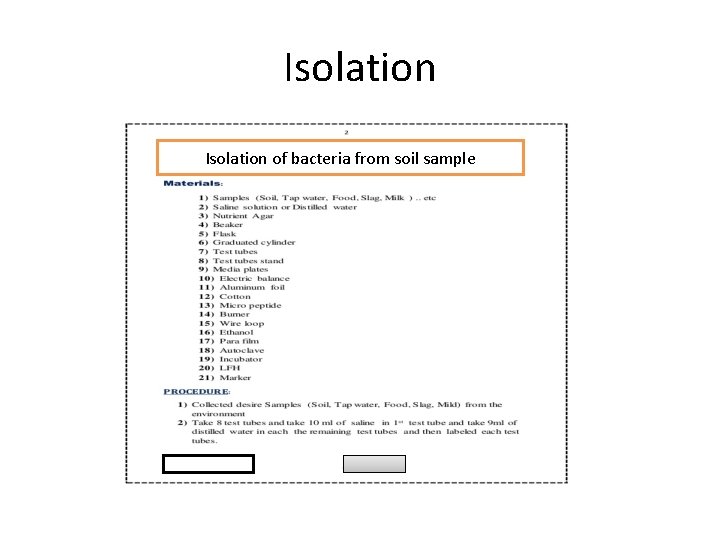
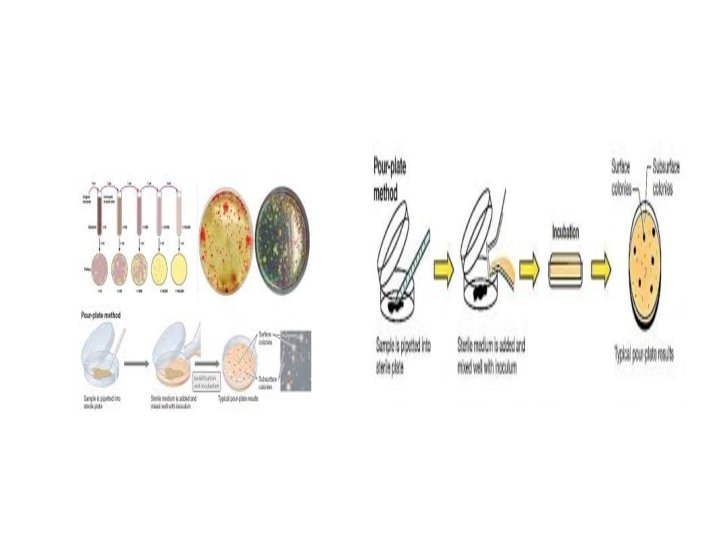
Isolation of bacteria from soil sample
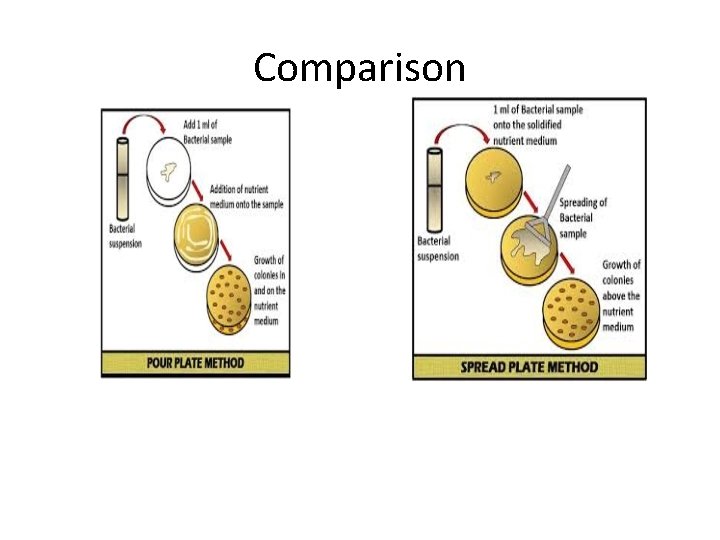
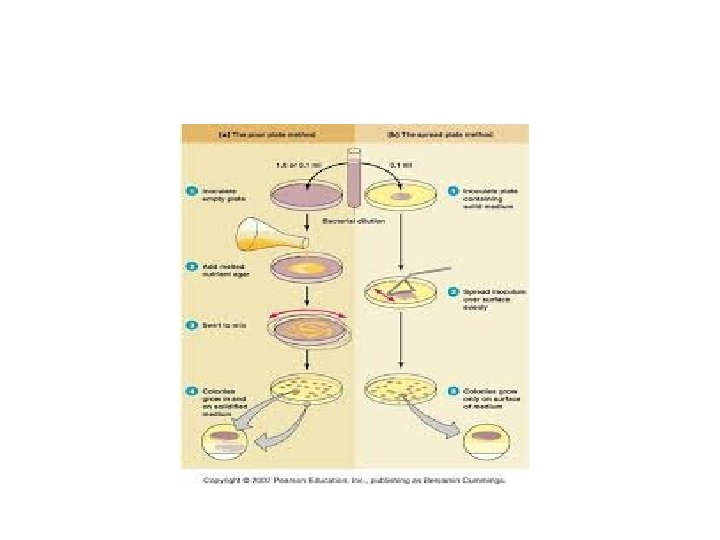
Comparison
Streaking Method
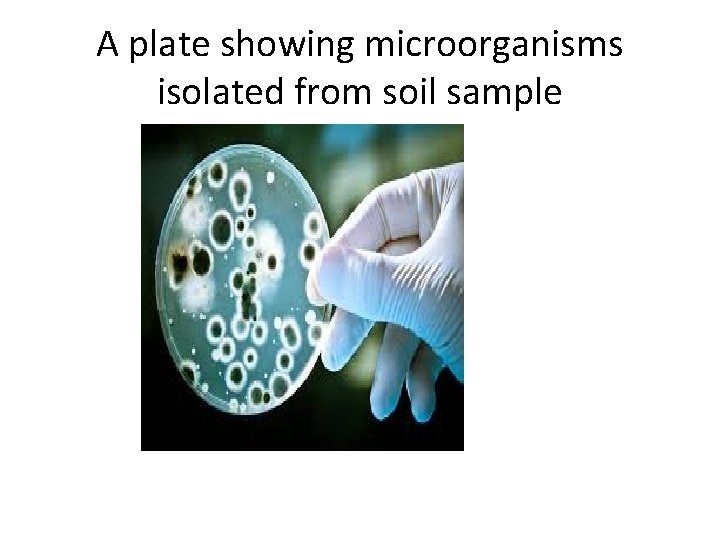
A plate showing microorganisms isolated from soil sample
References. Internet Archives. Pelczar, M. J. Jr. Chan. E. C. S. and Kriog, N. R. – Microbiology. Mc Graw Hill Book Company. . Atlas, R. M. (recent Edition) – Principle of Microbiology, W. E. B. Mc Graw Hill. Prescott, L. M. Harley, J. P. and Klein, d. A. – Microbiology. W. C. Brown Publishers, England. . Schelegel, H. G. – General Microbiology. Cambridge University Press. . Madigan, M. T. Martins, J. M. and Parker, J. – Biology of Microorganisms. Prentice Hall International Inc.