
ISO 9001 2000 Focus on custumers and suppliers
- Slides: 14
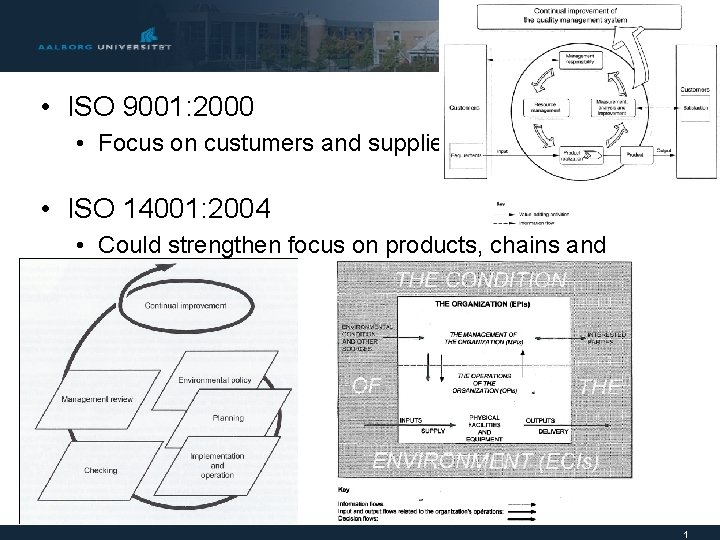
• ISO 9001: 2000 • Focus on custumers and suppliers • ISO 14001: 2004 • Could strengthen focus on products, chains and stakeholders 1
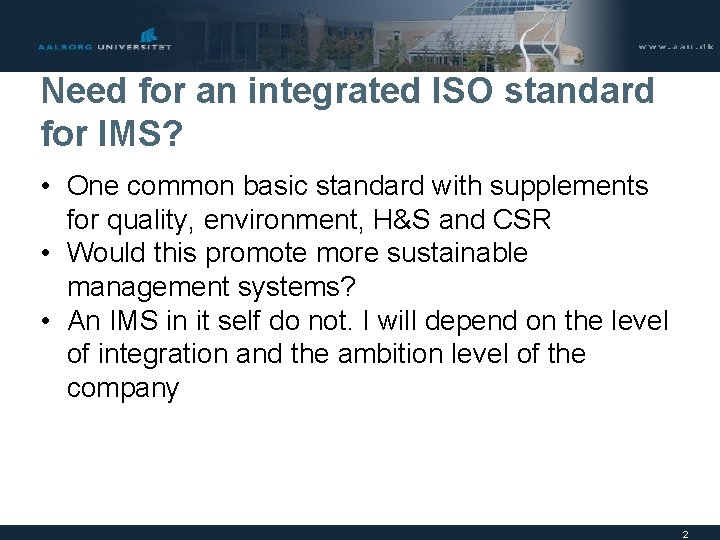
Need for an integrated ISO standard for IMS? • One common basic standard with supplements for quality, environment, H&S and CSR • Would this promote more sustainable management systems? • An IMS in it self do not. I will depend on the level of integration and the ambition level of the company 2
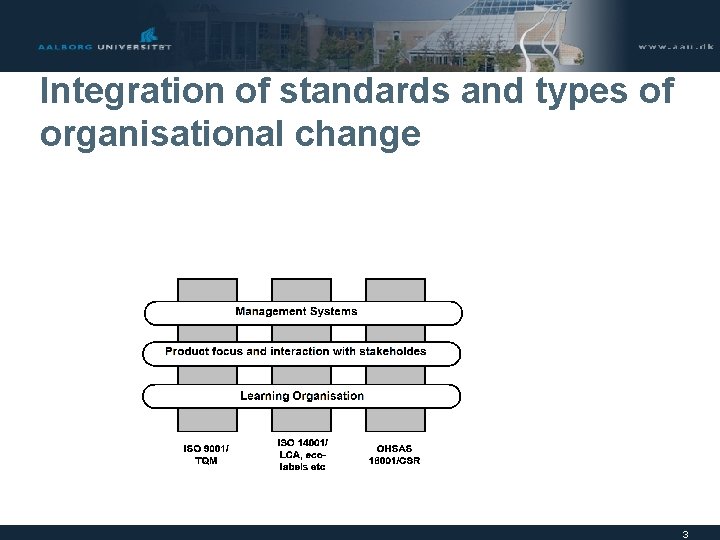
Integration of standards and types of organisational change 3
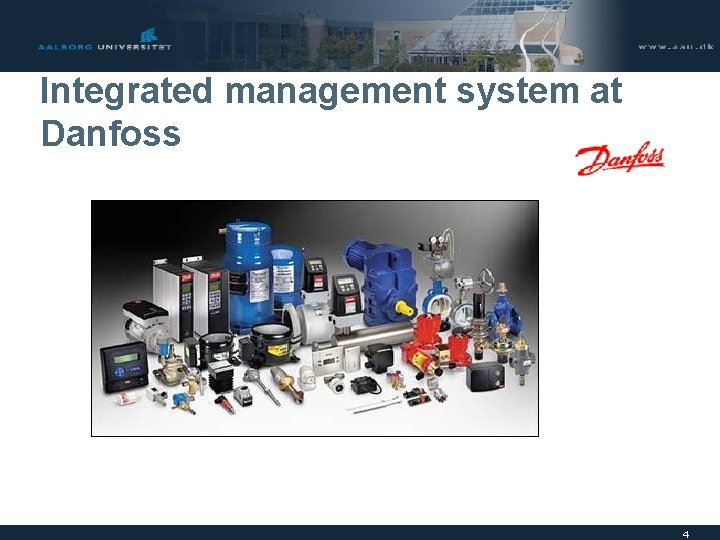
Integrated management system at Danfoss 4
Why IMS at Danfoss? Common elements (centrally managed) • • Management responsibility Resources and infrastructure Aim, control and measurement Employees, development and education Communication Document control and registration Continuous improvements and corrective actions Process control, maintenance and calibration 5
Why is IMS necessary? • • Meet the expectations of the customers Lean business systems Utilize the synergy Slimming the management system Simplify Attitude among employees Avoid conflicts 6
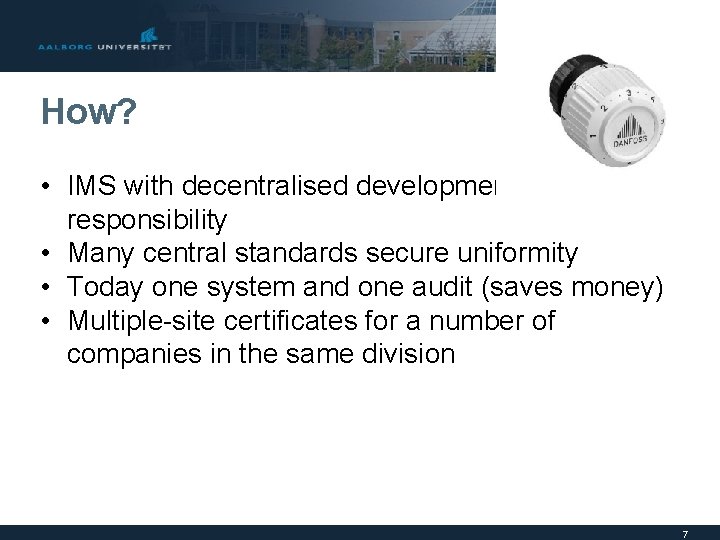
How? • IMS with decentralised development and responsibility • Many central standards secure uniformity • Today one system and one audit (saves money) • Multiple-site certificates for a number of companies in the same division 7
Common certification of quality, environment and OHS • • Same auditor-team for all three systems All three systems audited in the same days Saves time and expences Synergy between audit of the three management systems 8
An integrated system because… • All procedures are important for the business • Quality, environment and OHS are not special, so they do not have a system each • The systems reflect the business, not the contrary • Formulation of the system follows the organisation and tasks 9
Barriers for integration • Lack of knowledge among employees and management • You know what you have – not what you get • Reinvention of bureaucracy • Lack of demand internal and external • Certifying bodies 10
Wants to link IMS with: • • Lean business 6 sigma TQM Business excellence 11
Conclusion (1) • Mangement for sustainability should include quality, environment, H&S and CSR in an IMS with focus on the life cycle perspectives. • The IMS should create a culture of learning, focus on stakeholders, continuous improvements and synergy between areas to create a dynamic system • The ISO standards for management systems should strengthen these demands 12
Conclusion (2) • Change towards more sustainable management systems in industry also demand changes in the organisation of society, where lifestyles and needs must change 13
Thank you – questions? Tine Herreborg Jørgensen Associate Professor, M. Sc. , Ph. D. Aalborg University, Denmark