
Island Biogeography Island Biogeography o Colonization arrival float
Island Biogeography

Island Biogeography o Colonization - arrival – float – fly – swim – be carried – wind (seeds, spores)

Surtsey (1963) 25 miles from Iceland
Plant colonization - Surtsey
Krakatau (1833)

Colonization - Krakatau anak Krakatau
Characteristics of Island Species o Good dispersal ability o Flock loving animals o Prefer fresh water, mangroves, secondary forest on the mainland o High ecological flexibility
Maquire (Ecol. Monog. 33: 161 -185) o Placed bowls of nutrient solution at various distances and heights from a pond. o Some bowls increased, then decreased in one species as others moved in. o The number of new species/unit time decreased with time. They finally reached an equilibrium state. o Different bowls had different species assemblages.
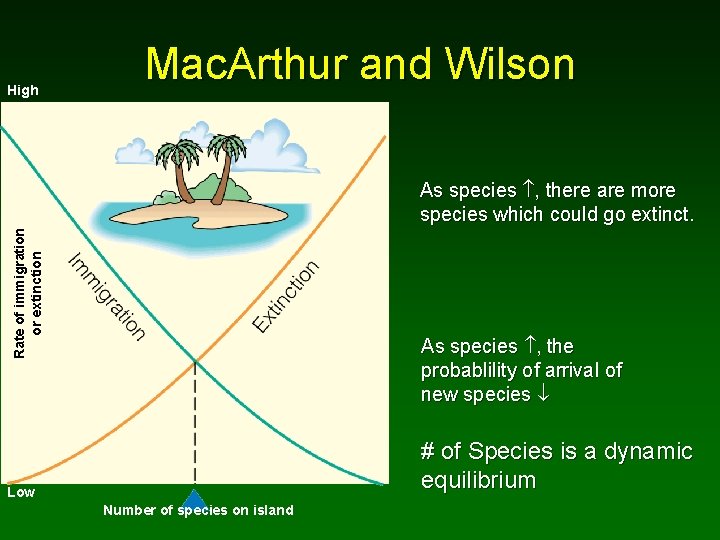
As species , there are more species which could go extinct. E Rate of immigration or extinction High Mac. Arthur and Wilson I As species , the probablility of arrival of new species # of Species is a dynamic equilibrium Low Number of species on island
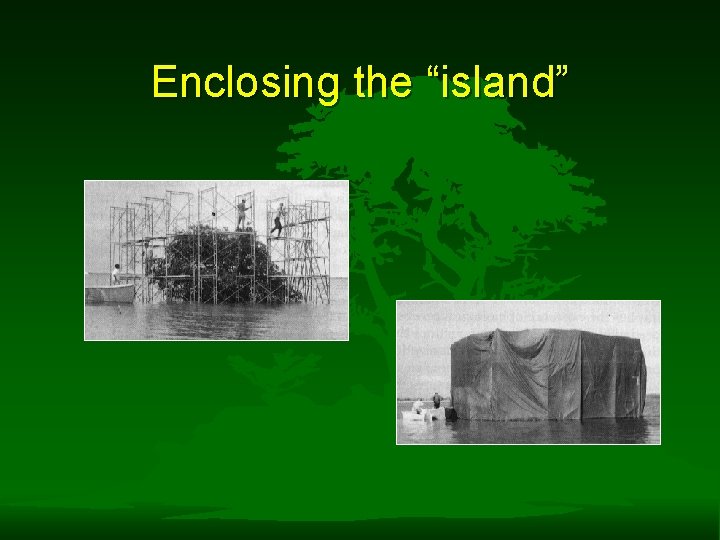
Enclosing the “island”

Simberloff - equilibrium
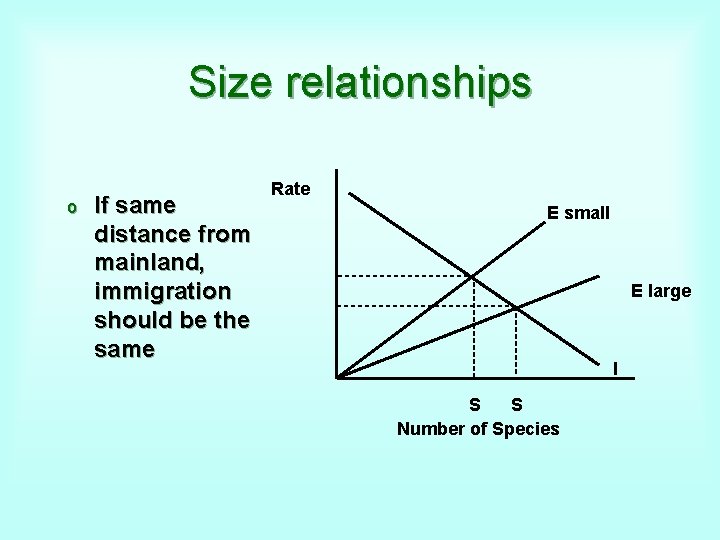
Size relationships o If same distance from mainland, immigration should be the same Rate E small E large I S S Number of Species
Small Islands - high turnover rate o Microtus pennsylvanicus (meadow vole) o Clethrionomys gapperi (red-backed vole) o 12 red-backed voles introduced to Rock Island – rapidly displaced meadow vole in small Meadow vole woodland – population never > 30 – went extinct in 3 years Red backed vole
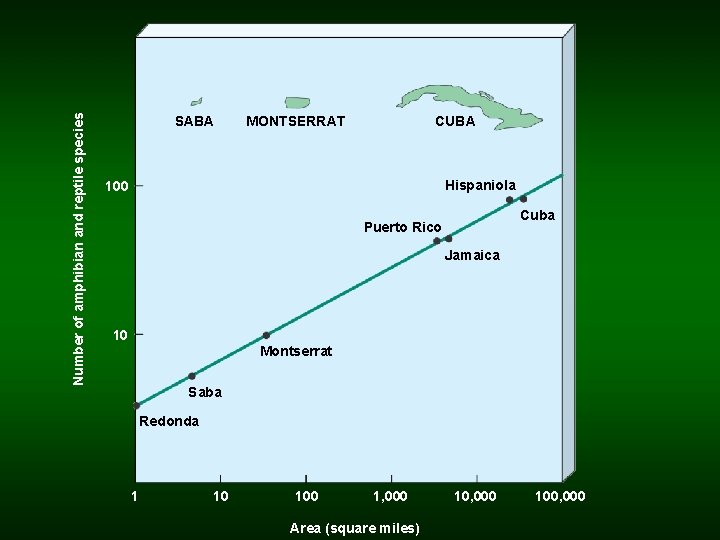
Number of amphibian and reptile species SABA MONTSERRAT CUBA Hispaniola 100 Cuba Puerto Rico Jamaica 10 Montserrat Saba Redonda 1 10 100 1, 000 Area (square miles) 10, 000 100, 000
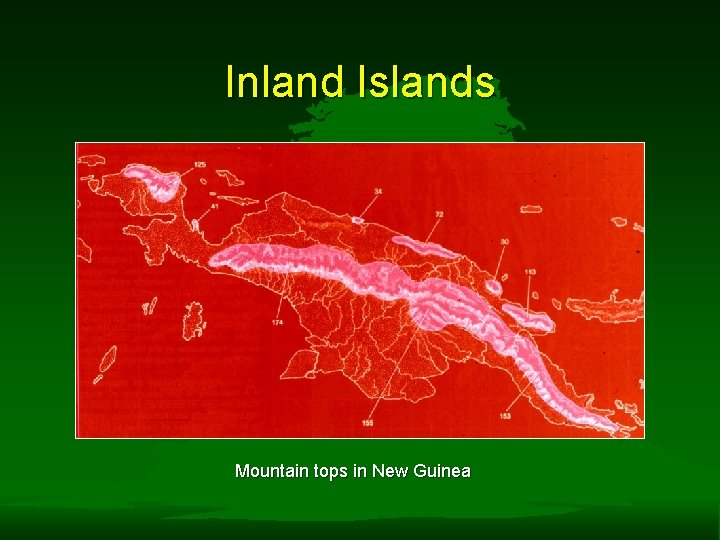
Inland Islands Mountain tops in New Guinea
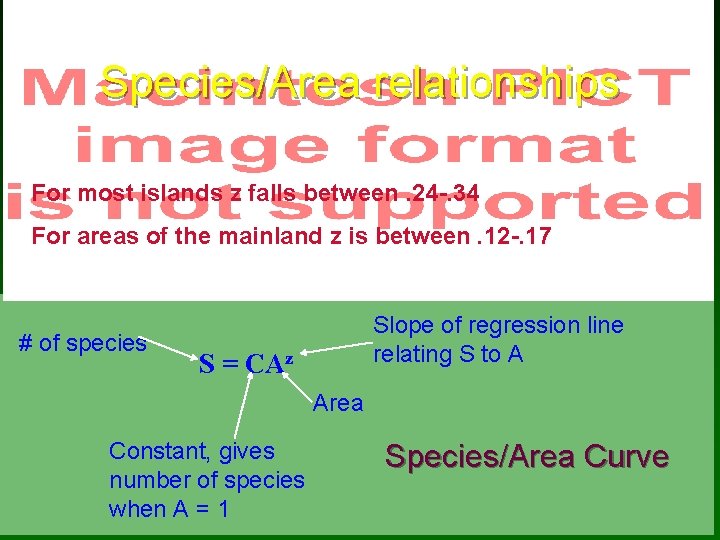
Species/Area relationships For most islands z falls between. 24 -. 34 For areas of the mainland z is between. 12 -. 17 # of species Slope of regression line relating S to A S = CAz Area Constant, gives number of species when A = 1 Species/Area Curve

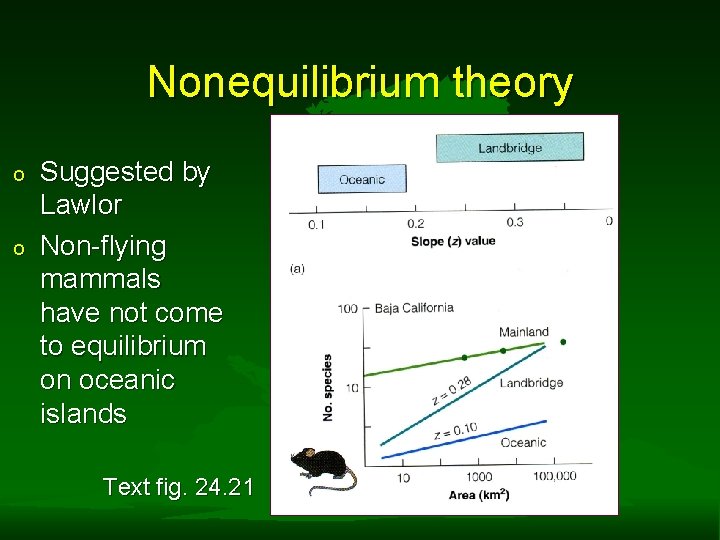
Nonequilibrium theory o o Suggested by Lawlor Non-flying mammals have not come to equilibrium on oceanic islands Text fig. 24. 21
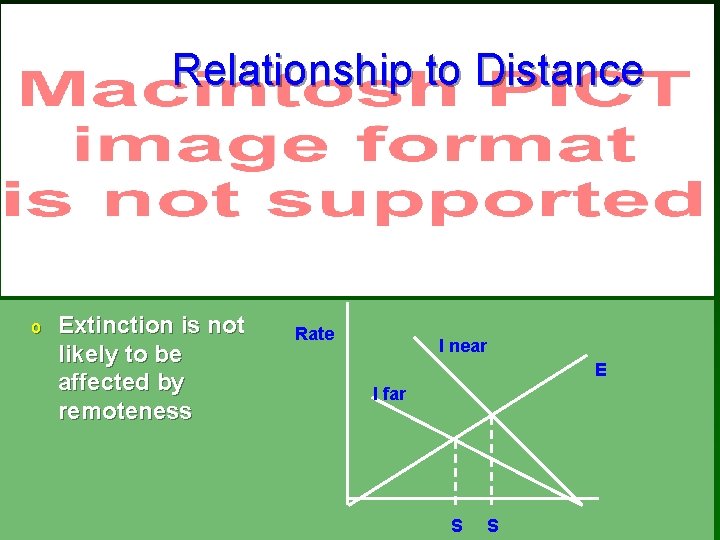
Relationship to Distance o Extinction is not likely to be affected by remoteness Rate I near E I far S S
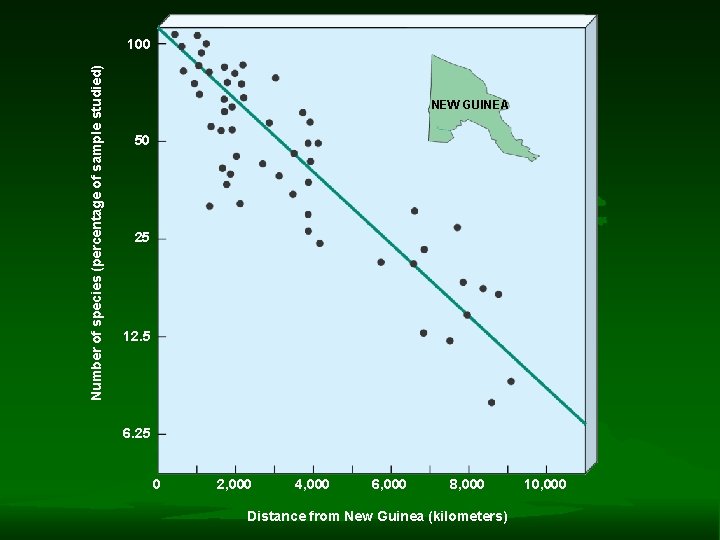
Number of species (percentage of sample studied) 100 NEW GUINEA 50 25 12. 5 6. 25 0 2, 000 4, 000 6, 000 8, 000 Distance from New Guinea (kilometers) 10, 000
Mac. Arthur-Wilson model predictions o o Number of species should remain constant over time Some species should become extinct over time Extinctions balanced by immigrations Turnover rate of species should vary with island area and distance from a source of immigrants
Assembly rules o Worked out by Jared Diamond o Three sets of rules determining the species mix on an island – Incidence functions – Compatibility rules – Combination rules
Incidence Functions o Incidence functions place species into 3 groups: – Species only on species rich islands. – Tramps - on species rich islands and with lower probability on species poor islands. – Super tramps - only on species poor islands.
Compatibility rules o Built from mutually exclusive ranges of pairs of species. o Certain closely related species cannot co-exist.
Combination rules o o Based on diffuse competition rather than direct. Prevents certain groups of species from coexisting. Calculates the probability of a given combination being found together on an island of a given size The only stochastic part is the order of arrival of the first colonists.
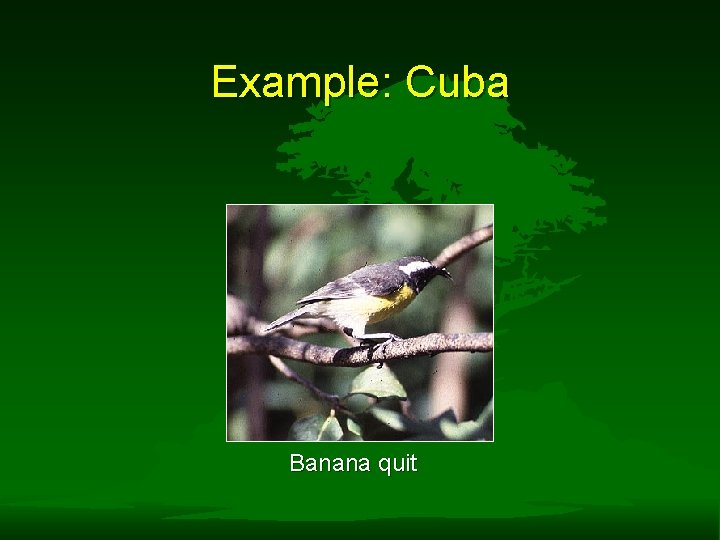
Example: Cuba Banana quit

- Slides: 28