
Islamic Practices Salah and Other Forms of Prayer
- Slides: 10
Islamic Practices Salah and Other Forms of Prayer
Learning Objective • To understand, and be able to explain, the different types of prayer. Success Criteria • To describe the actions that make up Muslim prayer. • To describe what Du’a and Jummah prayer are. • To explain how Shi’a and Sunni Muslims pray differently.
What Can You Remember from Last Lesson? 1. How many times should Muslims pray? 2. What is wudu? 3. Why might Muslims find a compass useful? 4. Why do Muslims believe it is important to pray? 5. What is the pillar linked to prayer called? 1. Five 2. Ritual washing to purify oneself 3. To help them pray toward Makkah 4. A number of reasons could be given here such as – prevent immorality, be close to God, show respect to God. 5. Salah
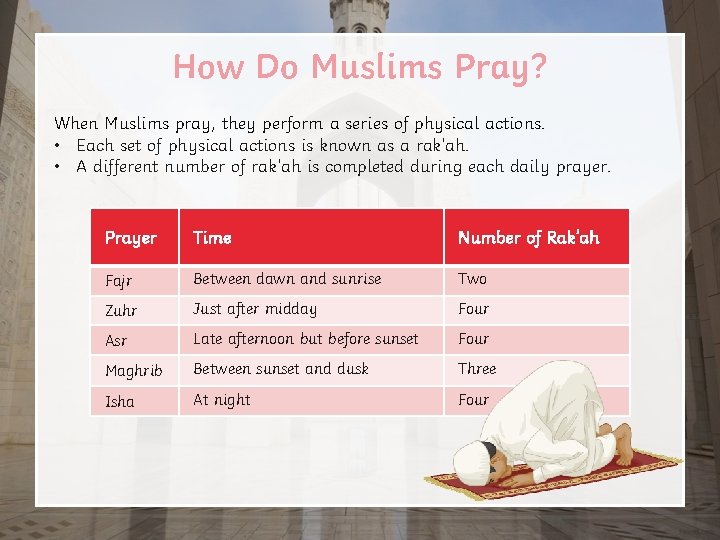
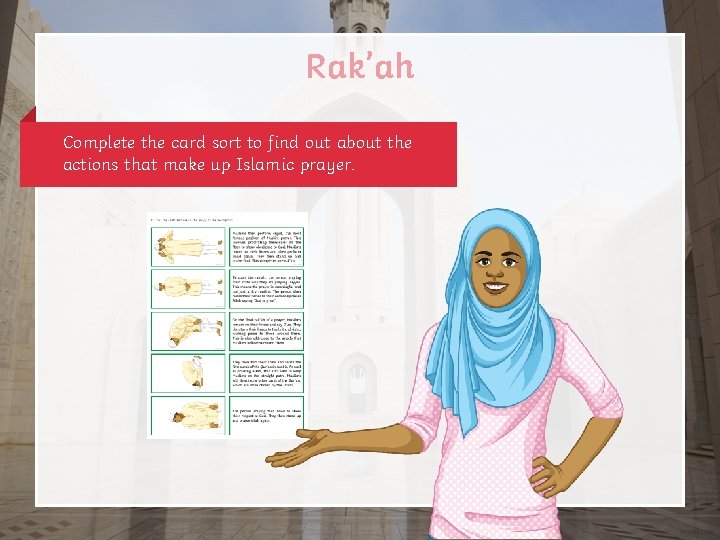
How Do Muslims Pray? When Muslims pray, they perform a series of physical actions. • Each set of physical actions is known as a rak’ah. • A different number of rak’ah is completed during each daily prayer. Prayer Time Number of Rak’ah Fajr Between dawn and sunrise Two Zuhr Just after midday Four Asr Late afternoon but before sunset Four Maghrib Between sunset and dusk Three Isha At night Four
Rak’ah Complete the card sort to find out about the actions that make up Islamic prayer.
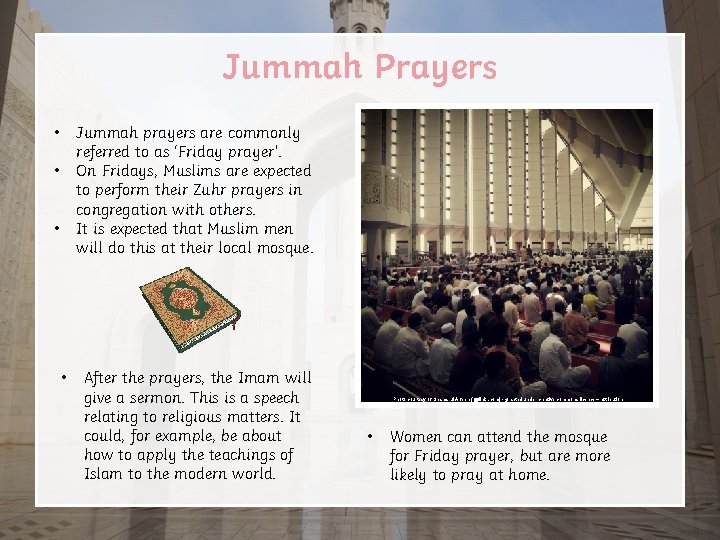
Jummah Prayers Jummah prayers are commonly referred to as ‘Friday prayer’. On Fridays, Muslims are expected to perform their Zuhr prayers in congregation with others. It is expected that Muslim men will do this at their local mosque. • • After the prayers, the Imam will give a sermon. This is a speech relating to religious matters. It could, for example, be about how to apply the teachings of Islam to the modern world. Photo courtesy of Shams ul Arfeen (@flickr. com) - granted under creative commons licence – attribution • Women can attend the mosque for Friday prayer, but are more likely to pray at home.
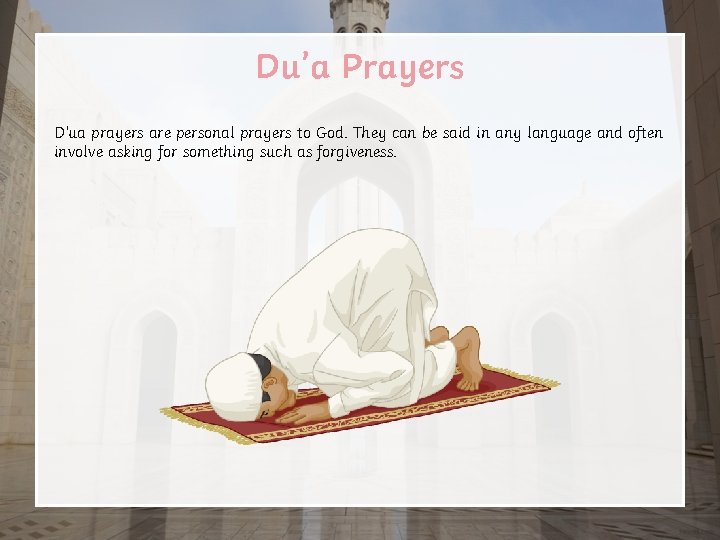
Du’a Prayers D’ua prayers are personal prayers to God. They can be said in any language and often involve asking for something such as forgiveness.
Islamic Prayer Using the information sheet, find out about Jummah and Du’a prayers You should also find about the differences between how Sunni and Shi’a Muslims pray.
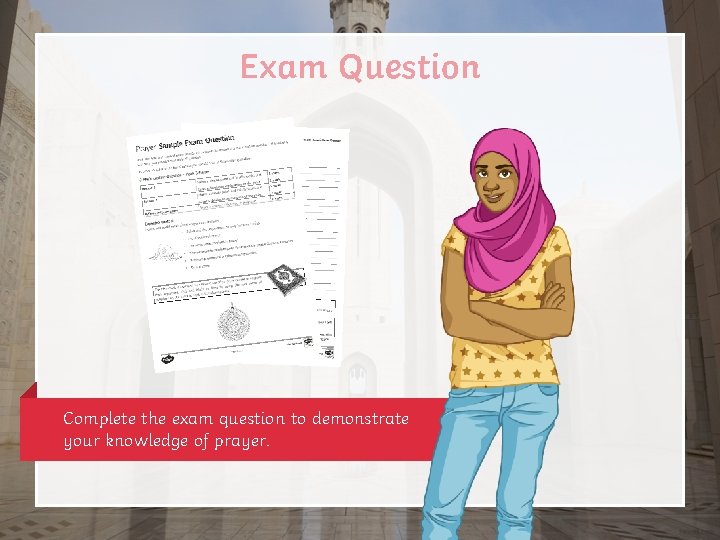
Exam Question Complete the exam question to demonstrate your knowledge of prayer.
Learning Objective • To understand, and be able to explain, the different types of prayer. Success Criteria • To describe the actions that make up Muslim prayer. • To describe what Du’a and Jummah prayer are. • To explain how Shi’a and Sunni Muslims pray differently. Have you met today’s aims?