
Islamic Politics 622 AD two local Arab tribes
Islamic Politics

622 AD • two local Arab tribes constantly warring for control of Medina • Muhammad seen as an impartial outsider that could resolve the conflict • Muhammad and his followers moved to Medina and were invited to rule the city
Medina Charter • Also known as the Constitution of Medina • Officially made him a ruler and recognized him as the prophet of Allah The Constitution established: the security of the community, religious freedoms, the role of Medina as a sacred place (barring all violence and weapons), the security of women, stable tribal relations within Medina, a tax system for supporting the community in time of conflict, parameters for non-Muslim political alliances, a system for granting protection of individuals, a judicial system for resolving disputes, and also regulated the paying of blood money
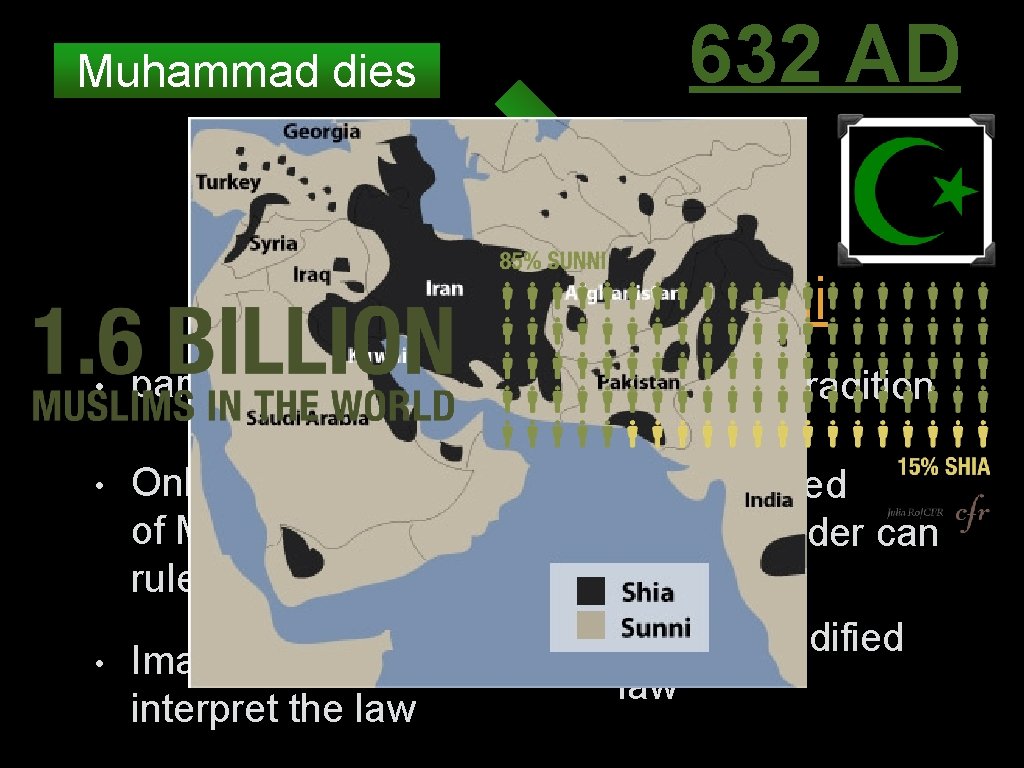
632 AD Muhammad dies Shia Sunni • party of Ali • people of tradition • Only descendants of Muhammad can rule • Imam - can interpret the law • Any qualified Islamic leader can rule Caliph - codified law •
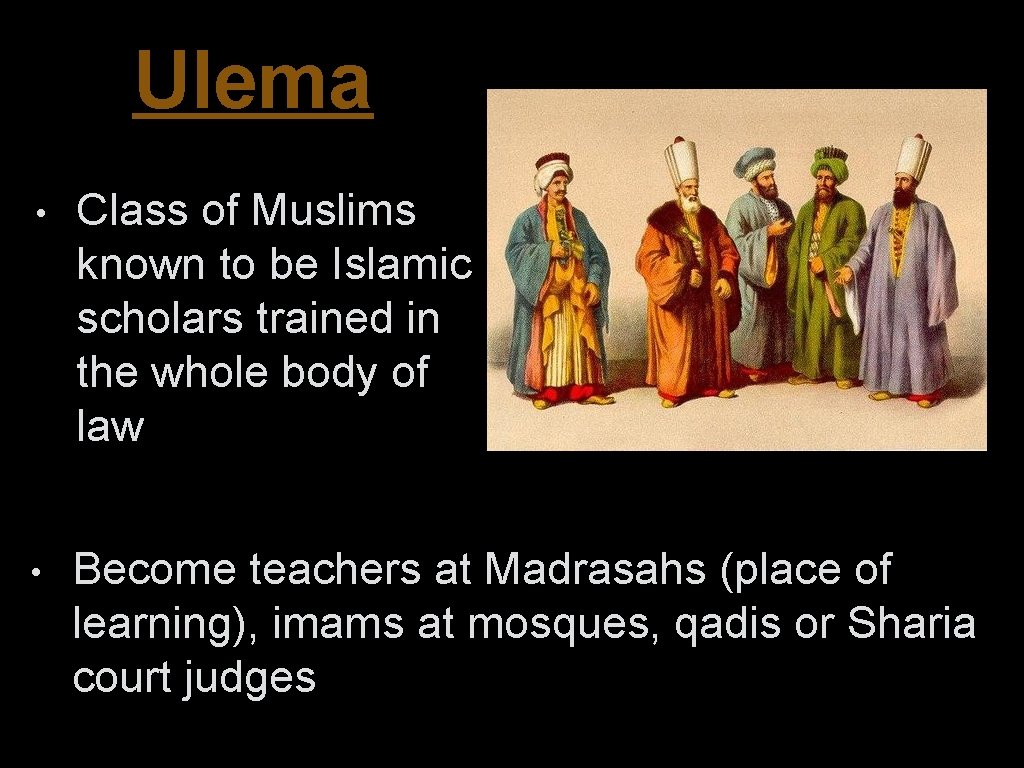
Ulema • Class of Muslims known to be Islamic scholars trained in the whole body of law • Become teachers at Madrasahs (place of learning), imams at mosques, qadis or Sharia court judges
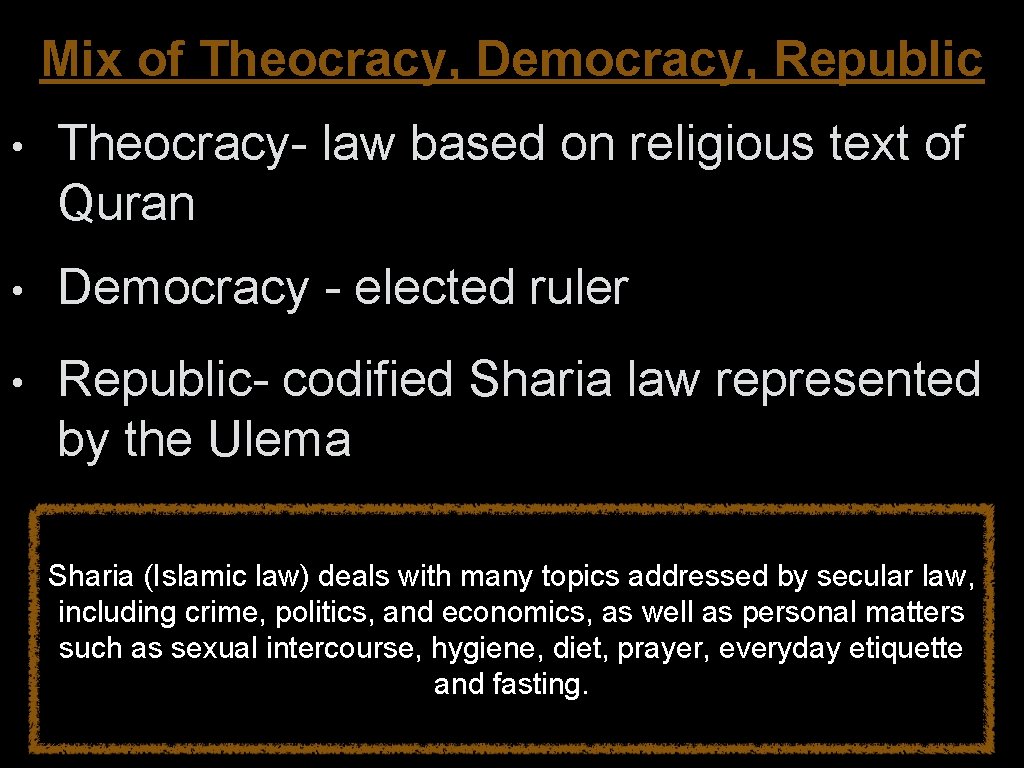
Mix of Theocracy, Democracy, Republic • Theocracy- law based on religious text of Quran • Democracy - elected ruler • Republic- codified Sharia law represented by the Ulema Sharia (Islamic law) deals with many topics addressed by secular law, including crime, politics, and economics, as well as personal matters such as sexual intercourse, hygiene, diet, prayer, everyday etiquette and fasting.
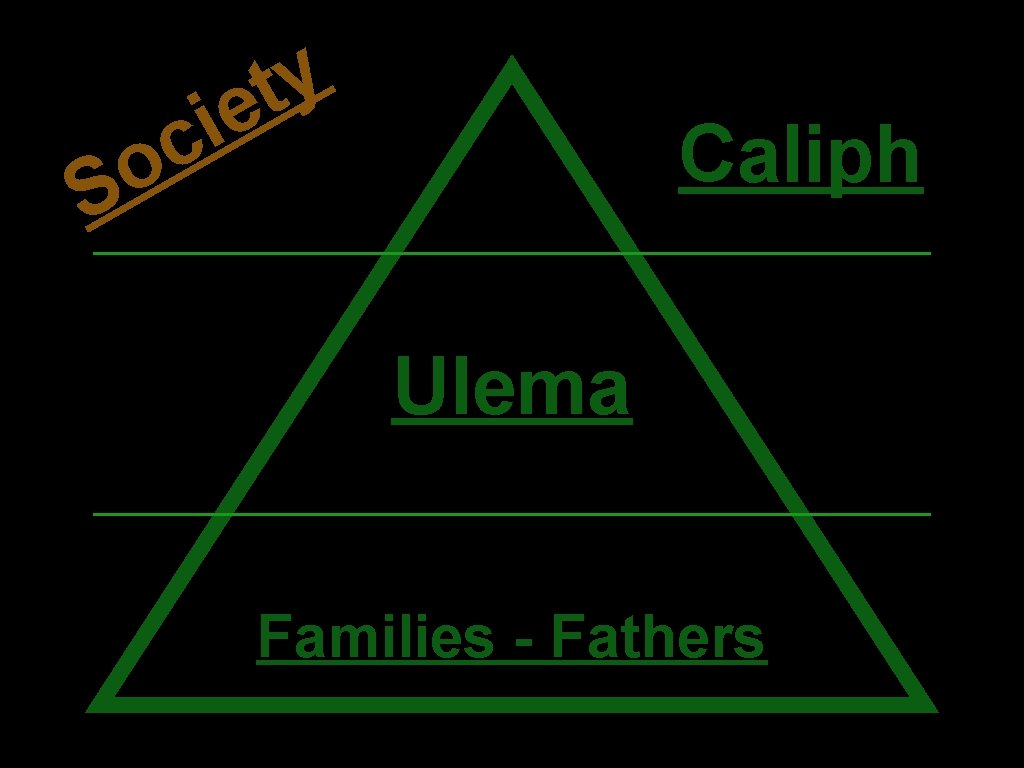
o S y t e i c Caliph Ulema Families - Fathers
- Slides: 7