
Islamic Culture and Contributions Global History and Geography
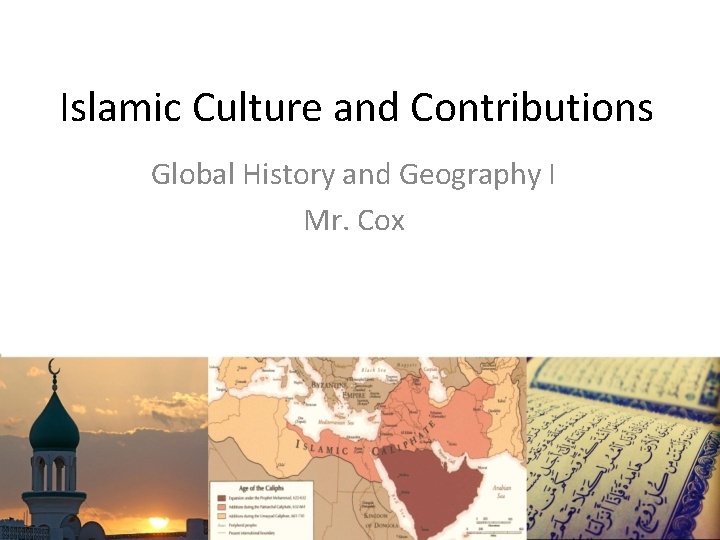
Islamic Culture and Contributions Global History and Geography I Mr. Cox
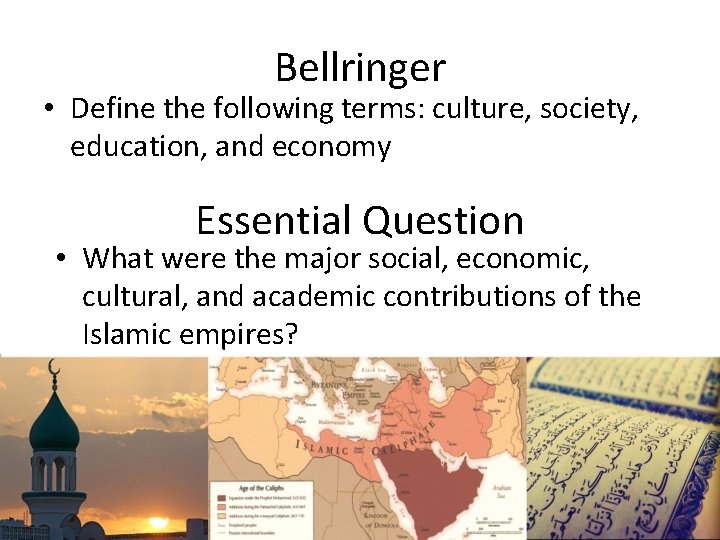
Bellringer • Define the following terms: culture, society, education, and economy Essential Question • What were the major social, economic, cultural, and academic contributions of the Islamic empires?
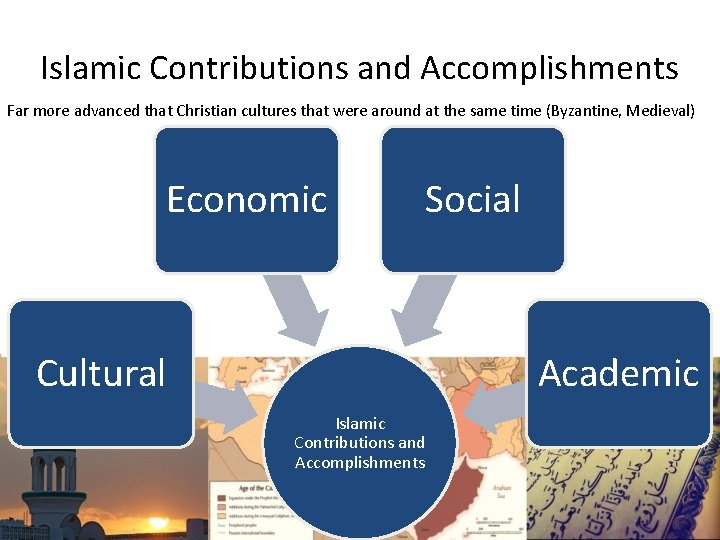
Islamic Contributions and Accomplishments Far more advanced that Christian cultures that were around at the same time (Byzantine, Medieval) Economic Social Cultural Academic Islamic Contributions and Accomplishments
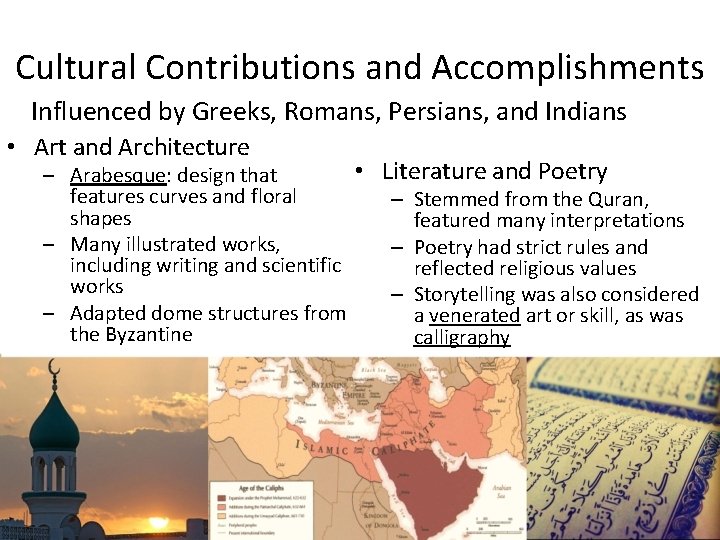
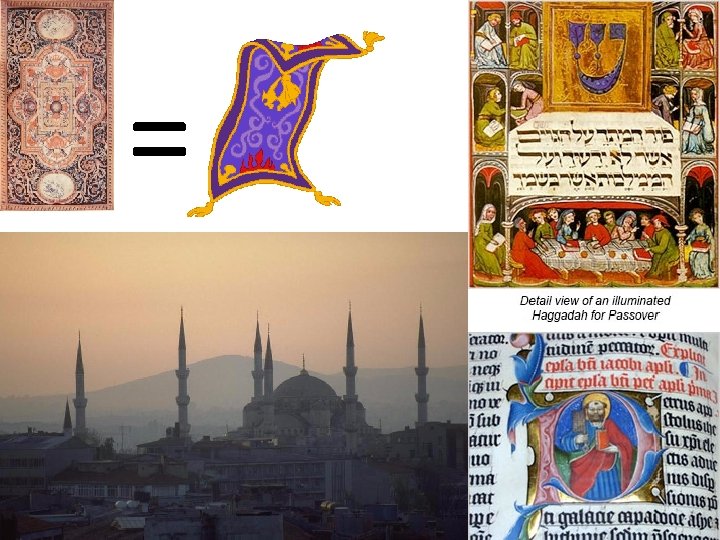
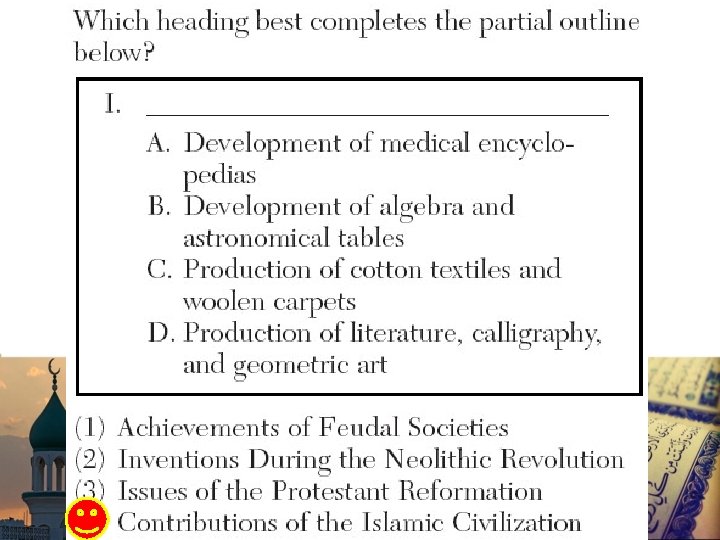
Cultural Contributions and Accomplishments Influenced by Greeks, Romans, Persians, and Indians • Art and Architecture • Literature and Poetry – Arabesque: design that features curves and floral – Stemmed from the Quran, shapes featured many interpretations – Many illustrated works, – Poetry had strict rules and including writing and scientific reflected religious values works – Storytelling was also considered – Adapted dome structures from a venerated art or skill, as was the Byzantine calligraphy
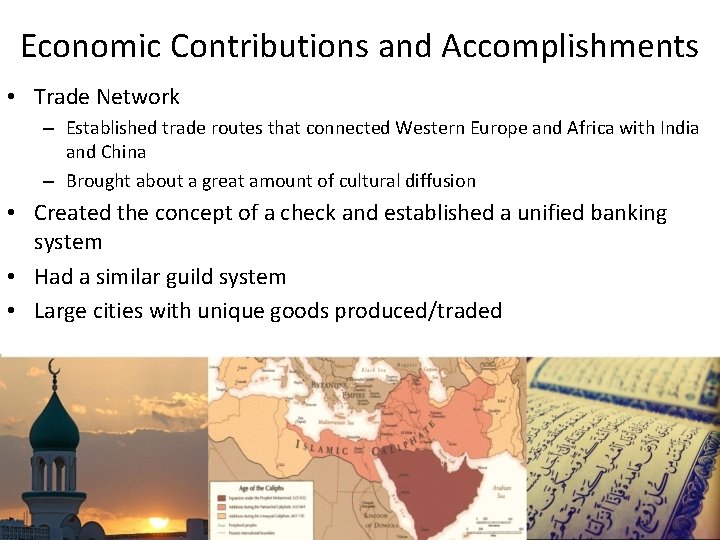
Economic Contributions and Accomplishments • Trade Network – Established trade routes that connected Western Europe and Africa with India and China – Brought about a great amount of cultural diffusion • Created the concept of a check and established a unified banking system • Had a similar guild system • Large cities with unique goods produced/traded
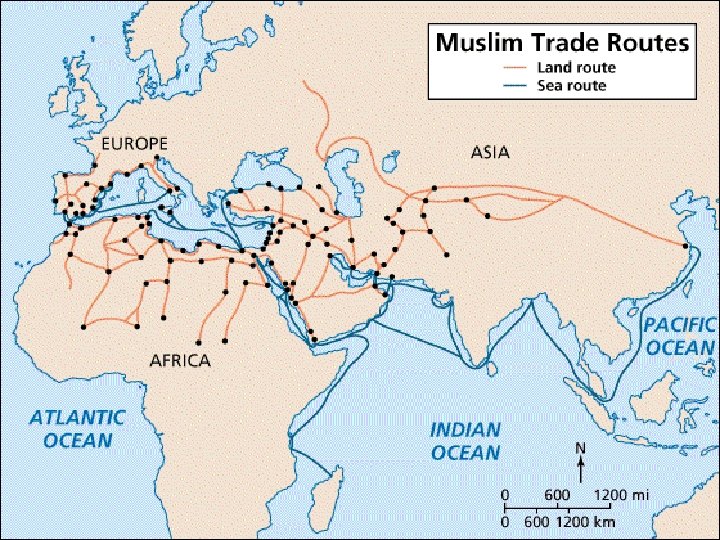
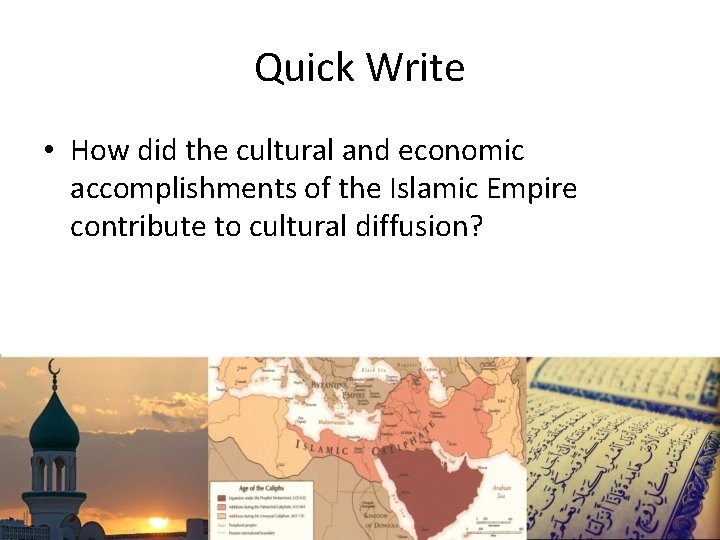
Quick Write • How did the cultural and economic accomplishments of the Islamic Empire contribute to cultural diffusion?
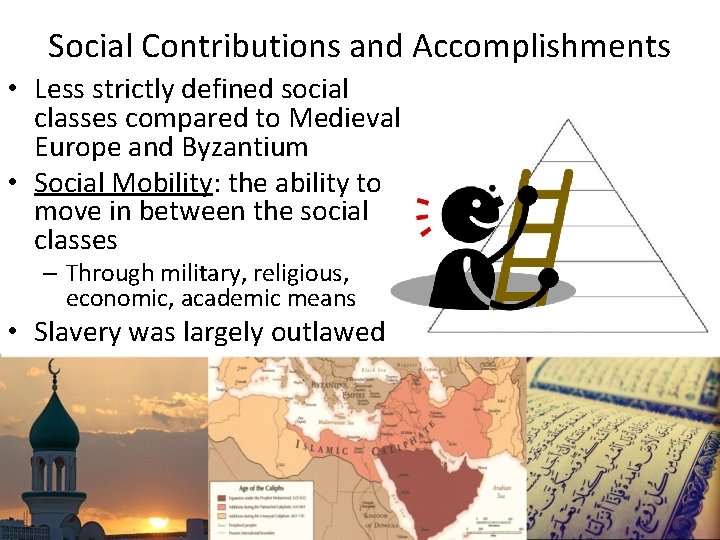
Social Contributions and Accomplishments • Less strictly defined social classes compared to Medieval Europe and Byzantium • Social Mobility: the ability to move in between the social classes – Through military, religious, economic, academic means • Slavery was largely outlawed
Academic Contributions and Accomplishments • Established centers of learning in many cities studying the Quran and translating texts into their vast libraries – Many accomplishments were based off of the advancements made by previous civilizations!
• Philosophy: tried to harmonize knowledge with religion – Ibn Rushd: put knowledge to reason, studied Aristotle – Ibn Khaldun: Established regulations for studying history, including sourcing, bias, exaggeration, and studying in depth on topics

• Mathematics: al-Khwarizmi pioneered modern algebra • Astronomy: Studied eclipses, rotations, and even determined the Earth’s circumference • Medicine: made medicine a profession, studied disease, made encyclopedias of prescriptions, and even began to establish standards for safe surgery!
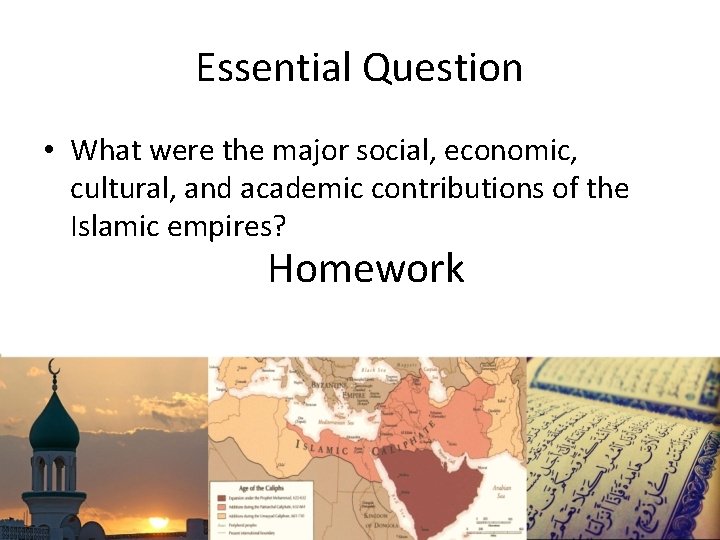
Essential Question • What were the major social, economic, cultural, and academic contributions of the Islamic empires? Homework
- Slides: 15