
ISLAMIC ART Art Smart 6 th grade ISLAMIC
- Slides: 10
ISLAMIC ART Art Smart | 6 th grade
ISLAMIC ART – WHAT IS IT?
ISLAMIC ART
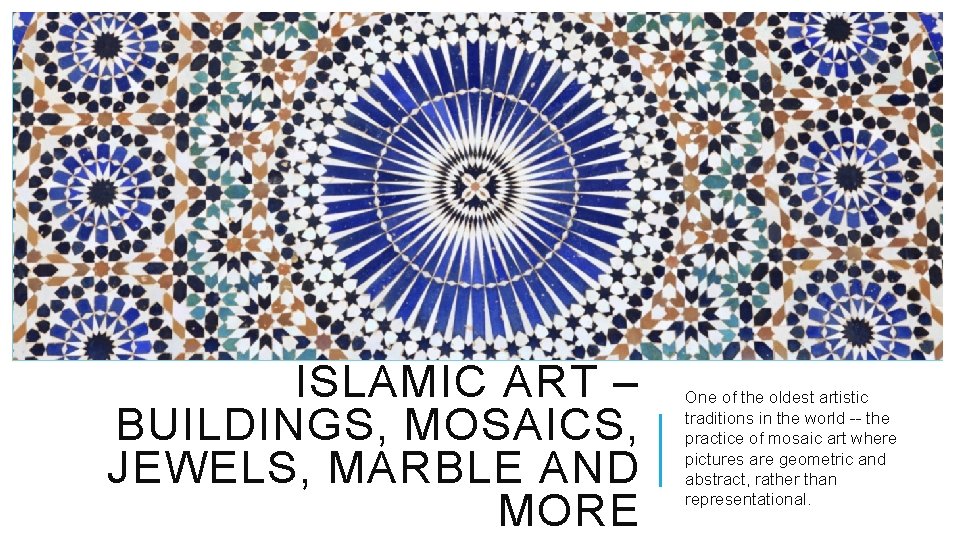
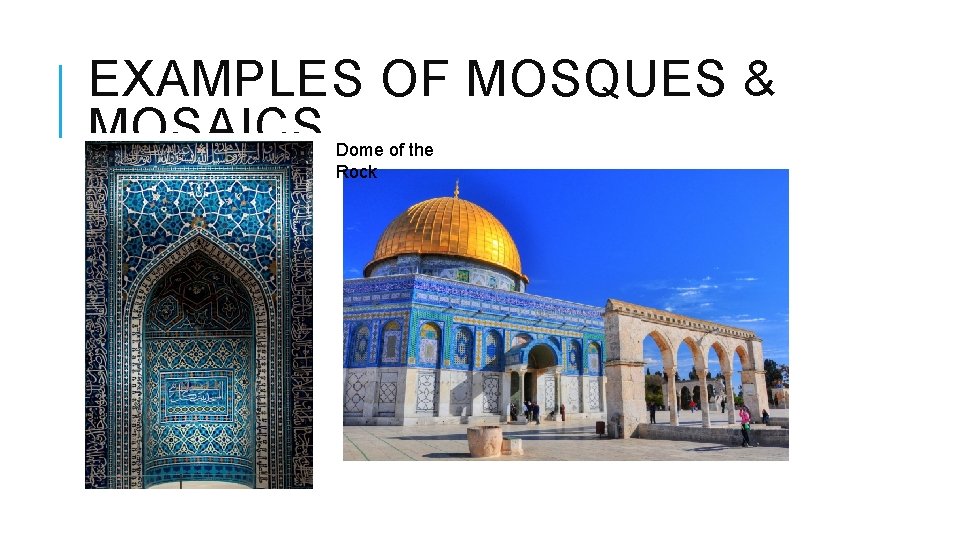
ISLAMIC ART – BUILDINGS, MOSAICS, JEWELS, MARBLE AND MORE One of the oldest artistic traditions in the world -- the practice of mosaic art where pictures are geometric and abstract, rather than representational.
EXAMPLES OF MOSQUES & MOSAICS Dome of the Rock
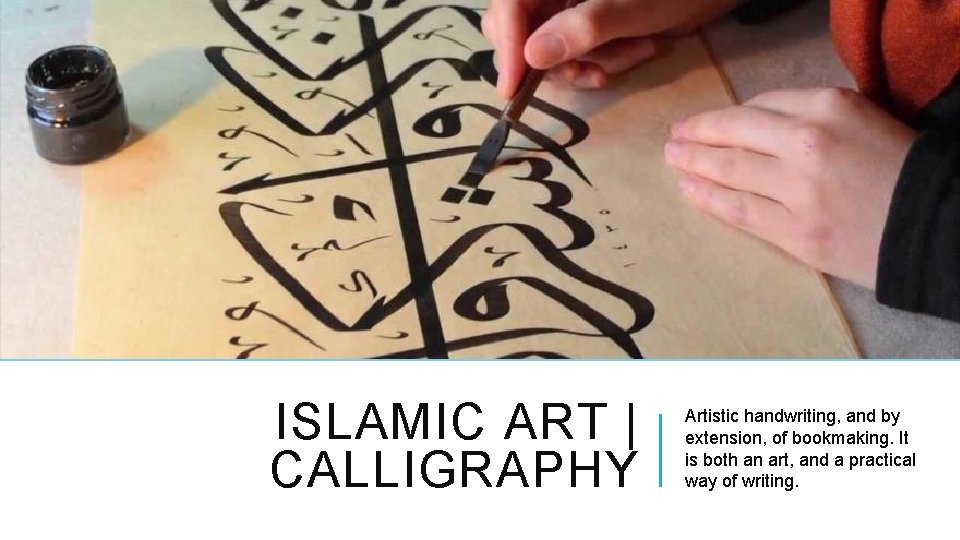
ISLAMIC ART | CALLIGRAPHY Artistic handwriting, and by extension, of bookmaking. It is both an art, and a practical way of writing.
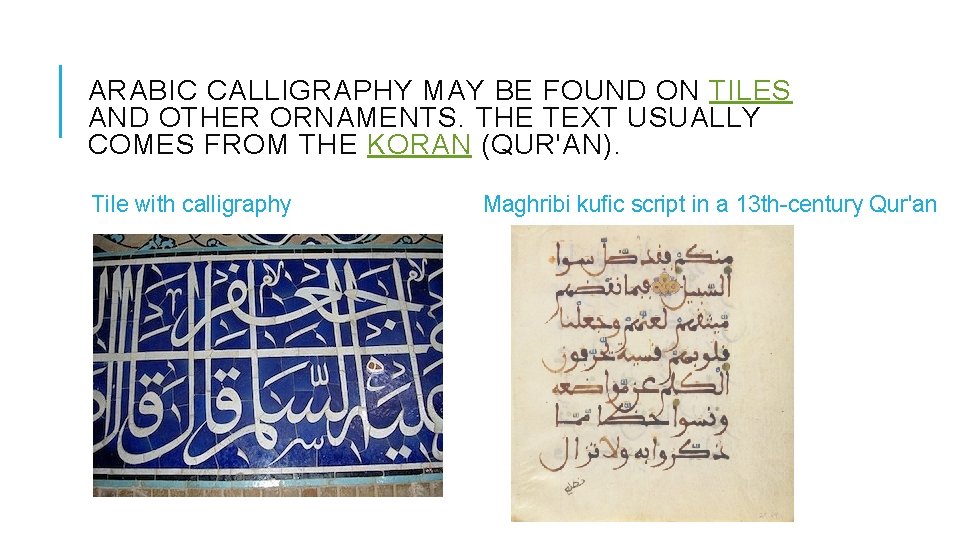
ARABIC CALLIGRAPHY MAY BE FOUND ON TILES AND OTHER ORNAMENTS. THE TEXT USUALLY COMES FROM THE KORAN (QUR'AN). Tile with calligraphy Maghribi kufic script in a 13 th-century Qur'an
HISTORY LESSON – IN 1258 PERSIA WAS CAPTURED BY THE MONGOLS. The Mongols destroyed most architecture and arts of the period. Illuminated manuscripts of the Koran and secular books were the main art that survived.
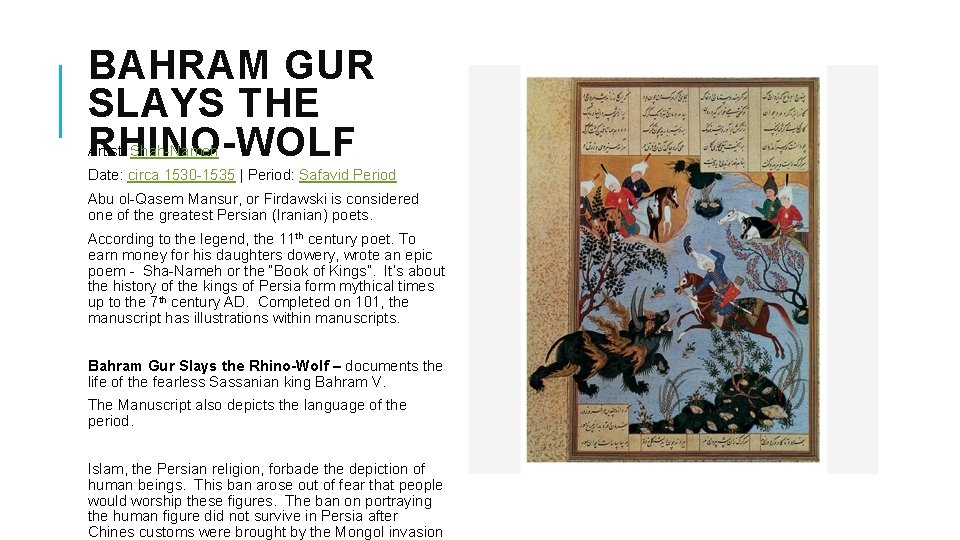
BAHRAM GUR SLAYS THE RHINO-WOLF Artist: Shah-Nameh Date: circa 1530 -1535 | Period: Safavid Period Abu ol-Qasem Mansur, or Firdawski is considered one of the greatest Persian (Iranian) poets. According to the legend, the 11 th century poet. To earn money for his daughters dowery, wrote an epic poem - Sha-Nameh or the “Book of Kings”. It’s about the history of the kings of Persia form mythical times up to the 7 th century AD. Completed on 101, the manuscript has illustrations within manuscripts. Bahram Gur Slays the Rhino-Wolf – documents the life of the fearless Sassanian king Bahram V. The Manuscript also depicts the language of the period. Islam, the Persian religion, forbade the depiction of human beings. This ban arose out of fear that people would worship these figures. The ban on portraying the human figure did not survive in Persia after Chines customs were brought by the Mongol invasion
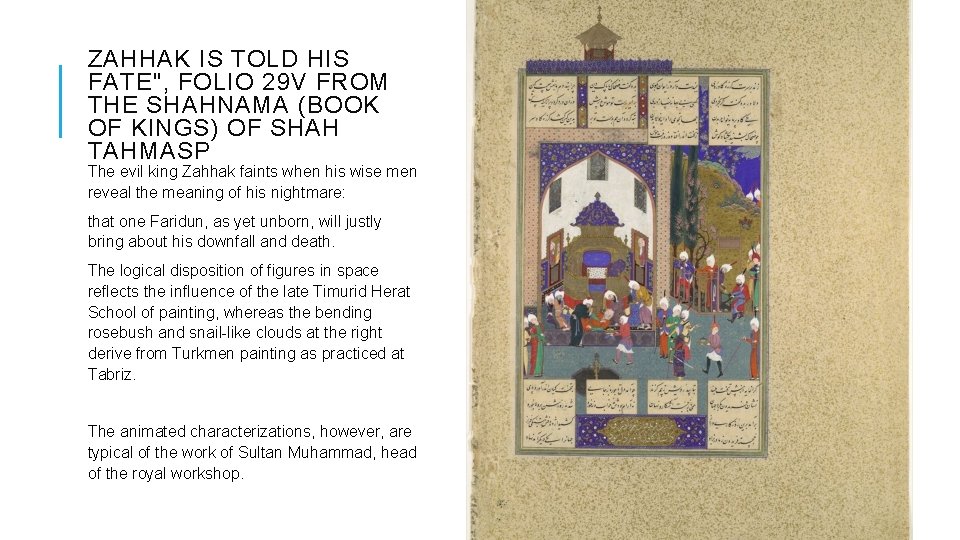
ZAHHAK IS TOLD HIS FATE", FOLIO 29 V FROM THE SHAHNAMA (BOOK OF KINGS) OF SHAH TAHMASP The evil king Zahhak faints when his wise men reveal the meaning of his nightmare: that one Faridun, as yet unborn, will justly bring about his downfall and death. The logical disposition of figures in space reflects the influence of the late Timurid Herat School of painting, whereas the bending rosebush and snail-like clouds at the right derive from Turkmen painting as practiced at Tabriz. The animated characterizations, however, are typical of the work of Sultan Muhammad, head of the royal workshop.