
ISL Shared Services Hub DSPL Strategic Group October

ISL Shared Services Hub: DSPL Strategic Group October 2020
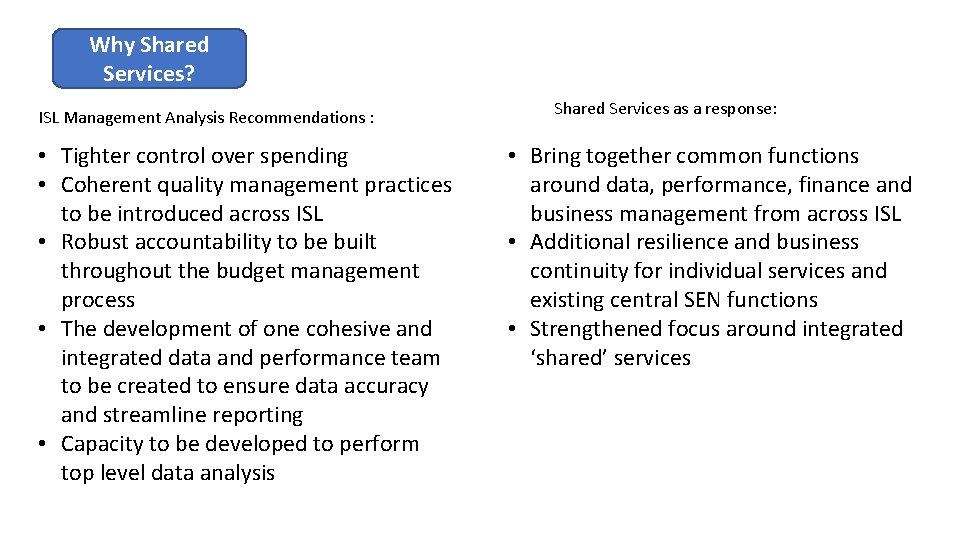
Why Shared Services? ISL Management Analysis Recommendations : • Tighter control over spending • Coherent quality management practices to be introduced across ISL • Robust accountability to be built throughout the budget management process • The development of one cohesive and integrated data and performance team to be created to ensure data accuracy and streamline reporting • Capacity to be developed to perform top level data analysis Shared Services as a response: • Bring together common functions around data, performance, finance and business management from across ISL • Additional resilience and business continuity for individual services and existing central SEN functions • Strengthened focus around integrated ‘shared’ services

Shared Services in a nutshell Performance Intelligence and Insight Consistent Quality Management across ISL Value-adding and flexible Business Support Enhanced Budget Management and Monitoring Enhanced understanding, monitoring and reporting of activity Evidence base for identifying priorities and driving action Underpinning evaluation of impact Promoting and adding value to the work of our services
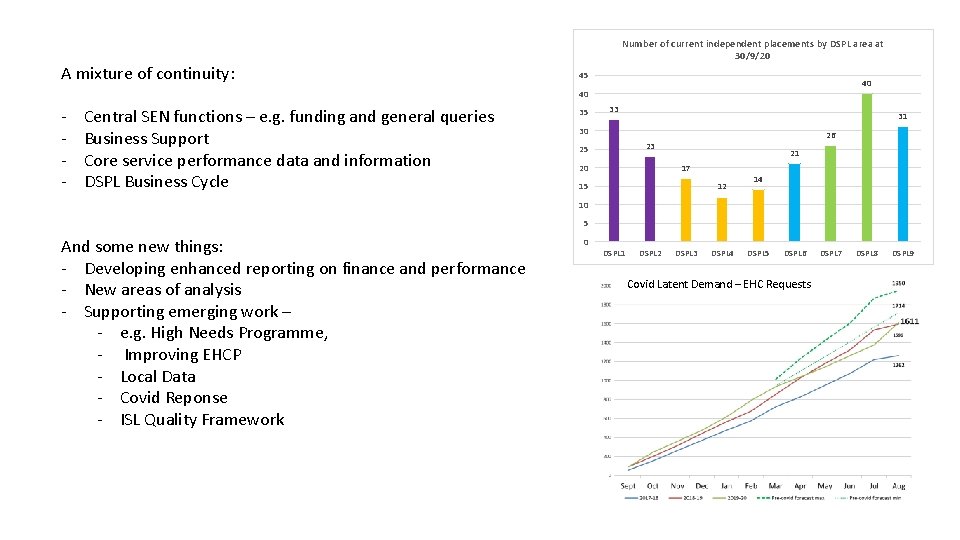
A mixture of continuity: Number of current independent placements by DSPL area at 30/9/20 45 40 40 - Central SEN functions – e. g. funding and general queries Business Support Core service performance data and information DSPL Business Cycle 35 33 31 30 26 23 25 20 21 17 15 12 14 10 5 And some new things: - Developing enhanced reporting on finance and performance - New areas of analysis - Supporting emerging work – - e. g. High Needs Programme, - Improving EHCP - Local Data - Covid Reponse - ISL Quality Framework 0 DSPL 1 DSPL 2 DSPL 3 DSPL 4 DSPL 5 DSPL 6 Covid Latent Demand – EHC Requests DSPL 7 DSPL 8 DSPL 9
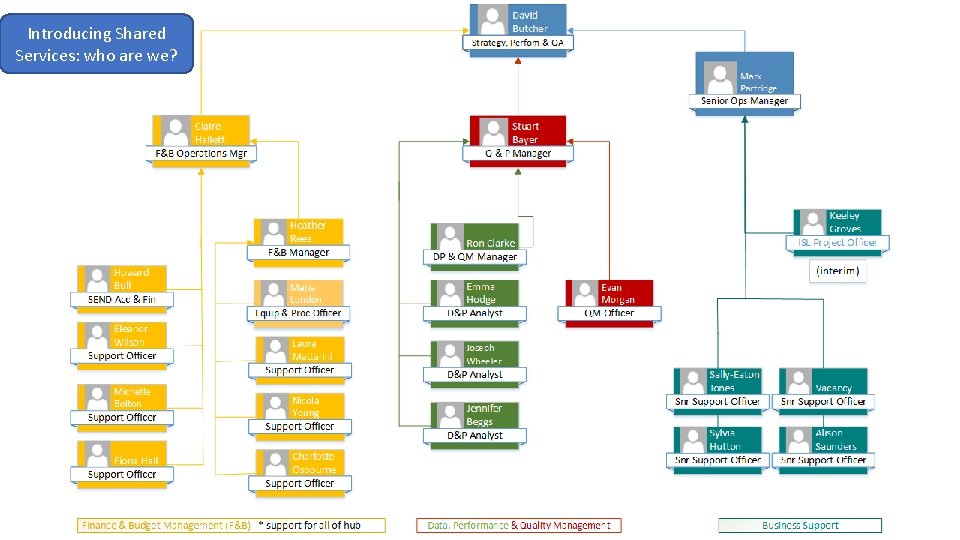
Introducing Shared Services: who are we?
Questions?
- Slides: 6