
ISIT Strategic Analysis Determining the Future Potential Presented
- Slides: 20
IS/IT Strategic Analysis: Determining the Future Potential Presented by: Benny Sia 19/08/04 version 1. 0 1
Table of Contents ¨ Objectives ¨ Analytical tools ¨ Value Chain Analysis – Internal and external analysis ¨ Conclusions ¨ References 19/08/04 version 1. 0 2
Objectives ¨ Understand the current situation ¨ The use of analytical tools ¨ Linkage of each systems ¨ To what extent these systems enable separate activities to perform harmoniously. ¨ Strategic thinking 19/08/04 version 1. 0 3
Analytical tools ¨ Application portfolio ¨ Porter’s 5 Forces ¨ Value Chain models ¨ SWOT ¨ One problem – which to use and when? ¨ Neuman 1 recognizes that they’re a means of helping the thinking process, not a recipe for identified of strategic systems. 19/08/04 version 1. 0 4
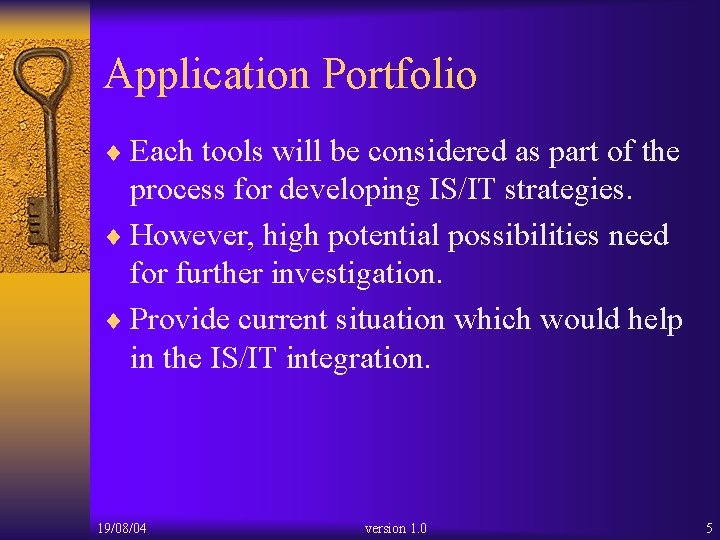
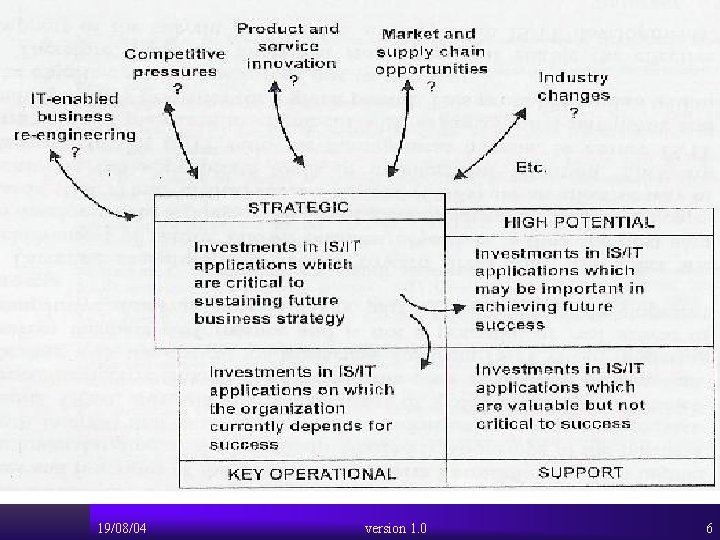
Application Portfolio ¨ Each tools will be considered as part of the process for developing IS/IT strategies. ¨ However, high potential possibilities need for further investigation. ¨ Provide current situation which would help in the IS/IT integration. 19/08/04 version 1. 0 5
19/08/04 version 1. 0 6
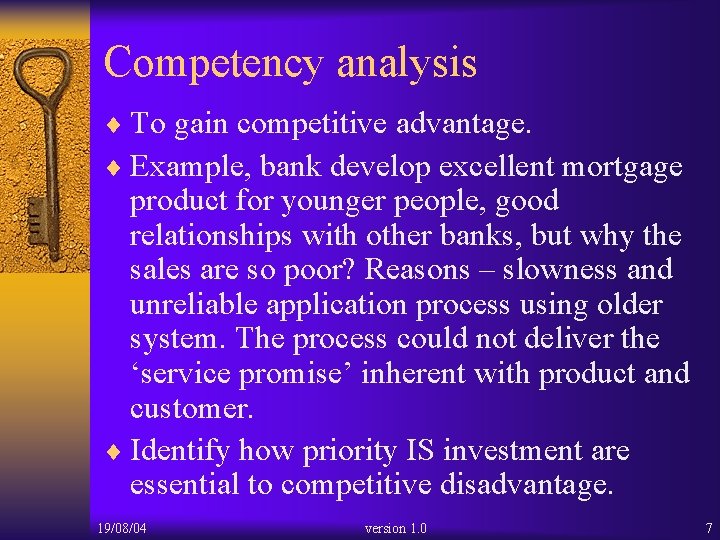
Competency analysis ¨ To gain competitive advantage. ¨ Example, bank develop excellent mortgage product for younger people, good relationships with other banks, but why the sales are so poor? Reasons – slowness and unreliable application process using older system. The process could not deliver the ‘service promise’ inherent with product and customer. ¨ Identify how priority IS investment are essential to competitive disadvantage. 19/08/04 version 1. 0 7
19/08/04 version 1. 0 8
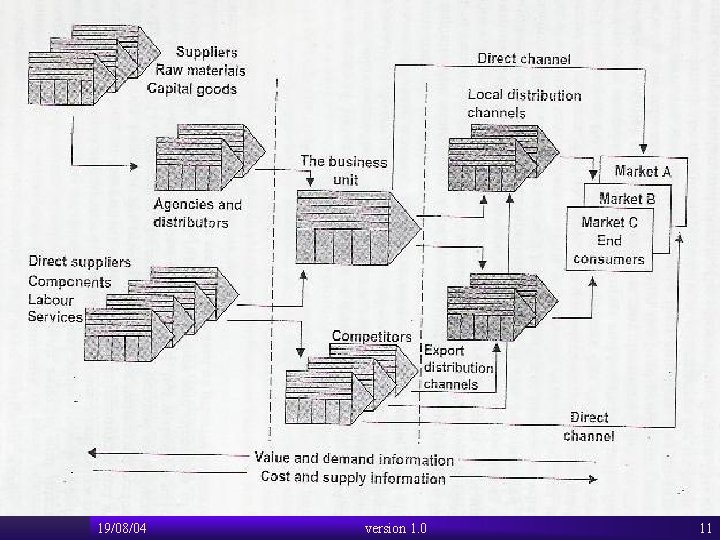
Value Chain Analysis ¨ Value chain of the business unit is only one part of a larger set of value-adding activities in an industry. ¨ The actions of other parties – customers, suppliers and competitors – will have a significant impact on what the firm does and how it does it. ¨ People’s output can be your input. ¨ External an Internal value chain 19/08/04 version 1. 0 9
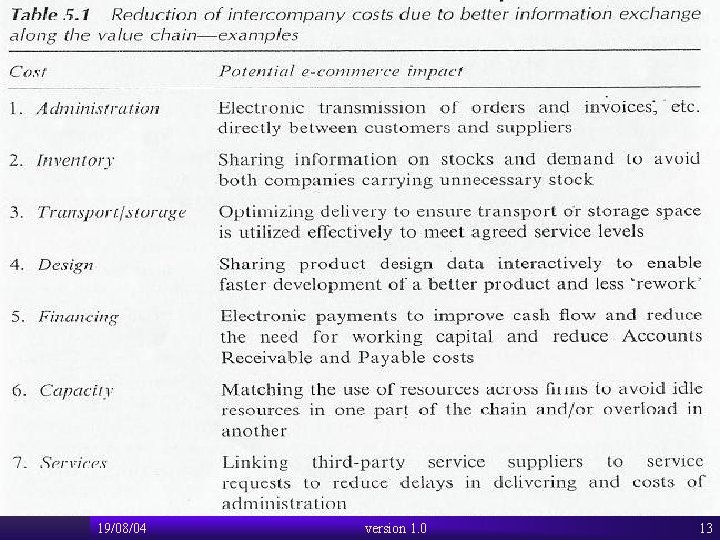
External Value Chain ¨ Maximize its value-added and minimize its costs on how well the demand supply information are matched at all stages. ¨ Poor information means resources are wasted will increase cost without increase revenue. ¨ Non-profit industries such as government, health care and charities always matching of supply and demand to achieve break-even. 19/08/04 version 1. 0 10
19/08/04 version 1. 0 11
External value chain ¨ Strategic thinking – What information is available? – Who are they? – How they can be influenced? ¨ Key of information flow can be examined to see how the process be improved in terms of accuracy, speed, cost or timeliness ¨ Many information exchanges cannot easily be improved without willing cooperation of trading partners. 19/08/04 version 1. 0 12
19/08/04 version 1. 0 13
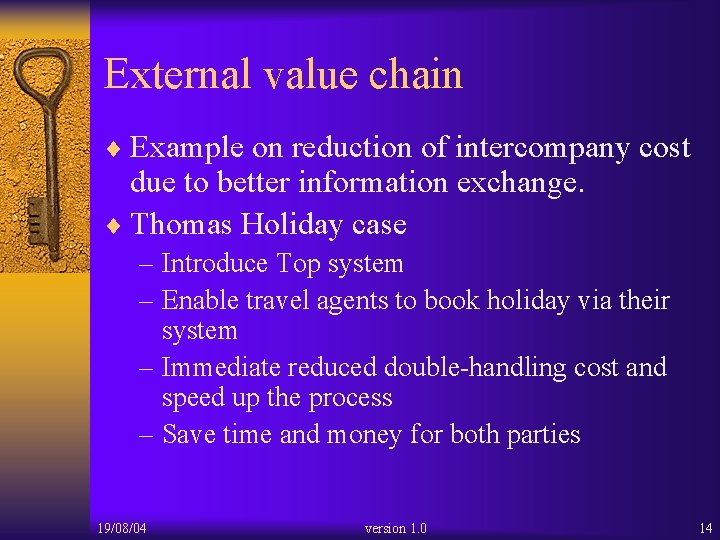
External value chain ¨ Example on reduction of intercompany cost due to better information exchange. ¨ Thomas Holiday case – Introduce Top system – Enable travel agents to book holiday via their system – Immediate reduced double-handling cost and speed up the process – Save time and money for both parties 19/08/04 version 1. 0 14
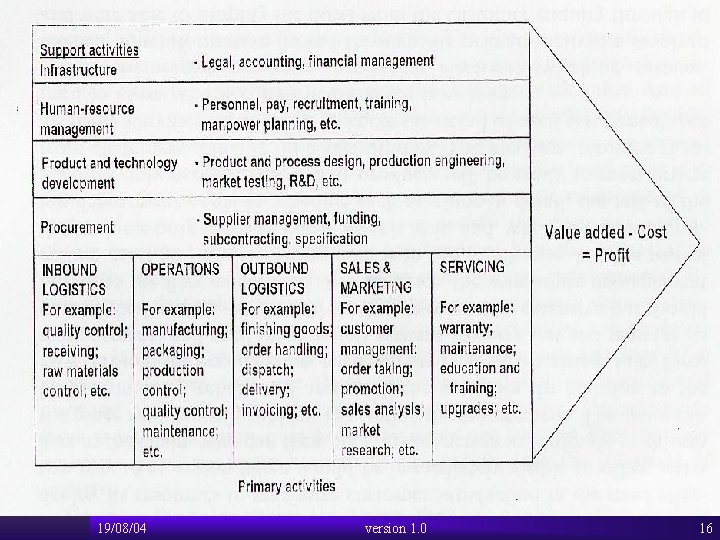
Internal value chain ¨ Assessing and improving how company operates ¨ What the company does rather how it does it – look at the activities it performs to contribute to the value-adding process ¨ 2 types of business activities – primary and support activities 19/08/04 version 1. 0 15
19/08/04 version 1. 0 16
The use of value chain analysis ¨ Information flow throughout the industry, when and where the information is available, who has it and how to turn that into advantage. Example, fashion goods – ‘demand’ information is critical factor. ¨ Information exchange with customers and suppliers throughout the chain to improve the performance. Example, EDI 19/08/04 version 1. 0 17
¨ How effectively the information flows through the primary processes – Within each activity to optimize performance – Linking activities together to avoid unnecessary cost and missed opportunities – Enable support activities to contribute to the value-adding 19/08/04 version 1. 0 18
Conclusion ¨ Value chain analysis should extent their context ( industry value chain) in order to achieve maximum leverage IS/IT investment. ¨ Future planning IS/IT should identify the business opportunities and threats presented by developing use of IS/IT in the industry. 19/08/04 version 1. 0 19
References 1. 2. 3. 4. 19/08/04 Neumann, S. , (1994), Strategic Information Systems, Macmillan, London. Porter, M. E, (1985), Competitive Advantage: Creating and sustaining Superior Performance, Free Press, New York. Strategy: value chain analysis, (2003), [ Online], Available: http: //www. tutor 2 u. net/business/strategy/value_chain_an alysis. htm [17 August 2004]. Ward, J. & Peppard, J. , (2002), Strategic Planning for Information Systems, 3 rd Edition, p. 237 – 275, Wiley & Son, UK. version 1. 0 20