
Ishikawa Diagram Also known as Fishbone Diagram or

Ishikawa Diagram Also known as Fishbone Diagram or Cause and Effect Analysis 1 PRIVILEGED AND CONFIDENTIAL
What is it? § AKA – FISHBONE DIAGRAM § CREATED BY DR. KAORU ISHIKAWA • Japanese QC statistician in the 1960’s § QUALITY IMPROVEMENT TOOL § CAUSE-AND-EFFECT DIAGRAM § PROBLEM SOLVING TOOL 2 • Systematic way • Big / High Level Problems • Behavioral as well as Technical • Also used for smaller problems. PRIVILEGED AND CONFIDENTIAL
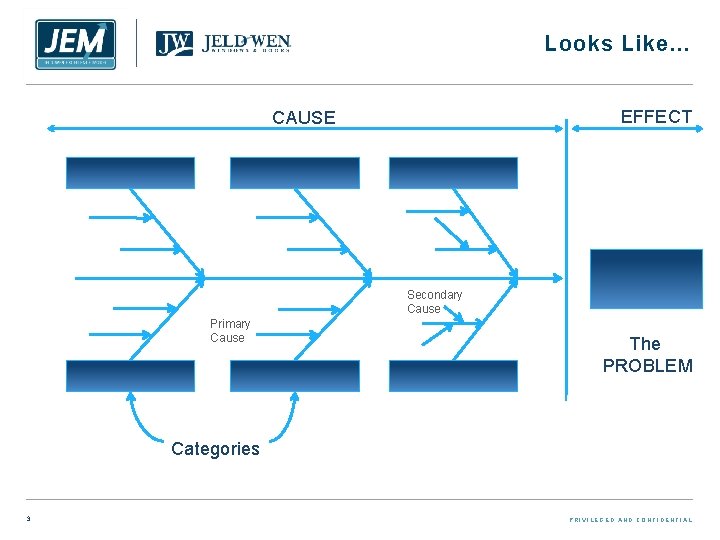
Looks Like… EFFECT CAUSE Secondary Cause Primary Cause The PROBLEM Categories 3 PRIVILEGED AND CONFIDENTIAL
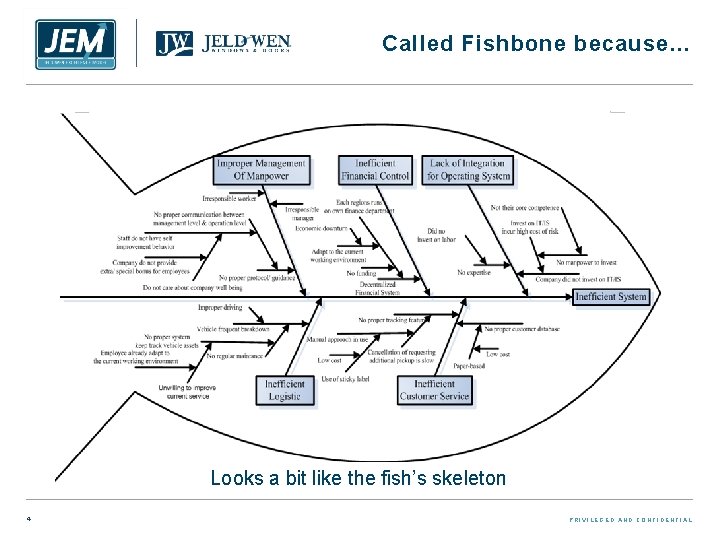
Called Fishbone because… Looks a bit like the fish’s skeleton 4 PRIVILEGED AND CONFIDENTIAL
Purpose § Cause and Effect Analysis is used to identify the causes, factors, and sources of variation that lead to a specific results, event, or defect in a process or product § (Identify what is causing a performance problem) § Grouping into categories (branches), helps organize and identify potential causes § Graphically displays relationship between causes and their effect. § Tool that is used along with 5 why and Brainstorming 5 PRIVILEGED AND CONFIDENTIAL
Advantages / Disadvantages ADVANTAGES DISADVANTAGES § Permits a thoughtful analysis that avoids overlooking any possible root causes for a need. § Can make it difficult to represent the truly interrelated nature of problems and causes in some very complex situations. § Easy to implement and creates an easy-to-understand visual representation of the causes, categories of causes, and the need. § Focuses the group on the “big picture” as to possible causes or influencing factors of the problem/need § If not given enough space to draw fishbone, you may find you are not able to explore the cause and effect relationships in as much detail as you would like to. § Even after the need has been addressed, the fishbone diagram shows areas of weakness that can be rectified before causing more sustained difficulties. 6 PRIVILEGED AND CONFIDENTIAL
How to use it? § Define the effect. Be specific about the problem § Choose the categories - Most common set Man (People); Machine (Equipment); Process (Method); Material; Environment; Management § Brainstorming possible causes - Ask Why? - And Why Else? . . . - Using diagram helps broaden and focus thinking 7 PRIVILEGED AND CONFIDENTIAL
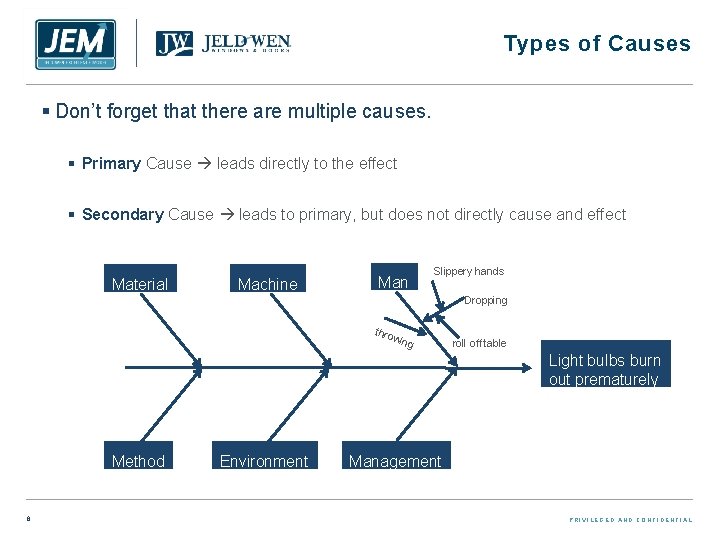
Types of Causes § Don’t forget that there are multiple causes. § Primary Cause leads directly to the effect § Secondary Cause leads to primary, but does not directly cause and effect Material Machine Man Slippery hands Dropping thro win g roll off table Light bulbs burn out prematurely Method 8 Environment Management PRIVILEGED AND CONFIDENTIAL
How to use it? (Cont. ) § DETERMINE IS ROOT CAUSE - Ask the following questions: • Would problem have occurred if this cause was not present? • Would problem re-occur if cause was corrected? - If answer NO to both questions, circle cause § INVESTIGATE - Gather data to confirm if real or not (if you do not have already) - Pick main 5 probable causes based on data – and rank them § Eliminate them. Have an action plan to track § Validate if the effect changed as you would have expected 9 PRIVILEGED AND CONFIDENTIAL
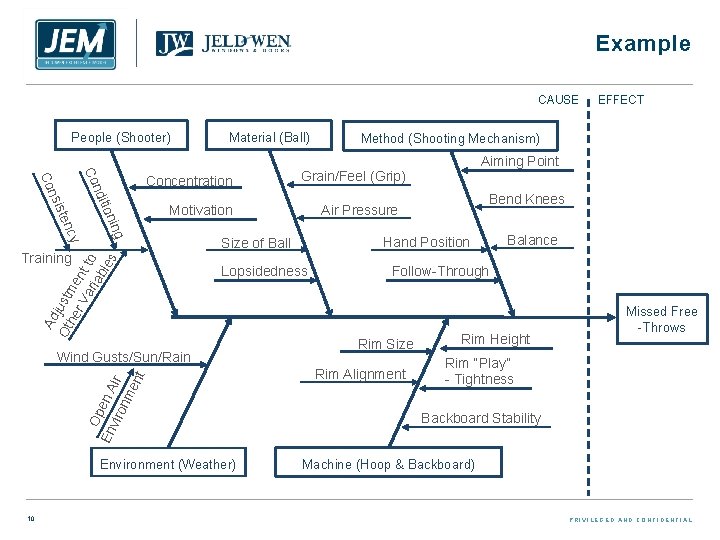
Example CAUSE People (Shooter) Material (Ball) Co ndi ing Ad Ot justm he r V ent ari to ab les t Balance Follow-Through Rim Size Rim Alignment Rim Height Missed Free -Throws Rim “Play” - Tightness Backboard Stability En Op en viro Air nm en Bend Knees Hand Position Lopsidedness Wind Gusts/Sun/Rain Aiming Point Air Pressure Size of Ball Training Method (Shooting Mechanism) Grain/Feel (Grip) Motivation ncy ste nsi Co Concentration EFFECT Environment (Weather) 10 Machine (Hoop & Backboard) PRIVILEGED AND CONFIDENTIAL
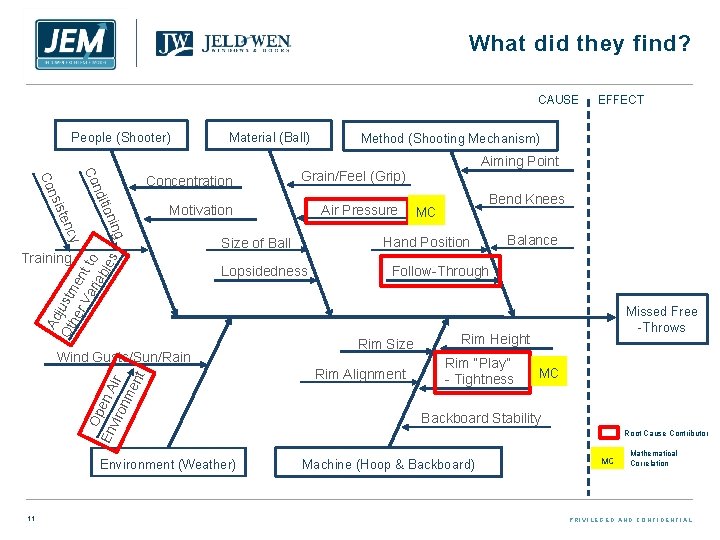
What did they find? CAUSE People (Shooter) Material (Ball) Co ndi Air Pressure ing Ad Ot justm he r V ent ari to ab les Lopsidedness Bend Knees MC Balance Follow-Through Rim Size Rim Alignment Missed Free -Throws Rim Height Rim “Play” - Tightness MC Backboard Stability Root Cause Contributor En Op en viro Air nm en t Wind Gusts/Sun/Rain Aiming Point Hand Position Size of Ball Training Method (Shooting Mechanism) Grain/Feel (Grip) Motivation ncy ste nsi Co Concentration EFFECT Environment (Weather) 11 Machine (Hoop & Backboard) MC Mathematical Correlation PRIVILEGED AND CONFIDENTIAL
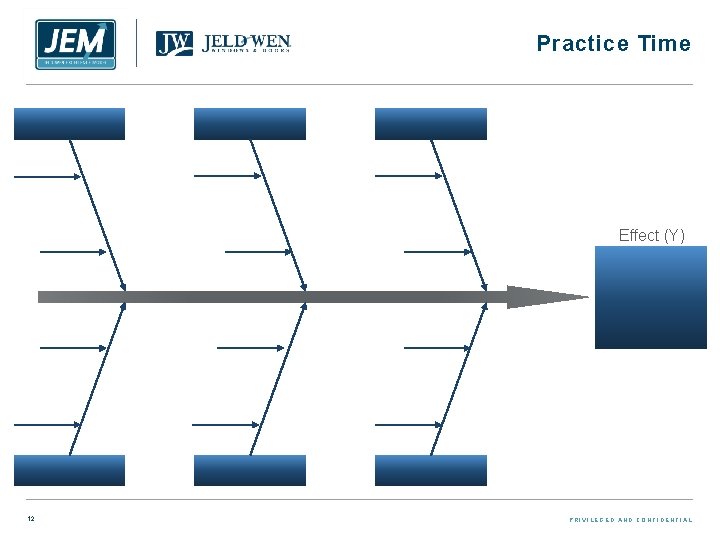
Practice Time Effect (Y) 12 PRIVILEGED AND CONFIDENTIAL
Thank You
- Slides: 13