
Isermann Ch 1 Notes Rolf Isermann Mechatronic Systems
- Slides: 10
Isermann Ch 1 Notes Rolf Isermann Mechatronic Systems Springer 2005
Background: Historical sequence o From Mechanical to Mechatronic n Pure mechanical systems (previous centuries p Include feedback elements EG. Governor on steam engine p Control by levers, gears ratchets etc. n Add electrical actuators (motors) p Electrical n Control: Relays switches etc. Electro-mechanical systems
Sequence (cont) o Electronic control n Low-current systems, safer, easier to work with, (cheaper? ) o Computer control n Grerater flexibility (software)
Integration o Combined design approach n Equivalent systems p EG mass/damper/spring RLC circuit o Use best features of each medium o New design tools
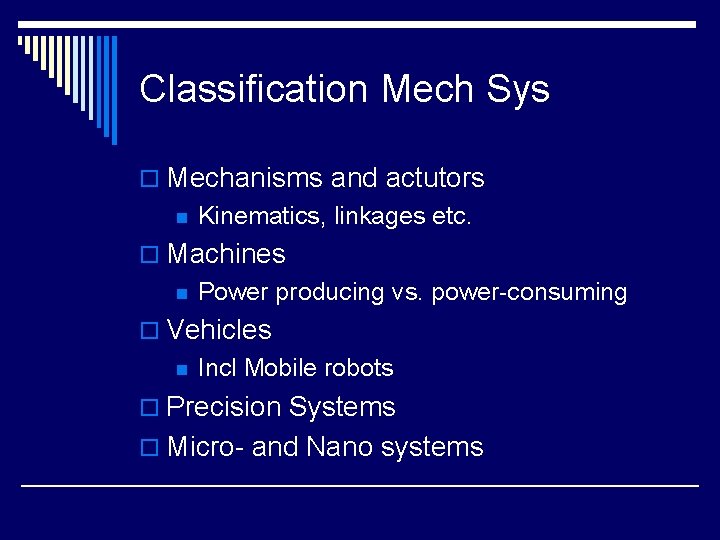
Classification Mech Sys o Mechanisms and actutors n Kinematics, linkages etc. o Machines n Power producing vs. power-consuming o Vehicles n Incl Mobile robots o Precision Systems o Micro- and Nano systems
Traditional vs. Mechatronic design o Table 1. 1, 1. 2
Control layers o Fig 1. 9 o Responsiveness vs. abstraction n n Computer languages Real-time o Modeling
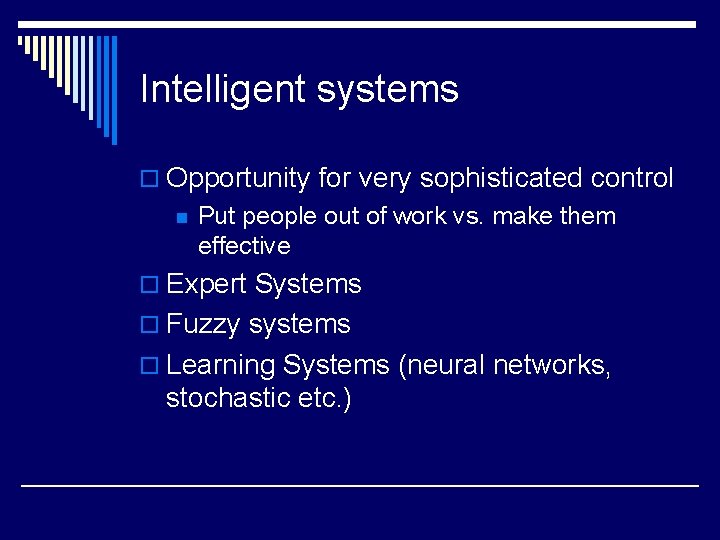
Intelligent systems o Opportunity for very sophisticated control n Put people out of work vs. make them effective o Expert Systems o Fuzzy systems o Learning Systems (neural networks, stochastic etc. )
Design Approaches o Fig 1. 15
Review o Benefits from integrated Design o Need to cross traditional design boundaries