
ISDN REFERENCE MODEL BASIC RATE ACCESS BRI 2
ISDN REFERENCE MODEL
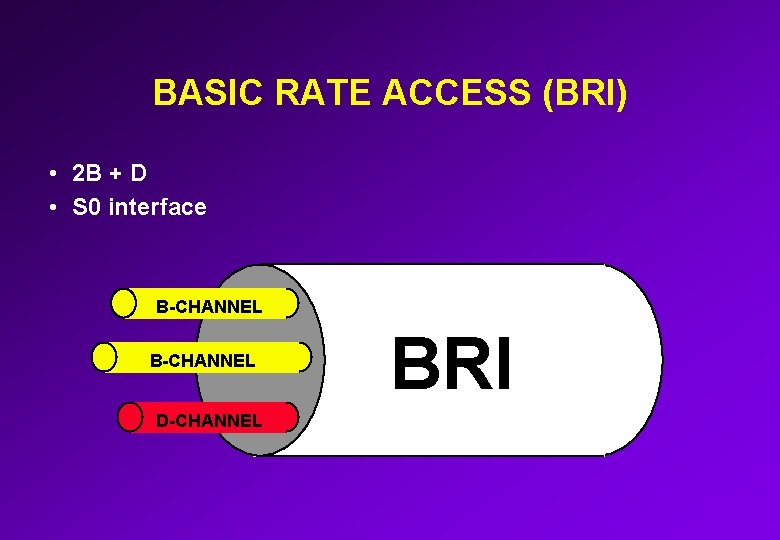
BASIC RATE ACCESS (BRI) • 2 B + D • S 0 interface B-CHANNEL D-CHANNEL BRI
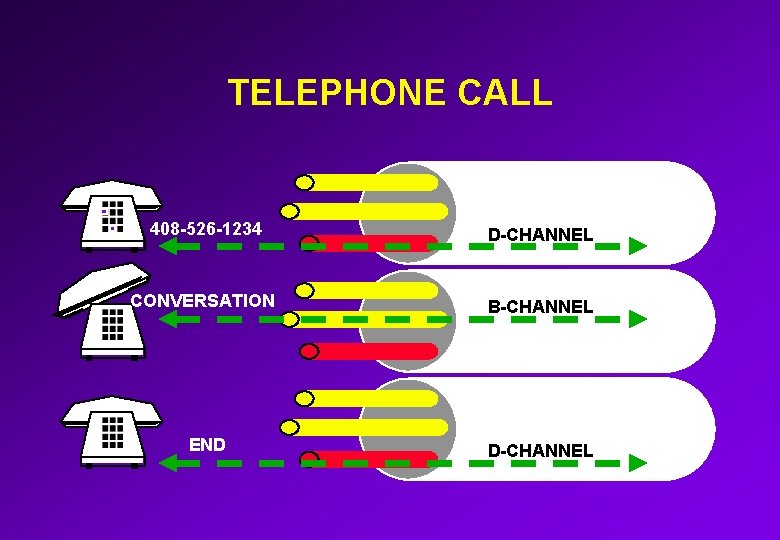
TELEPHONE CALL 408 -526 -1234 D-CHANNEL CONVERSATION B-CHANNEL END D-CHANNEL
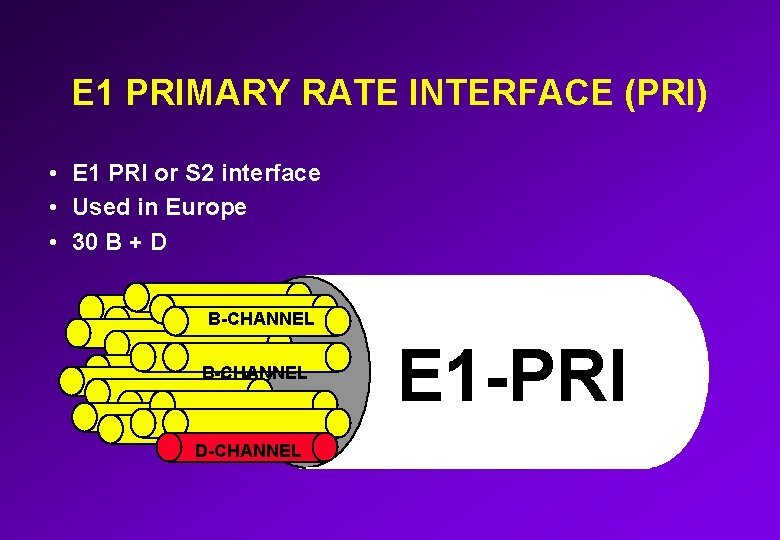
E 1 PRIMARY RATE INTERFACE (PRI) • E 1 PRI or S 2 interface • Used in Europe • 30 B + D B-CHANNEL D-CHANNEL E 1 -PRI
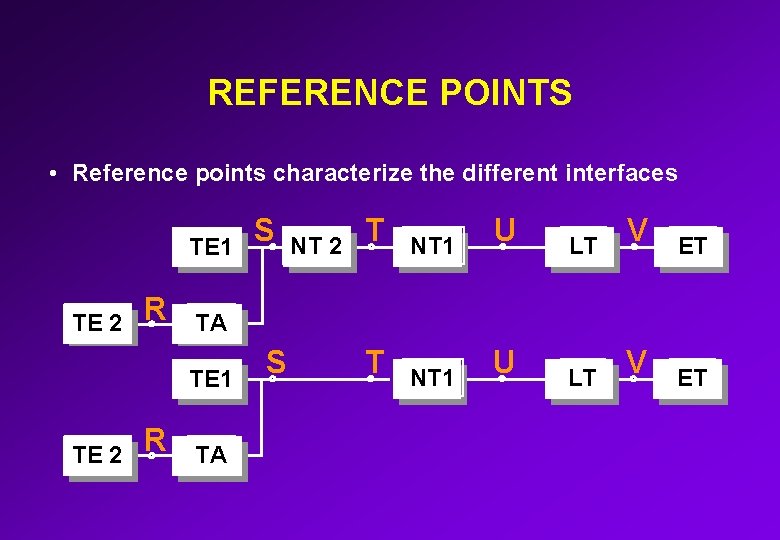
REFERENCE POINTS • Reference points characterize the different interfaces TE 1 TE 2 R R NT 2 T NT 1 U LT V ET TA TE 1 TE 2 S TA S
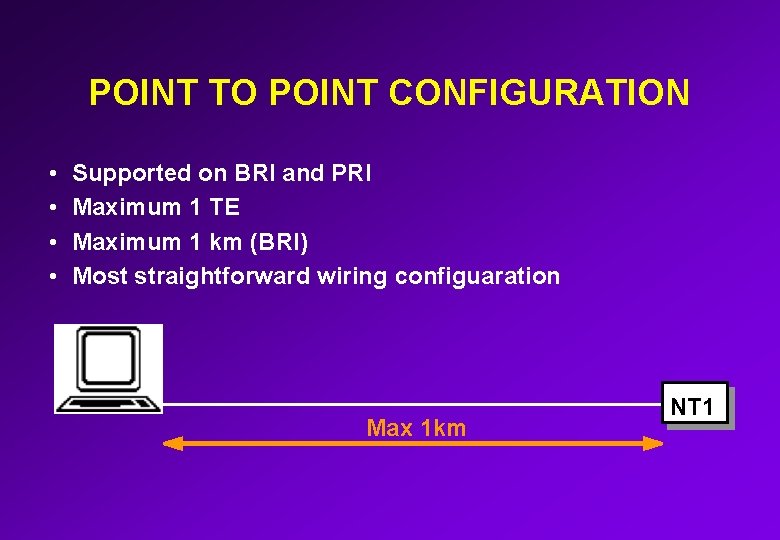
POINT TO POINT CONFIGURATION • • Supported on BRI and PRI Maximum 1 TE Maximum 1 km (BRI) Most straightforward wiring configuaration TE Max 1 km NT 1
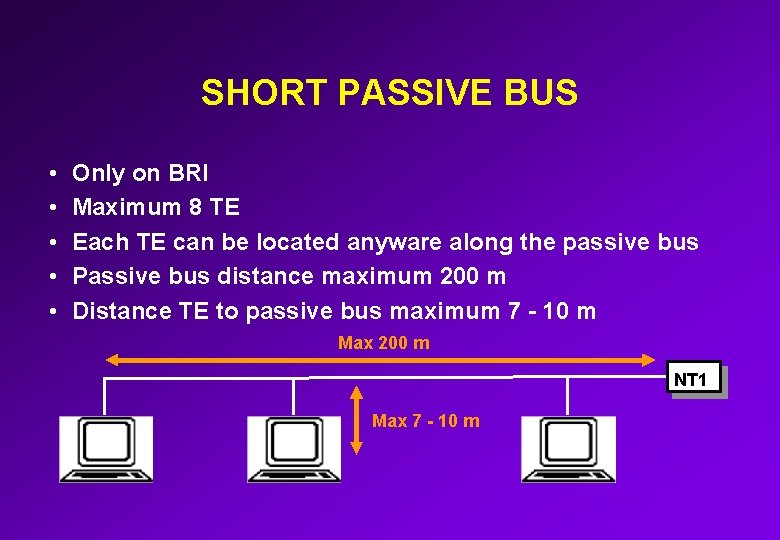
SHORT PASSIVE BUS • • • Only on BRI Maximum 8 TE Each TE can be located anyware along the passive bus Passive bus distance maximum 200 m Distance TE to passive bus maximum 7 - 10 m Max 200 m NT 1 Max 7 - 10 m
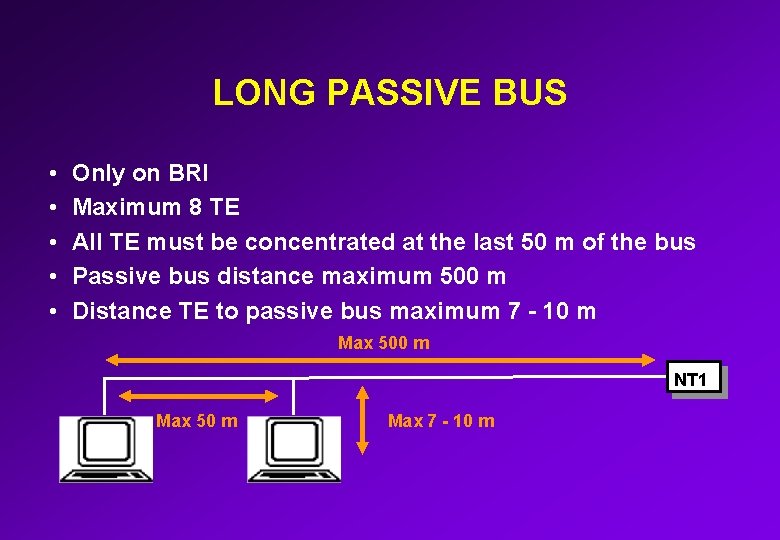
LONG PASSIVE BUS • • • Only on BRI Maximum 8 TE All TE must be concentrated at the last 50 m of the bus Passive bus distance maximum 500 m Distance TE to passive bus maximum 7 - 10 m Max 500 m NT 1 Max 50 m Max 7 - 10 m
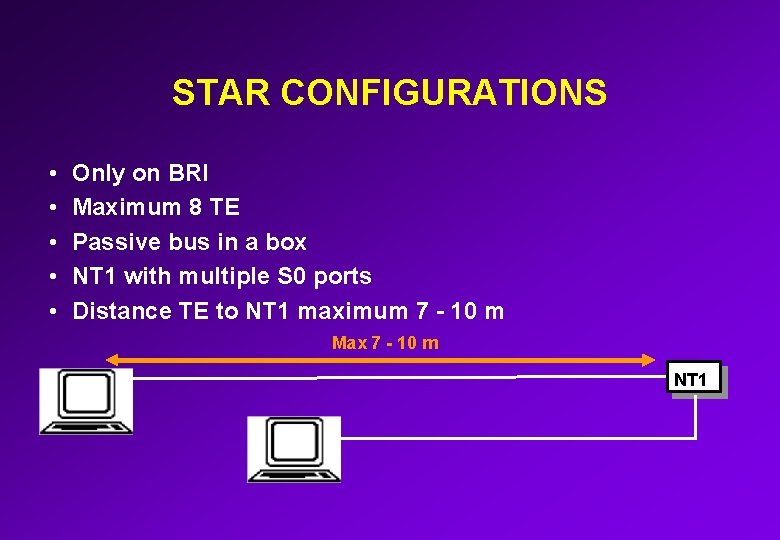
STAR CONFIGURATIONS • • • Only on BRI Maximum 8 TE Passive bus in a box NT 1 with multiple S 0 ports Distance TE to NT 1 maximum 7 - 10 m Max 7 - 10 m NT 1
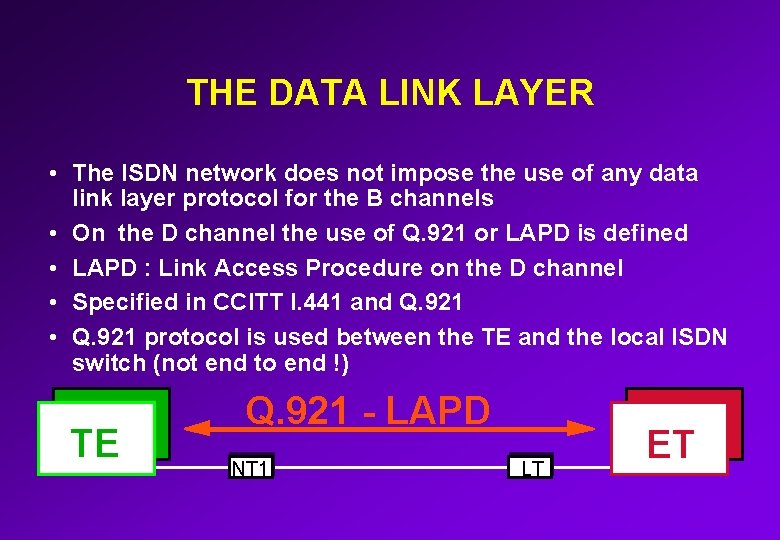
THE DATA LINK LAYER • The ISDN network does not impose the use of any data link layer protocol for the B channels • On the D channel the use of Q. 921 or LAPD is defined • LAPD : Link Access Procedure on the D channel • Specified in CCITT I. 441 and Q. 921 • Q. 921 protocol is used between the TE and the local ISDN switch (not end to end !) TE Q. 921 - LAPD NT 1 [ LT ET
Q. 931
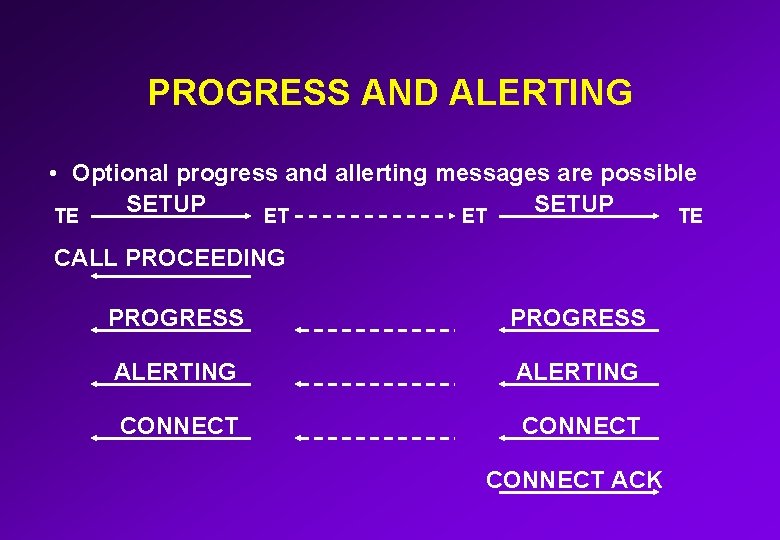
PROGRESS AND ALERTING • Optional progress and allerting messages are possible SETUP TE ET ET TE CALL PROCEEDING PROGRESS ALERTING CONNECT ACK
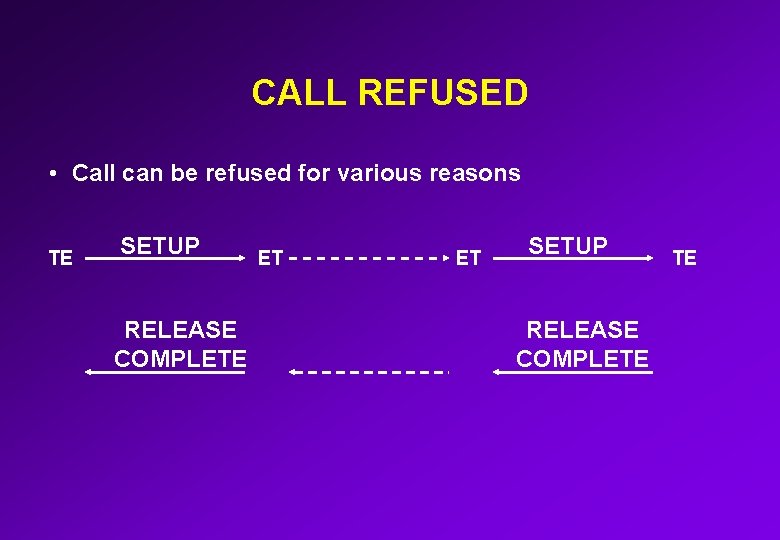
CALL REFUSED • Call can be refused for various reasons TE SETUP RELEASE COMPLETE ET ET SETUP RELEASE COMPLETE TE
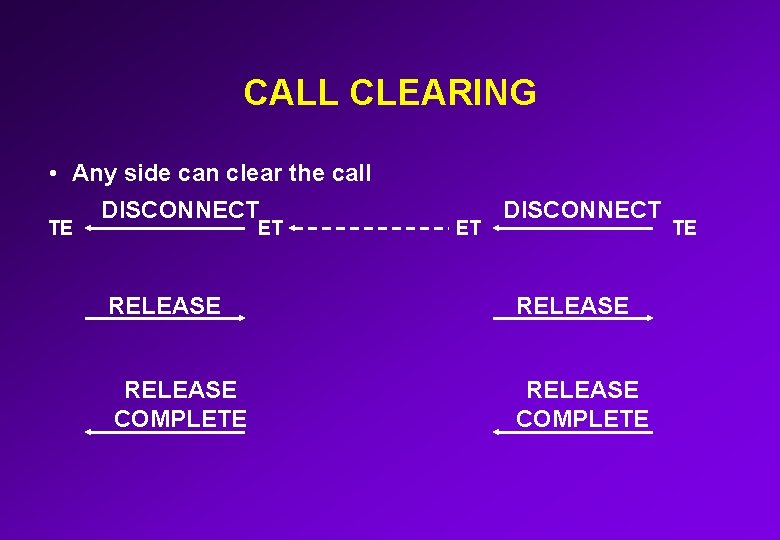
CALL CLEARING • Any side can clear the call TE DISCONNECT ET ET DISCONNECT RELEASE COMPLETE TE
- Slides: 14