
Ischemic Stroke The IntraArterial Thrombolysis Regimen Equipment Methods
Ischemic Stroke: The Intra-Arterial Thrombolysis Regimen, Equipment, Methods, Complications and Results Lawrence R. Wechsler, M. D. Professor and Chair, Department of Neurology University of Pittsburgh

Lawrence R. Wechsler, MD § Ownership Interest (Stocks, Stock Options or Ownership Interest) – Neuro Interventional Therapeutic
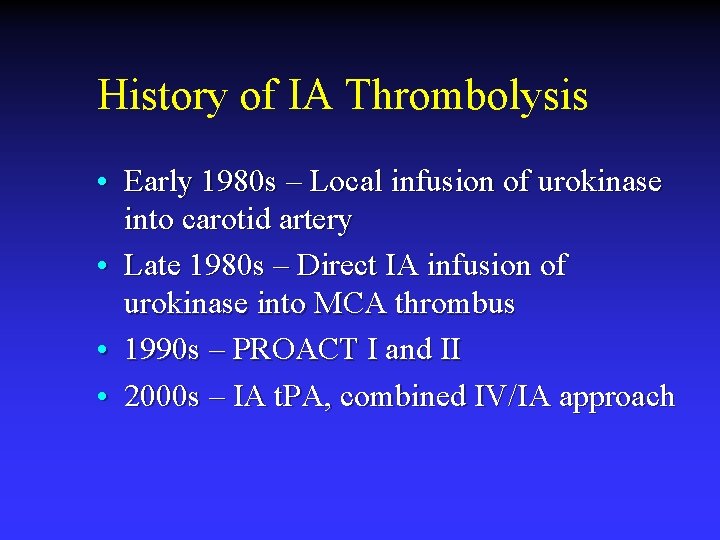
History of IA Thrombolysis • Early 1980 s – Local infusion of urokinase into carotid artery • Late 1980 s – Direct IA infusion of urokinase into MCA thrombus • 1990 s – PROACT I and II • 2000 s – IA t. PA, combined IV/IA approach

PROACT Project Timeline PROACT II Futility Assessment (July 1997) Heparin Reduced (September 1994) First Patient (March 1994) 1994 Moratorium Study Discontinued (February 1995) 1995 FINAL PATIENT (September 1998) t. PA Approved (July 1996) First Patient (February 1996) 1996 75 th Patient (March 1997) 150 th Patient (March 1998) PROACT I Published (January 1998) 1997 1998
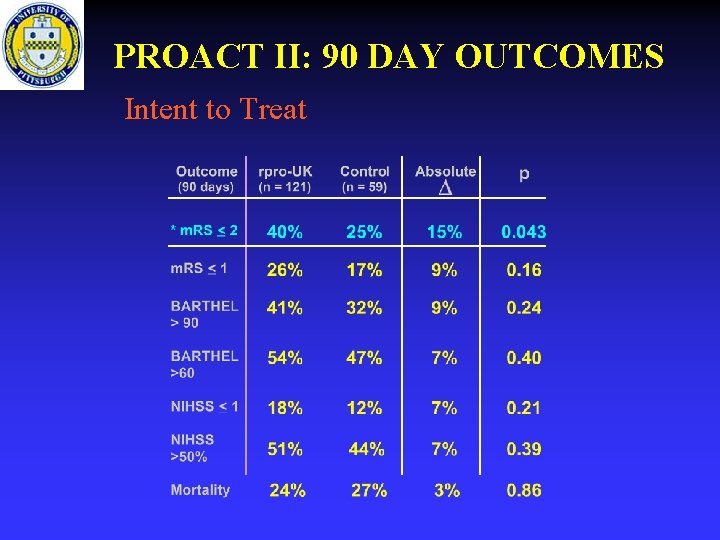
PROACT II: 90 DAY OUTCOMES Intent to Treat
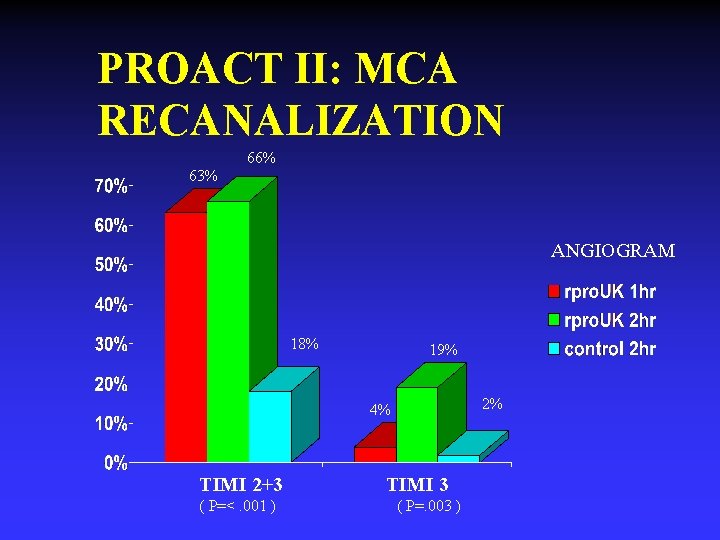
PROACT II: MCA RECANALIZATION 66% 63% ANGIOGRAM 18% 19% 2% 4% TIMI 2+3 ( P=<. 001 ) TIMI 3 ( P=. 003 )
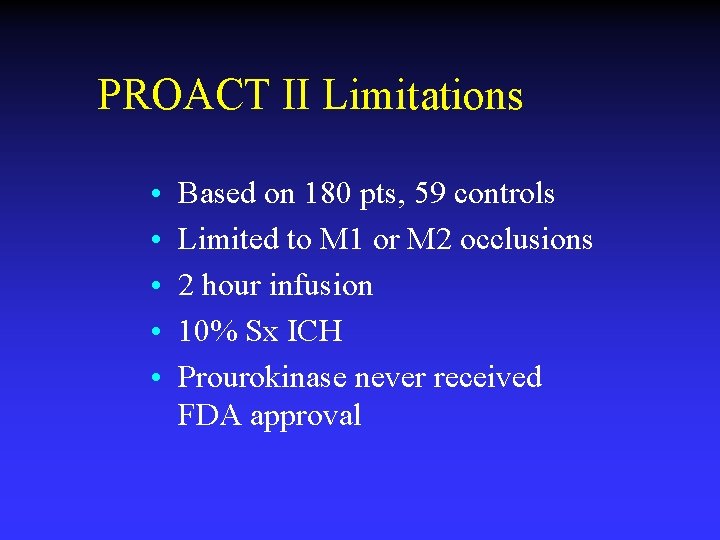
PROACT II Limitations • • • Based on 180 pts, 59 controls Limited to M 1 or M 2 occlusions 2 hour infusion 10% Sx ICH Prourokinase never received FDA approval
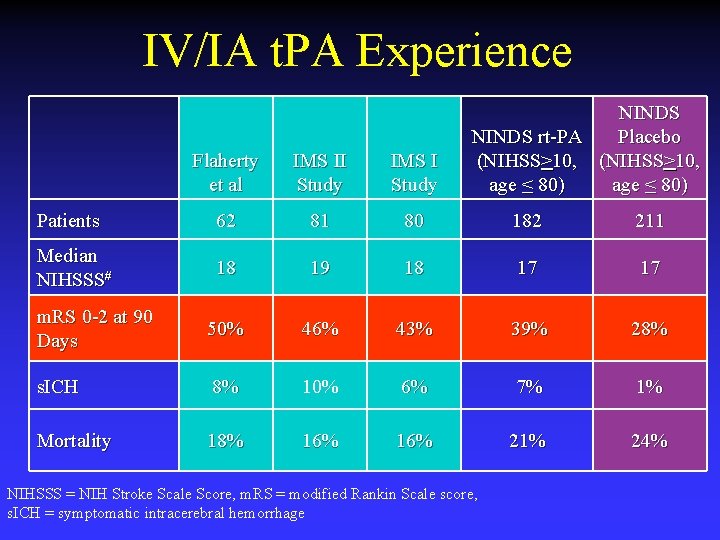
IV/IA t. PA Experience NINDS rt-PA Placebo (NIHSS>10, age ≤ 80) Flaherty et al IMS II Study IMS I Study Patients 62 81 80 182 211 Median NIHSSS# 18 19 18 17 17 m. RS 0 -2 at 90 Days 50% 46% 43% 39% 28% s. ICH 8% 10% 6% 7% 1% Mortality 18% 16% 21% 24% NIHSSS = NIH Stroke Scale Score, m. RS = modified Rankin Scale score, s. ICH = symptomatic intracerebral hemorrhage
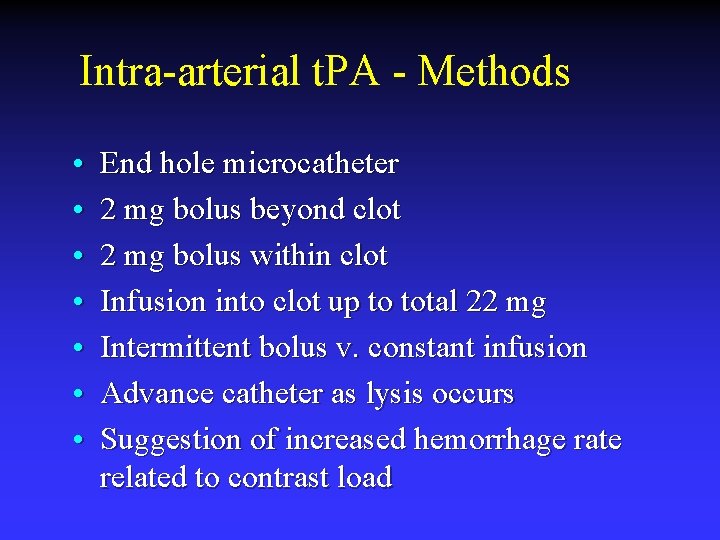
Intra-arterial t. PA - Methods • • End hole microcatheter 2 mg bolus beyond clot 2 mg bolus within clot Infusion into clot up to total 22 mg Intermittent bolus v. constant infusion Advance catheter as lysis occurs Suggestion of increased hemorrhage rate related to contrast load
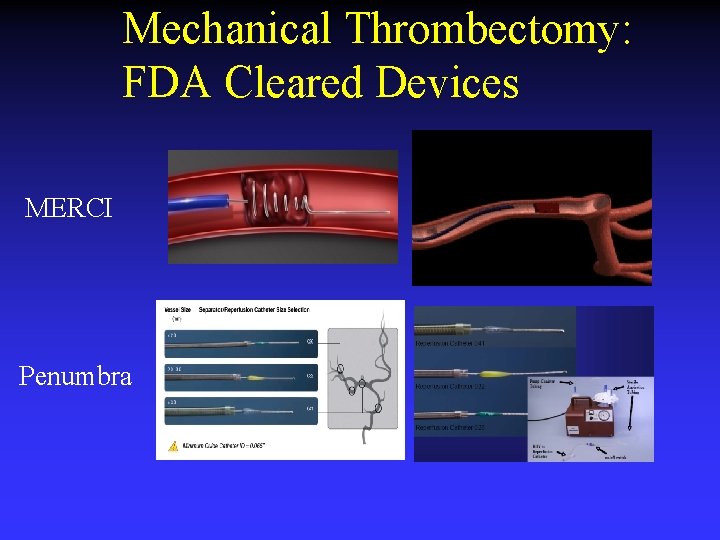
Mechanical Thrombectomy: FDA Cleared Devices MERCI Penumbra
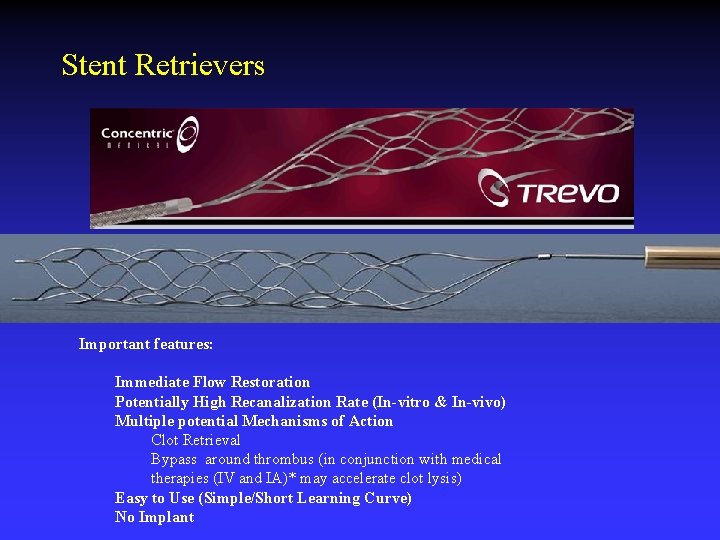
Stent Retrievers Important features: Immediate Flow Restoration Potentially High Recanalization Rate (In-vitro & In-vivo) Multiple potential Mechanisms of Action Clot Retrieval Bypass around thrombus (in conjunction with medical therapies (IV and IA)* may accelerate clot lysis) Easy to Use (Simple/Short Learning Curve) No Implant
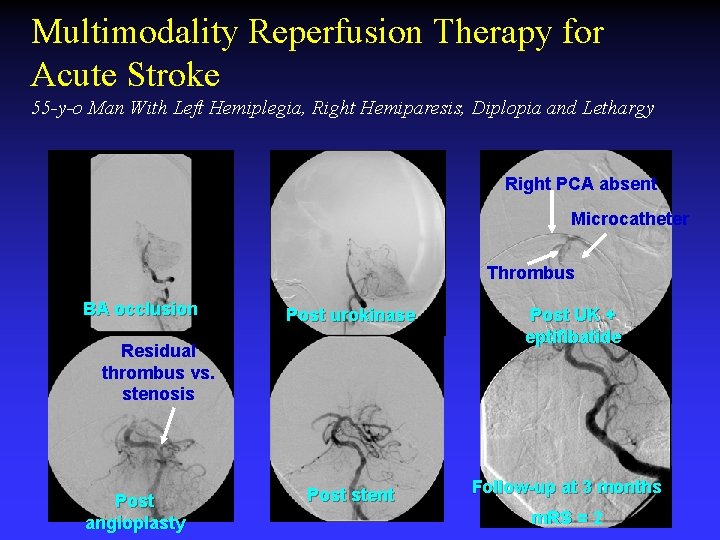
Multimodality Reperfusion Therapy for Acute Stroke 55 -y-o Man With Left Hemiplegia, Right Hemiparesis, Diplopia and Lethargy Right PCA absent Microcatheter Thrombus BA occlusion Post urokinase Residual thrombus vs. stenosis Post angioplasty Post stent Post UK + eptifibatide Follow-up at 3 months m. RS = 2
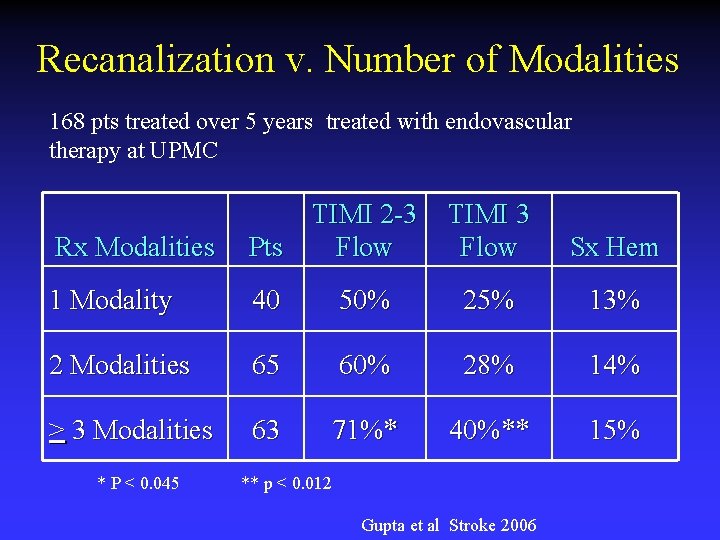
Recanalization v. Number of Modalities 168 pts treated over 5 years treated with endovascular therapy at UPMC Rx Modalities Pts TIMI 2 -3 Flow 1 Modality 40 50% 25% 13% 2 Modalities 65 60% 28% 14% > 3 Modalities 63 71%* 40%** 15% * P < 0. 045 TIMI 3 Flow Sx Hem ** p < 0. 012 Gupta et al Stroke 2006
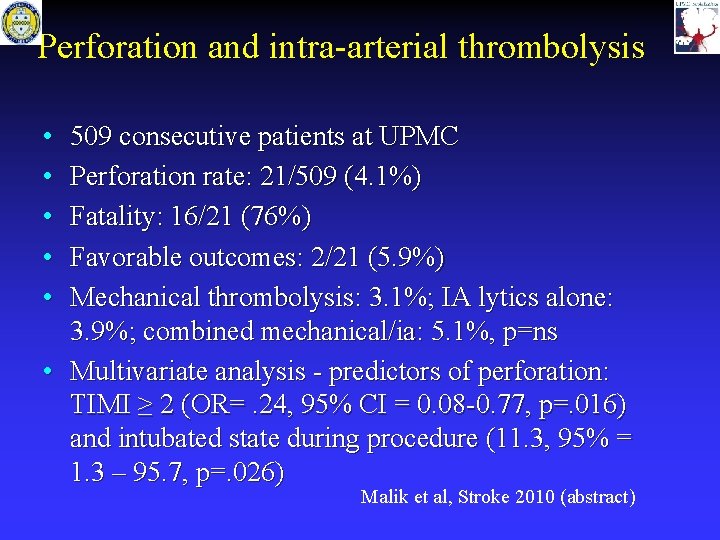
Perforation and intra-arterial thrombolysis • • • 509 consecutive patients at UPMC Perforation rate: 21/509 (4. 1%) Fatality: 16/21 (76%) Favorable outcomes: 2/21 (5. 9%) Mechanical thrombolysis: 3. 1%; IA lytics alone: 3. 9%; combined mechanical/ia: 5. 1%, p=ns • Multivariate analysis - predictors of perforation: TIMI ≥ 2 (OR=. 24, 95% CI = 0. 08 -0. 77, p=. 016) and intubated state during procedure (11. 3, 95% = 1. 3 – 95. 7, p=. 026) Malik et al, Stroke 2010 (abstract)
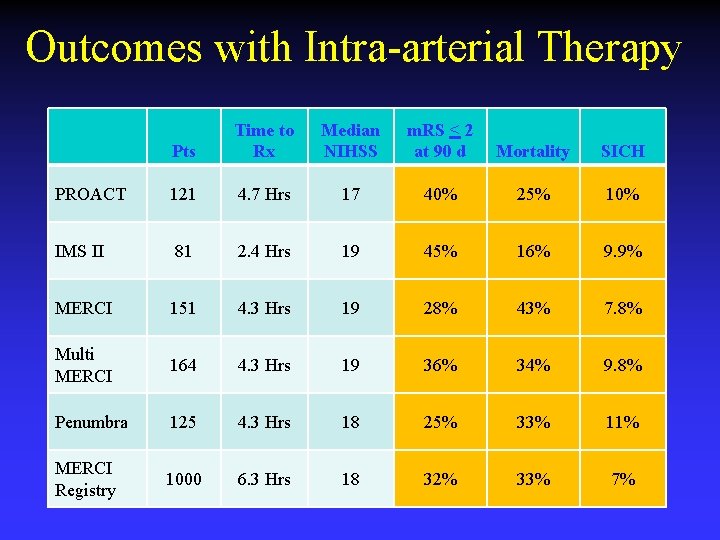
Outcomes with Intra-arterial Therapy Pts Time to Rx Median NIHSS m. RS < 2 at 90 d Mortality SICH PROACT 121 4. 7 Hrs 17 40% 25% 10% IMS II 81 2. 4 Hrs 19 45% 16% 9. 9% MERCI 151 4. 3 Hrs 19 28% 43% 7. 8% Multi MERCI 164 4. 3 Hrs 19 36% 34% 9. 8% Penumbra 125 4. 3 Hrs 18 25% 33% 11% MERCI Registry 1000 6. 3 Hrs 18 32% 33% 7%
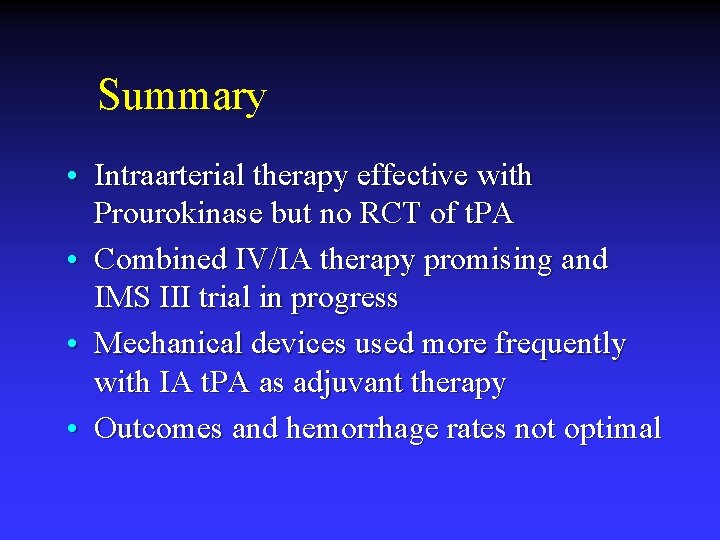
Summary • Intraarterial therapy effective with Prourokinase but no RCT of t. PA • Combined IV/IA therapy promising and IMS III trial in progress • Mechanical devices used more frequently with IA t. PA as adjuvant therapy • Outcomes and hemorrhage rates not optimal
- Slides: 16