
Ischemiareperfusion injury IRI Introduction 1955 Sewel tied up
![⑵ collateral(侧枝) circulation:chronic ⑶ O 2 consumption rate [K+ ] , [Mg 2+] protection](https://slidetodoc.com/presentation_image_h2/4e7d6a8b139849dbf06c4d4f5742f11a/image-10.jpg "⑵ collateral(侧枝) circulation:chronic ⑶ O 2 consumption rate [K+ ] , [Mg 2+] protection")
![lipid cross-linked inhibition of Na+-pump and Ca 2+-pump calcium overload [Na+] i , [Ca](https://slidetodoc.com/presentation_image_h2/4e7d6a8b139849dbf06c4d4f5742f11a/image-25.jpg "lipid cross-linked inhibition of Na+-pump and Ca 2+-pump calcium overload [Na+] i , [Ca")
![catecholamine β – receptor [Ca 2+] i L Ca 2+- channel β Cellular membrane](https://slidetodoc.com/presentation_image_h2/4e7d6a8b139849dbf06c4d4f5742f11a/image-30.jpg "catecholamine β – receptor [Ca 2+] i L Ca 2+- channel β Cellular membrane")
- Slides: 42
Ischemia-reperfusion injury (IRI)
Introduction 1955, Sewel tied up coronary of dog, loose suddenly ventricular fibrillation 。 Kane tied up left entricular branch of coronary of rat ECG no obvious change relieve deligation arrhythmic
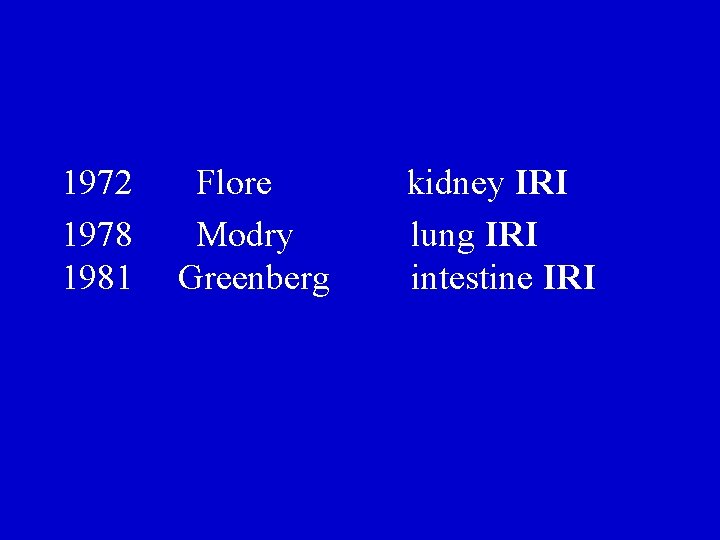
1972 1978 1981 Flore Modry Greenberg kidney IRI lung IRI intestine IRI
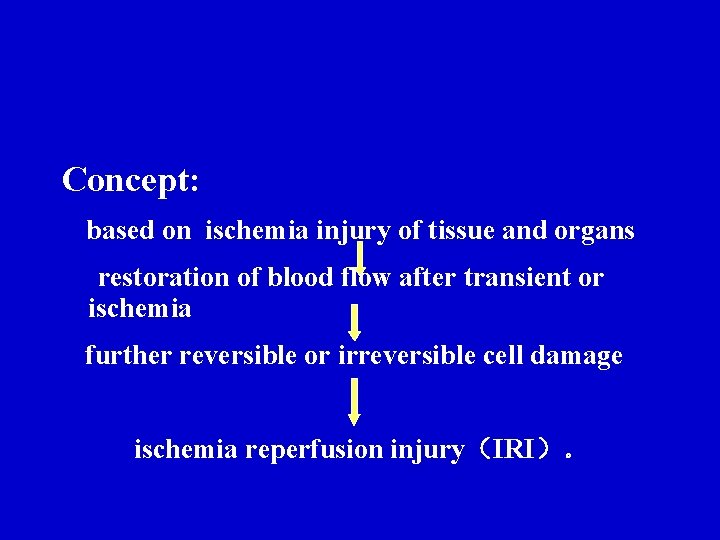
Concept: based on ischemia injury of tissue and organs restoration of blood flow after transient or ischemia further reversible or irreversible cell damage ischemia reperfusion injury(IRI)。
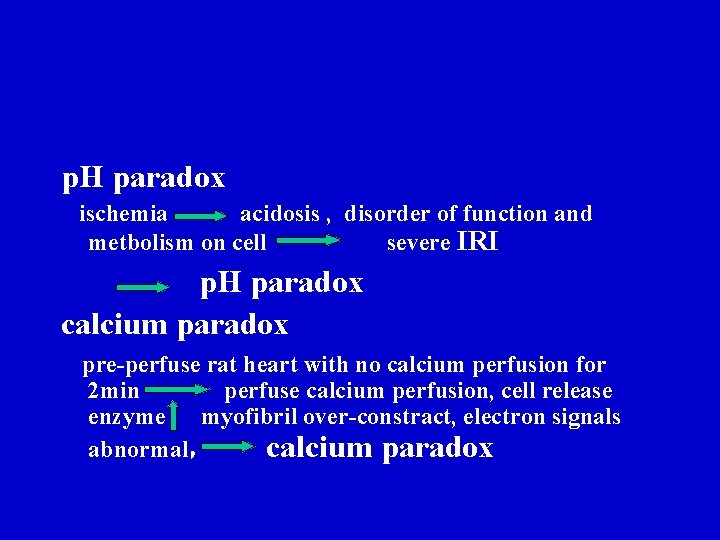
p. H paradox ischemia acidosis , disorder of function and metbolism on cell severe IRI p. H paradox calcium paradox pre-perfuse rat heart with no calcium perfusion for 2 min perfuse calcium perfusion, cell release enzyme myofibril over-constract, electron signals abnormal, calcium paradox
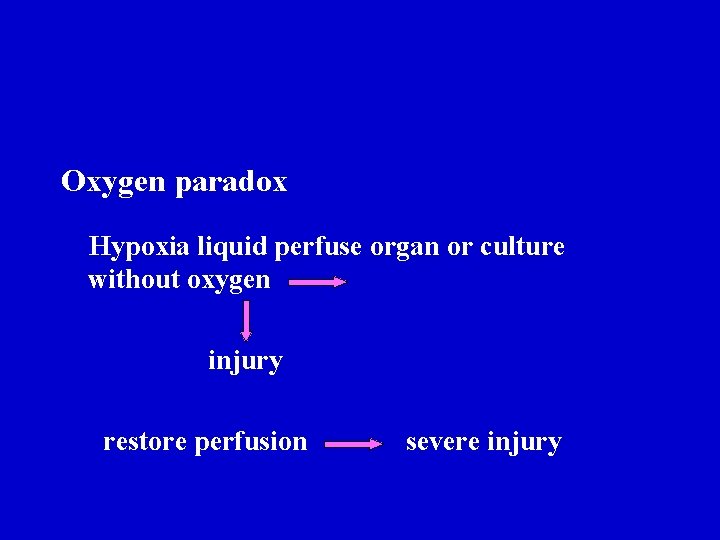
Oxygen paradox Hypoxia liquid perfuse organ or culture without oxygen injury restore perfusion severe injury
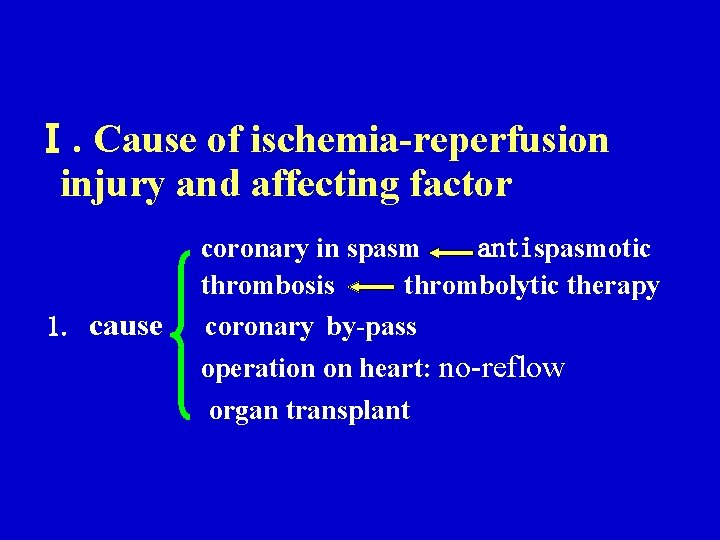
Ⅰ. Cause of ischemia-reperfusion injury and affecting factor 1. cause coronary in spasm antispasmotic thrombosis thrombolytic therapy coronary by-pass operation on heart: no-reflow organ transplant
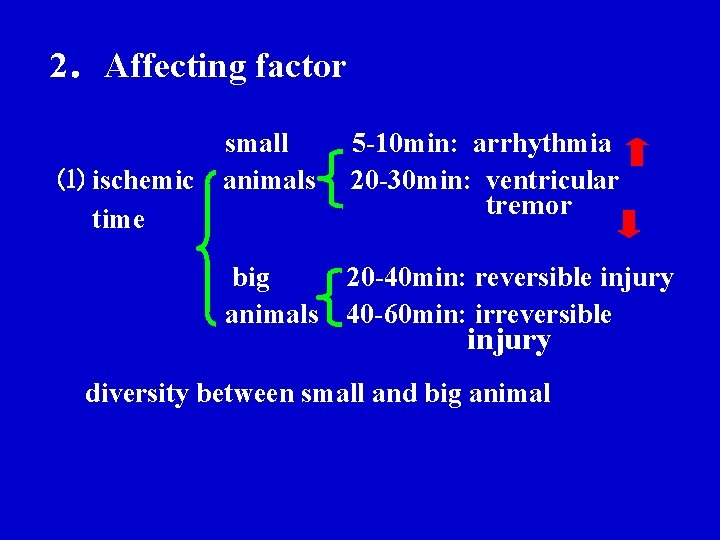
2.Affecting factor ⑴ ischemic time small animals 5 -10 min: arrhythmia 20 -30 min: ventricular tremor big animals 20 -40 min: reversible injury 40 -60 min: irreversible injury diversity between small and big animal
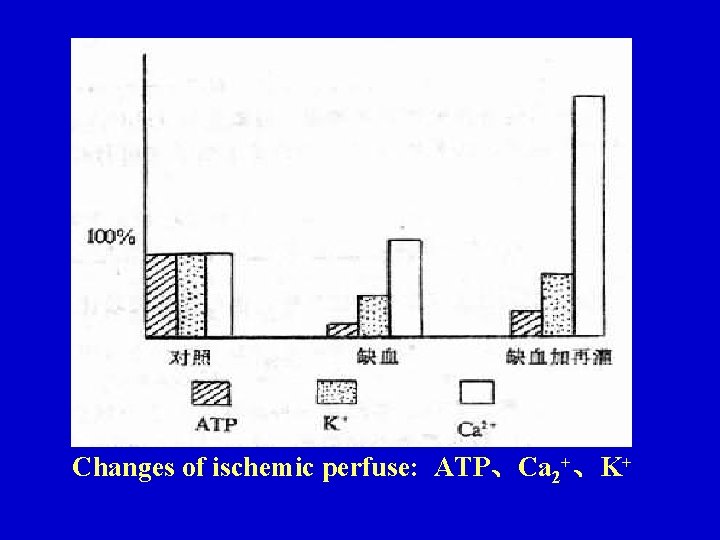
Changes of ischemic perfuse: ATP、Ca 2+、K+
⑵ collateral(侧枝) circulation:chronic ⑶ O 2 consumption rate [K+ ] , [Mg 2+] protection ⑷ electrolytes [Na+ ] , [Ca 2+] (5) condition of T, pressure, p. H, Na+, Ca 2+ reperfusion T, pressure, Na+, Ca 2+ damage protection damage
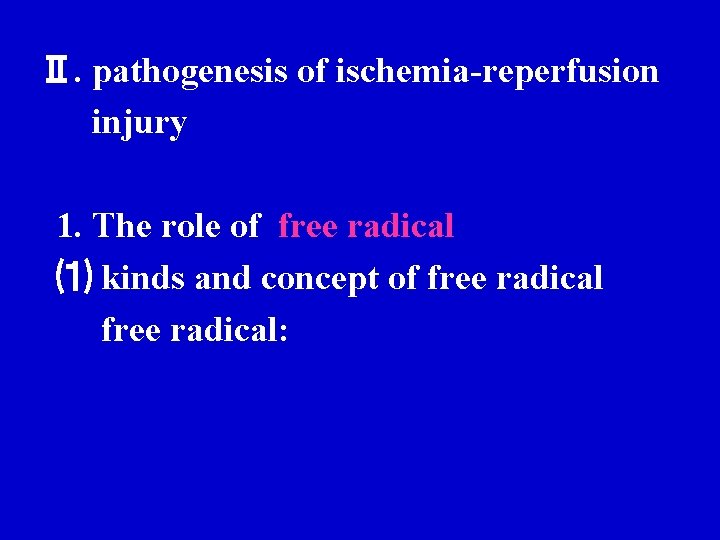
Ⅱ. pathogenesis of ischemia-reperfusion injury 1. The role of free radical ⑴ kinds and concept of free radical:
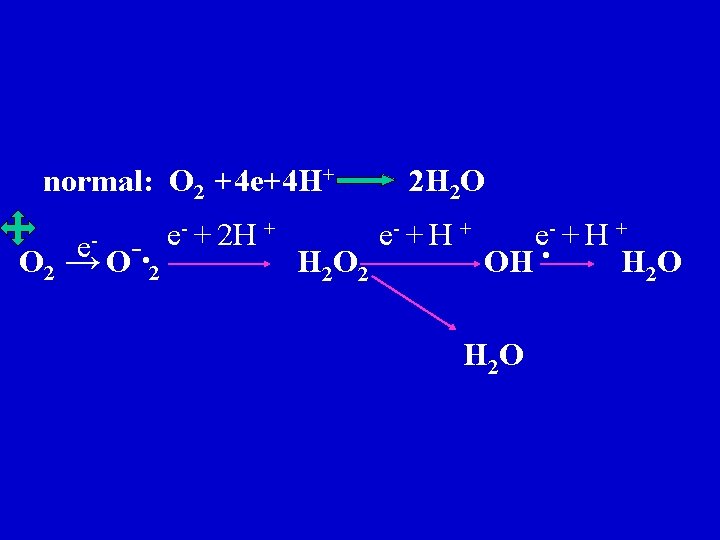
normal: O 2 +4 e+4 H+ 2 H 2 O - + 2 H + -+H + e e e O 2 → O - • 2 H 2 O 2 OH • H 2 O e- H 2 O
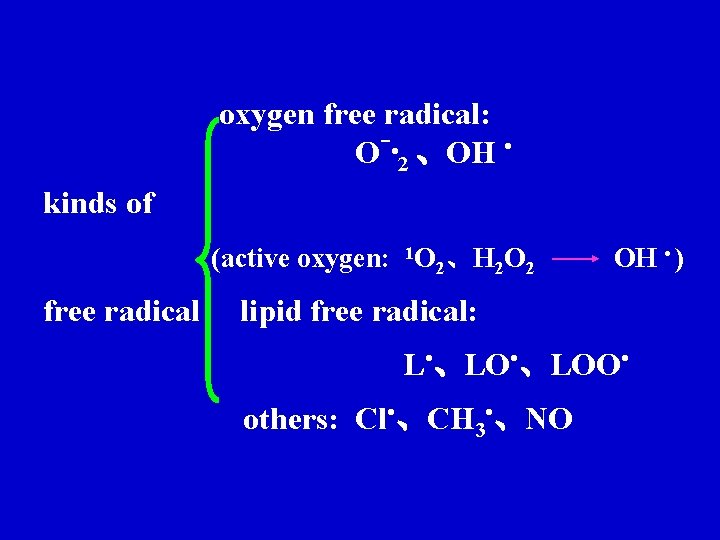
oxygen free radical: O- • 2 、OH • kinds of (active oxygen: 1 O 2、H 2 O 2 free radical OH • ) lipid free radical: L • 、LOO • others: Cl • 、CH 3 • 、NO
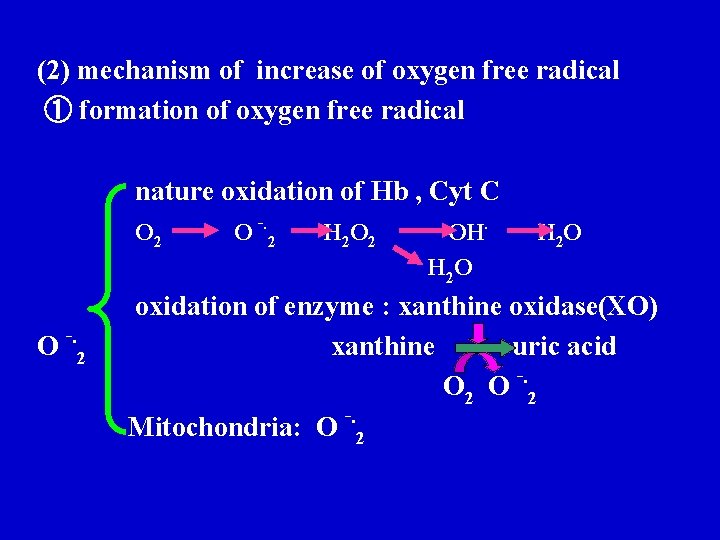
(2) mechanism of increase of oxygen free radical ① formation of oxygen free radical nature oxidation of Hb , Cyt C O 2 O ‾∙ 2 H 2 O 2 OH∙ H 2 O oxidation of enzyme : xanthine oxidase(XO) xanthine uric acid O 2 O ‾∙ 2 Mitochondria: O ‾∙ 2
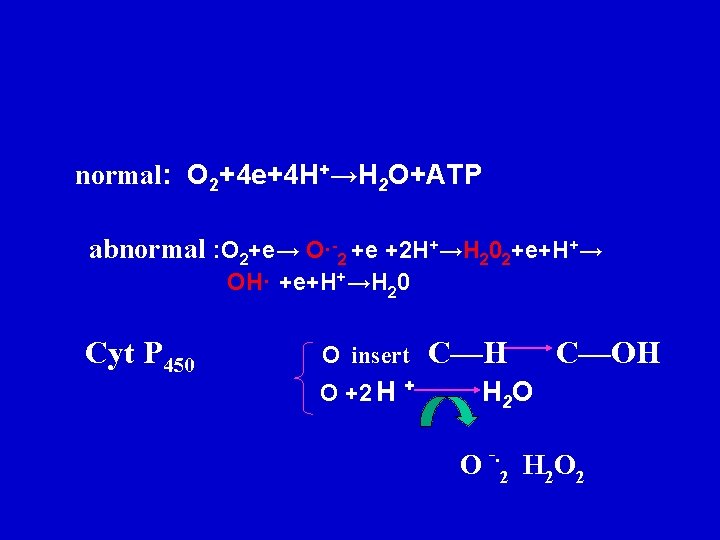
normal: O 2+4 e+4 H+→H 2 O+ATP abnormal : O 2+e→ O·-2 +e +2 H+→H 202+e+H+→ OH· +e+H+→H 20 Cyt P 450 O insert O +2 H + C—H C—OH H 2 O O ‾∙ 2 H 2 O 2
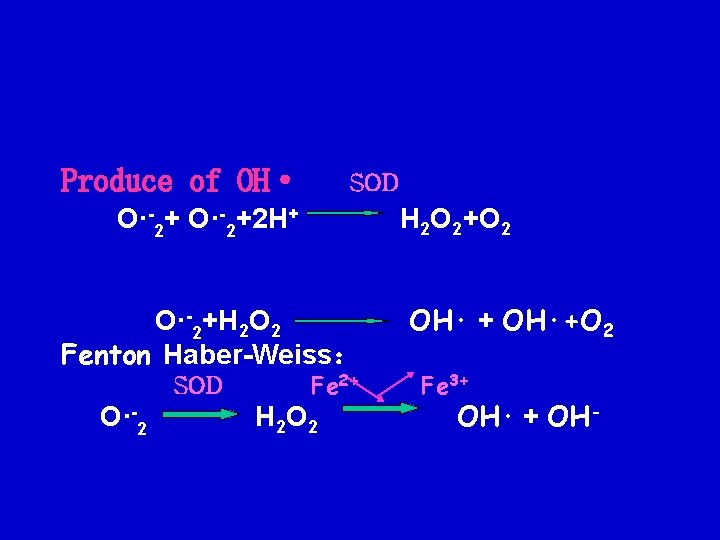
Produce of OH· SOD O·-2+2 H+ H 2 O 2+O 2 O·-2+H 2 O 2 Fenton Haber-Weiss: SOD O·-2 Fe 2+ H 2 O 2 OH· + OH·+O 2 Fe 3+ OH· + OH-
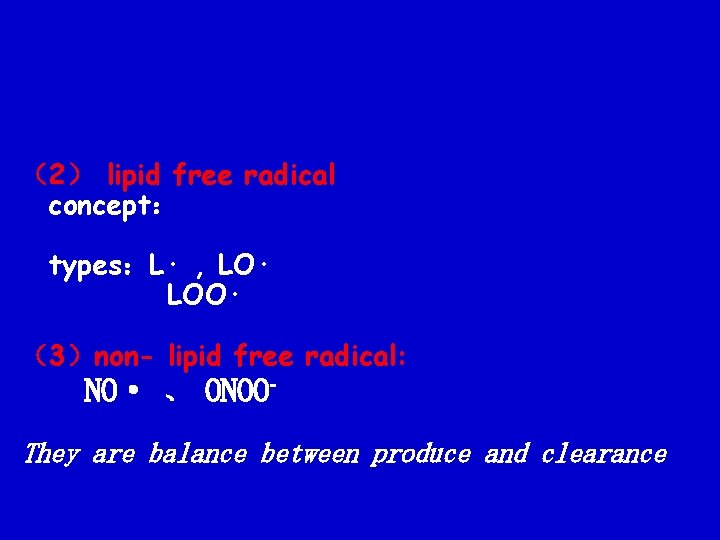
(2) lipid free radical concept: types:L· , LO· LOO· (3)non- lipid free radical: NO· 、 ONOO- They are balance between produce and clearance
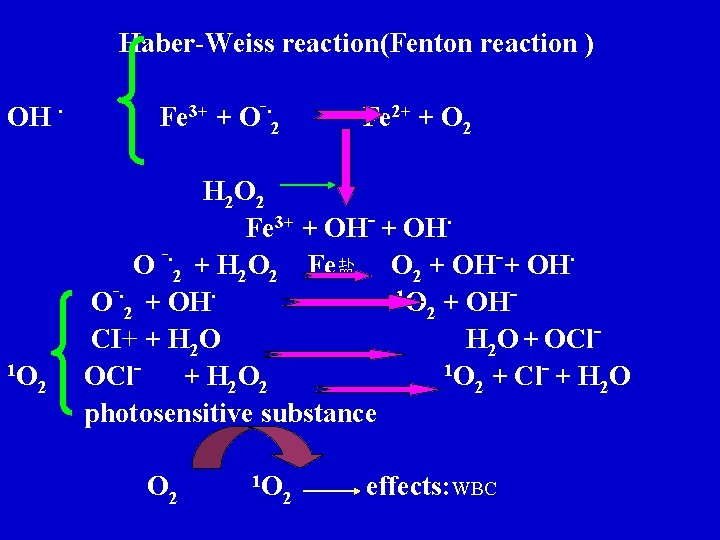
Haber-Weiss reaction(Fenton reaction ) OH ∙ 1 O 2 Fe 3+ + O‾∙ 2 Fe 2+ + O 2 H 2 O 2 Fe 3+ + OH- + OH∙ O ‾∙ 2 + H 2 O 2 Fe盐 O 2 + OH-+ OH∙ 1 O + OHO‾∙ 2 + OH∙ 2 CI+ + H 2 O + OCl 1 O + Cl- + H O OCl- + H 2 O 2 2 2 photosensitive substance O 2 1 O 2 effects: WBC
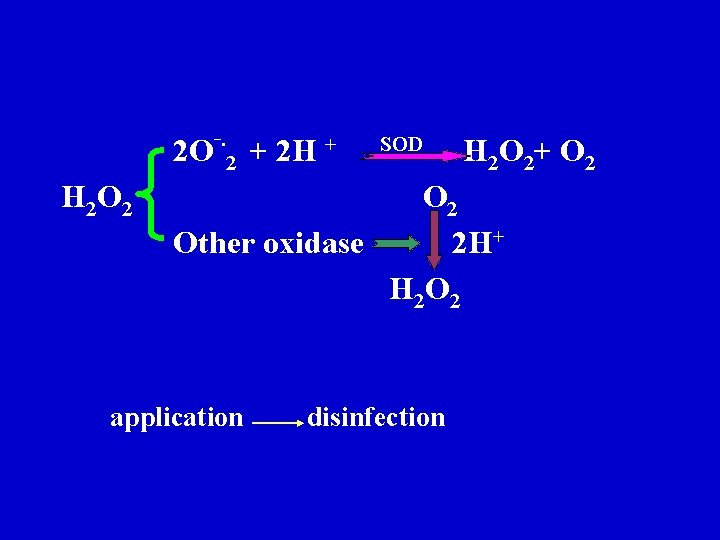
2 O‾∙ 2 + 2 H + H 2 O 2 SOD H 2 O 2+ O 2 Other oxidase 2 H+ H 2 O 2 application disinfection
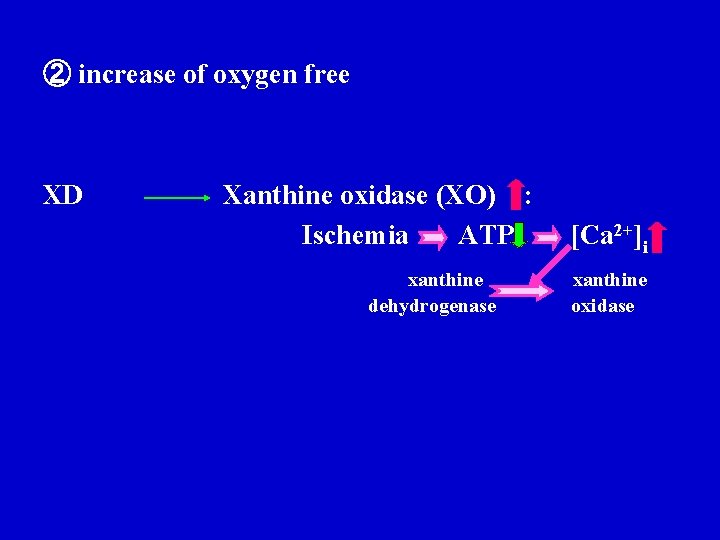
② increase of oxygen free XD Xanthine oxidase (XO) : Ischemia ATP xanthine dehydrogenase [Ca 2+]i xanthine oxidase
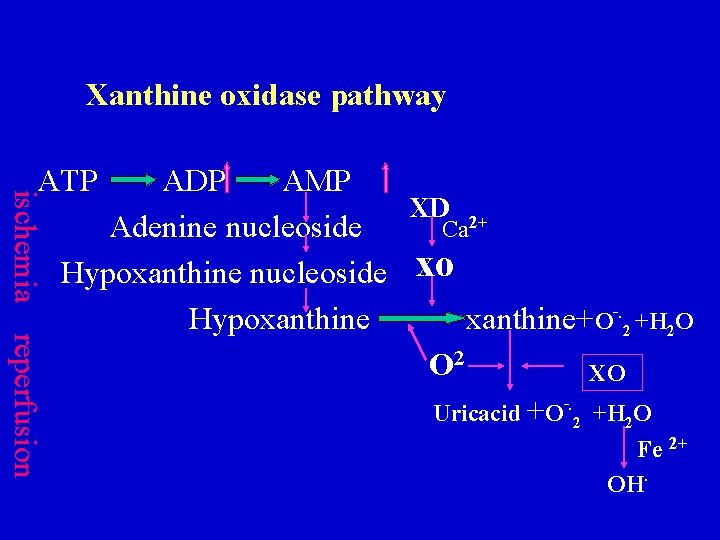
Xanthine oxidase pathway ischemia reperfusion ATP ADP AMP XD 2+ Adenine nucleoside Ca Hypoxanthine nucleoside xo Hypoxanthine+O‾∙ 2 +H 2 O O 2 XO Uricacid +O‾∙ 2 +H 2 O Fe 2+ OH∙
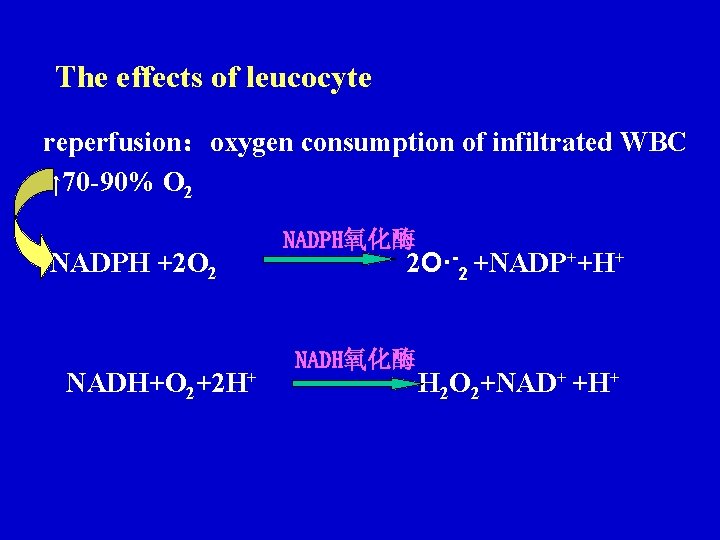
The effects of leucocyte reperfusion:oxygen consumption of infiltrated WBC ↑ 70 -90% O 2 NADPH +2 O 2 NADH+O 2+2 H+ NADPH氧化酶 2 O·-2 +NADP++H+ NADH氧化酶 H 2 O 2+NAD+ +H+
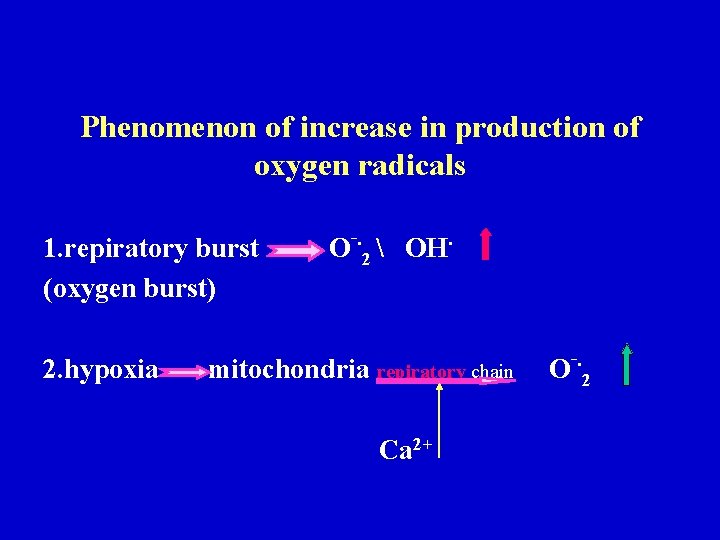
Phenomenon of increase in production of oxygen radicals 1. repiratory burst (oxygen burst) 2. hypoxia O‾∙ 2 OH∙ mitochondria repiratory chain Ca 2+ O‾∙ 2
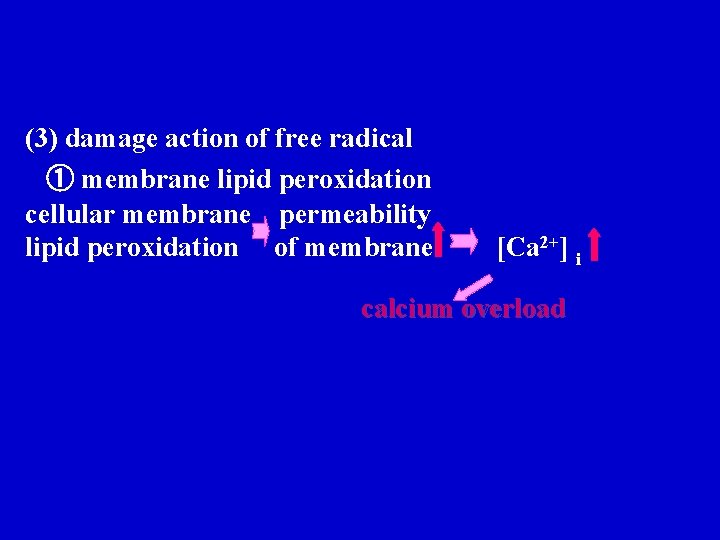
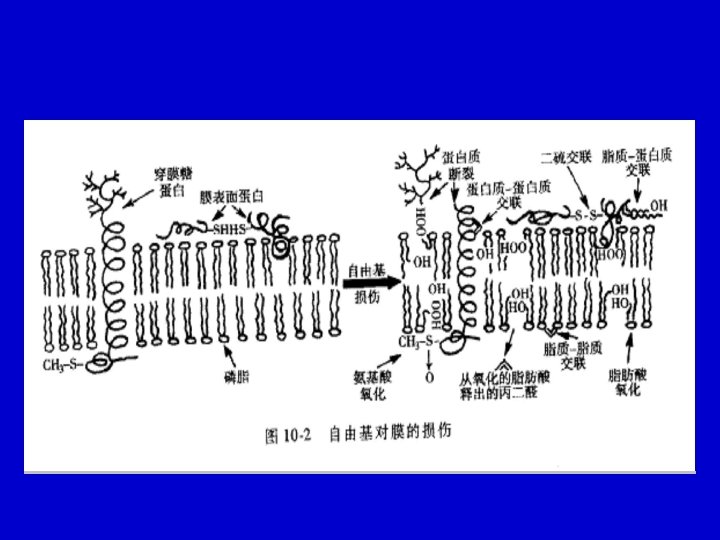
(3) damage action of free radical ① membrane lipid peroxidation cellular membrane permeability lipid peroxidation of membrane [Ca 2+] i calcium overload
lipid cross-linked inhibition of Na+-pump and Ca 2+-pump calcium overload [Na+] i , [Ca 2+] i membrane lipid phospholipase C peroxidation phospholipase D damage of mitochondria membrane PGs , LTs(花) TXA 2 ATP
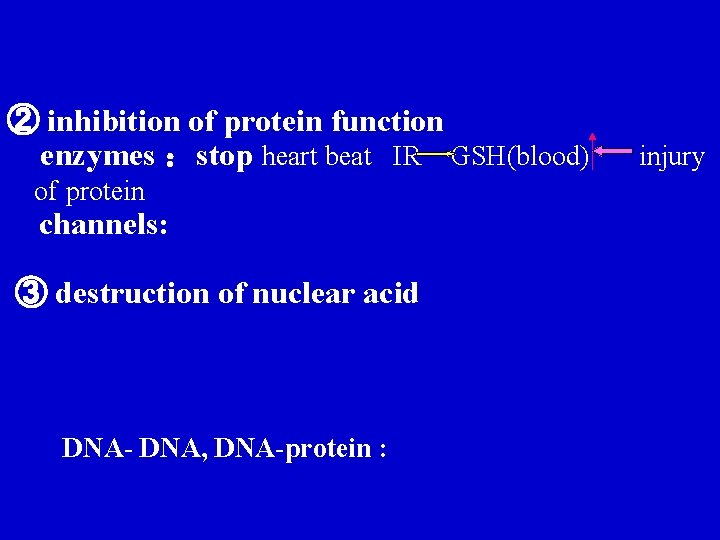
② inhibition of protein function enzymes :stop heart beat IR GSH(blood) of protein channels: ③ destruction of nuclear acid DNA- DNA, DNA-protein : injury
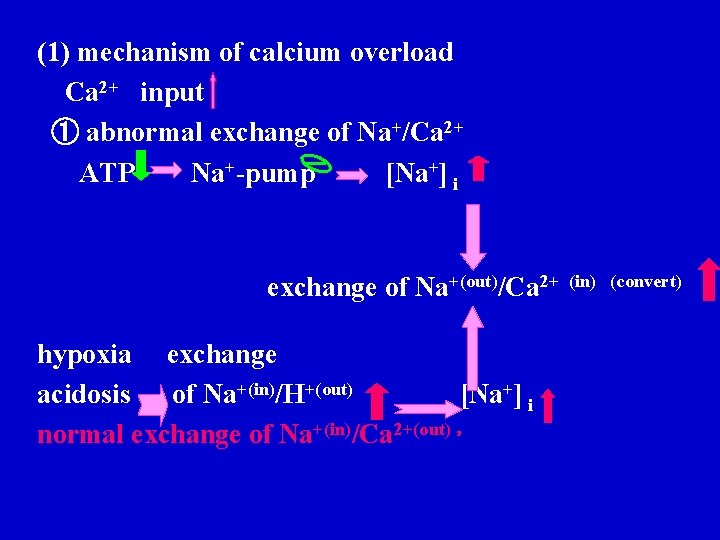
(1) mechanism of calcium overload Ca 2+ input ① abnormal exchange of Na+/Ca 2+ ATP Na+-pump [Na+] i exchange of Na+(out)/Ca 2+ hypoxia exchange acidosis of Na+(in)/H+(out) [Na+] i normal exchange of Na+(in)/Ca 2+(out) , (in) (convert)
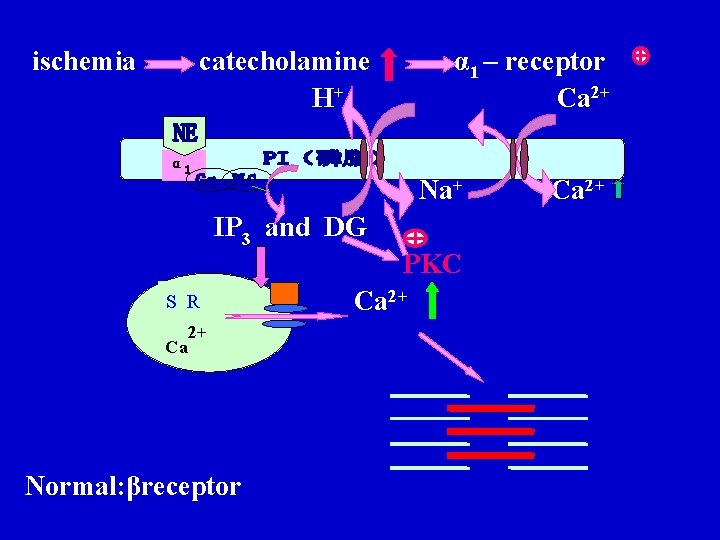
ischemia catecholamine H+ α 1 – receptor Ca 2+ α 1 Na+ IP 3 and DG S R Ca 2+ Normal: βreceptor PKC Ca 2+
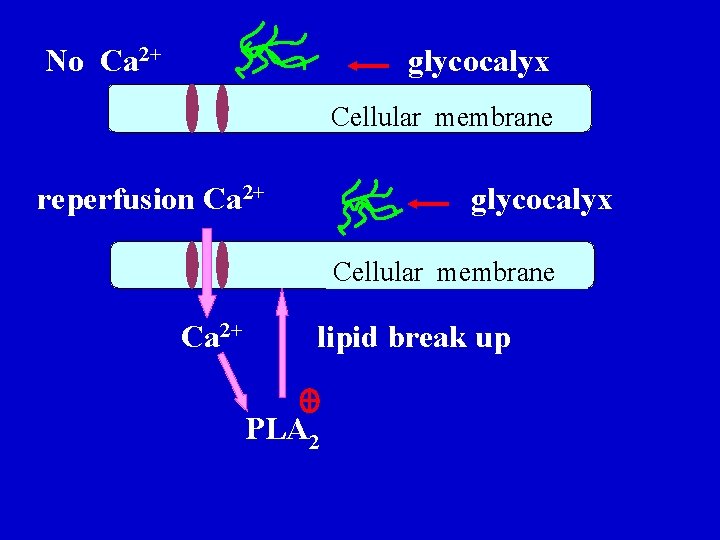
catecholamine β – receptor [Ca 2+] i L Ca 2+- channel β Cellular membrane Ca 2+ pre-apply anti-Ca 2+ drugs GOOD ② injury of biomembrane damage of cellular membrane normal Ca 2+ bridge glycocalyx Cellular membrane
No Ca 2+ glycocalyx Cellular membrane reperfusion Ca 2+ glycocalyx Cellular membrane Ca 2+ lipid break up PLA 2
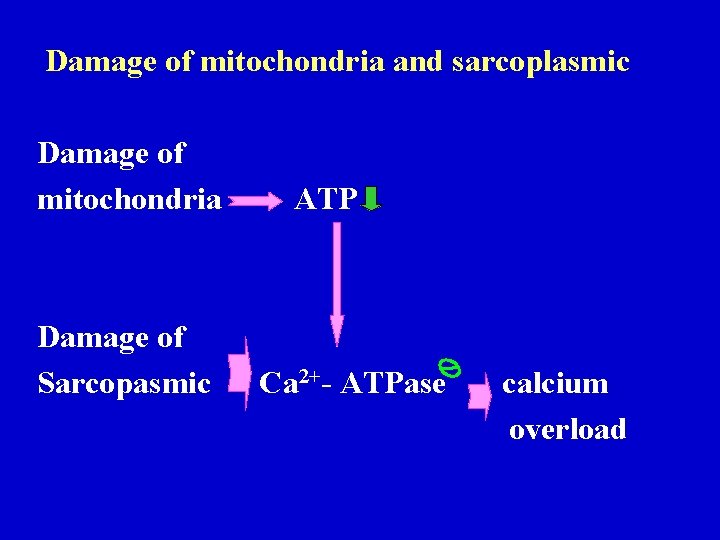
Damage of mitochondria and sarcoplasmic Damage of mitochondria Damage of Sarcopasmic ATP Ca 2+- ATPase calcium overload
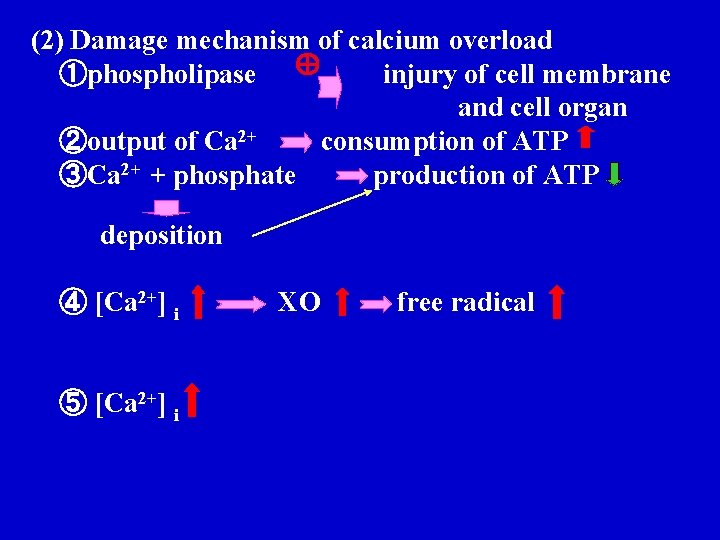
(2) Damage mechanism of calcium overload ①phospholipase injury of cell membrane and cell organ ②output of Ca 2+ consumption of ATP ③Ca 2+ + phosphate production of ATP deposition ④ [Ca 2+] i ⑤ [Ca 2+] i XO free radical
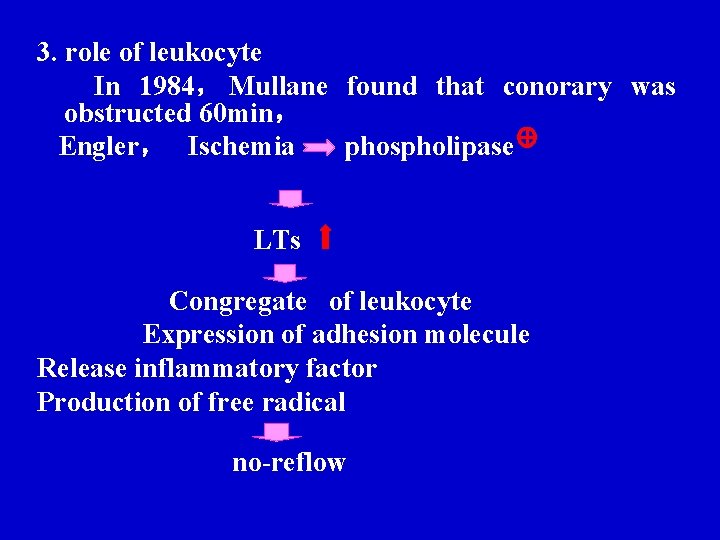
3. role of leukocyte In 1984, Mullane found that conorary was obstructed 60 min, Engler, Ischemia phospholipase LTs Congregate of leukocyte Expression of adhesion molecule Release inflammatory factor Production of free radical no-reflow
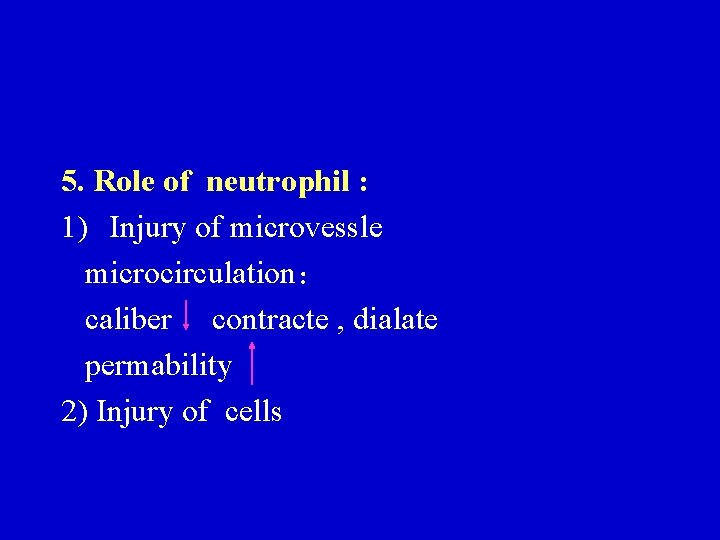
5. Role of neutrophil : 1) Injury of microvessle microcirculation: caliber contracte , dialate permability 2) Injury of cells
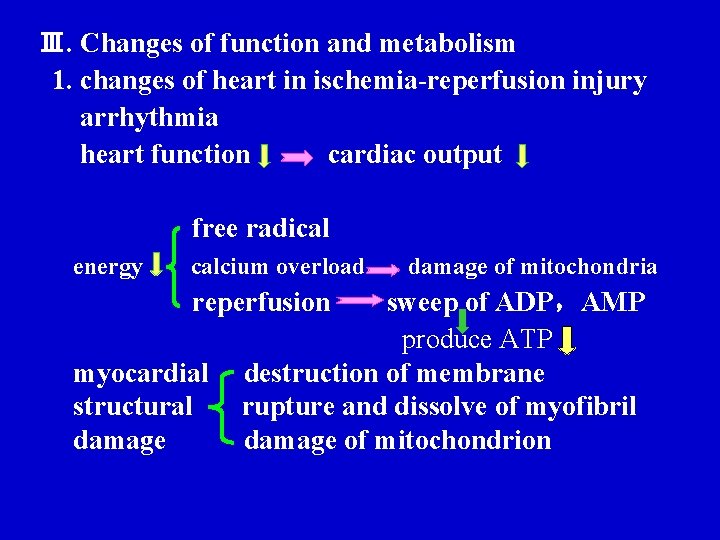
Ⅲ. Changes of function and metabolism 1. changes of heart in ischemia-reperfusion injury arrhythmia heart function cardiac output free radical energy calcium overload reperfusion myocardial structural damage of mitochondria sweep of ADP,AMP produce ATP destruction of membrane rupture and dissolve of myofibril damage of mitochondrion
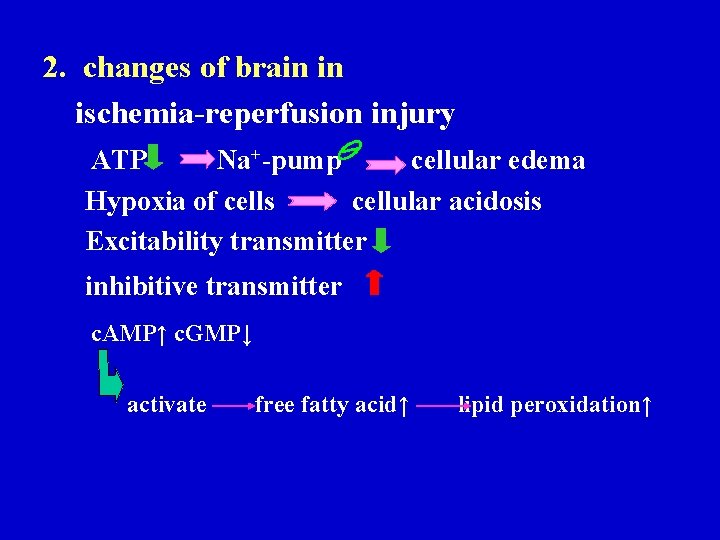
2. changes of brain in ischemia-reperfusion injury ATP Na+-pump cellular edema Hypoxia of cells cellular acidosis Excitability transmitter inhibitive transmitter c. AMP↑ c. GMP↓ activate free fatty acid↑ lipid peroxidation↑
Hisconstructure Edema , necrosis 3. Others Colone, kidney
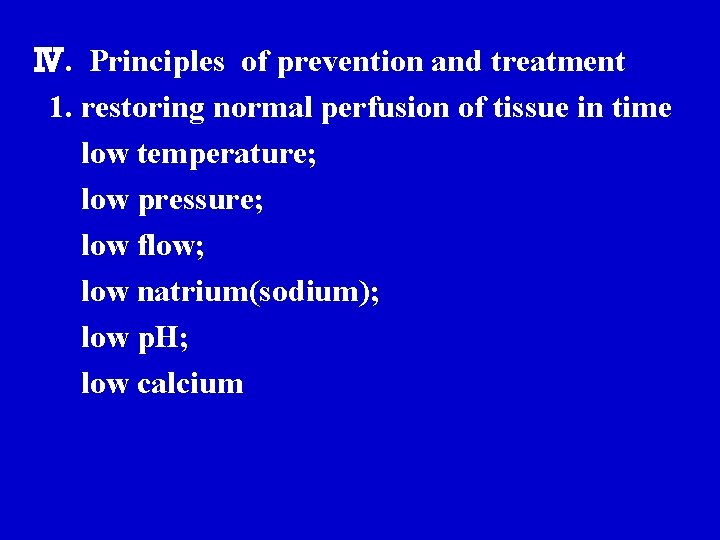
Ⅳ. Principles of prevention and treatment 1. restoring normal perfusion of tissue in time low temperature; low pressure; low flow; low natrium(sodium); low p. H; low calcium
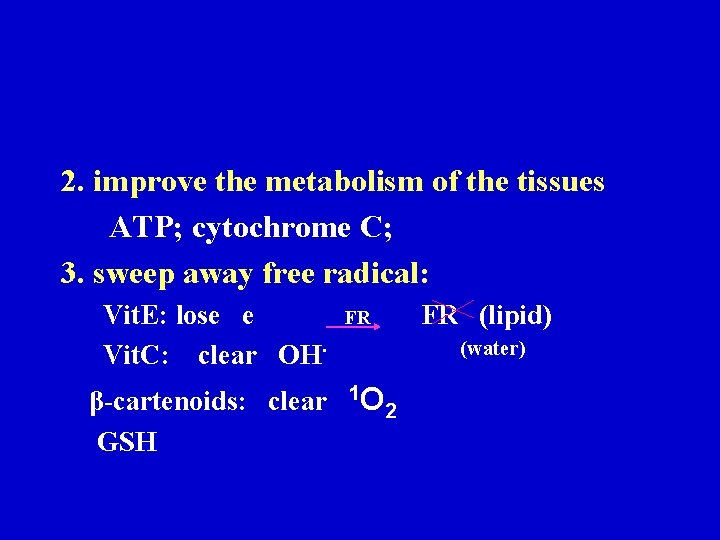
2. improve the metabolism of the tissues ATP; cytochrome C; 3. sweep away free radical: Vit. E: lose e Vit. C: clear OH∙ β-cartenoids: clear GSH FR (lipid) FR (water) 1 O 2
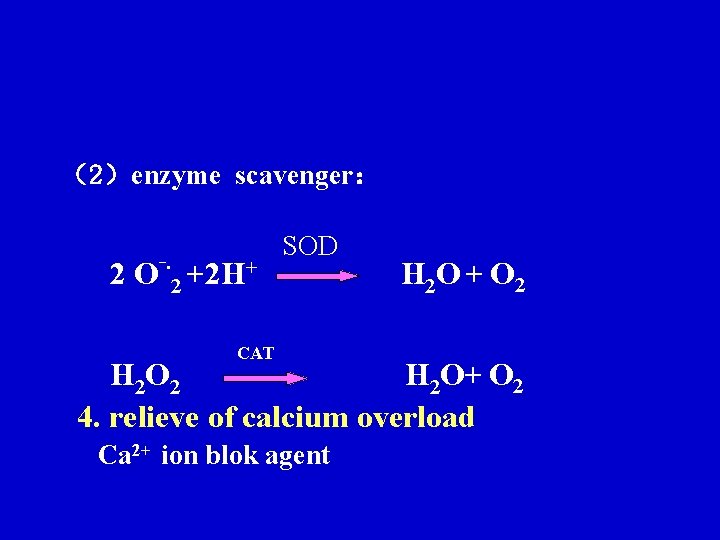
(2)enzyme scavenger: 2 O‾∙ 2 +2 H+ SOD CAT H 2 O + O 2 H 2 O+ O 2 4. relieve of calcium overload Ca 2+ ion blok agent
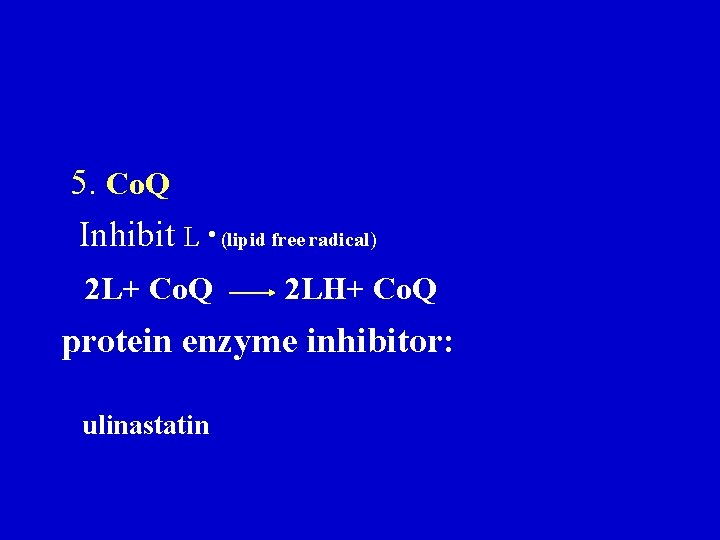
5. Co. Q Inhibit L • (lipid free radical) 2 L+ Co. Q 2 LH+ Co. Q protein enzyme inhibitor: ulinastatin