
ISARITHMIC MAPPING Cartographic Design for GIS Geog 340
- Slides: 26
ISARITHMIC MAPPING Cartographic Design for GIS (Geog. 340) Prof. Hugh Howard American River College
ISARITHMIC MAP DEFINED
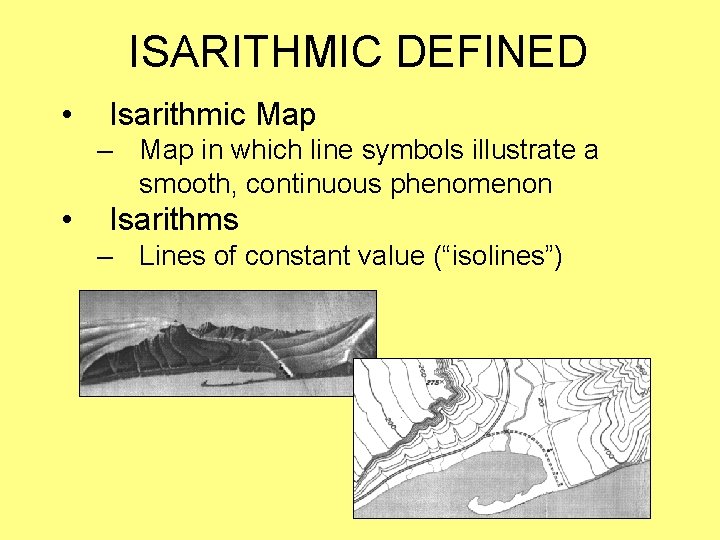
ISARITHMIC DEFINED • Isarithmic Map – Map in which line symbols illustrate a smooth, continuous phenomenon • Isarithms – Lines of constant value (“isolines”)
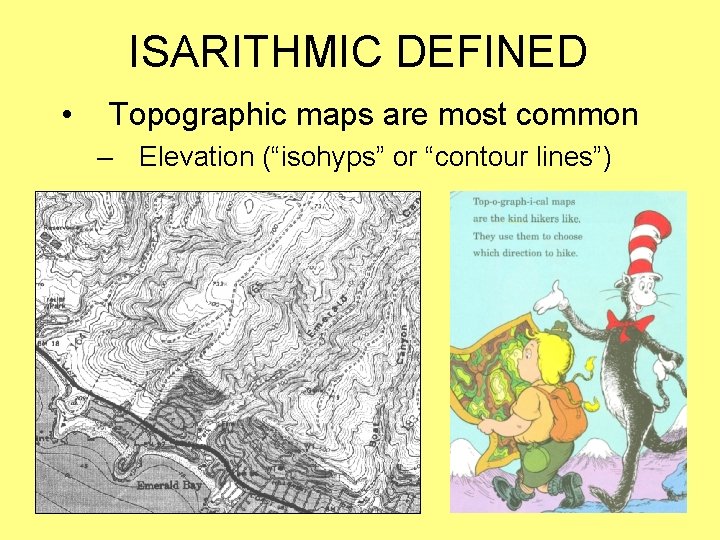
ISARITHMIC DEFINED • Topographic maps are most common – Elevation (“isohyps” or “contour lines”)
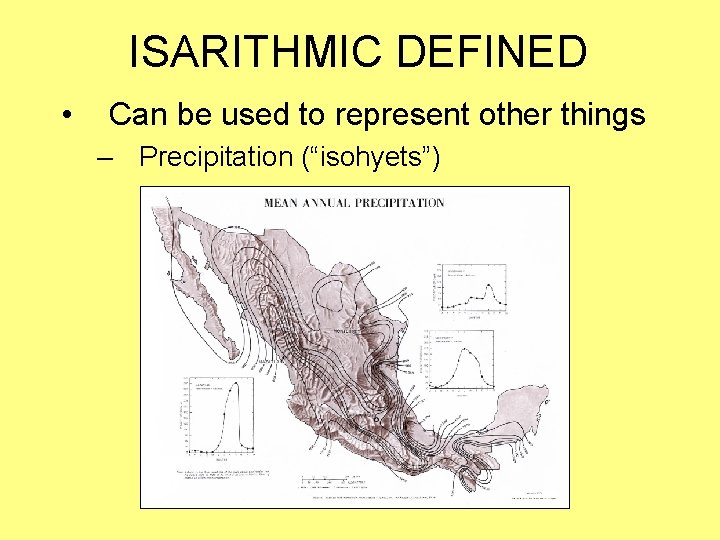
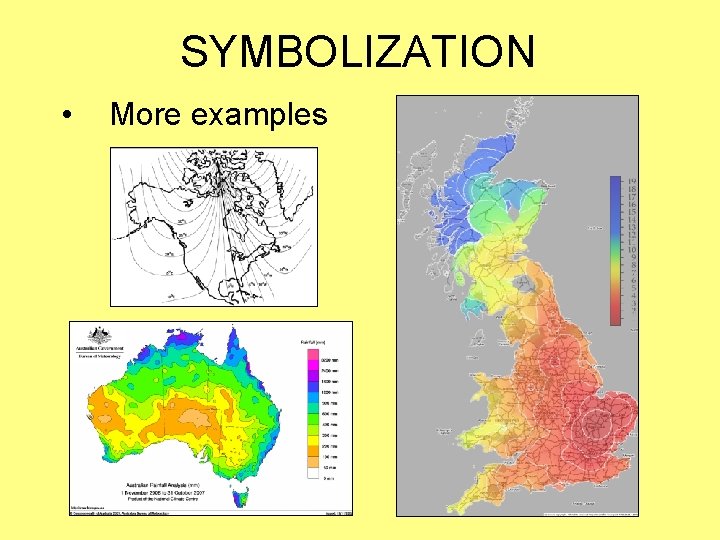
ISARITHMIC DEFINED • Can be used to represent other things – Precipitation (“isohyets”)
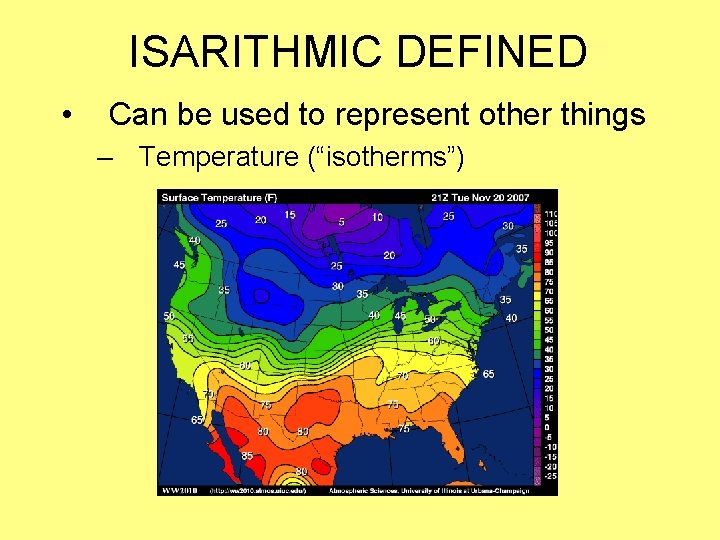
ISARITHMIC DEFINED • Can be used to represent other things – Temperature (“isotherms”)
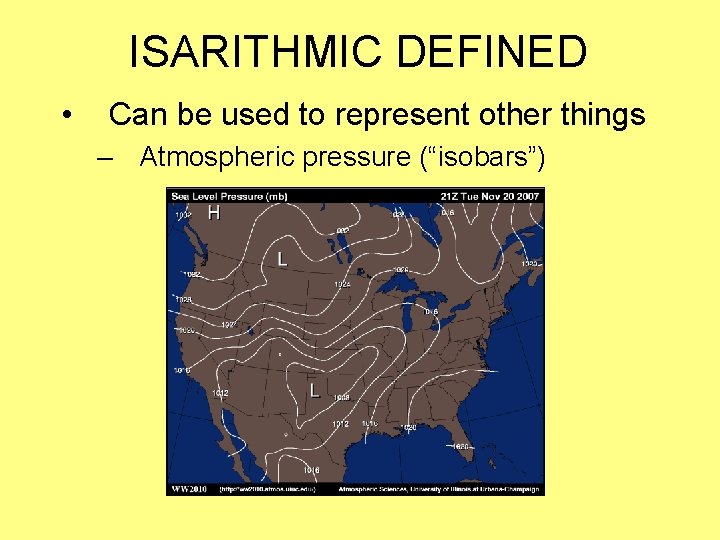
ISARITHMIC DEFINED • Can be used to represent other things – Atmospheric pressure (“isobars”)
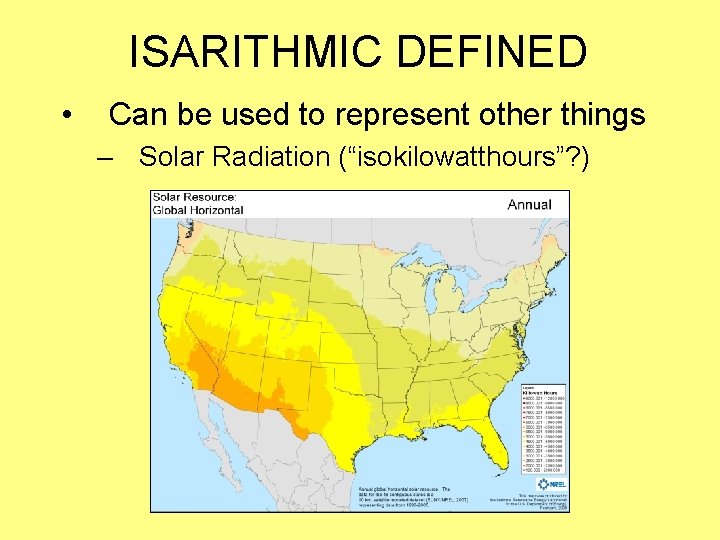
ISARITHMIC DEFINED • Can be used to represent other things – Solar Radiation (“isokilowatthours”? )
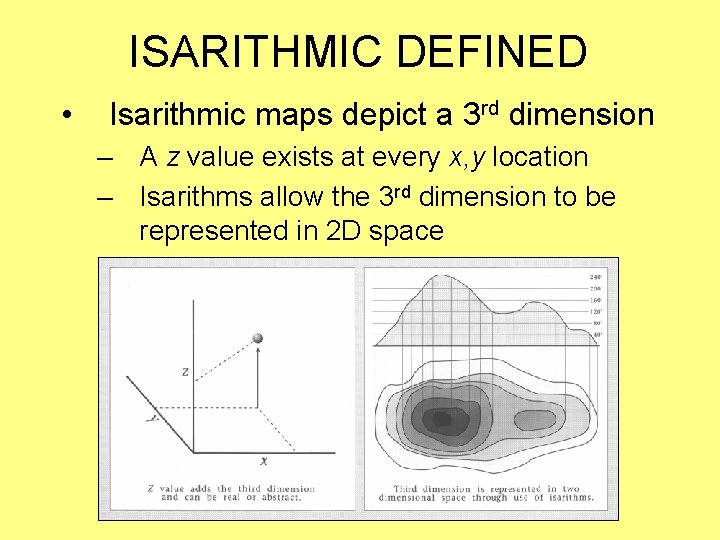
ISARITHMIC DEFINED • Isarithmic maps depict a 3 rd dimension – A z value exists at every x, y location – Isarithms allow the 3 rd dimension to be represented in 2 D space
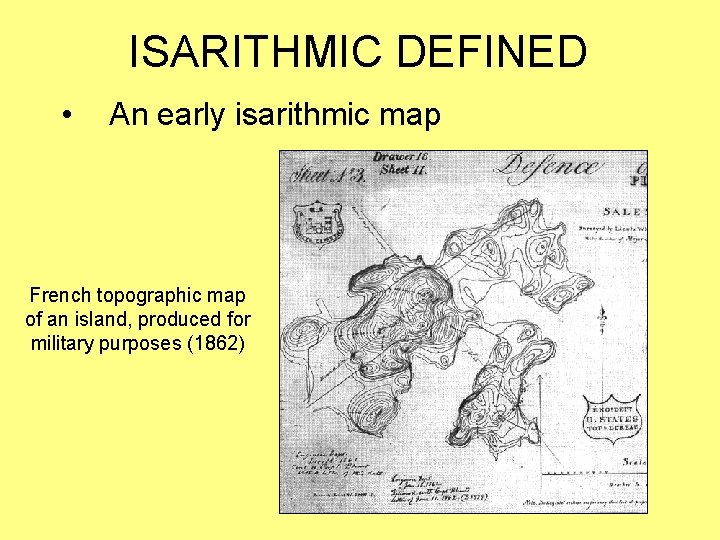
ISARITHMIC DEFINED • An early isarithmic map French topographic map of an island, produced for military purposes (1862)
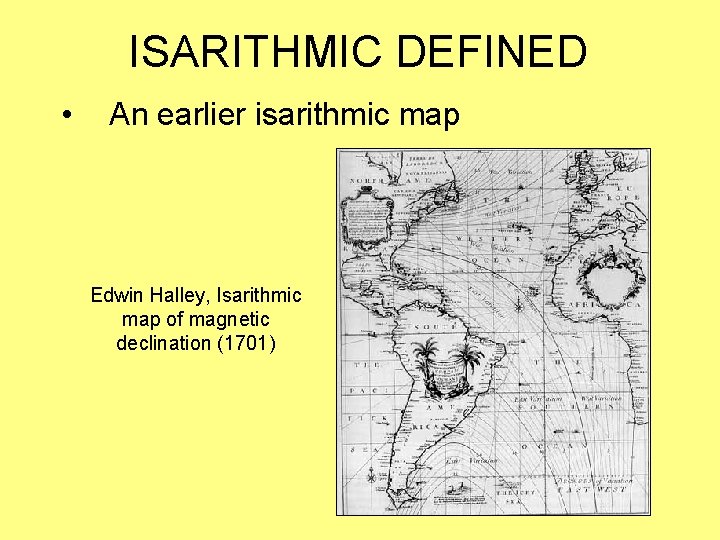
ISARITHMIC DEFINED • An earlier isarithmic map Edwin Halley, Isarithmic map of magnetic declination (1701)
DATA ISSUES
DATA ISSUES • Derived from point data – Each point has an x, y, and z value – Interpolation is performed to derive isarithms • Point data can take two forms – True – Conceptual
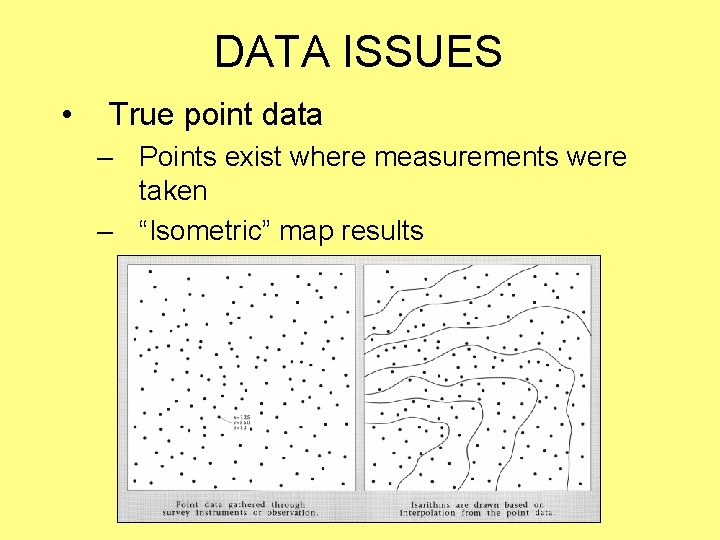
DATA ISSUES • True point data – Points exist where measurements were taken – “Isometric” map results
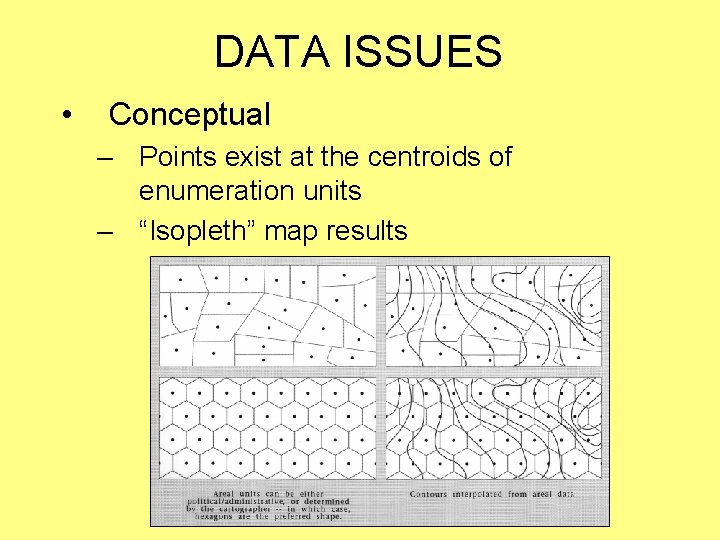
DATA ISSUES • Conceptual – Points exist at the centroids of enumeration units – “Isopleth” map results
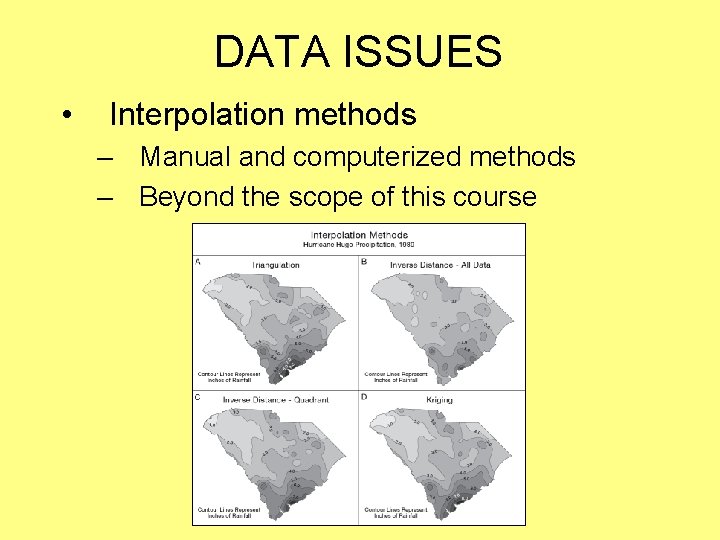
DATA ISSUES • Interpolation methods – Manual and computerized methods – Beyond the scope of this course
DATA ISSUES • Data standardization – Isometric map can represent raw or standardized data – Isopleth map can benefit from standardized data, to account for the sizes of enumeration units
IDENTIFYING ISARITHM VALUES
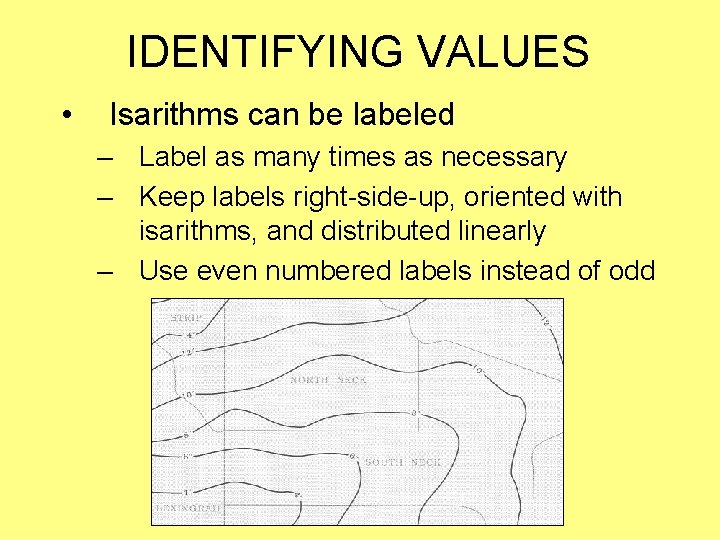
IDENTIFYING VALUES • Isarithms can be labeled – Label as many times as necessary – Keep labels right-side-up, oriented with isarithms, and distributed linearly – Use even numbered labels instead of odd
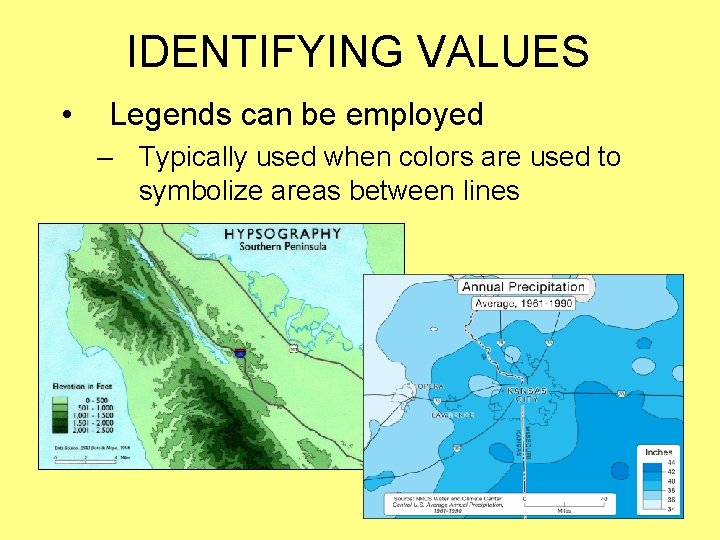
IDENTIFYING VALUES • Legends can be employed – Typically used when colors are used to symbolize areas between lines
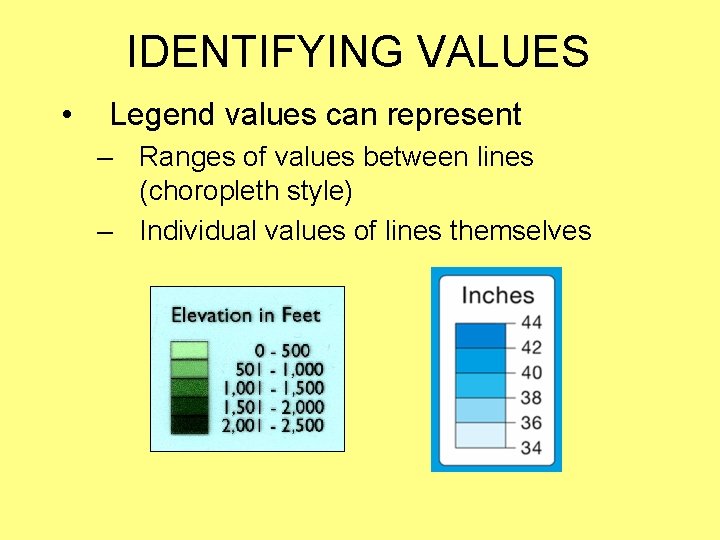
IDENTIFYING VALUES • Legend values can represent – Ranges of values between lines (choropleth style) – Individual values of lines themselves
SYMBOLIZATION
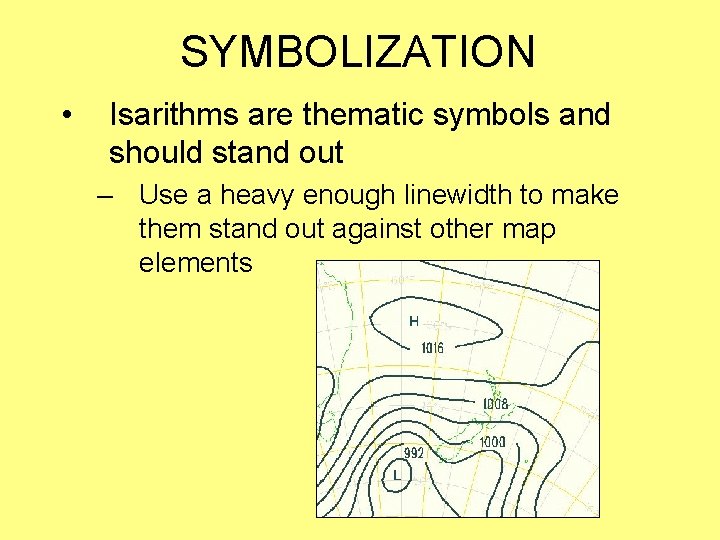
SYMBOLIZATION • Isarithms are thematic symbols and should stand out – Use a heavy enough linewidth to make them stand out against other map elements
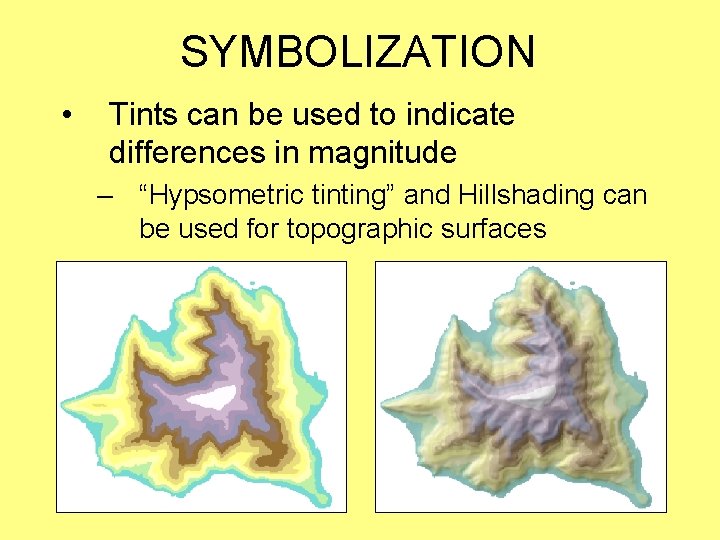
SYMBOLIZATION • Tints can be used to indicate differences in magnitude – “Hypsometric tinting” and Hillshading can be used for topographic surfaces
SYMBOLIZATION • More examples
ISARITHMIC MAPPING Cartographic Design for GIS (Geog. 340) Prof. Hugh Howard American River College