
Isaac Newton 1642 1727 1704 Oltre i limiti










- Slides: 50
Isaac Newton (1642 -1727) 1704
Oltre i limiti dello spettro visibile IR: 1800 (Herschel) UV: 1801 (Ritter) Frederick William Herschel (1738 -1822) Ultravioletto: effetti fotochimici Infrarosso: effetti termici
Joseph von Fraunhofer (1787 -1826)
The Wave Nature of Light
Saggi alla fiamma Litio Sodio Potassio Cesio Calcio Stronzio Bario Rame
Franz Schmidt & Haensch, Berlin, ca. 1916
Franz Schmidt&Haensch, Berlin S. , 1902
Origine delle righe di Fraunhofer nello spettro solare
The Wave Nature of Light
Line Spectra and the Bohr Model • Colors from excited gases arise because electrons move between energy states in the atom. (Electronic Transition)
Cavità assorbente (corpo nero) Distribuzione spettrale della radiazione di cavità
Max Planck (1858 -1947) Formula di Planck (1900)
Rydberg
Bohr
La formula di Bohr è in accordo all’ esperimento
Diffrazione di onde meccaniche
The Wave Behavior of Matter • Knowing that light has a particle nature, it seems reasonable to ask if matter has a wave nature. • Using Einstein’s and Planck’s equations, de Broglie showed: • The momentum, mv, is a particle property, whereas is a wave property. • de Broglie summarized the concepts of waves and particles, with noticeable effects if the objects are small.
Equazione di Schroedinger Densità di probabilità Probabilità di trovare una particella tra V e V+d. V
Quantum Mechanics and Atomic Orbitals and Quantum Numbers
Representations of Orbitals The s-Orbitals
Representations of Orbitals The p-Orbitals
d-orbitals
+ - + - - + + d-orbitals
Many-Electron Atoms Electron Spin and the Pauli Exclusion Principle
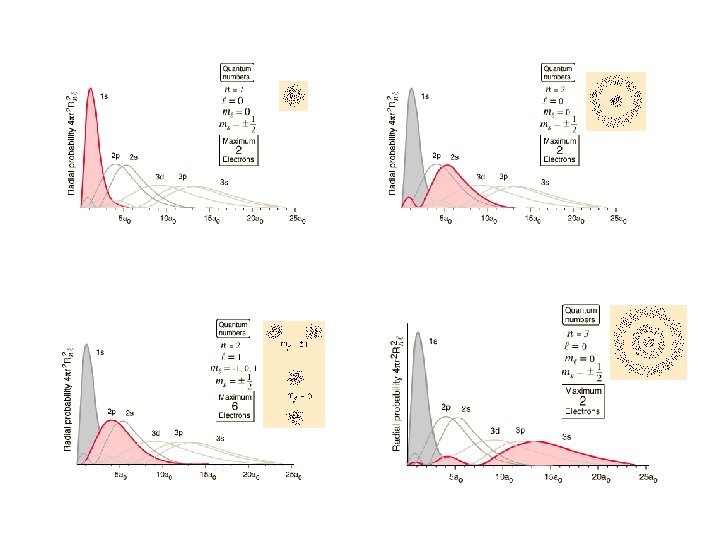
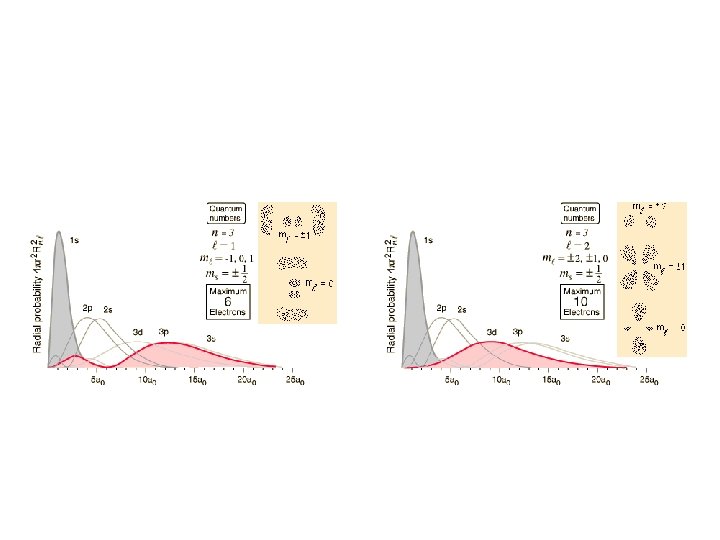
Probabilità radiale
Zeff = Z-s E~
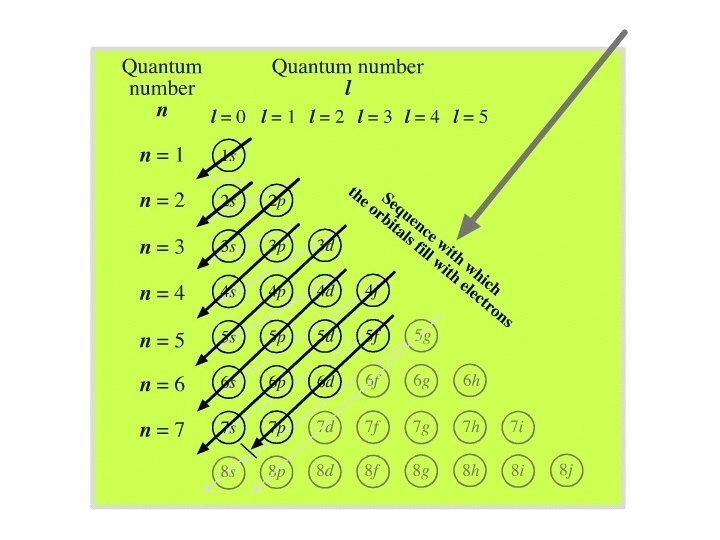
Orbitals and Their Energies Orbitals CD Many-Electron Atoms
Figure 6. 27 Orbitals CD Figure 6. 27
Figure 6. 28 Orbitals CD
Periodic Trends Two Major Factors: • principal quantum number, n, and • the effective nuclear charge, Zeff.
Figure 7. 6
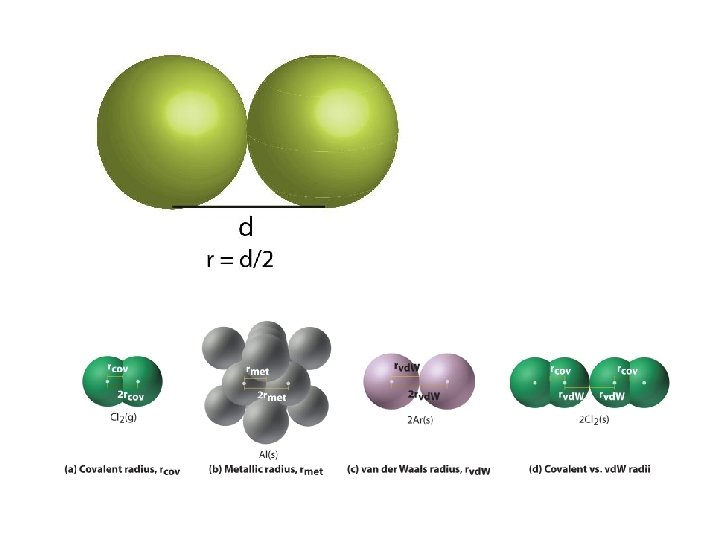
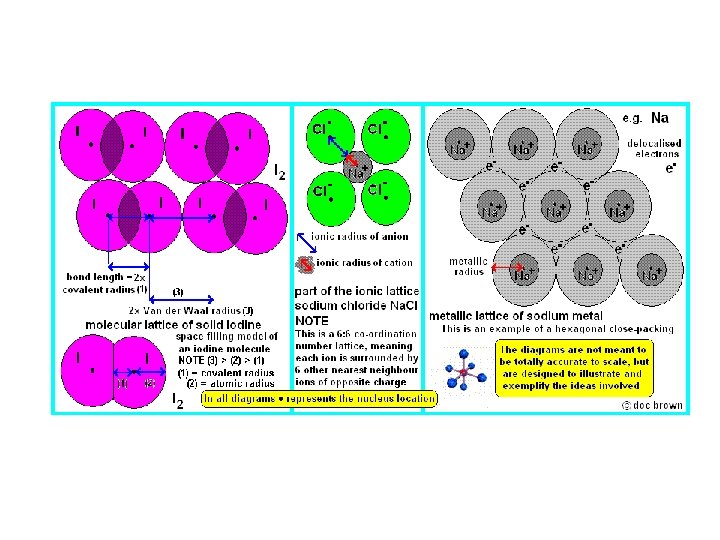
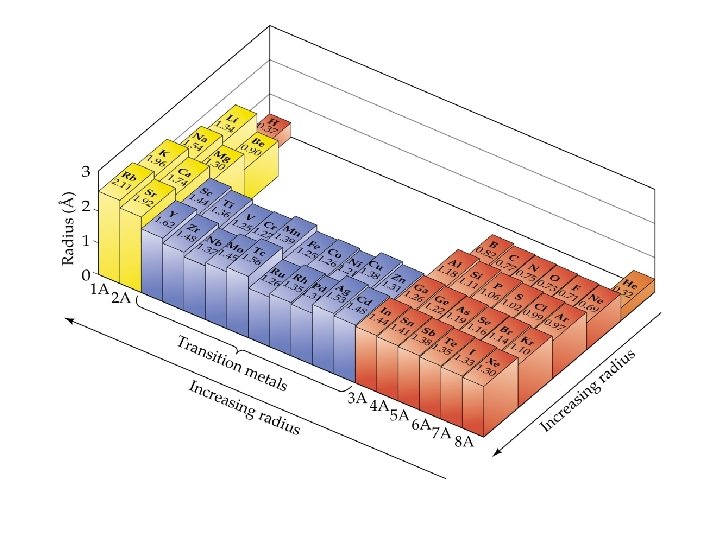
Periodicità del raggio atomico
Potenziale di ionizzazione X X+ + e -
Figure 7. 10 IE clip
Figure 7. 9
Affinità elettronica X + e- X- EA
Elettronegatività