
ISA Presentation on Indian Currency Current Denominations 01

- Slides: 16
ISA Presentation on Indian Currency
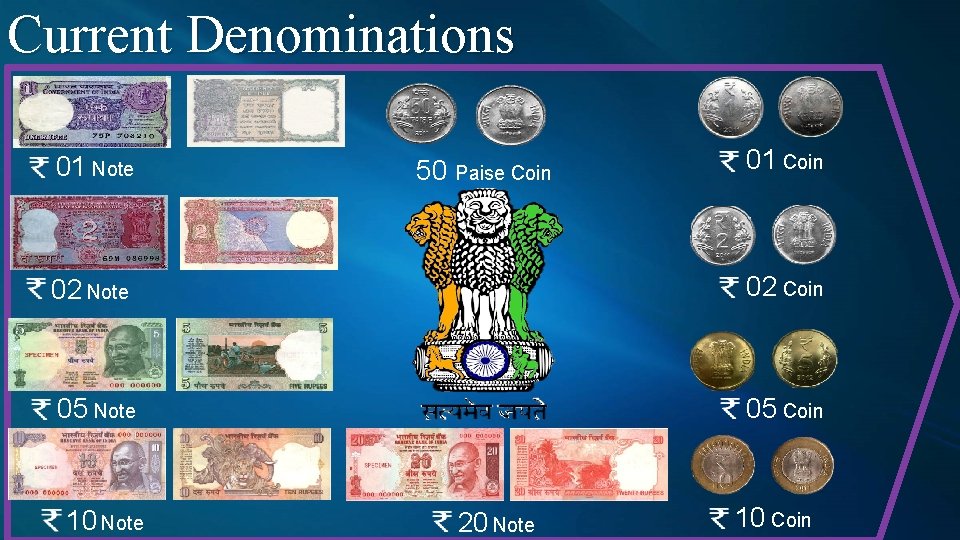
Current Denominations 01 Note 50 Paise Coin 01 Coin 02 Note 02 Coin 05 Note 05 Coin 10 Note 20 Note 10 Coin
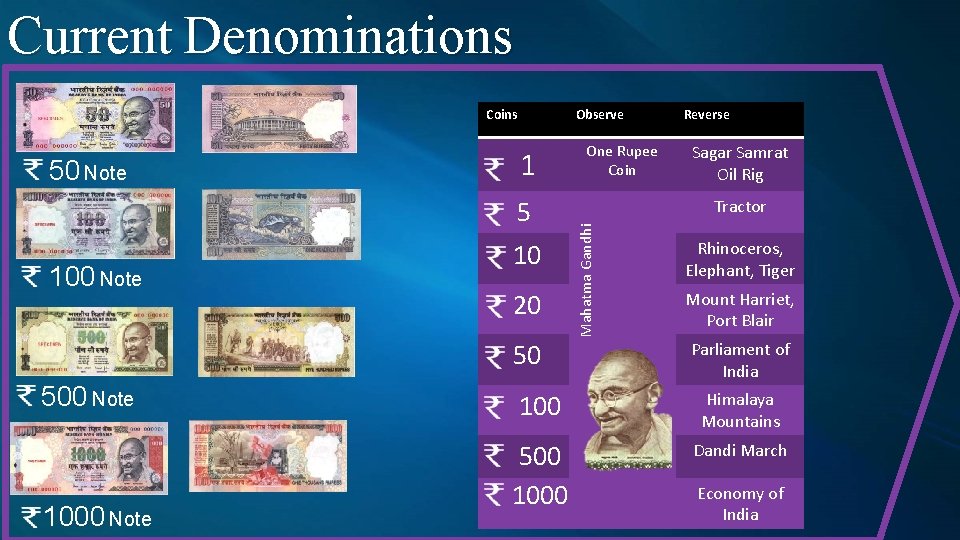
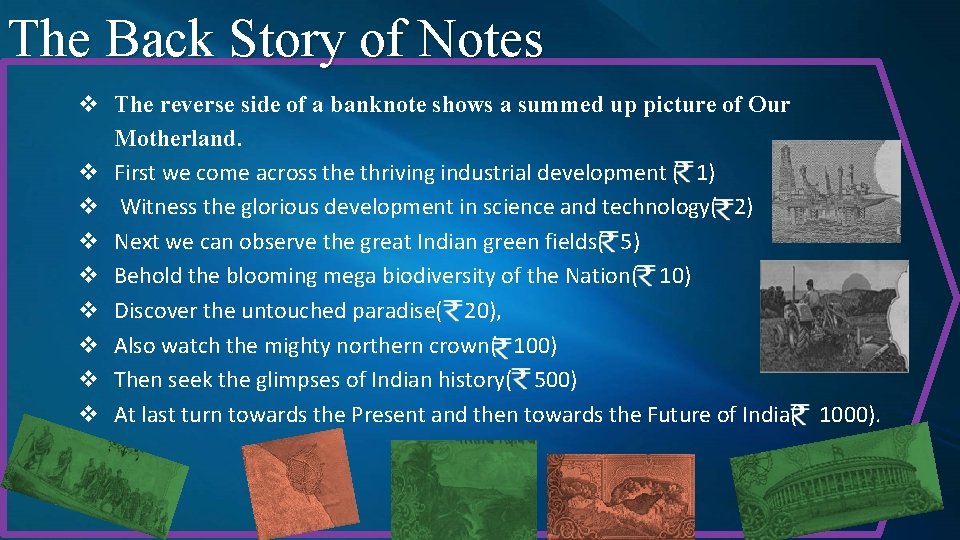
Current Denominations 50 Note Observe 1 5 100 Note 10 20 50 500 Note 1000 Note One Rupee Coin Reverse Sagar Samrat Oil Rig Tractor Mahatma Gandhi Coins Rhinoceros, Elephant, Tiger Mount Harriet, Port Blair Parliament of India 100 Himalaya Mountains 500 1000 Dandi March Economy of India
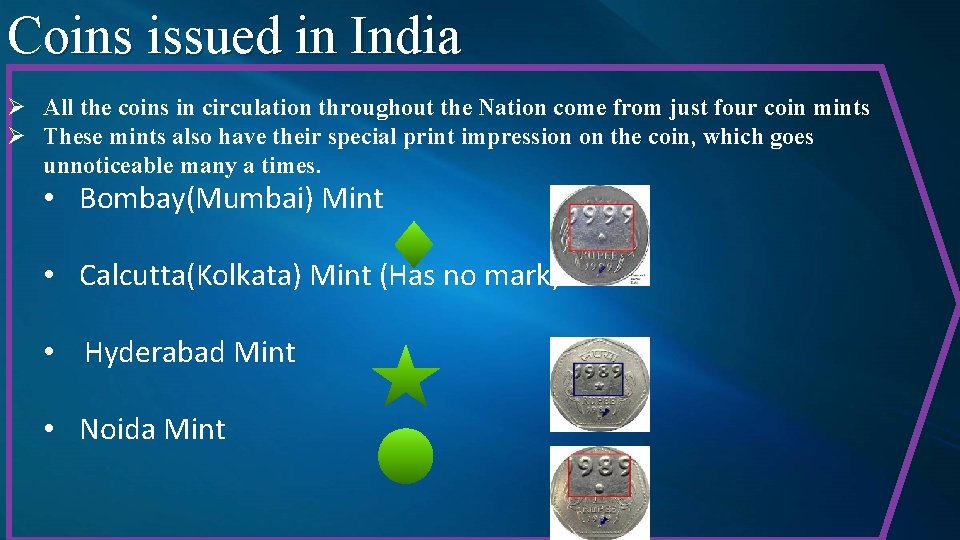
Coins issued in India Ø All the coins in circulation throughout the Nation come from just four coin mints Ø These mints also have their special print impression on the coin, which goes unnoticeable many a times. • Bombay(Mumbai) Mint • Calcutta(Kolkata) Mint (Has no mark) • Hyderabad Mint • Noida Mint
Special Symbols And Identification Marks
Special Symbols And Identification Marks
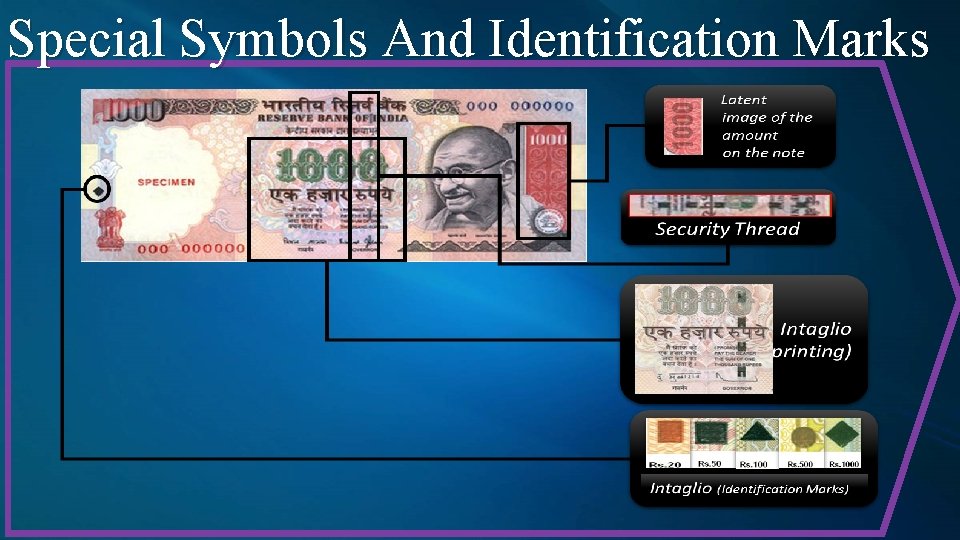
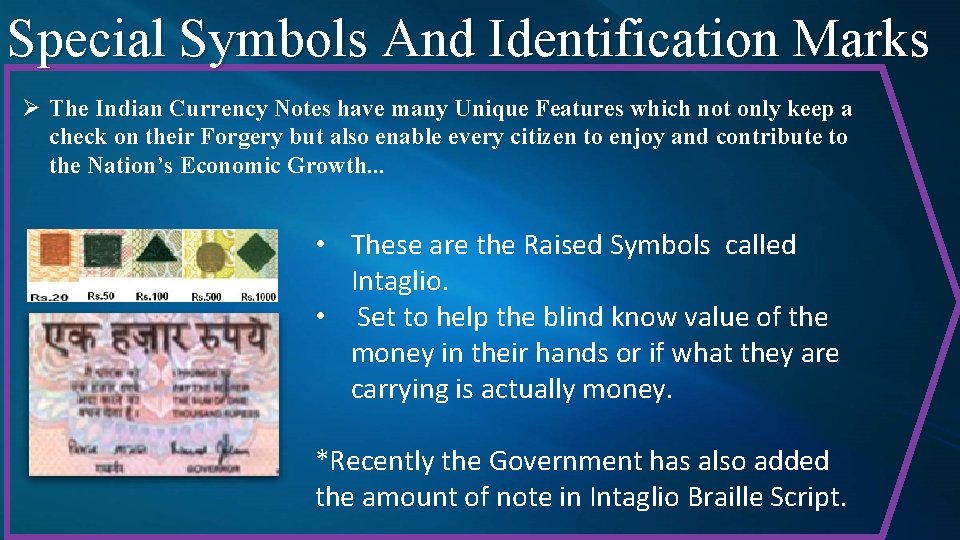
Special Symbols And Identification Marks Ø The Indian Currency Notes have many Unique Features which not only keep a check on their Forgery but also enable every citizen to enjoy and contribute to the Nation’s Economic Growth. . . • These are the Raised Symbols called Intaglio. • Set to help the blind know value of the money in their hands or if what they are carrying is actually money. *Recently the Government has also added the amount of note in Intaglio Braille Script.
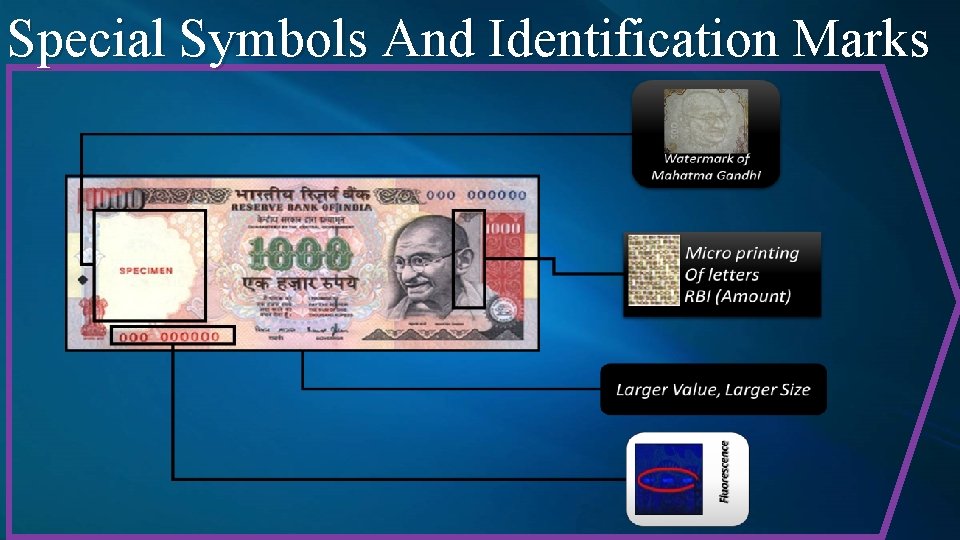
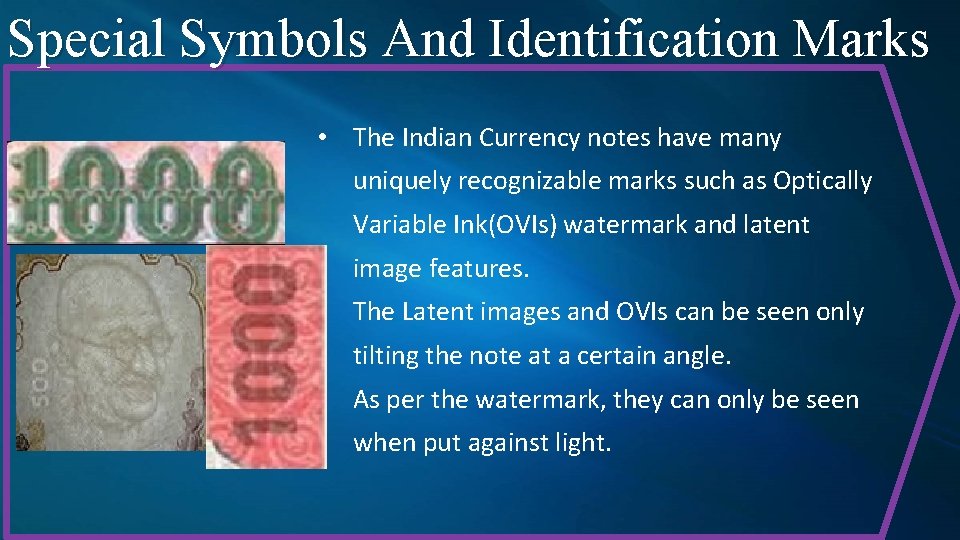
Special Symbols And Identification Marks • The Indian Currency notes have many uniquely recognizable marks such as Optically Variable Ink(OVIs) watermark and latent image features. • The Latent images and OVIs can be seen only tilting the note at a certain angle. • As per the watermark, they can only be seen when put against light.
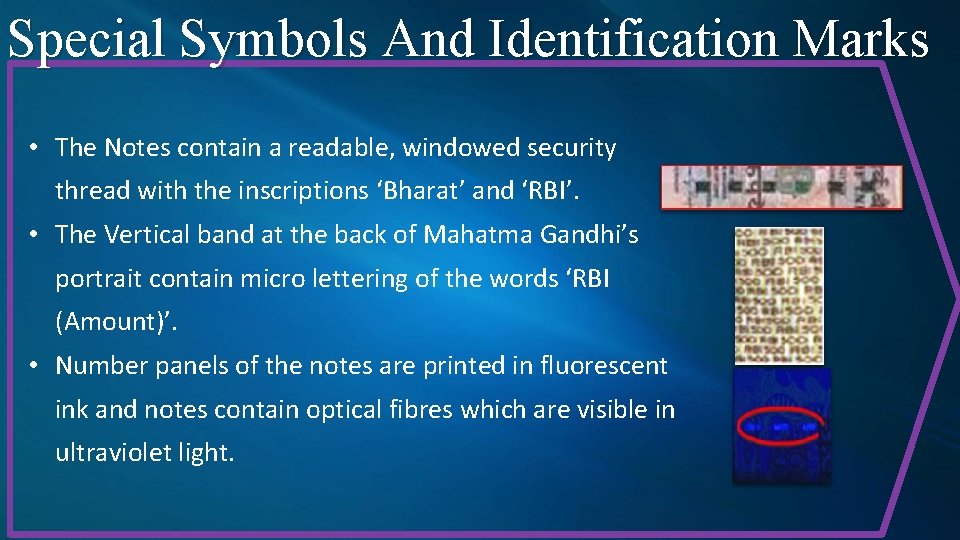
Special Symbols And Identification Marks • The Notes contain a readable, windowed security thread with the inscriptions ‘Bharat’ and ‘RBI’. • The Vertical band at the back of Mahatma Gandhi’s portrait contain micro lettering of the words ‘RBI (Amount)’. • Number panels of the notes are printed in fluorescent ink and notes contain optical fibres which are visible in ultraviolet light.
The Back Story of Notes v The reverse side of a banknote shows a summed up picture of Our Motherland. v First we come across the thriving industrial development ( 1) v Witness the glorious development in science and technology( 2) v Next we can observe the great Indian green fields( 5) v Behold the blooming mega biodiversity of the Nation( 10) v Discover the untouched paradise( 20), v Also watch the mighty northern crown( 100) v Then seek the glimpses of Indian history( 500) v At last turn towards the Present and then towards the Future of India( 1000).
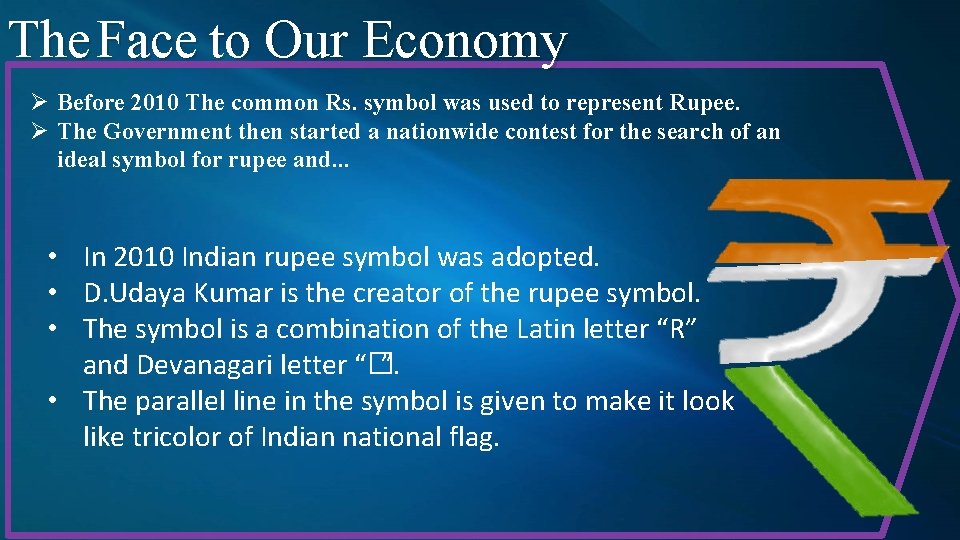
The Face to Our Economy Ø Before 2010 The common Rs. symbol was used to represent Rupee. Ø The Government then started a nationwide contest for the search of an ideal symbol for rupee and. . . • In 2010 Indian rupee symbol was adopted. • D. Udaya Kumar is the creator of the rupee symbol. • The symbol is a combination of the Latin letter “R” and Devanagari letter “� ”. • The parallel line in the symbol is given to make it look like tricolor of Indian national flag.
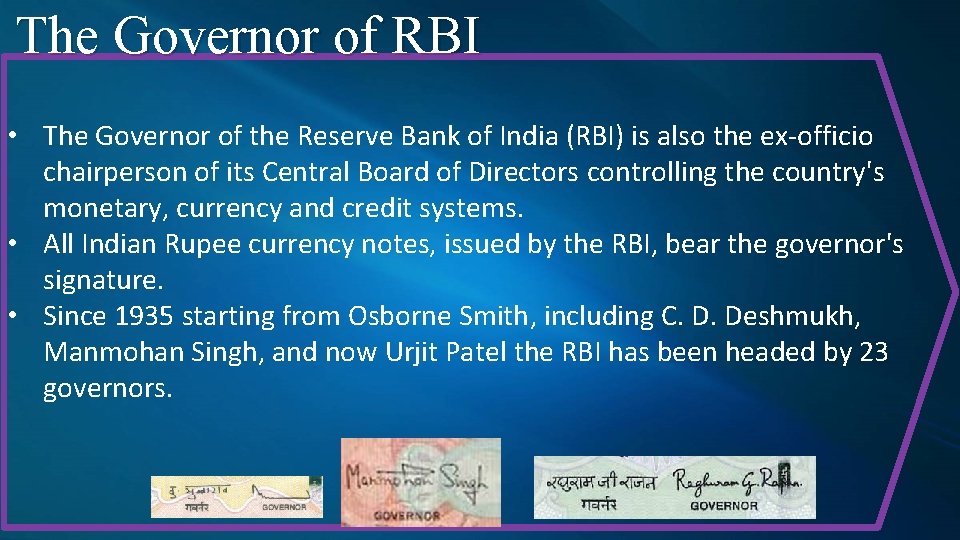
The Governor of RBI • The Governor of the Reserve Bank of India (RBI) is also the ex-officio chairperson of its Central Board of Directors controlling the country's monetary, currency and credit systems. • All Indian Rupee currency notes, issued by the RBI, bear the governor's signature. • Since 1935 starting from Osborne Smith, including C. D. Deshmukh, Manmohan Singh, and now Urjit Patel the RBI has been headed by 23 governors.
Promissory Clause Ø The promissory note means that the Reserve Bank of India is obligated to exchange a banknote say of 1000 Rupees with bank notes or coins of a lower value thus returning to you a sum total of 1000 Rupees in lower denomination. • The official website of the Reserve Bank of India says, “The promissory clause printed on the banknotes i. e. , "I promise to pay the bearer the sum of Rupees …is a statement which means that the banknote is a legal tender for the specified amount. The obligation on the part of the Bank is to exchange a banknote with bank notes of lower value or other coins which are legal tender under the Indian Coinage Act, 2011, of an equivalent amount”. * This clause however has no tangible value. This clause has not been utilized in practicality on a large scale. The only probable use of a promissory clause is to help maintain confidence in the people in the Rupee.
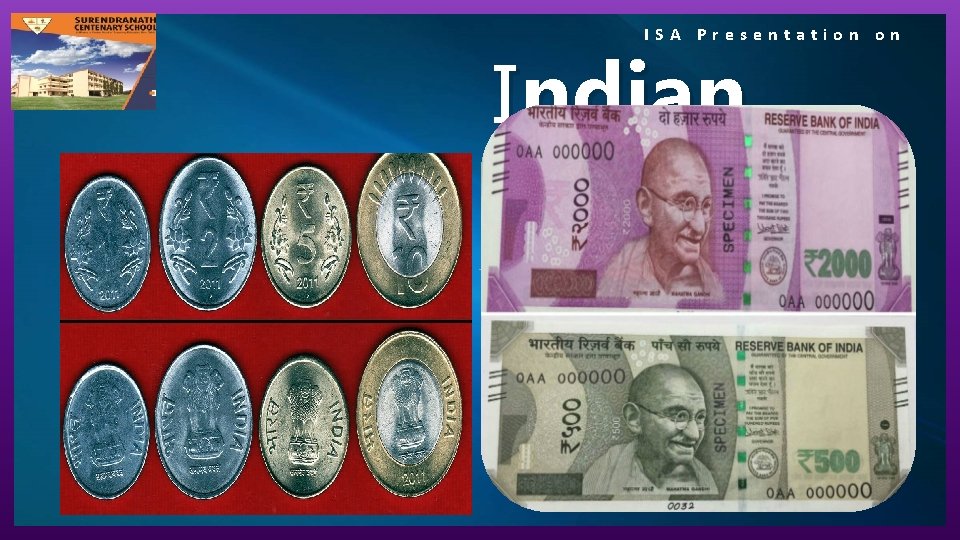
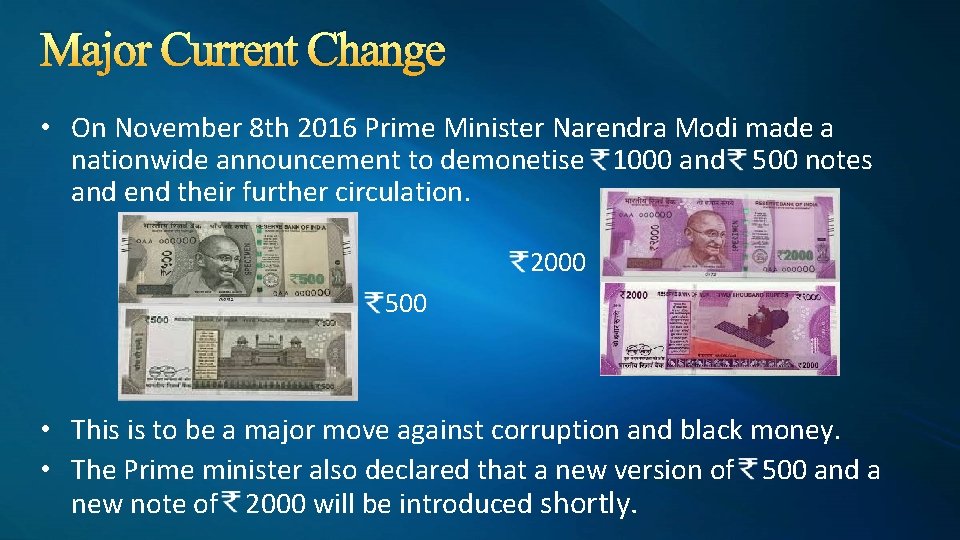
Major Current Change • On November 8 th 2016 Prime Minister Narendra Modi made a nationwide announcement to demonetise 1000 and 500 notes and end their further circulation. 2000 500 • This is to be a major move against corruption and black money. • The Prime minister also declared that a new version of 500 and a new note of 2000 will be introduced shortly.
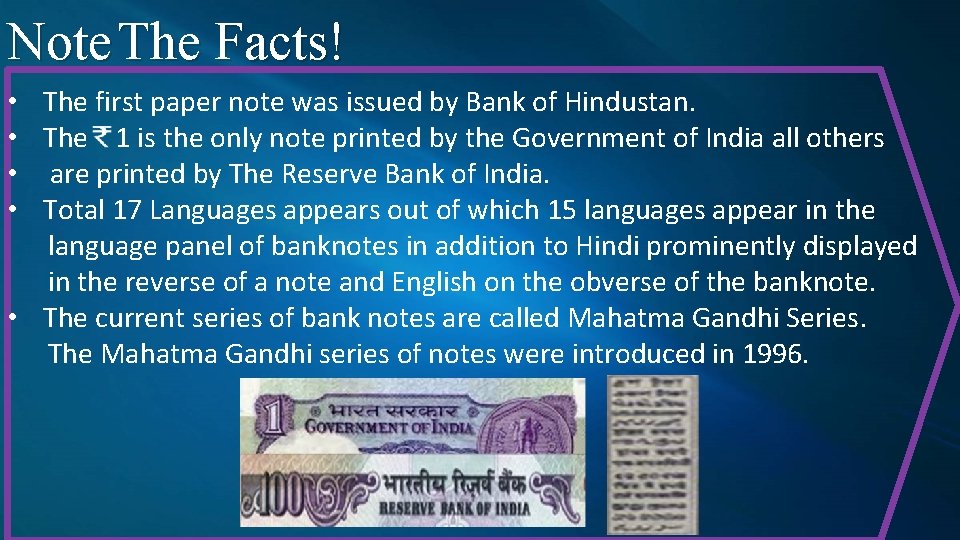
Note The Facts! • The first paper note was issued by Bank of Hindustan. • The 1 is the only note printed by the Government of India all others • are printed by The Reserve Bank of India. • Total 17 Languages appears out of which 15 languages appear in the language panel of banknotes in addition to Hindi prominently displayed in the reverse of a note and English on the obverse of the banknote. • The current series of bank notes are called Mahatma Gandhi Series. The Mahatma Gandhi series of notes were introduced in 1996.
Thank you for watching Made by Students of Standard IX ØAditya Anshul ØDevesh Kumar Jhaluka ØAprajita Jha ØAakriti Sharma