
Is your organisation fit for future Geraldine Haley
- Slides: 13
Is your organisation fit for future? Geraldine Haley Global Head Executive Talent & Succession October 2014 0
Three Key Questions • Why is succession planning important now to your organisation? • How do you ensure maximum value add for the business? • What is the role for HR to play that is different from the past? 1
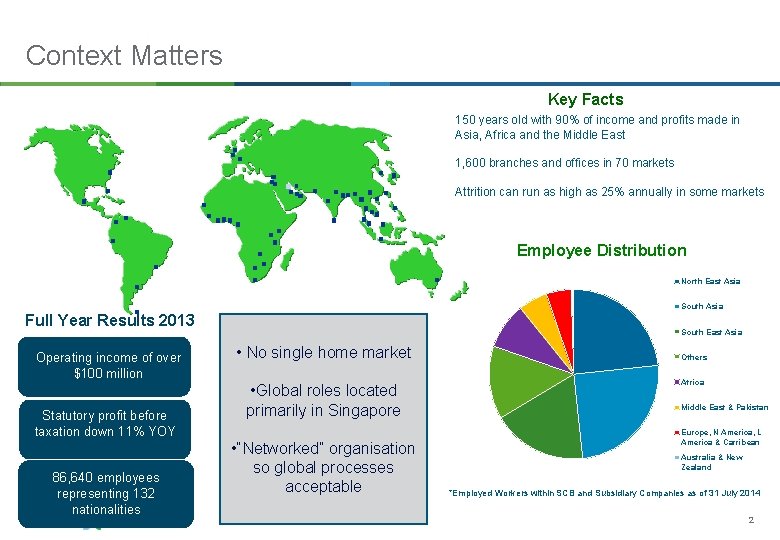
Context Matters Key Facts 150 years old with 90% of income and profits made in Asia, Africa and the Middle East 1, 600 branches and offices in 70 markets Attrition can run as high as 25% annually in some markets Employee Distribution North East Asia South Asia Full Year Results 2013 Operating income of over $100 million Statutory profit before taxation down 11% YOY 86, 640 employees representing 132 nationalities South East Asia • No single home market • Global roles located primarily in Singapore • “Networked” organisation so global processes acceptable Others Africa Middle East & Pakistan Europe, N America, L America & Carribean Australia & New Zealand *Employed Workers within SCB and Subsidiary Companies as of 31 July 2014 2
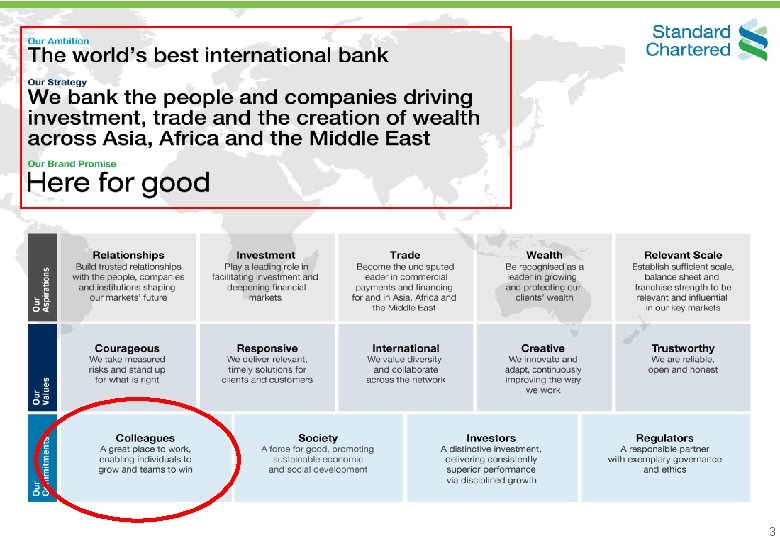
3 3
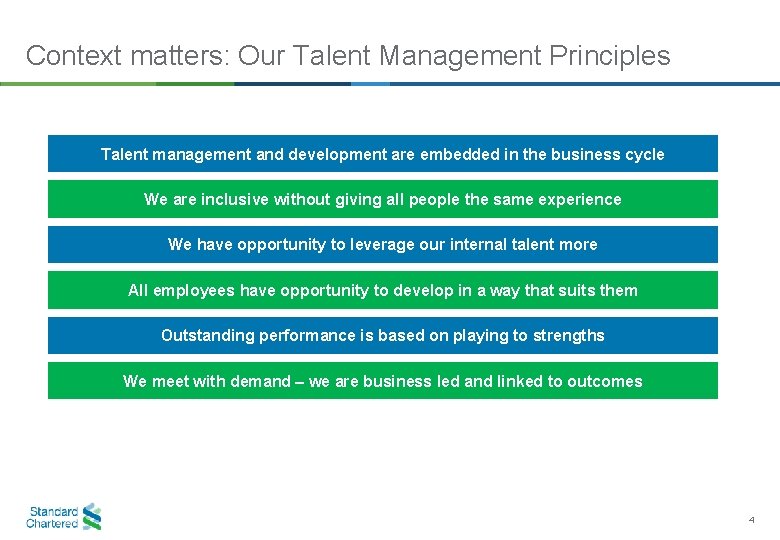
Context matters: Our Talent Management Principles Talent management and development are embedded in the business cycle We are inclusive without giving all people the same experience We have opportunity to leverage our internal talent more All employees have opportunity to develop in a way that suits them Outstanding performance is based on playing to strengths We meet with demand – we are business led and linked to outcomes 4
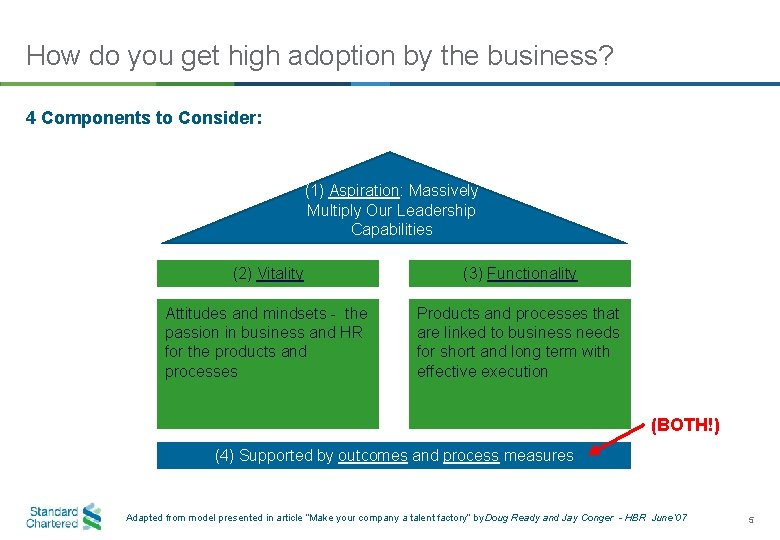
How do you get high adoption by the business? 4 Components to Consider: (1) Aspiration: Massively Multiply Our Leadership Capabilities (2) Vitality (3) Functionality Attitudes and mindsets - the passion in business and HR for the products and processes Products and processes that are linked to business needs for short and long term with effective execution (BOTH!) (4) Supported by outcomes and process measures Adapted from model presented in article “Make your company a talent factory” by Doug Ready and Jay Conger - HBR June’ 07 5
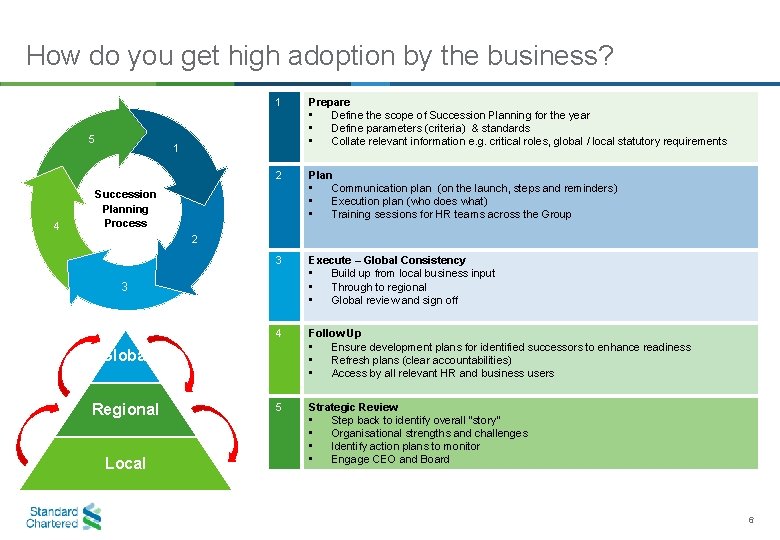
How do you get high adoption by the business? 5 4 1 Prepare • Define the scope of Succession Planning for the year • Define parameters (criteria) & standards • Collate relevant information e. g. critical roles, global / local statutory requirements 2 Plan • Communication plan (on the launch, steps and reminders) • Execution plan (who does what) • Training sessions for HR teams across the Group 3 Execute – Global Consistency • Build up from local business input • Through to regional • Global review and sign off 4 Follow Up • Ensure development plans for identified successors to enhance readiness • Refresh plans (clear accountabilities) • Access by all relevant HR and business users 5 Strategic Review • Step back to identify overall “story” • Organisational strengths and challenges • Identify action plans to monitor • Engage CEO and Board 1 Succession Planning Process 2 3 Global Regional Local 6
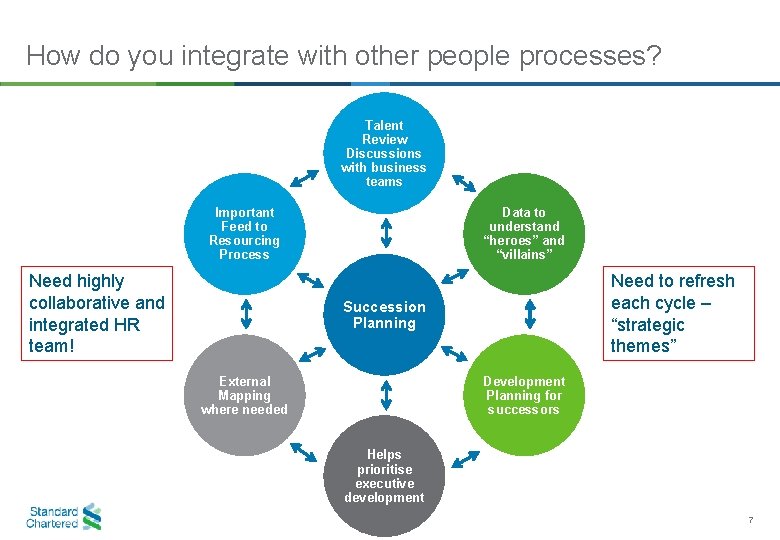
How do you integrate with other people processes? Talent Review Discussions with business teams Important Feed to Resourcing Process Need highly collaborative and integrated HR team! Data to understand “heroes” and “villains” Need to refresh each cycle – “strategic themes” Succession Planning External Mapping where needed Development Planning for successors Helps prioritise executive development 7
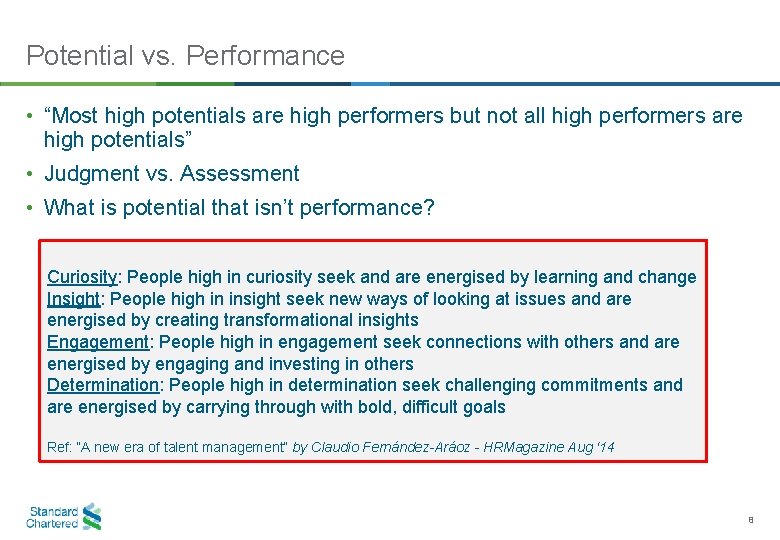
Potential vs. Performance • “Most high potentials are high performers but not all high performers are high potentials” • Judgment vs. Assessment • What is potential that isn’t performance? Curiosity: People high in curiosity seek and are energised by learning and change Insight: People high in insight seek new ways of looking at issues and are energised by creating transformational insights Engagement: People high in engagement seek connections with others and are energised by engaging and investing in others Determination: People high in determination seek challenging commitments and are energised by carrying through with bold, difficult goals Ref: “A new era of talent management” by Claudio Fernández-Aráoz - HRMagazine Aug ‘ 14 8
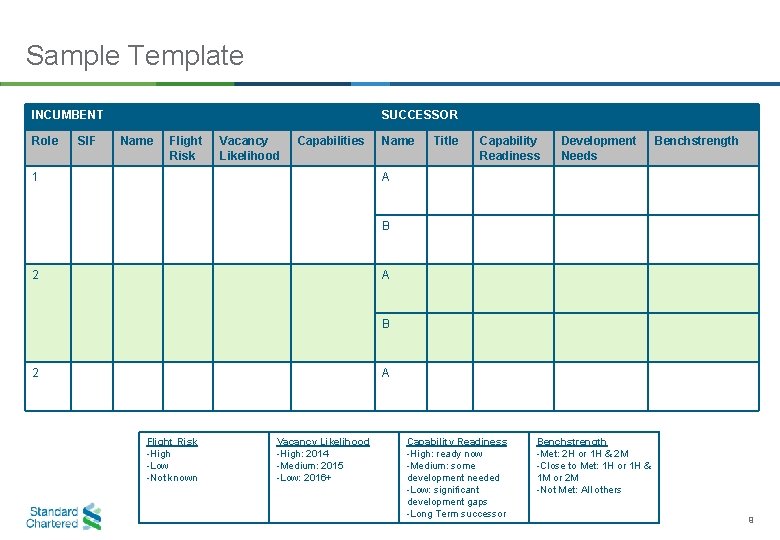
Sample Template INCUMBENT Role SIF SUCCESSOR Name Flight Risk Vacancy Likelihood Capabilities 1 Name Title Capability Readiness Development Needs Benchstrength A B 2 A Flight Risk -High -Low -Not known Vacancy Likelihood -High: 2014 -Medium: 2015 -Low: 2016+ Capability Readiness -High: ready now -Medium: some development needed -Low: significant development gaps -Long Term successor Benchstrength -Met: 2 H or 1 H & 2 M -Close to Met: 1 H or 1 H & 1 M or 2 M -Not Met: All others 9
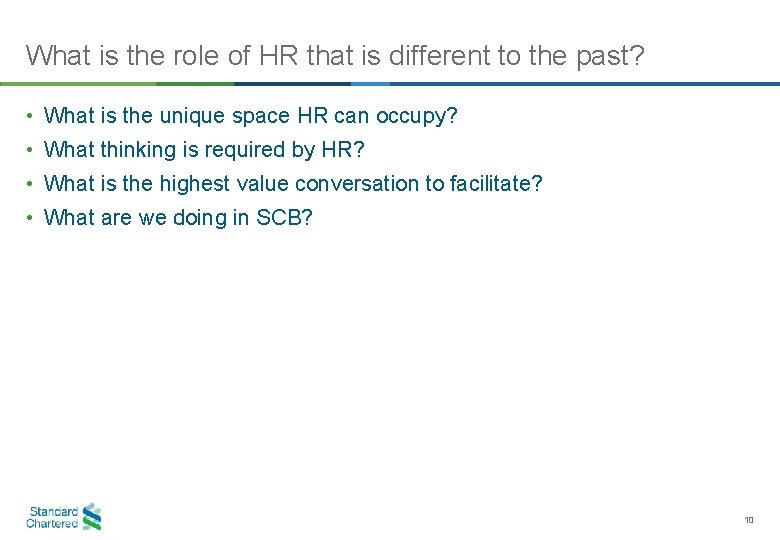
What is the role of HR that is different to the past? • What is the unique space HR can occupy? • What thinking is required by HR? • What is the highest value conversation to facilitate? • What are we doing in SCB? 10
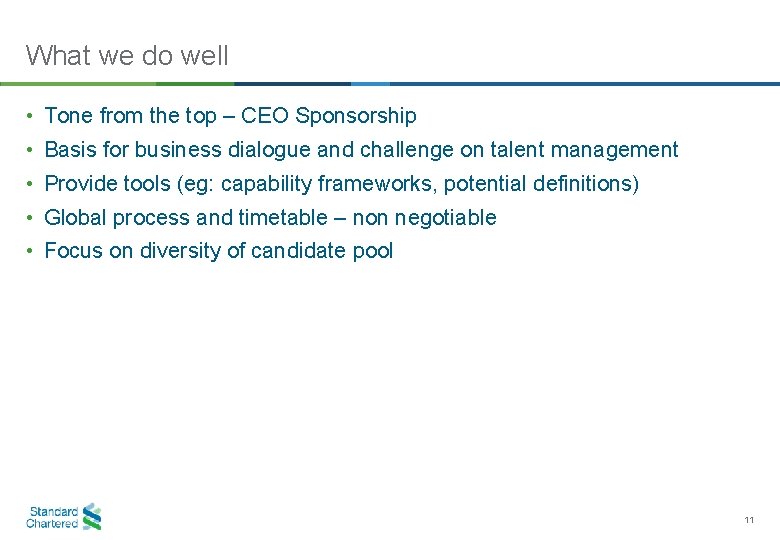
What we do well • Tone from the top – CEO Sponsorship • Basis for business dialogue and challenge on talent management • Provide tools (eg: capability frameworks, potential definitions) • Global process and timetable – non negotiable • Focus on diversity of candidate pool 11
What we have challenges with • Poor system to capture data (Excel!) • Need to work hard to source candidates outside of known population • Transparency – not enough! • Potential assessment is judgement only 12