
Is Your Inpatient Family Happy An Innovative Program

- Slides: 19
Is Your Inpatient “Family” Happy? An Innovative Program to Enhance Resident Communication and Teamwork By Maria Devens, Ph. D. and Brian Dudkiewicz, MD University of Illinois at Chicago Department of Family Medicine
Today’s Session • • • Objectives Program Rationale and Development Brief Literature Review Process of the Intervention Demonstration Common Themes Quantitative / Qualitative Results Summary of Key Elements Discussion
Objectives • Identify unique stressors facing residents on Family Medicine inpatient services • Discuss one approach to enhance resident communication, teamwork and conflict resolution on an inpatient service • Consider implementation of this process in your respective settings
Program Rationale and Development “The Crisis” 1. 2. 3. Inpatient director paged by attending one Friday afternoon for the following issues: Unprofessional negative attitude of senior resident to interns and attending Senior resident refused to take direction from attending Poor communication and little teamwork
Program Rationale and Development • Potential harm to our patients and intradepartmental relationships • Signal for a more structured intervention • Resolution of this conflict lead to the development and implementation of our current process
Program Rationale and Development (Goals of Structured Intervention) • Promotion of Clear Communication • Promotion of Teamwork • Expedient Resolution of Inpatient Team Conflicts • Reduction of Stress
Literature Review • House officer stress syndrome (ranging from episodic cognitive impairment and chronic anger to depression and suicide) (Small, 1981) • 27% of FM residents met criteria for burnout; among all specialties combined, interns particularly vulnerable (77% vs. 44%) (Martini et al. 2004) • Stress leads to depersonalization, depression, and unprofessional behavior; interventions to reduce stress will promote ideal of professionalism (Mareiniss, 2004)
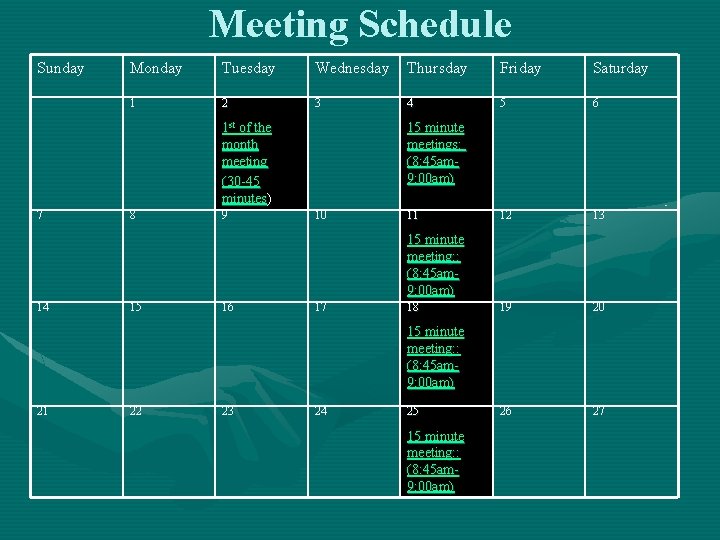
Meeting Schedule Sunday Monday Tuesday Wednesday Thursday Friday Saturday 1 2 3 4 5 6 12 13 19 20 26 27 1 st of the month meeting (30 -45 minutes) 7 8 9 15 minute meetings: (8: 45 am 9: 00 am) 10 11 15 minute meeting: : (8: 45 am 9: 00 am) 14 15 16 17 18 15 minute meeting: : (8: 45 am 9: 00 am) 21 22 23 24 25 15 minute meeting: : (8: 45 am 9: 00 am)
Weekly Thursday Meetings: Process • Residents grade their stress levels (0 -10) • High stress levels (8, 9, 10)- explore external stressors • Document number of patients on the service • Ask for messages in the “message box” • Have residents reflect and propose solutions • Encourage all to participate
Meeting Demonstration
Thursday Meetings Common Recurring Issues • Completion of duties within the work hour rules • Increased intern stress on call during initial months of training • “Too many” other duties which distract residents from inpatient care (clinic, interviews, lectures, and nursing home visits)
Common Recurring Issues – cont’d • Improve patient care and safety with accurate and concise sign-outs • Timely completion of morning rounds prior to afternoon clinic • Role orientation and expectations for seniors and interns
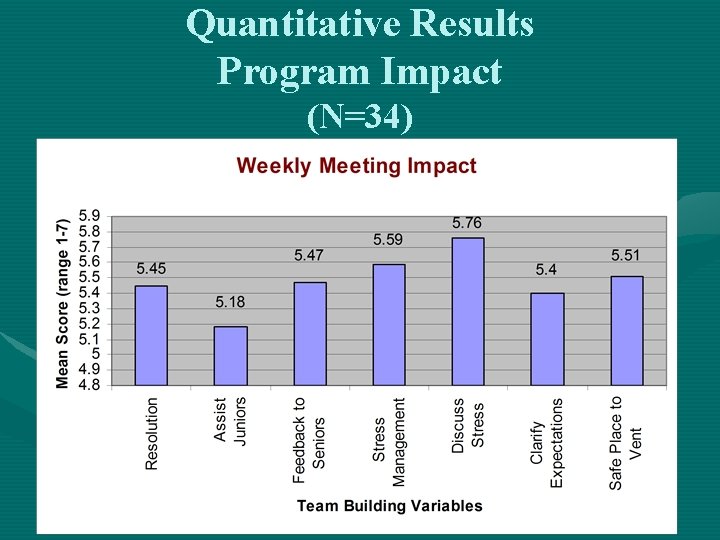
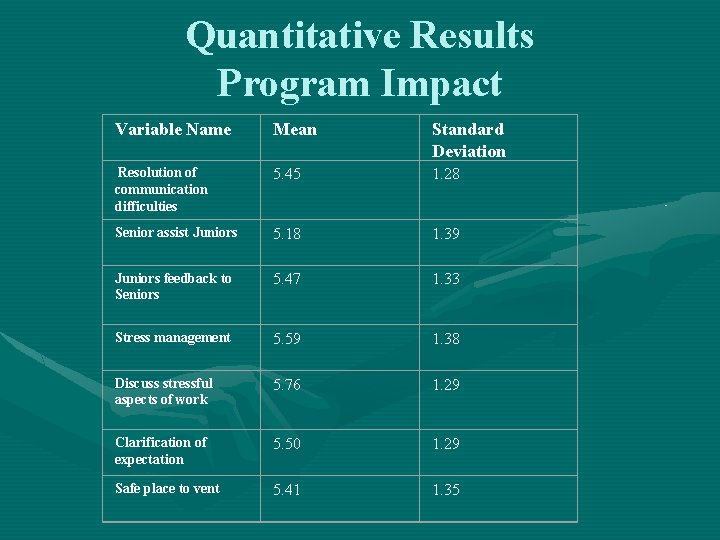
Quantitative Results Program Impact (N=34)
Quantitative Results Program Impact Variable Name Mean Standard Deviation Resolution of communication difficulties 5. 45 1. 28 Senior assist Juniors 5. 18 1. 39 Juniors feedback to Seniors 5. 47 1. 33 Stress management 5. 59 1. 38 Discuss stressful aspects of work 5. 76 1. 29 Clarification of expectation 5. 50 1. 29 Safe place to vent 5. 41 1. 35
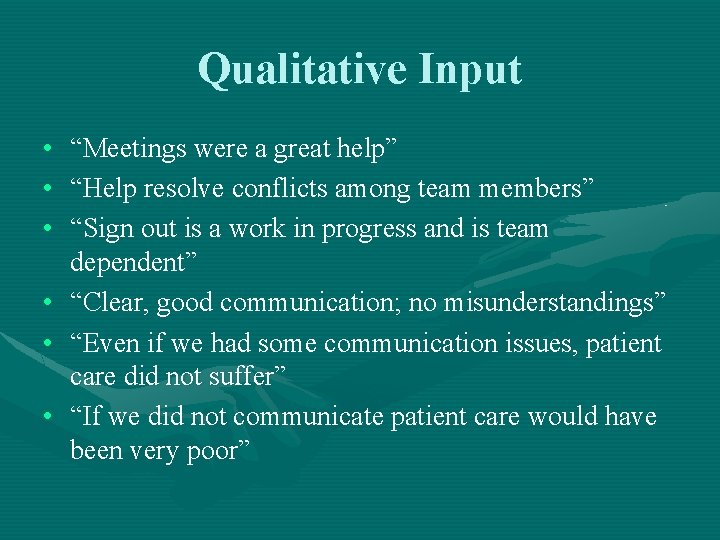
Qualitative Input • “Meetings were a great help” • “Help resolve conflicts among team members” • “Sign out is a work in progress and is team dependent” • “Clear, good communication; no misunderstandings” • “Even if we had some communication issues, patient care did not suffer” • “If we did not communicate patient care would have been very poor”
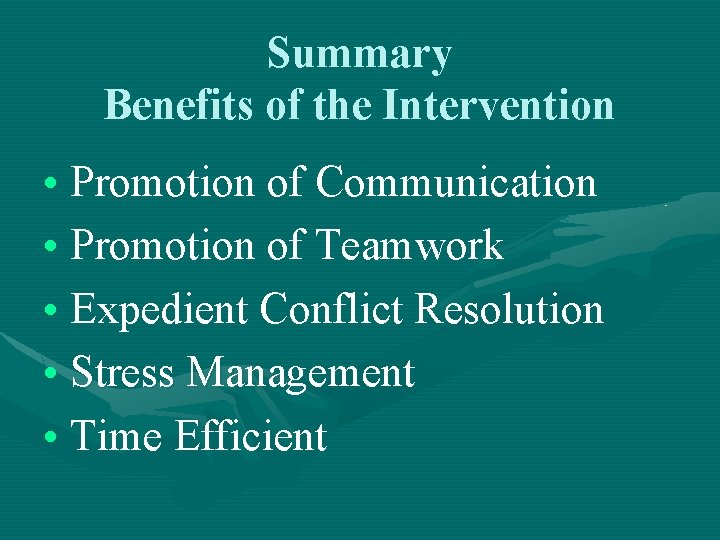
Summary Benefits of the Intervention • Promotion of Communication • Promotion of Teamwork • Expedient Conflict Resolution • Stress Management • Time Efficient
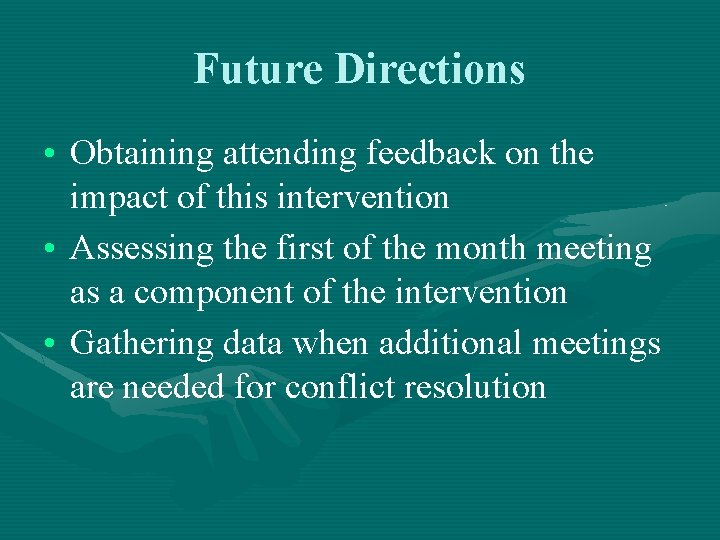
Future Directions • Obtaining attending feedback on the impact of this intervention • Assessing the first of the month meeting as a component of the intervention • Gathering data when additional meetings are needed for conflict resolution
Acknowledgements • • Department of FM Residents Department of FM Attendings Karen Connell, MS, Director of Education Memoona Hasnain, MD, Ph. D, Director of Research • Robert Rios, Pre-Doc Coordinator • Patrick Tranmer, MD, MPH, Department Head
Thank You QUESTIONS ?