
Is this story like any others we know

- Slides: 9
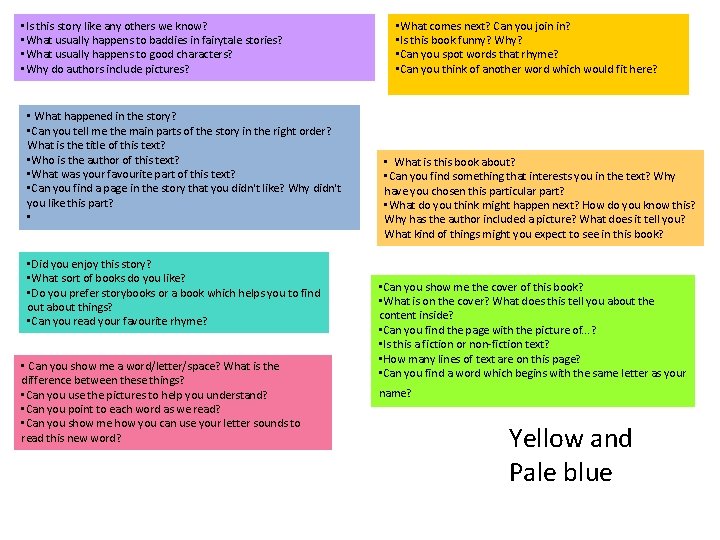
• Is this story like any others we know? • What usually happens to baddies in fairytale stories? • What usually happens to good characters? • Why do authors include pictures? • What happened in the story? • Can you tell me the main parts of the story in the right order? What is the title of this text? • Who is the author of this text? • What was your favourite part of this text? • Can you find a page in the story that you didn't like? Why didn't you like this part? • • Did you enjoy this story? • What sort of books do you like? • Do you prefer storybooks or a book which helps you to find out about things? • Can you read your favourite rhyme? • Can you show me a word/letter/space? What is the difference between these things? • Can you use the pictures to help you understand? • Can you point to each word as we read? • Can you show me how you can use your letter sounds to read this new word? • What comes next? Can you join in? • Is this book funny? Why? • Can you spot words that rhyme? • Can you think of another word which would fit here? • What is this book about? • Can you find something that interests you in the text? Why have you chosen this particular part? • What do you think might happen next? How do you know this? Why has the author included a picture? What does it tell you? What kind of things might you expect to see in this book? • Can you show me the cover of this book? • What is on the cover? What does this tell you about the content inside? • Can you find the page with the picture of. . . ? • Is this a fiction or non-fiction text? • How many lines of text are on this page? • Can you find a word which begins with the same letter as your name? Yellow and Pale blue
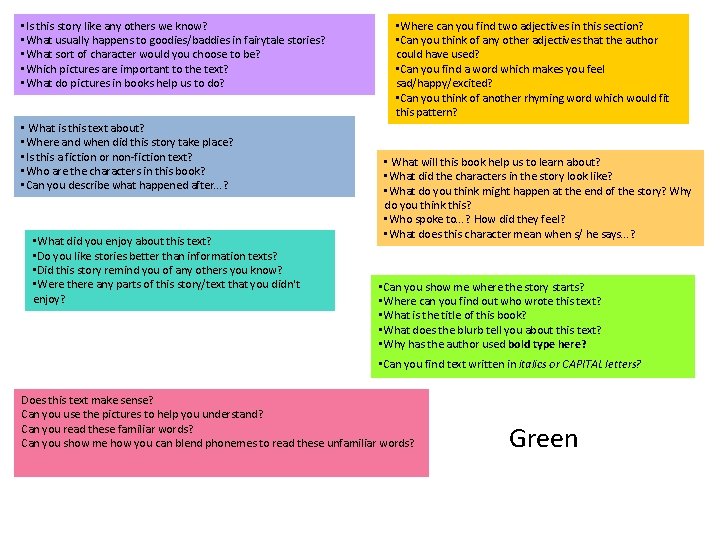
• Is this story like any others we know? • What usually happens to goodies/baddies in fairytale stories? • What sort of character would you choose to be? • Which pictures are important to the text? • What do pictures in books help us to do? • What is this text about? • Where and when did this story take place? • Is this a fiction or non-fiction text? • Who are the characters in this book? • Can you describe what happened after. . . ? • What did you enjoy about this text? • Do you like stories better than information texts? • Did this story remind you of any others you know? • Were there any parts of this story/text that you didn't enjoy? • Where can you find two adjectives in this section? • Can you think of any other adjectives that the author could have used? • Can you find a word which makes you feel sad/happy/excited? • Can you think of another rhyming word which would fit this pattern? • What will this book help us to learn about? • What did the characters in the story look like? • What do you think might happen at the end of the story? Why do you think this? • Who spoke to. . . ? How did they feel? • What does this character mean when s/ he says. . . ? • Can you show me where the story starts? • Where can you find out who wrote this text? • What is the title of this book? • What does the blurb tell you about this text? • Why has the author used bold type here? • Can you find text written in italics or CAPITAL letters? Does this text make sense? Can you use the pictures to help you understand? Can you read these familiar words? Can you show me how you can blend phonemes to read these unfamiliar words? Green
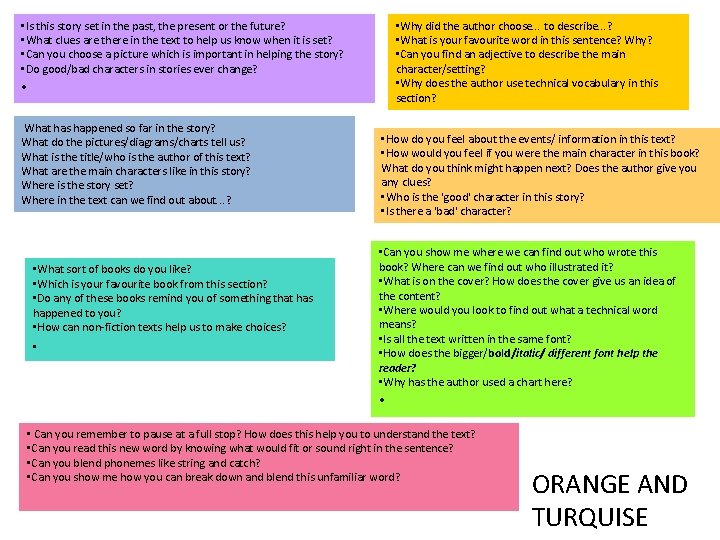
• Is this story set in the past, the present or the future? • What clues are there in the text to help us know when it is set? • Can you choose a picture which is important in helping the story? • Do good/bad characters in stories ever change? • Why did the author choose. . . to describe. . . ? • What is your favourite word in this sentence? Why? • Can you find an adjective to describe the main character/setting? • Why does the author use technical vocabulary in this section? • What has happened so far in the story? What do the pictures/diagrams/charts tell us? What is the title/who is the author of this text? What are the main characters like in this story? Where is the story set? Where in the text can we find out about. . . ? • What sort of books do you like? • Which is your favourite book from this section? • Do any of these books remind you of something that has happened to you? • How can non-fiction texts help us to make choices? • • How do you feel about the events/ information in this text? • How would you feel if you were the main character in this book? What do you think might happen next? Does the author give you any clues? • Who is the 'good' character in this story? • Is there a 'bad' character? • Can you show me where we can find out who wrote this book? Where can we find out who illustrated it? • What is on the cover? How does the cover give us an idea of the content? • Where would you look to find out what a technical word means? • Is all the text written in the same font? • How does the bigger/bold/italic/ different font help the reader? • Why has the author used a chart here? • • Can you remember to pause at a full stop? How does this help you to understand the text? • Can you read this new word by knowing what would fit or sound right in the sentence? • Can you blend phonemes like string and catch? • Can you show me how you can break down and blend this unfamiliar word? ORANGE AND TURQUISE
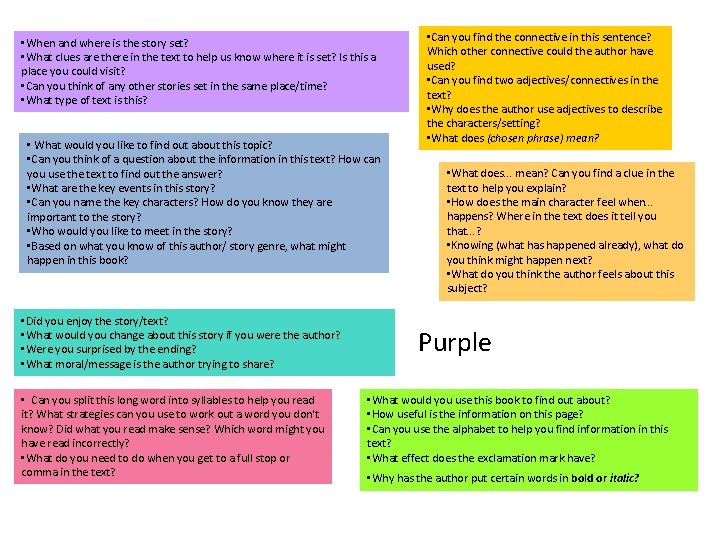
• When and where is the story set? • What clues are there in the text to help us know where it is set? Is this a place you could visit? • Can you think of any other stories set in the same place/time? • What type of text is this? • What would you like to find out about this topic? • Can you think of a question about the information in this text? How can you use the text to find out the answer? • What are the key events in this story? • Can you name the key characters? How do you know they are important to the story? • Who would you like to meet in the story? • Based on what you know of this author/ story genre, what might happen in this book? • Did you enjoy the story/text? • What would you change about this story if you were the author? • Were you surprised by the ending? • What moral/message is the author trying to share? • Can you split this long word into syllables to help you read it? What strategies can you use to work out a word you don't know? Did what you read make sense? Which word might you have read incorrectly? • What do you need to do when you get to a full stop or comma in the text? • Can you find the connective in this sentence? Which other connective could the author have used? • Can you find two adjectives/connectives in the text? • Why does the author use adjectives to describe the characters/setting? • What does (chosen phrase) mean? • What does. . . mean? Can you find a clue in the text to help you explain? • How does the main character feel when. . . happens? Where in the text does it tell you that. . . ? • Knowing (what has happened already), what do you think might happen next? • What do you think the author feels about this subject? Purple • What would you use this book to find out about? • How useful is the information on this page? • Can you use the alphabet to help you find information in this text? • What effect does the exclamation mark have? • Why has the author put certain words in bold or italic?
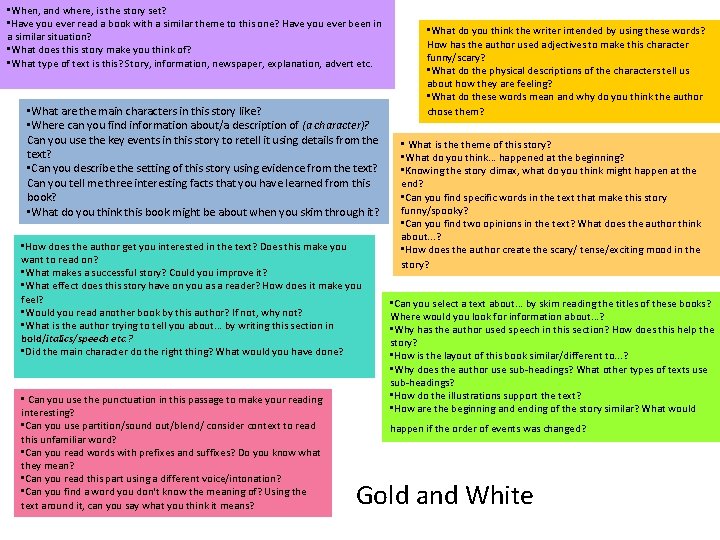
• When, and where, is the story set? • Have you ever read a book with a similar theme to this one? Have you ever been in a similar situation? • What does this story make you think of? • What type of text is this? Story, information, newspaper, explanation, advert etc. • What are the main characters in this story like? • Where can you find information about/a description of (a character)? Can you use the key events in this story to retell it using details from the text? • Can you describe the setting of this story using evidence from the text? Can you tell me three interesting facts that you have learned from this book? • What do you think this book might be about when you skim through it? • How does the author get you interested in the text? Does this make you want to read on? • What makes a successful story? Could you improve it? • What effect does this story have on you as a reader? How does it make you feel? • Would you read another book by this author? If not, why not? • What is the author trying to tell you about. . . by writing this section in bold/italics/speech etc. ? • Did the main character do the right thing? What would you have done? • Can you use the punctuation in this passage to make your reading interesting? • Can you use partition/sound out/blend/ consider context to read this unfamiliar word? • Can you read words with prefixes and suffixes? Do you know what they mean? • Can you read this part using a different voice/intonation? • Can you find a word you don't know the meaning of? Using the text around it, can you say what you think it means? • What do you think the writer intended by using these words? How has the author used adjectives to make this character funny/scary? • What do the physical descriptions of the characters tell us about how they are feeling? • What do these words mean and why do you think the author chose them? • What is theme of this story? • What do you think. . . happened at the beginning? • Knowing the story climax, what do you think might happen at the end? • Can you find specific words in the text that make this story funny/spooky? • Can you find two opinions in the text? What does the author think about. . . ? • How does the author create the scary/ tense/exciting mood in the story? • Can you select a text about. . . by skim reading the titles of these books? Where would you look for information about. . . ? • Why has the author used speech in this section? How does this help the story? • How is the layout of this book similar/different to. . . ? • Why does the author use sub-headings? What other types of texts use sub-headings? • How do the illustrations support the text? • How are the beginning and ending of the story similar? What would happen if the order of events was changed? Gold and White
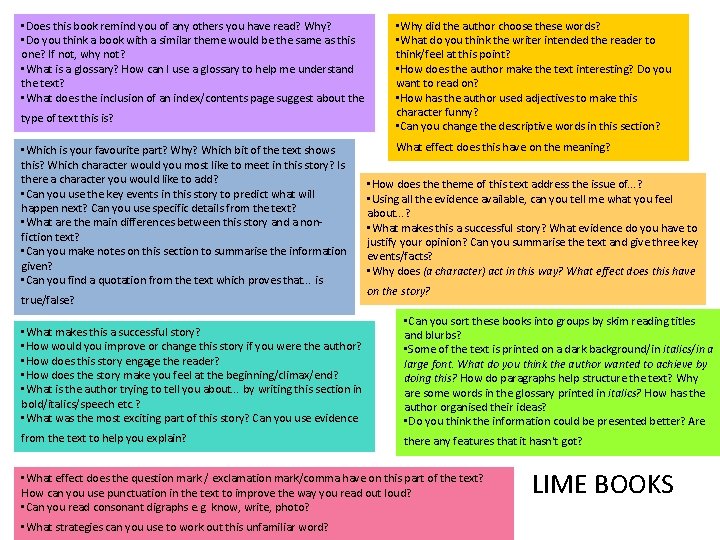
• Does this book remind you of any others you have read? Why? • Do you think a book with a similar theme would be the same as this one? If not, why not? • What is a glossary? How can I use a glossary to help me understand the text? • What does the inclusion of an index/contents page suggest about the type of text this is? • Which is your favourite part? Why? Which bit of the text shows this? Which character would you most like to meet in this story? Is there a character you would like to add? • Can you use the key events in this story to predict what will happen next? Can you use specific details from the text? • What are the main differences between this story and a nonfiction text? • Can you make notes on this section to summarise the information given? • Can you find a quotation from the text which proves that. . . is true/false? • Why did the author choose these words? • What do you think the writer intended the reader to think/feel at this point? • How does the author make the text interesting? Do you want to read on? • How has the author used adjectives to make this character funny? • Can you change the descriptive words in this section? What effect does this have on the meaning? • How does theme of this text address the issue of. . . ? • Using all the evidence available, can you tell me what you feel about. . . ? • What makes this a successful story? What evidence do you have to justify your opinion? Can you summarise the text and give three key events/facts? • Why does (a character) act in this way? What effect does this have on the story? • What makes this a successful story? • How would you improve or change this story if you were the author? • How does this story engage the reader? • How does the story make you feel at the beginning/climax/end? • What is the author trying to tell you about. . . by writing this section in bold/italics/speech etc. ? • What was the most exciting part of this story? Can you use evidence • Can you sort these books into groups by skim reading titles and blurbs? • Some of the text is printed on a dark background/in italics/in a large font. What do you think the author wanted to achieve by doing this? How do paragraphs help structure the text? Why are some words in the glossary printed in italics? How has the author organised their ideas? • Do you think the information could be presented better? Are from the text to help you explain? there any features that it hasn't got? • What effect does the question mark. / exclamation mark/comma have on this part of the text? How can you use punctuation in the text to improve the way you read out loud? • Can you read consonant digraphs e. g. know, write, photo? • What strategies can you use to work out this unfamiliar word? LIME BOOKS
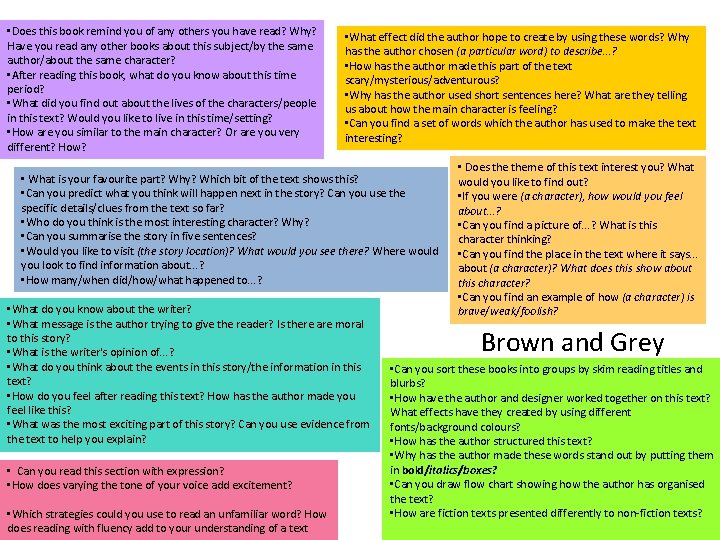
• Does this book remind you of any others you have read? Why? Have you read any other books about this subject/by the same author/about the same character? • After reading this book, what do you know about this time period? • What did you find out about the lives of the characters/people in this text? Would you like to live in this time/setting? • How are you similar to the main character? Or are you very different? How? • What effect did the author hope to create by using these words? Why has the author chosen (a particular word) to describe. . . ? • How has the author made this part of the text scary/mysterious/adventurous? • Why has the author used short sentences here? What are they telling us about how the main character is feeling? • Can you find a set of words which the author has used to make the text interesting? • What is your favourite part? Why? Which bit of the text shows this? • Can you predict what you think will happen next in the story? Can you use the specific details/clues from the text so far? • Who do you think is the most interesting character? Why? • Can you summarise the story in five sentences? • Would you like to visit (the story location)? What would you see there? Where would you look to find information about. . . ? • How many/when did/how/what happened to. . . ? • What do you know about the writer? • What message is the author trying to give the reader? Is there are moral to this story? • What is the writer's opinion of. . . ? • What do you think about the events in this story/the information in this text? • How do you feel after reading this text? How has the author made you feel like this? • What was the most exciting part of this story? Can you use evidence from the text to help you explain? • Can you read this section with expression? • How does varying the tone of your voice add excitement? • Which strategies could you use to read an unfamiliar word? How does reading with fluency add to your understanding of a text • Does theme of this text interest you? What would you like to find out? • If you were (a character), how would you feel about. . . ? • Can you find a picture of. . . ? What is this character thinking? • Can you find the place in the text where it says. . . about (a character)? What does this show about this character? • Can you find an example of how (a character) is brave/weak/foolish? Brown and Grey • Can you sort these books into groups by skim reading titles and blurbs? • How have the author and designer worked together on this text? What effects have they created by using different fonts/background colours? • How has the author structured this text? • Why has the author made these words stand out by putting them in bold/italics/boxes? • Can you draw flow chart showing how the author has organised the text? • How are fiction texts presented differently to non-fiction texts?
• Does this book remind you of any others you have read? Why? Have you read any other books about this subject/by the same author/about the same character? • After reading this book, what do you know about this time period? • What did you find out about the lives of the characters/people in this text? Would you like to live in this time/setting? • How are you similar to the main character? Or are you very different? How? • What effect did the author hope to create by using these words? Why has the author chosen (a particular word) to describe. . . ? • How has the author made this part of the text scary/mysterious/adventurous? • Why has the author used short sentences here? What are they telling us about how the main character is feeling? • Can you find a set of words which the author has used to make the text interesting? • What is your favourite part? Why? Which bit of the text shows this? • Can you predict what you think will happen next in the story? Can you use the specific details/clues from the text so far? • Who do you think is the most interesting character? Why? • Can you summarise the story in five sentences? • Would you like to visit (the story location)? What would you see there? Where would you look to find information about. . . ? • How many/when did/how/what happened to. . . ? • What do you know about the writer? • What message is the author trying to give the reader? Is there are moral to this story? • What is the writer's opinion of. . . ? • What do you think about the events in this story/the information in this text? • How do you feel after reading this text? How has the author made you feel like this? • What was the most exciting part of this story? Can you use evidence from the text to help you explain? • Can you read this section with expression? • How does varying the tone of your voice add excitement? • Which strategies could you use to read an unfamiliar word? How does reading with fluency add to your understanding of a text • Does theme of this text interest you? What would you like to find out? • If you were (a character), how would you feel about. . . ? • Can you find a picture of. . . ? What is this character thinking? • Can you find the place in the text where it says. . . about (a character)? What does this show about this character? • Can you find an example of how (a character) is brave/weak/foolish? Brown and Grey • Can you sort these books into groups by skim reading titles and blurbs? • How have the author and designer worked together on this text? What effects have they created by using different fonts/background colours? • How has the author structured this text? • Why has the author made these words stand out by putting them in bold/italics/boxes? • Can you draw flow chart showing how the author has organised the text? • How are fiction texts presented differently to non-fiction texts?