
Is this photo shopped SPACE EXPLORATION UNIT Topic



- Slides: 16
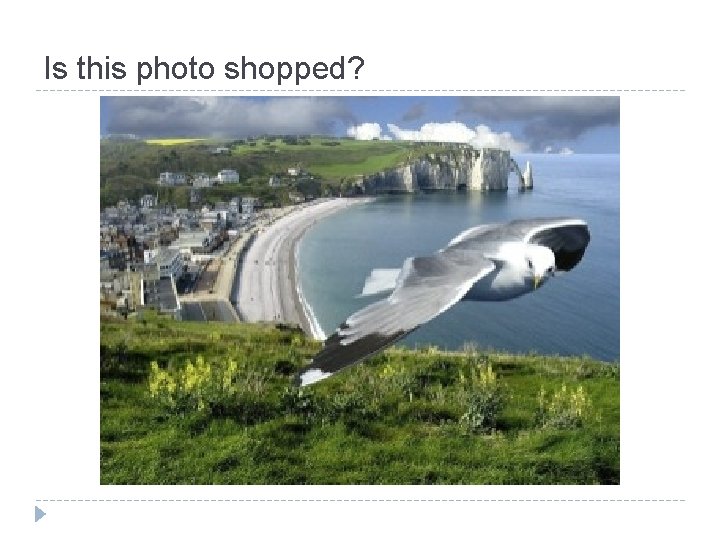
Is this photo shopped?
SPACE EXPLORATION UNIT Topic 4 – Bigger, Smarter Telescopes (pages 385 -392)
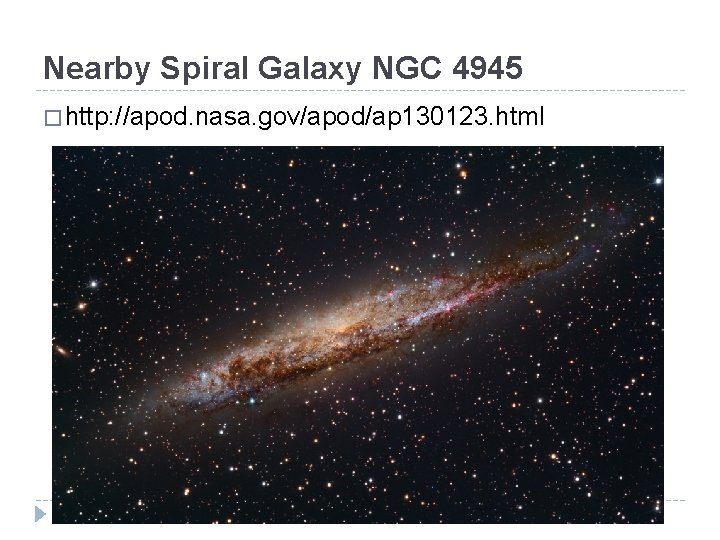
Nearby Spiral Galaxy NGC 4945 � http: //apod. nasa. gov/apod/ap 130123. html
Unit Overview - Last Class recap – Any questions? Unit topic Status 1 – Azimuth-altitude (+ activity) & models of solar system 100% Complete 2 – Telescopes, elliptical orbits & universal gravitation 100% Complete 3 – The Spectroscope & Doppler effect 50% Complete 4 – Bigger telescopes and triangulation ( + activity) Today/tomorro w 5 – Radio telescopes 6 – Rockets, computers, hazards of space, microgravity, space stations, gravitational assist, CCD’s and satellites / GPS 7 – The Solar System 8 – People in Space
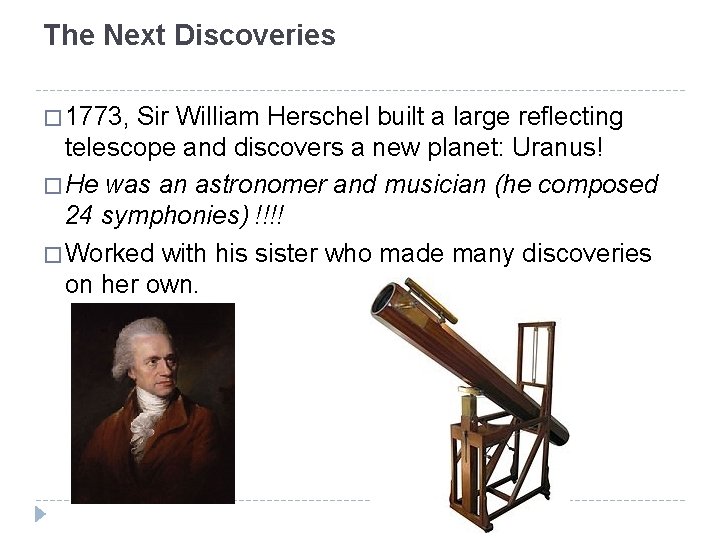
The Next Discoveries � 1773, Sir William Herschel built a large reflecting telescope and discovers a new planet: Uranus! � He was an astronomer and musician (he composed 24 symphonies) !!!! � Worked with his sister who made many discoveries on her own.
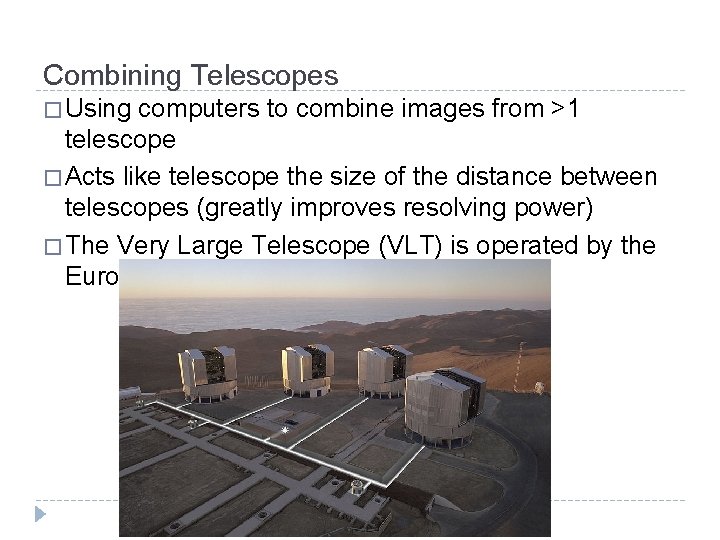
Combining Telescopes � Using computers to combine images from >1 telescope � Acts like telescope the size of the distance between telescopes (greatly improves resolving power) � The Very Large Telescope (VLT) is operated by the European Southern Observatory in Chile
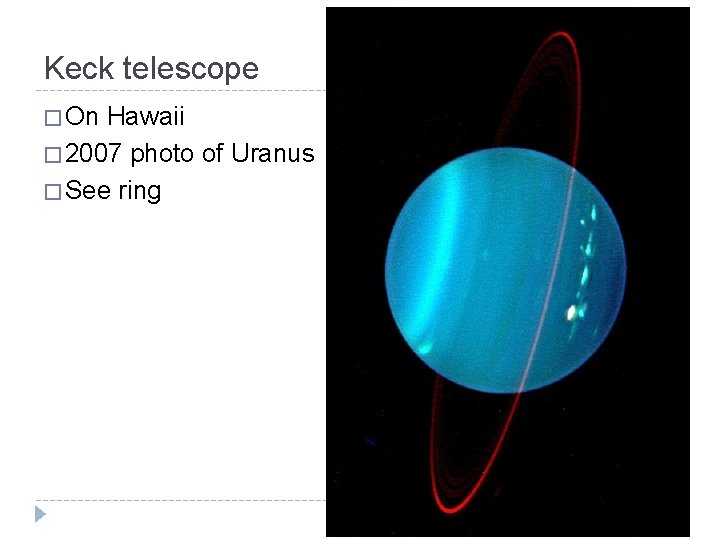
Keck telescope � On Hawaii � 2007 photo of Uranus � See ring
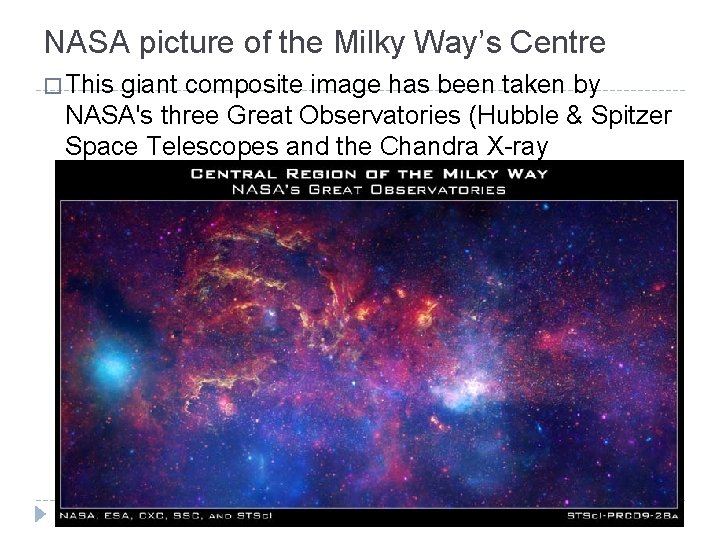
NASA picture of the Milky Way’s Centre � This giant composite image has been taken by NASA's three Great Observatories (Hubble & Spitzer Space Telescopes and the Chandra X-ray Observatory.
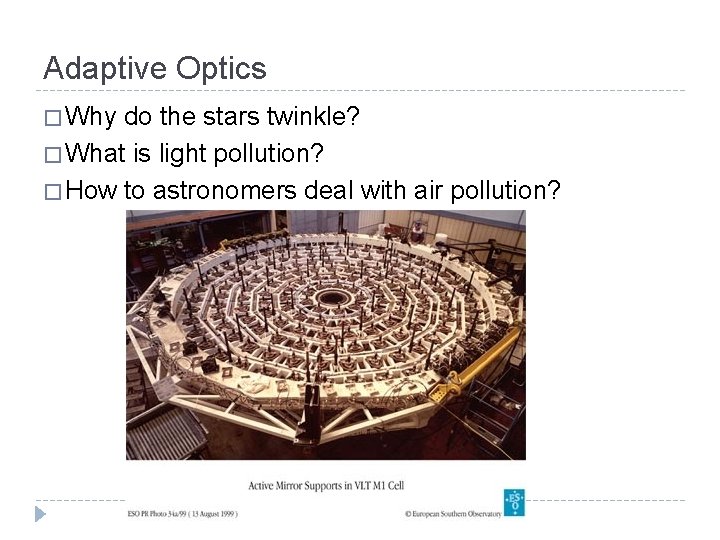
Adaptive Optics � Why do the stars twinkle? � What is light pollution? � How to astronomers deal with air pollution?
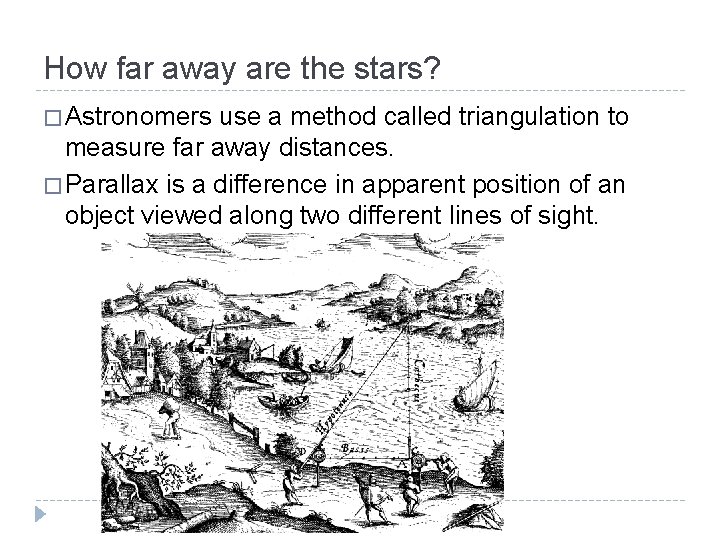
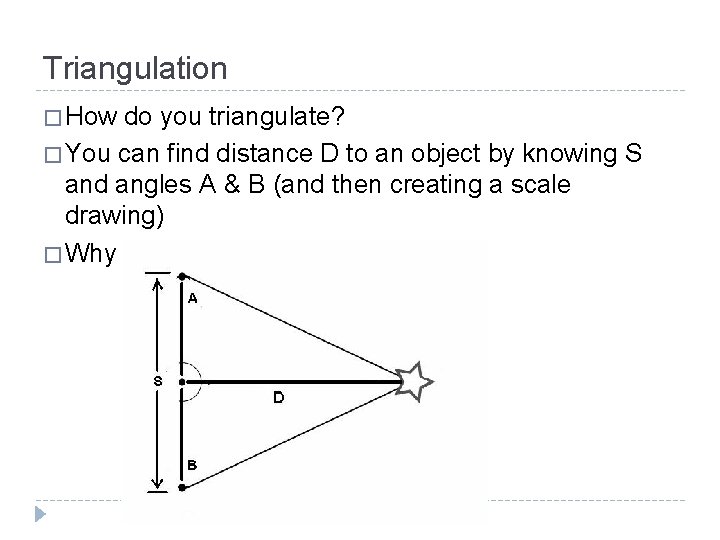
How far away are the stars? � Astronomers use a method called triangulation to measure far away distances. � Parallax is a difference in apparent position of an object viewed along two different lines of sight.
Triangulation � How do you triangulate? � You can find distance D to an object by knowing S and angles A & B (and then creating a scale drawing) � Why would you do this?
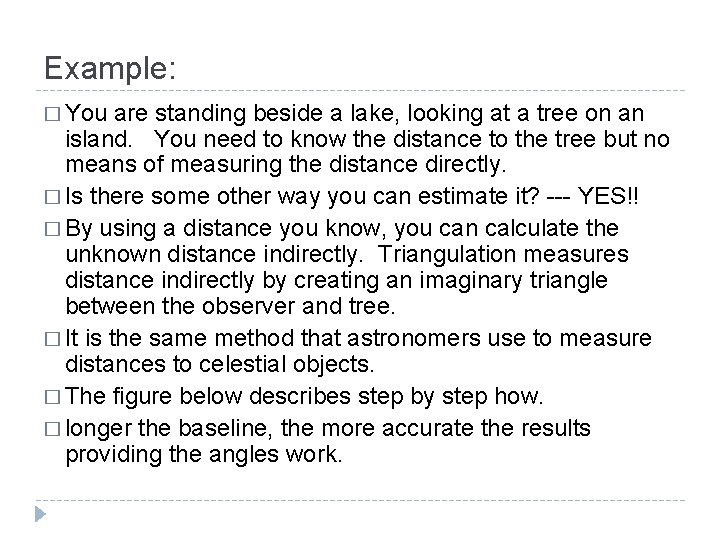
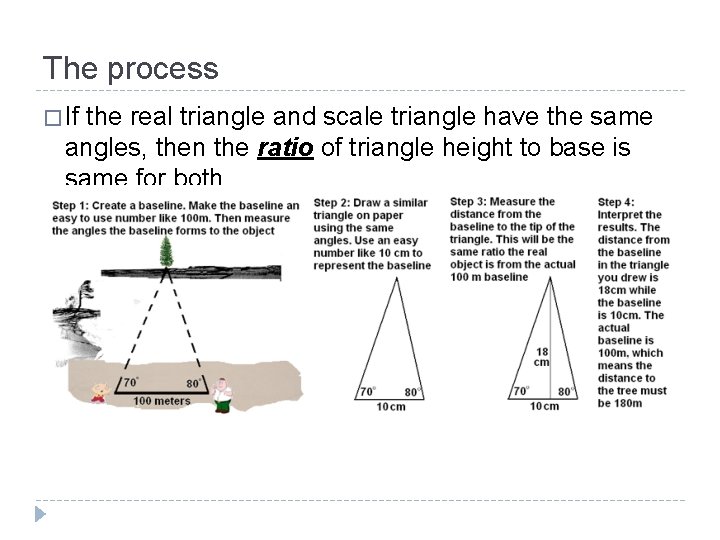
Example: � You are standing beside a lake, looking at a tree on an island. You need to know the distance to the tree but no means of measuring the distance directly. � Is there some other way you can estimate it? --- YES!! � By using a distance you know, you can calculate the unknown distance indirectly. Triangulation measures distance indirectly by creating an imaginary triangle between the observer and tree. � It is the same method that astronomers use to measure distances to celestial objects. � The figure below describes step by step how. � longer the baseline, the more accurate the results providing the angles work.
The process � If the real triangle and scale triangle have the same angles, then the ratio of triangle height to base is same for both.
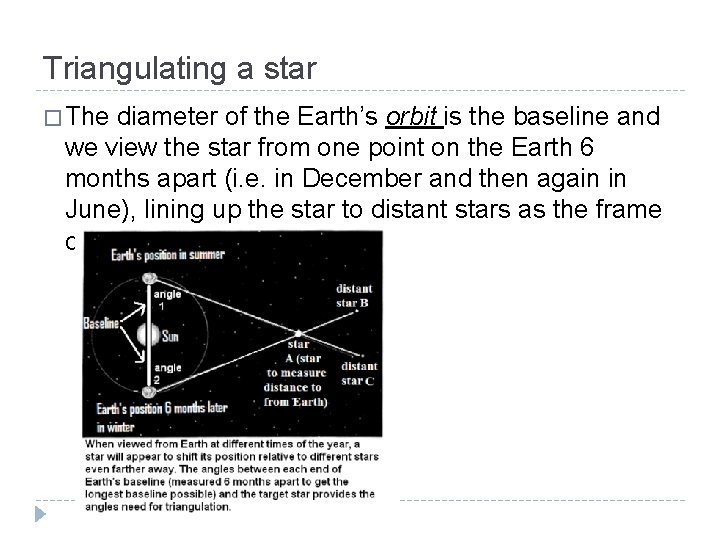
Triangulating a star � The diameter of the Earth’s orbit is the baseline and we view the star from one point on the Earth 6 months apart (i. e. in December and then again in June), lining up the star to distant stars as the frame of reference.
How Big is big? � the astronomical unit: 1 AU is the distance from the Earth to the Sun = 150 million km � But the universe is so much larger than our solar system, So astronomers created the light year: the distance light travels in one year (63 240 AU). � 1 light year = 9. 5 trillion km � Light travels at 300 000 km/s (goes around the earth 7. 4 times in 1 second) � The visible universe (from telescopes) has a diameter of 28 Billion light years
Practice: � Do the practice sheet “triangulation worksheet BLM 5 -9” #1 -3. � �� Assignment: Topic 4 Review # 1 -5 p. 392 �� Complete your vocab for Topic 4 �