
Is the oceanic heat transport with Atlantic water
- Slides: 20
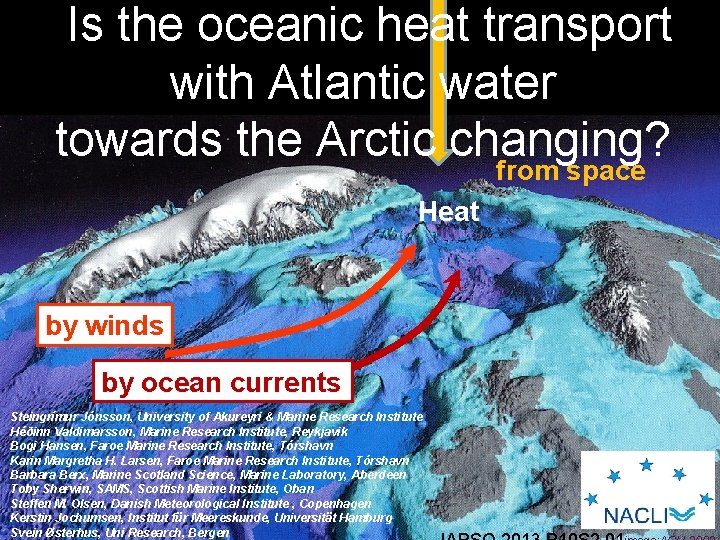
Is the oceanic heat transport with Atlantic water towards the Arctic changing? from space Heat by winds by ocean currents Steingrímur Jónsson, University of Akureyri & Marine Research Institute Héðinn Valdimarsson, Marine Research Institute, Reykjavik Bogi Hansen, Faroe Marine Research Institute, Tórshavn Karin Margretha H. Larsen, Faroe Marine Research Institute, Tórshavn Barbara Berx, Marine Scotland Science, Marine Laboratory, Aberdeen Toby Sherwin, SAMS, Scottish Marine Institute, Oban Steffen M. Olsen, Danish Meteorological Institute , Copenhagen Kerstin Jochumsen, Institut für Meereskunde, Universität Hamburg Svein Østerhus, Uni Research, Bergen
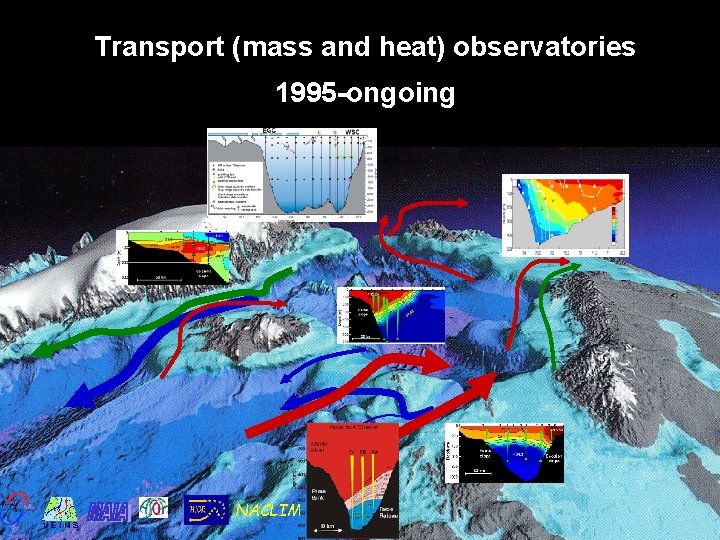
Transport (mass and heat) observatories 1995 -ongoing NACLIM
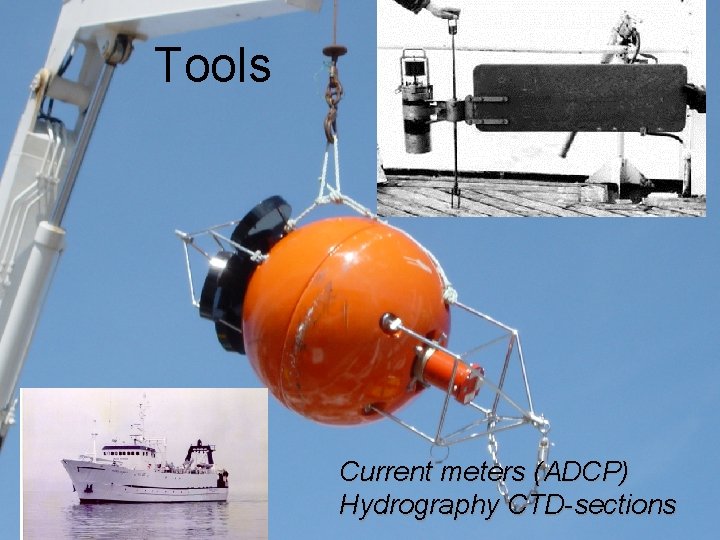
Tools Current meters (ADCP) Hydrography CTD-sections
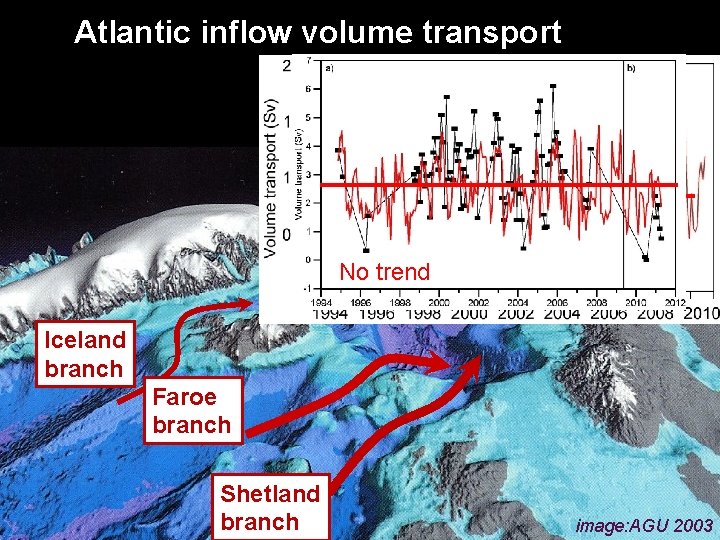
Atlantic inflow volume transport Inflowing Atlantic water (millions m 3/second) No trend !!!!!!!!!!!!! No No trend weakening Iceland branch Faroe branch Shetland branch image: AGU 2003
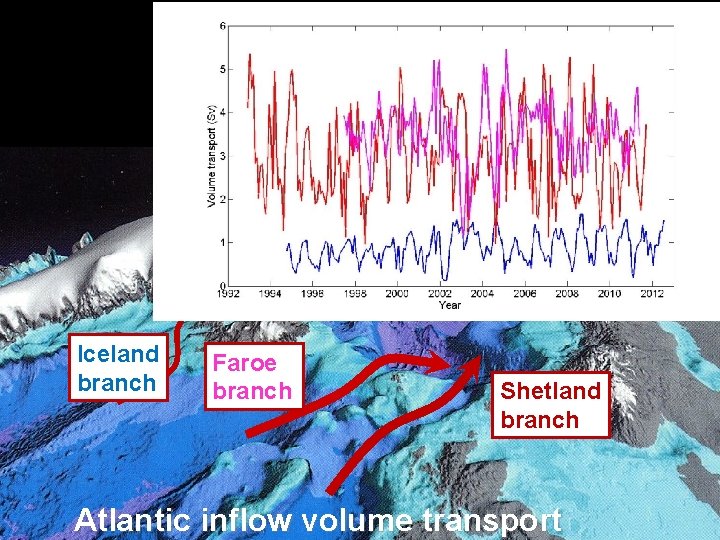
Inflowing Atlantic water (millions m 3/second) Iceland branch Faroe branch Shetland branch Atlantic inflow volume transport
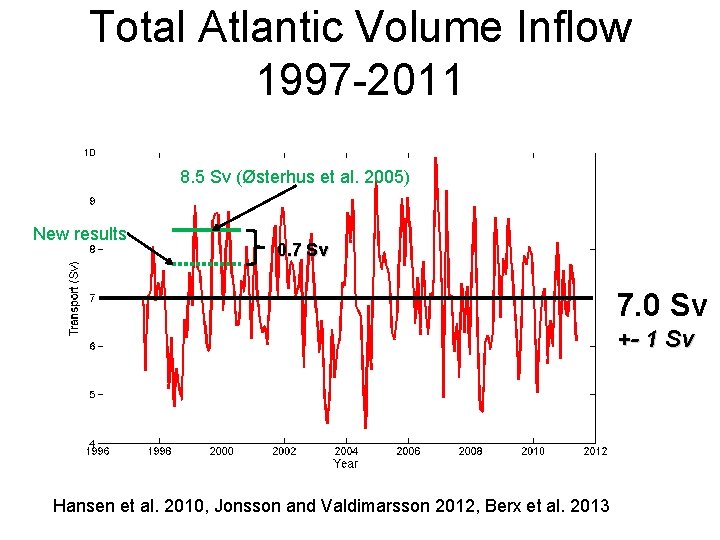
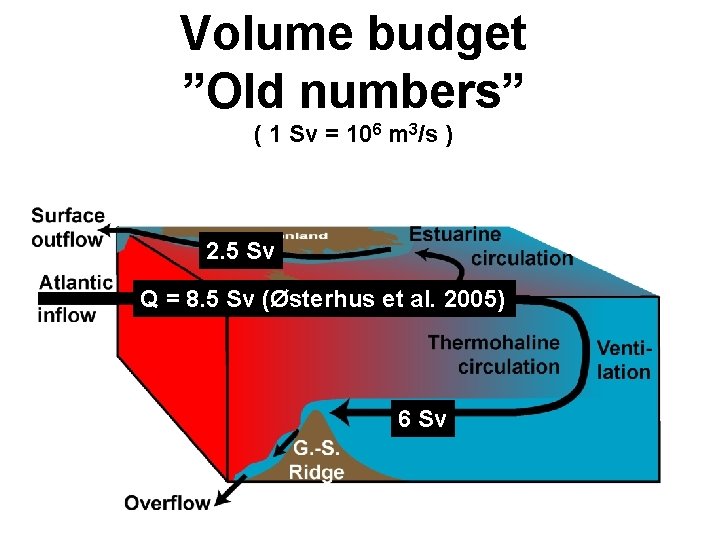
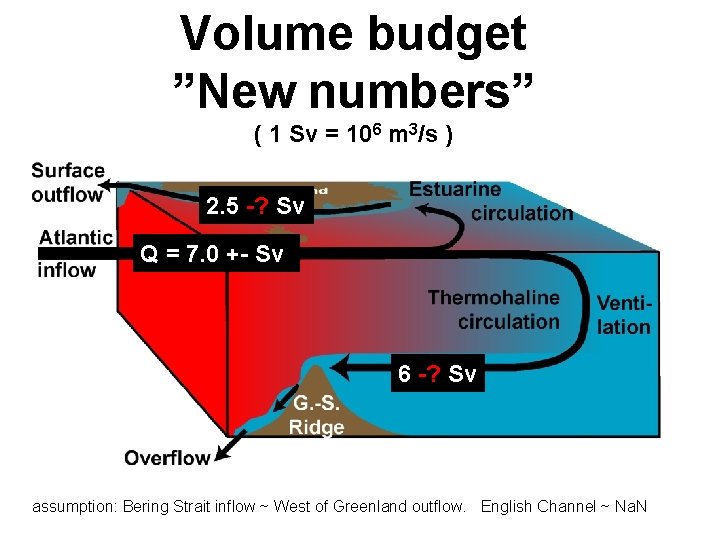
Total Atlantic Volume Inflow 1997 -2011 8. 5 Sv (Østerhus et al. 2005) New results 0. 7 Sv 7. 0 Sv +- 1 Sv Hansen et al. 2010, Jonsson and Valdimarsson 2012, Berx et al. 2013
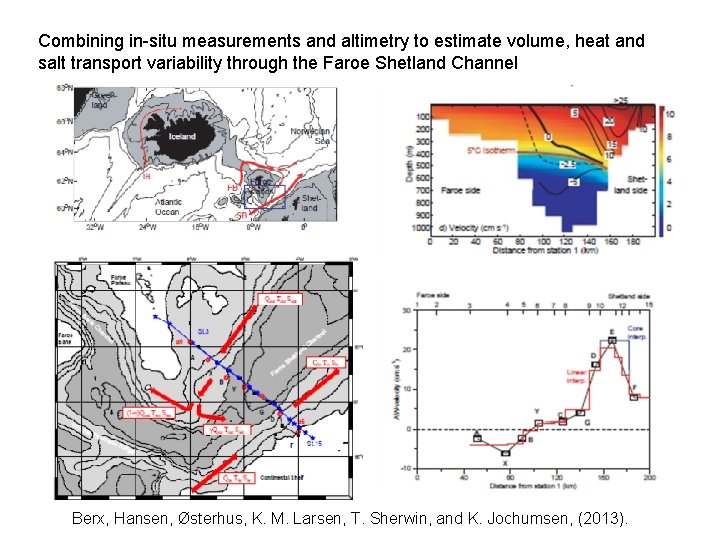
Combining in-situ measurements and altimetry to estimate volume, heat and salt transport variability through the Faroe Shetland Channel Berx, Hansen, Østerhus, K. M. Larsen, T. Sherwin, and K. Jochumsen, (2013).
Volume budget ”Old numbers” ( 1 Sv = 106 m 3/s ) 2. 5 Sv Q = 8. 5 Sv (Østerhus et al. 2005) 6 Sv
Volume budget ”New numbers” ( 1 Sv = 106 m 3/s ) 2. 5 -? Sv Q = 7. 0 +- Sv 6 -? Sv assumption: Bering Strait inflow ~ West of Greenland outflow. English Channel ~ Na. N
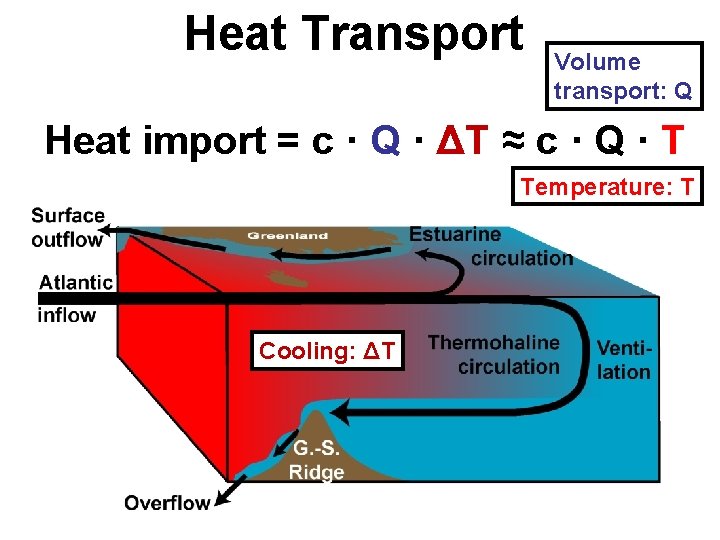
Heat Transport Volume transport: Q Heat import = c · Q · ΔT ≈ c · Q · T Temperature: T Cooling: ΔT
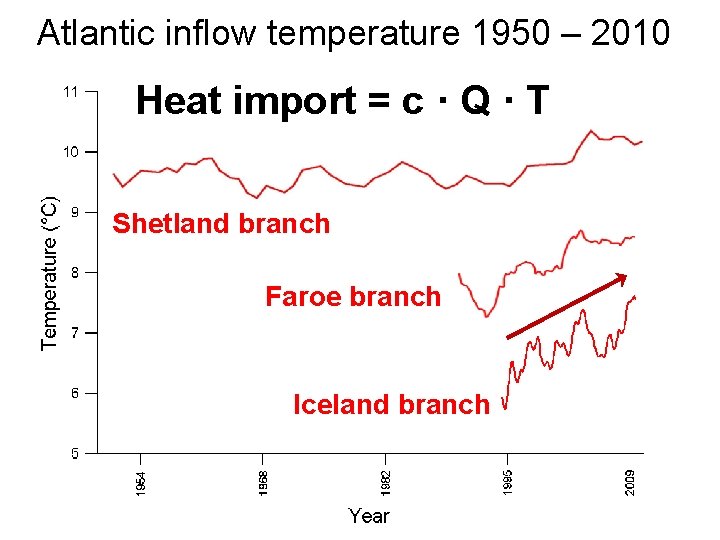
Atlantic inflow temperature 1950 – 2010 Heat import = c · Q · T Shetland branch Faroe branch Iceland branch
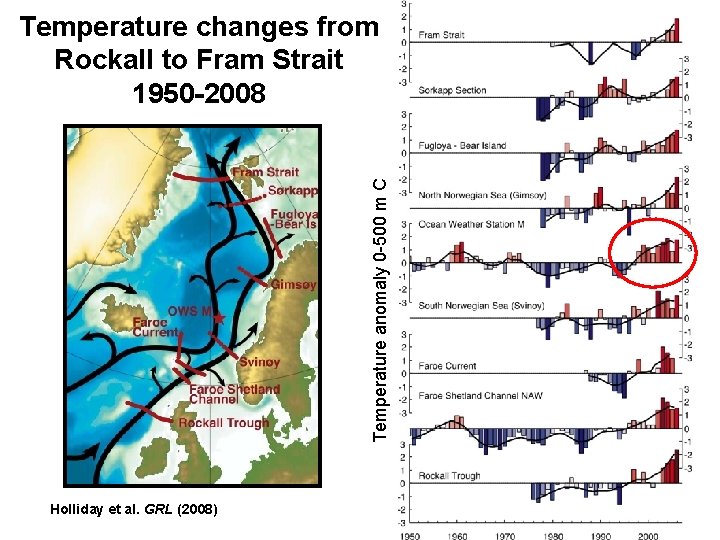
Temperature anomaly 0 -500 m C Temperature changes from Rockall to Fram Strait 1950 -2008 Holliday et al. GRL (2008)
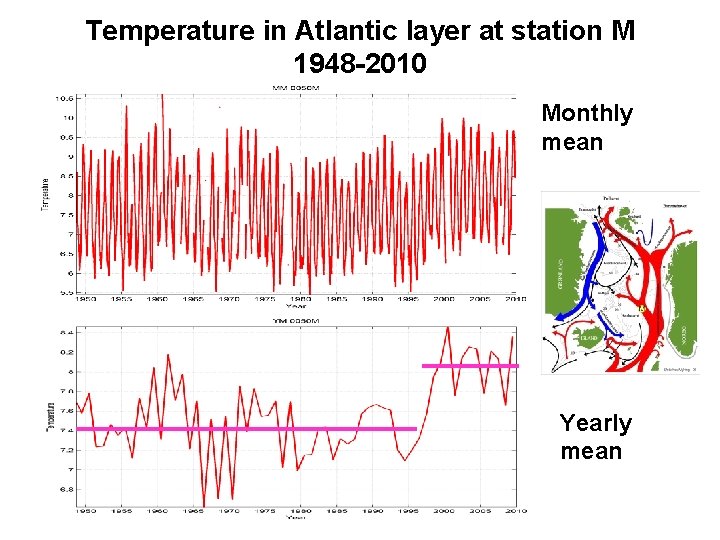
Temperature in Atlantic layer at station M 1948 -2010 Monthly mean Yearly mean
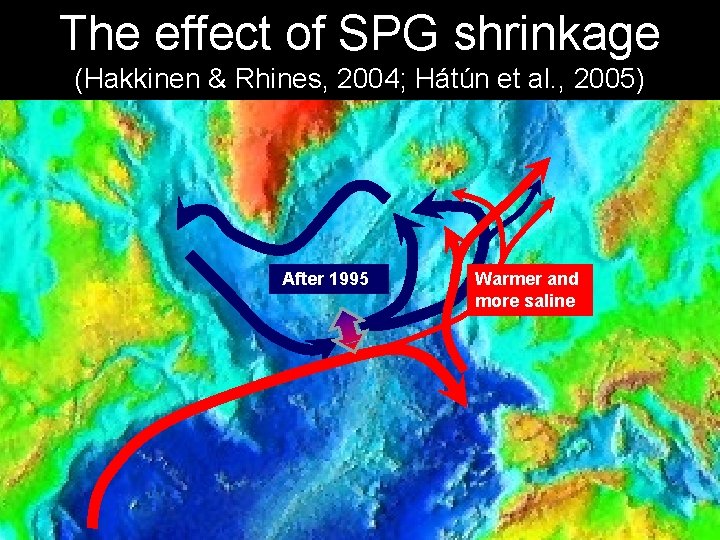
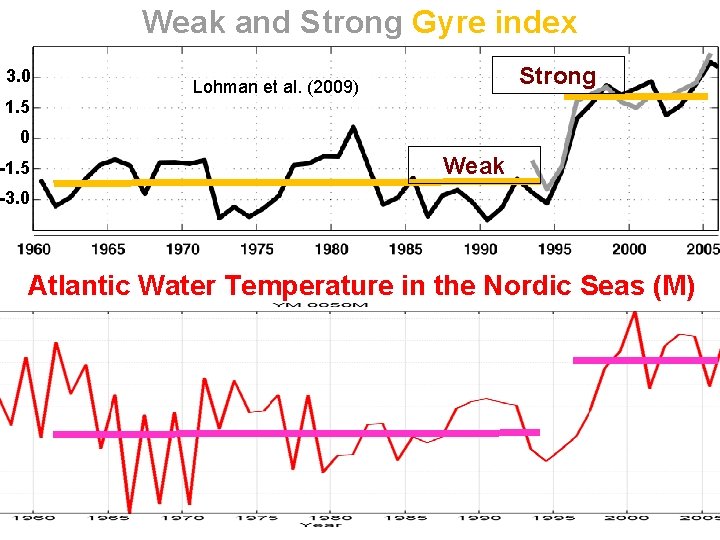
The effect of SPG shrinkage (Hakkinen & Rhines, 2004; Hátún et al. , 2005) Before After 1995 Warmer and more saline
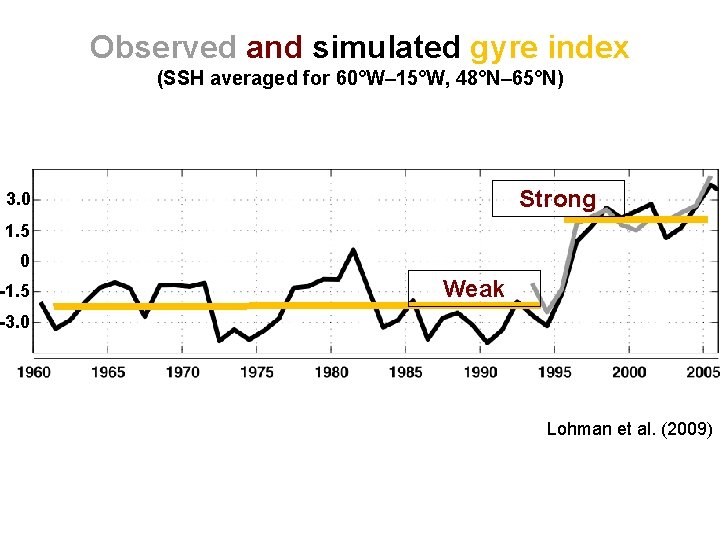
Observed and simulated gyre index (SSH averaged for 60°W– 15°W, 48°N– 65°N) Strong 3. 0 1. 5 0 -1. 5 Weak -3. 0 Lohman et al. (2009)
Weak and Strong Gyre index 3. 0 Strong Lohman et al. (2009) 1. 5 0 -1. 5 Weak -3. 0 Atlantic Water Temperature in the Nordic Seas (M)
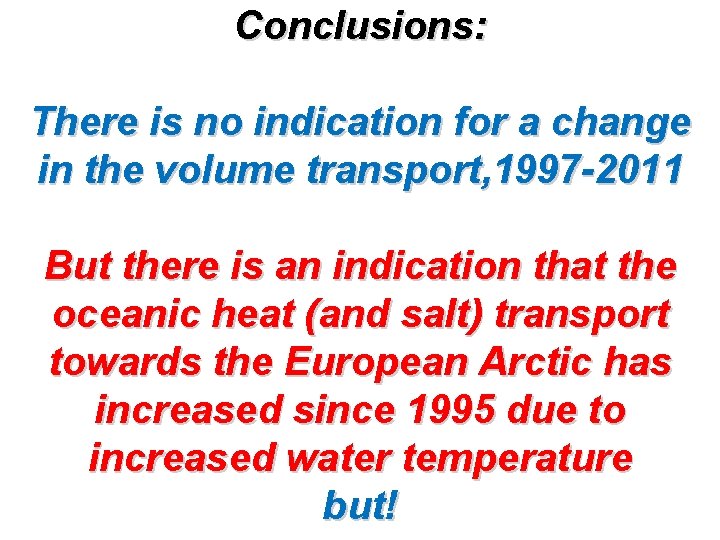
Conclusions: There is no indication for a change in the volume transport, 1997 -2011 But there is an indication that the oceanic heat (and salt) transport towards the European Arctic has increased since 1995 due to increased water temperature but!
Confused? Please ask! www. naclim. eu www. folk. uib. no/ngfso Svein Østerhus
The research leading to these results has received funding from the European Union 7 th Framework Programme (FP 7 2007 -2013), under grant agreement n. 308299 NACLIM www. naclim. eu