
Is the expression of catalase by Staphylococcus aureus
Is the expression of catalase by Staphylococcus aureus protective or detrimental to the survival of the bacteria when exposed to H 2 O 2 in broth or after phagocytosis by monocytes? Are we disproving a dogma or misinterpreting data? Paul M. Tulkens based on work made in collaboration with Sandrine Lemaire, 1 Wafi Siala, 1 Roland Leclercq, 2 Barbara C. Kahl, 3 and Françoise Van Bambeke, 1 15 Aug 2016 1 Pharmacologie cellulaire et moléculaire, Louvain Drug Research Institute, Université catholique de Louvain, Brussels, Belgium 2 Service de Microbiologie, Université de Caen Basse-Normandie, Caen, France; 3 Institüt fur Medizinische Mikrobiologie, Universitaetsklinikum Münster, Germany. 3 rd Global Microbiologists Annual Meeting, Portland, OR 1
Content of the presentation • What is the "accepted" role of catalase in S. aureus • What about low or catalase-negative natural mutants ? • What did we find ? • What could we not do ? • What are our current hypotheses ? 15 Aug 2016 3 rd Global Microbiologists Annual Meeting, Portland, OR 2
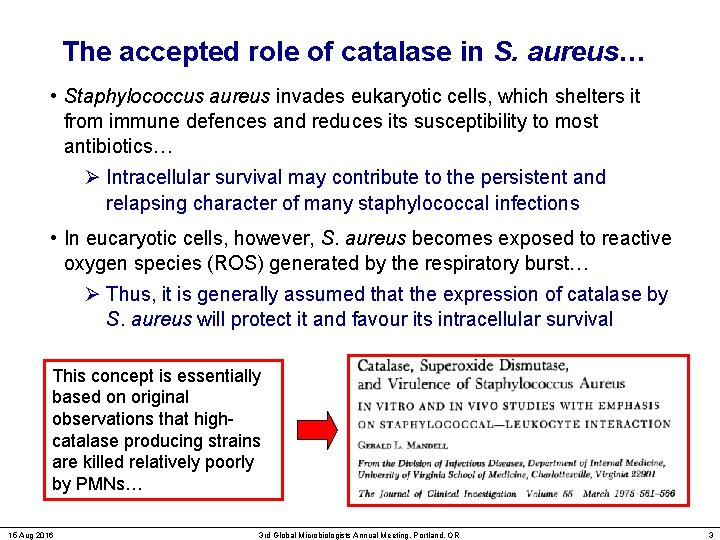
The accepted role of catalase in S. aureus… • Staphylococcus aureus invades eukaryotic cells, which shelters it from immune defences and reduces its susceptibility to most antibiotics… Ø Intracellular survival may contribute to the persistent and relapsing character of many staphylococcal infections • In eucaryotic cells, however, S. aureus becomes exposed to reactive oxygen species (ROS) generated by the respiratory burst… Ø Thus, it is generally assumed that the expression of catalase by S. aureus will protect it and favour its intracellular survival This concept is essentially based on original observations that highcatalase producing strains are killed relatively poorly by PMNs… 15 Aug 2016 3 rd Global Microbiologists Annual Meeting, Portland, OR 3
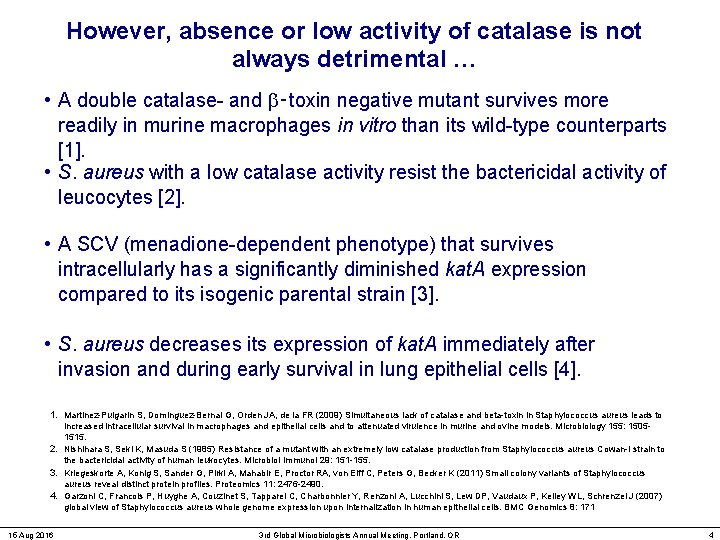
However, absence or low activity of catalase is not always detrimental … • A double catalase- and ‑toxin negative mutant survives more readily in murine macrophages in vitro than its wild-type counterparts [1]. • S. aureus with a low catalase activity resist the bactericidal activity of leucocytes [2]. • A SCV (menadione-dependent phenotype) that survives intracellularly has a significantly diminished kat. A expression compared to its isogenic parental strain [3]. • S. aureus decreases its expression of kat. A immediately after invasion and during early survival in lung epithelial cells [4]. 1. Martinez-Pulgarin S, Dominguez-Bernal G, Orden JA, de la FR (2009) Simultaneous lack of catalase and beta-toxin in Staphylococcus aureus leads to increased intracellular survival in macrophages and epithelial cells and to attenuated virulence in murine and ovine models. Microbiology 155: 15051515. 2. Nishihara S, Seki K, Masuda S (1985) Resistance of a mutant with an extremely low catalase production from Staphylococcus aureus Cowan-I strain to the bactericidal activity of human leukocytes. Microbiol Immunol 29: 151 -155. 3. Kriegeskorte A, Konig S, Sander G, Pirkl A, Mahabir E, Proctor RA, von Eiff C, Peters G, Becker K (2011) Small colony variants of Staphylococcus aureus reveal distinct protein profiles. Proteomics 11: 2476 -2490. 4. Garzoni C, Francois P, Huyghe A, Couzinet S, Tapparel C, Charbonnier Y, Renzoni A, Lucchini S, Lew DP, Vaudaux P, Kelley WL, Schrenzel J (2007) global view of Staphylococcus aureus whole genome expression upon internalization in human epithelial cells. BMC Genomics 8: 171 15 Aug 2016 3 rd Global Microbiologists Annual Meeting, Portland, OR 4
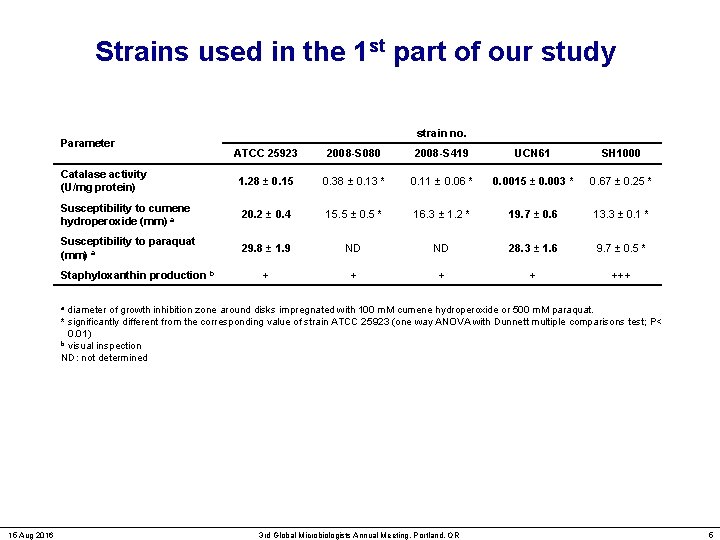
Strains used in the 1 st part of our study Parameter strain no. ATCC 25923 2008 -S 080 2008 -S 419 UCN 61 SH 1000 Catalase activity (U/mg protein) 1. 28 ± 0. 15 0. 38 ± 0. 13 * 0. 11 ± 0. 06 * 0. 0015 ± 0. 003 * 0. 67 ± 0. 25 * Susceptibility to cumene hydroperoxide (mm) a 20. 2 ± 0. 4 15. 5 ± 0. 5 * 16. 3 ± 1. 2 * 19. 7 ± 0. 6 13. 3 ± 0. 1 * Susceptibility to paraquat (mm) a 29. 8 ± 1. 9 ND ND 28. 3 ± 1. 6 9. 7 ± 0. 5 * + + +++ Staphyloxanthin production b diameter of growth inhibition zone around disks impregnated with 100 m. M cumene hydroperoxide or 500 m. M paraquat. * significantly different from the corresponding value of strain ATCC 25923 (one way ANOVA with Dunnett multiple comparisons test; P< 0. 01) b visual inspection ND: not determined a 15 Aug 2016 3 rd Global Microbiologists Annual Meeting, Portland, OR 5
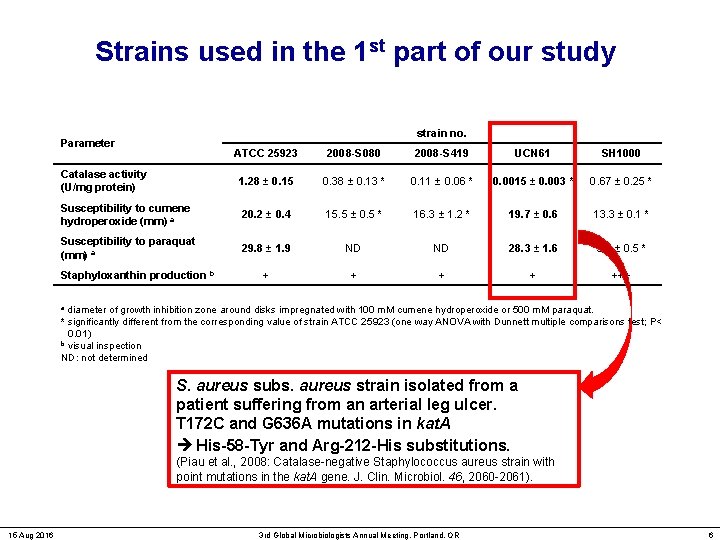
Strains used in the 1 st part of our study strain no. Parameter ATCC 25923 2008 -S 080 2008 -S 419 UCN 61 SH 1000 Catalase activity (U/mg protein) 1. 28 ± 0. 15 0. 38 ± 0. 13 * 0. 11 ± 0. 06 * 0. 0015 ± 0. 003 * 0. 67 ± 0. 25 * Susceptibility to cumene hydroperoxide (mm) a 20. 2 ± 0. 4 15. 5 ± 0. 5 * 16. 3 ± 1. 2 * 19. 7 ± 0. 6 13. 3 ± 0. 1 * Susceptibility to paraquat (mm) a 29. 8 ± 1. 9 ND ND 28. 3 ± 1. 6 9. 7 ± 0. 5 * + + +++ Staphyloxanthin production b diameter of growth inhibition zone around disks impregnated with 100 m. M cumene hydroperoxide or 500 m. M paraquat. * significantly different from the corresponding value of strain ATCC 25923 (one way ANOVA with Dunnett multiple comparisons test; P< 0. 01) b visual inspection ND: not determined a S. aureus subs. aureus strain isolated from a patient suffering from an arterial leg ulcer. T 172 C and G 636 A mutations in kat. A His-58 -Tyr and Arg-212 -His substitutions. (Piau et al. , 2008: Catalase-negative Staphylococcus aureus strain with point mutations in the kat. A gene. J. Clin. Microbiol. 46, 2060 -2061). 15 Aug 2016 3 rd Global Microbiologists Annual Meeting, Portland, OR 6
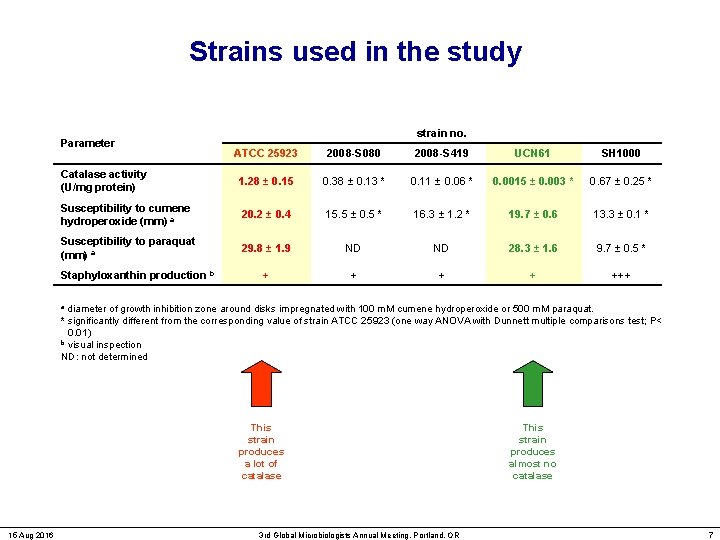
Strains used in the study Parameter strain no. ATCC 25923 2008 -S 080 2008 -S 419 UCN 61 SH 1000 Catalase activity (U/mg protein) 1. 28 ± 0. 15 0. 38 ± 0. 13 * 0. 11 ± 0. 06 * 0. 0015 ± 0. 003 * 0. 67 ± 0. 25 * Susceptibility to cumene hydroperoxide (mm) a 20. 2 ± 0. 4 15. 5 ± 0. 5 * 16. 3 ± 1. 2 * 19. 7 ± 0. 6 13. 3 ± 0. 1 * Susceptibility to paraquat (mm) a 29. 8 ± 1. 9 ND ND 28. 3 ± 1. 6 9. 7 ± 0. 5 * + + +++ Staphyloxanthin production b diameter of growth inhibition zone around disks impregnated with 100 m. M cumene hydroperoxide or 500 m. M paraquat. * significantly different from the corresponding value of strain ATCC 25923 (one way ANOVA with Dunnett multiple comparisons test; P< 0. 01) b visual inspection ND: not determined a This strain produces a lot of catalase 15 Aug 2016 3 rd Global Microbiologists Annual Meeting, Portland, OR This strain produces almost no catalase 7
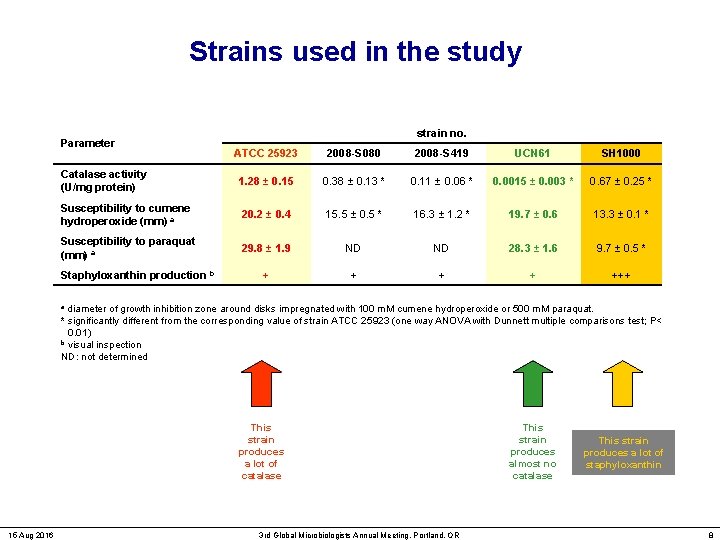
Strains used in the study Parameter strain no. ATCC 25923 2008 -S 080 2008 -S 419 UCN 61 SH 1000 Catalase activity (U/mg protein) 1. 28 ± 0. 15 0. 38 ± 0. 13 * 0. 11 ± 0. 06 * 0. 0015 ± 0. 003 * 0. 67 ± 0. 25 * Susceptibility to cumene hydroperoxide (mm) a 20. 2 ± 0. 4 15. 5 ± 0. 5 * 16. 3 ± 1. 2 * 19. 7 ± 0. 6 13. 3 ± 0. 1 * Susceptibility to paraquat (mm) a 29. 8 ± 1. 9 ND ND 28. 3 ± 1. 6 9. 7 ± 0. 5 * + + +++ Staphyloxanthin production b diameter of growth inhibition zone around disks impregnated with 100 m. M cumene hydroperoxide or 500 m. M paraquat. * significantly different from the corresponding value of strain ATCC 25923 (one way ANOVA with Dunnett multiple comparisons test; P< 0. 01) b visual inspection ND: not determined a This strain produces a lot of catalase 15 Aug 2016 3 rd Global Microbiologists Annual Meeting, Portland, OR This strain produces almost no catalase This strain produces a lot of staphyloxanthin 8
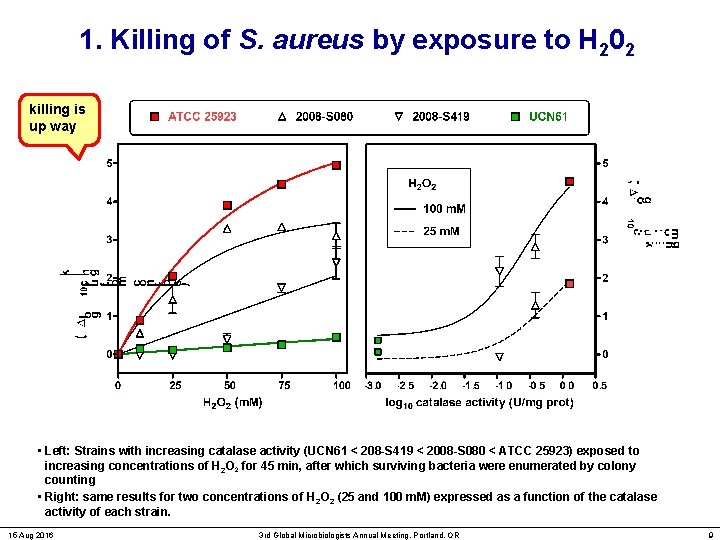
1. Killing of S. aureus by exposure to H 202 killing is up way • Left: Strains with increasing catalase activity (UCN 61 < 208 -S 419 < 2008 -S 080 < ATCC 25923) exposed to increasing concentrations of H 2 O 2 for 45 min, after which surviving bacteria were enumerated by colony counting • Right: same results for two concentrations of H 2 O 2 (25 and 100 m. M) expressed as a function of the catalase activity of each strain. 15 Aug 2016 3 rd Global Microbiologists Annual Meeting, Portland, OR 9
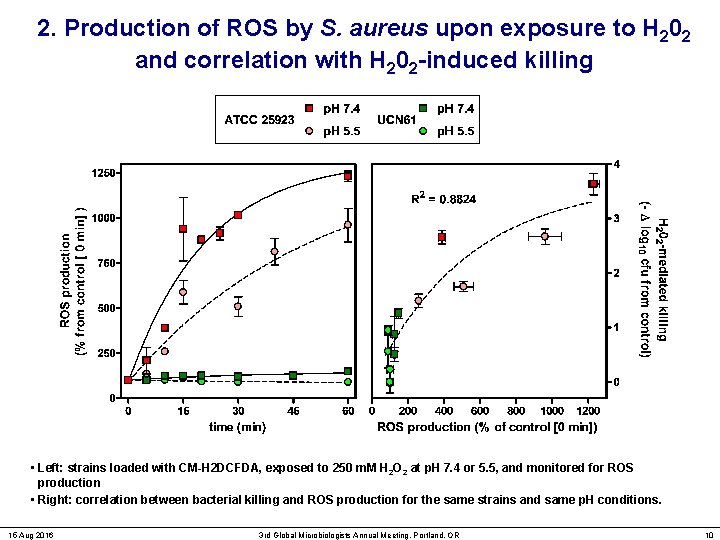
2. Production of ROS by S. aureus upon exposure to H 202 and correlation with H 202 -induced killing • Left: strains loaded with CM-H 2 DCFDA, exposed to 250 m. M H 2 O 2 at p. H 7. 4 or 5. 5, and monitored for ROS production • Right: correlation between bacterial killing and ROS production for the same strains and same p. H conditions. 15 Aug 2016 3 rd Global Microbiologists Annual Meeting, Portland, OR 10
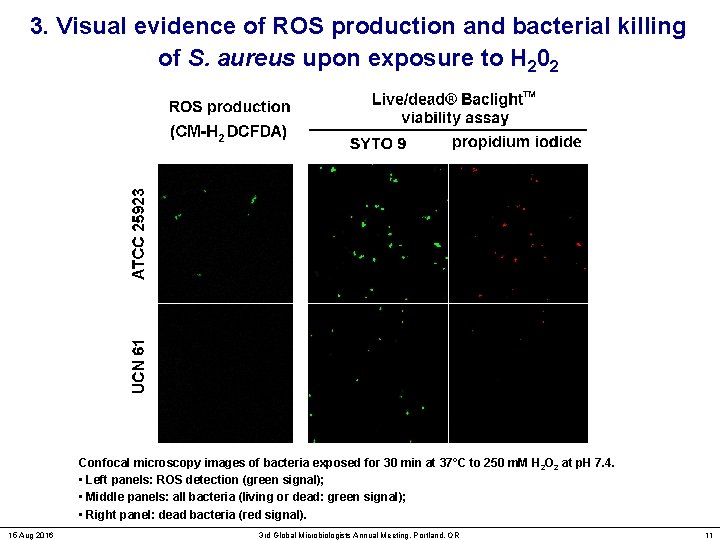
3. Visual evidence of ROS production and bacterial killing of S. aureus upon exposure to H 202 Confocal microscopy images of bacteria exposed for 30 min at 37°C to 250 m. M H 2 O 2 at p. H 7. 4. • Left panels: ROS detection (green signal); • Middle panels: all bacteria (living or dead: green signal); • Right panel: dead bacteria (red signal). 15 Aug 2016 3 rd Global Microbiologists Annual Meeting, Portland, OR 11
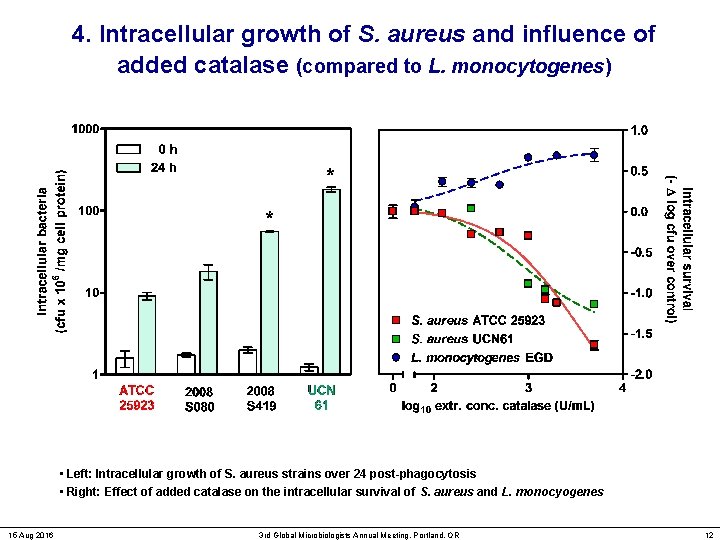
4. Intracellular growth of S. aureus and influence of added catalase (compared to L. monocytogenes) • Left: Intracellular growth of S. aureus strains over 24 post-phagocytosis • Right: Effect of added catalase on the intracellular survival of S. aureus and L. monocyogenes 15 Aug 2016 3 rd Global Microbiologists Annual Meeting, Portland, OR 12
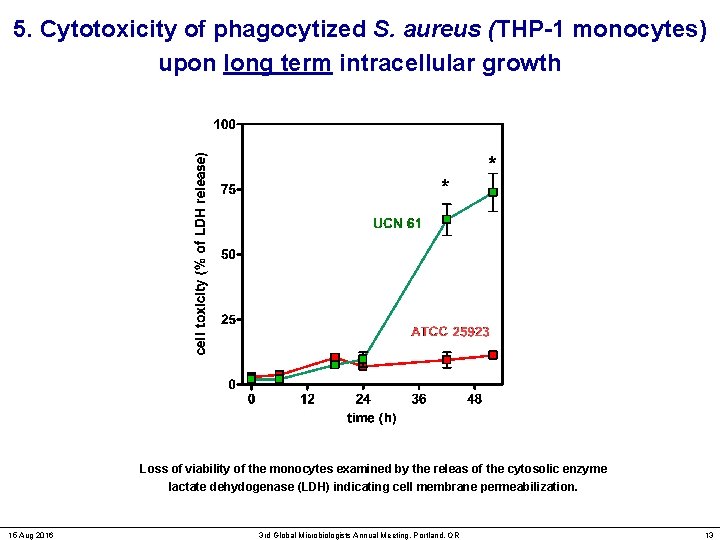
5. Cytotoxicity of phagocytized S. aureus (THP-1 monocytes) upon long term intracellular growth Loss of viability of the monocytes examined by the releas of the cytosolic enzyme lactate dehydogenase (LDH) indicating cell membrane permeabilization. 15 Aug 2016 3 rd Global Microbiologists Annual Meeting, Portland, OR 13
In a nutshell at this point … • S. aureus strains with a high catalase activity are more readily killed by exposure to H 2 O 2 than those with low activity; • Strains with high catalase activity produce large amounts ROS; • Strains with high catalase-producing strains are less capable of multiplying in THP 1 monocytes • Intracellular survival of S. aureus is decreased by addition of exogenous catalase. • Strain UCN 61 (very low catalase activity) readily kills THP-1 monocytes through its excessive growth within 24 h whereas ATCC 25923 does not. • Not illustrated: strain SH 1000 (high producer of staphyloxanthin) is more susceptible to H 2 O 2 than strain UCN 61 (low producer of staphyloxanthin) ruling out a major role of this pigment in our findings 15 Aug 2016 3 rd Global Microbiologists Annual Meeting, Portland, OR 14
What we could not do for a long time… • We failed, in spite of continuous efforts, to construct kat. A negative mutants and the requisite complemented strains in the ATCC 25923 background (but see later) • We LONG failed to restore catalase activity in the S. aureus UCN 61 background (but see next slides) Ø Staphylococcus aureus is known to be a “untransformable bacterium” unless using specific DNA cytosine methyltransferase mutant (DC 10 B [1]) … or having luck ! Ø Catalase may have other critical roles for bacterial survival than its turnover of hydrogen peroxide (maintained or compensated for in the natural strain UCN 61) Note: Isogenic catalase-negative mutants have been described but obtained from the genetically modified SH 1000 laboratory strain (restored rsb. U activities), which shows an exceptionally large production of staphyloxanthin and is accordingly more resistant than ATCC 25293 to H 2 O 2 -induced killing [2]. 1. Monk IR, Shah IM, Xu M, Tan MW, Foster TJ (2012) Transforming the untransformable: application of direct transformation to manipulate genetically Staphylococcus aureus and Staphylococcus epidermidis. MBio 3. 2012 Mar 20; 3(2). 2. Olivier AC, Lemaire S, Van Bambeke F, Tulkens PM, Oldfield E (2009) Role of rsb. U and staphyloxanthin in phagocytosis and intracellular growth of Staphylococcus aureus in human macrophages and endothelial cells. J Infect Dis 200: 1367 -1370. 15 Aug 2016 3 rd Global Microbiologists Annual Meeting, Portland, OR 15
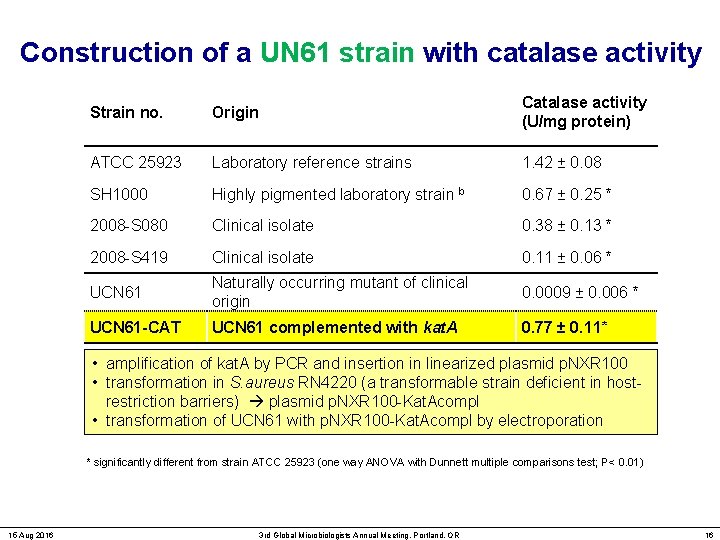
Construction of a UN 61 strain with catalase activity Strain no. Origin Catalase activity (U/mg protein) ATCC 25923 Laboratory reference strains 1. 42 ± 0. 08 SH 1000 Highly pigmented laboratory strain b 0. 67 ± 0. 25 * 2008 -S 080 Clinical isolate 0. 38 ± 0. 13 * 2008 -S 419 Clinical isolate 0. 11 ± 0. 06 * UCN 61 Naturally occurring mutant of clinical origin 0. 0009 ± 0. 006 * UCN 61 -CAT UCN 61 complemented with kat. A 0. 77 ± 0. 11* • amplification of kat. A by PCR and insertion in linearized plasmid p. NXR 100 • transformation in S. aureus RN 4220 (a transformable strain deficient in hostrestriction barriers) plasmid p. NXR 100 -Kat. Acompl • transformation of UCN 61 with p. NXR 100 -Kat. Acompl by electroporation * significantly different from strain ATCC 25923 (one way ANOVA with Dunnett multiple comparisons test; P< 0. 01) 15 Aug 2016 3 rd Global Microbiologists Annual Meeting, Portland, OR 16
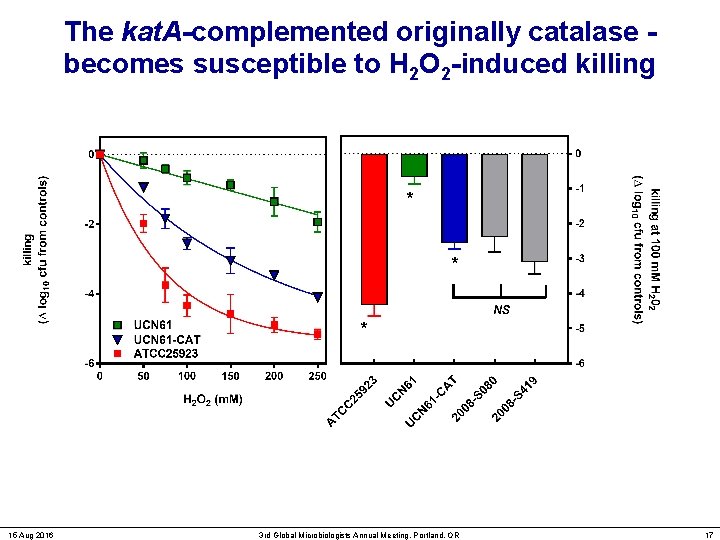
The kat. A-complemented originally catalase becomes susceptible to H 2 O 2 -induced killing 15 Aug 2016 3 rd Global Microbiologists Annual Meeting, Portland, OR 17
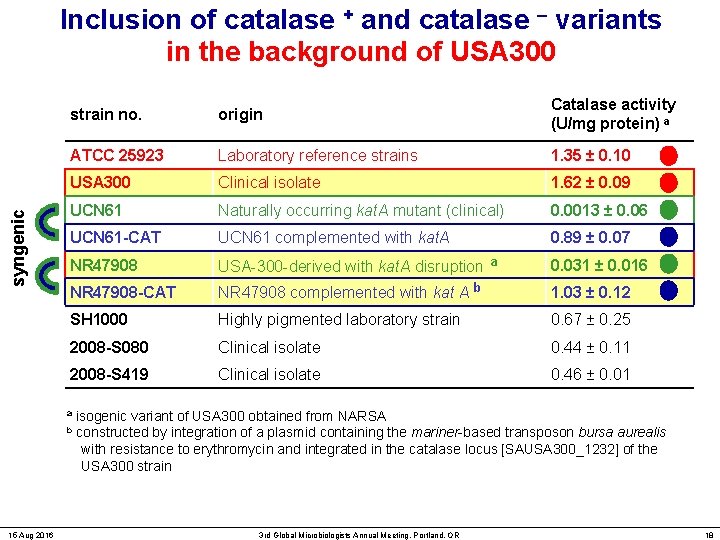
syngenic Inclusion of catalase + and catalase – variants in the background of USA 300 strain no. origin Catalase activity (U/mg protein) a ATCC 25923 Laboratory reference strains 1. 35 ± 0. 10 USA 300 Clinical isolate 1. 62 ± 0. 09 UCN 61 Naturally occurring kat. A mutant (clinical) 0. 0013 ± 0. 06 UCN 61 -CAT UCN 61 complemented with kat. A 0. 89 ± 0. 07 NR 47908 USA-300 -derived with kat. A disruption a 0. 031 ± 0. 016 NR 47908 -CAT NR 47908 complemented with kat A b 1. 03 ± 0. 12 SH 1000 Highly pigmented laboratory strain 0. 67 ± 0. 25 2008 -S 080 Clinical isolate 0. 44 ± 0. 11 2008 -S 419 Clinical isolate 0. 46 ± 0. 01 a b 15 Aug 2016 isogenic variant of USA 300 obtained from NARSA constructed by integration of a plasmid containing the mariner-based transposon bursa aurealis with resistance to erythromycin and integrated in the catalase locus [SAUSA 300_1232] of the USA 300 strain 3 rd Global Microbiologists Annual Meeting, Portland, OR 18
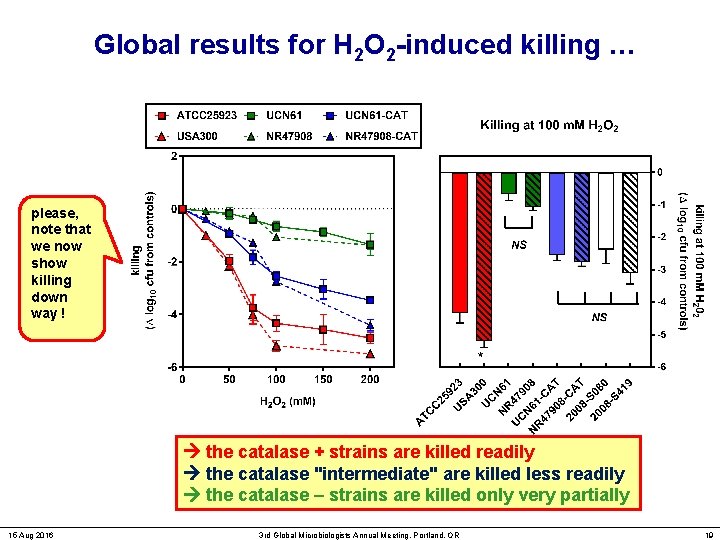
Global results for H 2 O 2 -induced killing … please, note that we now show killing down way ! the catalase + strains are killed readily the catalase "intermediate" are killed less readily the catalase – strains are killed only very partially 15 Aug 2016 3 rd Global Microbiologists Annual Meeting, Portland, OR 19
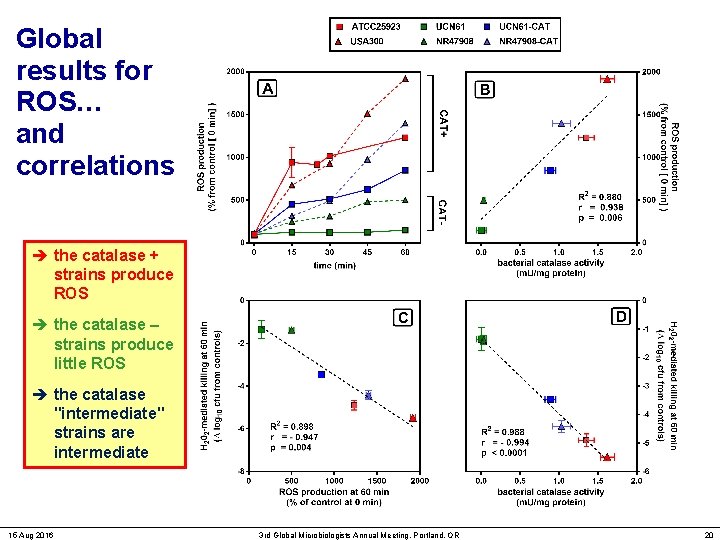
Global results for ROS… and correlations the catalase + strains produce ROS the catalase – strains produce little ROS the catalase "intermediate" strains are intermediate 15 Aug 2016 3 rd Global Microbiologists Annual Meeting, Portland, OR 20
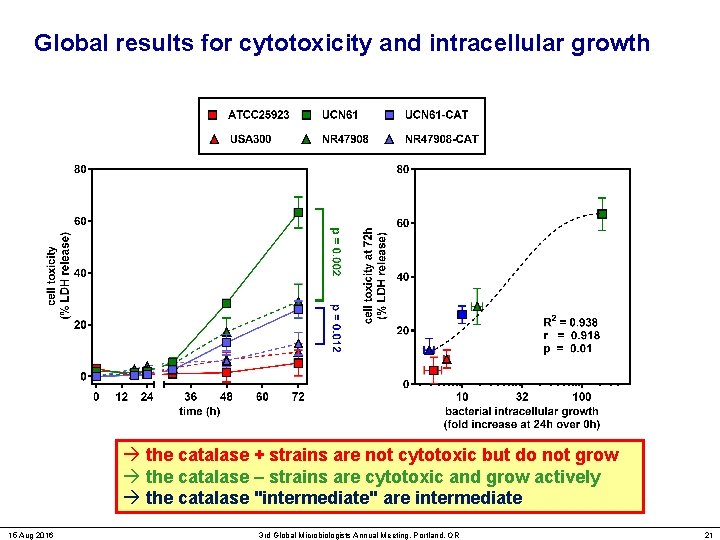
Global results for cytotoxicity and intracellular growth the catalase + strains are not cytotoxic but do not grow the catalase – strains are cytotoxic and grow actively the catalase "intermediate" are intermediate 15 Aug 2016 3 rd Global Microbiologists Annual Meeting, Portland, OR 21
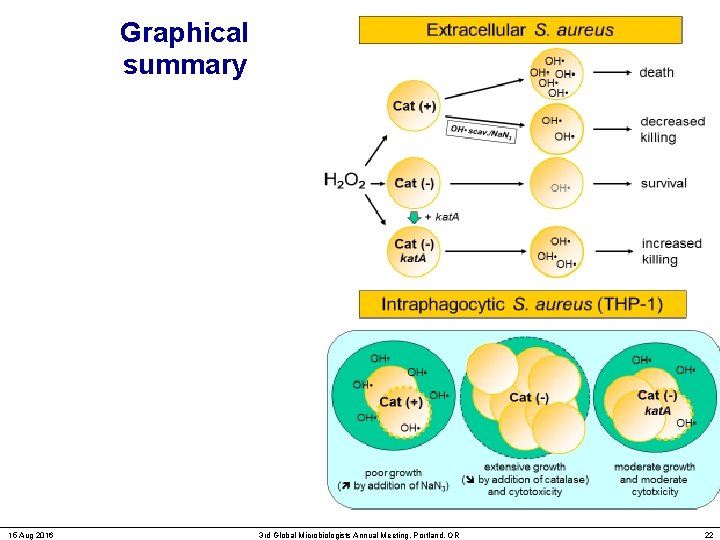
Graphical summary 15 Aug 2016 3 rd Global Microbiologists Annual Meeting, Portland, OR 22
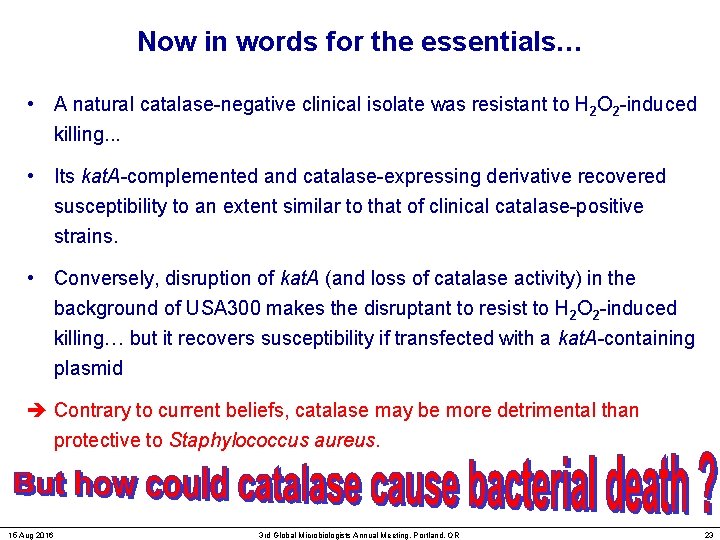
Now in words for the essentials… • A natural catalase-negative clinical isolate was resistant to H 2 O 2 -induced killing. . . • Its kat. A-complemented and catalase-expressing derivative recovered susceptibility to an extent similar to that of clinical catalase-positive strains. • Conversely, disruption of kat. A (and loss of catalase activity) in the background of USA 300 makes the disruptant to resist to H 2 O 2 -induced killing… but it recovers susceptibility if transfected with a kat. A-containing plasmid Contrary to current beliefs, catalase may be more detrimental than protective to Staphylococcus aureus. 15 Aug 2016 3 rd Global Microbiologists Annual Meeting, Portland, OR 23
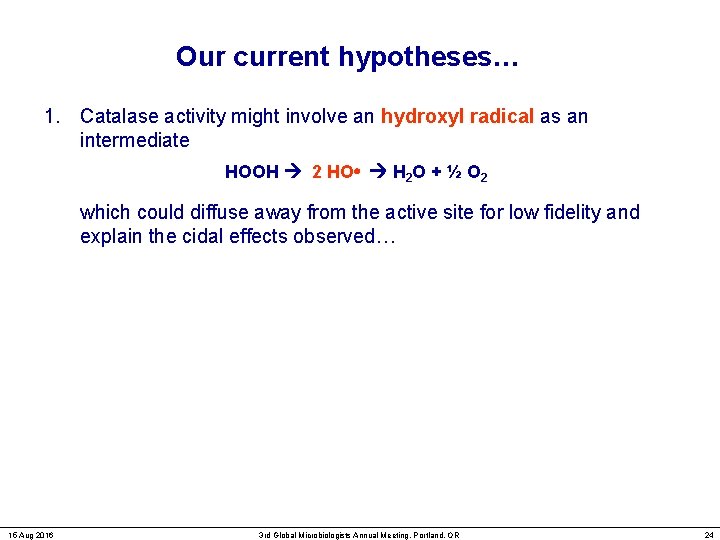
Our current hypotheses… 1. Catalase activity might involve an hydroxyl radical as an intermediate HOOH 2 HO H 2 O + ½ O 2 which could diffuse away from the active site for low fidelity and explain the cidal effects observed… 15 Aug 2016 3 rd Global Microbiologists Annual Meeting, Portland, OR 24
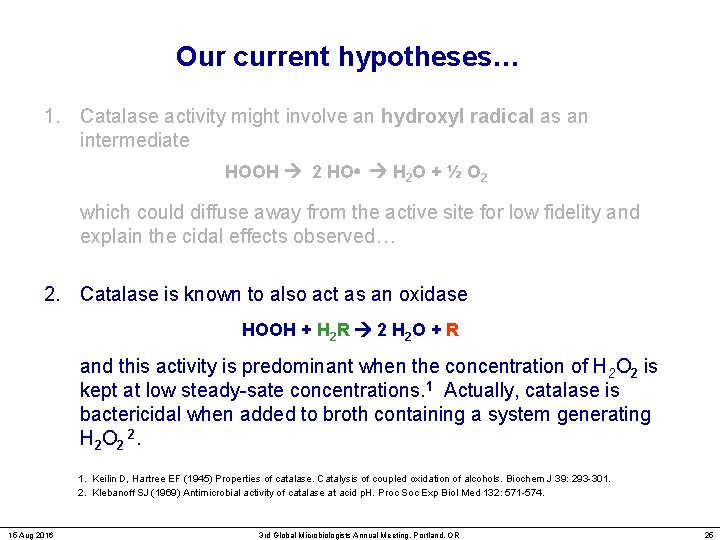
Our current hypotheses… 1. Catalase activity might involve an hydroxyl radical as an intermediate HOOH 2 HO H 2 O + ½ O 2 which could diffuse away from the active site for low fidelity and explain the cidal effects observed… 2. Catalase is known to also act as an oxidase HOOH + H 2 R 2 H 2 O + R and this activity is predominant when the concentration of H 2 O 2 is kept at low steady-sate concentrations. 1 Actually, catalase is bactericidal when added to broth containing a system generating H 2 O 2 2. 1. Keilin D, Hartree EF (1945) Properties of catalase. Catalysis of coupled oxidation of alcohols. Biochem J 39: 293 -301. 2. Klebanoff SJ (1969) Antimicrobial activity of catalase at acid p. H. Proc Soc Exp Biol Med 132: 571 -574. 15 Aug 2016 3 rd Global Microbiologists Annual Meeting, Portland, OR 25

Please, make suggestions ! 15 Aug 2016 3 rd Global Microbiologists Annual Meeting, Portland, OR 26
- Slides: 26