
Is Methylene Blue Safe In Patients With Methemoglobinemia
Is Methylene Blue Safe In Patients With Methemoglobinemia And Glucose 6 -phosphate Dehydrogenase (G 6 PD) Deficiency? Bob Hoffman New York City Poison Center, NY, USA
Overview • • Review of G 6 PD deficiency Review of methemoglobinemia (very brief) Review of methylene blue (MB) (brief) Attempt to answer the question – Expert opinion – Case reports – In Vitro data
Introduction • G 6 PD deficiency – one of the most common inherited disorders, 400 million people affected – Largely in tropical and subtropical countries • Selection advantages – Against Plasmodium falciparum infection • Most affected individuals asymptomatic, but the risk of acute hemolysis is well known
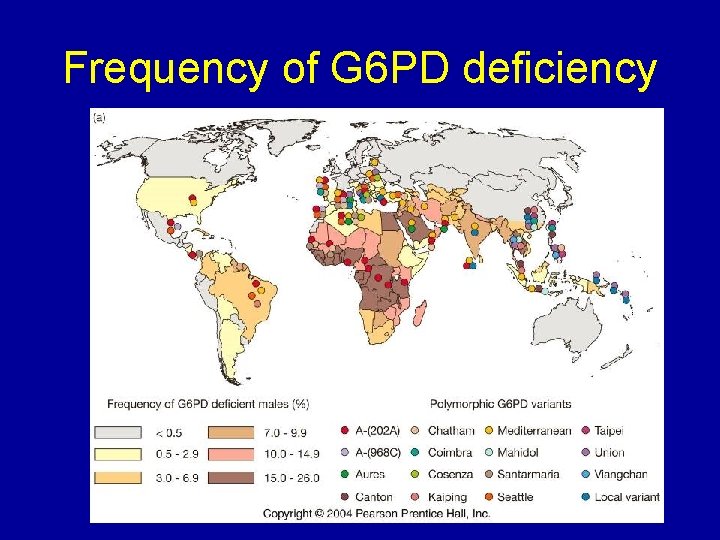
Frequency of G 6 PD deficiency
Genetics • > 400 variants described • Different electrophoretic mobility, kinetic properties. • 5 classes according to the residual enzyme activity based (WHO). • Mediterranean and African (A-) variants – The most clinically significant. • Activity scarcely detectable in the Mediterranean type but close to normal in the African variant.
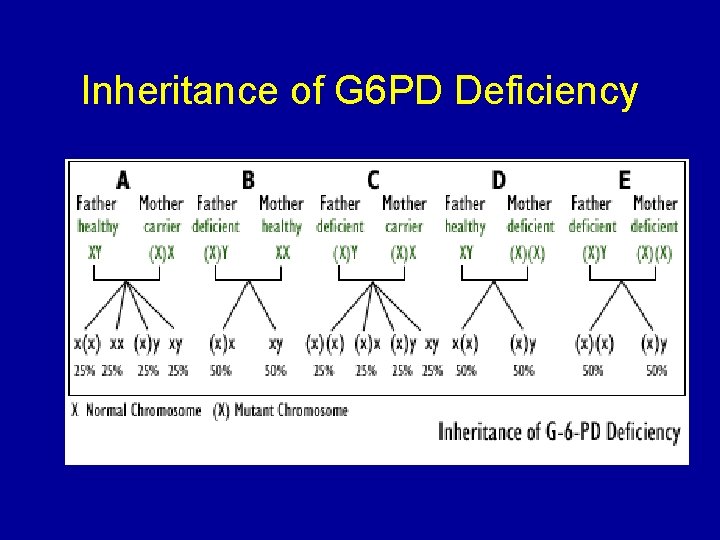
Inheritance of G 6 PD Deficiency
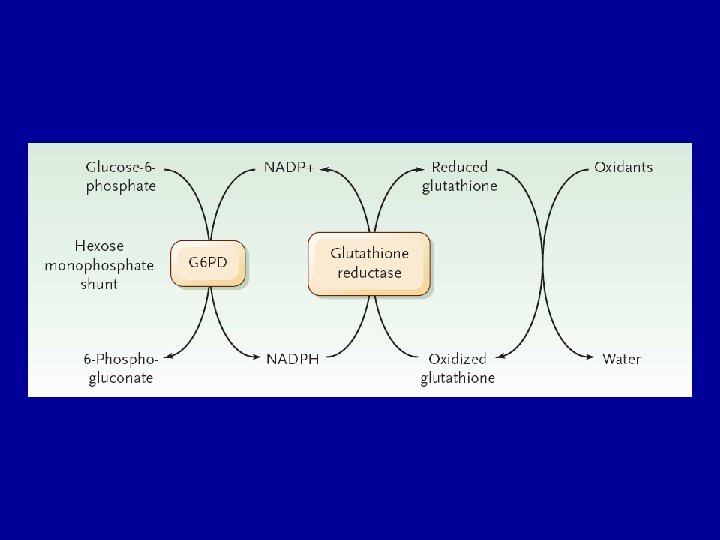
What Do We Need G 6 PD For? • Phosphogluconate pathway • Pentose phosphate pathway • Hexose monosphosphate shunt
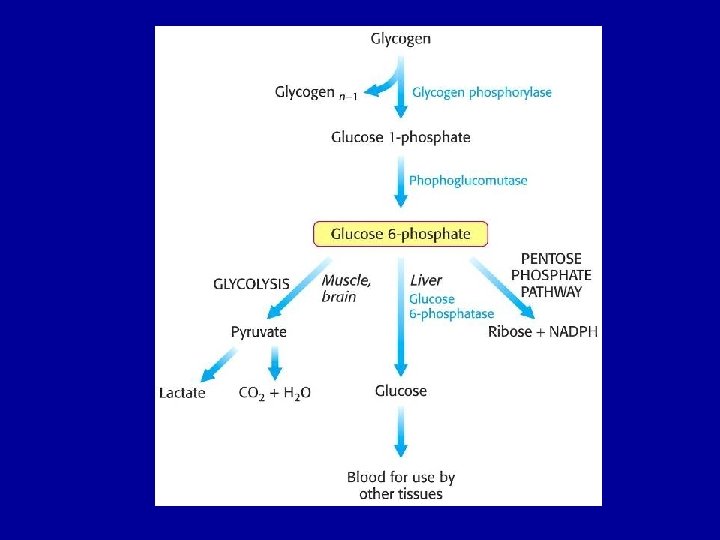
G 6 PD Catalyzes the first step in the pentose phosphate pathway
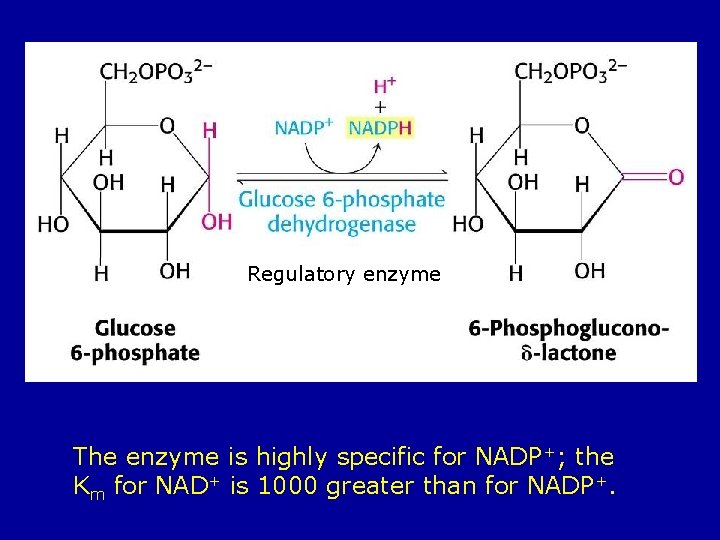
Regulatory enzyme The enzyme is highly specific for NADP+; the Km for NAD+ is 1000 greater than for NADP+.
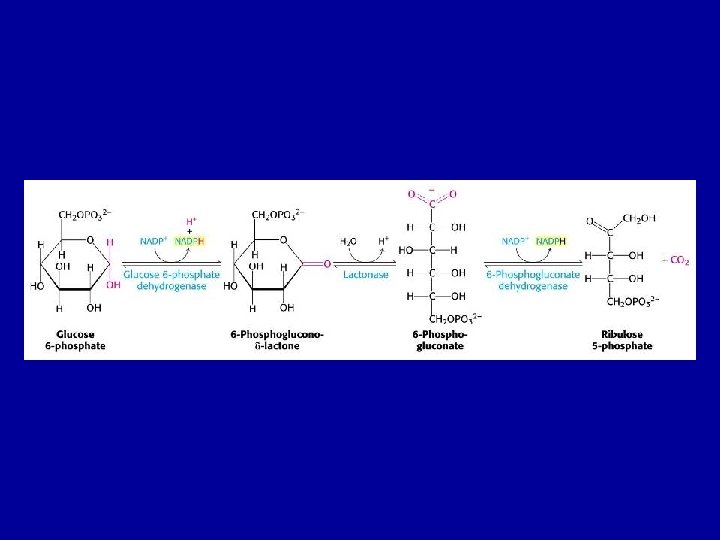
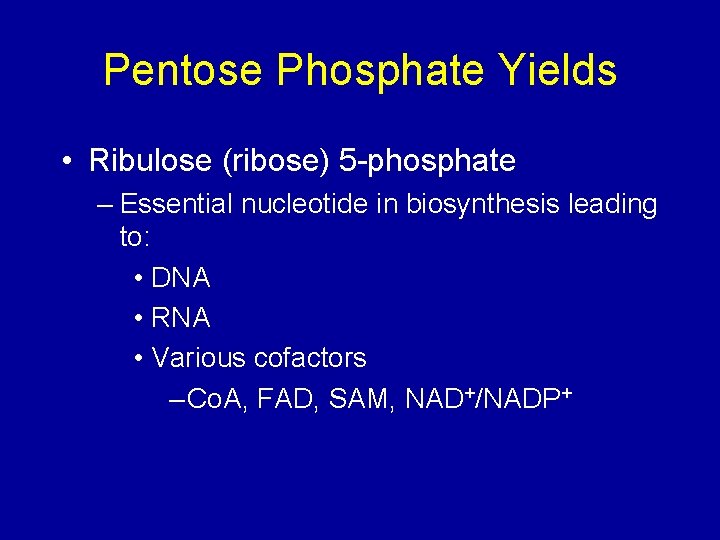
Pentose Phosphate Yields • Ribulose (ribose) 5 -phosphate – Essential nucleotide in biosynthesis leading to: • DNA • RNA • Various cofactors – Co. A, FAD, SAM, NAD+/NADP+
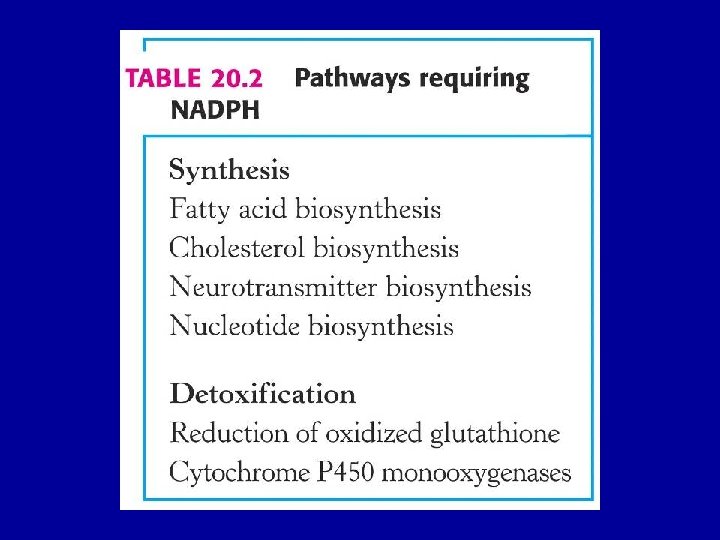
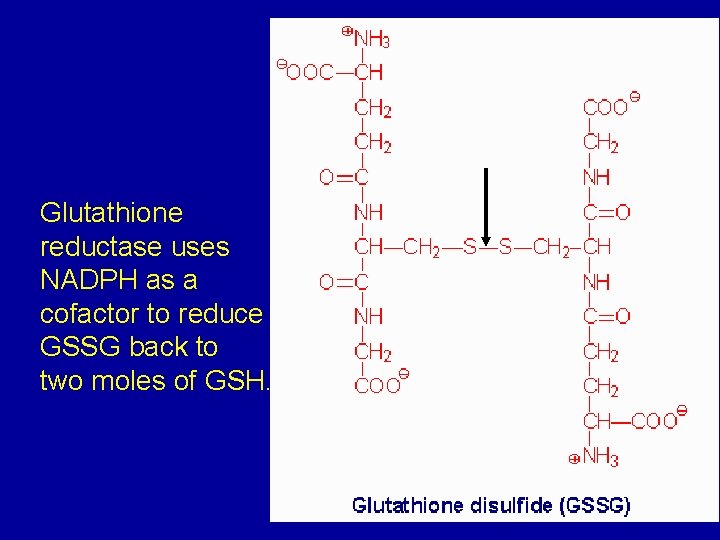
Glutathione reductase uses NADPH as a cofactor to reduce GSSG back to two moles of GSH.
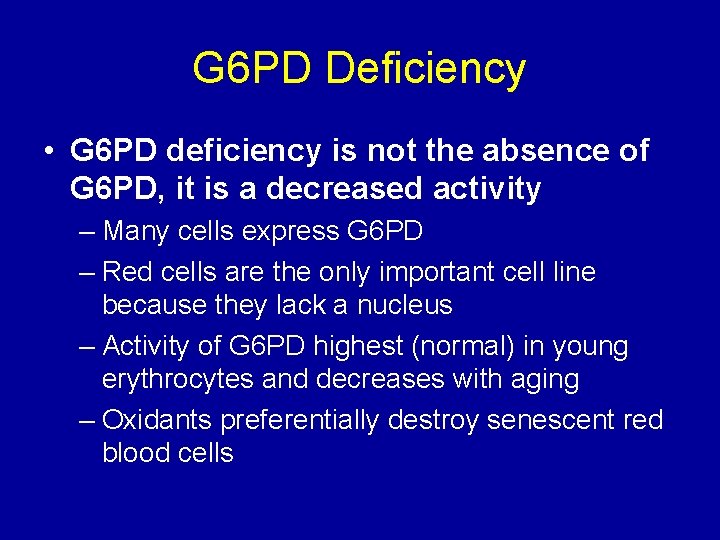
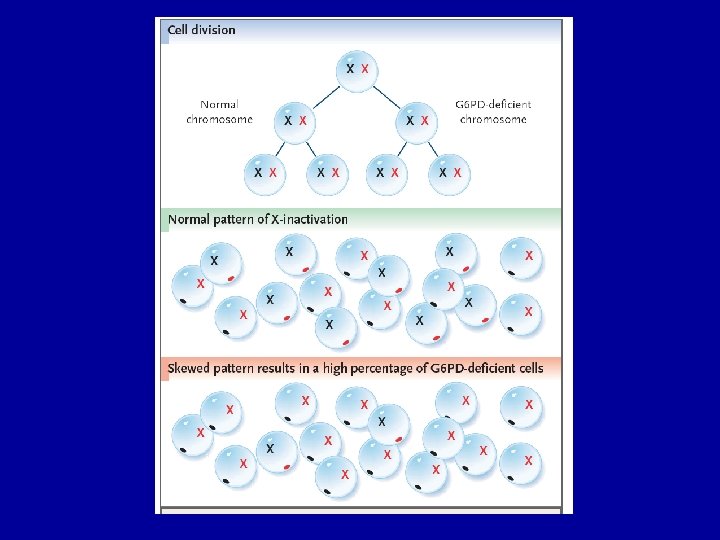
G 6 PD Deficiency • G 6 PD deficiency is not the absence of G 6 PD, it is a decreased activity – Many cells express G 6 PD – Red cells are the only important cell line because they lack a nucleus – Activity of G 6 PD highest (normal) in young erythrocytes and decreases with aging – Oxidants preferentially destroy senescent red blood cells
Response to Oxidants
Oxidant Response • If not reduced: – Some produce hemolysis • Oxidation of the hemoglobin chain – Some produce Met. Hb • Oxidation of iron – Some produce both?
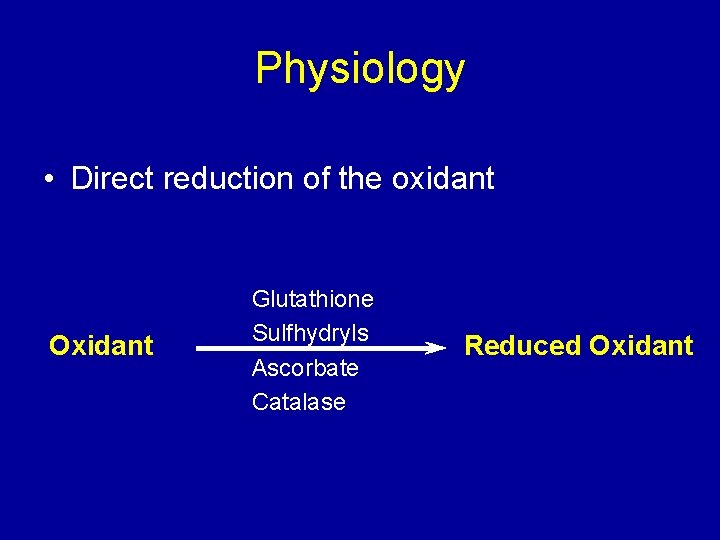
Physiology • Direct reduction of the oxidant Oxidant Glutathione Sulfhydryls Ascorbate Catalase Reduced Oxidant

RBCs with Heinz Bodies • Precipitation of hemoglobin due to disulfide bond formation between Hb molecues • Upper photo shows distorted RBCs with large Heinz bodies • Bottom photo shows RBC stained with methylene blue

Methemoglobin Definition • Oxidation of the iron molecule in hemoglobin from its normal Fe 2+ to Fe 3+ N N Fe histidine N N O H Methemoglobin H O 2 - Oxyhemoglobin C O COHb

Physiology The oxidant is reduced by Hb (forming Met. Hb) • Then Met. Hb is reduced back to Hb Met. Hb NADH Met. Hb reductase (67%) Ascorbate (15%) Reduced Hb Glutathione (12%) NADPH Met Hb reductase (5%)
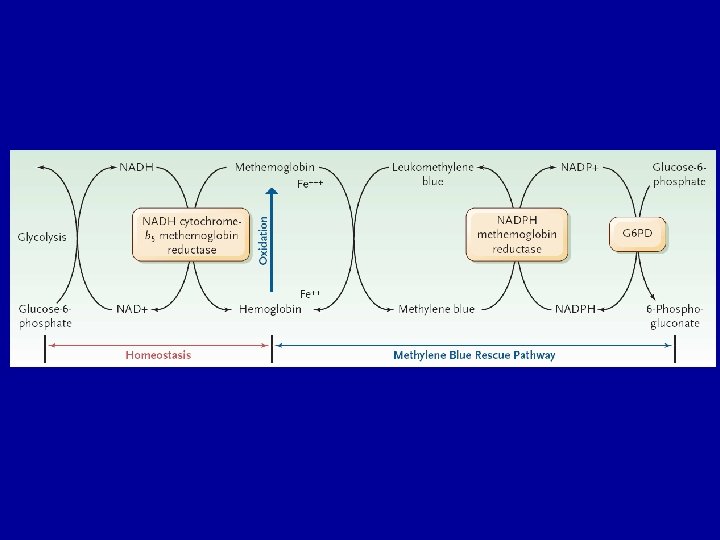
Can You Use Methylene Blue In Patients with G 6 PD Deficiency?
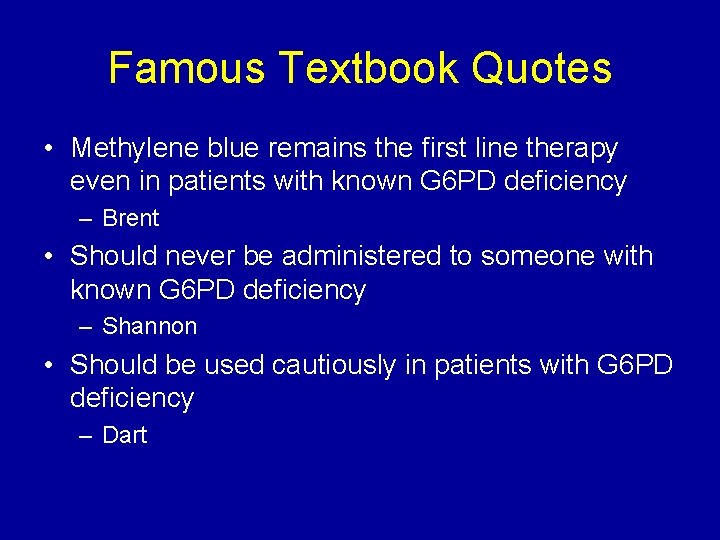
Famous Textbook Quotes • Methylene blue remains the first line therapy even in patients with known G 6 PD deficiency – Brent • Should never be administered to someone with known G 6 PD deficiency – Shannon • Should be used cautiously in patients with G 6 PD deficiency – Dart
• • 28 year old man Ingested 60 -120 m. L of 18% aniline Met. Hb 11 gm/d. L (70 -80%) 75 mg methylene blue given Didn’t get better G 6 PD screening showed deficiency (A-) Given ascorbate Hemolyzed, Hb fell, recovered – Rosen PJ: Failure of methylene blue treatment in toxic methemoglobinemia. Association with glucose-6 -phosphate dehydrogenase deficiency. Ann Intern Med 1971; 75: 83 -6
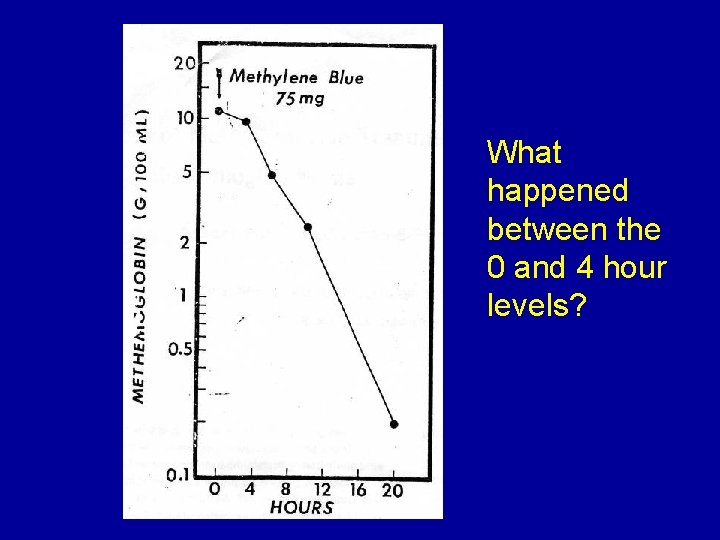
What happened between the 0 and 4 hour levels?
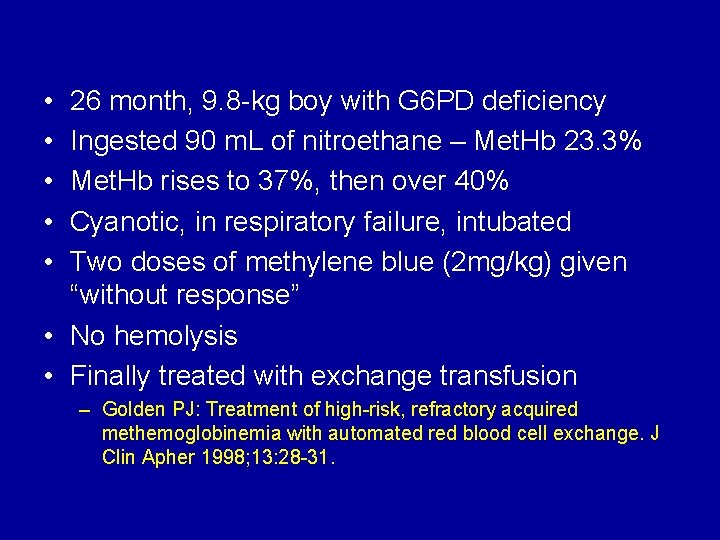
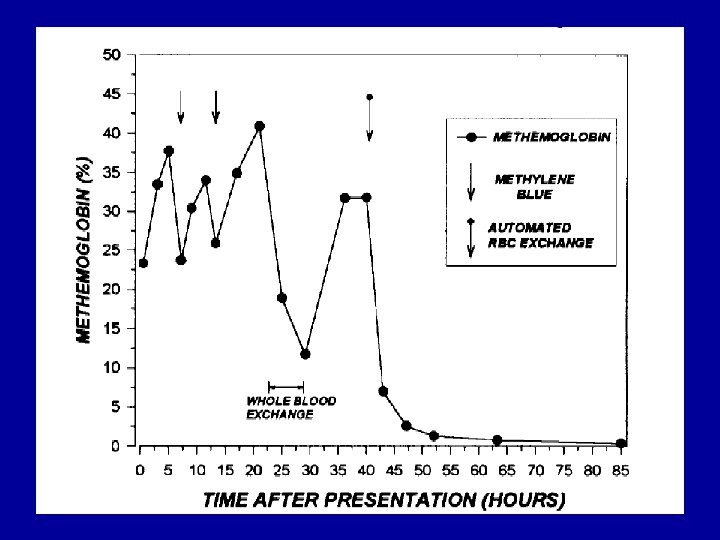
• • • 26 month, 9. 8 -kg boy with G 6 PD deficiency Ingested 90 m. L of nitroethane – Met. Hb 23. 3% Met. Hb rises to 37%, then over 40% Cyanotic, in respiratory failure, intubated Two doses of methylene blue (2 mg/kg) given “without response” • No hemolysis • Finally treated with exchange transfusion – Golden PJ: Treatment of high-risk, refractory acquired methemoglobinemia with automated red blood cell exchange. J Clin Apher 1998; 13: 28 -31.
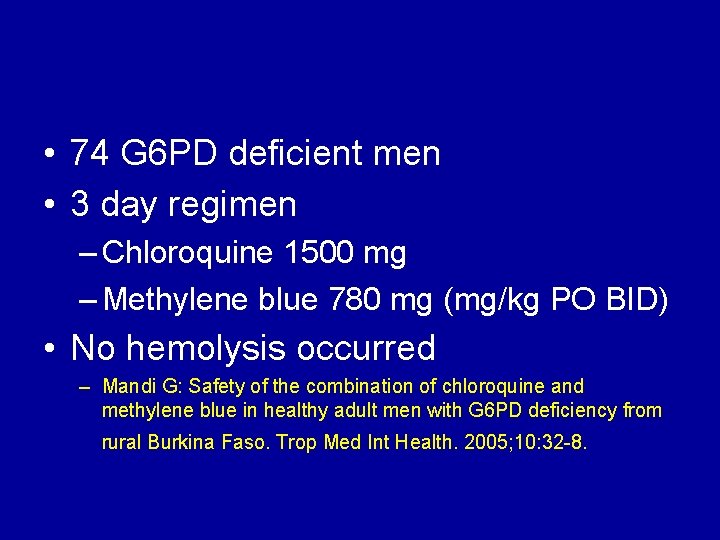
• 74 G 6 PD deficient men • 3 day regimen – Chloroquine 1500 mg – Methylene blue 780 mg (mg/kg PO BID) • No hemolysis occurred – Mandi G: Safety of the combination of chloroquine and methylene blue in healthy adult men with G 6 PD deficiency from rural Burkina Faso. Trop Med Int Health. 2005; 10: 32 -8.
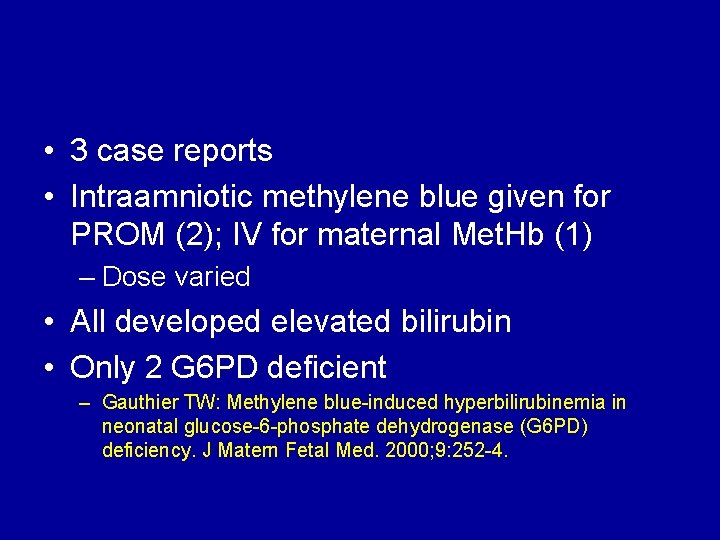
• 3 case reports • Intraamniotic methylene blue given for PROM (2); IV for maternal Met. Hb (1) – Dose varied • All developed elevated bilirubin • Only 2 G 6 PD deficient – Gauthier TW: Methylene blue-induced hyperbilirubinemia in neonatal glucose-6 -phosphate dehydrogenase (G 6 PD) deficiency. J Matern Fetal Med. 2000; 9: 252 -4.
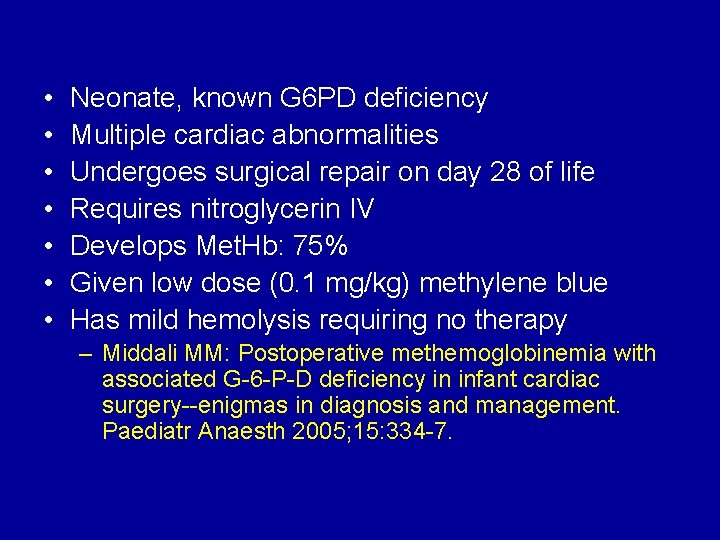
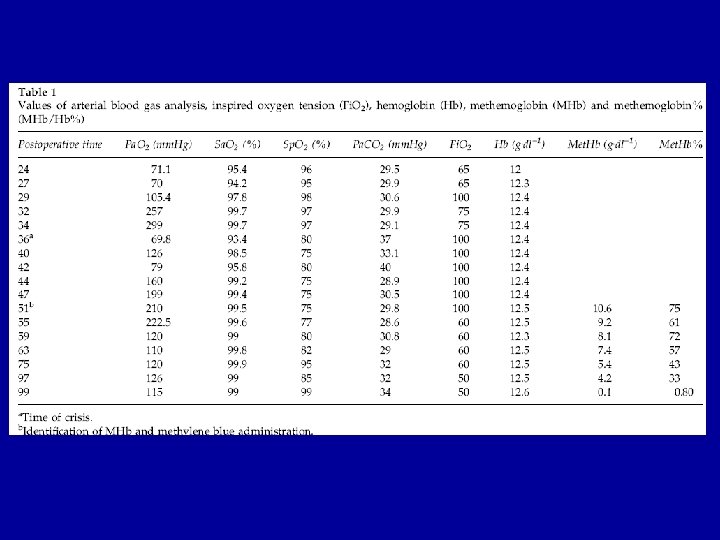
• • Neonate, known G 6 PD deficiency Multiple cardiac abnormalities Undergoes surgical repair on day 28 of life Requires nitroglycerin IV Develops Met. Hb: 75% Given low dose (0. 1 mg/kg) methylene blue Has mild hemolysis requiring no therapy – Middali MM: Postoperative methemoglobinemia with associated G-6 -P-D deficiency in infant cardiac surgery--enigmas in diagnosis and management. Paediatr Anaesth 2005; 15: 334 -7.
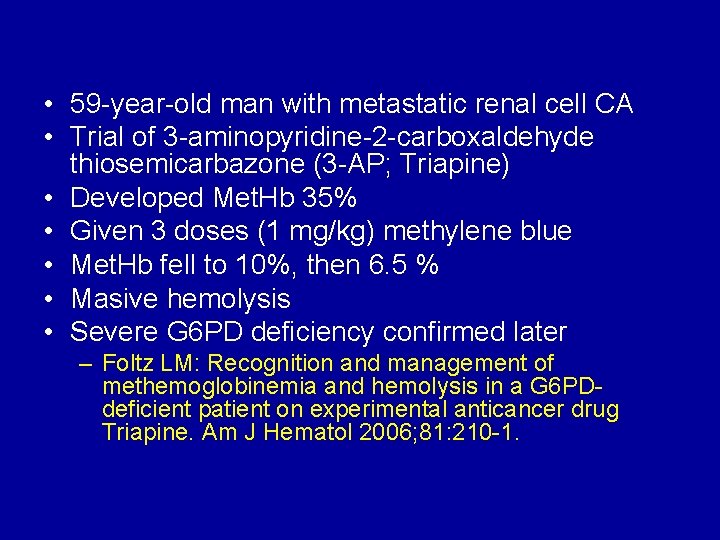
• 59 -year-old man with metastatic renal cell CA • Trial of 3 -aminopyridine-2 -carboxaldehyde thiosemicarbazone (3 -AP; Triapine) • Developed Met. Hb 35% • Given 3 doses (1 mg/kg) methylene blue • Met. Hb fell to 10%, then 6. 5 % • Masive hemolysis • Severe G 6 PD deficiency confirmed later – Foltz LM: Recognition and management of methemoglobinemia and hemolysis in a G 6 PDdeficient patient on experimental anticancer drug Triapine. Am J Hematol 2006; 81: 210 -1.
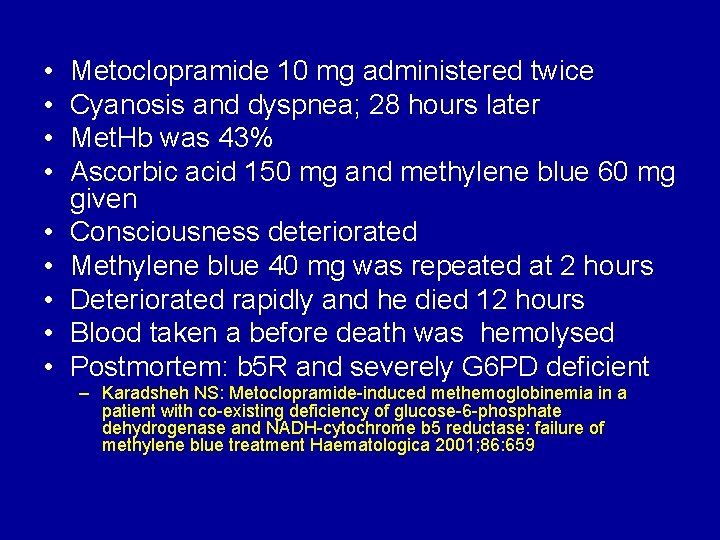
• • • Metoclopramide 10 mg administered twice Cyanosis and dyspnea; 28 hours later Met. Hb was 43% Ascorbic acid 150 mg and methylene blue 60 mg given Consciousness deteriorated Methylene blue 40 mg was repeated at 2 hours Deteriorated rapidly and he died 12 hours Blood taken a before death was hemolysed Postmortem: b 5 R and severely G 6 PD deficient – Karadsheh NS: Metoclopramide-induced methemoglobinemia in a patient with co-existing deficiency of glucose-6 -phosphate dehydrogenase and NADH-cytochrome b 5 reductase: failure of methylene blue treatment Haematologica 2001; 86: 659
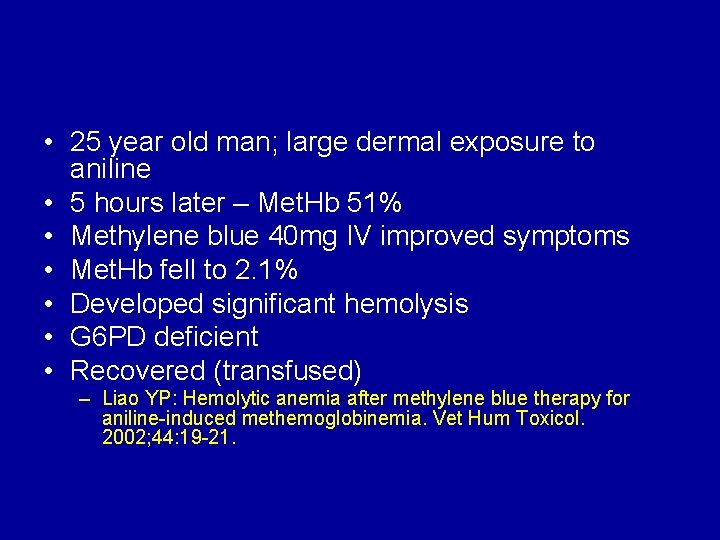
• 25 year old man; large dermal exposure to aniline • 5 hours later – Met. Hb 51% • Methylene blue 40 mg IV improved symptoms • Met. Hb fell to 2. 1% • Developed significant hemolysis • G 6 PD deficient • Recovered (transfused) – Liao YP: Hemolytic anemia after methylene blue therapy for aniline-induced methemoglobinemia. Vet Hum Toxicol. 2002; 44: 19 -21.
In Vivo Summary • Does Methylene blue fail? – Often works – Usually slowly • Does methylene blue cause hemolysis – It can, and it can be severe – Especially when hemolysis is present prior to therapy
Beutler E: Methemoglobin Reduction: Studies of the interaction between cell popluations and of the role of methylene blue. Blood 1963; 22: 323 -333 • Incubated human RBCs with nitrite to induce Met. Hb • Treated with methylene blue and glucose • Observed rates of fall – Normal cells – G 6 PD cells (A-) – Mixture of cells
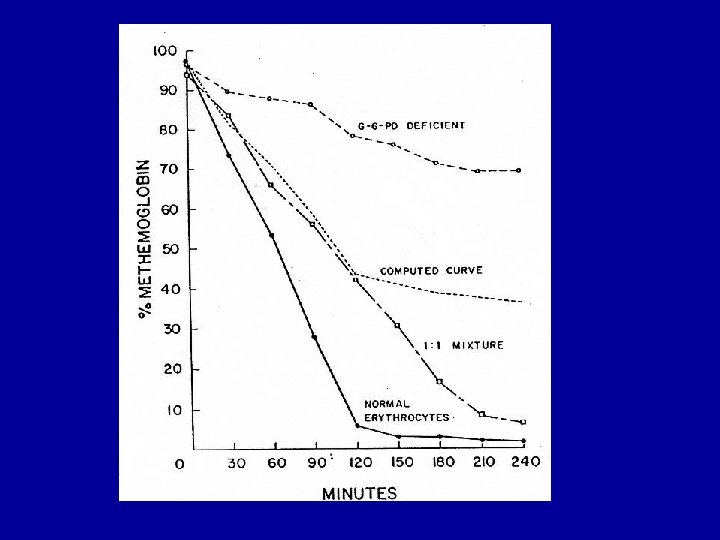
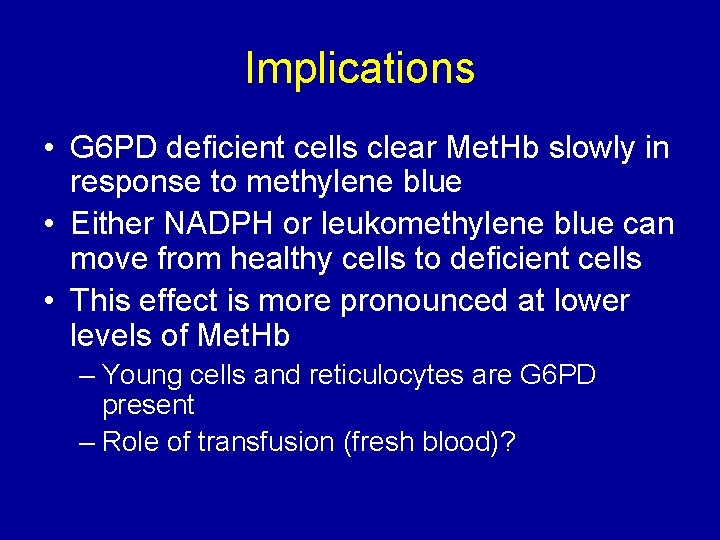
Implications • G 6 PD deficient cells clear Met. Hb slowly in response to methylene blue • Either NADPH or leukomethylene blue can move from healthy cells to deficient cells • This effect is more pronounced at lower levels of Met. Hb – Young cells and reticulocytes are G 6 PD present – Role of transfusion (fresh blood)?
Summary (1) • Data on the use of methylene blue in patients with G 6 PD deficiency are limited – Most support some degree of efficacy – Significant risk of hemolysis • Would administer methylene blue in: – Patients with no history of G 6 PD deficiency – Patients with known G 6 PD deficiency and lifethreatening Met. Hb • Ascorbate, Exchange transfusion, HBO, NAC
Summary (2) • Withhold methylene blue in: – Patients with known severe variant G 6 PD deficiency (Mediterranean) not significantly ill – Patients with known or suspected G 6 PD deficiency and marginal indications for treatment – Patients with significant active hemolysis in addition to Met. Hb
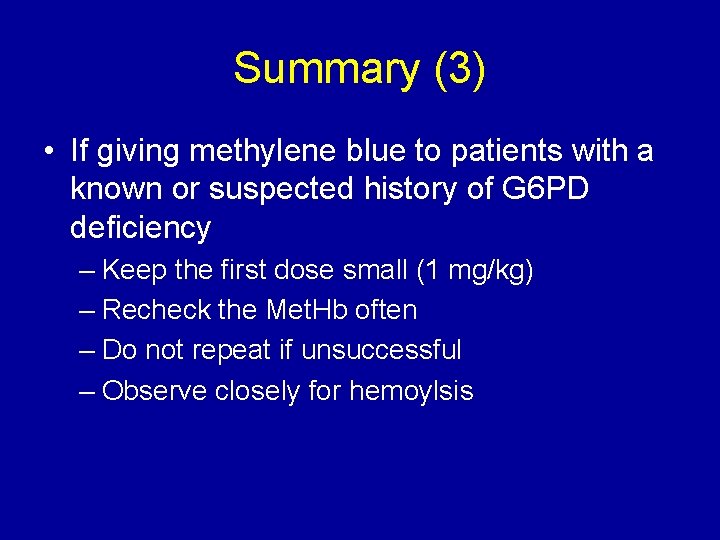
Summary (3) • If giving methylene blue to patients with a known or suspected history of G 6 PD deficiency – Keep the first dose small (1 mg/kg) – Recheck the Met. Hb often – Do not repeat if unsuccessful – Observe closely for hemoylsis
- Slides: 44